 IA
Kvass de pan
Nivel 2 · con algo de práctica
Pan de centeno remojado en agua caliente, colado y fermentado un día con azúcar y levadura. Sale entre dulce y ácido, con gas y algo de alcohol.
- Azúcar
- 22g por litro de agua
- Tiempo
- 24h
- Temperatura
- 25–30°C
- Tarro
- 6L
La regla de oro: un solo día de fermentación y a la nevera: con más tiempo hace más alcohol.
Sin registrarte. Te guiamos paso a paso, de la báscula a la nevera.
Revisada el 26 de octubre de 2026 · 30 datos, cada uno con su fuente
Necesitas
- Olla grande, para 4,5 litros
- Termómetro de cocina
- Cuchara larga
- Colador grande y una gasa limpia
- Tarro de vidrio de 6 litros, o dos de 3 litros
- Tela limpia y una goma elástica
- Medidor de pH calibrado
- Báscula de cocina
- Embudo
- Botellas para bebidas con gas: PET de refresco o vidrio para gas, con tapón
Paso a paso
-
Corta el pan en dados y sécalo
Lava la olla, el tarro y los utensilios con agua caliente y jabón, y enjuágalos bien. Corta 500 g de pan de centeno en dados pequeños y déjalos secar al aire hasta que estén duros. Míralos bien: si alguno tiene moho, no uses ese pan.
Truco: Tirar el pan con moho es regla de la casa, la misma que las guías dan a la verdura: lo dañado o con moho, fuera.
-
Remoja el pan en agua caliente, en dos tandas
Calienta 1,5 litros de agua a 80 °C y viértela sobre el pan en la olla. Mezcla y déjalo reposar 30 minutos, removiendo cada 5. Añade otros 1,5 litros de agua a 70 °C, remueve y déjalo 90 minutos más, removiendo cada 10.
-
Cuélalo, añade el resto del agua y enfríalo
Cuela el líquido con la gasa sobre el colador. Añádele los últimos 1,5 litros de agua a 70 °C. Déjalo enfriar hasta 25–30 °C en menos de 2 horas; si hace falta, pon la olla en agua fría.
Truco: No añadas la levadura hasta que esté a 25–30 °C.
-
Añade el azúcar y la levadura, y déjalo 24 horas
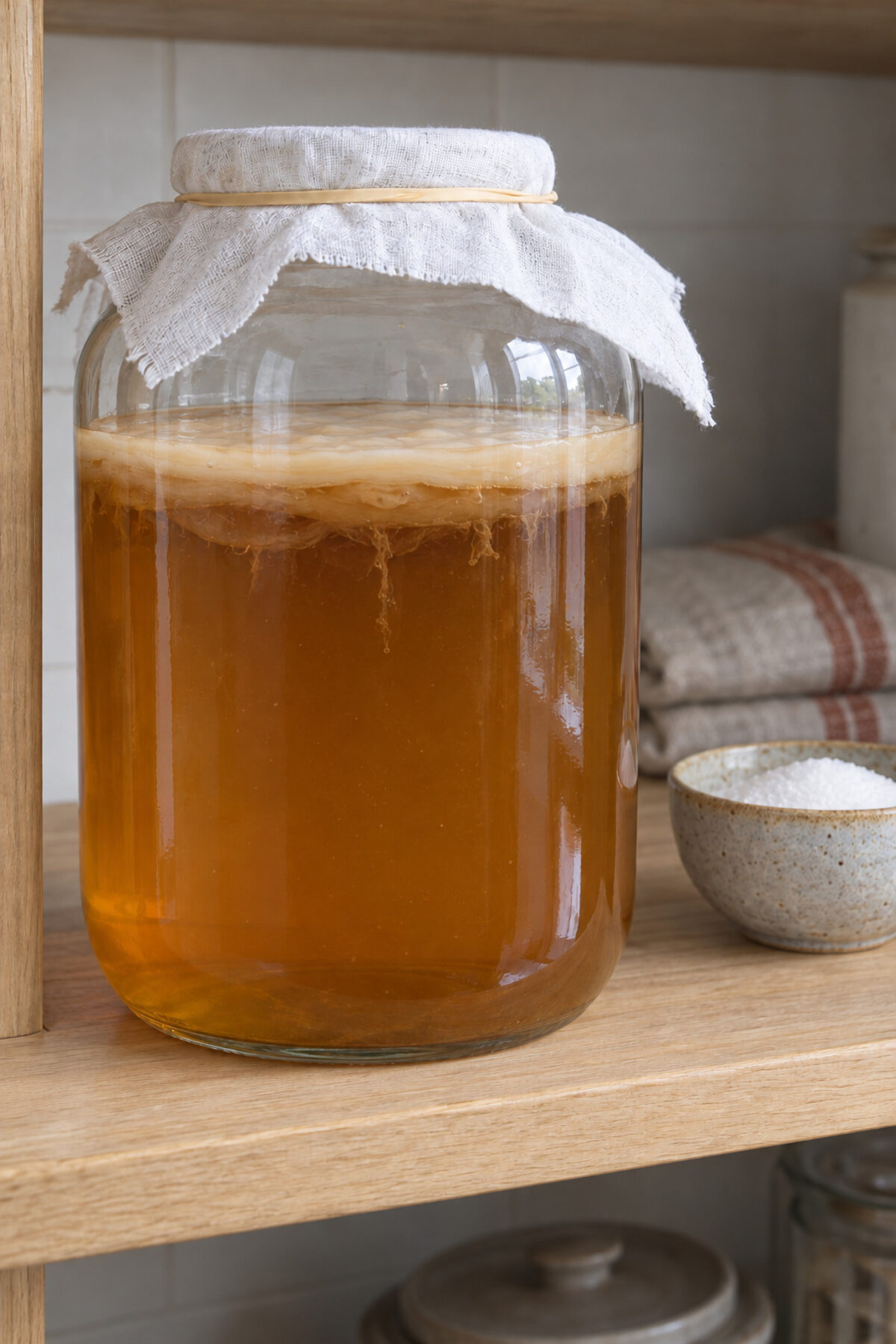
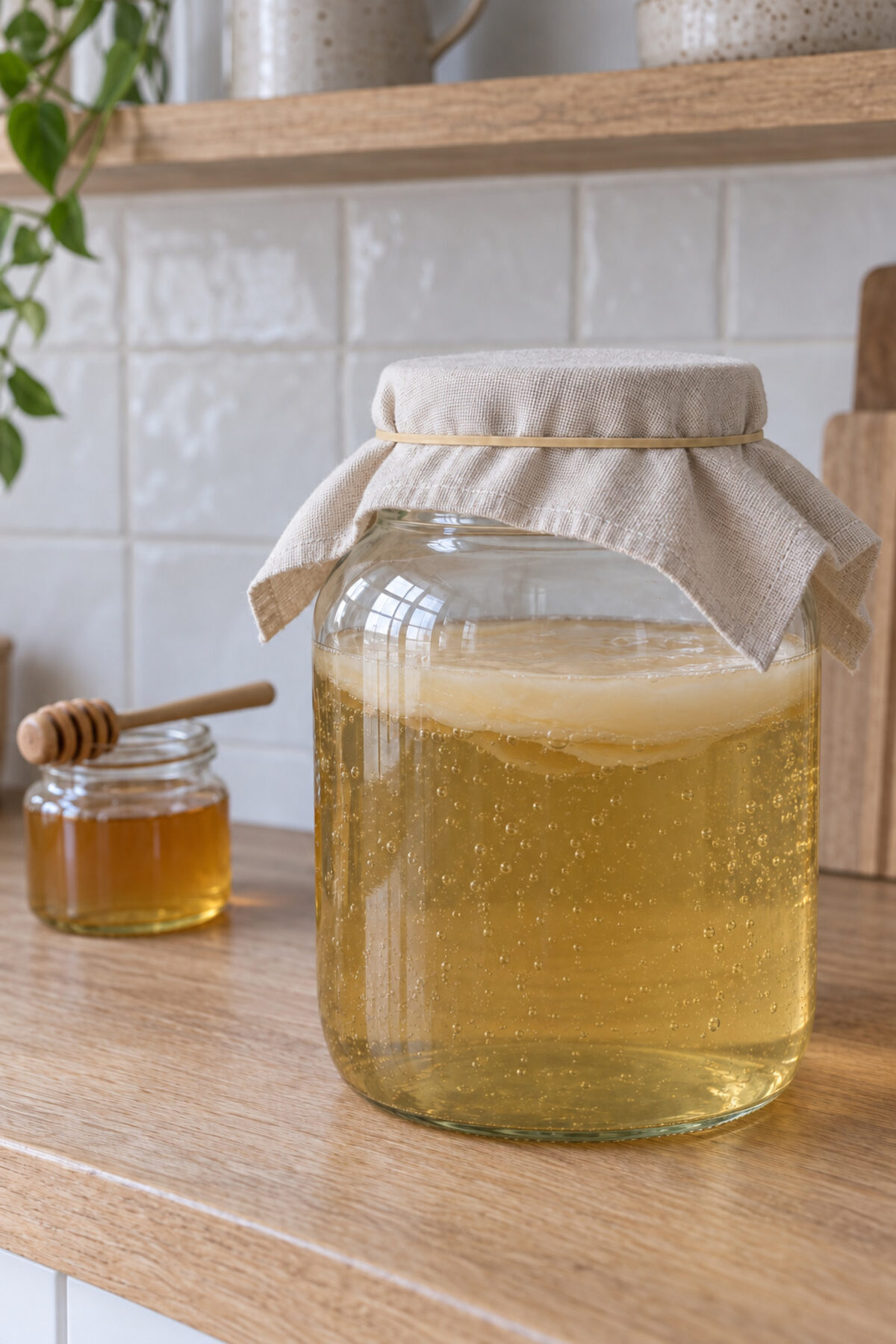
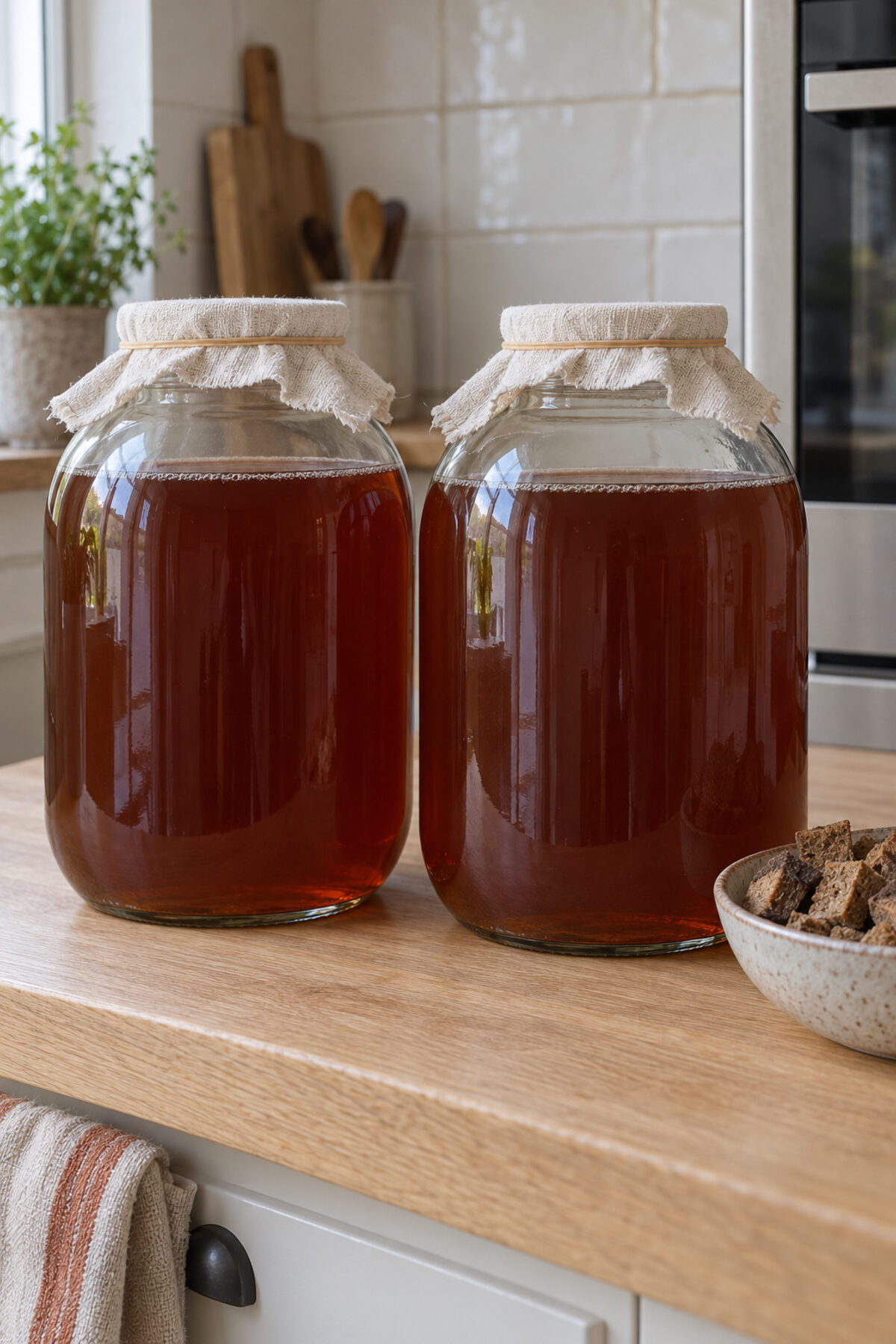
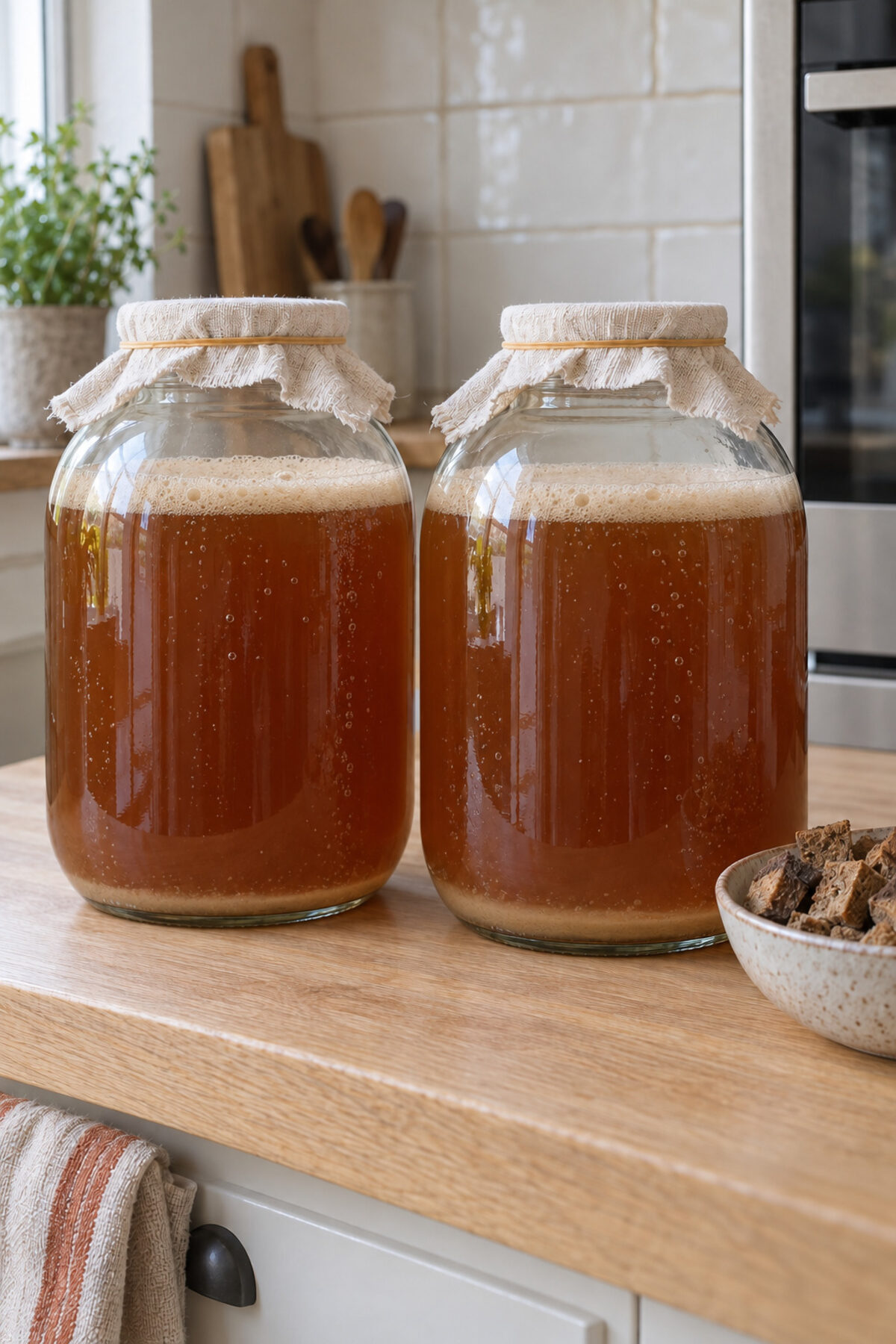
Disuelve 100 g de azúcar en el líquido, unos 22 g por litro de agua, y desmenuza encima 20 g de levadura fresca. Remueve, pásalo al tarro de vidrio y tápalo con la tela y una goma. Déjalo 24 horas a 25–30 °C; el estudio lo fermentó a 28 °C.
Truco: Solo un día: con más tiempo hace más alcohol, y puede llegar al 2,5 % o más.
-
Mide el pH, cuélalo y embotéllalo
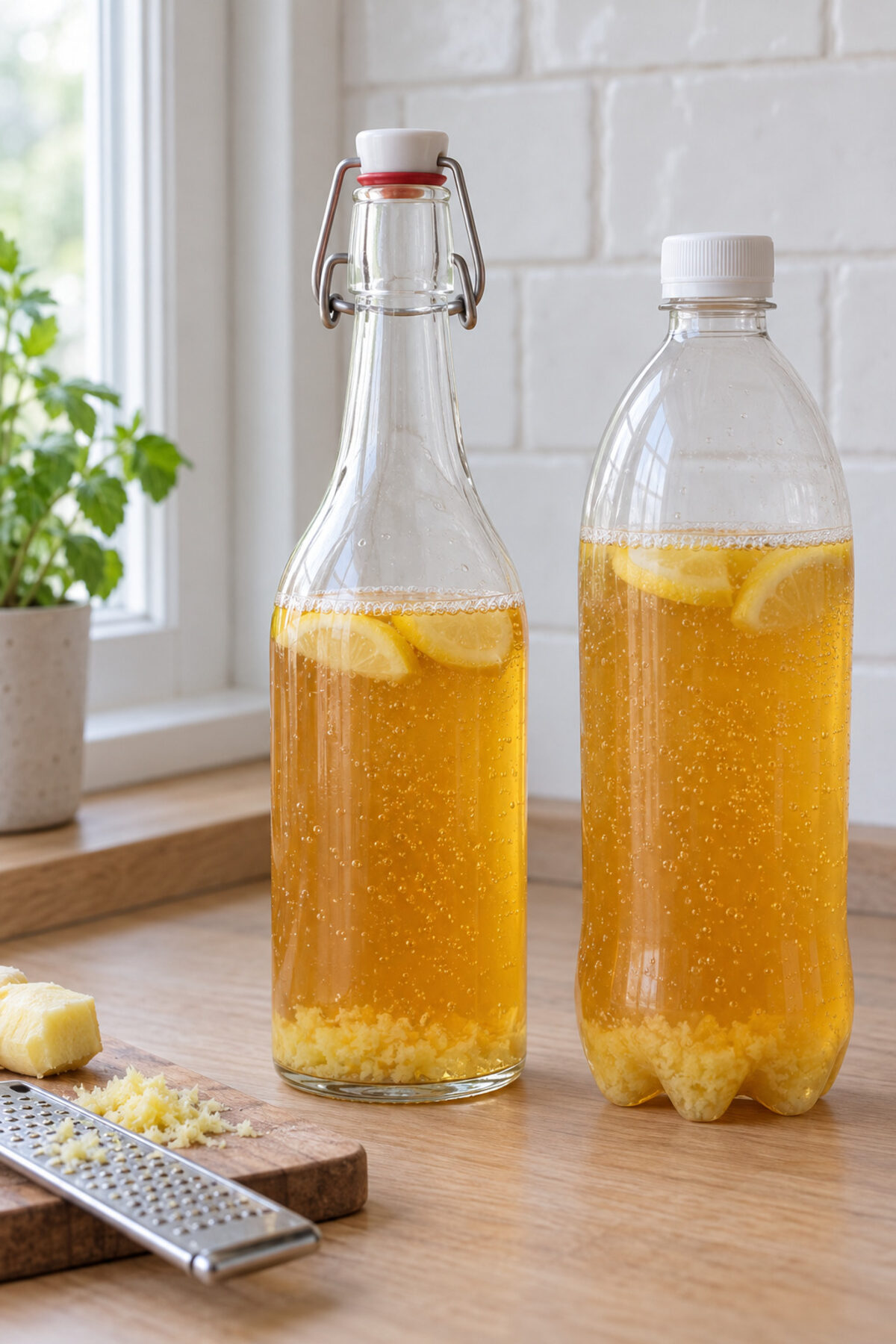
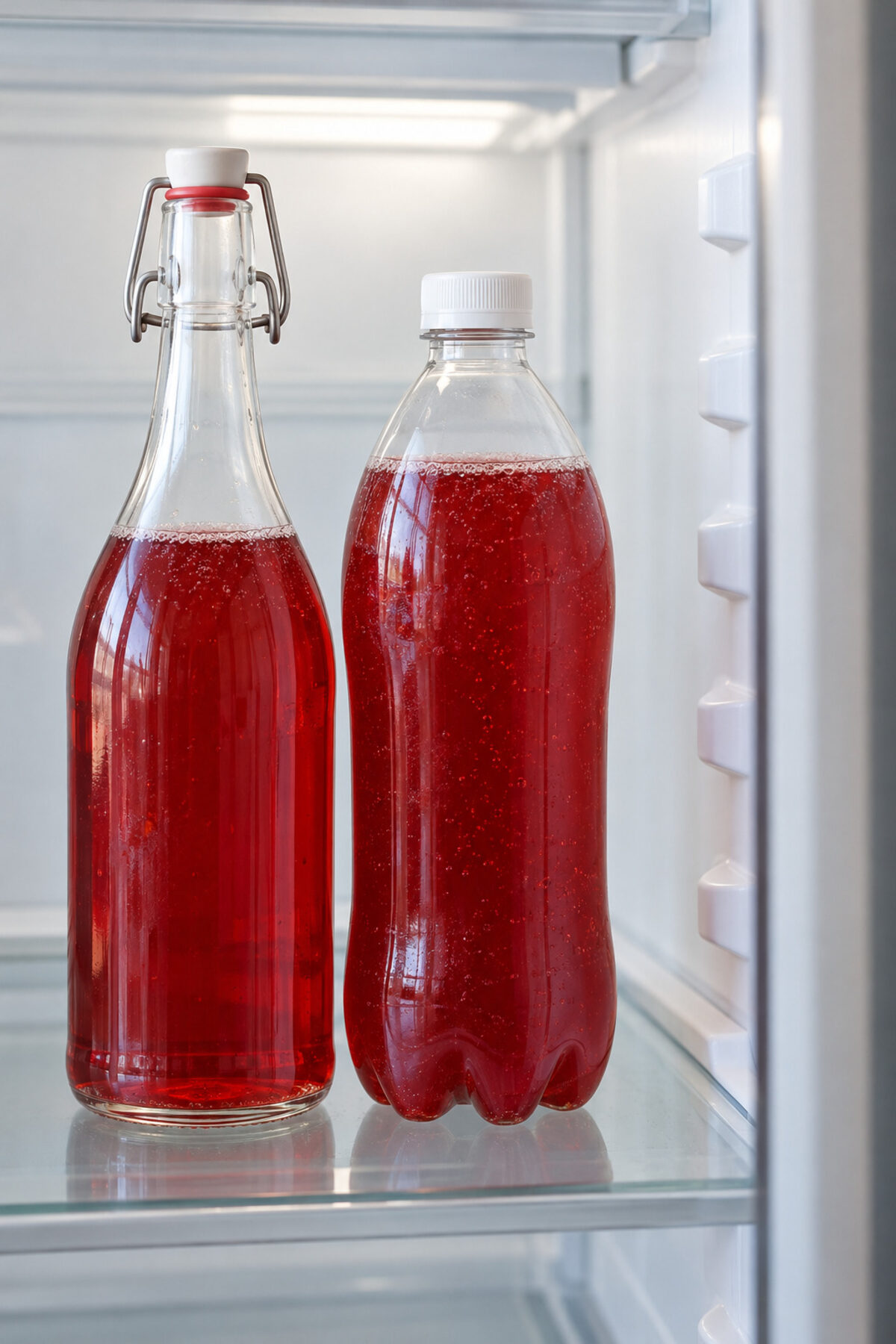
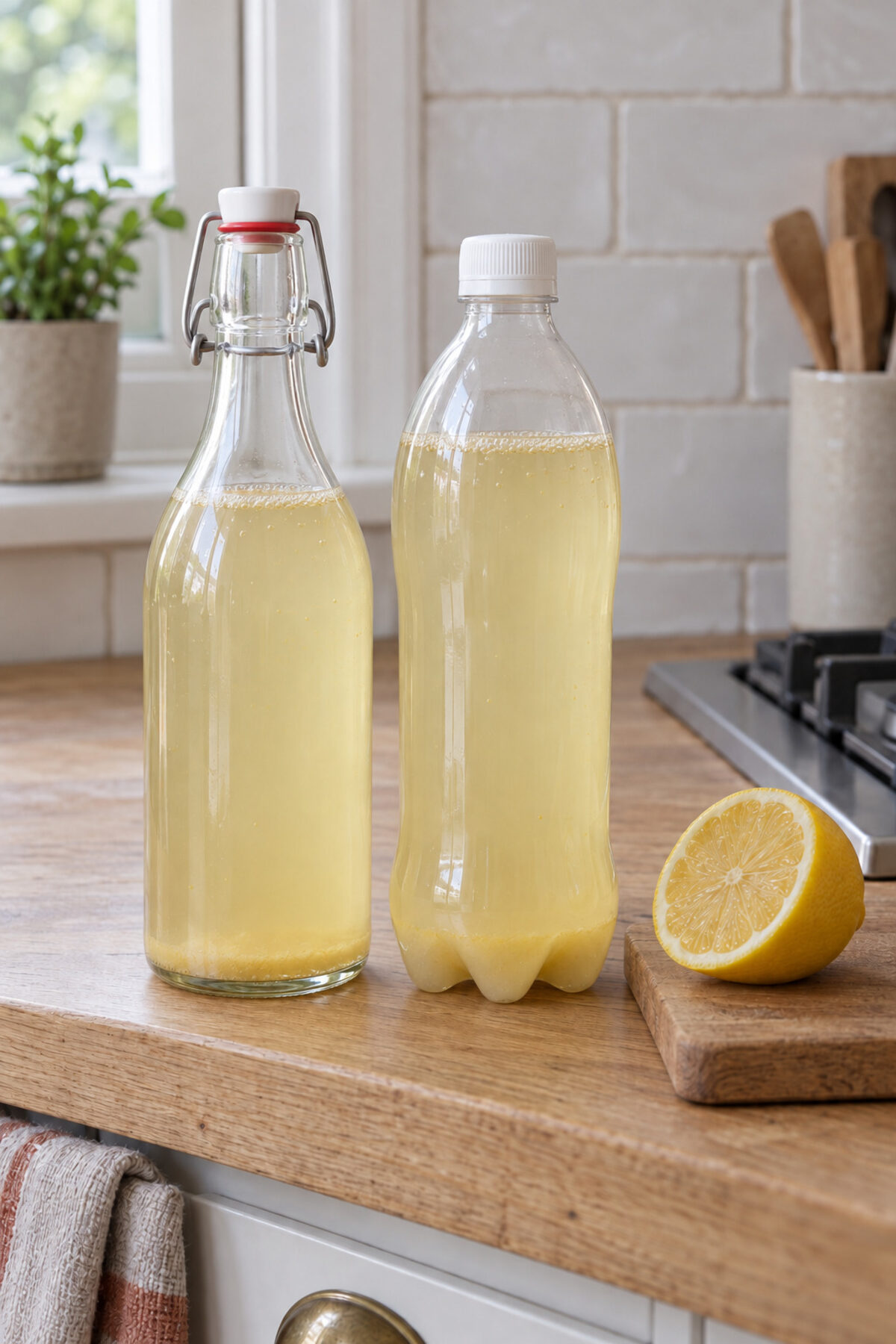
A las 24 horas, mide el pH con el medidor: tiene que estar en 4,6 o menos, y mejor en 4,2 o menos. Si pasa de 4,6, no lo bebas: tíralo. Cuélalo otra vez con la gasa limpia, mide cuántos litros tienes y añade 10 g de azúcar por litro. Remueve y llena las botellas con el embudo, dejando 3–5 cm de aire arriba. Ciérralas. Usa botellas de PET de refresco o de vidrio hecho para gas: el azúcar de las botellas le da gas.
Truco: El 4,6 y el 4,2 son reglas de la casa. El kvass de pan se queda cerca de esa línea: en el estudio, 4,15 de media y de 4,2 a 4,6 con aditivos.
-
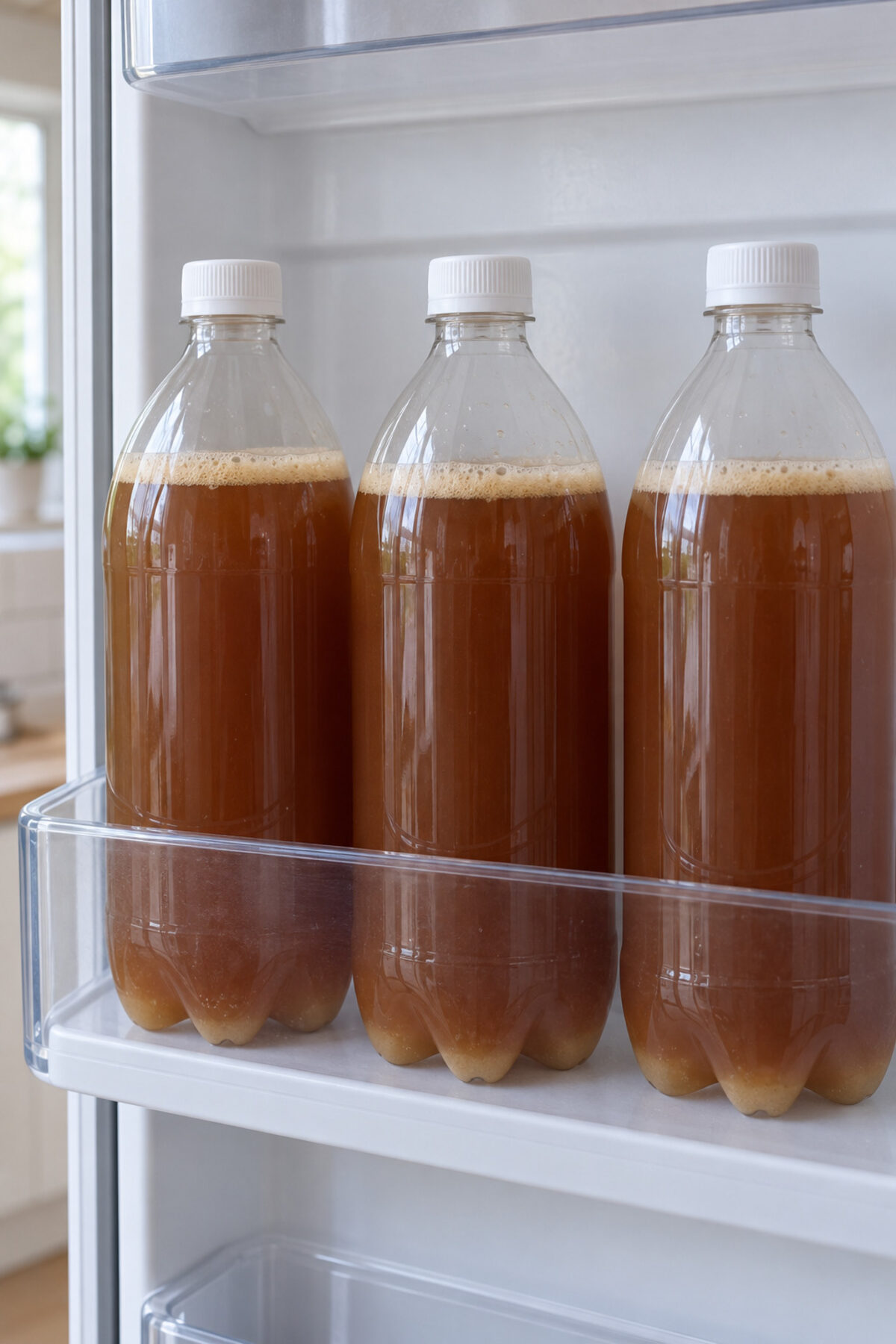
Directo a la nevera, y bébelo en 7 días
Pon las botellas en la nevera enseguida, a 4 °C o menos: así la fermentación se frena. No las dejes fuera, que pueden estallar. Bébelo en 7 días como máximo. No agites las botellas y ábrelas frías, despacio y lejos de la cara.
Truco: Los 7 días son regla de la casa. El estudio lo guardó 14 días a 10 °C, pero como ensayo, no como consejo.
Sin registrarte. Te guiamos paso a paso, de la báscula a la nevera.
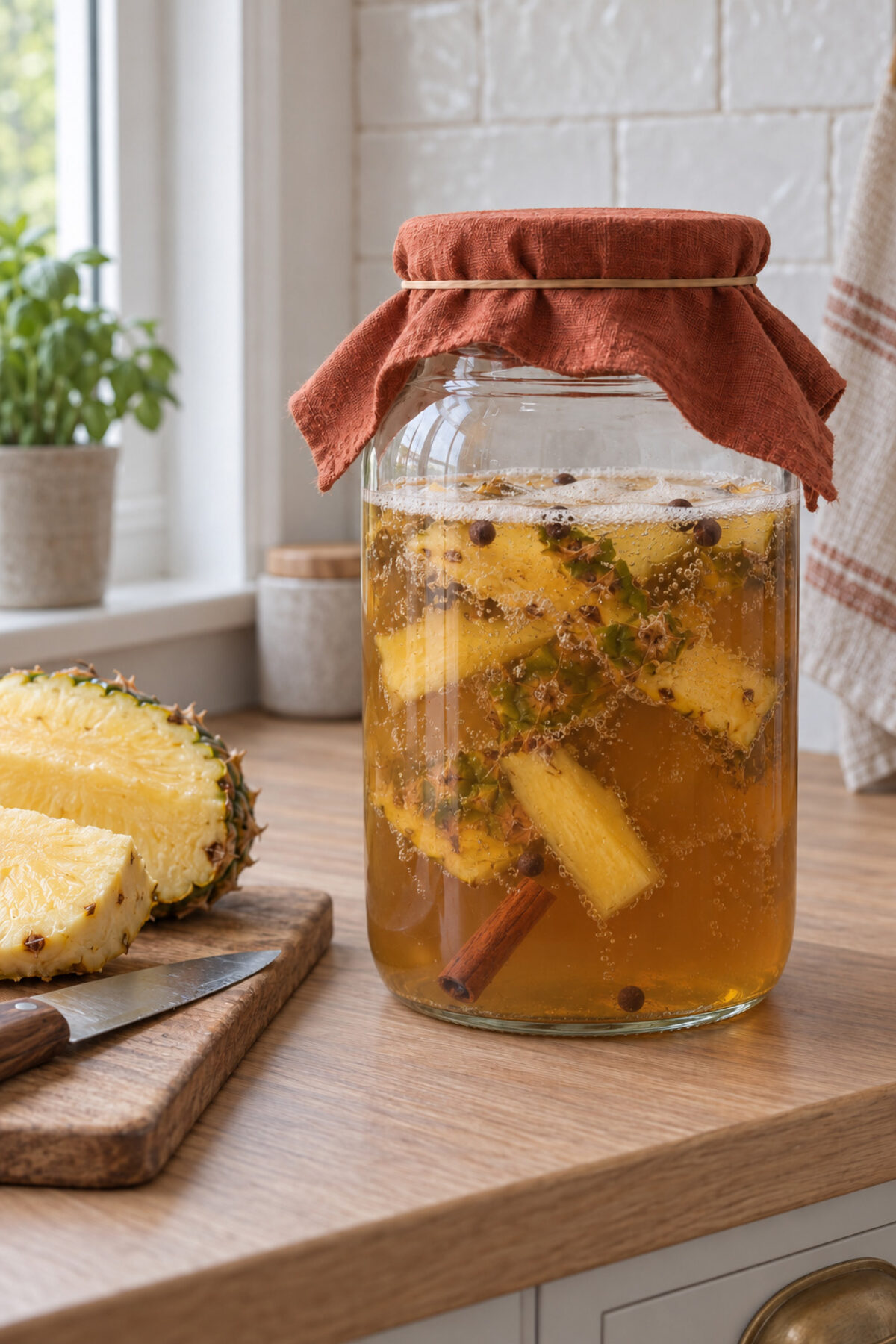
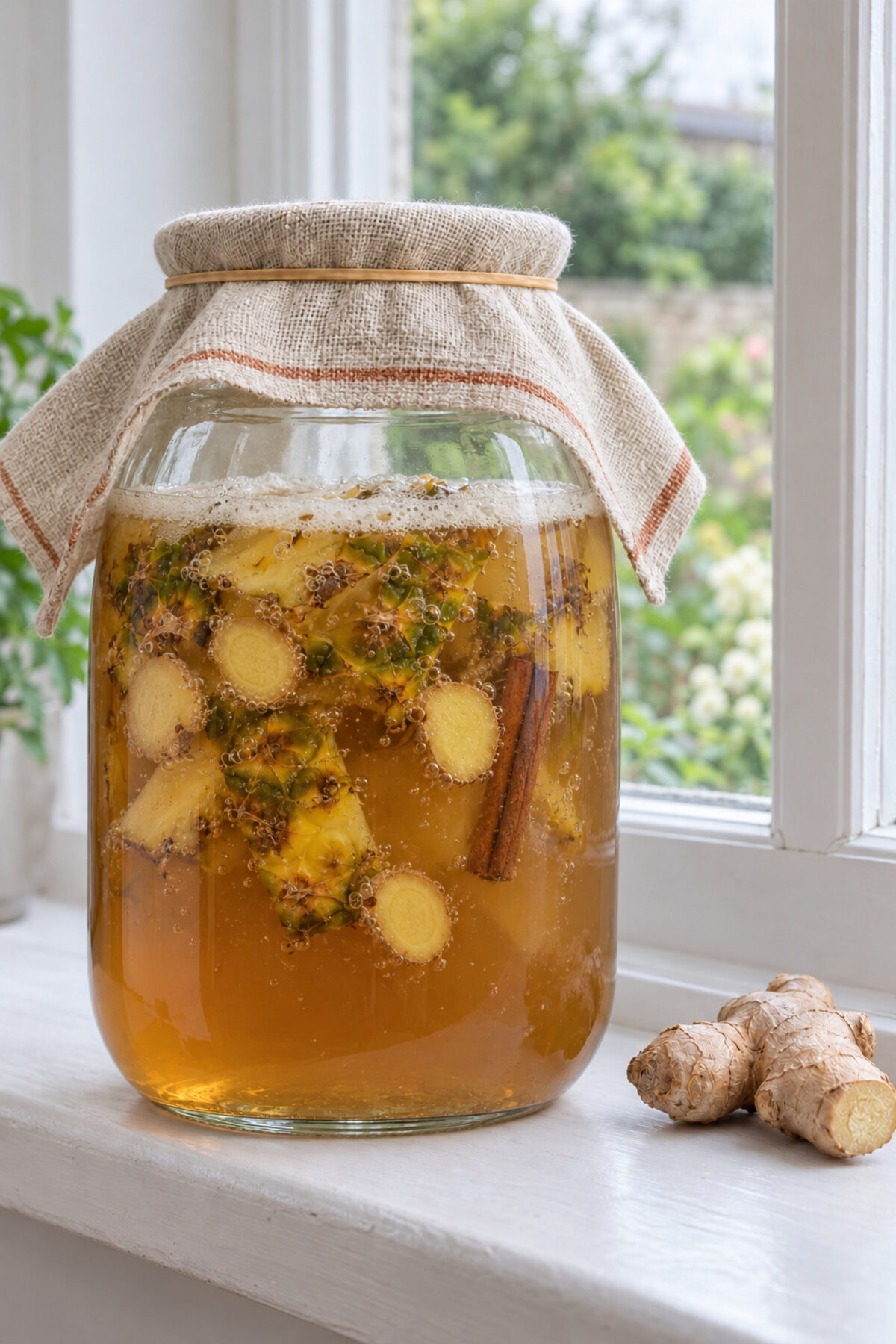
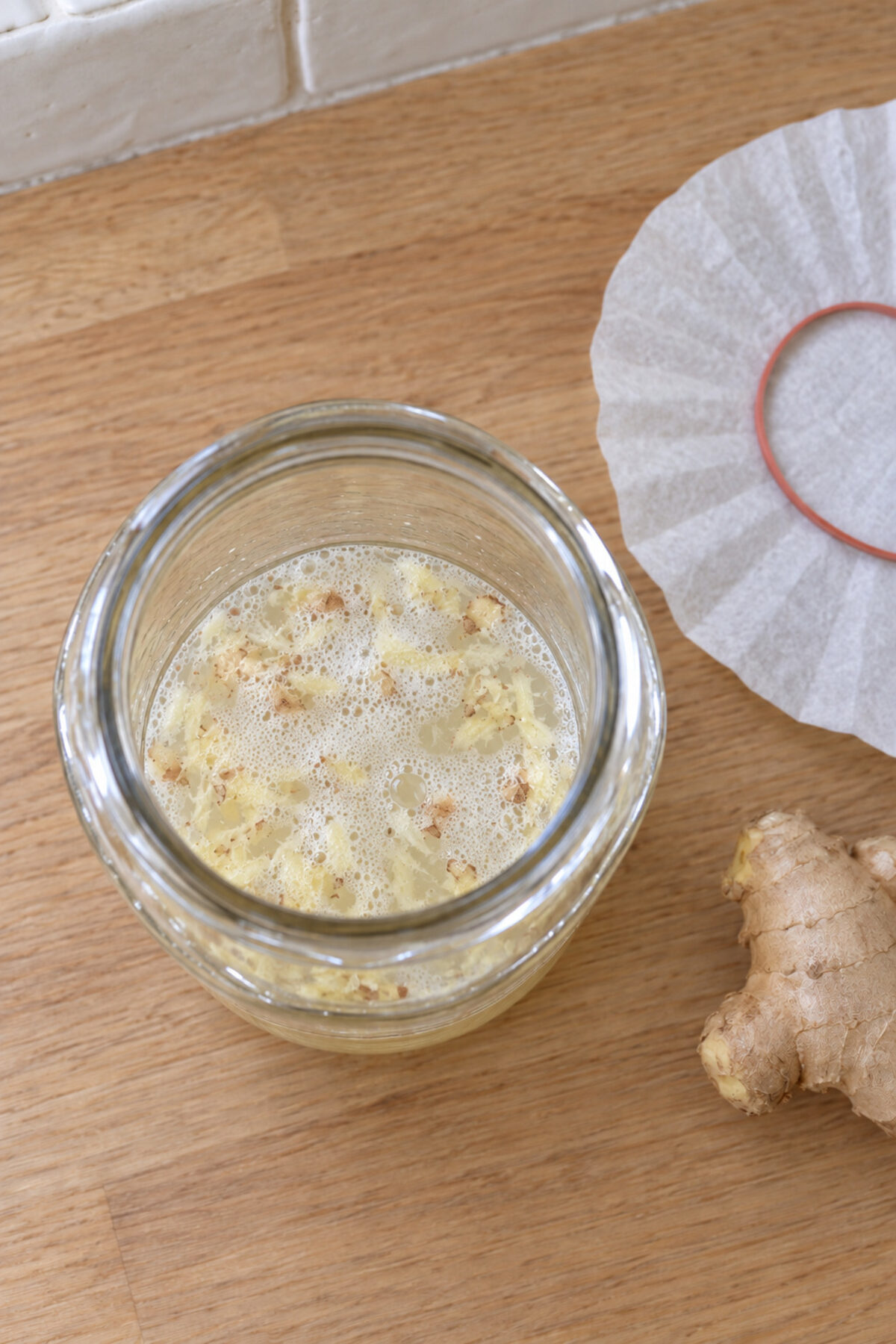
Variaciones
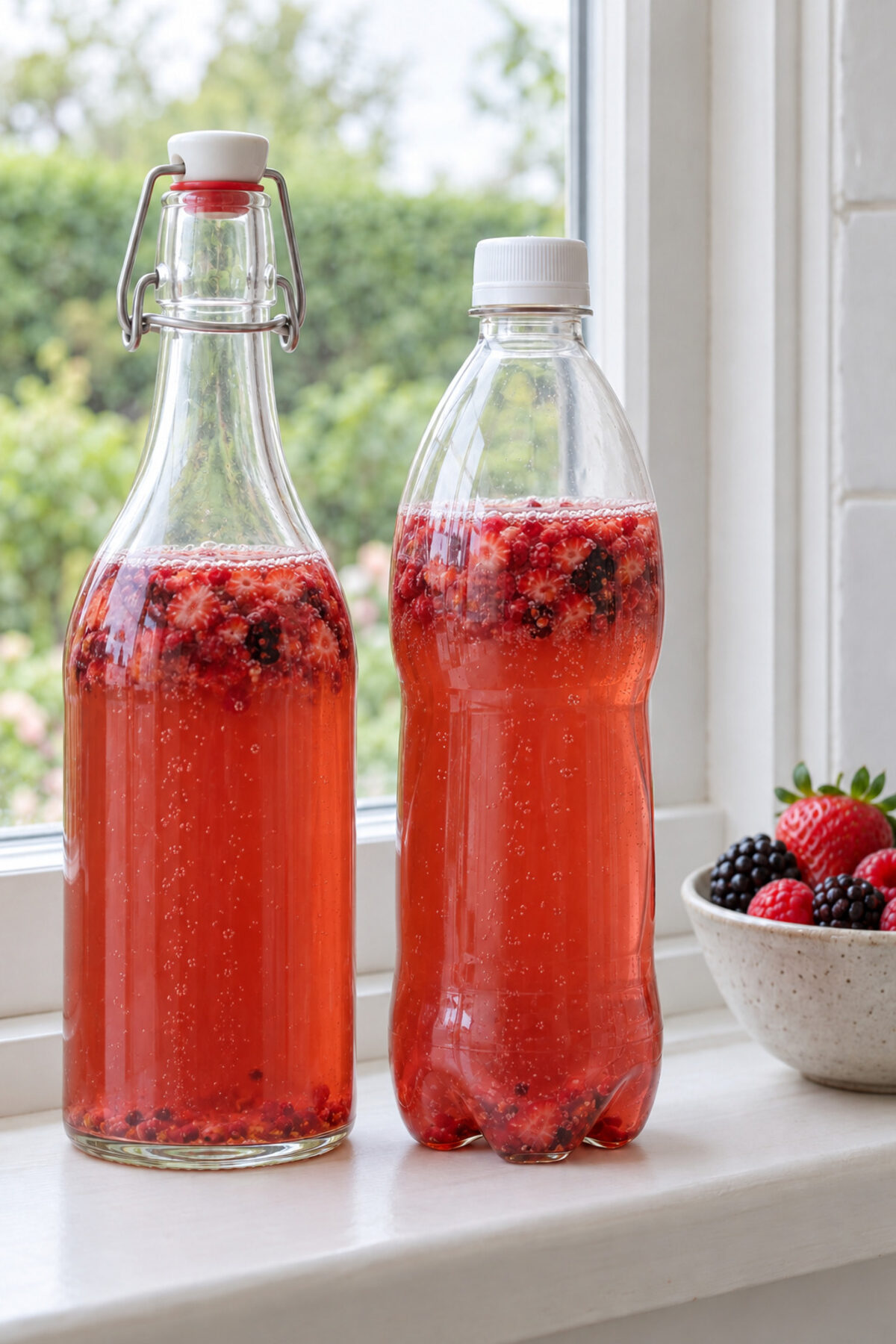
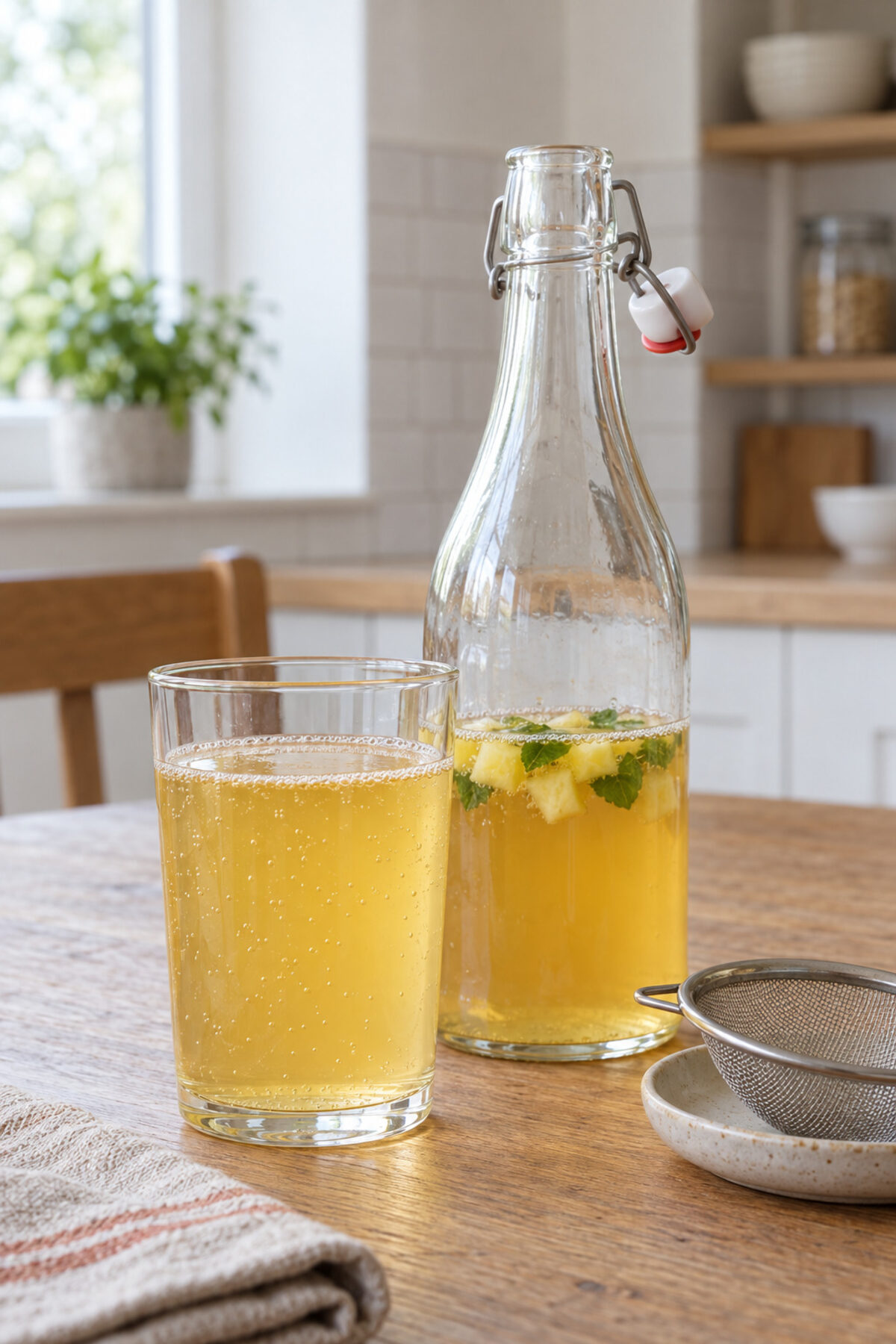
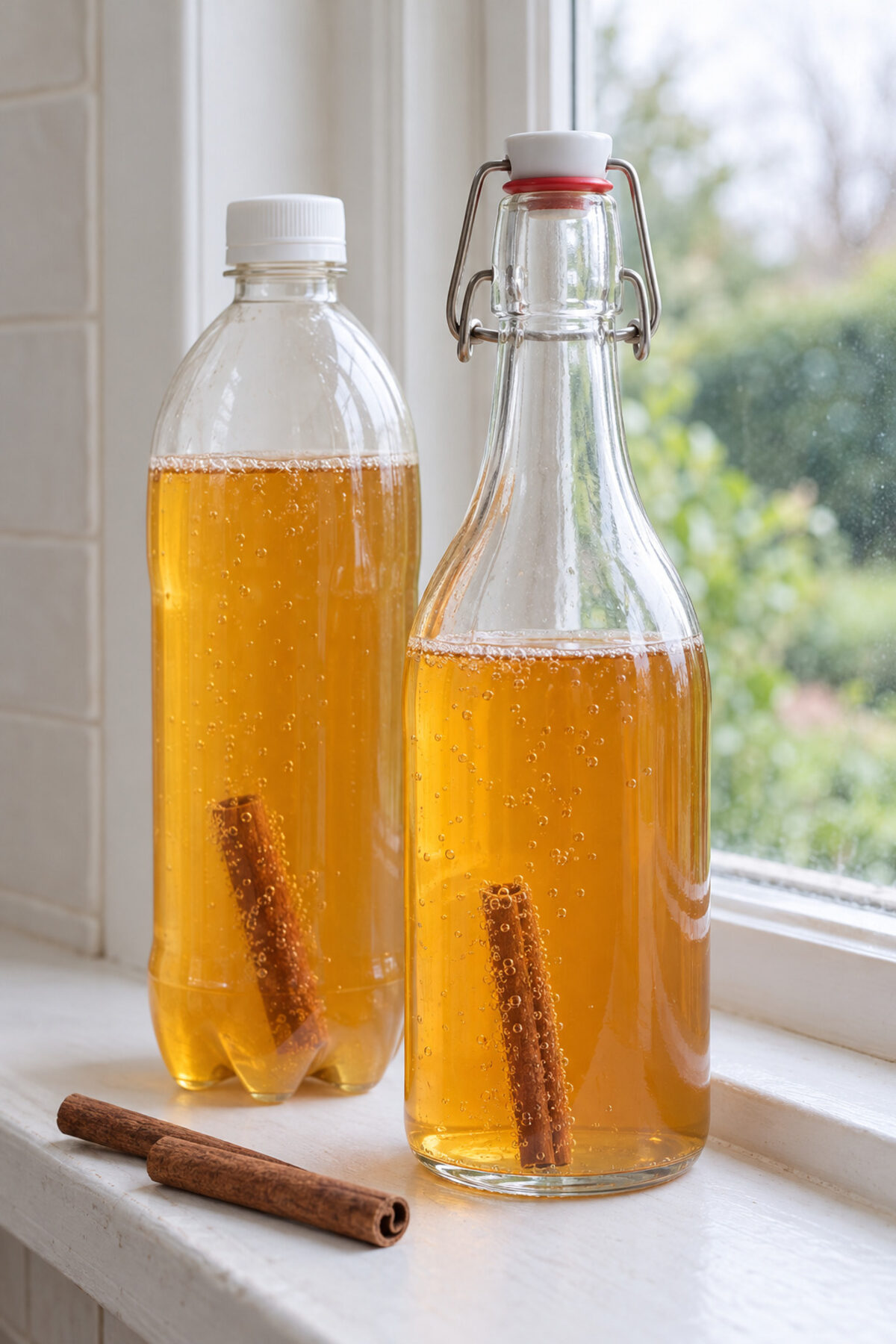
El mismo método, otro sabor. Cuando domines esta, prueba una de estas.
Qué vas a ver
El kvass de pan es una bebida con aroma a pan de centeno y un sabor entre dulce y ácido. Lleva dos fermentaciones a la vez, una láctica y otra alcohólica, de pan de centeno, azúcar y levadura, y BCCDC lo clasifica como fermento de levadura. No hay guía oficial: esta receta sigue paso a paso un estudio publicado en 2024. El pH y los días de nevera son reglas de la casa. Tiene algo de alcohol.
 IA
 IA
IA
Cómo saber si va bien
- Lleva alcohol. En el estudio, hasta un 0,5 %; si se deja más tiempo, puede llegar al 2,5 % o más. No es para niños pequeños ni para el embarazo.
- Un solo día de fermentación. El alcohol depende sobre todo del azúcar y de los microbios: no le pongas más azúcar ni más días.
- pH de 4,6 o menos antes de embotellar, y mejor 4,2 (reglas de la casa). Por encima de 4,6, tíralo.
- Pan con moho, fuera. Y si sale moho en el tarro, tira todo el lote. El moho suele ser verde, azul, marrón o negro.
- Olor a podrido: tíralo. Es un fermento fallido.
- Botellas para gas y directo a la nevera, a 4 °C o menos. Sin nevera pueden estallar.
- Bébelo en 7 días (regla de la casa). Ábrelo frío y despacio, sin agitarlo: el tapón puede saltar y herir.
De dónde sale cada dato
Cada cifra de esta receta sale de una guía de seguridad alimentaria. Guardamos una copia de cada fuente y citamos sus palabras exactas, en su idioma original.
-
1
Fermentación láctica y alcohólica de centeno, azúcar y levadura
“Kvass is made through the following two processes: lactic acid fermentation and the alcoholic fermentation of rye raw materials (rye flour, dry rye bread, rye malt), sugar, and yeast.”
Foods (MDPI; Kaszuba et al.), via PubMed Central · Comparison of the Antioxidant and Sensorial Properties of Kvass Produced from Mountain Rye Bread with the Addition of Selected Plant Raw Materials (2024) · consultada el 25 de octubre de 2026
-
2
Aroma a pan de centeno y un sabor entre dulce y ácido
“Kvass is a refreshing beverage with a pleasant aroma of rye bread and a moderately sweet and sour taste”
Foods (MDPI; Kaszuba et al.), via PubMed Central · Comparison of the Antioxidant and Sensorial Properties of Kvass Produced from Mountain Rye Bread with the Addition of Selected Plant Raw Materials (2024) · consultada el 25 de octubre de 2026
-
3
500 g de pan de centeno en dados, secado al aire, 30 minutos en 1,5 litros de agua a 80 °C
“A portion of 500 g of mountain rye bread, previously chopped into small cubes and air-dried, was added to 1500 mL of water at a temperature of 80 °C, mixed, and left to stand for 30 min, stirring every 5 min.”
Foods (MDPI; Kaszuba et al.), via PubMed Central · Comparison of the Antioxidant and Sensorial Properties of Kvass Produced from Mountain Rye Bread with the Addition of Selected Plant Raw Materials (2024) · consultada el 25 de octubre de 2026
-
4
Otros 1,5 litros a 70 °C, 90 minutos
“Then, another portion of water (1500 mL) at a temperature of 70 °C was added, stirred, and allowed to extract for 90 min, stirring every 10 min.”
Foods (MDPI; Kaszuba et al.), via PubMed Central · Comparison of the Antioxidant and Sensorial Properties of Kvass Produced from Mountain Rye Bread with the Addition of Selected Plant Raw Materials (2024) · consultada el 25 de octubre de 2026
-
5
Colado con gasa, y otros 1,5 litros a 70 °C
“The mash was then filtered through a sterile gauze, and another portion of water (1500 mL) at a temperature of 70 °C was added to the filtrate.”
Foods (MDPI; Kaszuba et al.), via PubMed Central · Comparison of the Antioxidant and Sensorial Properties of Kvass Produced from Mountain Rye Bread with the Addition of Selected Plant Raw Materials (2024) · consultada el 25 de octubre de 2026
-
6
100 g de azúcar y 20 g de levadura fresca de panadería
“To the filtrate, 100 g of sugar and 20 g of compressed baker’s yeast”
Foods (MDPI; Kaszuba et al.), via PubMed Central · Comparison of the Antioxidant and Sensorial Properties of Kvass Produced from Mountain Rye Bread with the Addition of Selected Plant Raw Materials (2024) · consultada el 25 de octubre de 2026
-
7
Fermentado a 28 °C
“left to ferment at a temperature of 28 °C (laboratory incubator)”
Foods (MDPI; Kaszuba et al.), via PubMed Central · Comparison of the Antioxidant and Sensorial Properties of Kvass Produced from Mountain Rye Bread with the Addition of Selected Plant Raw Materials (2024) · consultada el 25 de octubre de 2026
-
8
24 horas de fermentación
“The fermentation time for both variants was 24 h.”
Foods (MDPI; Kaszuba et al.), via PubMed Central · Comparison of the Antioxidant and Sensorial Properties of Kvass Produced from Mountain Rye Bread with the Addition of Selected Plant Raw Materials (2024) · consultada el 25 de octubre de 2026
Ver los 22 datos que faltan
-
9
Colado otra vez con gasa
“The next step was to separate the resulting kvass from the precipitate via filtration through a sterile gauze.”
Foods (MDPI; Kaszuba et al.), via PubMed Central · Comparison of the Antioxidant and Sensorial Properties of Kvass Produced from Mountain Rye Bread with the Addition of Selected Plant Raw Materials (2024) · consultada el 25 de octubre de 2026
-
10
10 g de azúcar por litro, embotellado y 14 días en la nevera a 10 °C
“Sugar was added to the collected filtrate at a rate of 10 g/L of liquid, mixed and transferred into glass bottles (1000 mL), closed with twist-off caps, and left in a refrigerator at 10 °C for 14 days.”
Foods (MDPI; Kaszuba et al.), via PubMed Central · Comparison of the Antioxidant and Sensorial Properties of Kvass Produced from Mountain Rye Bread with the Addition of Selected Plant Raw Materials (2024) · consultada el 25 de octubre de 2026
-
11
Su pH medio, 4,15
“The pH value of the tested control kvasses did not vary and averaged 4.15”
Foods (MDPI; Kaszuba et al.), via PubMed Central · Comparison of the Antioxidant and Sensorial Properties of Kvass Produced from Mountain Rye Bread with the Addition of Selected Plant Raw Materials (2024) · consultada el 25 de octubre de 2026
-
12
Con aditivos, de 4,2 a 4,6
“higher values of the particular parameter were recorded in the range of pH = 4.2–4.6”
Foods (MDPI; Kaszuba et al.), via PubMed Central · Comparison of the Antioxidant and Sensorial Properties of Kvass Produced from Mountain Rye Bread with the Addition of Selected Plant Raw Materials (2024) · consultada el 25 de octubre de 2026
-
13
Hasta un 0,5 % de alcohol en el estudio
“The presence of alcohol (Table 4) was found in the tested kvasses in concentrations not exceeding 0.5%”
Foods (MDPI; Kaszuba et al.), via PubMed Central · Comparison of the Antioxidant and Sensorial Properties of Kvass Produced from Mountain Rye Bread with the Addition of Selected Plant Raw Materials (2024) · consultada el 25 de octubre de 2026
-
14
Si se deja más tiempo, puede llegar al 2,5 % o más
“with longer stands, the alcohol concentration can reach 2.5% or more”
Foods (MDPI; Kaszuba et al.), via PubMed Central · Comparison of the Antioxidant and Sensorial Properties of Kvass Produced from Mountain Rye Bread with the Addition of Selected Plant Raw Materials (2024) · consultada el 25 de octubre de 2026
-
15
El alcohol depende sobre todo del azúcar y de los microbios
“Of particular importance is the proportion of sugar and the composition of the microflora”
Foods (MDPI; Kaszuba et al.), via PubMed Central · Comparison of the Antioxidant and Sensorial Properties of Kvass Produced from Mountain Rye Bread with the Addition of Selected Plant Raw Materials (2024) · consultada el 25 de octubre de 2026
-
16
El kvass de pan es un fermento de levadura
“Kvass (rye bread), kenkey (cornmeal) and dosa (lentils) are ethnic yeast fermented foods.”
BC Centre for Disease Control, Environmental Health Services · Safety of Fermented Foods, Section 1: Introduction to fermented food safety (2024) · consultada el 25 de octubre de 2026
-
17
Todo lavado con agua caliente y jabón, y bien enjuagado
“Wash all surfaces and containers that will be used with hot sudsy water and rinse well before use.”
K-State Research and Extension (Kansas State University) · Taking a New Look at Fermented Foods (MF3491, June 2020) · consultada el 20 de octubre de 2026
-
18
Lo dañado o con moho se tira
“Damaged, visibly mouldy vegetables should be discarded.”
BC Centre for Disease Control, Environmental Health Services · Safety of Fermented Foods, Section 3.1: Fermented Vegetables (August 2024, updated December 2024) · consultada el 25 de octubre de 2026
-
19
La verdura fermentada tiene que llegar a pH 4,6 o menos
“Ensure effective fermentation and end pH of ≤4.6 is achieved.”
BC Centre for Disease Control, Environmental Health Services · Safety of Fermented Foods, Section 3.1: Fermented Vegetables (August 2024, updated December 2024) · consultada el 25 de octubre de 2026
-
20
De 60 °C a la temperatura del cultivo en menos de 2 horas
“from 60oC to 21-24°C within 2 hours”
BC Centre for Disease Control, Environmental Health Services · Safety of Fermented Foods, Section 3.12: Kefir, milk and water (December 2024) · consultada el 25 de octubre de 2026
-
21
3–5 cm de aire en cada botella
“leaving a 3–5 cm air gap at the top”
Science in School (EIROforum), Dean Madden, National Centre for Biotechnology Education, University of Reading · Ginger beer: a traditional fermented low-alcohol drink (Issue 8, Spring 2008) · consultada el 25 de octubre de 2026
-
22
Botellas que aguanten la presión
“Glass bottles, cans or kegs should be resistant to acid leaching and pressure build-up.”
BC Centre for Disease Control, Environmental Health Services · Safety of Fermented Foods, Section 3.11: Kombucha and Jun (September 2023, updated December 2024) · consultada el 25 de octubre de 2026
-
23
A 4 °C o menos para frenar la fermentación
“Once fermentation is completed, kombucha and jun should be bottled and refrigerated to 4°C or lower to stop further fermentation”
BC Centre for Disease Control, Environmental Health Services · Safety of Fermented Foods, Section 3.11: Kombucha and Jun (September 2023, updated December 2024) · consultada el 25 de octubre de 2026
-
24
Sin nevera, las botellas pueden estallar
“Some jun and kombucha products can explode if not refrigerated.”
BC Centre for Disease Control, Environmental Health Services · Safety of Fermented Foods, Section 3.11: Kombucha and Jun (September 2023, updated December 2024) · consultada el 25 de octubre de 2026
-
25
Los tapones pueden saltar y herir
“If fermentation is not properly controlled, the container lids may come off under extreme pressure or containers may break. This poses a potential risk of injury.”
BC Centre for Disease Control, Environmental Health Services · Safety of Fermented Foods, Section 3.11: Kombucha and Jun (September 2023, updated December 2024) · consultada el 25 de octubre de 2026
-
26
No agitar, contenido a presión
“Precautionary statement labels on bottles are recommended to advise consumers “Do not shake. Contents under pressure.””
BC Centre for Disease Control, Environmental Health Services · Safety of Fermented Foods, Section 3.11: Kombucha and Jun (September 2023, updated December 2024) · consultada el 25 de octubre de 2026
-
27
No apto para niños pequeños ni en el embarazo
“not a suitable beverage for young children or during pregnancy”
BC Centre for Disease Control, Environmental Health Services · Safety of Fermented Foods, Section 2: Starter cultures and fermented food standards (August 2024, updated December 2024) · consultada el 25 de octubre de 2026
-
28
Si hay moho, se tira entero
“If you confirm mold growth on any part of a ferment, it should be immediately discarded.”
UC Davis, Department of Food Science and Technology · Common issues with fermented fruits and vegetables (v1.0, 15-mar-2022) · consultada el 20 de octubre de 2026
-
29
El moho suele ser verde, azul, marrón o negro
“Mold is typically green, blue, brown, or black in color.”
UC Davis, Department of Food Science and Technology · Common issues with fermented fruits and vegetables (v1.0, 15-mar-2022) · consultada el 20 de octubre de 2026
-
30
El olor a podrido es un fermento fallido
“A putrid smell indicates a failed fermentation.”
UC Davis, Department of Food Science and Technology · Common issues with fermented fruits and vegetables (v1.0, 15-mar-2022) · consultada el 20 de octubre de 2026