 IA
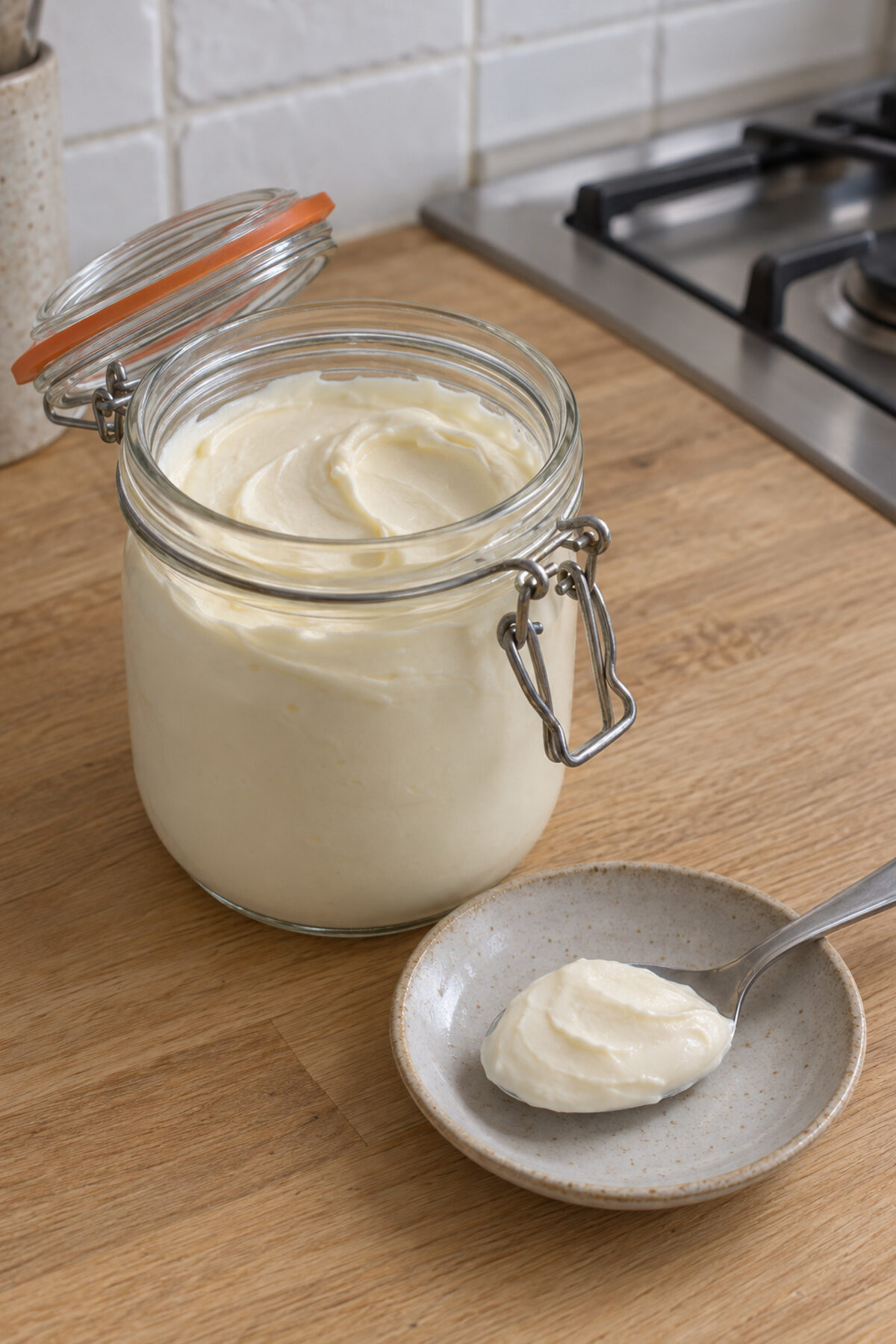
Yogur natural
Nivel 1 · para empezar
Leche, un poco de yogur con cultivos vivos y unas horas de calor constante. Con un termómetro sale siempre igual.
- Tiempo
- 4–7h
- Temperatura
- 41–46°C
- Tarro
- 1L
La regla de oro: leche pasteurizada, la temperatura vigilada con termómetro y, si no cuaja, se tira.
Sin registrarte. Te guiamos paso a paso, de la báscula a la nevera.
Revisada el 26 de octubre de 2026 · 35 datos, cada uno con su fuente
Antes de empezar
El yogur es leche fermentada por dos bacterias, Streptococcus thermophilus y Lactobacillus bulgaricus. Trabajan con calor: a unos 43 °C convierten el azúcar de la leche en ácido láctico, y ese ácido la espesa. La receta sigue al National Center for Home Food Preservation (NCHFP) de Estados Unidos, con lo que añaden las guías de Alaska e Illinois. Todo depende de la temperatura, así que no se puede hacer sin termómetro.
Necesitas
- Olla de 2 litros, o un baño maría
- Termómetro de cocina, imprescindible
- Cuchara para remover
- Taza o bol pequeño
- Tarros de vidrio con tapa, 1 litro en total
- Yogurtera, o una nevera portátil con agua a 43 °C
Paso a paso
-
Calienta la leche a 85–93 °C y mantenla 10 minutos
Lava la olla, los tarros, la cuchara y la taza con agua caliente y jabón, acláralos bien y déjalos secar al aire. Pon la leche en la olla y caliéntala a fuego suave, removiendo, hasta que el termómetro marque entre 85 y 93 °C. Mantenla así 10 minutos, o 20 si quieres un yogur más espeso. Que no llegue a hervir.
Truco: Este calor cambia las proteínas de la leche para que cuajen juntas en vez de cortarse. No sustituye a la pasteurización: la leche ya tiene que venir pasteurizada.
-
Enfríala rápido hasta 44–46 °C
Mete la olla en el fregadero con agua fría y remueve de vez en cuando hasta que la leche baje a 44–46 °C. Tiene que llegar en menos de 1 hora, y nunca en más de 2.
Truco: Para un yogur más firme, la próxima vez añade a la leche fría, antes de calentarla, ⅓ de taza de leche en polvo desnatada, unos 25 g.
-
Mezcla el yogur con una taza de leche y devuélvelo a la olla
Saca una taza de la leche templada y mézclala en la taza con los 60 g de yogur hasta que no queden grumos. Échalo en la olla y remueve. La mezcla debe quedar a 43–44 °C. Repártela enseguida en los tarros y ciérralos. Son 60 g por litro, la proporción de NCHFP: ¼ de taza de yogur por cada cuarto de galón de leche.
Truco: No siembres por encima de 46 °C: el calor puede matar las bacterias del fermento.
-
Mantén los tarros a unos 43 °C de 4 a 7 horas
Pon los tarros en la yogurtera o en una nevera portátil. Si usas la nevera, caliéntala antes con agua casi hirviendo, tírala y llénala con agua a 43 °C hasta la mitad de los tarros. Mide la temperatura cada hora: tiene que estar entre 41 y 46 °C. Si baja, añade agua caliente. No muevas los tarros.
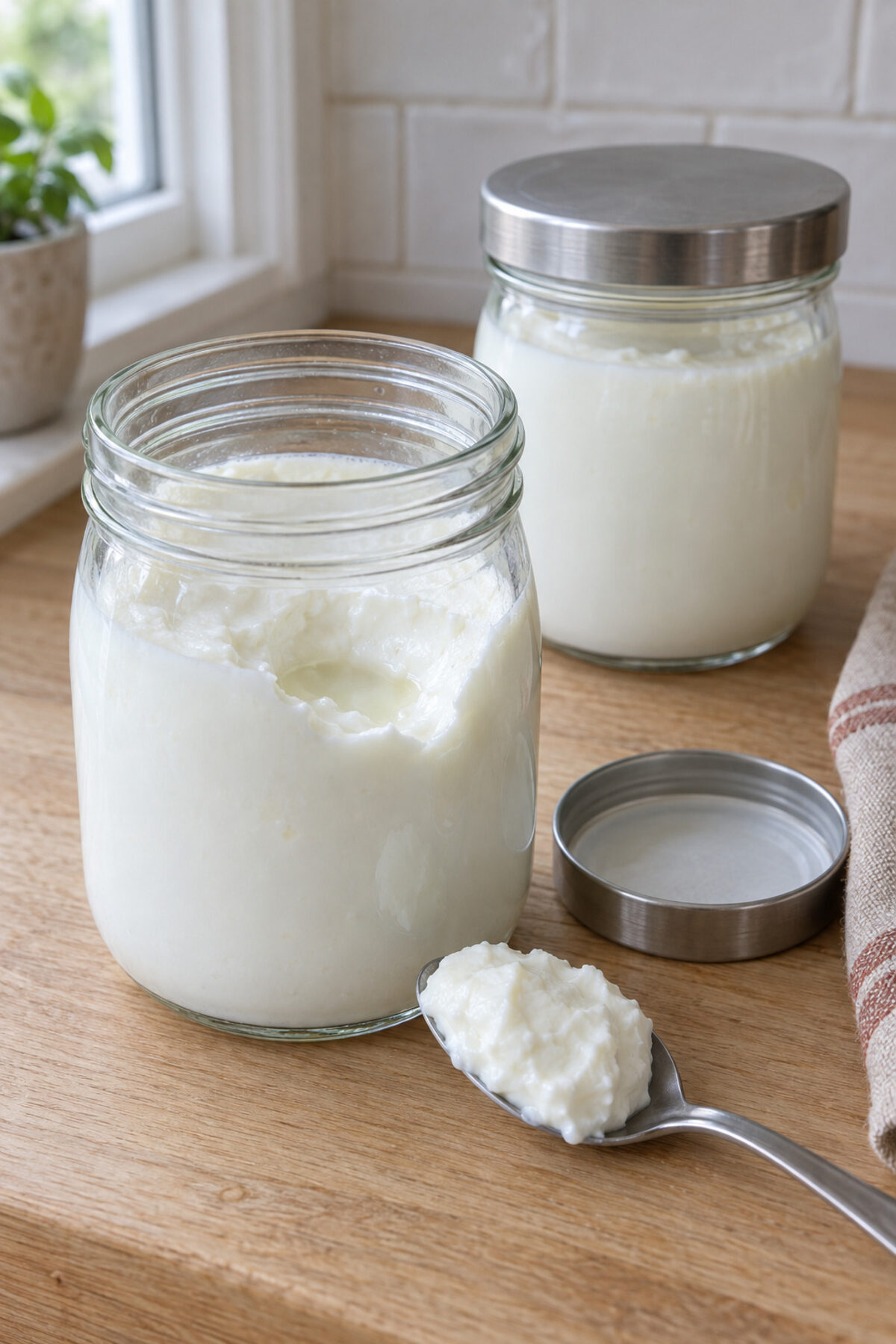
Está listo cuando ha cuajado firme. En la prueba de NCHFP llegó a pH 4,6 a las 5 horas y estaba firme a las 6. Si a las 10 horas no ha cuajado, tíralo y empieza de nuevo con otro fermento. Es regla de la casa: 10 horas es lo más largo que da una guía, la de Illinois.
Truco: Si ves un poco de suero encima, es normal. Cuantas más horas pase después de cuajar, más ácido sale.
-
En cuanto cuaje, a la nevera
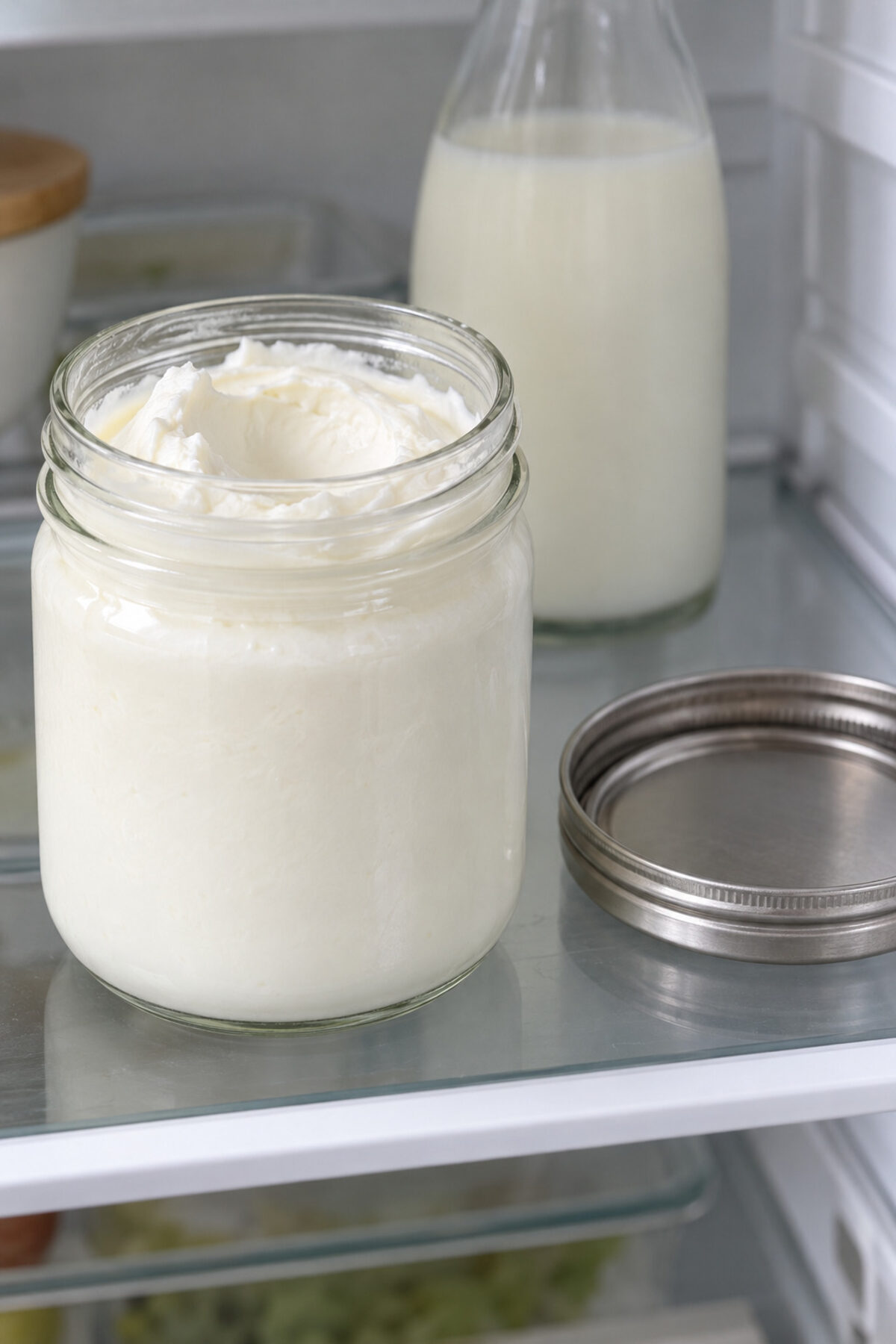
Pasa los tarros a la nevera, a 4 °C o menos: el frío frena el ácido. Las guías le dan de 10 a 21 días; cuenta 10, la cifra más corta.
Truco: Para el siguiente lote, lo más fiable es un yogur natural comprado. Si usas el tuyo, guarda 60 g y úsalo en 5 a 7 días.
Sin registrarte. Te guiamos paso a paso, de la báscula a la nevera.
Variaciones
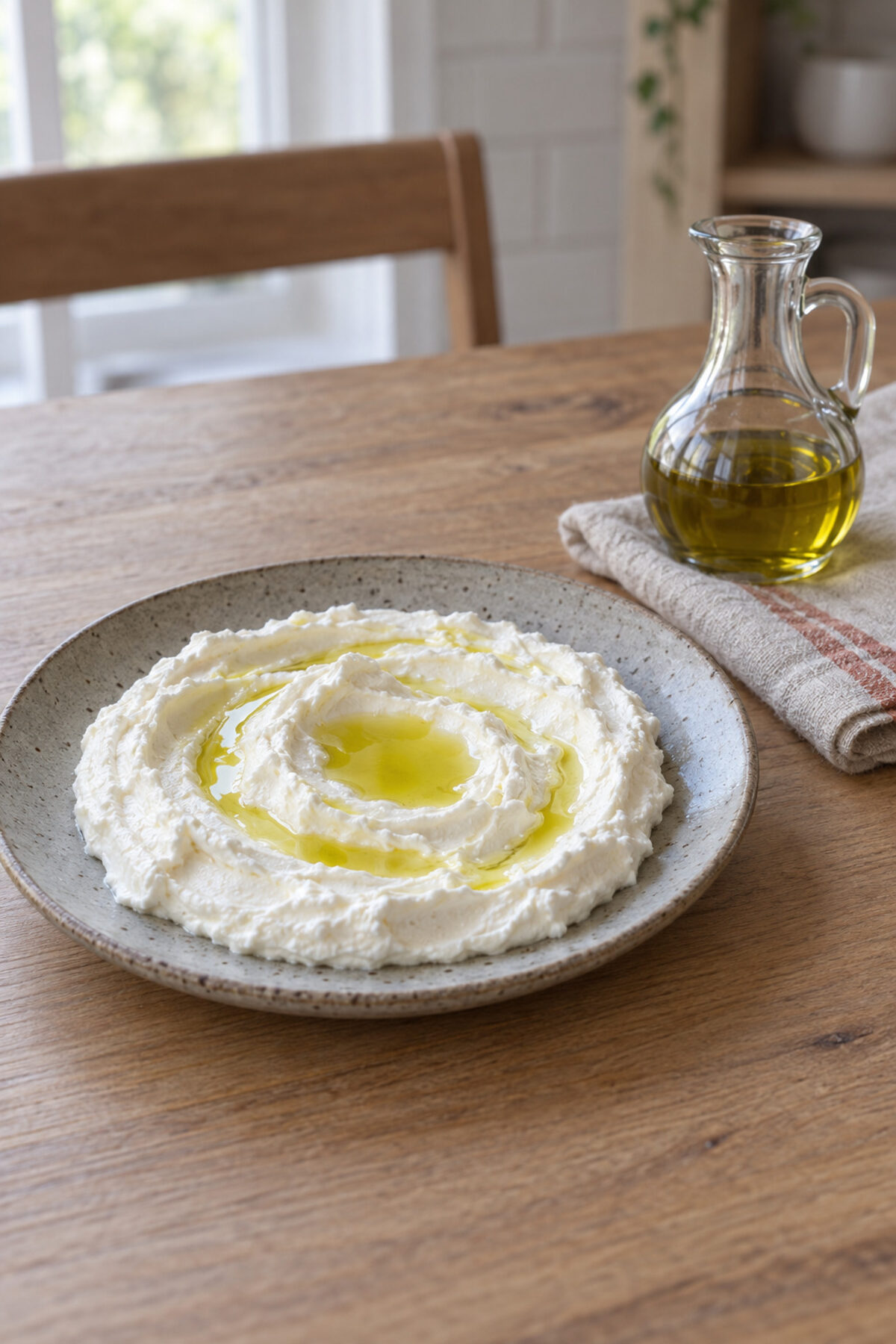
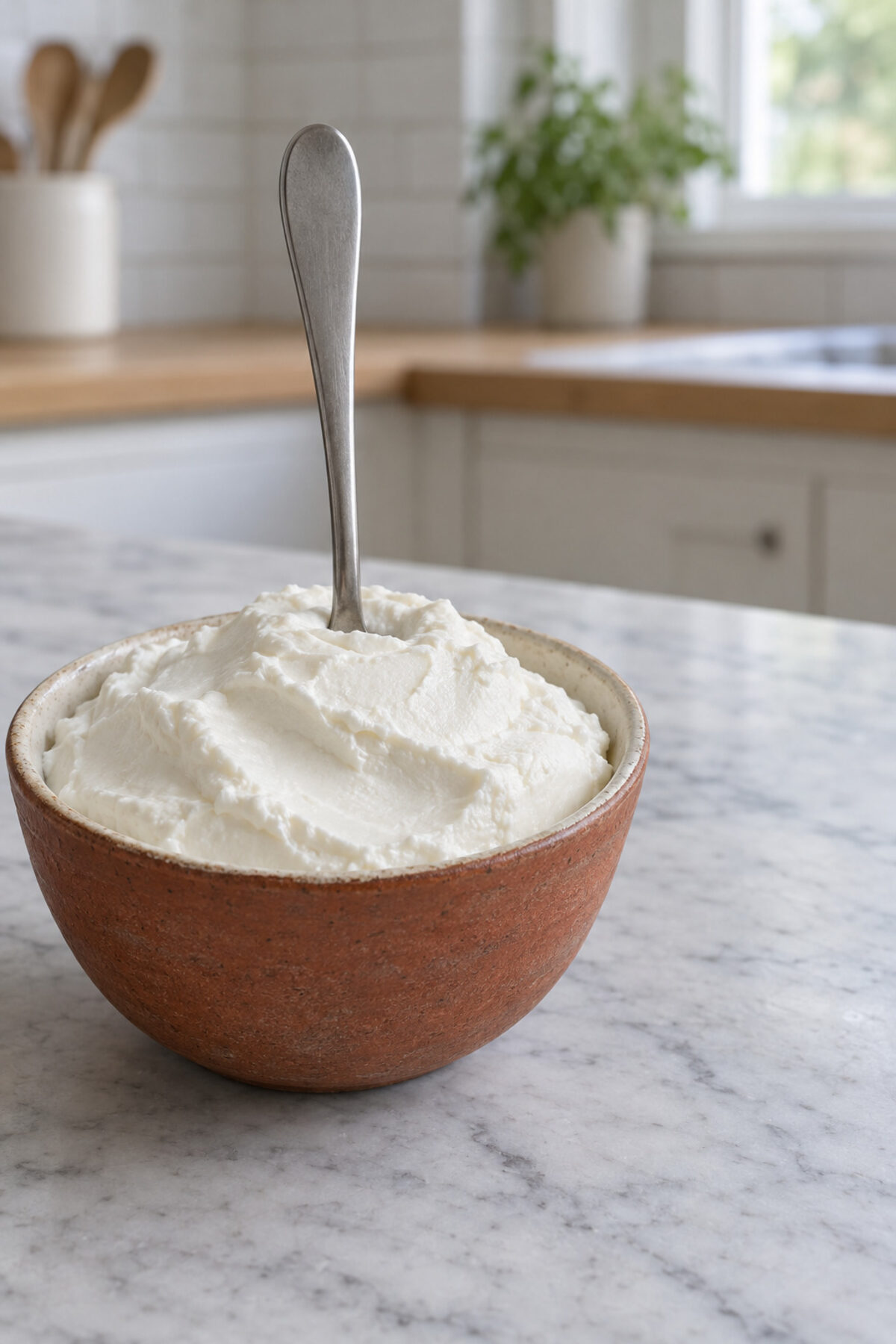
El mismo método, otro sabor. Cuando domines esta, prueba una de estas.
Cómo saber si va bien
- Siempre leche pasteurizada. El calentamiento de la receta no sustituye a la pasteurización. Si tienes leche cruda, pasteurízala antes: caliéntala a 74 °C sin dejar de remover y enfríala enseguida en agua con hielo.
- Con termómetro. La leche tiene que bajar a 44–46 °C en menos de 1 hora, y nunca en más de 2, y la incubación tiene que estar entre 41 y 46 °C. Por debajo de 37 °C las bacterias crecen mal y la leche se queda templada sin acidificar.
- Si no cuaja, tíralo. Puede ser un fermento en mal estado o microbios que no deberían estar.
- En la nevera, como mucho 10 días. Con fruta fresca, cómelo en el día y como mucho en 3 días.
- Si sale moho o huele a algo que no sea yogur, tíralo entero. El moho llega por debajo de la superficie. No lo huelas.
De dónde sale cada dato
Cada cifra de esta receta sale de una guía de seguridad alimentaria. Guardamos una copia de cada fuente y citamos sus palabras exactas, en su idioma original.
-
1
Lo hacen dos bacterias, Streptococcus thermophilus y Lactobacillus bulgaricus
“Yogurt is made by adding Streptococcus thermophilus and Lactobacillus bulgaricus into heated milk.”
National Center for Home Food Preservation (Nummer, 2002); copy hosted by UC Davis Food Safety · Fermenting Yogurt at Home (October 2002) · consultada el 25 de octubre de 2026
-
2
El ácido láctico es lo que espesa la leche
“The milk is coagulated (thickened) by an increase in acidity from lactic acid produced by the bacteria.”
National Center for Home Food Preservation (Nummer, 2002); copy hosted by UC Davis Food Safety · Fermenting Yogurt at Home (October 2002) · consultada el 25 de octubre de 2026
-
3
Siempre leche pasteurizada
“Therefore, always pasteurize milk or use commercially pasteurized milk to make yogurt.”
National Center for Home Food Preservation (Nummer, 2002); copy hosted by UC Davis Food Safety · Fermenting Yogurt at Home (October 2002) · consultada el 25 de octubre de 2026
-
4
Calentar la leche no sustituye a la pasteurización
“Do not substitute this heating step for pasteurization.”
National Center for Home Food Preservation (Nummer, 2002); copy hosted by UC Davis Food Safety · Fermenting Yogurt at Home (October 2002) · consultada el 25 de octubre de 2026
-
5
La leche cruda, a 74 °C sin dejar de remover y enfriada enseguida
“Cover the milk and heat to 165°F while stirring constantly for uniform heating. Cool immediately by setting the top section of the double boiler in ice water or cold running water.”
National Center for Home Food Preservation (Nummer, 2002); copy hosted by UC Davis Food Safety · Fermenting Yogurt at Home (October 2002) · consultada el 25 de octubre de 2026
-
6
¼ de taza de yogur con cultivos
“Commercial, unflavored, cultured yogurt — Use ¼-cup.”
National Center for Home Food Preservation (Nummer, 2002); copy hosted by UC Davis Food Safety · Fermenting Yogurt at Home (October 2002) · consultada el 25 de octubre de 2026
-
7
Por cada cuarto de galón de leche (946 ml)
“1-quart milk (cream, whole, low fat, or skim)”
National Center for Home Food Preservation (Nummer, 2002); copy hosted by UC Davis Food Safety · Fermenting Yogurt at Home (October 2002) · consultada el 25 de octubre de 2026
-
8
Que la etiqueta diga que lleva cultivos vivos
“Be sure the product label indicates that it contains a live culture.”
National Center for Home Food Preservation (Nummer, 2002); copy hosted by UC Davis Food Safety · Fermenting Yogurt at Home (October 2002) · consultada el 25 de octubre de 2026
Ver los 27 datos que faltan
-
9
Con leche en polvo, un yogur más firme
“Use 1/3-cup powder when using whole or low fat milk, or use 2/3-cup powder when using skim milk. The higher the milk solids the firmer the yogurt will be.”
National Center for Home Food Preservation (Nummer, 2002); copy hosted by UC Davis Food Safety · Fermenting Yogurt at Home (October 2002) · consultada el 25 de octubre de 2026
-
10
Material lavado con agua caliente y jabón, y secado al aire
“Clean equipment and containers in hot detergent water, then rinse well. Allow to air dry.”
National Center for Home Food Preservation (Nummer, 2002); copy hosted by UC Davis Food Safety · Fermenting Yogurt at Home (October 2002) · consultada el 25 de octubre de 2026
-
11
La temperatura exacta es la clave
“Accurate temperatures are critical for successful processing.”
National Center for Home Food Preservation (Nummer, 2002); copy hosted by UC Davis Food Safety · Fermenting Yogurt at Home (October 2002) · consultada el 25 de octubre de 2026
-
12
El calor hace que las proteínas cuajen en vez de cortarse
“Heating the milk is a necessary step to change the milk proteins so that they set together rather than to form curds and whey.”
National Center for Home Food Preservation (Nummer, 2002); copy hosted by UC Davis Food Safety · Fermenting Yogurt at Home (October 2002) · consultada el 25 de octubre de 2026
-
13
Enfriar rápido a 44–46 °C
“cool milk rapidly to 112-115°F”
National Center for Home Food Preservation (Nummer, 2002); copy hosted by UC Davis Food Safety · Fermenting Yogurt at Home (October 2002) · consultada el 25 de octubre de 2026
-
14
El yogur, en una taza de leche; la mezcla queda a 43–44 °C
“Remove one cup of the warm milk and blend it with the yogurt starter culture. Add this to the rest of the warm milk. The temperature of the mixture should now be 110-112°F.”
National Center for Home Food Preservation (Nummer, 2002); copy hosted by UC Davis Food Safety · Fermenting Yogurt at Home (October 2002) · consultada el 25 de octubre de 2026
-
15
Por encima de 46 °C, el fermento puede morir
“Adding culture to very hot milk (+115°F) can kill bacteria”
National Center for Home Food Preservation (Nummer, 2002); copy hosted by UC Davis Food Safety · Fermenting Yogurt at Home (October 2002) · consultada el 25 de octubre de 2026
-
16
De 4 a 7 horas entre 41 y 46 °C
“incubate about 4 - 7 hours at 110°F ± 5°F”
National Center for Home Food Preservation (Nummer, 2002); copy hosted by UC Davis Food Safety · Fermenting Yogurt at Home (October 2002) · consultada el 25 de octubre de 2026
-
17
Cuaja firme cuando llega a pH 4,6
“Yogurt should set firm when the proper acid level is achieved (pH 4.6).”
National Center for Home Food Preservation (Nummer, 2002); copy hosted by UC Davis Food Safety · Fermenting Yogurt at Home (October 2002) · consultada el 25 de octubre de 2026
-
18
En la prueba de NCHFP, pH 4,6 a las 5 horas
“Our yogurt reached pH 4.7 in approx. four hours, pH 4.6 in approx. five hours and pH 4.5 in approx. six hours.”
National Center for Home Food Preservation (Nummer, 2002); copy hosted by UC Davis Food Safety · Fermenting Yogurt at Home (October 2002) · consultada el 25 de octubre de 2026
-
19
Más horas después de cuajar, más ácido
“Incubating yogurt for several hours past the time after the yogurt has set will produce more acidity.”
National Center for Home Food Preservation (Nummer, 2002); copy hosted by UC Davis Food Safety · Fermenting Yogurt at Home (October 2002) · consultada el 25 de octubre de 2026
-
20
Un poco de suero encima es normal
“This is called syneresis. Some syneresis is natural.”
National Center for Home Food Preservation (Nummer, 2002); copy hosted by UC Davis Food Safety · Fermenting Yogurt at Home (October 2002) · consultada el 25 de octubre de 2026
-
21
En la nevera a 4 °C o menos, de 10 a 21 días
“Rapid cooling stops the development of acid. Yogurt will keep for about 10-21 days if held in the refrigerator at 40°F or lower.”
National Center for Home Food Preservation (Nummer, 2002); copy hosted by UC Davis Food Safety · Fermenting Yogurt at Home (October 2002) · consultada el 25 de octubre de 2026
-
22
Se tira si tiene moho o huele a algo que no sea yogur
“Discard any yogurt samples with visible signs of microbial growth or any odors other than the acidity of fresh yogurt.”
National Center for Home Food Preservation (Nummer, 2002); copy hosted by UC Davis Food Safety · Fermenting Yogurt at Home (October 2002) · consultada el 25 de octubre de 2026
-
23
Un fermento comprado cada vez
“Use a fresh, recently purchased culture from the grocery store each time you make yogurt.”
National Center for Home Food Preservation (Nummer, 2002); copy hosted by UC Davis Food Safety · Fermenting Yogurt at Home (October 2002) · consultada el 25 de octubre de 2026
-
24
Sirve leche pasteurizada o ultrapasteurizada
“must be pasteurized or ultra-pasteurized before the addition of the characterizing bacterial culture”
U.S. Food and Drug Administration, Code of Federal Regulations (eCFR) · 21 CFR 131.200 Yogurt · consultada el 25 de octubre de 2026
-
25
De 85 a 93 °C durante 10 o 20 minutos, sin hervir
“Hold temperature at 185° to 200°F for 10 minutes for thinner yogurt or up to 20 minutes for thicker yogurt. Do not boil.”
University of Alaska Fairbanks Cooperative Extension Service · Making Yogurt at Home (FNH-00062, reviewed October 2024) · consultada el 25 de octubre de 2026
-
26
Por debajo de 37 °C crece mal y por encima de 54 °C muere
“They like warm temperatures, but they can be killed at temperatures above 130°F and will not grow well below 98°F.”
University of Alaska Fairbanks Cooperative Extension Service · Making Yogurt at Home (FNH-00062, reviewed October 2024) · consultada el 25 de octubre de 2026
-
27
Nevera portátil templada y con agua a 43 °C
“To use an insulated cooler, prewarm the cooler with almost-boiling water. Empty, then fill with 110°F water that comes halfway up the sides of jars filled with 110°F cultured milk.”
University of Alaska Fairbanks Cooperative Extension Service · Making Yogurt at Home (FNH-00062, reviewed October 2024) · consultada el 25 de octubre de 2026
-
28
Vigilar la temperatura durante toda la incubación
“Monitor temperature throughout incubation, making adjustments as necessary.”
University of Alaska Fairbanks Cooperative Extension Service · Making Yogurt at Home (FNH-00062, reviewed October 2024) · consultada el 25 de octubre de 2026
-
29
Si no cuaja, se tira
“Discard batches that fail to set properly since this may be an indication of a bad culture or unwanted microorganisms.”
University of Alaska Fairbanks Cooperative Extension Service · Making Yogurt at Home (FNH-00062, reviewed October 2024) · consultada el 25 de octubre de 2026
-
30
Enfriada en 1 hora, y nunca en más de 2
“Cooling milk to the inoculation temperature within 1 hour (best practice for commercial and smallscale), and up to a maximum of 2 hours (this is a CCP).”
BC Centre for Disease Control, Environmental Health Services · Safety of Fermented Foods, Section 3.6: Yogurt (April 2024, updated December 2024) · consultada el 25 de octubre de 2026
-
31
Con fruta fresca, en el día y como mucho en 3 días
“Controlling time, when fresh ingredients are added (e.g. added fruit berries). For example, use yogurt same day, up to a maximum of 3 days, then discard.”
BC Centre for Disease Control, Environmental Health Services · Safety of Fermented Foods, Section 3.6: Yogurt (April 2024, updated December 2024) · consultada el 25 de octubre de 2026
-
32
Illinois: de 6 a 10 horas, sin mover
“Incubate yogurt between 108-115 F for 6 to 10 hours, undisturbed.”
University of Illinois Extension · Making Yogurt at Home, Best Practice Guide (modified May 2024) · consultada el 25 de octubre de 2026
-
33
Tu propio yogur como fermento, en 5 a 7 días
“If using a previous batch of homemade yogurt, use it as a starter within 5 to 7 days from when the yogurt was made.”
University of Illinois Extension · Making Yogurt at Home, Best Practice Guide (modified May 2024) · consultada el 25 de octubre de 2026
-
34
El yogur con moho se tira entero
“Yogurt and sour cream Discard Foods with high moisture content can be contaminated below the surface.”
USDA Food Safety and Inspection Service · Molds on Food: Are They Dangerous? · consultada el 20 de octubre de 2026
-
35
El moho no se huele
“Don't sniff the moldy item. This can cause respiratory trouble.”
USDA Food Safety and Inspection Service · Molds on Food: Are They Dangerous? · consultada el 20 de octubre de 2026