 AI
Bread kvass
Level 2 · some practice
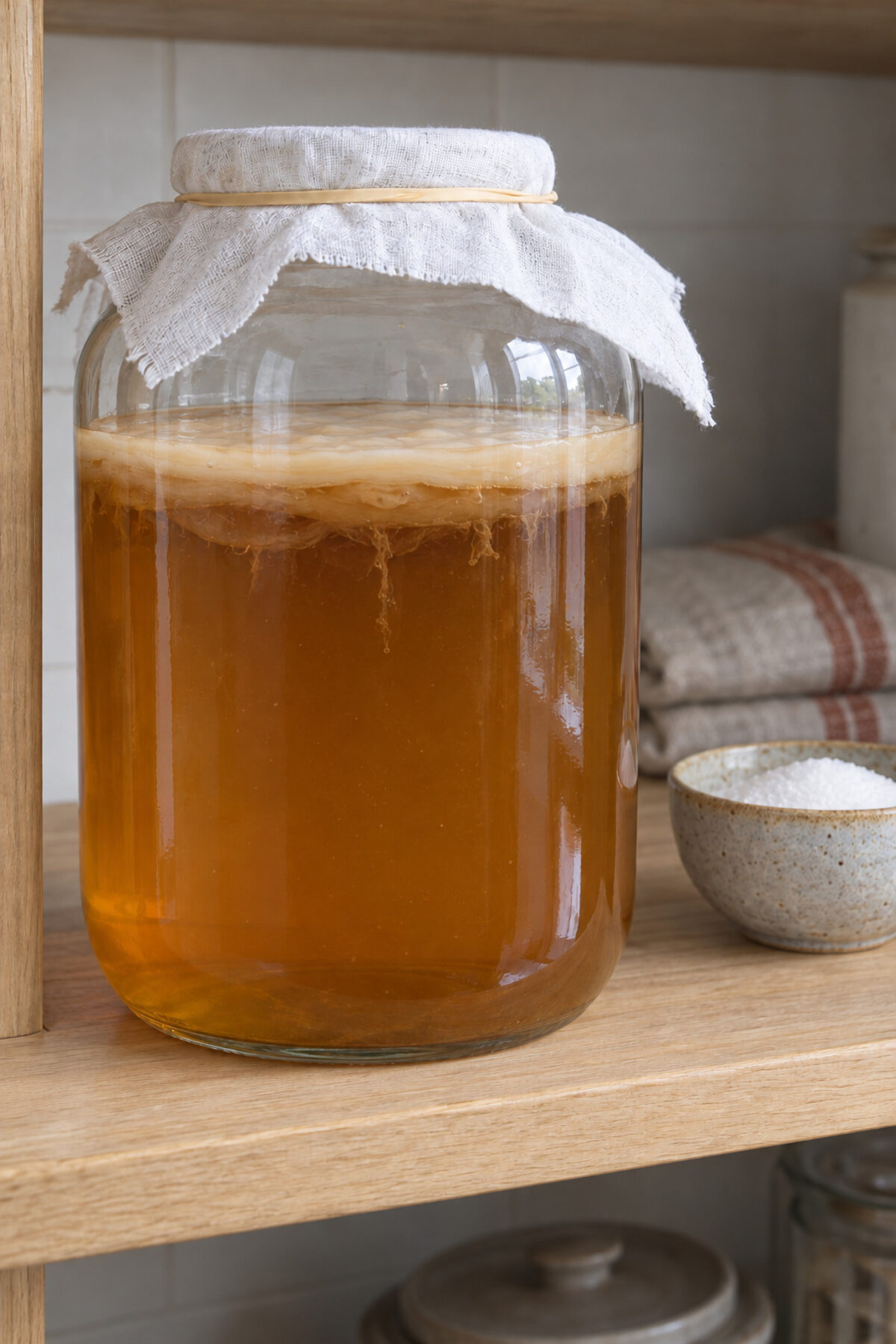
Rye bread soaked in hot water, strained and fermented for a day with sugar and yeast. It comes out sweet and sour, fizzy, with a little alcohol.
- Sugar
- 22g per liter of water
- Time
- 24h
- Temperature
- 77–86°F
- Jar
- 6L
The golden rule: one day of fermenting, then into the fridge: the longer it goes, the more alcohol it makes.
No sign-up. We guide you step by step, from the scale to the fridge.
Reviewed October 26, 2026 · 30 facts, each with its source
You'll need
- Large pot that holds 4.5 liters
- Food thermometer
- Long spoon
- Large strainer and clean cheesecloth
- 6-liter glass jar (about 1.5 gallons), or two 3-liter jars
- Clean cloth and a rubber band
- Calibrated pH meter
- Kitchen scale
- Funnel
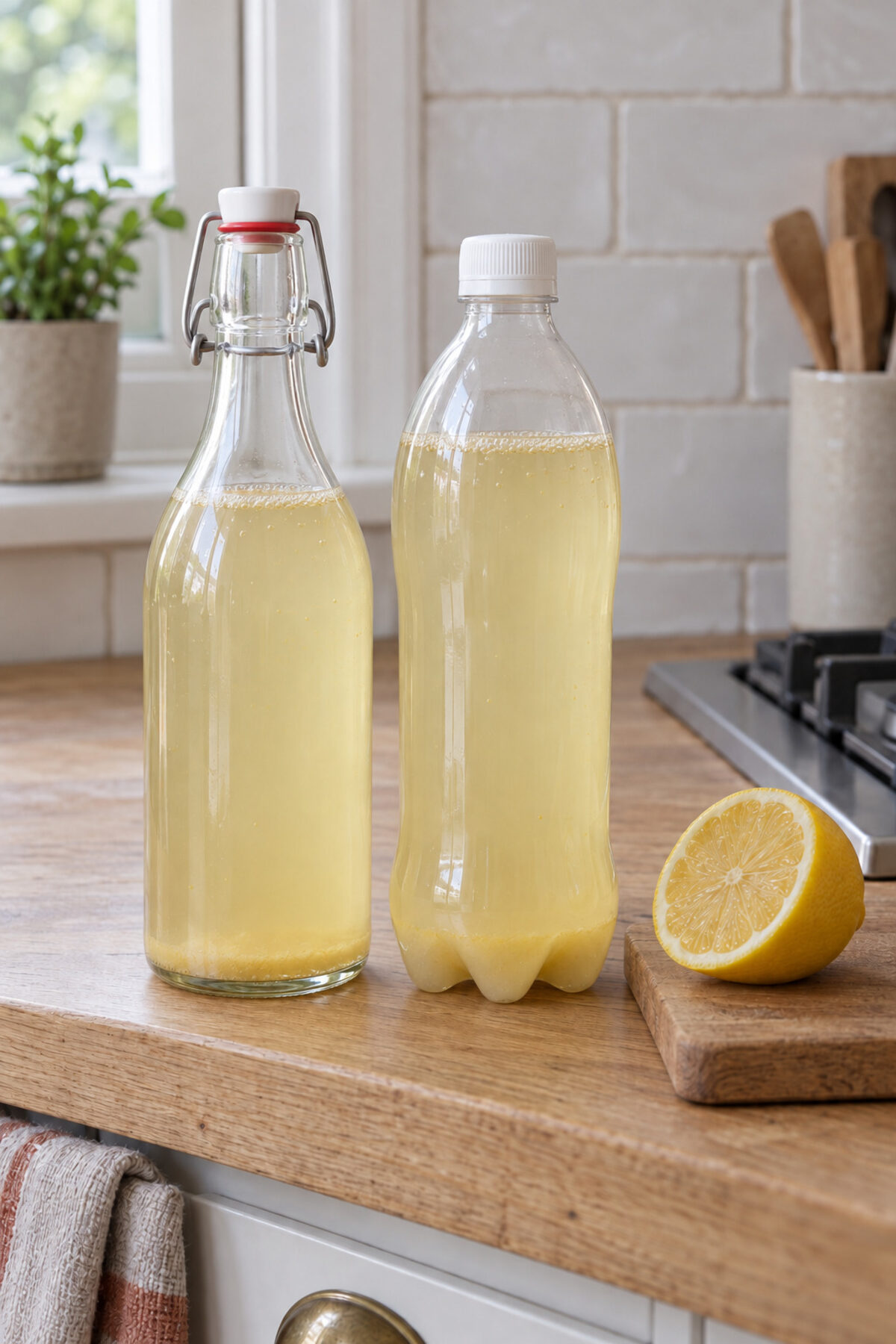
- Bottles made for carbonated drinks: soda PET, or glass made for fizz, with caps
Step by step
-
Cut the bread into cubes and dry it
Wash the pot, the jar and the utensils in hot soapy water and rinse them well. Cut 500 g of rye bread into small cubes and let them air-dry until hard. Look them over carefully: if any of the bread is moldy, don't use it.
Tip: Throwing out moldy bread is a house rule, the same one the guidance gives for vegetables: anything damaged or moldy goes.
-
Soak the bread in hot water, in two rounds
Heat 1.5 liters of water to 176 °F and pour it over the bread in the pot. Stir and let it stand for 30 minutes, stirring every 5. Add another 1.5 liters of water at 158 °F, stir and leave it 90 more minutes, stirring every 10.
-
Strain it, add the rest of the water and cool it
Strain the liquid through the cheesecloth in the strainer. Add the last 1.5 liters of water at 158 °F. Let it cool to 77–86 °F in under 2 hours; if you need to, set the pot in cold water.
Tip: Don't add the yeast until it's down to 77–86 °F.
-
Add the sugar and yeast, and leave it 24 hours
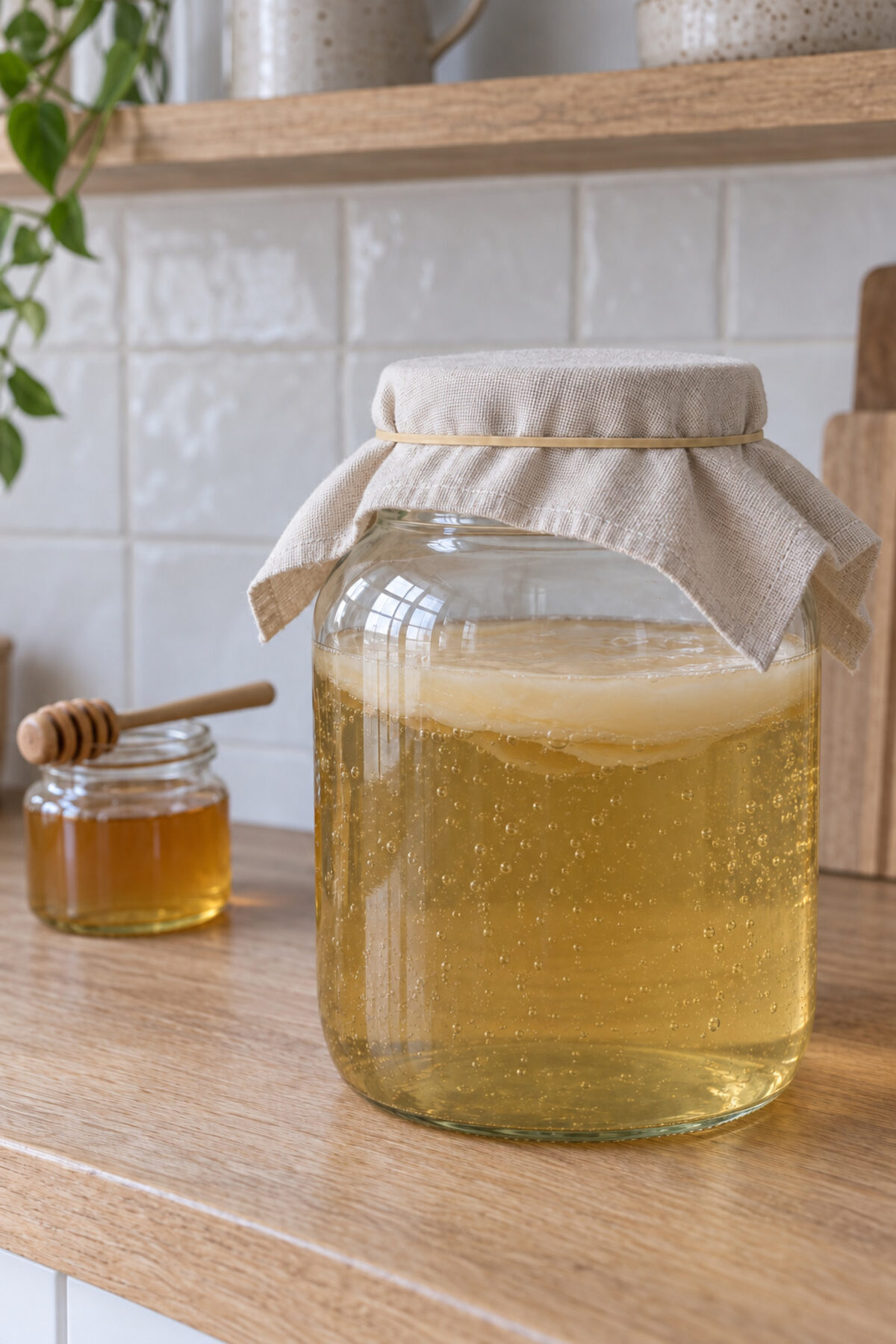
Dissolve 100 g of sugar in the liquid, about 22 g per liter of water, and crumble 20 g of fresh yeast over it. Stir, pour it into the glass jar and cover it with the cloth and a rubber band. Leave it for 24 hours at 77–86 °F; the study fermented it at 82 °F.
Tip: Just one day: left longer it makes more alcohol, and can reach 2.5% or more.
-
Check the pH, strain it and bottle it
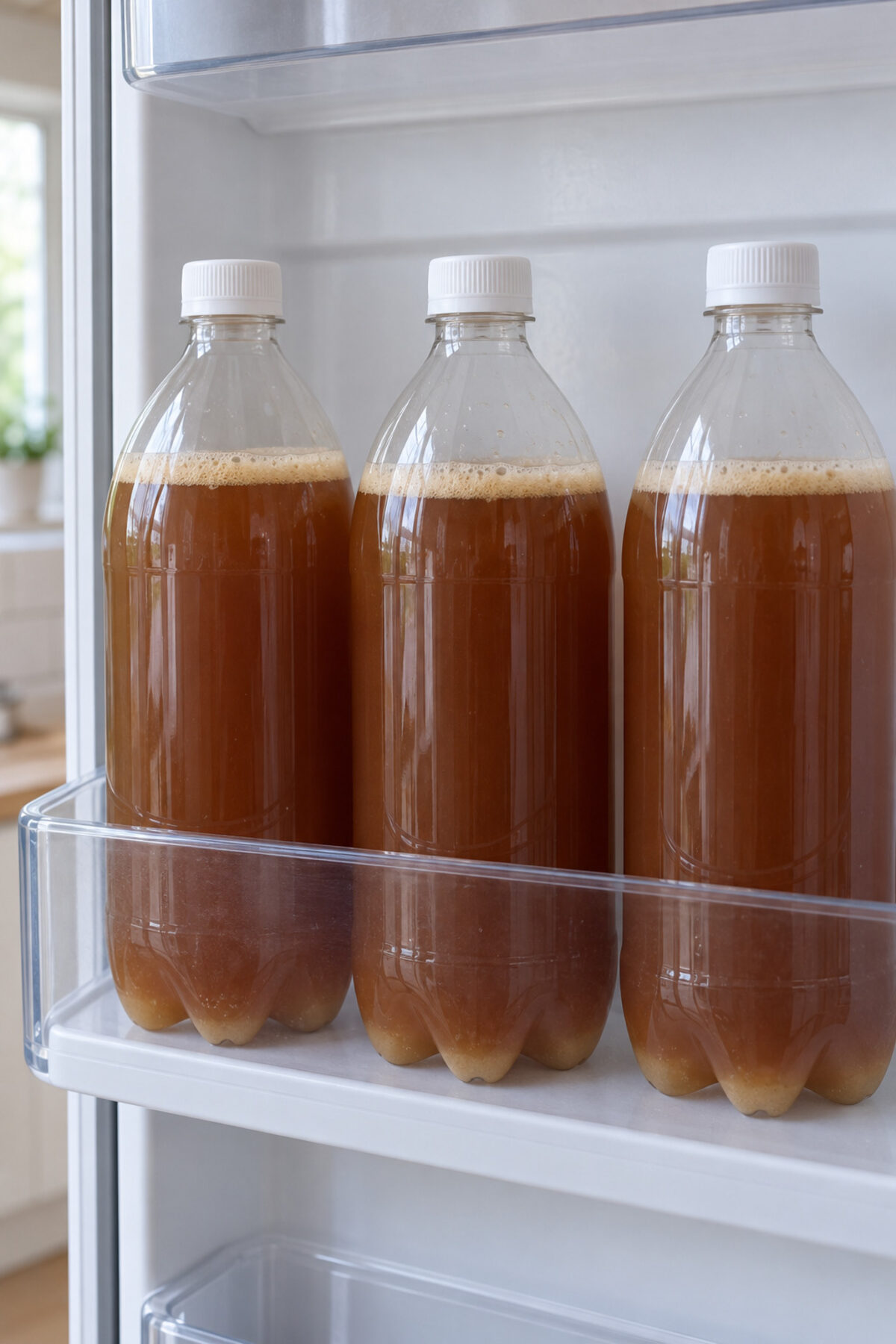
At 24 hours, check the pH with the meter: it must be 4.6 or below, and ideally 4.2 or below. If it's above 4.6, don't drink it: throw it out. Strain it again through clean cheesecloth, measure how many liters you have, and add 10 g of sugar per liter. Stir and fill the bottles with the funnel, leaving 3–5 cm (about 1¼–2 inches) of air at the top. Close them. Use soda PET bottles or glass made for fizz: the sugar in the bottles is what makes it fizzy.
Tip: The 4.6 and the 4.2 are house rules. Bread kvass sits close to that line: in the study, 4.15 on average, and 4.2 to 4.6 with additions.
-
Straight into the fridge, and drink it within 7 days
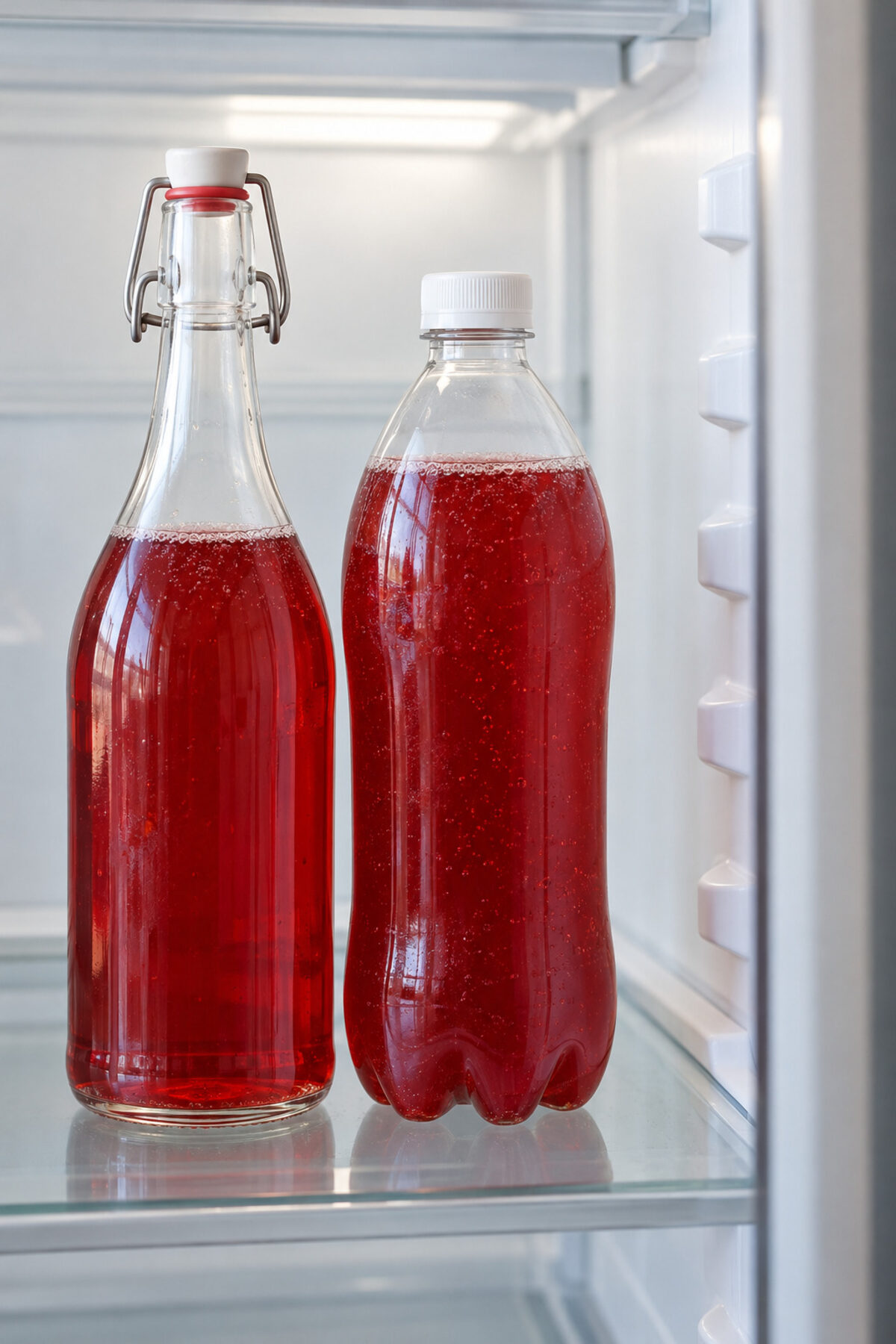
Put the bottles in the fridge right away, at 39 °F or below: that slows the fermentation. Don't leave them out, or they can explode. Drink it within 7 days. Don't shake the bottles, and open them cold, slowly and away from your face.
Tip: The 7 days are a house rule. The study kept it 14 days at 50 °F, but as a trial, not as advice.
No sign-up. We guide you step by step, from the scale to the fridge.
Variations
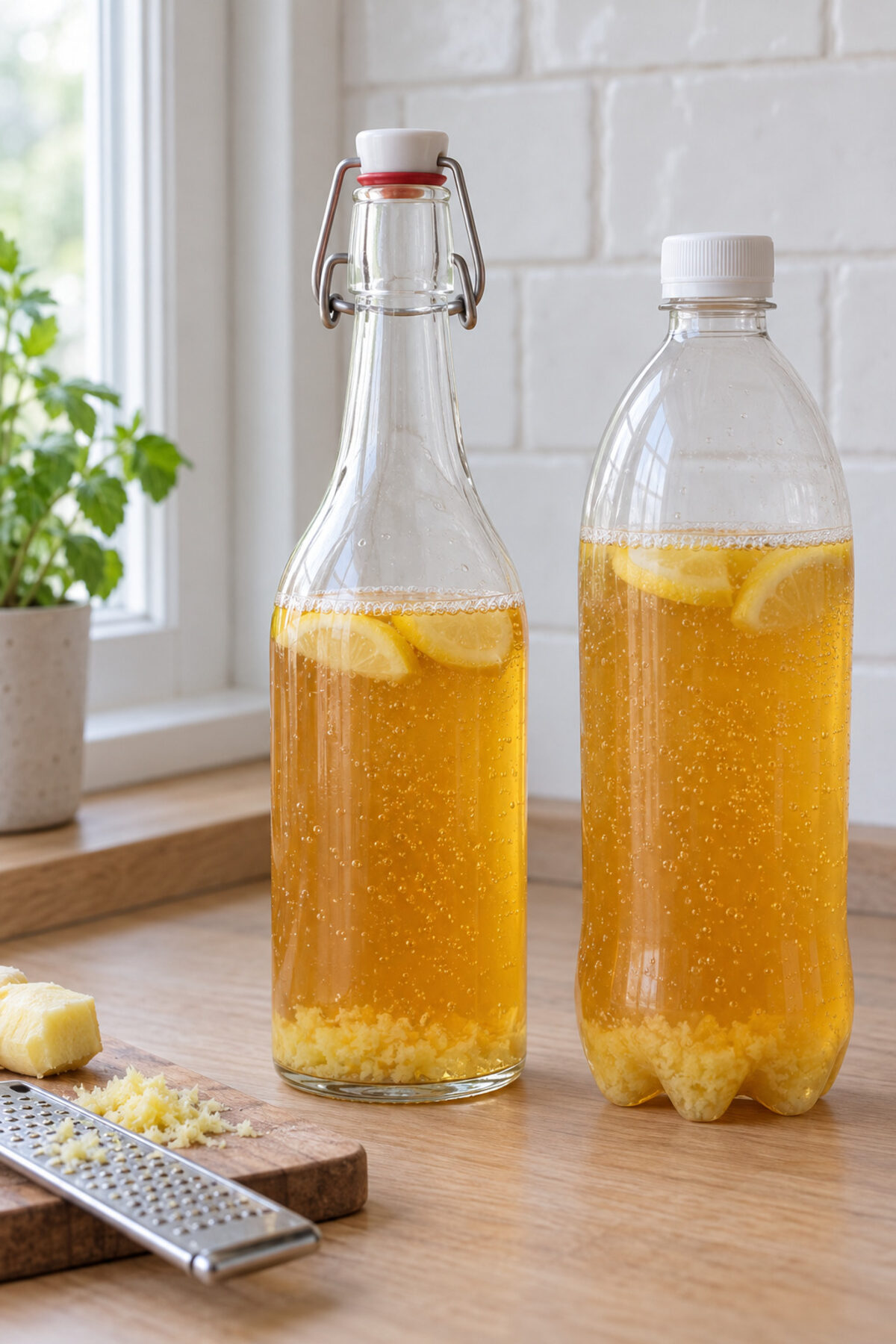
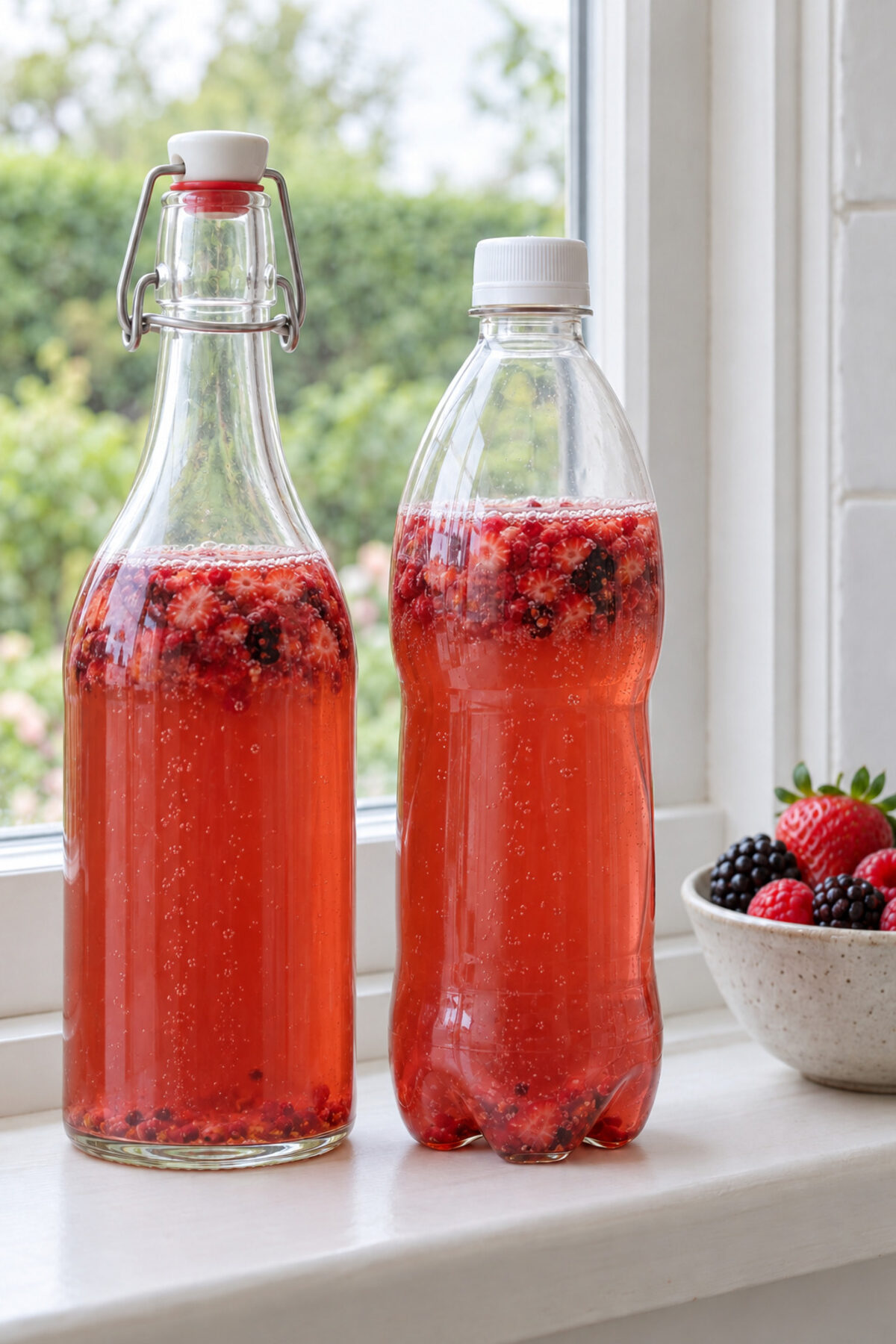
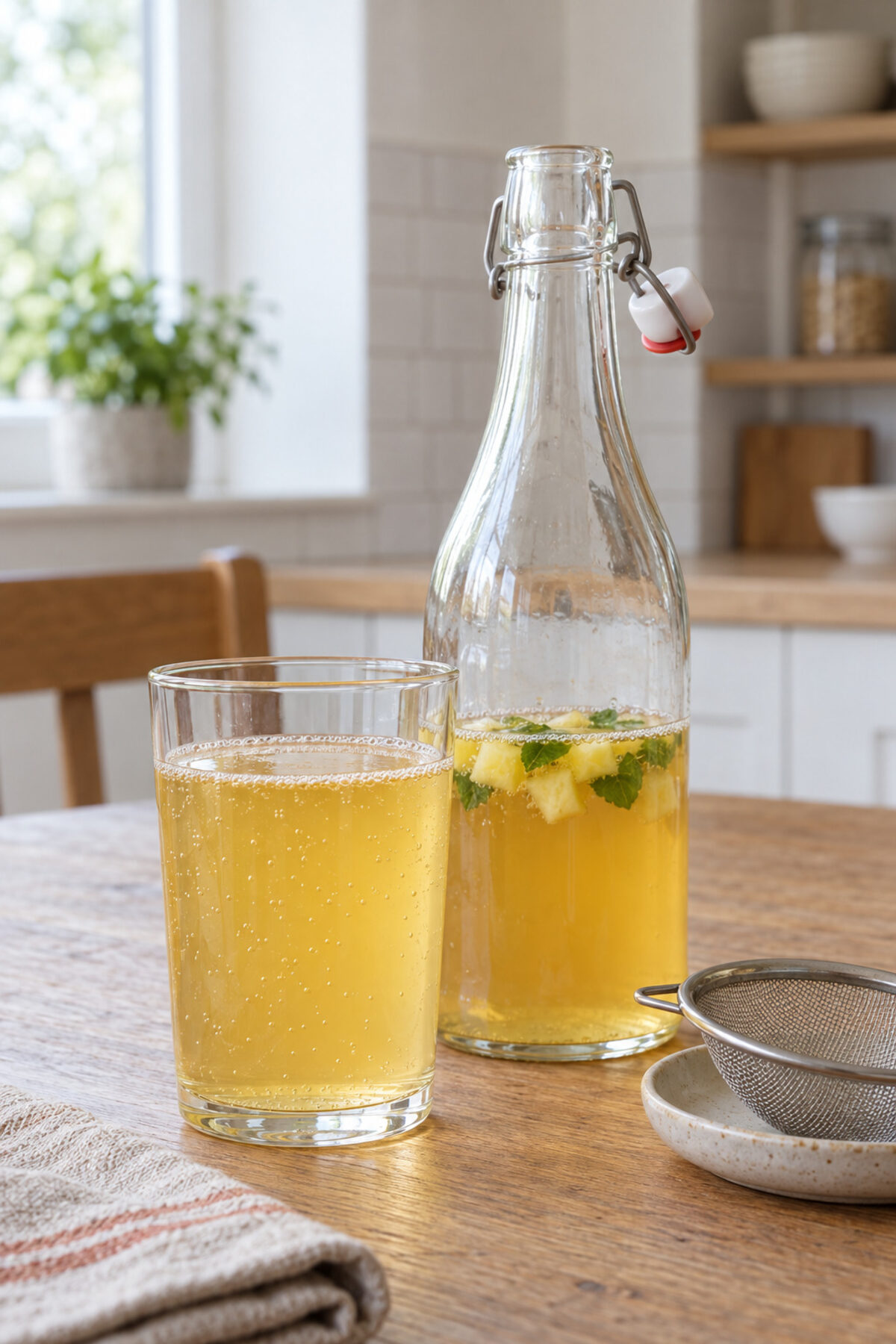
The same method, a different flavor. Once you have this one down, try one of these.
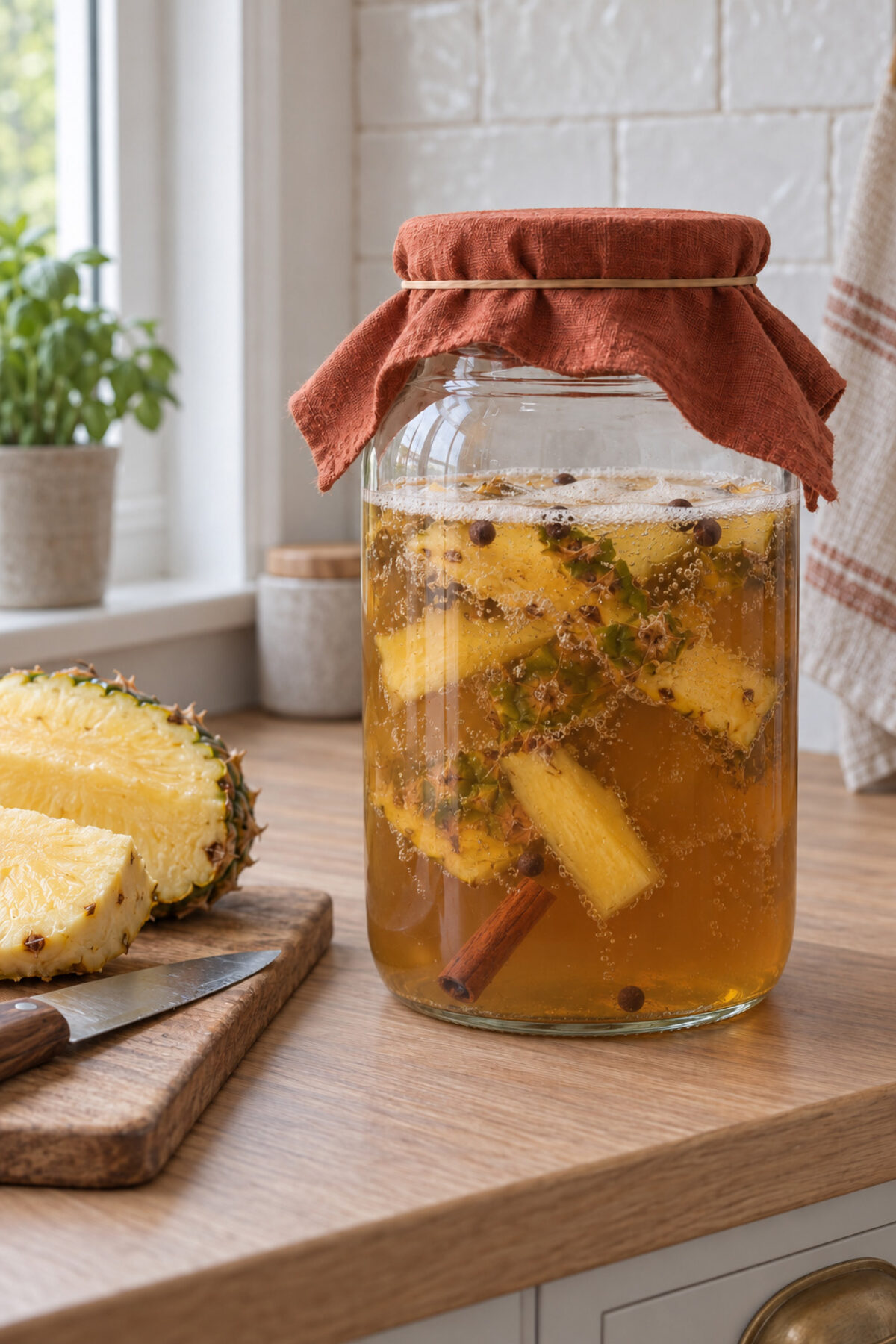
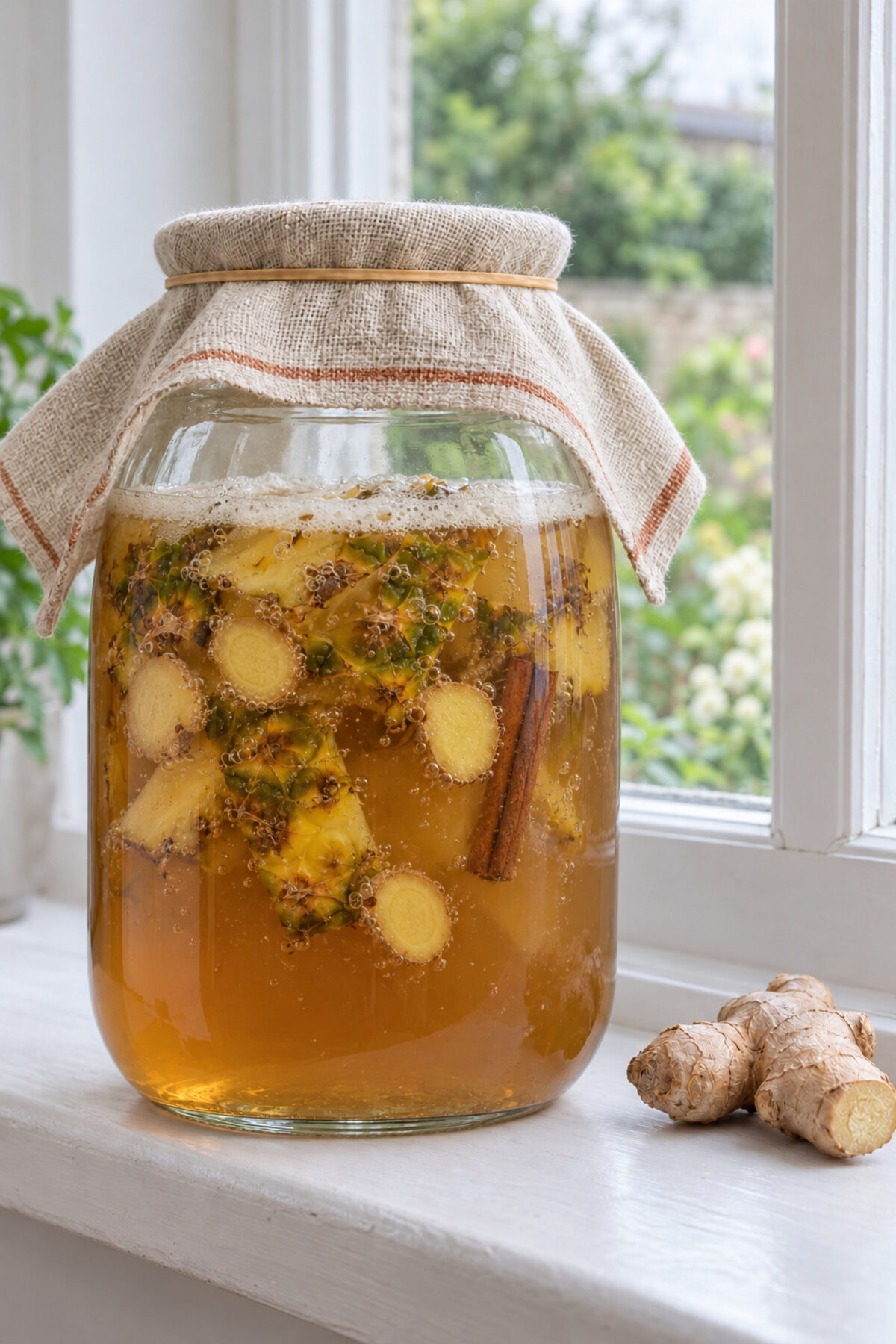
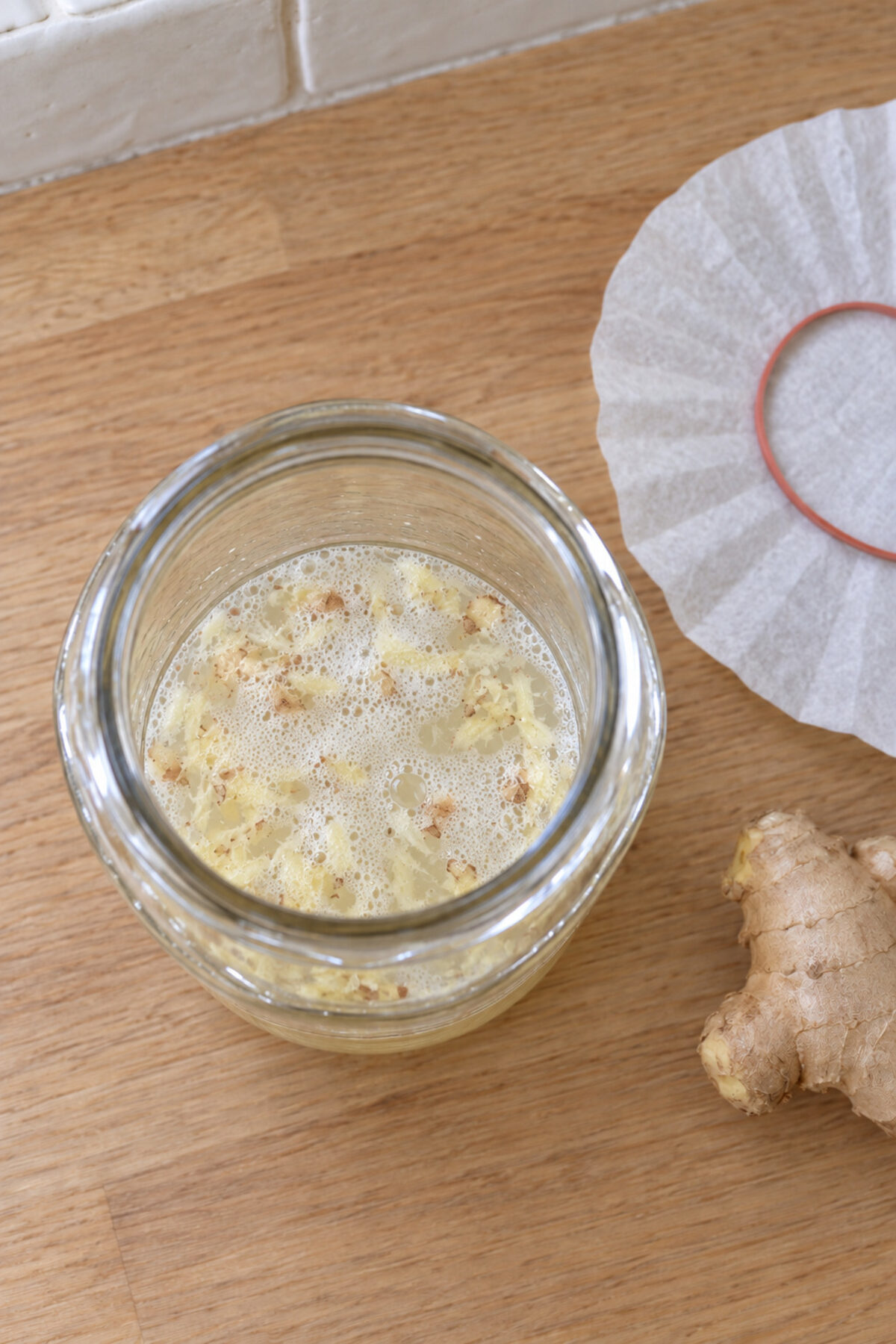
What you'll see
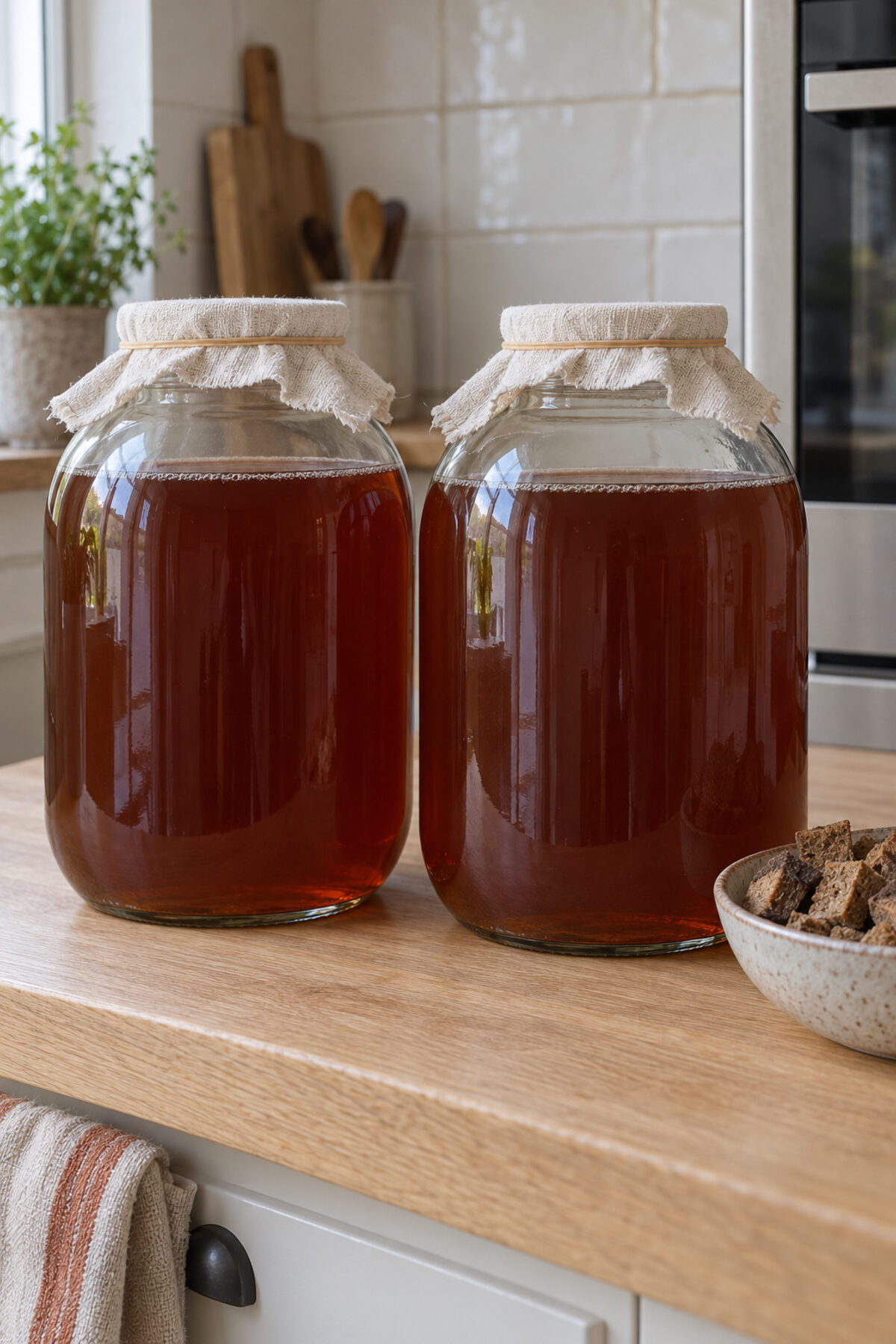
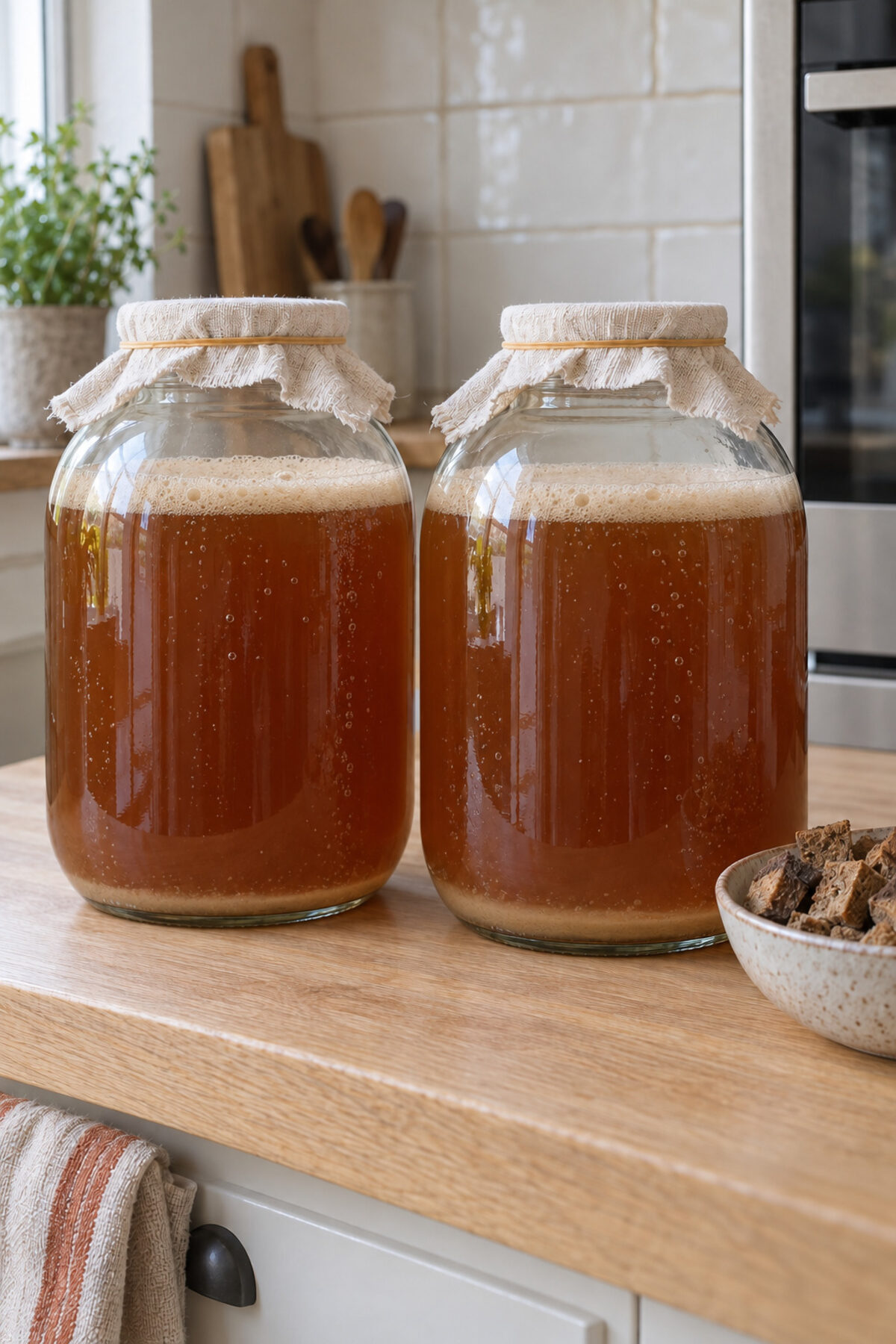
Bread kvass is a drink with a rye bread aroma and a sweet-and-sour taste. It goes through two fermentations at once, one lactic and one alcoholic, of rye bread, sugar and yeast, and BCCDC classes it as a yeast ferment. There's no official guidance: this recipe follows a study published in 2024 step by step. The pH and the days in the fridge are house rules. It contains some alcohol.
 AI
 AI
AI
How to tell it's going well
- It contains alcohol. Up to 0.5% in the study; left longer, it can reach 2.5% or more. It's not for young children or during pregnancy.
- Just one day of fermentation. The alcohol depends mostly on the sugar and the microbes: don't add more sugar or more days.
- pH 4.6 or below before bottling, and ideally 4.2 (house rules). Above 4.6, throw it out.
- Moldy bread goes. And if mold appears in the jar, throw out the whole batch. Mold is usually green, blue, brown or black.
- A putrid smell: throw it out. The ferment has failed.
- Bottles made for fizz, straight into the fridge, at 39 °F or below. Without the fridge, they can explode.
- Drink it within 7 days (house rule). Open it cold and slowly, without shaking it: the cap can pop off and hurt someone.
Where every number comes from
Every number in this recipe comes from a food safety guide. We keep a copy of each source and quote its exact words.
-
1
Lactic and alcoholic fermentation of rye, sugar and yeast
“Kvass is made through the following two processes: lactic acid fermentation and the alcoholic fermentation of rye raw materials (rye flour, dry rye bread, rye malt), sugar, and yeast.”
Foods (MDPI; Kaszuba et al.), via PubMed Central · Comparison of the Antioxidant and Sensorial Properties of Kvass Produced from Mountain Rye Bread with the Addition of Selected Plant Raw Materials (2024) · read on October 25, 2026
-
2
A rye bread aroma and a sweet-and-sour taste
“Kvass is a refreshing beverage with a pleasant aroma of rye bread and a moderately sweet and sour taste”
Foods (MDPI; Kaszuba et al.), via PubMed Central · Comparison of the Antioxidant and Sensorial Properties of Kvass Produced from Mountain Rye Bread with the Addition of Selected Plant Raw Materials (2024) · read on October 25, 2026
-
3
500 g of air-dried rye bread cubes, 30 minutes in 1.5 liters of water at 176 °F
“A portion of 500 g of mountain rye bread, previously chopped into small cubes and air-dried, was added to 1500 mL of water at a temperature of 80 °C, mixed, and left to stand for 30 min, stirring every 5 min.”
Foods (MDPI; Kaszuba et al.), via PubMed Central · Comparison of the Antioxidant and Sensorial Properties of Kvass Produced from Mountain Rye Bread with the Addition of Selected Plant Raw Materials (2024) · read on October 25, 2026
-
4
Another 1.5 liters at 158 °F, 90 minutes
“Then, another portion of water (1500 mL) at a temperature of 70 °C was added, stirred, and allowed to extract for 90 min, stirring every 10 min.”
Foods (MDPI; Kaszuba et al.), via PubMed Central · Comparison of the Antioxidant and Sensorial Properties of Kvass Produced from Mountain Rye Bread with the Addition of Selected Plant Raw Materials (2024) · read on October 25, 2026
-
5
Strained through cheesecloth, plus another 1.5 liters at 158 °F
“The mash was then filtered through a sterile gauze, and another portion of water (1500 mL) at a temperature of 70 °C was added to the filtrate.”
Foods (MDPI; Kaszuba et al.), via PubMed Central · Comparison of the Antioxidant and Sensorial Properties of Kvass Produced from Mountain Rye Bread with the Addition of Selected Plant Raw Materials (2024) · read on October 25, 2026
-
6
100 g of sugar and 20 g of fresh baker's yeast
“To the filtrate, 100 g of sugar and 20 g of compressed baker’s yeast”
Foods (MDPI; Kaszuba et al.), via PubMed Central · Comparison of the Antioxidant and Sensorial Properties of Kvass Produced from Mountain Rye Bread with the Addition of Selected Plant Raw Materials (2024) · read on October 25, 2026
-
7
Fermented at 82 °F
“left to ferment at a temperature of 28 °C (laboratory incubator)”
Foods (MDPI; Kaszuba et al.), via PubMed Central · Comparison of the Antioxidant and Sensorial Properties of Kvass Produced from Mountain Rye Bread with the Addition of Selected Plant Raw Materials (2024) · read on October 25, 2026
-
8
24 hours of fermentation
“The fermentation time for both variants was 24 h.”
Foods (MDPI; Kaszuba et al.), via PubMed Central · Comparison of the Antioxidant and Sensorial Properties of Kvass Produced from Mountain Rye Bread with the Addition of Selected Plant Raw Materials (2024) · read on October 25, 2026
Show the remaining 22 claims
-
9
Strained again through cheesecloth
“The next step was to separate the resulting kvass from the precipitate via filtration through a sterile gauze.”
Foods (MDPI; Kaszuba et al.), via PubMed Central · Comparison of the Antioxidant and Sensorial Properties of Kvass Produced from Mountain Rye Bread with the Addition of Selected Plant Raw Materials (2024) · read on October 25, 2026
-
10
10 g of sugar per liter, bottled and kept 14 days in the fridge at 50 °F
“Sugar was added to the collected filtrate at a rate of 10 g/L of liquid, mixed and transferred into glass bottles (1000 mL), closed with twist-off caps, and left in a refrigerator at 10 °C for 14 days.”
Foods (MDPI; Kaszuba et al.), via PubMed Central · Comparison of the Antioxidant and Sensorial Properties of Kvass Produced from Mountain Rye Bread with the Addition of Selected Plant Raw Materials (2024) · read on October 25, 2026
-
11
An average pH of 4.15
“The pH value of the tested control kvasses did not vary and averaged 4.15”
Foods (MDPI; Kaszuba et al.), via PubMed Central · Comparison of the Antioxidant and Sensorial Properties of Kvass Produced from Mountain Rye Bread with the Addition of Selected Plant Raw Materials (2024) · read on October 25, 2026
-
12
With additions, 4.2 to 4.6
“higher values of the particular parameter were recorded in the range of pH = 4.2–4.6”
Foods (MDPI; Kaszuba et al.), via PubMed Central · Comparison of the Antioxidant and Sensorial Properties of Kvass Produced from Mountain Rye Bread with the Addition of Selected Plant Raw Materials (2024) · read on October 25, 2026
-
13
Up to 0.5% alcohol in the study
“The presence of alcohol (Table 4) was found in the tested kvasses in concentrations not exceeding 0.5%”
Foods (MDPI; Kaszuba et al.), via PubMed Central · Comparison of the Antioxidant and Sensorial Properties of Kvass Produced from Mountain Rye Bread with the Addition of Selected Plant Raw Materials (2024) · read on October 25, 2026
-
14
Left longer, it can reach 2.5% or more
“with longer stands, the alcohol concentration can reach 2.5% or more”
Foods (MDPI; Kaszuba et al.), via PubMed Central · Comparison of the Antioxidant and Sensorial Properties of Kvass Produced from Mountain Rye Bread with the Addition of Selected Plant Raw Materials (2024) · read on October 25, 2026
-
15
The alcohol depends mostly on the sugar and the microbes
“Of particular importance is the proportion of sugar and the composition of the microflora”
Foods (MDPI; Kaszuba et al.), via PubMed Central · Comparison of the Antioxidant and Sensorial Properties of Kvass Produced from Mountain Rye Bread with the Addition of Selected Plant Raw Materials (2024) · read on October 25, 2026
-
16
Bread kvass is a yeast ferment
“Kvass (rye bread), kenkey (cornmeal) and dosa (lentils) are ethnic yeast fermented foods.”
BC Centre for Disease Control, Environmental Health Services · Safety of Fermented Foods, Section 1: Introduction to fermented food safety (2024) · read on October 25, 2026
-
17
Everything washed in hot soapy water and rinsed well
“Wash all surfaces and containers that will be used with hot sudsy water and rinse well before use.”
K-State Research and Extension (Kansas State University) · Taking a New Look at Fermented Foods (MF3491, June 2020) · read on October 20, 2026
-
18
Anything damaged or moldy is thrown out
“Damaged, visibly mouldy vegetables should be discarded.”
BC Centre for Disease Control, Environmental Health Services · Safety of Fermented Foods, Section 3.1: Fermented Vegetables (August 2024, updated December 2024) · read on October 25, 2026
-
19
Fermented vegetables must reach pH 4.6 or below
“Ensure effective fermentation and end pH of ≤4.6 is achieved.”
BC Centre for Disease Control, Environmental Health Services · Safety of Fermented Foods, Section 3.1: Fermented Vegetables (August 2024, updated December 2024) · read on October 25, 2026
-
20
From 140 °F to culture temperature in under 2 hours
“from 60oC to 21-24°C within 2 hours”
BC Centre for Disease Control, Environmental Health Services · Safety of Fermented Foods, Section 3.12: Kefir, milk and water (December 2024) · read on October 25, 2026
-
21
3–5 cm of air in each bottle
“leaving a 3–5 cm air gap at the top”
Science in School (EIROforum), Dean Madden, National Centre for Biotechnology Education, University of Reading · Ginger beer: a traditional fermented low-alcohol drink (Issue 8, Spring 2008) · read on October 25, 2026
-
22
Bottles that can take the pressure
“Glass bottles, cans or kegs should be resistant to acid leaching and pressure build-up.”
BC Centre for Disease Control, Environmental Health Services · Safety of Fermented Foods, Section 3.11: Kombucha and Jun (September 2023, updated December 2024) · read on October 25, 2026
-
23
At 39 °F or below to stop fermentation
“Once fermentation is completed, kombucha and jun should be bottled and refrigerated to 4°C or lower to stop further fermentation”
BC Centre for Disease Control, Environmental Health Services · Safety of Fermented Foods, Section 3.11: Kombucha and Jun (September 2023, updated December 2024) · read on October 25, 2026
-
24
Without the fridge, bottles can explode
“Some jun and kombucha products can explode if not refrigerated.”
BC Centre for Disease Control, Environmental Health Services · Safety of Fermented Foods, Section 3.11: Kombucha and Jun (September 2023, updated December 2024) · read on October 25, 2026
-
25
Caps can pop off and hurt someone
“If fermentation is not properly controlled, the container lids may come off under extreme pressure or containers may break. This poses a potential risk of injury.”
BC Centre for Disease Control, Environmental Health Services · Safety of Fermented Foods, Section 3.11: Kombucha and Jun (September 2023, updated December 2024) · read on October 25, 2026
-
26
Do not shake, contents under pressure
“Precautionary statement labels on bottles are recommended to advise consumers “Do not shake. Contents under pressure.””
BC Centre for Disease Control, Environmental Health Services · Safety of Fermented Foods, Section 3.11: Kombucha and Jun (September 2023, updated December 2024) · read on October 25, 2026
-
27
Not for young children or during pregnancy
“not a suitable beverage for young children or during pregnancy”
BC Centre for Disease Control, Environmental Health Services · Safety of Fermented Foods, Section 2: Starter cultures and fermented food standards (August 2024, updated December 2024) · read on October 25, 2026
-
28
If there's mold, throw out the whole batch
“If you confirm mold growth on any part of a ferment, it should be immediately discarded.”
UC Davis, Department of Food Science and Technology · Common issues with fermented fruits and vegetables (v1.0, 15-mar-2022) · read on October 20, 2026
-
29
Mold is usually green, blue, brown or black
“Mold is typically green, blue, brown, or black in color.”
UC Davis, Department of Food Science and Technology · Common issues with fermented fruits and vegetables (v1.0, 15-mar-2022) · read on October 20, 2026
-
30
A putrid smell means the ferment failed
“A putrid smell indicates a failed fermentation.”
UC Davis, Department of Food Science and Technology · Common issues with fermented fruits and vegetables (v1.0, 15-mar-2022) · read on October 20, 2026