 IA
Jun de té verde y miel
Nivel 2 · con algo de práctica
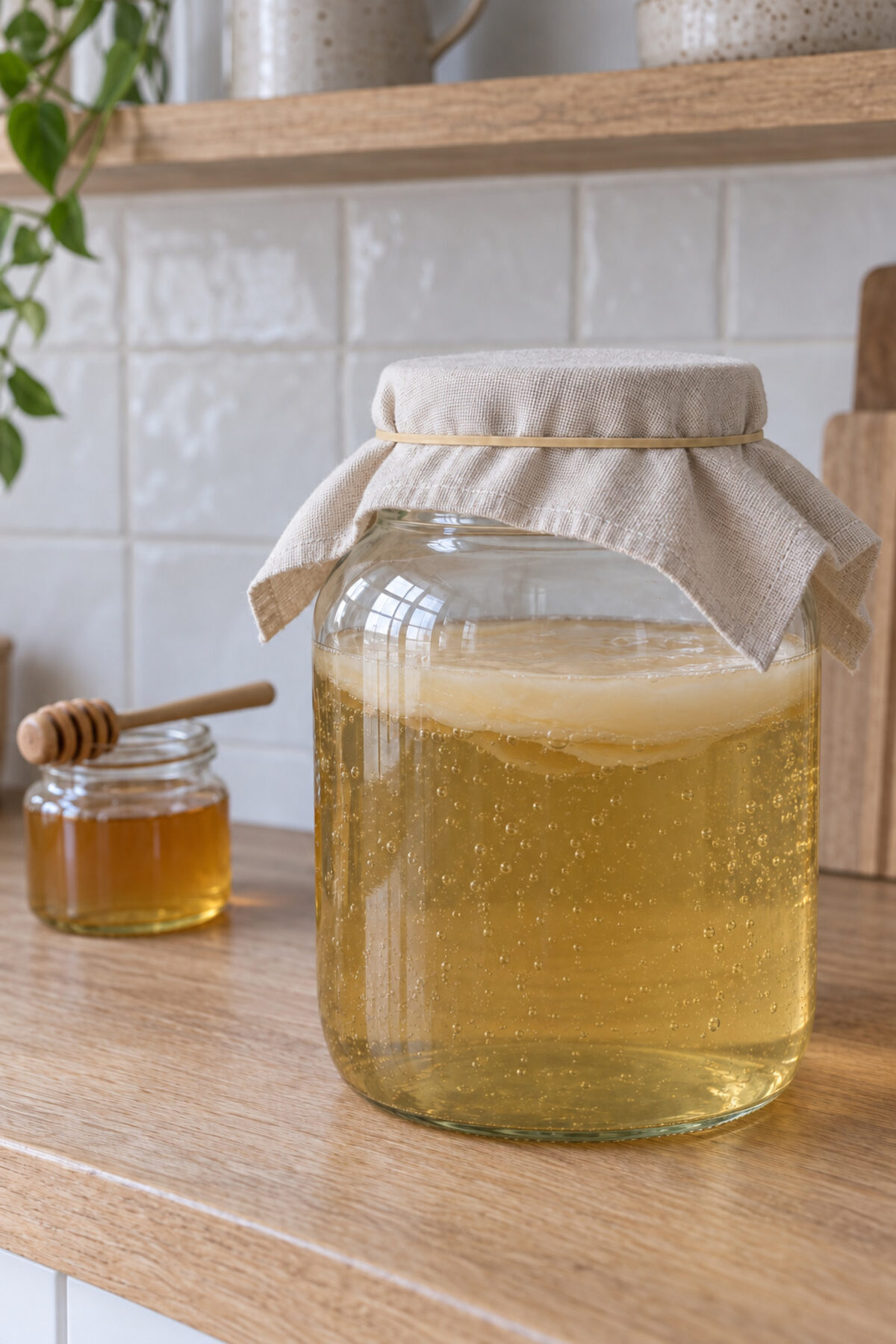
Té verde, miel y un SCOBY. Es pariente de la kombucha, fermenta en menos días, hace más gas y la miel va siempre en el té ya frío.
- Iniciador
- 20% del lote
- Tiempo
- 4–7días
- Temperatura
- 21–26°C
- Tarro
- 3L
La regla de oro: un iniciador ácido para empezar, la miel en el té ya frío y el pH medido antes de la nevera.
Sin registrarte. Te guiamos paso a paso, de la báscula a la nevera.
Revisada el 26 de octubre de 2026 · 46 datos, cada uno con su fuente
Necesitas
- Tarro de vidrio de 3 litros
- Tela de algodón de trama tupida y una goma elástica
- Olla
- Colador fino para el té
- Termómetro de cocina
- Tiras de pH y un medidor de pH calibrado
- Báscula de cocina
- Botellas hechas para bebidas con gas, de cierre mecánico o PET de refresco
Paso a paso
-
Lávate las manos y desinfecta el equipo
Lávate bien las manos con agua y jabón. Lava el tarro, la olla, el colador y las botellas, y desinféctalos sumergidos en agua a 77 °C o más durante al menos 30 segundos.
Truco: Fermenta en vidrio. Nada de cerámica, barro, cristal con plomo ni metal: el jun es ácido y puede sacar del recipiente plomo y otros tóxicos.
-
Mide el pH del líquido iniciador
Pon una cucharada del iniciador en un vaso y mídela con una tira de pH. Si marca 4,0 o menos, sigue y tira esa cucharada. Si marca más, no lo uses.
Truco: El iniciador ácido frena a los microbios dañinos desde el primer momento. Con miel, es también lo que impide que germinen sus esporas.
-
Haz el té verde
Lleva a ebullición los 2 litros de agua y apaga el fuego. Añade 2 cucharaditas de té verde en hebra, déjalo de 3 a 5 minutos y cuélalo. El agua hervida elimina los microbios que pueda traer el té.
Truco: Sirve cualquier té de la planta del té, Camellia sinensis: puedes mezclar el verde con té blanco u oolong. Las infusiones de hierbas no, porque pueden frenar el cultivo o ser tóxicas.
-
Enfría el té antes de la miel
Tapa la olla y ponla en el fregadero, en agua fría con hielo. Tiene que bajar de 60 °C a 20 °C en 2 horas como mucho, y nunca en más de 6. Sigue cuando el termómetro marque 20–22 °C.
Truco: La miel va siempre en el té ya frío, nunca en caliente.
-
Disuelve la miel, añade el SCOBY y tapa con tela
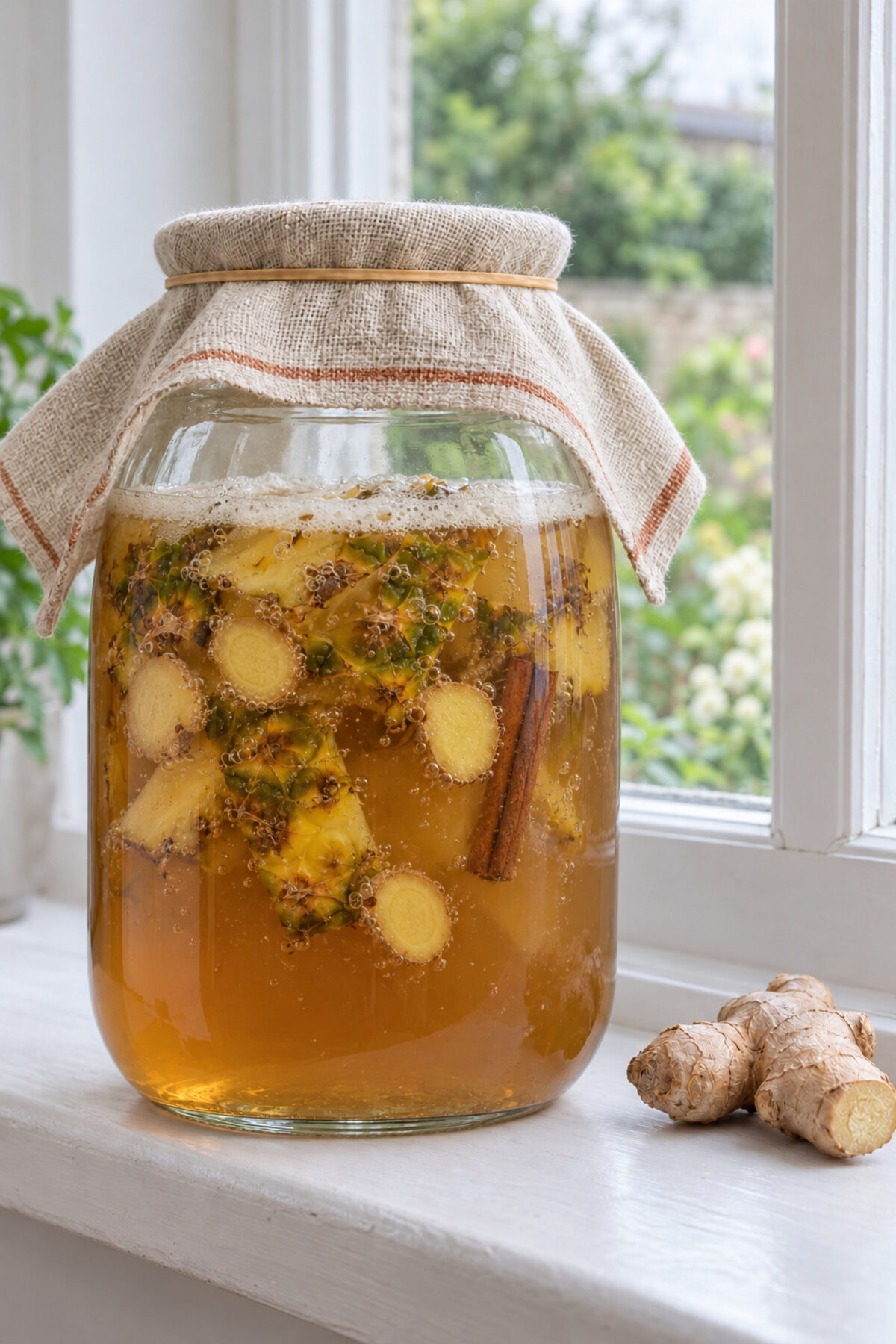
Pasa el té frío al tarro. Añade 160 g de miel y remueve hasta que se disuelva del todo. Añade el SCOBY con los 500 ml de iniciador y remueve. Tapa la boca con la tela y sujétala con la goma: el jun necesita aire, pero no moscas. Apunta la fecha: hoy es el día 0.
Los 160 g son 80 g por litro de agua, una regla de la casa: un estudio con miel usó 75 g por litro, y la guía de BCCDC, 125 ml por litro.
Truco: ¿Tu SCOBY trae menos de 500 ml de iniciador? El mínimo es el 10 % del lote, unos 225 ml. Es regla de la casa, dentro de los 100 a 200 ml por litro de BCCDC.
-
Déjalo de 4 a 7 días y mide el pH
Déjalo a 21–26 °C y nunca por encima de 26 °C. Con frío va más lento. El día 4 empieza a notarse ácido: desde entonces, pruébalo y mide el pH con un medidor calibrado. Está listo con 4,2 o menos, y lo normal es que acabe entre 2,5 y 3,5. No lo dejes bajar de 2,5. Si el día 7 no ha llegado a 4,2, el cultivo ha fallado: tíralo y empieza de nuevo con un SCOBY sano.
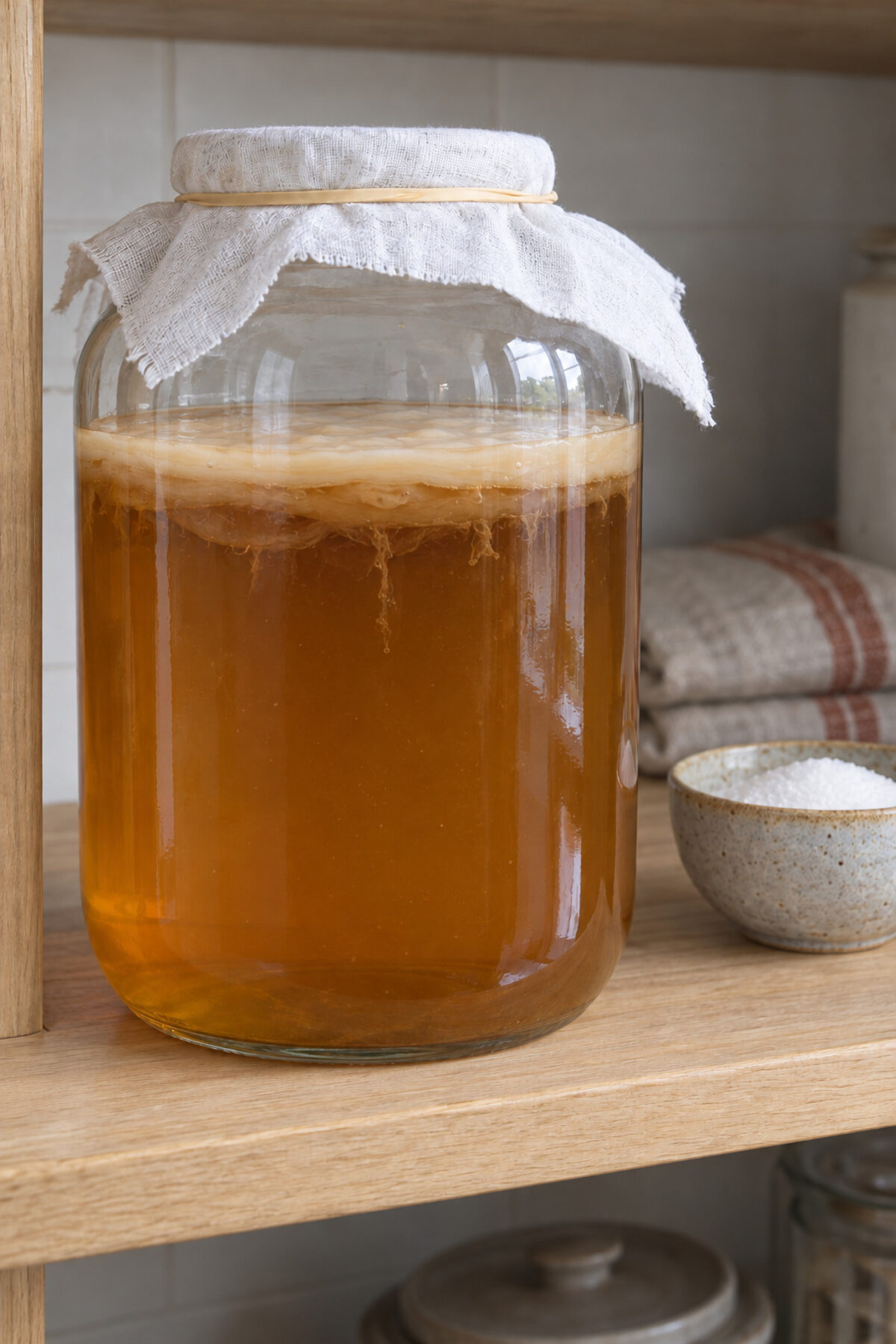
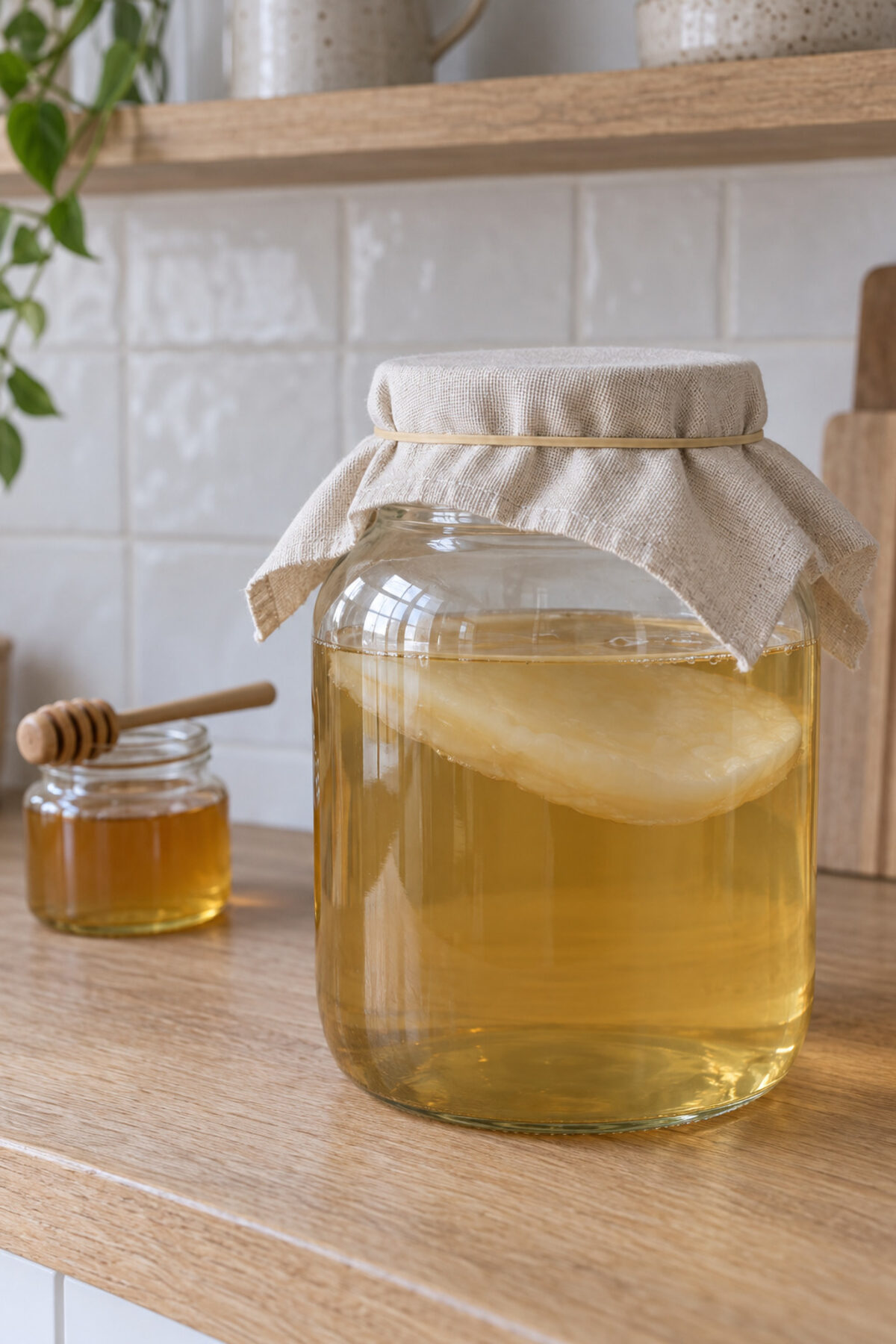
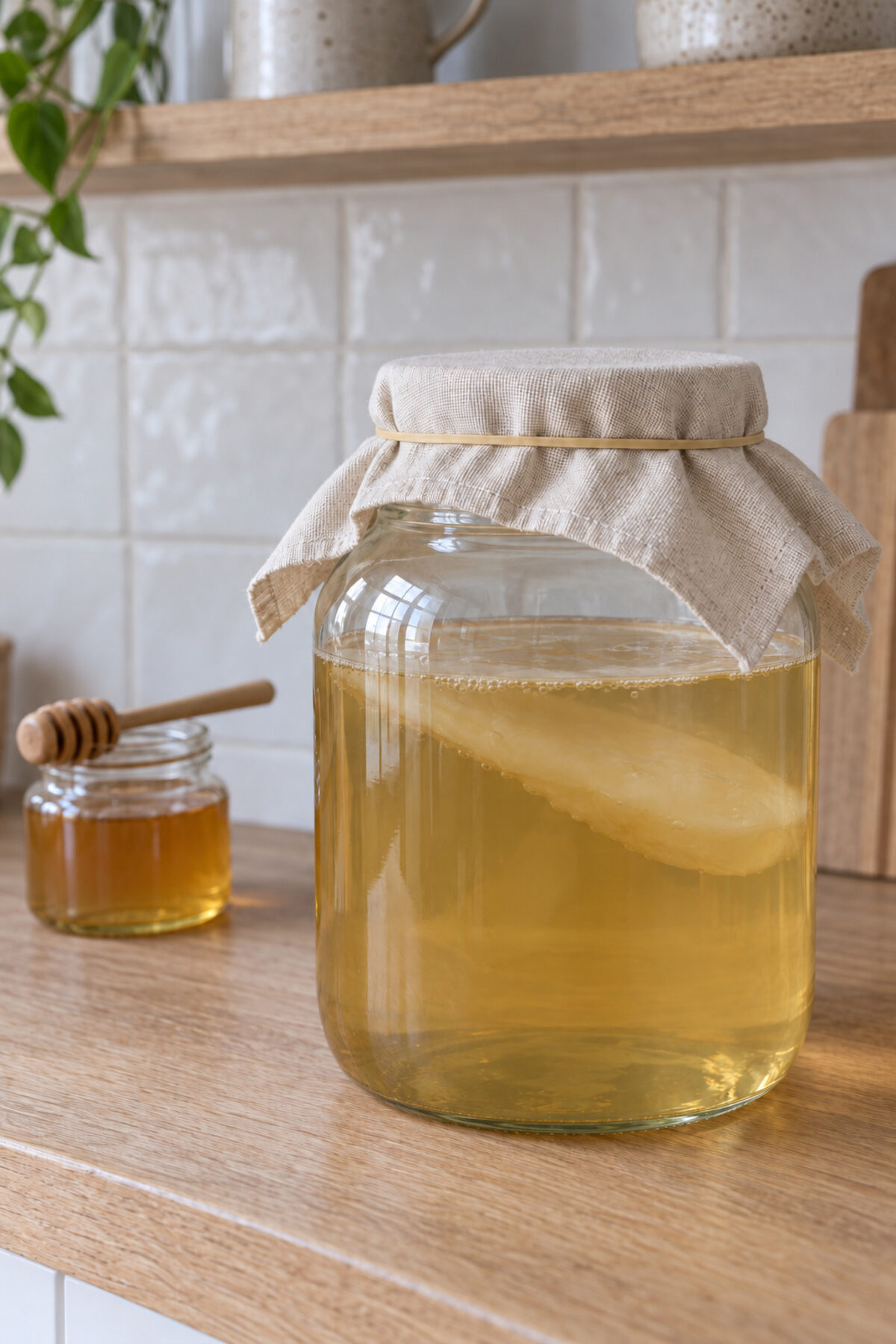
Truco: El primer o el segundo día se forma una capa blanquecina en la superficie: es SCOBY nuevo. El SCOBY puede hundirse y volver a subir. Si se hunde y no vuelve a subir, el cultivo no funciona bien.
-
Pásalo a la nevera y guarda el SCOBY
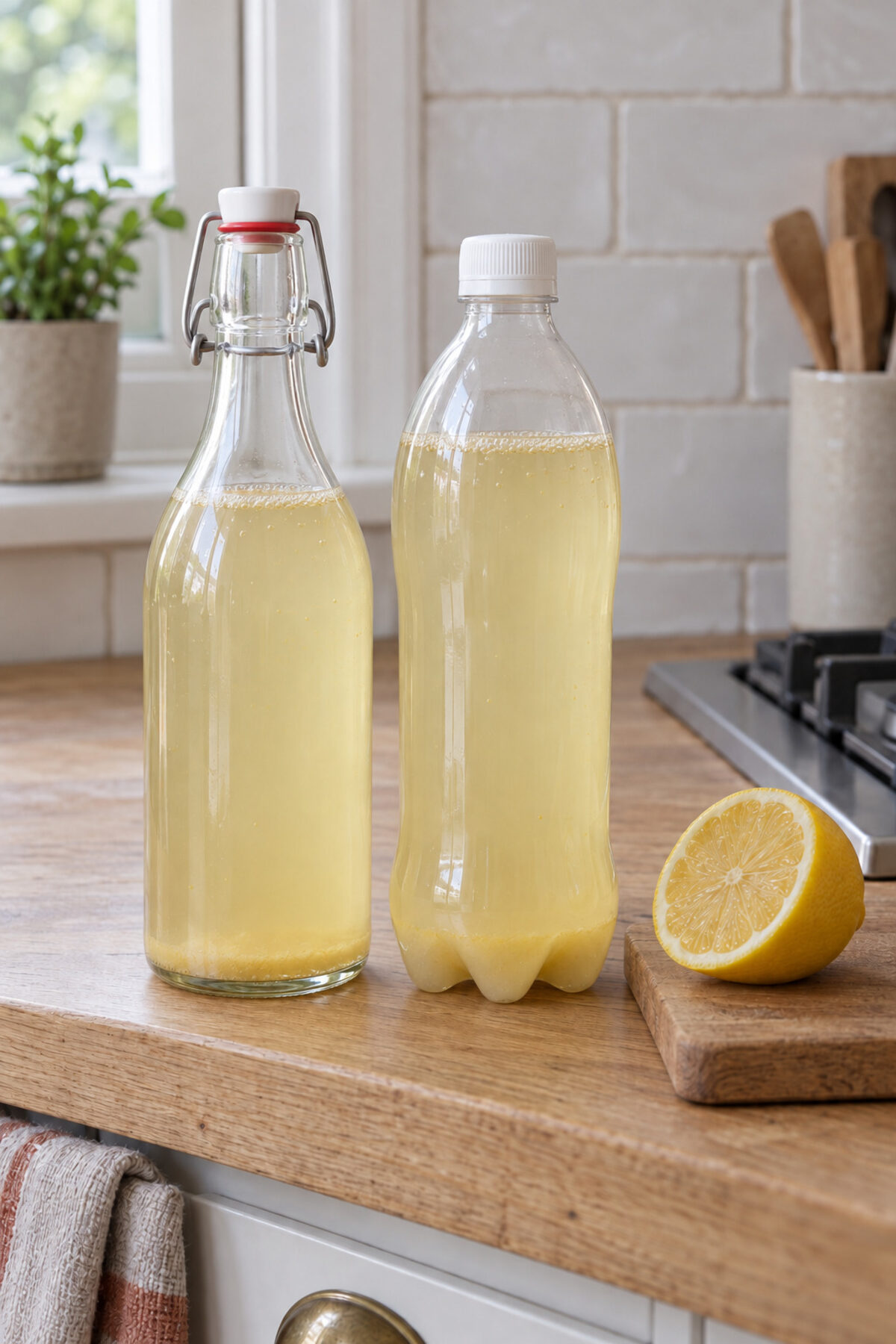
Cuando tenga la acidez que te guste, entre el día 4 y el 7, saca el SCOBY y aparta 500 ml de jun, una quinta parte: es el iniciador del siguiente lote. Pasa el resto a botellas limpias, hechas para bebidas con gas, y a la nevera, a 4 °C o menos. Bébelo en 30 días. Es regla de la casa, la misma que para la kombucha, porque ninguna fuente la da para el jun.
Truco: Hace más gas que la kombucha, y fuera de la nevera una botella cerrada puede estallar. Ábrelas despacio, sobre el fregadero.
Sin registrarte. Te guiamos paso a paso, de la báscula a la nevera.
Variaciones
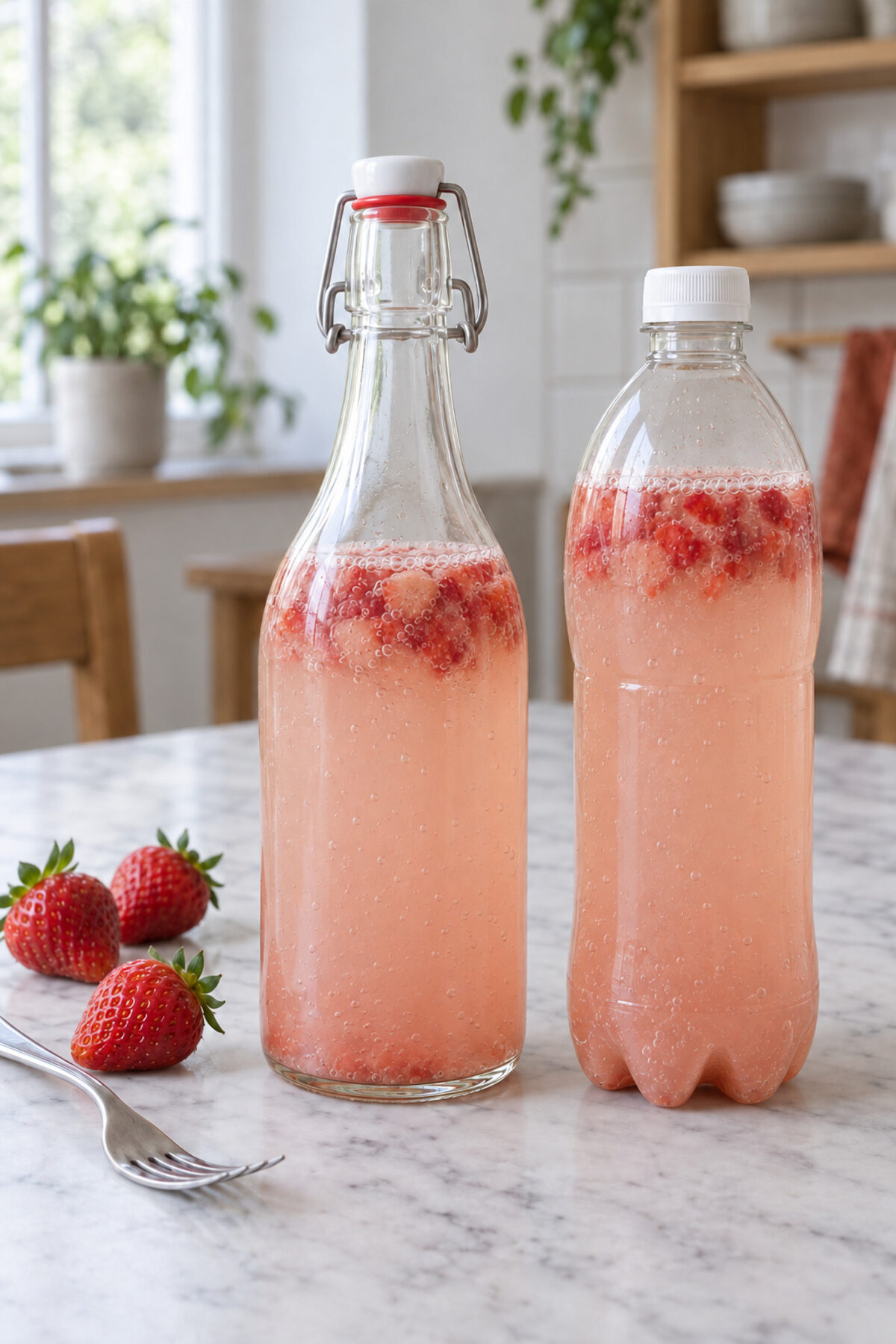
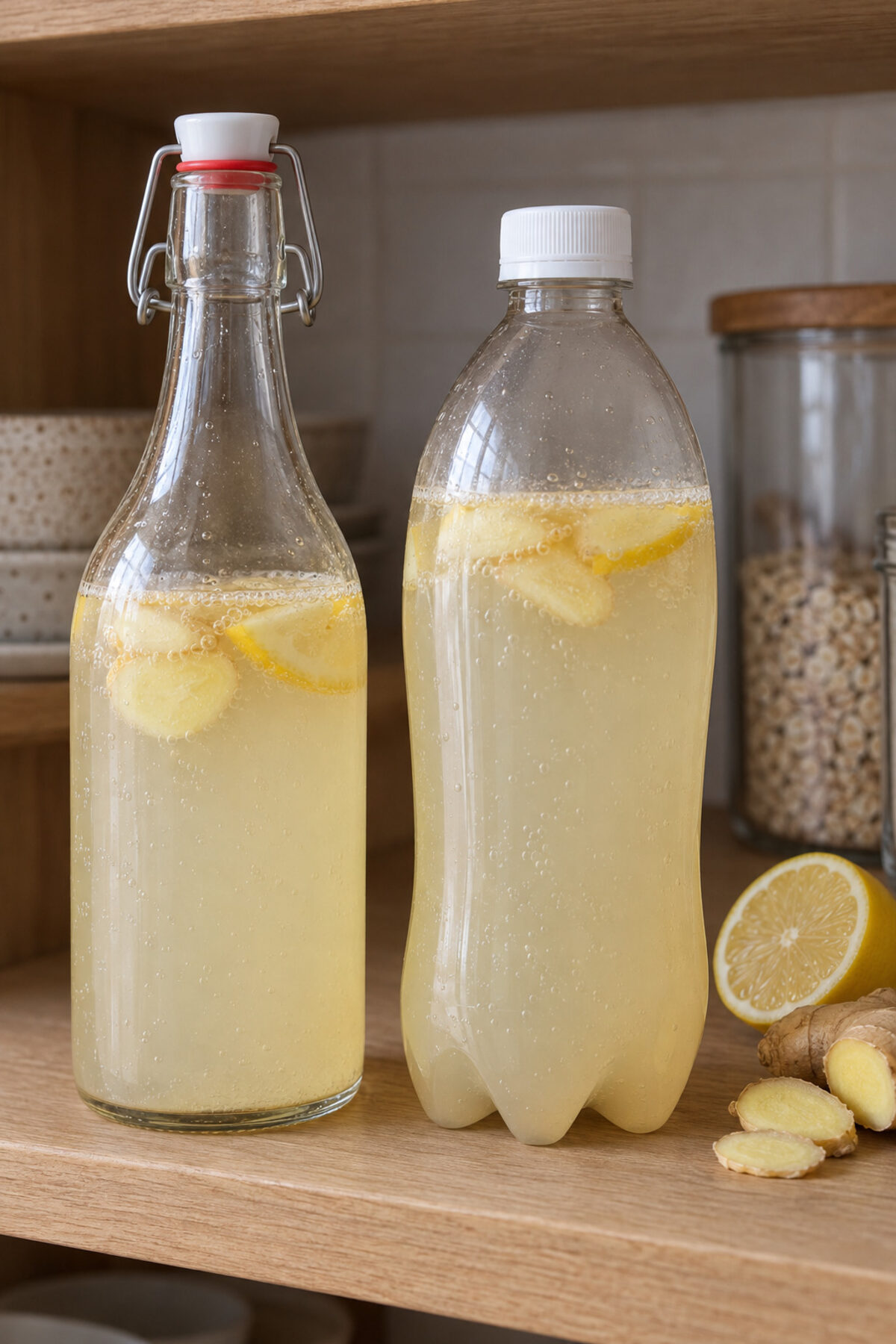
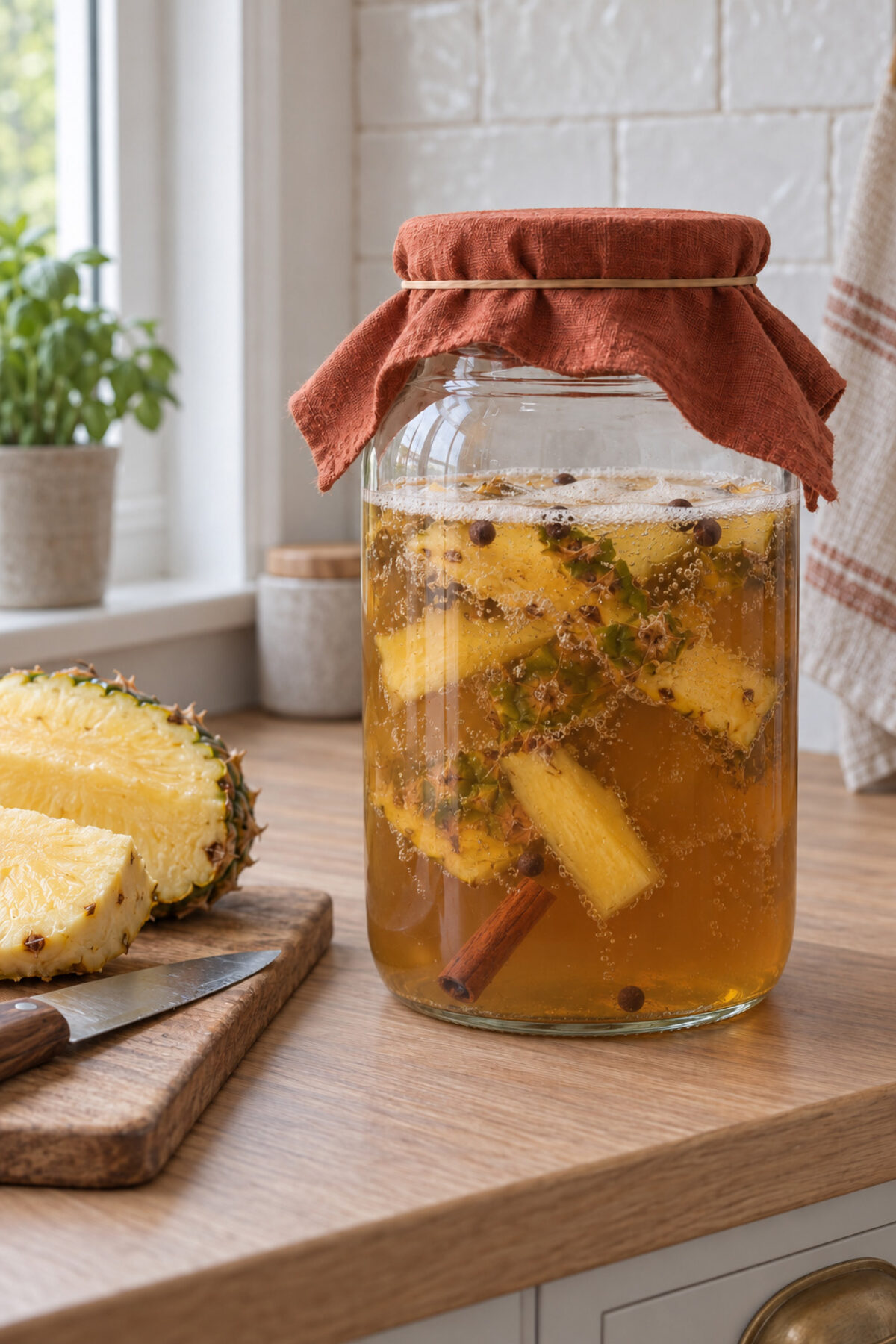
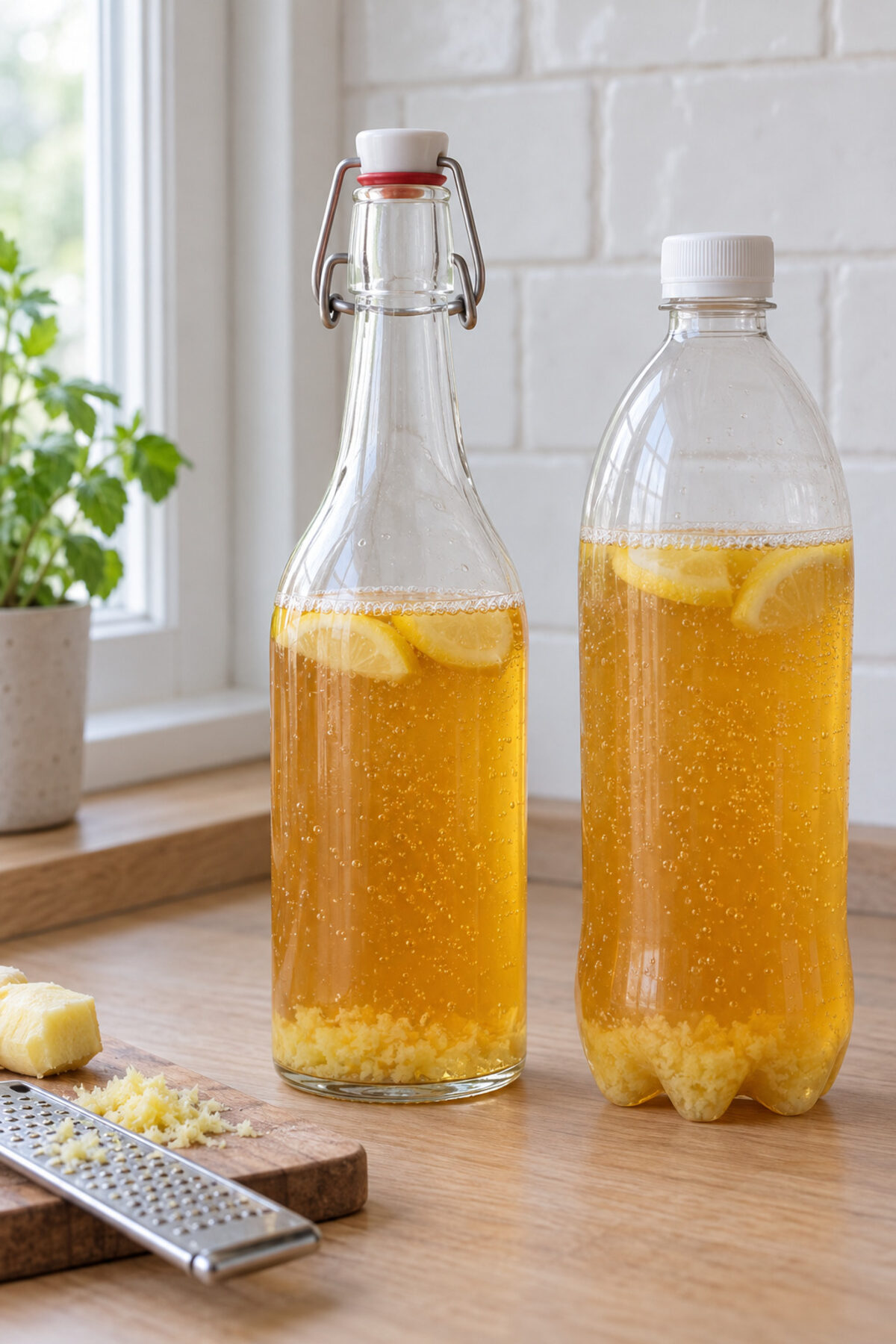
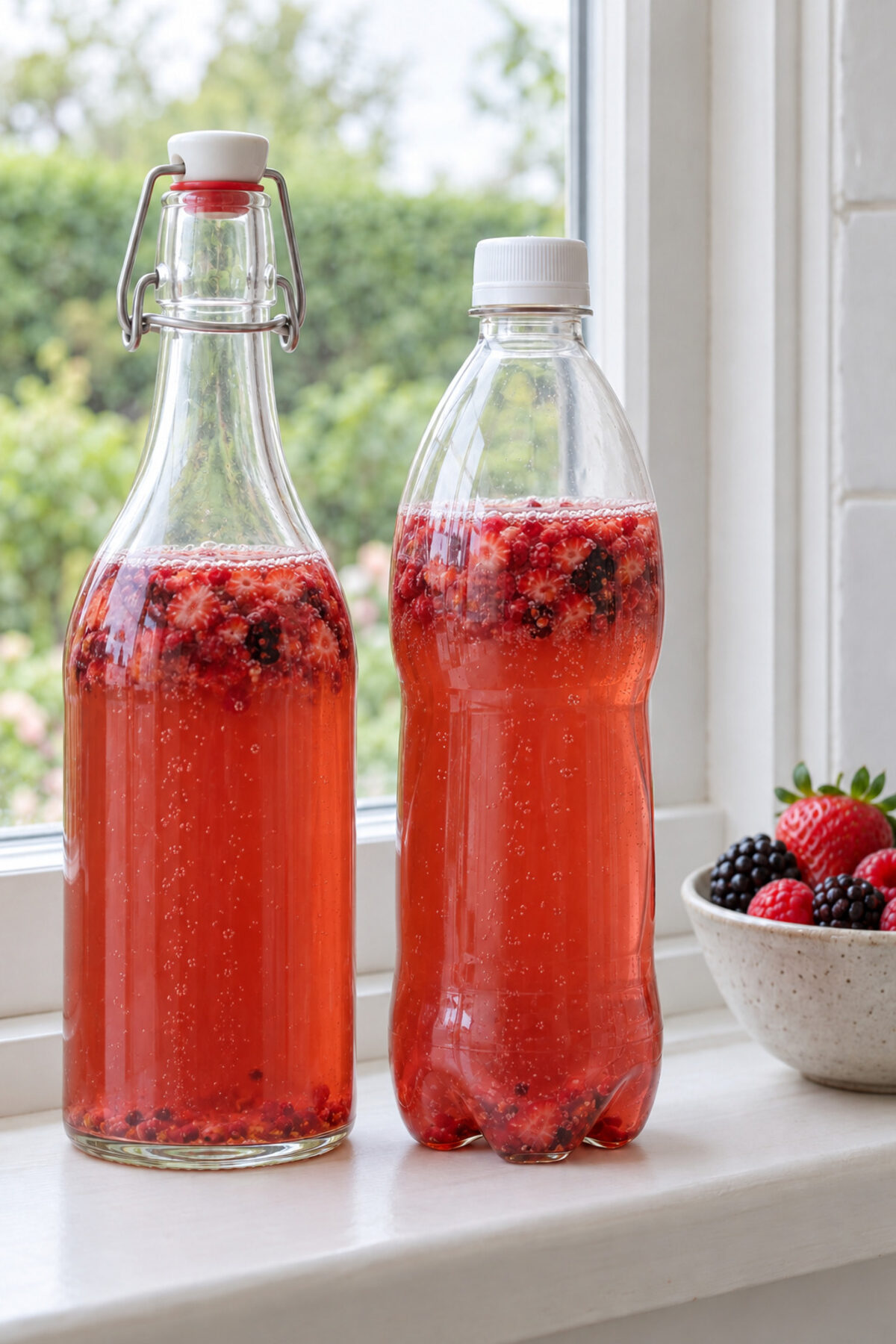
El mismo método, otro sabor. Cuando domines esta, prueba una de estas.
Qué vas a ver
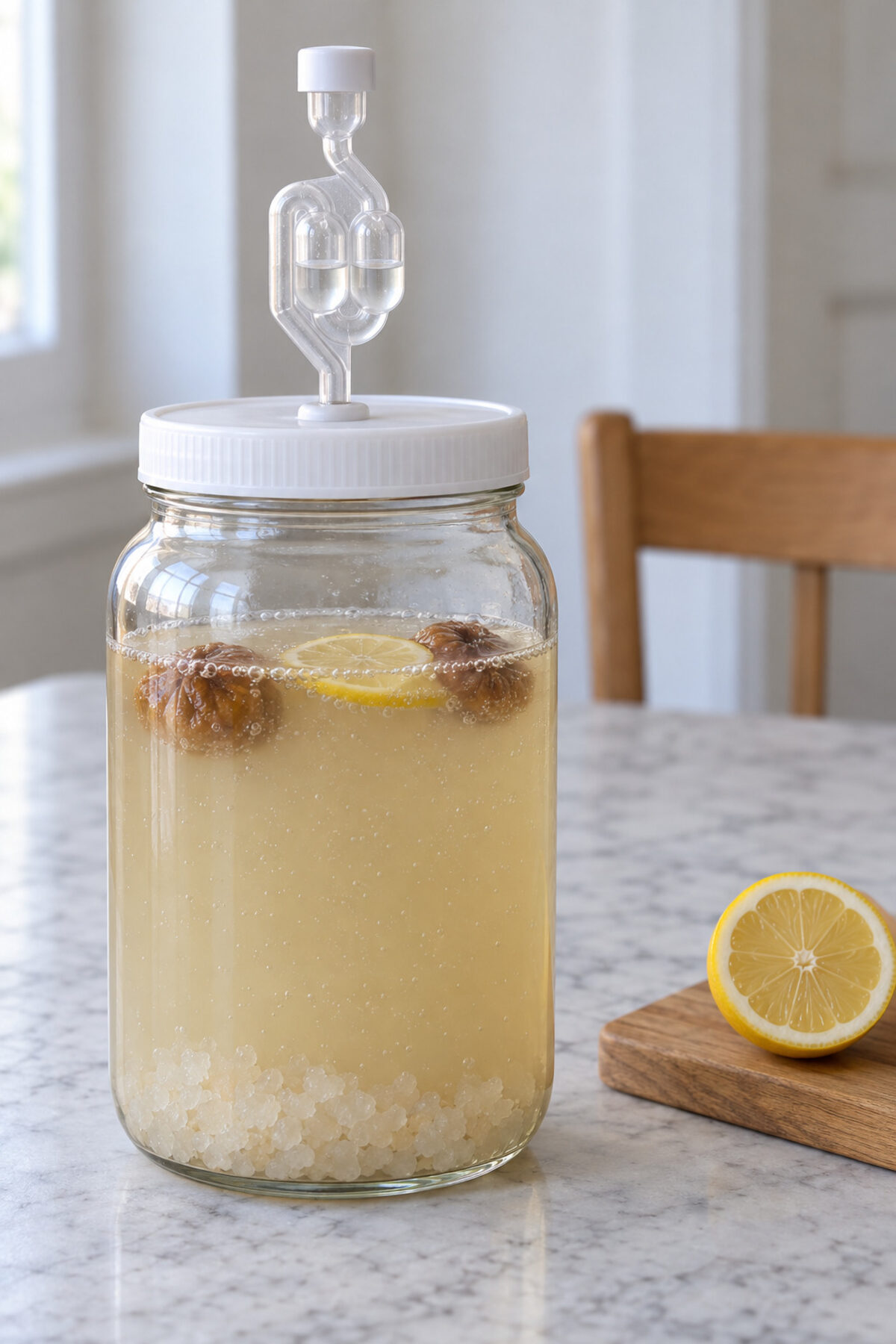
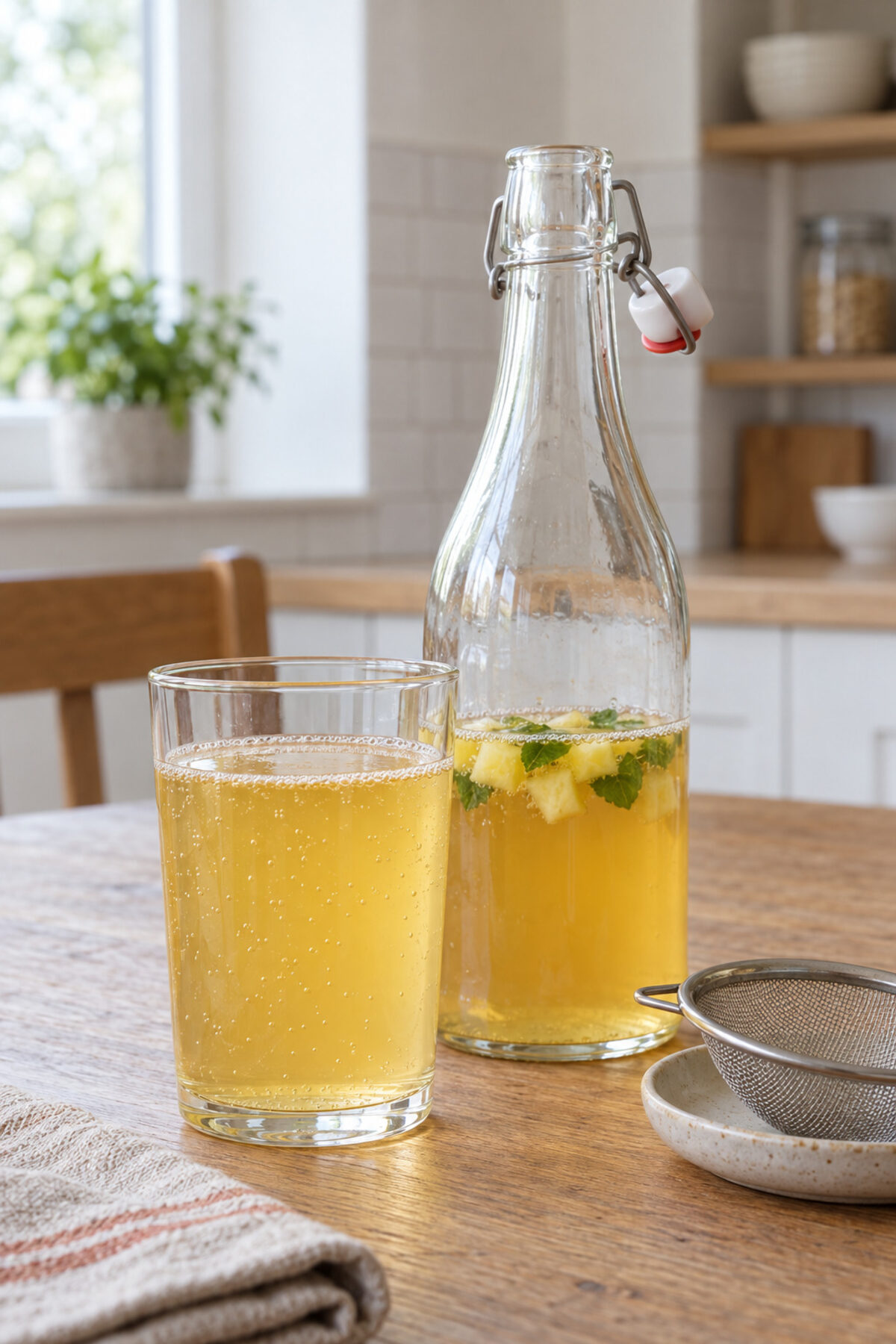
El jun es té verde con miel fermentado por un SCOBY, la colonia de bacterias y levaduras de la kombucha. El proceso es el mismo que el de la kombucha, pero fermenta más deprisa, en 4 a 7 días, y sale menos ácido, con más gas y con más alcohol. Esta receta sigue la guía de BCCDC, la autoridad sanitaria de la Columbia Británica. La miel cruda puede traer esporas de botulismo y lo que las frena es la acidez, así que aquí el pH se mide dos veces.
 IA
 IA
IA
Cómo saber si va bien
- Lleva miel: nunca para bebés menores de 12 meses.
- Fermenta en vidrio. Nada de cerámica, barro, cristal con plomo ni metal: con la acidez, el recipiente puede soltar plomo y otros tóxicos.
- El primer SCOBY, comprado.
- Iniciador a pH 4,0 o menos, y al menos un 10 % del lote (regla de la casa). La miel cruda puede traer esporas de botulismo, y la acidez es lo que impide que germinen.
- La miel, siempre en el té frío, a 20–22 °C.
- Del día 4 al 7, pH de 4,2 o menos, y nunca por debajo de 2,5. Si no llega a 4,2, tíralo y empieza de nuevo con un SCOBY sano.
- Manchas con pelusa azules, verdes, grises, marrones o negras: es moho. Tira el jun y el SCOBY. Una capa lisa, blanca o crema, es SCOBY nuevo.
- A la nevera, a 4 °C o menos, y como mucho 30 días (regla de la casa).
- Lleva alcohol, más que la kombucha. No es para niños pequeños ni para el embarazo.
De dónde sale cada dato
Cada cifra de esta receta sale de una guía de seguridad alimentaria. Guardamos una copia de cada fuente y citamos sus palabras exactas, en su idioma original.
-
1
Té verde y miel cruda
“Kombucha is typically made with black tea and refined sugar, whereas Jun is made with green tea and raw honey.”
BC Centre for Disease Control, Environmental Health Services · Safety of Fermented Foods, Section 3.11: Kombucha and Jun (September 2023, updated December 2024) · consultada el 25 de octubre de 2026
-
2
El mismo proceso que la kombucha
“The fermentation process is the same as well.”
BC Centre for Disease Control, Environmental Health Services · Safety of Fermented Foods, Section 3.11: Kombucha and Jun (September 2023, updated December 2024) · consultada el 25 de octubre de 2026
-
3
Fermenta más deprisa que la kombucha
“Jun ferments faster than kombucha.”
BC Centre for Disease Control, Environmental Health Services · Safety of Fermented Foods, Section 3.11: Kombucha and Jun (September 2023, updated December 2024) · consultada el 25 de octubre de 2026
-
4
Recipientes y botellas limpios y desinfectados
“Containers and bottles used for primary and secondary fermentations should be clean and sterilized.”
BC Centre for Disease Control, Environmental Health Services · Safety of Fermented Foods, Section 3.11: Kombucha and Jun (September 2023, updated December 2024) · consultada el 25 de octubre de 2026
-
5
Un recipiente alimentario que no reaccione con el ácido
“Containers must be food grade and non-reactive due to high acid and low pH environment of fermented teas.”
BC Centre for Disease Control, Environmental Health Services · Safety of Fermented Foods, Section 3.11: Kombucha and Jun (September 2023, updated December 2024) · consultada el 25 de octubre de 2026
-
6
Recipientes esmaltados que soltaron plomo
“Lead poisoning has occurred when inappropriate glazed containers were used to ferment highly acidic teas over time.”
BC Centre for Disease Control, Environmental Health Services · Safety of Fermented Foods, Section 3.11: Kombucha and Jun (September 2023, updated December 2024) · consultada el 25 de octubre de 2026
-
7
Para empezar, un cultivo comprado
“Commercial kombucha and jun starter cultures may be used for initial batches.”
BC Centre for Disease Control, Environmental Health Services · Safety of Fermented Foods, Section 3.11: Kombucha and Jun (September 2023, updated December 2024) · consultada el 25 de octubre de 2026
-
8
El iniciador acidifica y frena a los patógenos
“The addition of backslopped culture acidifies the brew, inhibiting growth of pathogenic microorganisms.”
BC Centre for Disease Control, Environmental Health Services · Safety of Fermented Foods, Section 3.11: Kombucha and Jun (September 2023, updated December 2024) · consultada el 25 de octubre de 2026
Ver los 38 datos que faltan
-
9
La acidez impide que germinen las esporas de la miel
“Raw honey can contain botulism spores. The acidity (pH<4.6) of the jun and fermentation process should prevent spores from fruiting.”
BC Centre for Disease Control, Environmental Health Services · Safety of Fermented Foods, Section 3.11: Kombucha and Jun (September 2023, updated December 2024) · consultada el 25 de octubre de 2026
-
10
2 cucharaditas de té verde en 2 litros, de 3 a 5 minutos
“Green tea leaves are steeped in boiled water (2 teaspoons in 2 L) for 3-5 minutes before they are removed by a filtration step.”
BC Centre for Disease Control, Environmental Health Services · Safety of Fermented Foods, Section 3.11: Kombucha and Jun (September 2023, updated December 2024) · consultada el 25 de octubre de 2026
-
11
Hervir elimina los patógenos del té
“Boiling removes pathogens that may be present on tea leaves or sugar before starter culture is added”
BC Centre for Disease Control, Environmental Health Services · Safety of Fermented Foods, Section 3.11: Kombucha and Jun (September 2023, updated December 2024) · consultada el 25 de octubre de 2026
-
12
Sirve cualquier té de Camellia sinensis
“Steeped tea made from any variety of Camellia sinensis (black, green, white or oolong) is acceptable.”
BC Centre for Disease Control, Environmental Health Services · Safety of Fermented Foods, Section 3.11: Kombucha and Jun (September 2023, updated December 2024) · consultada el 25 de octubre de 2026
-
13
Las infusiones de hierbas pueden no servir
“Herbal teas and infusions may not be acceptable if they contain compounds that interfere with natural fermentative bacteria, if they elaborate toxins or have unknown toxicity.”
BC Centre for Disease Control, Environmental Health Services · Safety of Fermented Foods, Section 3.11: Kombucha and Jun (September 2023, updated December 2024) · consultada el 25 de octubre de 2026
-
14
De 60 °C a 20 °C en 2 horas, nunca en más de 6
“Cool mixture from 60oC to 20oC (ambient temp) within 2 hrs and no longer than 6 hrs before adding culture”
BC Centre for Disease Control, Environmental Health Services · Safety of Fermented Foods, Section 3.11: Kombucha and Jun (September 2023, updated December 2024) · consultada el 25 de octubre de 2026
-
15
El té, a 20–22 °C antes de la miel
“The mixture is cooled to room temperature (20-22°C).”
BC Centre for Disease Control, Environmental Health Services · Safety of Fermented Foods, Section 3.11: Kombucha and Jun (September 2023, updated December 2024) · consultada el 25 de octubre de 2026
-
16
250 ml de miel en 2 litros
“Honey is added (250 mL into the 2 L solution) and stirred until completely dissolved.”
BC Centre for Disease Control, Environmental Health Services · Safety of Fermented Foods, Section 3.11: Kombucha and Jun (September 2023, updated December 2024) · consultada el 25 de octubre de 2026
-
17
De 100 a 200 ml de iniciador por litro
“previous SCOBY culture is added at 100 to 200 mL/L.”
BC Centre for Disease Control, Environmental Health Services · Safety of Fermented Foods, Section 3.11: Kombucha and Jun (September 2023, updated December 2024) · consultada el 25 de octubre de 2026
-
18
El recipiente, abierto al aire
“Fermentation vessels should be open to allow aerobic microbial activity.”
BC Centre for Disease Control, Environmental Health Services · Safety of Fermented Foods, Section 3.11: Kombucha and Jun (September 2023, updated December 2024) · consultada el 25 de octubre de 2026
-
19
Una tela limpia y porosa, que deja pasar el aire
“or similar clean porous cloth to protect from contamination while permitting air flow.”
BC Centre for Disease Control, Environmental Health Services · Safety of Fermented Foods, Section 3.11: Kombucha and Jun (September 2023, updated December 2024) · consultada el 25 de octubre de 2026
-
20
Tela de trama tupida
“Vessels should be protected using tightly woven cloth”
BC Centre for Disease Control, Environmental Health Services · Safety of Fermented Foods, Section 3.11: Kombucha and Jun (September 2023, updated December 2024) · consultada el 25 de octubre de 2026
-
21
De 4 a 7 días a 21–26 °C
“The primary fermentation usually proceeds for 4 to 7 days at 21-26 °C.”
BC Centre for Disease Control, Environmental Health Services · Safety of Fermented Foods, Section 3.11: Kombucha and Jun (September 2023, updated December 2024) · consultada el 25 de octubre de 2026
-
22
Lo óptimo, 20–22 °C; entre 10 y 26 °C
“Optimal temperatures for fermentation are between 20°C to 22°C with an upper limit of 26°C and lower limit of 10°C.”
BC Centre for Disease Control, Environmental Health Services · Safety of Fermented Foods, Section 3.11: Kombucha and Jun (September 2023, updated December 2024) · consultada el 25 de octubre de 2026
-
23
La acidez se nota el día 4
“Initial fermentation lasts 4 to 7 days, with acidity becoming evident on day 4.”
BC Centre for Disease Control, Environmental Health Services · Safety of Fermented Foods, Section 3.11: Kombucha and Jun (September 2023, updated December 2024) · consultada el 25 de octubre de 2026
-
24
pH de 4,2 o menos, nunca por debajo de 2,5
“Ferment to a pH of 4.2 or lower. Do not ferment to a pH lower than 2.5.”
BC Centre for Disease Control, Environmental Health Services · Safety of Fermented Foods, Section 3.11: Kombucha and Jun (September 2023, updated December 2024) · consultada el 25 de octubre de 2026
-
25
Menos ácido, entre pH 2,5 y 3,5
“Jun also tends to be less acidic with the acidity of the final ferment should be between 2.5-3.5, with maximum pH of jun at 4.2”
BC Centre for Disease Control, Environmental Health Services · Safety of Fermented Foods, Section 3.11: Kombucha and Jun (September 2023, updated December 2024) · consultada el 25 de octubre de 2026
-
26
Si no llega a 4,2, se tira
“If pH does not drop to 4.2 or below, fermentation has failed and product should be discarded. New, healthy SCOBY culture should be used in subsequent batches.”
BC Centre for Disease Control, Environmental Health Services · Safety of Fermented Foods, Section 3.11: Kombucha and Jun (September 2023, updated December 2024) · consultada el 25 de octubre de 2026
-
27
Si se hunde y no vuelve a subir, mala señal
“when pellicles sink to bottom of fermentation vessel and do not rise again”
BC Centre for Disease Control, Environmental Health Services · Safety of Fermented Foods, Section 3.11: Kombucha and Jun (September 2023, updated December 2024) · consultada el 25 de octubre de 2026
-
28
Manchas con pelusa de colores, se tira
“Discard if fuzzy patches of blue, green, grey, brown or black on SCOBY.”
BC Centre for Disease Control, Environmental Health Services · Safety of Fermented Foods, Section 3.11: Kombucha and Jun (September 2023, updated December 2024) · consultada el 25 de octubre de 2026
-
29
A la nevera, a 4 °C o menos
“Once fermentation is completed, kombucha and jun should be bottled and refrigerated to 4°C or lower to stop further fermentation”
BC Centre for Disease Control, Environmental Health Services · Safety of Fermented Foods, Section 3.11: Kombucha and Jun (September 2023, updated December 2024) · consultada el 25 de octubre de 2026
-
30
Más gas que la kombucha
“Jun tends to be more carbonated than kombucha so extra caution is needed when bottling and opening.”
BC Centre for Disease Control, Environmental Health Services · Safety of Fermented Foods, Section 3.11: Kombucha and Jun (September 2023, updated December 2024) · consultada el 25 de octubre de 2026
-
31
Fuera de la nevera, una botella puede estallar
“Some jun and kombucha products can explode if not refrigerated.”
BC Centre for Disease Control, Environmental Health Services · Safety of Fermented Foods, Section 3.11: Kombucha and Jun (September 2023, updated December 2024) · consultada el 25 de octubre de 2026
-
32
Botellas que aguanten el ácido y la presión
“Glass bottles, cans or kegs should be resistant to acid leaching and pressure build-up.”
BC Centre for Disease Control, Environmental Health Services · Safety of Fermented Foods, Section 3.11: Kombucha and Jun (September 2023, updated December 2024) · consultada el 25 de octubre de 2026
-
33
Más alcohol que la kombucha
“The alcohol content of jun is generally higher than kombucha.”
BC Centre for Disease Control, Environmental Health Services · Safety of Fermented Foods, Section 3.11: Kombucha and Jun (September 2023, updated December 2024) · consultada el 25 de octubre de 2026
-
34
No apto para niños pequeños ni en el embarazo
“Not a suitable beverage for young children or during pregnancy”
BC Centre for Disease Control, Environmental Health Services · Safety of Fermented Foods, Section 3.11: Kombucha and Jun (September 2023, updated December 2024) · consultada el 25 de octubre de 2026
-
35
Desinfectar en agua a 77 °C o más durante 30 segundos
“Submerge cleaned equipment in hot water (at least 171°F) for at least 30 seconds to sanitize.”
National Center for Home Food Preservation (USDA, University of Georgia) · Kombucha Tea · consultada el 20 de octubre de 2026
-
36
Se mide una cucharada de iniciador
“Place 1 tablespoon of starter liquid in a small bowl or cup.”
National Center for Home Food Preservation (USDA, University of Georgia) · Kombucha Tea · consultada el 20 de octubre de 2026
-
37
La cucharada medida se tira
“If the pH is 4.0 OR LESS, proceed to step 4 of the instructions above, discarding the starter liquid that you tested.”
National Center for Home Food Preservation (USDA, University of Georgia) · Kombucha Tea · consultada el 20 de octubre de 2026
-
38
Nada de cerámica ni cristal con plomo
“Because of the acidity of Kombucha tea, it should not be prepared or stored in containers made from materials such as ceramic or lead crystal, which both contain toxic elements than can leach into the tea.”
CDC, MMWR 44(48):892 · Unexplained Severe Illness Possibly Associated with Consumption of Kombucha Tea -- Iowa, 1995 · consultada el 20 de octubre de 2026
-
39
El iniciador, a pH 4,0 o menos
“Verify that the starter liquid has a pH of ≤ 4.0.”
University of Georgia Cooperative Extension (National Center for Home Food Preservation) · Crafting Kombucha at Home: Frequently Asked Questions (2026) · consultada el 20 de octubre de 2026
-
40
Se guarda el 20 % del líquido con el SCOBY
“After each batch, reserve 20% of the liquid and the SCOBY for the subsequent batch.”
University of Georgia Cooperative Extension (National Center for Home Food Preservation) · Crafting Kombucha at Home: Frequently Asked Questions (2026) · consultada el 20 de octubre de 2026
-
41
Con frío va más lento y con calor, más rápido
“Cooler temperatures may slow fermentation, while warmer temperatures can accelerate it.”
University of Georgia Cooperative Extension (National Center for Home Food Preservation) · Crafting Kombucha at Home: Frequently Asked Questions (2026) · consultada el 20 de octubre de 2026
-
42
La kombucha, hasta 30 días en la nevera
“kombucha should be stored in the refrigerator at 40 degrees Fahrenheit or below to slow down fermentation and preserve flavor. It can be stored under refrigeration temperatures for up to 30 days.”
University of Georgia Cooperative Extension (National Center for Home Food Preservation) · Crafting Kombucha at Home: Frequently Asked Questions (2026) · consultada el 20 de octubre de 2026
-
43
75 g de miel por litro
“Honey was added, 75 g/L, and stirred until dissolved.”
Foods (MDPI), via PubMed Central · Kombucha Fermentation of Olympus Mountain Tea (Sideritis scardica) Sweetened with Thyme Honey (2023) · consultada el 25 de octubre de 2026
-
44
Una capa blanquecina el primer o el segundo día
“In all solutions, an off-white cellulose membrane was formed on the first to the second day of fermentation”
Foods (MDPI), via PubMed Central · Kombucha Fermentation of Olympus Mountain Tea (Sideritis scardica) Sweetened with Thyme Honey (2023) · consultada el 25 de octubre de 2026
-
45
Nada de miel a menores de 12 meses
“Honey should not be added to water, food, or formula fed to infants under 12 months of age.”
UF/IFAS Extension · Infant Botulism and Honey (ENY-128/AA142) · consultada el 25 de octubre de 2026
-
46
Nada de miel a menores de un año, según la AESAN
“evitando el consumo de miel y de infusiones de especies vegetales en niños menores de un año (recomendaciones AESAN)”
Instituto de Salud Carlos III, Centro Nacional de Epidemiología (RENAVE) · Informe de botulismo 2023 · consultada el 25 de octubre de 2026