 IA
Kombucha casera
Nivel 2 · con algo de práctica
Té, azúcar y un SCOBY. Se mide dos veces, el iniciador antes de empezar y la kombucha antes de la nevera.
- Iniciador
- 20% del lote
- Tiempo
- 7–10días
- Temperatura
- 20–25°C
- Tarro
- 6L
La regla de oro: un iniciador ácido para empezar y el pH medido antes de la nevera.
Sin registrarte. Te guiamos paso a paso, de la báscula a la nevera.
Revisada el 20 de octubre de 2026 · 38 datos, cada uno con su fuente
Necesitas
- Tarro de vidrio de 6 litros
- Papel absorbente, filtro de café o gasa limpia, con una goma elástica
- Olla pequeña
- Termómetro de cocina
- Tiras de pH y un medidor de pH calibrado
- Báscula de cocina
- Botellas o tarros limpios para la nevera
Paso a paso
-
Lávate las manos y desinfecta el equipo
Lávate bien las manos con agua y jabón. Lava el tarro y los utensilios, y desinféctalos sumergidos en agua a 77 °C o más durante al menos 30 segundos.
-
Mide el pH del líquido iniciador
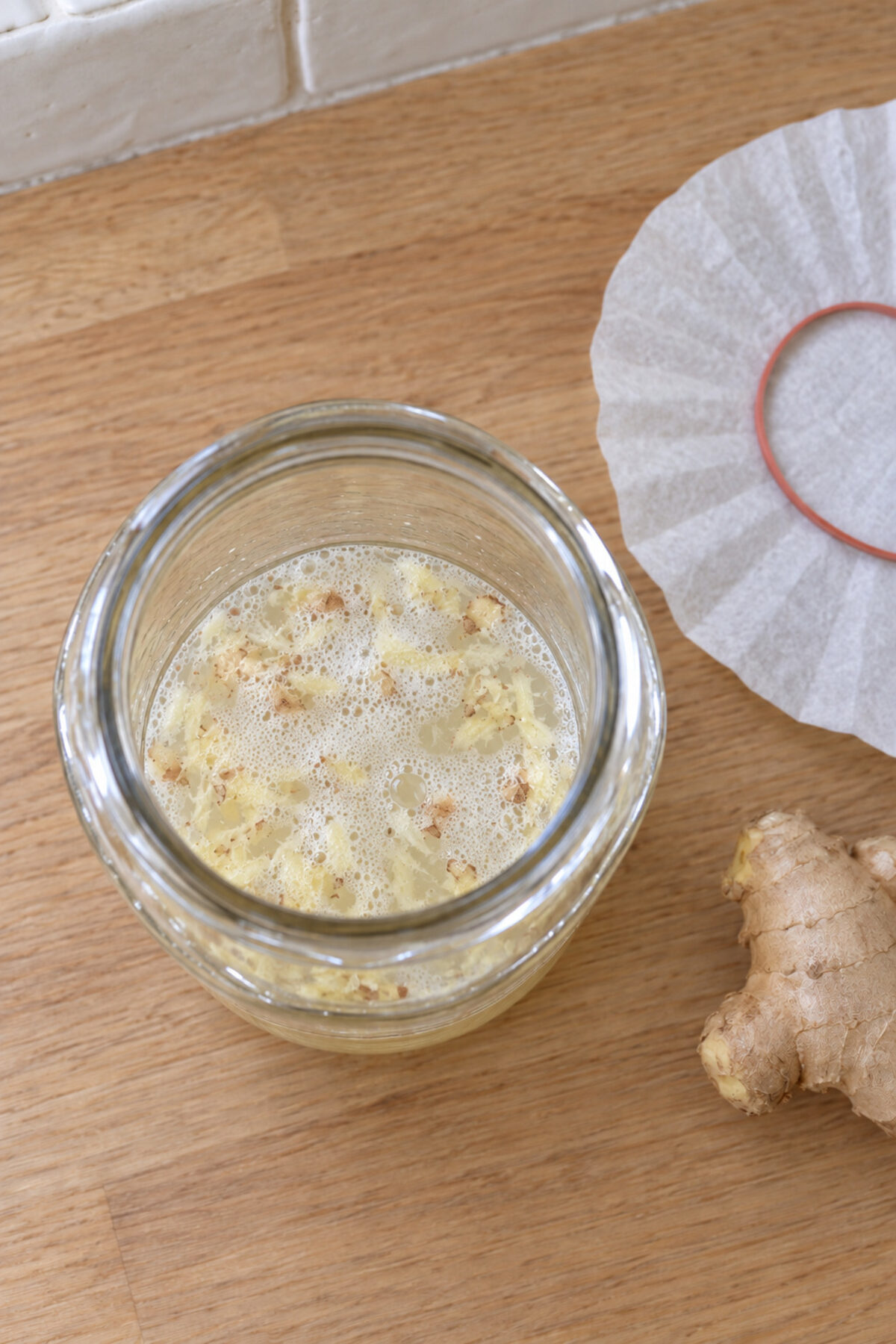
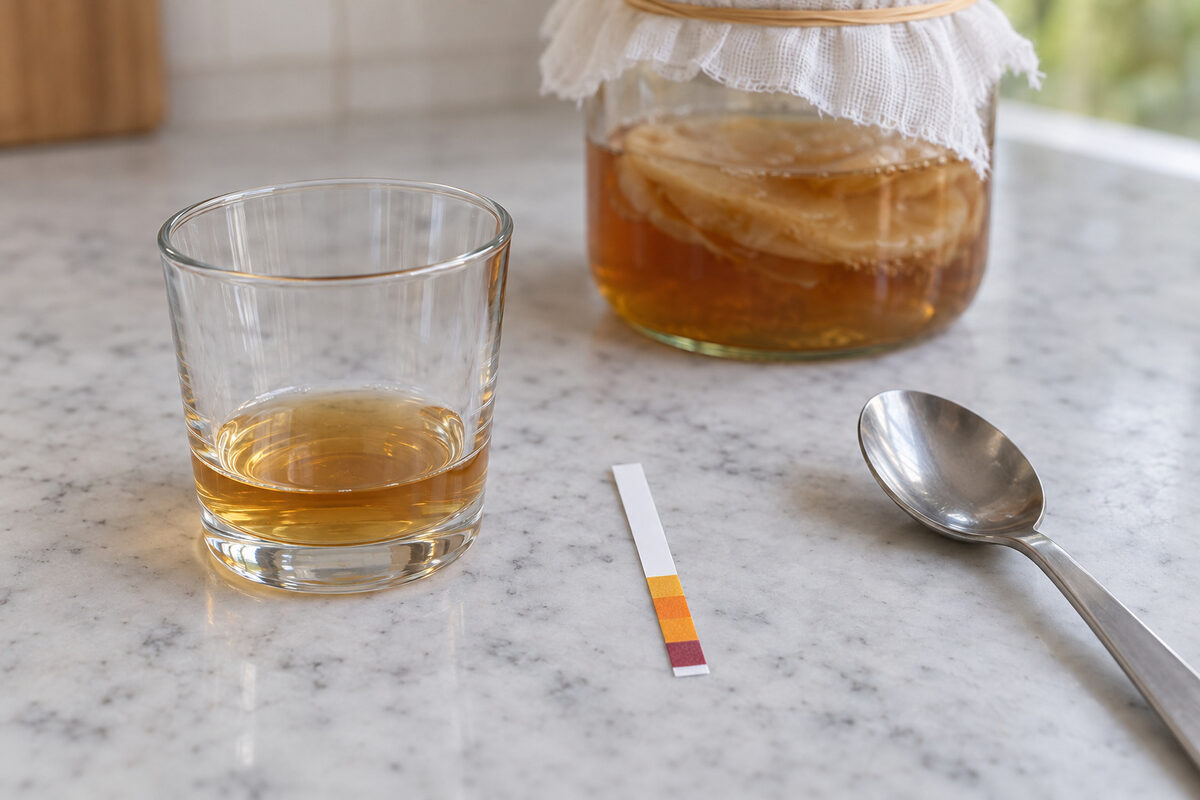
Pon una cucharada del iniciador en un vaso y mídela con una tira de pH. Si marca 4,0 o menos, sigue y tira esa cucharada. Si marca más, no lo uses.
 IA
Truco: Esa acidez de partida es la que protege la kombucha mientras arranca.
-
Haz el té, endúlzalo y enfríalo
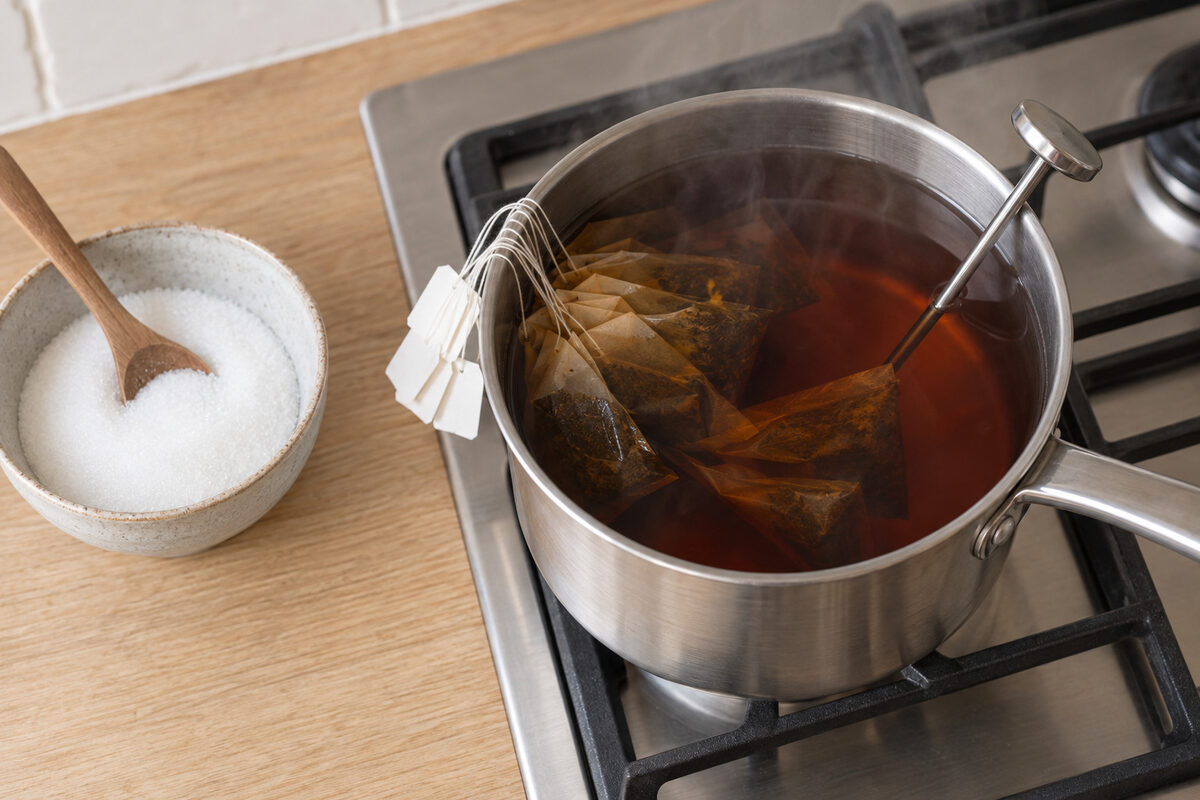
Calienta 950 ml del agua a 74–76 °C (compruébalo con el termómetro) y deja el té 2 minutos. Saca las bolsitas, vierte la infusión en el tarro y disuelve el azúcar. Añade el resto del agua, 2,85 litros, fría, y comprueba que el té está por debajo de 35 °C.
 IA
Truco: Usa azúcar blanco granulado: la receta no está probada con otros.
-
Añade el SCOBY y tapa el tarro
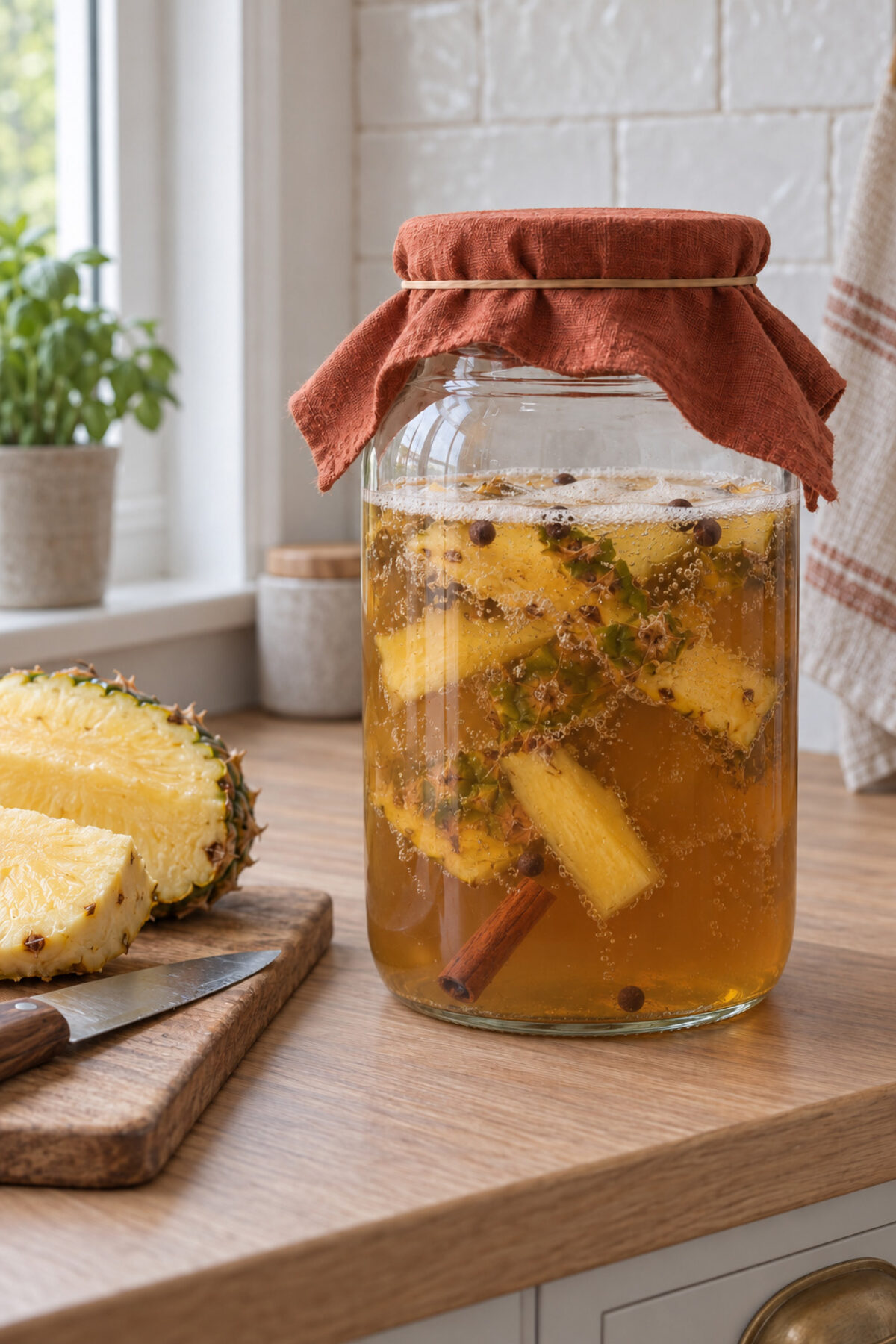
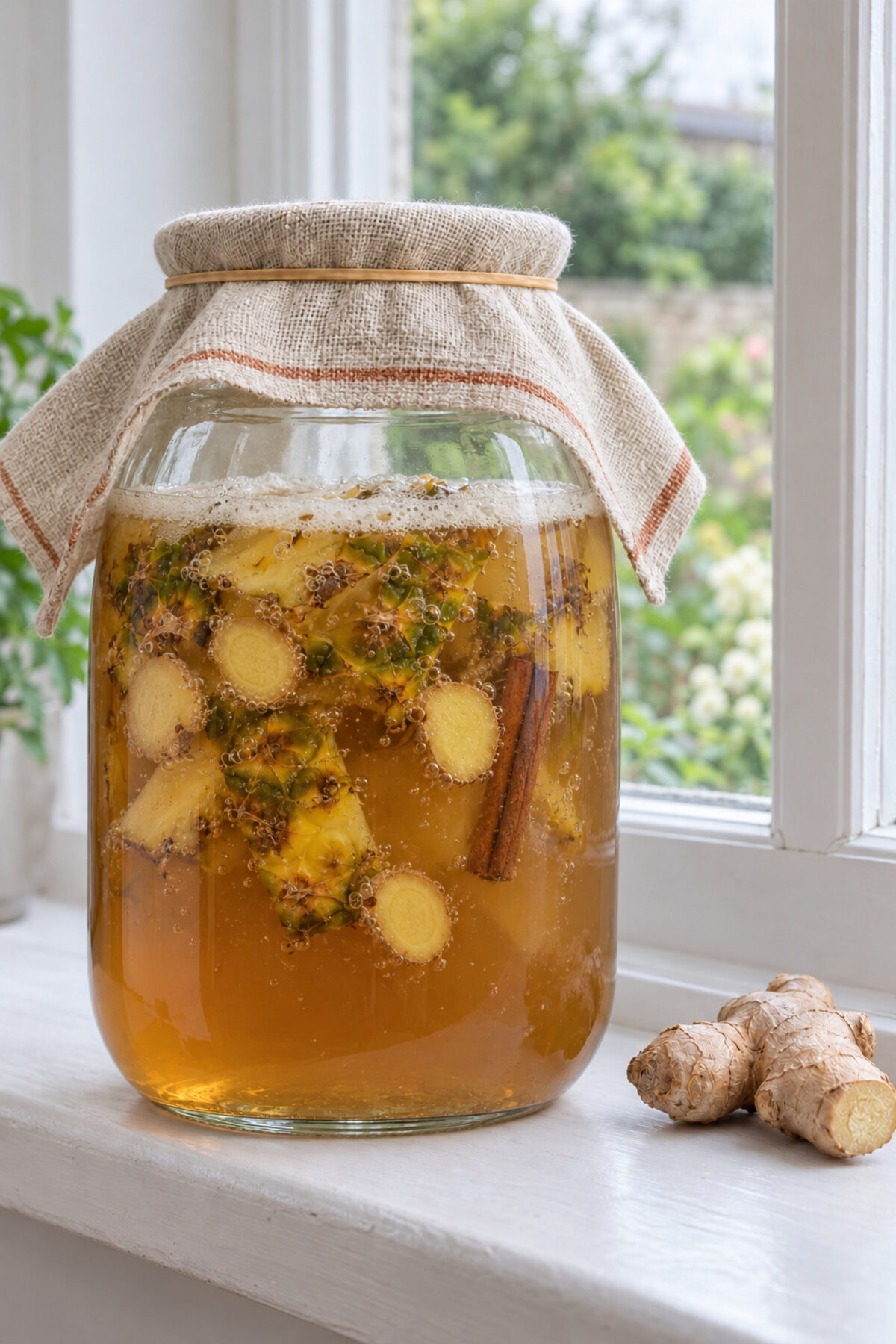
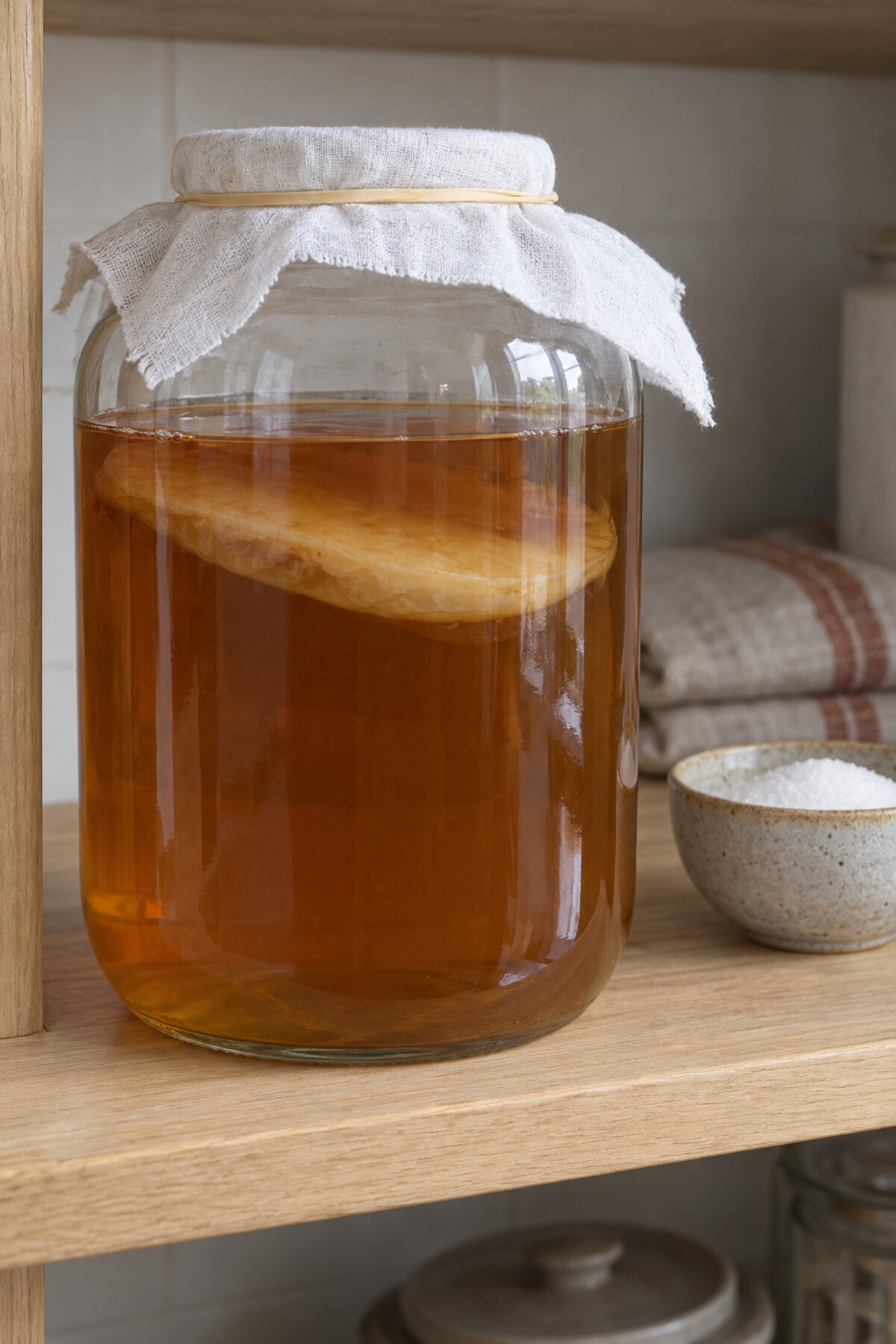
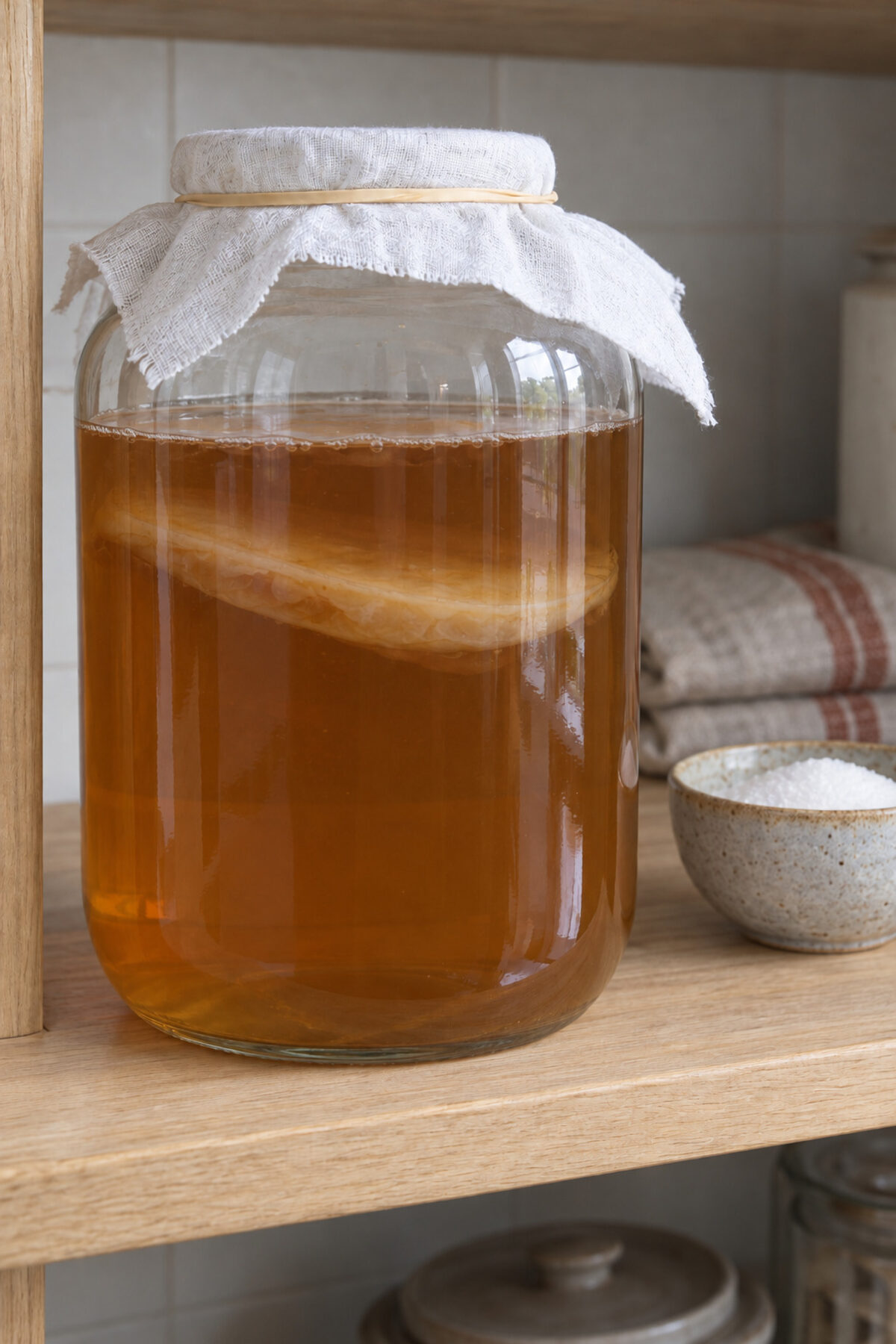
Añade el SCOBY con su líquido iniciador y remueve bien. Seca la boca del tarro, tápalo con papel absorbente, un filtro de café o una gasa limpia, y sujétalo con una goma. Apunta la fecha: hoy es el día 0.
 IA
Truco: ¿Tu SCOBY trae menos de 950 ml de iniciador? El mínimo es el 10 % del lote, unos 425 ml.
-
Déjala de 7 a 10 días y mide el pH
Déjala a 20–25 °C: con frío va más lenta y con calor, más rápida. El día 7, mide el pH con un medidor calibrado. Tiene que estar en 4,2 o menos, y nunca por debajo de 2,5.
Truco: Burbujas, olor ácido y una capa nueva en la superficie son buena señal.
-
Pásala a la nevera y guarda el SCOBY
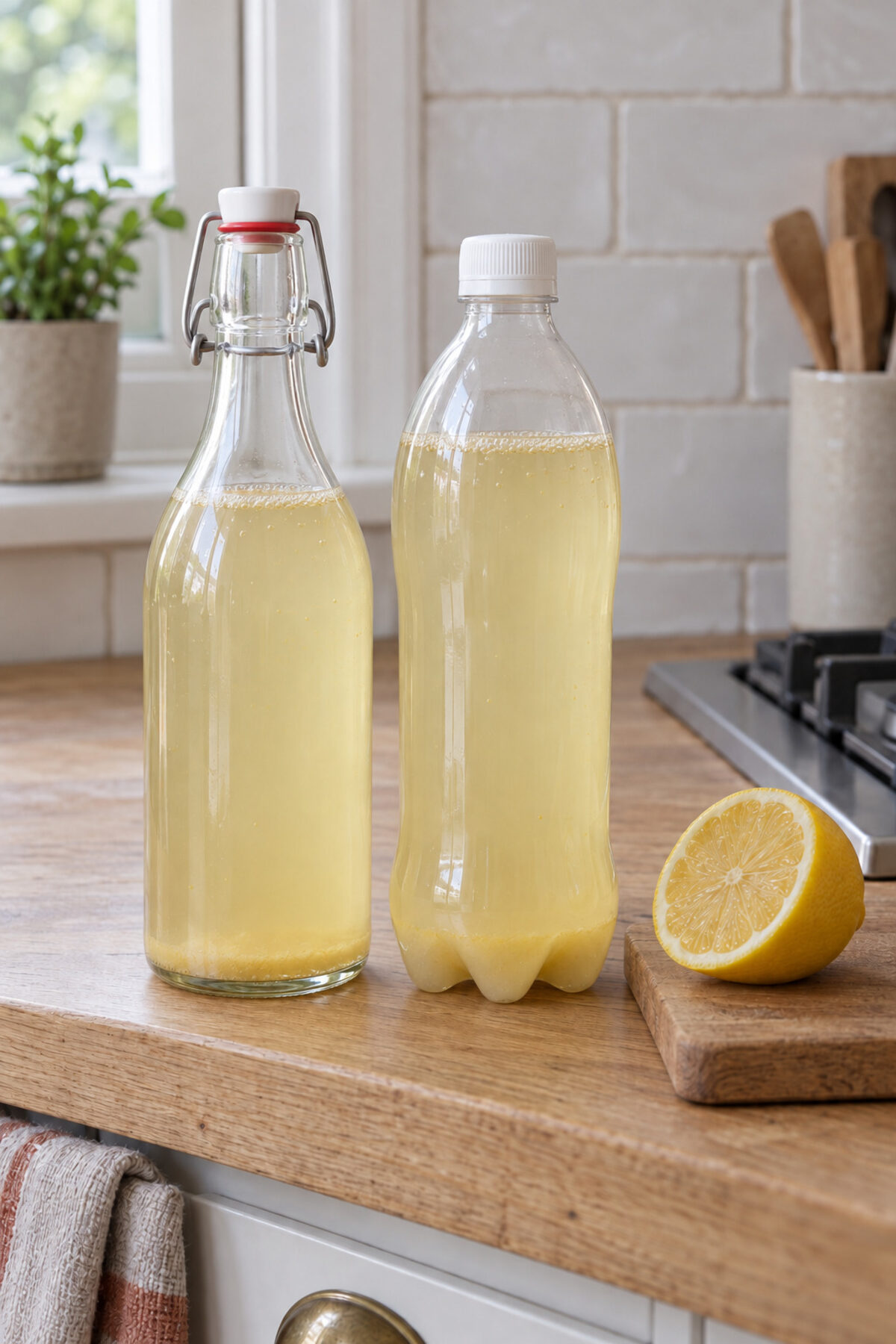
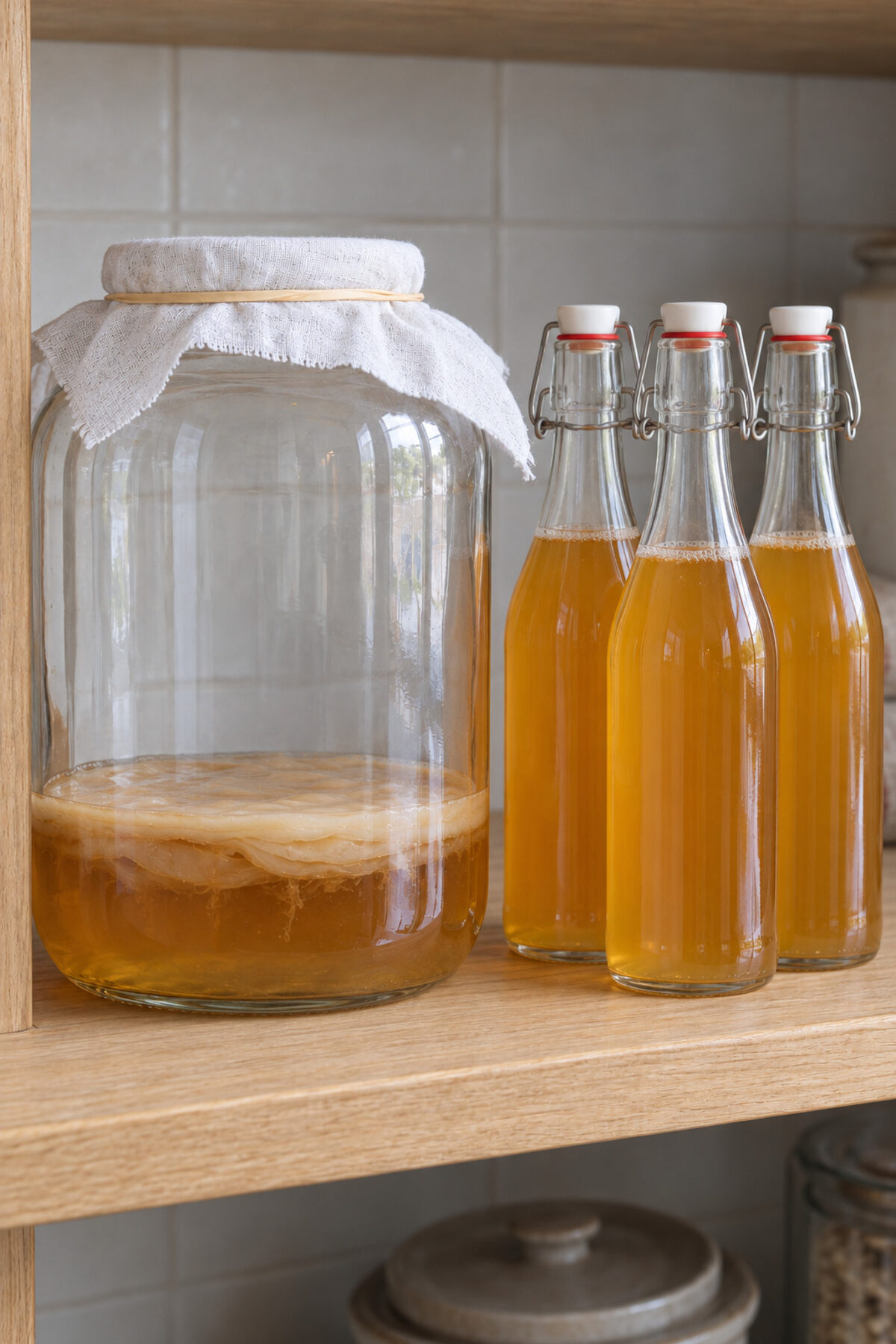
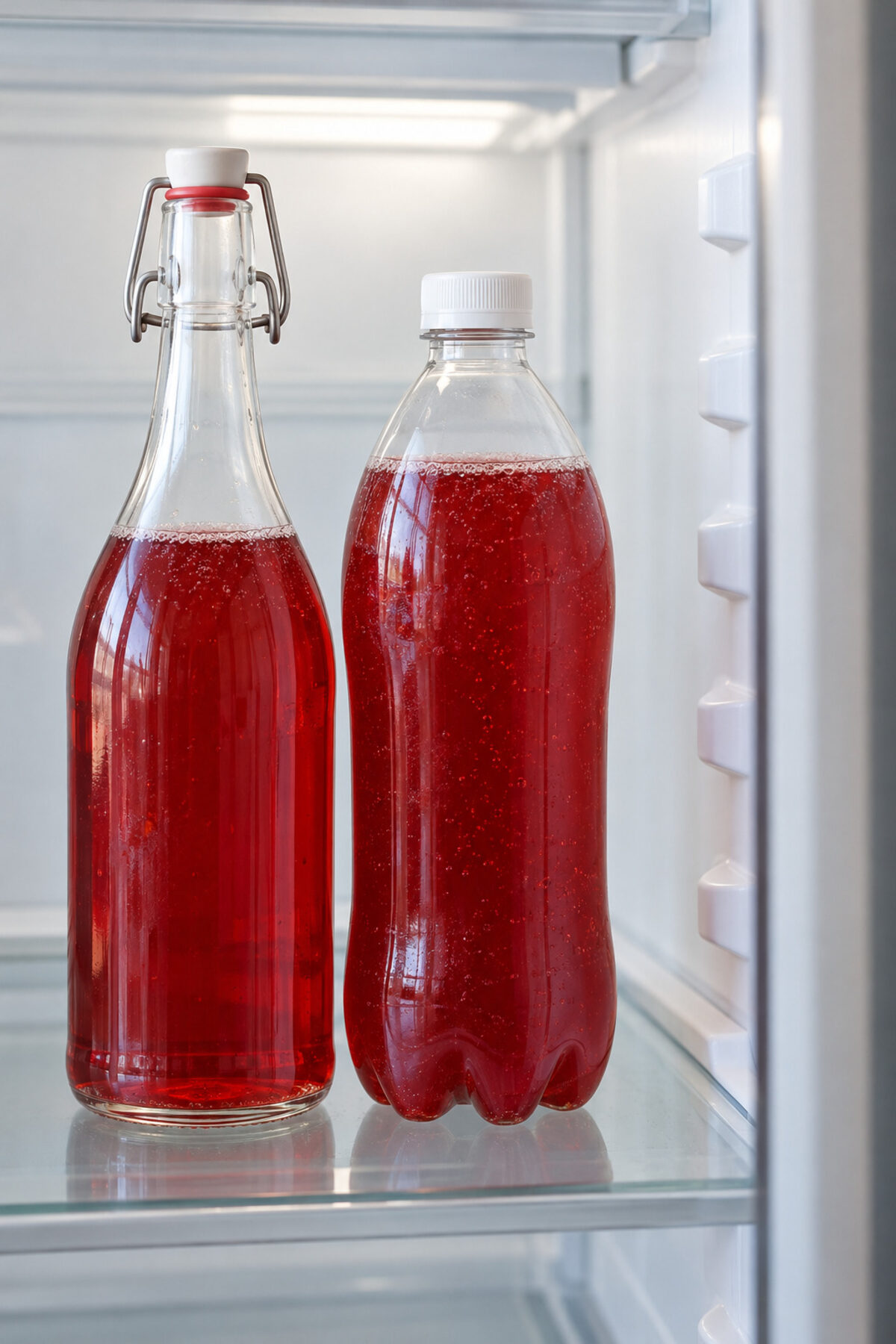
Entre el día 7 y el 10, cuando tenga la acidez que te guste, pásala a botellas o tarros limpios y a la nevera, a 4 °C o menos. Aguanta hasta 30 días. Aparta el SCOBY con una quinta parte del líquido: es el iniciador del siguiente lote.
 IA
Truco: Si cierras las botellas herméticas, vigílalas: el gas se acumula y pueden estallar.
Sin registrarte. Te guiamos paso a paso, de la báscula a la nevera.
Variaciones
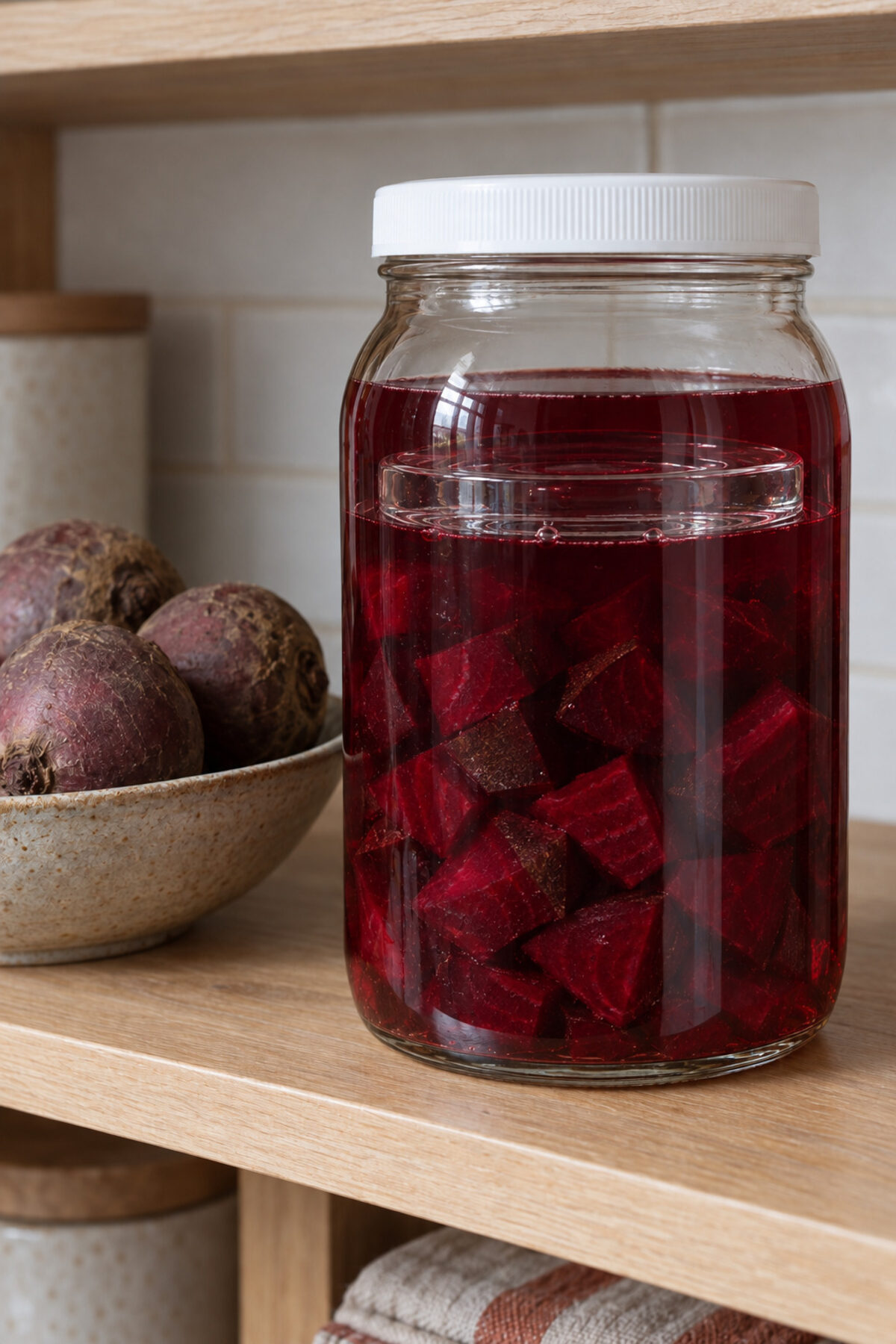
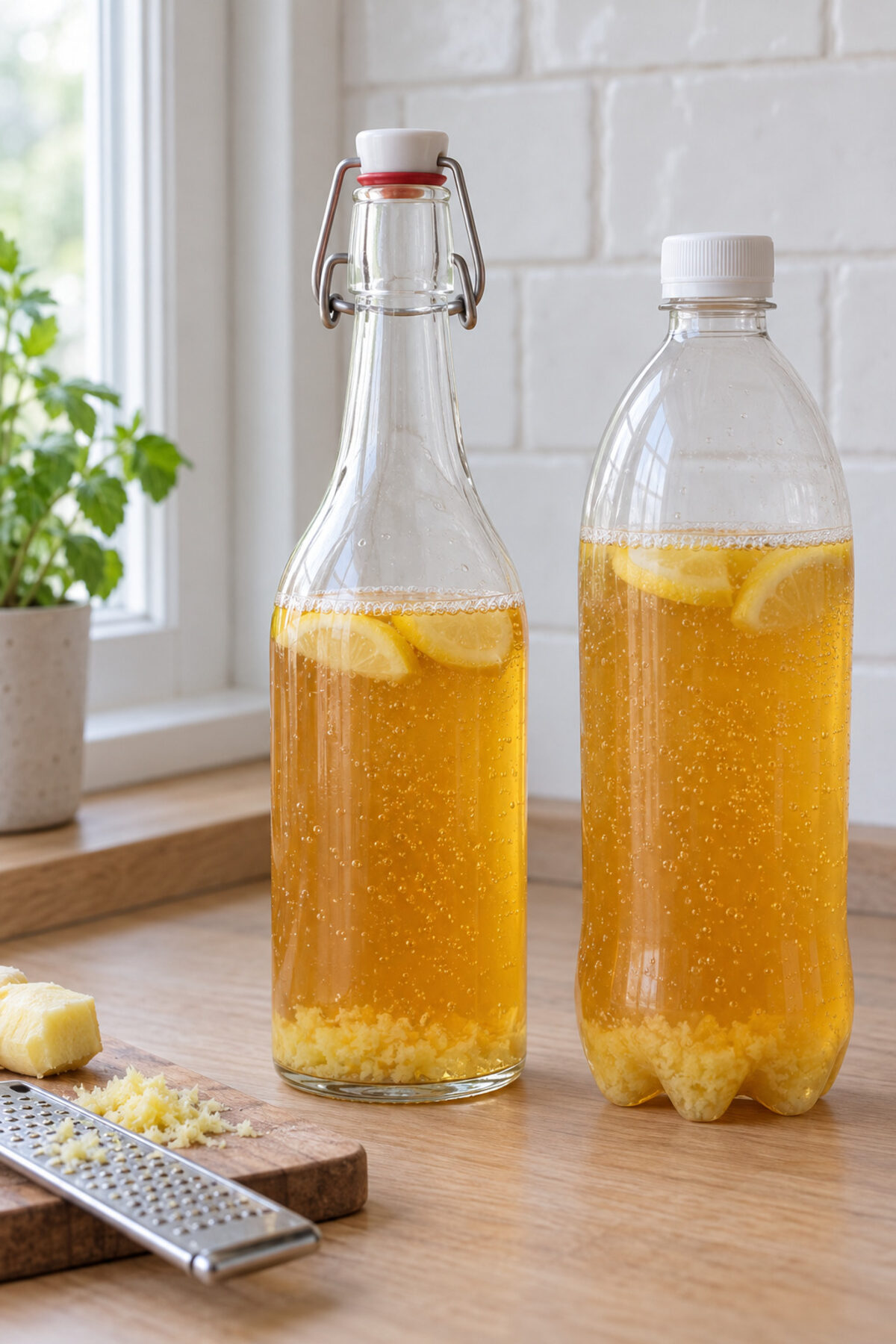
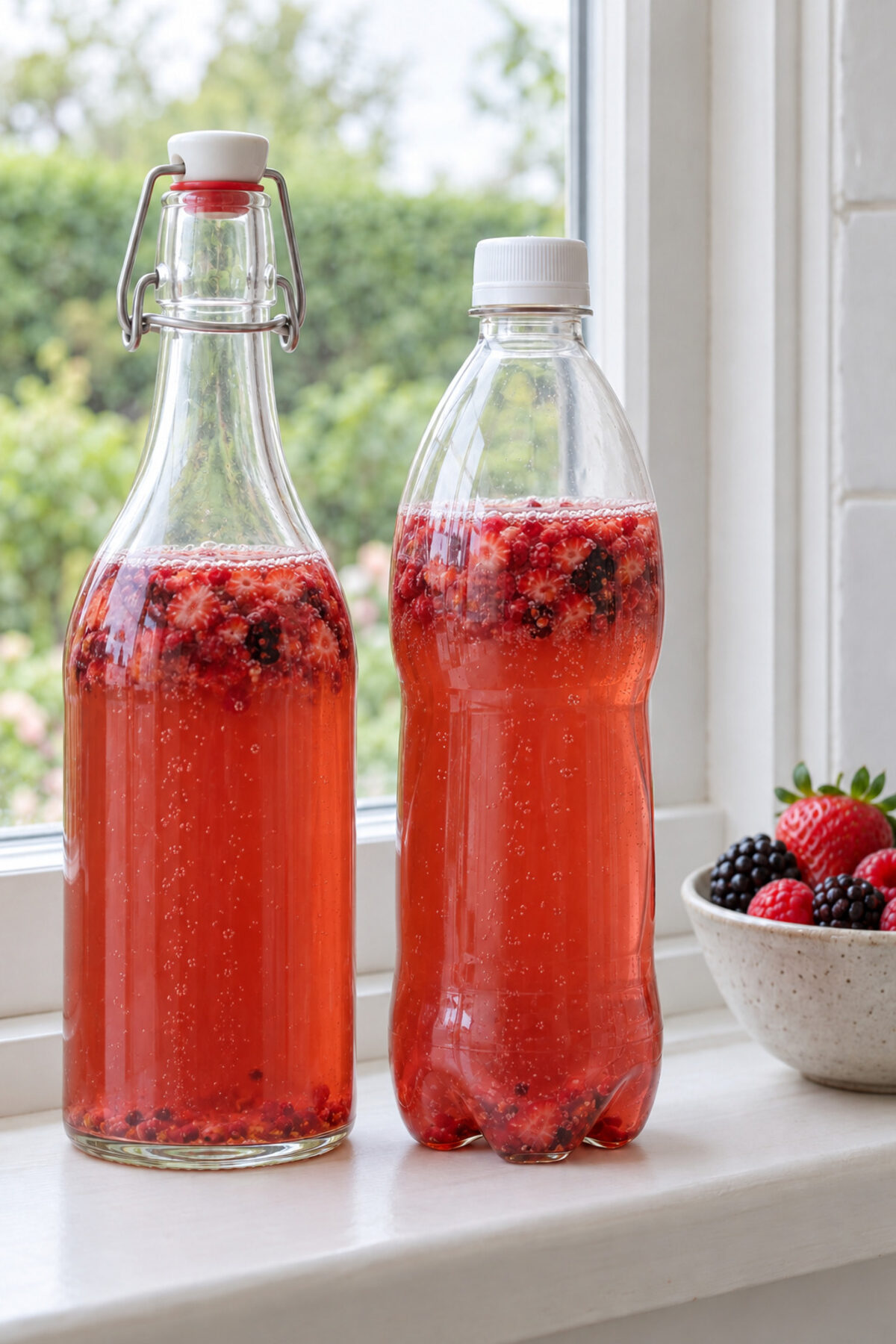
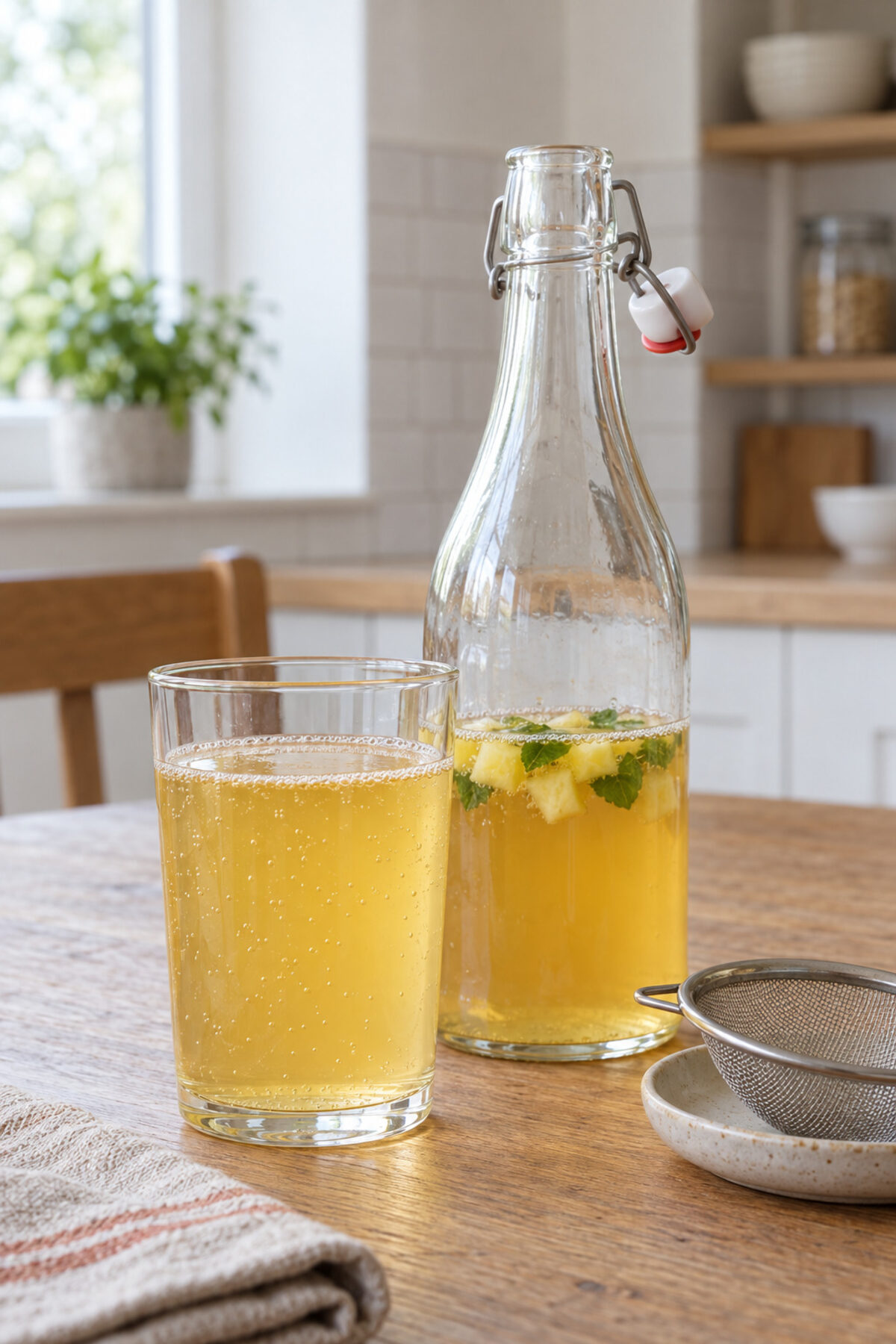
El mismo método, otro sabor. Cuando domines esta, prueba una de estas.
Qué vas a ver
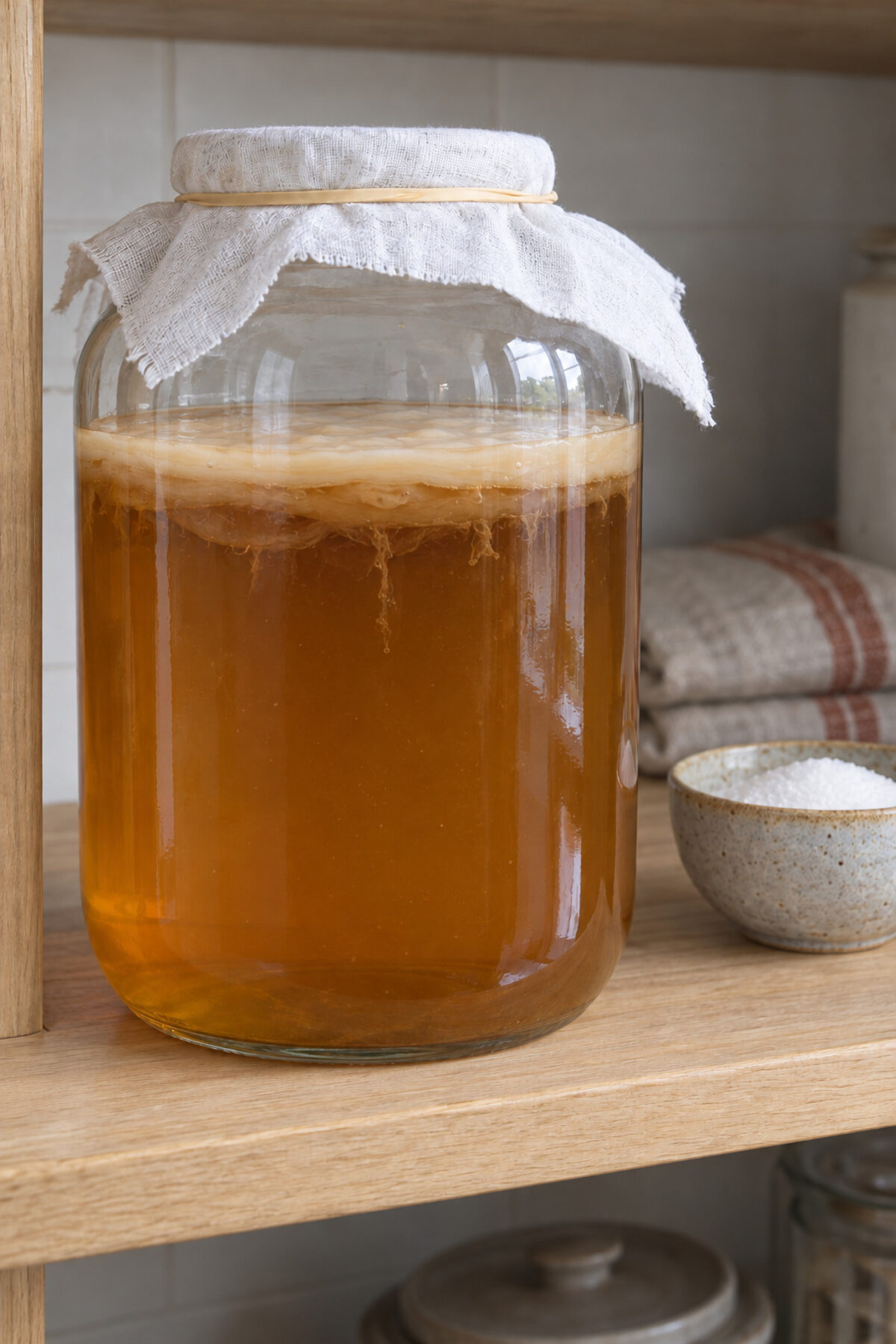
La kombucha es té con azúcar fermentado por un SCOBY, una colonia de bacterias y levaduras. Las levaduras convierten el azúcar en alcohol y gas, y las bacterias convierten ese alcohol en ácido acético. Esta receta sale de un estudio de las universidades de Georgia y Kansas State. Hazla entera: con media receta y el mismo SCOBY puede quedar demasiado ácida.
IA
 IA
IA
Cómo saber si va bien
- Fermenta en vidrio. Nada de cerámica, cristal con plomo ni metal: la kombucha es ácida y puede soltar en el té elementos tóxicos del recipiente.
- El primer SCOBY, comprado. No uses uno que pase de mano en mano.
- Iniciador a pH 4,0 o menos, y al menos un 10 % del lote. Sin esa acidez de partida, no empieces.
- El día 7, pH de 4,2 o menos. Si no ha llegado, tírala y empieza de nuevo con un SCOBY comprado.
- Nunca por debajo de pH 2,5. La nevera frena el ácido: pásala entre el día 7 y el 10.
- Manchas secas con pelusa, blancas o de color: es moho. Tira el té y el SCOBY. Una capa nueva en la superficie es SCOBY que crece.
- No más de 120 ml al día. No se aconseja a personas inmunodeprimidas, embarazadas, niños ni con ciertas enfermedades.
De dónde sale cada dato
Cada cifra de esta receta sale de una guía de seguridad alimentaria. Guardamos una copia de cada fuente y citamos sus palabras exactas, en su idioma original.
-
1
Las levaduras hacen alcohol y las bacterias lo convierten en ácido acético
“In the first step, the yeast in the SCOBY ferments the added sugar and forms alcohol and carbon dioxide. In the second step, the bacteria in the SCOBY ferments the alcohol to produce vinegar (acetic acid).”
Virginia Cooperative Extension (Virginia Tech) · What do I need to know to sell KOMBUCHA at the farmers market? (FST-297, last reviewed November 2025) · consultada el 20 de octubre de 2026
-
2
El primer SCOBY, comprado y no pasado de mano en mano
“It is highly recommended that you purchase your SCOBY commercially for first use. Do not pass SCOBY cultures from one person to another.”
Virginia Cooperative Extension (Virginia Tech) · What do I need to know to sell KOMBUCHA at the farmers market? (FST-297, last reviewed November 2025) · consultada el 20 de octubre de 2026
-
3
Un 10 % de iniciador
“Add 10% inoculum (SCOBY)”
Virginia Cooperative Extension (Virginia Tech) · What do I need to know to sell KOMBUCHA at the farmers market? (FST-297, last reviewed November 2025) · consultada el 20 de octubre de 2026
-
4
Recipiente que no sea de metal
“Ferment in a non-metallic food grade container.”
Virginia Cooperative Extension (Virginia Tech) · What do I need to know to sell KOMBUCHA at the farmers market? (FST-297, last reviewed November 2025) · consultada el 20 de octubre de 2026
-
5
El agua del té, por encima de 74 °C
“Ensure that hot water (>165°F) is used to steep the tea.”
Virginia Cooperative Extension (Virginia Tech) · What do I need to know to sell KOMBUCHA at the farmers market? (FST-297, last reviewed November 2025) · consultada el 20 de octubre de 2026
-
6
pH de 4,2 o menos, con un medidor calibrado
“Monitor the pH with a calibrated pH meter during fermentation to ensure the product gets to ≤4.2.”
Virginia Cooperative Extension (Virginia Tech) · What do I need to know to sell KOMBUCHA at the farmers market? (FST-297, last reviewed November 2025) · consultada el 20 de octubre de 2026
-
7
Nunca por debajo de pH 2,5
“To prevent the product from getting dangerously acidic, the pH should be no lower than 2.5.”
Virginia Cooperative Extension (Virginia Tech) · What do I need to know to sell KOMBUCHA at the farmers market? (FST-297, last reviewed November 2025) · consultada el 20 de octubre de 2026
-
8
A la nevera entre el día 7 y el 10
“After 7-10 days, refrigerate the kombucha with a tight fitting lid.”
Virginia Cooperative Extension (Virginia Tech) · What do I need to know to sell KOMBUCHA at the farmers market? (FST-297, last reviewed November 2025) · consultada el 20 de octubre de 2026
Ver los 30 datos que faltan
-
9
La nevera frena el alcohol y el exceso de ácido
“Refrigeration limits alcohol and excessive acid production.”
Virginia Cooperative Extension (Virginia Tech) · What do I need to know to sell KOMBUCHA at the farmers market? (FST-297, last reviewed November 2025) · consultada el 20 de octubre de 2026
-
10
No más de 120 ml al día
“no more than 4 ounces per day is recommended”
Virginia Cooperative Extension (Virginia Tech) · What do I need to know to sell KOMBUCHA at the farmers market? (FST-297, last reviewed November 2025) · consultada el 20 de octubre de 2026
-
11
Receta investigada por las universidades de Georgia y Kansas State
“This research was conducted as a collaboration between University of Georgia Food Science and Technology, Kansas State University Food Science Institute, and University of Georgia Nutritional Sciences.”
National Center for Home Food Preservation (USDA, University of Georgia) · Kombucha Tea · consultada el 20 de octubre de 2026
-
12
1 galón de agua (3,8 litros)
“1 gallon water, divided”
National Center for Home Food Preservation (USDA, University of Georgia) · Kombucha Tea · consultada el 20 de octubre de 2026
-
13
6 bolsitas de té negro
“3 tablespoons (or 6 tea bags) black tea”
National Center for Home Food Preservation (USDA, University of Georgia) · Kombucha Tea · consultada el 20 de octubre de 2026
-
14
13 bolsitas de té verde
“1/3 cup + 2 tablespoons (or 13 tea bags) green tea”
National Center for Home Food Preservation (USDA, University of Georgia) · Kombucha Tea · consultada el 20 de octubre de 2026
-
15
1 taza de azúcar granulado
“1 cup granulated sugar”
National Center for Home Food Preservation (USDA, University of Georgia) · Kombucha Tea · consultada el 20 de octubre de 2026
-
16
Se mide una cucharada de iniciador
“Place 1 tablespoon of starter liquid in a small bowl or cup.”
National Center for Home Food Preservation (USDA, University of Georgia) · Kombucha Tea · consultada el 20 de octubre de 2026
-
17
La cucharada medida se tira
“If the pH is 4.0 OR LESS, proceed to step 4 of the instructions above, discarding the starter liquid that you tested.”
National Center for Home Food Preservation (USDA, University of Georgia) · Kombucha Tea · consultada el 20 de octubre de 2026
-
18
Tapado con papel, filtro o gasa y una goma
“Dry the opening of the container, then cover with a paper towel, coffee filter, or clean cheese cloth and secure with a rubber band or string.”
National Center for Home Food Preservation (USDA, University of Georgia) · Kombucha Tea · consultada el 20 de octubre de 2026
-
19
Desinfectar en agua a 77 °C o más durante 30 segundos
“Submerge cleaned equipment in hot water (at least 171°F) for at least 30 seconds to sanitize.”
National Center for Home Food Preservation (USDA, University of Georgia) · Kombucha Tea · consultada el 20 de octubre de 2026
-
20
El té, 2 minutos en agua a 71–77 °C
“Heat 4 cups of water to 160° - 170°F (use a food thermometer to check), and add the tea to steep for 2 minutes.”
National Center for Home Food Preservation (USDA, University of Georgia) · Kombucha Tea · consultada el 20 de octubre de 2026
-
21
Por debajo de 35 °C antes del SCOBY
“Add 12 cups of cold water and stir. Take the temperature of the tea to make sure it is below 95°F before proceeding to step 8.”
National Center for Home Food Preservation (USDA, University of Georgia) · Kombucha Tea · consultada el 20 de octubre de 2026
-
22
De 7 a 10 días a 20–25 °C
“Mark the container with the date (this is Day 0 of the fermentation) and allow the kombucha to ferment at room temperature (68° - 77°F) for 7 – 10 days.”
National Center for Home Food Preservation (USDA, University of Georgia) · Kombucha Tea · consultada el 20 de octubre de 2026
-
23
Cerrada hermética, acumula gas y puede estallar
“Storing kombucha in airtight containers can cause the accumulation of CO2 (carbonation), potentially leading to an explosion if not regularly monitored.”
National Center for Home Food Preservation (USDA, University of Georgia) · Kombucha Tea · consultada el 20 de octubre de 2026
-
24
Con media receta puede quedar demasiado ácida
“It's not recommended to make a half batch of kombucha. Doing so could lead to excessive acidity due to the same amount of SCOBY used”
University of Georgia Cooperative Extension (National Center for Home Food Preservation) · Crafting Kombucha at Home: Frequently Asked Questions (2026) · consultada el 20 de octubre de 2026
-
25
No se recomienda otro tipo de azúcar
“It is not recommended to use other sugar types with our recipe.”
University of Georgia Cooperative Extension (National Center for Home Food Preservation) · Crafting Kombucha at Home: Frequently Asked Questions (2026) · consultada el 20 de octubre de 2026
-
26
Se guarda el 20 % del líquido para el siguiente lote
“After each batch, reserve 20% of the liquid and the SCOBY for the subsequent batch.”
University of Georgia Cooperative Extension (National Center for Home Food Preservation) · Crafting Kombucha at Home: Frequently Asked Questions (2026) · consultada el 20 de octubre de 2026
-
27
El iniciador aporta la acidez inicial
“This provides an initial acidity necessary for the safety of the product”
University of Georgia Cooperative Extension (National Center for Home Food Preservation) · Crafting Kombucha at Home: Frequently Asked Questions (2026) · consultada el 20 de octubre de 2026
-
28
Recipiente de al menos 1,5 galones (5,7 litros)
“for our recipe at east 1.5 gallon food grade container”
University of Georgia Cooperative Extension (National Center for Home Food Preservation) · Crafting Kombucha at Home: Frequently Asked Questions (2026) · consultada el 20 de octubre de 2026
-
29
Más días, más ácida
“For our recipe, the fermentation process takes between 7 to 10 days, depending on desired tartness.”
University of Georgia Cooperative Extension (National Center for Home Food Preservation) · Crafting Kombucha at Home: Frequently Asked Questions (2026) · consultada el 20 de octubre de 2026
-
30
Con frío va más lenta y con calor, más rápida
“Cooler temperatures may slow fermentation, while warmer temperatures can accelerate it.”
University of Georgia Cooperative Extension (National Center for Home Food Preservation) · Crafting Kombucha at Home: Frequently Asked Questions (2026) · consultada el 20 de octubre de 2026
-
31
Burbujas, olor ácido y una capa nueva son buena señal
“Signs of proper fermentation include the formation of bubbles, a tangy aroma, and a slightly sour taste. A new SCOBY may also form on the surface of the liquid.”
University of Georgia Cooperative Extension (National Center for Home Food Preservation) · Crafting Kombucha at Home: Frequently Asked Questions (2026) · consultada el 20 de octubre de 2026
-
32
En la nevera a 4 °C o menos, hasta 30 días
“kombucha should be stored in the refrigerator at 40 degrees Fahrenheit or below to slow down fermentation and preserve flavor. It can be stored under refrigeration temperatures for up to 30 days.”
University of Georgia Cooperative Extension (National Center for Home Food Preservation) · Crafting Kombucha at Home: Frequently Asked Questions (2026) · consultada el 20 de octubre de 2026
-
33
No se aconseja a inmunodeprimidos, embarazadas ni niños
“it may not be suitable for those with compromised immune systems, pregnant women, children, or individuals with certain health conditions.”
University of Georgia Cooperative Extension (National Center for Home Food Preservation) · Crafting Kombucha at Home: Frequently Asked Questions (2026) · consultada el 20 de octubre de 2026
-
34
Probada con 26, 53 y 80 g de azúcar por litro
“sugar concentrations of 26 g/L, 53 g/L, and 80 g/L”
Food Protection Trends (Cullinan et al., IAFP) · Determining Critical Food Safety Factors for Safely Homebrewing Kombucha: A Study on Microbial Survivability (2025) · consultada el 20 de octubre de 2026
-
35
El iniciador, a pH 4,0 o menos
“the starter liquid that comes with the SCOBY you add to start your brew should not be higher than a pH of 4.0.”
UGA Extension Forsyth County · Relax, Unwind, and Safely Make Your Own Flavored Kombucha at Home (11-jul-2025) · consultada el 20 de octubre de 2026
-
36
Nada de cerámica ni cristal con plomo
“Because of the acidity of Kombucha tea, it should not be prepared or stored in containers made from materials such as ceramic or lead crystal, which both contain toxic elements than can leach into the tea.”
CDC, MMWR 44(48):892 · Unexplained Severe Illness Possibly Associated with Consumption of Kombucha Tea -- Iowa, 1995 · consultada el 20 de octubre de 2026
-
37
Si no llega a 4,2 en 7 días, se tira
“If the pH does not reach pH ≤ 4.2 in seven days, the culture is most likely contaminated or the fermentation temperature is too cold. In either case, discarding the KT is recommended. Start a new batch with a newly purchased commercial culture.”
BC Centre for Disease Control, Environmental Health Services · Food Safety Assessment of Kombucha Tea Recipe and Food Safety Plan (2015, updated 2020) · consultada el 20 de octubre de 2026
-
38
Manchas secas con pelusa, blancas o de color, son moho
“If you see dry, fuzzy patches on your SCOBY and/or the liquid surface of the kombucha that are either white or colored, this is an indicator that the brew is spoiled. The tea and SCOBY should both be discarded”
University of Georgia Cooperative Extension · What’s the Word on Homemade Kombucha? (Circular 1312, 10-apr-2026) · consultada el 20 de octubre de 2026