 IA
Hidromiel de frutos rojos
Nivel 3 · para quien ya fermenta
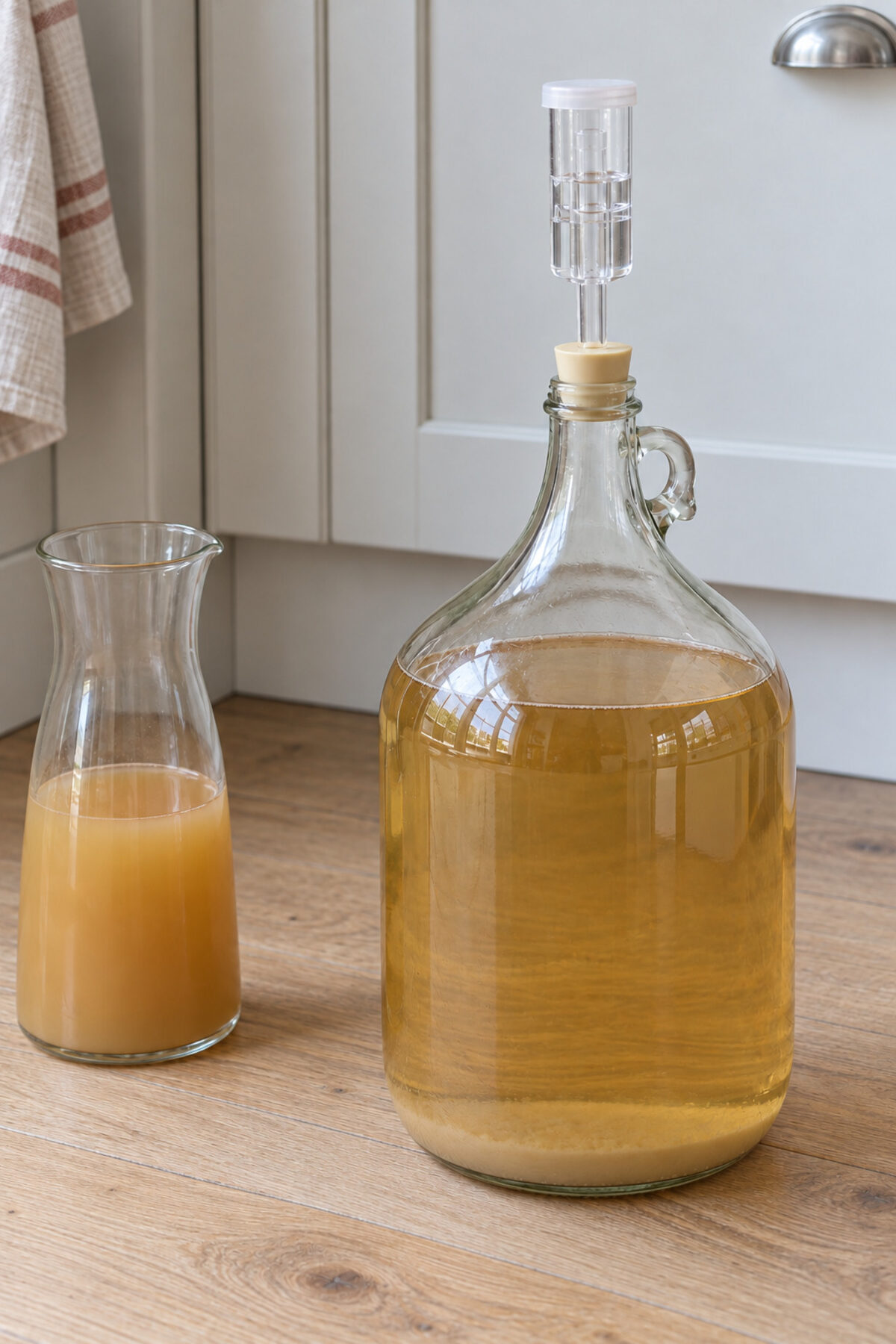
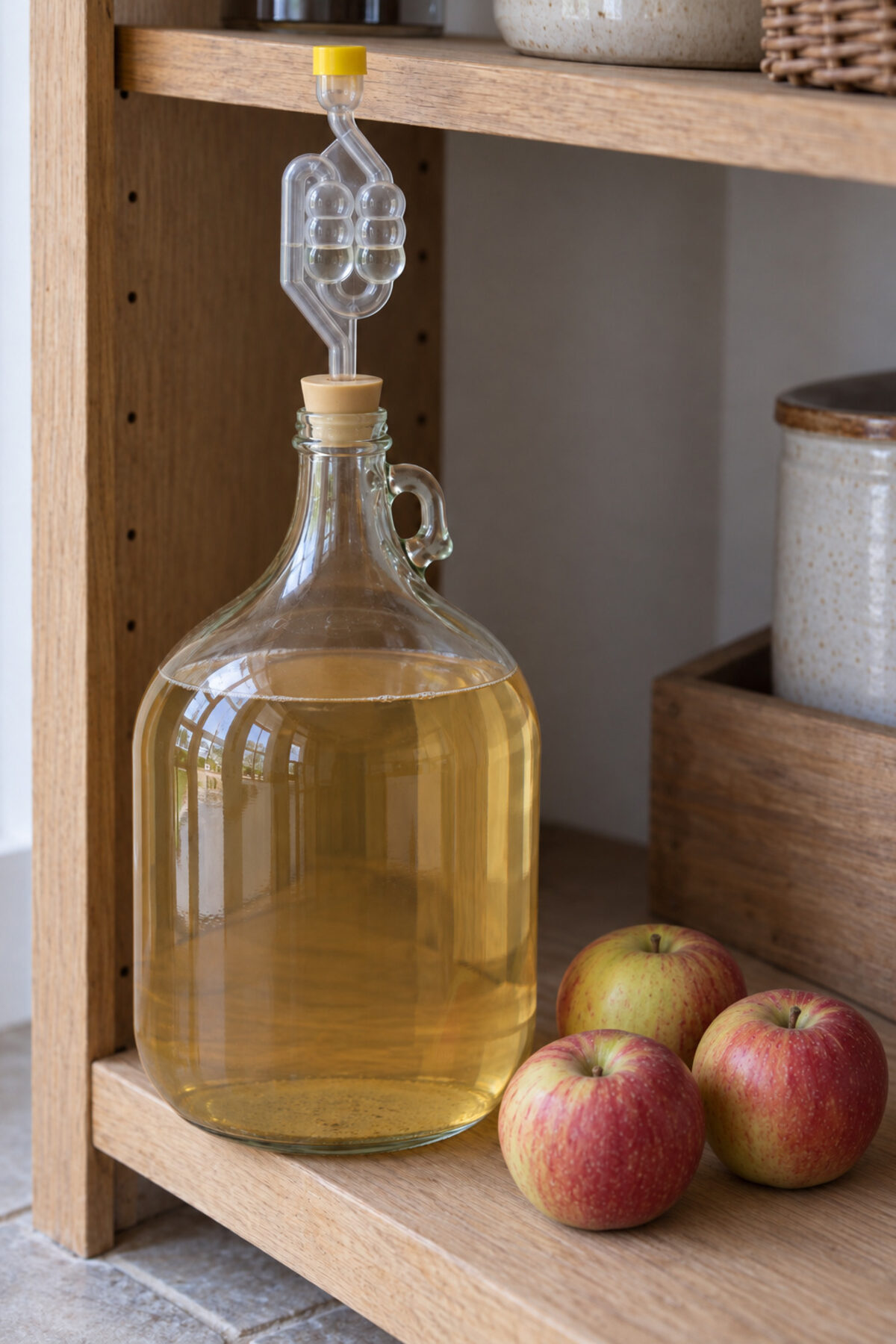
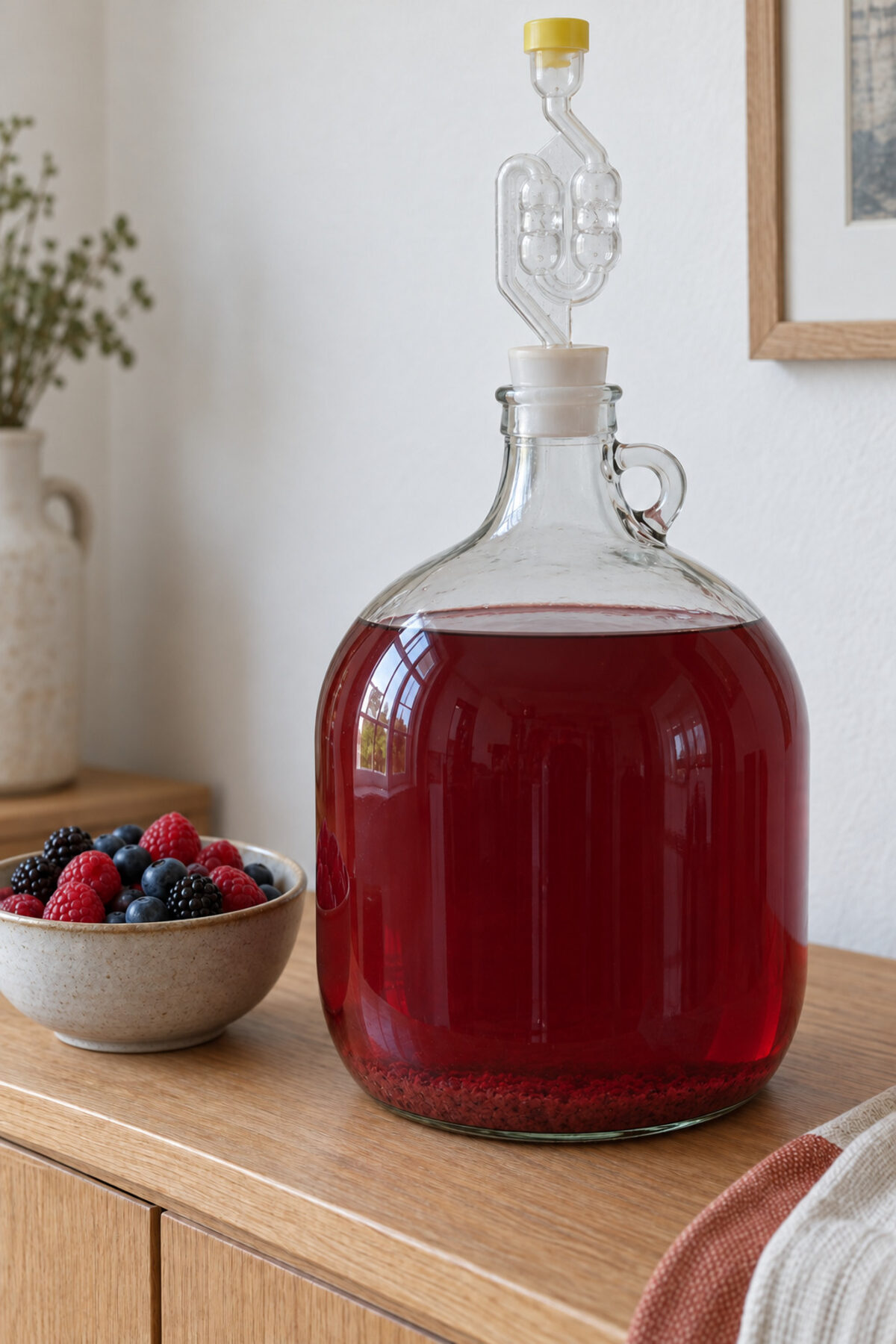
Miel, agua y frambuesas, moras o arándanos. La fruta fermenta las primeras semanas en una bolsa de colar y después se escurre, y el hidromiel se aclara durante meses.
- Tiempo
- 4–8semanas
- Temperatura
- 18–27°C
- Tarro
- 8L
La regla de oro: todo desinfectado, airlock y, si lo embotellas dulce, estabilizado antes.
Sin registrarte. Te guiamos paso a paso, de la báscula a la nevera.
Revisada el 26 de octubre de 2026 · 65 datos, cada uno con su fuente
Necesitas
- Cubo de fermentación de plástico alimentario de 8 litros, con tapa
- Bolsa de colar de nailon
- Dos damajuanas (garrafas de vidrio) de 5 litros
- Dos válvulas de fermentación (airlock): una para la tapa del cubo y otra con tapón para la damajuana
- Densímetro y su probeta
- Tubo de sifón para trasegar
- Olla
- Embudo
- Báscula de cocina
- Termómetro
- Desinfectante para vino o cerveza (metabisulfito o uno sin aclarado)
- Botellas de vino limpias, con corchos nuevos o tapones de rosca
Paso a paso
-
Lava y desinfecta todo lo que toque el mosto
Lávate las manos. Lava con agua caliente y jabón el cubo y su tapa, la bolsa, las damajuanas, las válvulas, el embudo, el tubo, la probeta y la cuchara, y acláralo todo con agua caliente. Después desinféctalo con el desinfectante, como indique el fabricante. El cubo tiene que ser de plástico apto para alimentos.
Truco: Repítelo cada vez que algo vaya a tocar el hidromiel: el densímetro, el tubo, las damajuanas. La limpieza es lo que lo protege del moho y del vinagre.
-
Prepara 1,6 kg de frutos rojos
Usa frambuesas, moras, arándanos o grosellas, solos o mezclados: 1,6 kg para unos 4,5 litros de hidromiel. Muchas recetas de vino de fruta ponen de 1,4 a 2,3 kg por galón (3,8 litros).
Si son frescos, elige fruta sana y madura, sin pasarse, sin moho, golpes ni bichos. Quítales las hojas y los tallos, enjuágalos con cuidado y congélalos: al descongelarse se ablandan y sueltan mejor el zumo. Si son congelados comprados e importados, o la etiqueta no dice de dónde vienen, hiérvelos 1 minuto y deja que se enfríen. Los de tu huerto, congelados al recogerlos, no lo necesitan.
Truco: La FSAI, la autoridad de seguridad alimentaria de Irlanda, aconseja hervir los frutos rojos congelados importados por los brotes de hepatitis A y norovirus en Europa. El calor suelta pectina y puede dejar el hidromiel turbio: para evitarlo, añade enzima péctica al mosto, como diga el fabricante.
-
Prepara el mosto en el cubo y espera 24 horas
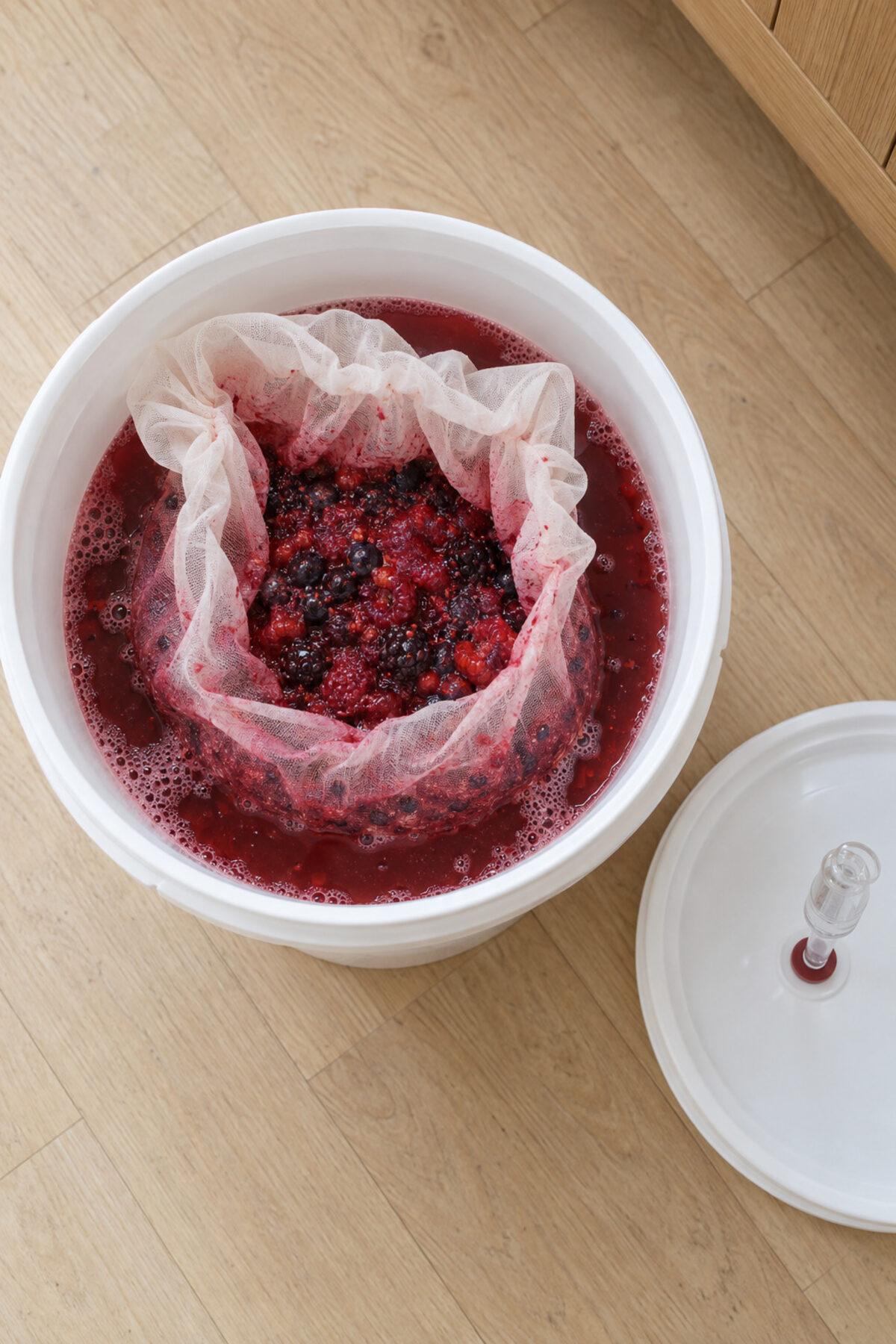
Mete la fruta en la bolsa de colar, ciérrala, ponla en el cubo y aplástala con las manos limpias. Calienta 1 litro del agua en la olla, sin que llegue a hervir, y disuelve en ella 1,2 kg de miel. Vierte la mezcla sobre la fruta y añade el resto del agua, 1,4 litros, fría. Añade 4 g de nutriente y una pastilla de Campden machacada, y remueve.
Mide la densidad del líquido con el densímetro: tiene que marcar 1,080 o más. Si marca menos, añade un poco más de miel disuelta y vuelve a medir. Apunta la lectura. Pon la tapa con la válvula y espera 24 horas.
Truco: La miel va 1:2 con el agua, una de las diluciones de la revisión científica, y la fruta pone su zumo. La revisión no dice si es en peso o en volumen: en peso es regla de la casa.
-
Añade la levadura
Pasadas las 24 horas, rehidrata la levadura como diga el sobre y échala en el cubo. Vuelve a poner la tapa con la válvula, con agua hasta la marca.
Truco: Usa levadura de vino, nunca de panadería. Para el hidromiel se recomiendan las de vino blanco.
-
Déjalo fermentar a 18–27 °C y mide la densidad
Déjalo en un sitio a 18–27 °C, sin cambios bruscos de temperatura. Por debajo de 15 °C fermenta mucho peor. En unos días verás burbujas y la válvula soltará gas: la levadura se está comiendo el azúcar.
A los 3–5 días, saca una muestra con el tubo desinfectado, mide la densidad y tira la muestra. Después, mídela cada pocos días. Si la bolsa flota, húndela con una cuchara desinfectada y vuelve a tapar enseguida: que no entren moscas de la fruta, llevan las bacterias del vinagre. Calcula de 4 a 8 semanas en total (regla de la casa), pero no te fíes de la fecha: el hidromiel puede tardar meses.
Truco: Si huele a huevo podrido, a la levadura le faltan nutrientes. No es motivo para tirarlo.
-
Saca la fruta a 1,020–1,030 y pásalo a la damajuana
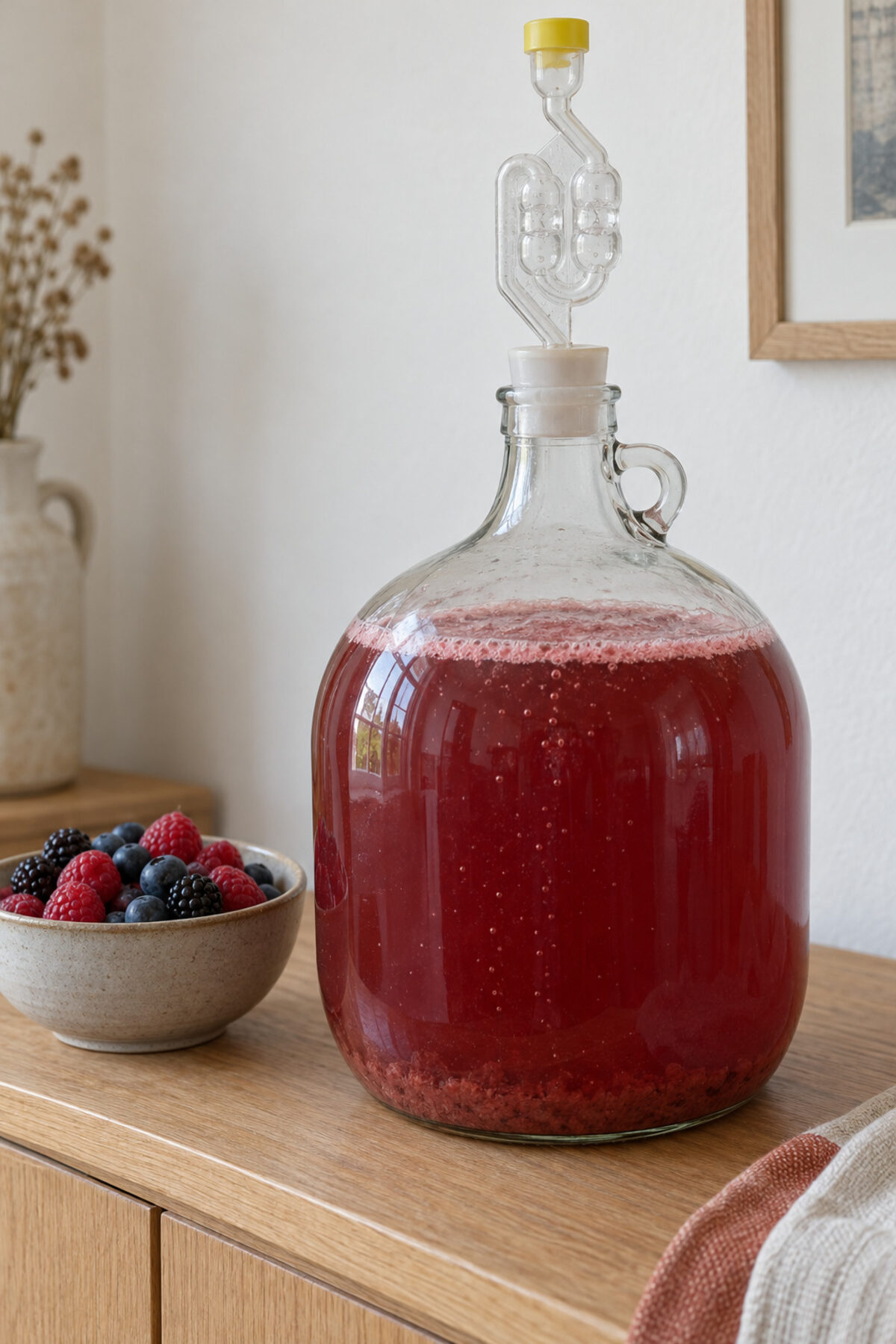
Cuando la densidad baje a 1,020–1,030, saca la bolsa y escúrrela bien sobre el cubo con las manos limpias. Tira la fruta. Pasa el líquido con el tubo de sifón a una damajuana limpia y desinfectada y deja en el cubo el poso del fondo. No la llenes por encima de los hombros: todavía fermenta y necesita sitio. Ponle el tapón con la válvula.
Truco: Pon el cubo más alto que la damajuana y deja caer el líquido por la pared, sin salpicar.
-
Cuando termine, rellénala y déjalo aclarar
Ha terminado cuando ya no ves burbujas y la densidad marca 1,000 o menos y no cambia en tres lecturas a lo largo de 7 días (regla de la casa). Un hidromiel seco puede bajar hasta 0,990.
Entonces rellena la damajuana hasta unos centímetros de la válvula, con agua o con canicas desinfectadas, para que le toque poco aire. Déjalo aclarar. Cada pocas semanas, trasiégalo a la otra damajuana, limpia y desinfectada, para separarlo del poso, y vuelve a rellenar. Puede llevar semanas o meses.
Truco: Si se para por encima de 1,000, le queda azúcar. No lo embotelles así: puede volver a fermentar en la botella y hacerla estallar. Para embotellarlo dulce hay que estabilizarlo con sorbato potásico, y el sorbato solo no para una fermentación que sigue activa.
-
Embotéllalo cuando esté transparente y estable
Embotella cuando esté transparente, sin poso que trasegar y con la densidad estable en 1,000 o menos. Lava las botellas por dentro con un cepillo y jabón de cocina y acláralas. Justo antes de llenarlas, pásales el desinfectante sin aclarado y déjalas escurrir. Llénalas con el tubo de sifón, sin arrastrar el poso, y ciérralas con corchos nuevos o tapones de rosca.
Truco: No limpies las botellas con lejía ni con jabones antibacterianos con triclosán. Con corcho, déjalas unos días de pie para que el corcho se expanda.
-
Déjalo envejecer al menos 2 meses
Guarda las botellas tumbadas en un sitio fresco y oscuro. Se puede beber desde el embotellado, pero mejora con el tiempo: espera al menos 2 meses, y mejor un año.
Truco: Apunta en cada botella la fecha, la fruta y las densidades del principio y del final.
Sin registrarte. Te guiamos paso a paso, de la báscula a la nevera.
Variaciones
El mismo método, otro sabor. Cuando domines esta, prueba una de estas.
Qué vas a ver
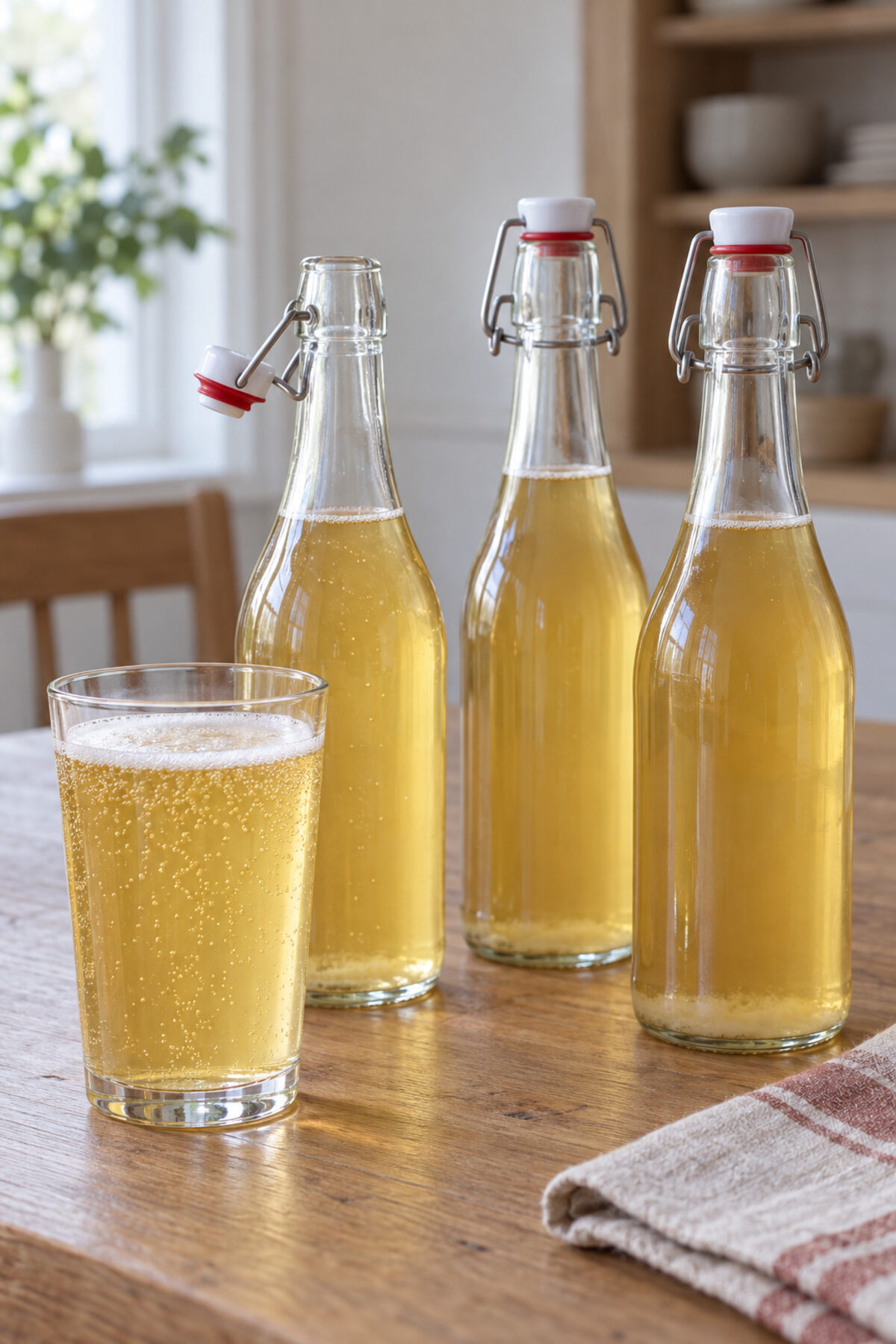
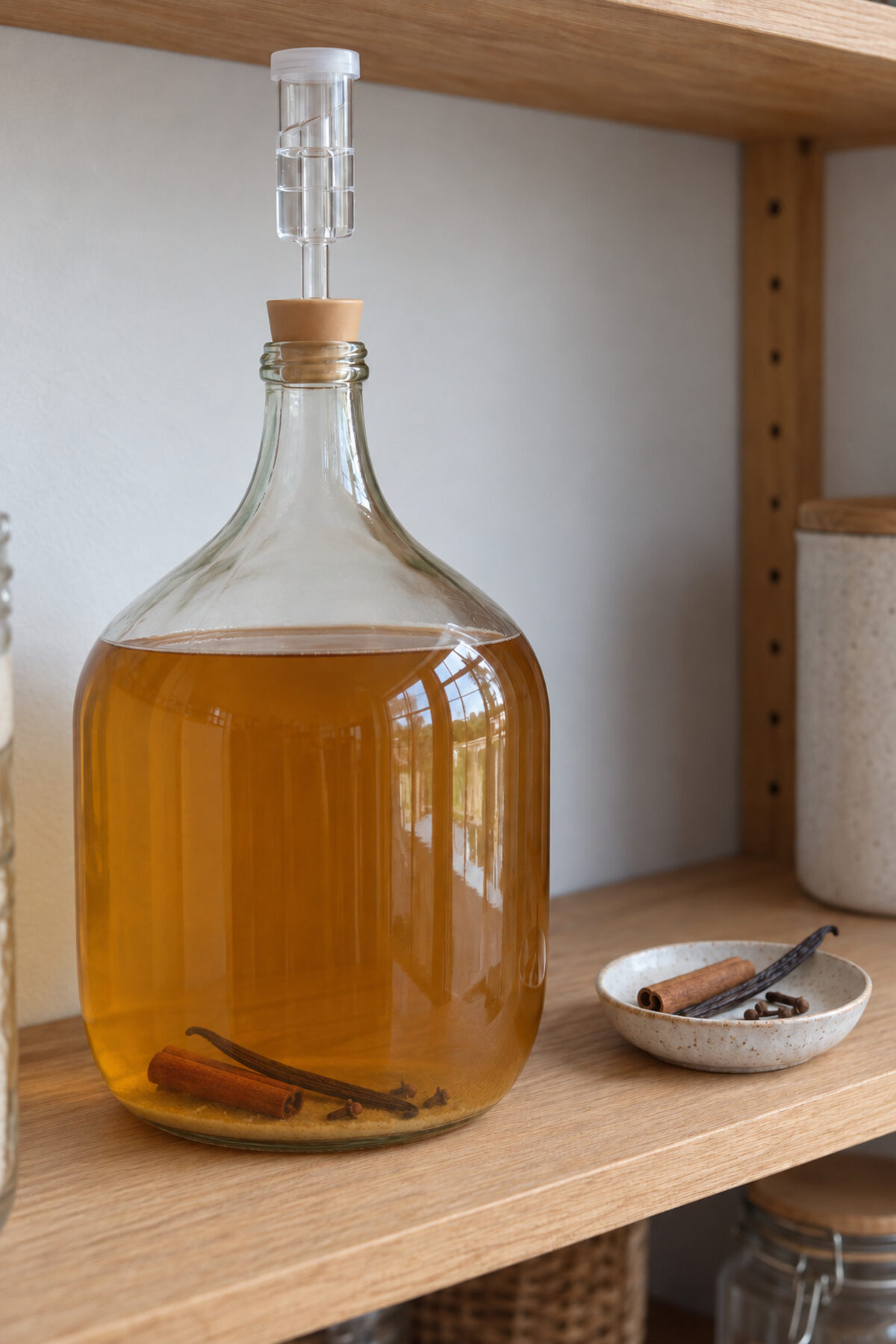
El melomel es hidromiel con fruta. Este lleva frutos rojos, que le dan color y aroma. Se hace como el hidromiel tradicional, pero la fruta fermenta las primeras semanas dentro de una bolsa de colar, en un cubo de boca ancha, y después se escurre y se retira. Parte del agua se cambia así por zumo de fruta. Lleva alcohol, de un 8 % a un 18 %. Ninguna agencia de seguridad alimentaria publica una receta de hidromiel casero, así que los pasos siguen la guía de vino casero de la Universidad Estatal de Dakota del Norte (NDSU), que trata igual cualquier vino de fruta, y una revisión científica sobre el hidromiel.
 IA
 IA
IA
Cómo saber si va bien
- Lleva alcohol, de un 8 % a un 18 %. No es para menores ni para embarazadas o quien pueda estarlo.
- Lleva miel. Nunca para bebés menores de un año.
- Fruta sana, sin moho ni golpes. Si es congelada comprada e importada, o no sabes de dónde viene, hiérvela 1 minuto antes de usarla.
- Desinfecta todo lo que toque el mosto, cada vez, y usa un cubo de plástico apto para alimentos. Que no entren moscas de la fruta: llevan las bacterias del vinagre.
- Embotéllalo seco y estable: a 1,000 o menos y sin cambios en 7 días (regla de la casa). Con azúcar y levadura viva, las botellas pueden estallar.
- Si lo quieres dulce, estabilízalo antes de embotellar con sorbato potásico.
- Moho en la superficie o en la fruta: tíralo todo.
- Para tu consumo, nunca para vender. En Estados Unidos los adultos pueden hacer vino y cerveza en casa para uso personal o familiar, pero no venderlo. En el Reino Unido, lo que se hace solo para el consumo propio no paga impuesto si no es un destilado. En otros países, consulta su norma.
- Nunca lo destiles. En Estados Unidos destilar en casa está prohibido, y Fervida no lo enseña.
De dónde sale cada dato
Cada cifra de esta receta sale de una guía de seguridad alimentaria. Guardamos una copia de cada fuente y citamos sus palabras exactas, en su idioma original.
-
1
Miel diluida y fermentada, con un 8–18 % de alcohol
“Mead is a traditional alcoholic beverage containing from 8% to 18% of ethanol (v/v) produced by the fermentation of a diluted solution of honey”
Molecules (MDPI), Iglesias et al. · Developments in the Fermentation Process and Quality Improvement Strategies for Mead Production (2014) · consultada el 25 de octubre de 2026
-
2
El melomel es hidromiel con fruta
“melomel (mead with fruit juices)”
Molecules (MDPI), Iglesias et al. · Developments in the Fermentation Process and Quality Improvement Strategies for Mead Production (2014) · consultada el 25 de octubre de 2026
-
3
Miel y agua en proporción 1:0,5, 1:1, 1:2 o 1:3
“The proportion to which honey is diluted determines the type of mead obtained: the finest at 1:0.5 (honey:water) and the other variants at 1:1, 1:2 and 1:3.”
Molecules (MDPI), Iglesias et al. · Developments in the Fermentation Process and Quality Improvement Strategies for Mead Production (2014) · consultada el 25 de octubre de 2026
-
4
Parte del agua se puede cambiar por zumo de fruta
“the water proportion can be replaced by fruit juice depending on the type of mead to be produced”
Molecules (MDPI), Iglesias et al. · Developments in the Fermentation Process and Quality Improvement Strategies for Mead Production (2014) · consultada el 25 de octubre de 2026
-
5
La miel tiene poco nitrógeno y pocos minerales
“honey presents low levels of nitrogen and mineral substances”
Molecules (MDPI), Iglesias et al. · Developments in the Fermentation Process and Quality Improvement Strategies for Mead Production (2014) · consultada el 25 de octubre de 2026
-
6
0,88 g de nutriente por litro en un estudio
“the nutrients concentration of 0.88 g/L (88 g/hL)”
Molecules (MDPI), Iglesias et al. · Developments in the Fermentation Process and Quality Improvement Strategies for Mead Production (2014) · consultada el 25 de octubre de 2026
-
7
El metabisulfito frena o elimina la mayoría de los microbios
“the addition of metabisulphite, either sodium or potassium salts that liberate sulphur dioxide which inhibits or eliminates the majority of microorganisms”
Molecules (MDPI), Iglesias et al. · Developments in the Fermentation Process and Quality Improvement Strategies for Mead Production (2014) · consultada el 25 de octubre de 2026
-
8
Se recomienda levadura comercial de vino blanco
“the inoculation of the honey-must with commercial yeasts used in the production of white wines is recommended”
Molecules (MDPI), Iglesias et al. · Developments in the Fermentation Process and Quality Improvement Strategies for Mead Production (2014) · consultada el 25 de octubre de 2026
Ver los 57 datos que faltan
-
9
Por debajo de 15 °C fermenta mucho peor
“temperatures lower than 15 °C are associated with significant decreases on the fermentative performance”
Molecules (MDPI), Iglesias et al. · Developments in the Fermentation Process and Quality Improvement Strategies for Mead Production (2014) · consultada el 25 de octubre de 2026
-
10
La fermentación suele tardar varios meses
“this fermentation often takes several months to complete”
Molecules (MDPI), Iglesias et al. · Developments in the Fermentation Process and Quality Improvement Strategies for Mead Production (2014) · consultada el 25 de octubre de 2026
-
11
Fermentar y madurar lleva de semanas a meses
“Mead fermentation and maturing is a time-consuming process taking from weeks to several months to complete”
Molecules (MDPI), Iglesias et al. · Developments in the Fermentation Process and Quality Improvement Strategies for Mead Production (2014) · consultada el 25 de octubre de 2026
-
12
Muchas recetas ponen de 1,4 a 2,3 kg de fruta por galón
“Many recipes call for 3 to 5 pounds of fruit per gallon of wine, with added water making up the rest of the volume.”
NDSU Extension (North Dakota State University) · From the Garden or Orchard to the Table: Getting Started With Home Winemaking (FN1638, reviewed August 2026) · consultada el 25 de octubre de 2026
-
13
Todo lo que toca el mosto, lavado, aclarado y desinfectado
“Everything that touches the juice or wine, including the primary fermenter, measuring containers and stirring spoons, must be washed, rinsed and sanitized.”
NDSU Extension (North Dakota State University) · From the Garden or Orchard to the Table: Getting Started With Home Winemaking (FN1638, reviewed August 2026) · consultada el 25 de octubre de 2026
-
14
Agua caliente con jabón, aclarado y desinfectante según el fabricante
“Begin by washing the equipment that will come into contact with any of the wine ingredients with hot, soapy water, and then rinse thoroughly with hot water. Finally, sanitize with potassium metabisulfite (Campden tablets) or sodium metabisulfite prepared according to the manufacturer’s directions.”
NDSU Extension (North Dakota State University) · From the Garden or Orchard to the Table: Getting Started With Home Winemaking (FN1638, reviewed August 2026) · consultada el 25 de octubre de 2026
-
15
Un cubo de plástico alimentario como primer fermentador
“Large food-grade plastic pail (6 to 8 gallons): used as a primary fermenter”
NDSU Extension (North Dakota State University) · From the Garden or Orchard to the Table: Getting Started With Home Winemaking (FN1638, reviewed August 2026) · consultada el 25 de octubre de 2026
-
16
El fermentador, de material apto para alimentos
“Many kinds of vessels can be used for primary fermenters, but they must be made of food-grade materials.”
NDSU Extension (North Dakota State University) · From the Garden or Orchard to the Table: Getting Started With Home Winemaking (FN1638, reviewed August 2026) · consultada el 25 de octubre de 2026
-
17
Fruta sana y sin pasarse, sin enfermedades, golpes ni bichos
“Be sure to choose high-quality fruit that is not overripe. The fruit should be free from diseases, blemishes and insect damage.”
NDSU Extension (North Dakota State University) · From the Garden or Orchard to the Table: Getting Started With Home Winemaking (FN1638, reviewed August 2026) · consultada el 25 de octubre de 2026
-
18
Sin tallos, hojas ni fruta enferma, pasada o con bichos
“Remove stems, leaves and any diseased, overripe or insect-infested fruit.”
NDSU Extension (North Dakota State University) · From the Garden or Orchard to the Table: Getting Started With Home Winemaking (FN1638, reviewed August 2026) · consultada el 25 de octubre de 2026
-
19
Los frutos rojos, enjuagados con cuidado y aplastados
“Gently rinse and then crush the strawberries.”
NDSU Extension (North Dakota State University) · From the Garden or Orchard to the Table: Getting Started With Home Winemaking (FN1638, reviewed August 2026) · consultada el 25 de octubre de 2026
-
20
Congelar y descongelar ablanda la fruta y suelta el zumo
“Freezing and then thawing softens many kinds of fruit and helps with juice extraction.”
NDSU Extension (North Dakota State University) · From the Garden or Orchard to the Table: Getting Started With Home Winemaking (FN1638, reviewed August 2026) · consultada el 25 de octubre de 2026
-
21
Calentar la fruta suelta demasiada pectina
“Avoid heating fruit because the heat may cause too much pectin to be released.”
NDSU Extension (North Dakota State University) · From the Garden or Orchard to the Table: Getting Started With Home Winemaking (FN1638, reviewed August 2026) · consultada el 25 de octubre de 2026
-
22
La enzima péctica evita que quede turbio
“This chemical helps break down pectin and prevents “pectic haze,” or cloudiness, in the resulting wine.”
NDSU Extension (North Dakota State University) · From the Garden or Orchard to the Table: Getting Started With Home Winemaking (FN1638, reviewed August 2026) · consultada el 25 de octubre de 2026
-
23
La fruta puede fermentar dentro de la bolsa de colar
“Some recipes call for leaving the fruit in the bag during the fermenting process.”
NDSU Extension (North Dakota State University) · From the Garden or Orchard to the Table: Getting Started With Home Winemaking (FN1638, reviewed August 2026) · consultada el 25 de octubre de 2026
-
24
Sin nutriente, la levadura sufre y huele a huevo podrido
“lack of yeast nutrient can stress the yeast, causing your wine to develop an unpleasant (hydrogen sulfide or rotten egg) odor”
NDSU Extension (North Dakota State University) · From the Garden or Orchard to the Table: Getting Started With Home Winemaking (FN1638, reviewed August 2026) · consultada el 25 de octubre de 2026
-
25
Con fruta fresca, una pastilla de Campden por galón
“If the juice has been prepared from fresh fruit, plan to add potassium metabisulfite at the rate of 50 parts per million of SO2 (or one Campden tablet per gallon) to neutralize any wild yeast or bacteria.”
NDSU Extension (North Dakota State University) · From the Garden or Orchard to the Table: Getting Started With Home Winemaking (FN1638, reviewed August 2026) · consultada el 25 de octubre de 2026
-
26
24 horas antes de añadir la levadura
“Wait about 24 hours before adding winemaking yeast to the prepared juice.”
NDSU Extension (North Dakota State University) · From the Garden or Orchard to the Table: Getting Started With Home Winemaking (FN1638, reviewed August 2026) · consultada el 25 de octubre de 2026
-
27
La densidad del mosto se mide con un densímetro
“A hydrometer is used to measure the SG of the must.”
NDSU Extension (North Dakota State University) · From the Garden or Orchard to the Table: Getting Started With Home Winemaking (FN1638, reviewed August 2026) · consultada el 25 de octubre de 2026
-
28
El mosto empieza en 1,080 o más
“Must has a starting SG of 1.080 (“ten-eighty”) or higher.”
NDSU Extension (North Dakota State University) · From the Garden or Orchard to the Table: Getting Started With Home Winemaking (FN1638, reviewed August 2026) · consultada el 25 de octubre de 2026
-
29
El azúcar, en pequeñas cantidades
“Add small amounts of sugar at a time to keep the SG from going higher than the recommended level.”
NDSU Extension (North Dakota State University) · From the Garden or Orchard to the Table: Getting Started With Home Winemaking (FN1638, reviewed August 2026) · consultada el 25 de octubre de 2026
-
30
Levadura de vino, no de panadería
“Be sure to use winemaking yeast; do not use baking yeast.”
NDSU Extension (North Dakota State University) · From the Garden or Orchard to the Table: Getting Started With Home Winemaking (FN1638, reviewed August 2026) · consultada el 25 de octubre de 2026
-
31
La levadura se rehidrata según el fabricante
“Follow the manufacturer’s recommendations for rehydrating the wine yeast”
NDSU Extension (North Dakota State University) · From the Garden or Orchard to the Table: Getting Started With Home Winemaking (FN1638, reviewed August 2026) · consultada el 25 de octubre de 2026
-
32
La válvula deja salir el gas y no deja entrar aire ni microbios
“Fermentation locks: allows carbon dioxide to escape from fermenters and prevents oxygen and microbial contamination”
NDSU Extension (North Dakota State University) · From the Garden or Orchard to the Table: Getting Started With Home Winemaking (FN1638, reviewed August 2026) · consultada el 25 de octubre de 2026
-
33
Entre 18 y 27 °C, sin cambios bruscos
“try to keep the must maintained at an even temperature between 65 and 80 degrees Fahrenheit”
NDSU Extension (North Dakota State University) · From the Garden or Orchard to the Table: Getting Started With Home Winemaking (FN1638, reviewed August 2026) · consultada el 25 de octubre de 2026
-
34
Las burbujas son normales, la levadura se come el azúcar
“As the juice starts to ferment, you will notice bubbles forming at the surface; this is normal and indicates that the yeast cells are consuming the sugar.”
NDSU Extension (North Dakota State University) · From the Garden or Orchard to the Table: Getting Started With Home Winemaking (FN1638, reviewed August 2026) · consultada el 25 de octubre de 2026
-
35
Las moscas de la fruta llevan las bacterias del vinagre
“Keeping out any fruit flies is very important because they can transmit vinegar-producing bacteria to your wine.”
NDSU Extension (North Dakota State University) · From the Garden or Orchard to the Table: Getting Started With Home Winemaking (FN1638, reviewed August 2026) · consultada el 25 de octubre de 2026
-
36
La densidad, a los 3–5 días
“In three to five days, measure the specific gravity”
NDSU Extension (North Dakota State University) · From the Garden or Orchard to the Table: Getting Started With Home Winemaking (FN1638, reviewed August 2026) · consultada el 25 de octubre de 2026
-
37
A 1,020–1,030 se saca la bolsa y se escurre la fruta
“when it has decreased to 1.020 to 1.030, remove the straining bag and squeeze the wine from the pulp”
NDSU Extension (North Dakota State University) · From the Garden or Orchard to the Table: Getting Started With Home Winemaking (FN1638, reviewed August 2026) · consultada el 25 de octubre de 2026
-
38
A la damajuana cuando baja a 1,020–1,030
“Monitor the specific gravity and when it reaches a level of about 1.020 to 1.030, move the wine into a secondary fermenter”
NDSU Extension (North Dakota State University) · From the Garden or Orchard to the Table: Getting Started With Home Winemaking (FN1638, reviewed August 2026) · consultada el 25 de octubre de 2026
-
39
Sin pasar el poso del fondo
“try to keep from transferring much of the sediment at the bottom of the fermenter”
NDSU Extension (North Dakota State University) · From the Garden or Orchard to the Table: Getting Started With Home Winemaking (FN1638, reviewed August 2026) · consultada el 25 de octubre de 2026
-
40
Sin llenar por encima de los hombros mientras fermenta
“do not fill above the shoulders of the carboy to allow for expansion during the remaining fermentation”
NDSU Extension (North Dakota State University) · From the Garden or Orchard to the Table: Getting Started With Home Winemaking (FN1638, reviewed August 2026) · consultada el 25 de octubre de 2026
-
41
Un vino seco puede bajar hasta 0,990
“Finished dry wine can have an SG as low as 0.990 (“nine-ninety”).”
NDSU Extension (North Dakota State University) · From the Garden or Orchard to the Table: Getting Started With Home Winemaking (FN1638, reviewed August 2026) · consultada el 25 de octubre de 2026
-
42
Al terminar, se llena hasta cerca de la válvula
“After fermentation is complete, filling the carboy to within a few inches of the airlock is important; this prevents too much exposure to oxygen.”
NDSU Extension (North Dakota State University) · From the Garden or Orchard to the Table: Getting Started With Home Winemaking (FN1638, reviewed August 2026) · consultada el 25 de octubre de 2026
-
43
Se rellena con agua o con canicas desinfectadas
“Be sure to top up the carboy after each racking with water or a similar wine. Sanitized marbles can be placed in the carboy in lieu of topping up.”
NDSU Extension (North Dakota State University) · From the Garden or Orchard to the Table: Getting Started With Home Winemaking (FN1638, reviewed August 2026) · consultada el 25 de octubre de 2026
-
44
Más trasiegos durante semanas o meses para quitar el poso
“For the next several weeks or months, additional racking from one container to another will be needed to remove the wine from the lees (sediment).”
NDSU Extension (North Dakota State University) · From the Garden or Orchard to the Table: Getting Started With Home Winemaking (FN1638, reviewed August 2026) · consultada el 25 de octubre de 2026
-
45
Con azúcar residual o para endulzar, sorbato potásico
“it should be used if your wine has residual sugar left after fermentation or if you plan to resweeten the wine before bottling.”
NDSU Extension (North Dakota State University) · From the Garden or Orchard to the Table: Getting Started With Home Winemaking (FN1638, reviewed August 2026) · consultada el 25 de octubre de 2026
-
46
Sin sorbato, las botellas pueden estallar
“Failure to add potassium sorbate may cause bottles to explode if fermentation restarts.”
NDSU Extension (North Dakota State University) · From the Garden or Orchard to the Table: Getting Started With Home Winemaking (FN1638, reviewed August 2026) · consultada el 25 de octubre de 2026
-
47
Se embotella solo sin poso y transparente
“Bottling and storage is the final step and should be done only when the wine has been racked off any remaining sediment and has achieved good clarity.”
NDSU Extension (North Dakota State University) · From the Garden or Orchard to the Table: Getting Started With Home Winemaking (FN1638, reviewed August 2026) · consultada el 25 de octubre de 2026
-
48
Botellas de vino nuevas o reutilizadas, limpias y desinfectadas
“Glass wine bottles: buy new bottles or reuse commercial wine bottles if they are thoroughly cleaned and sanitized”
NDSU Extension (North Dakota State University) · From the Garden or Orchard to the Table: Getting Started With Home Winemaking (FN1638, reviewed August 2026) · consultada el 25 de octubre de 2026
-
49
Las botellas, con desinfectante sin aclarado justo antes
“Just prior to bottling, rinse the bottle with a “no-rinse” sanitizing agent, then allow the bottle to drain before filling with wine.”
NDSU Extension (North Dakota State University) · From the Garden or Orchard to the Table: Getting Started With Home Winemaking (FN1638, reviewed August 2026) · consultada el 25 de octubre de 2026
-
50
Nada de lejía ni jabones con triclosán para las botellas
“Never use bleach or antibacterial soaps containing triclosan when cleaning bottles.”
NDSU Extension (North Dakota State University) · From the Garden or Orchard to the Table: Getting Started With Home Winemaking (FN1638, reviewed August 2026) · consultada el 25 de octubre de 2026
-
51
Siempre corchos nuevos
“Always use new corks.”
NDSU Extension (North Dakota State University) · From the Garden or Orchard to the Table: Getting Started With Home Winemaking (FN1638, reviewed August 2026) · consultada el 25 de octubre de 2026
-
52
Unos días de pie y después tumbadas
“After bottling, stand the bottles in an upright position for a few days to allow the cork to thoroughly expand, and then store the bottles on their sides until ready to use.”
NDSU Extension (North Dakota State University) · From the Garden or Orchard to the Table: Getting Started With Home Winemaking (FN1638, reviewed August 2026) · consultada el 25 de octubre de 2026
-
53
Al menos 2 meses de guarda, y mejor un año
“wine should be aged for at least two months, but one year of storage prior to consumption is better.”
NDSU Extension (North Dakota State University) · From the Garden or Orchard to the Table: Getting Started With Home Winemaking (FN1638, reviewed August 2026) · consultada el 25 de octubre de 2026
-
54
Tumbadas, en un sitio fresco y oscuro
“Store wine bottles on their sides in a cool, dark place.”
NDSU Extension (North Dakota State University) · From the Garden or Orchard to the Table: Getting Started With Home Winemaking (FN1638, reviewed August 2026) · consultada el 25 de octubre de 2026
-
55
No deben beber alcohol los menores de edad
“People under the legal drinking age”
NDSU Extension (North Dakota State University) · From the Garden or Orchard to the Table: Getting Started With Home Winemaking (FN1638, reviewed August 2026) · consultada el 25 de octubre de 2026
-
56
Ni las embarazadas o quien pueda estarlo
“Pregnant women and those who may be pregnant”
NDSU Extension (North Dakota State University) · From the Garden or Orchard to the Table: Getting Started With Home Winemaking (FN1638, reviewed August 2026) · consultada el 25 de octubre de 2026
-
57
Los frutos rojos congelados importados, hervidos 1 minuto
“As a result of outbreaks of norovirus and hepatitis A virus in imported frozen berries across Europe in recent years, the FSAI recommends boiling imported frozen berries for one minute before consumption.”
Food Safety Authority of Ireland (FSAI) · Advice to boil imported frozen berries · consultada el 26 de octubre de 2026
-
58
Si la etiqueta no dice el origen, cuenta con que son importados
“If the label does not state the country of origin, you should assume that the berries are imported.”
Food Safety Authority of Ireland (FSAI) · Advice to boil imported frozen berries · consultada el 26 de octubre de 2026
-
59
No hace falta con los de tu huerto, congelados al recogerlos
“this advice does not apply to berries grown in your own garden and frozen after picking”
Food Safety Authority of Ireland (FSAI) · Advice to boil imported frozen berries · consultada el 26 de octubre de 2026
-
60
El sorbato solo no para una fermentación
“Sorbates will not stop a ferment on their own”
University of Vermont Extension (T. Bradshaw) · Commercial Production of Unpasteurized and Fermented Ciders in Vermont (2010) · consultada el 25 de octubre de 2026
-
61
Con moho, se tira
“If you confirm mold growth on any part of a ferment, it should be immediately discarded.”
UC Davis, Department of Food Science and Technology · Common issues with fermented fruits and vegetables (v1.0, 15-mar-2022) · consultada el 20 de octubre de 2026
-
62
Nada de miel para menores de un año
“evitando el consumo de miel y de infusiones de especies vegetales en niños menores de un año (recomendaciones AESAN)”
Instituto de Salud Carlos III, Centro Nacional de Epidemiología (RENAVE) · Informe de botulismo 2023 · consultada el 25 de octubre de 2026
-
63
En EE. UU. se puede hacer vino en casa, pero no destilar
“While individuals of legal drinking age may produce wine or beer at home for personal or family use, Federal law strictly prohibits individuals from producing distilled spirits at home”
Alcohol and Tobacco Tax and Trade Bureau (TTB, U.S. Department of the Treasury) · Home Distilling · consultada el 25 de octubre de 2026
-
64
El vino hecho para uso propio nunca se vende
“wine produced for personal or family use may never be sold or offered for sale”
Alcohol and Tobacco Tax and Trade Bureau (TTB, U.S. Department of the Treasury) · Wine FAQs · consultada el 25 de octubre de 2026
-
65
Reino Unido, sin impuesto si es para consumo propio y no destilado
“by a person who produces alcoholic products only for the person’s own domestic use, and (b)are not spirits.”
UK legislation (legislation.gov.uk, The National Archives) · Finance (No. 2) Act 2023, section 72: Exemption: production for personal consumption · consultada el 25 de octubre de 2026