 AI
Homemade kombucha
Level 2 · some practice
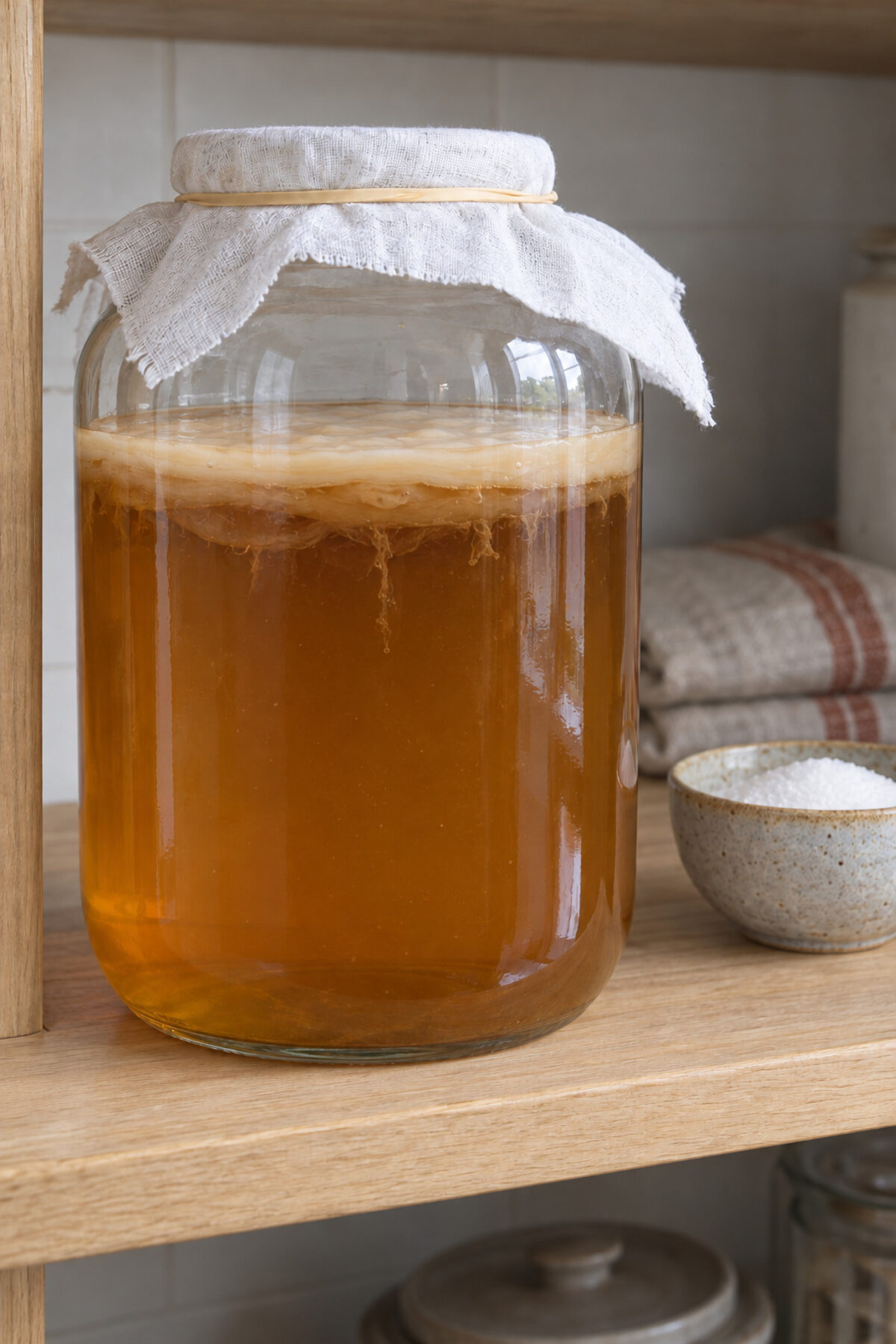
Tea, sugar and a SCOBY. You measure twice, the starter before you begin and the kombucha before it goes in the fridge.
- Starter
- 20% of the batch
- Time
- 7–10days
- Temperature
- 68–77°F
- Jar
- 6L
The golden rule: an acidic starter to begin with, and the pH measured before the fridge.
No sign-up. We guide you step by step, from the scale to the fridge.
Reviewed October 20, 2026 · 38 facts, each with its source
You'll need
- 6-liter glass jar (at least 1.5 gallons)
- Paper towel, coffee filter or clean cheesecloth, plus a rubber band
- Small saucepan
- Food thermometer
- pH strips and a calibrated pH meter
- Kitchen scale
- Clean bottles or jars for the fridge
Step by step
-
Wash your hands and sanitize your equipment
Wash your hands well with soap and water. Wash the jar and utensils, then sanitize them by submerging them in water at 171 °F or hotter for at least 30 seconds.
-
Test the pH of the starter liquid
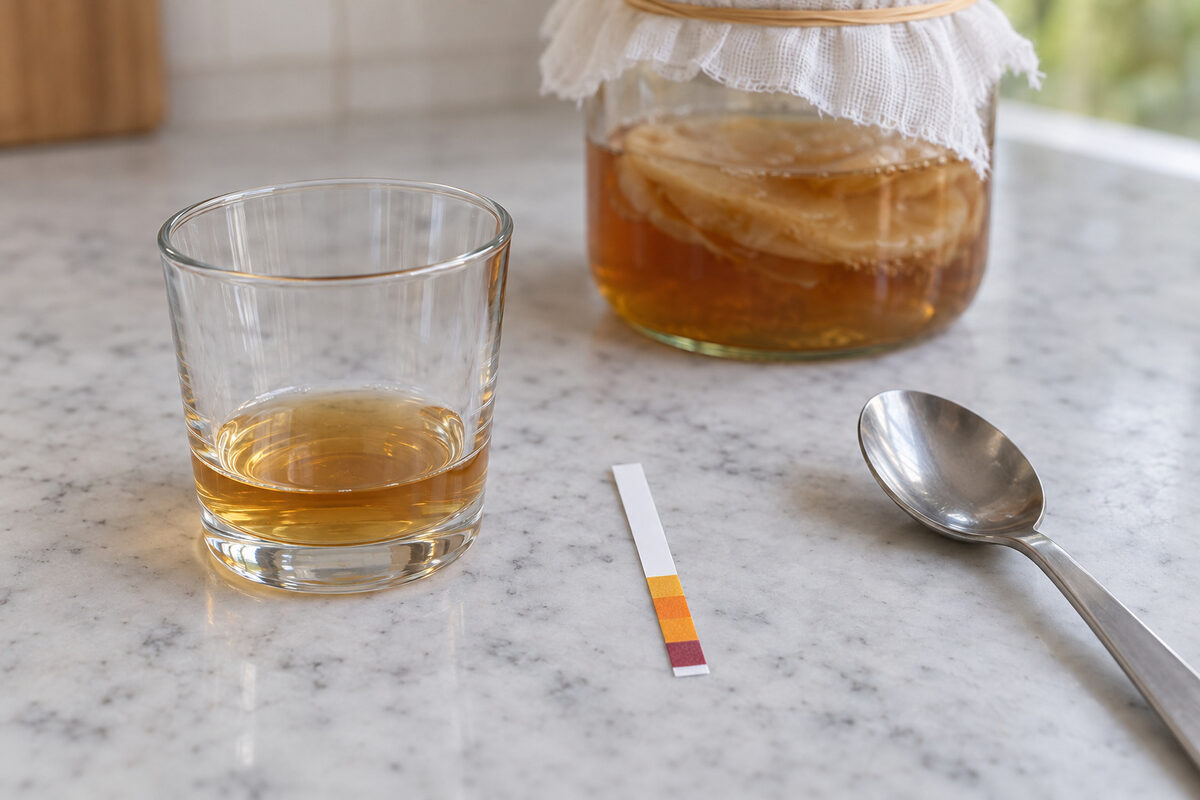
Put 1 tablespoon of the starter in a cup and test it with a pH strip. If it reads 4.0 or below, carry on and throw out the tablespoon you tested. If it reads higher, don't use it.
 AI
Tip: That starting acidity is what protects the kombucha while it gets going.
-
Brew the tea, sweeten it and cool it down
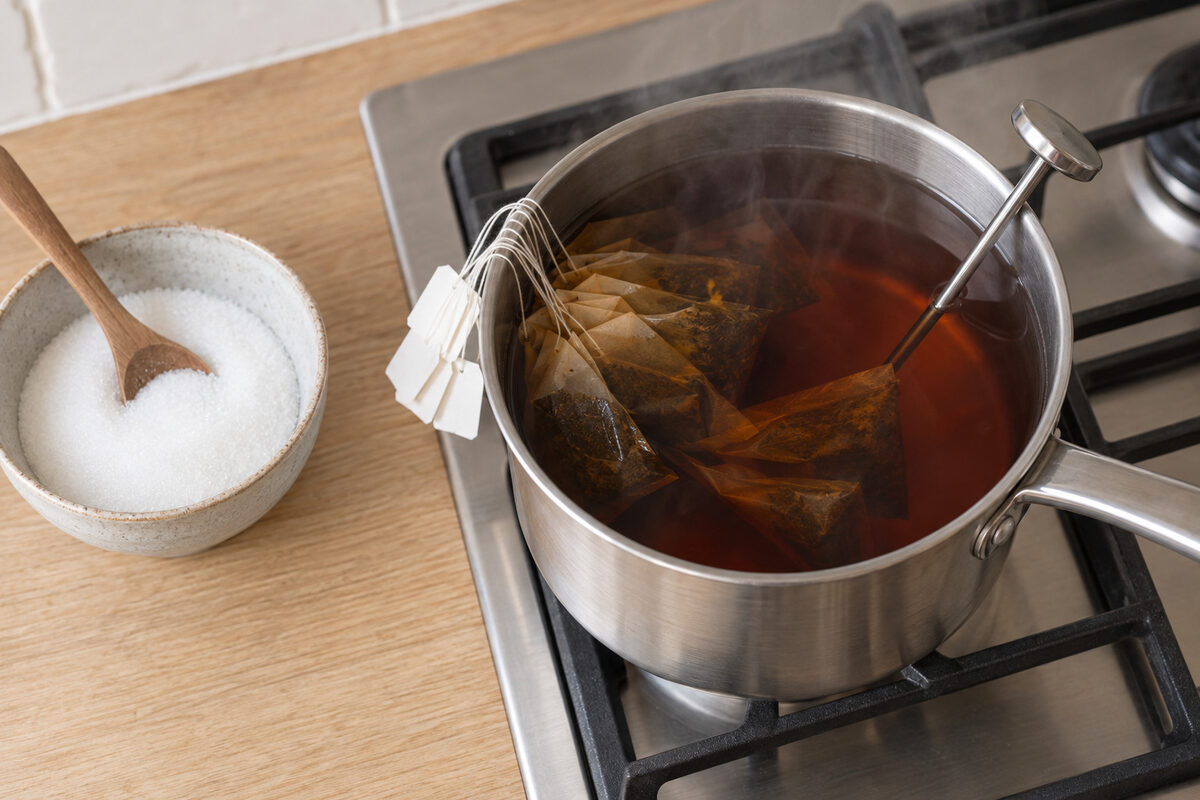
Heat 4 cups of the water to 166–170 °F (check with the thermometer) and steep the tea for 2 minutes. Take out the tea bags, pour the tea into the jar and dissolve the sugar. Add the remaining 12 cups of cold water and check that the tea is below 95 °F.
 AI
Tip: Use granulated white sugar: the recipe hasn't been tested with others.
-
Add the SCOBY and cover the jar
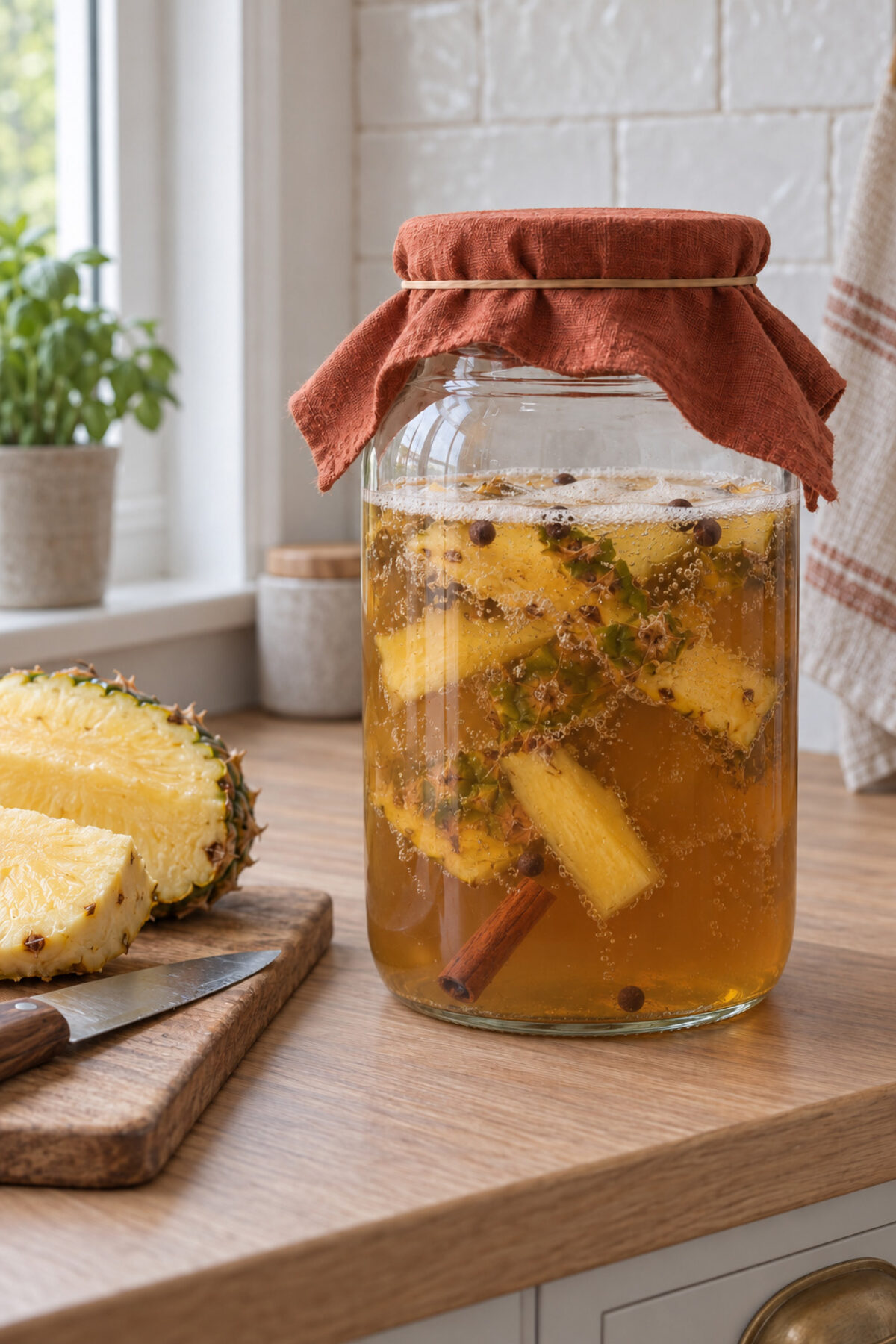
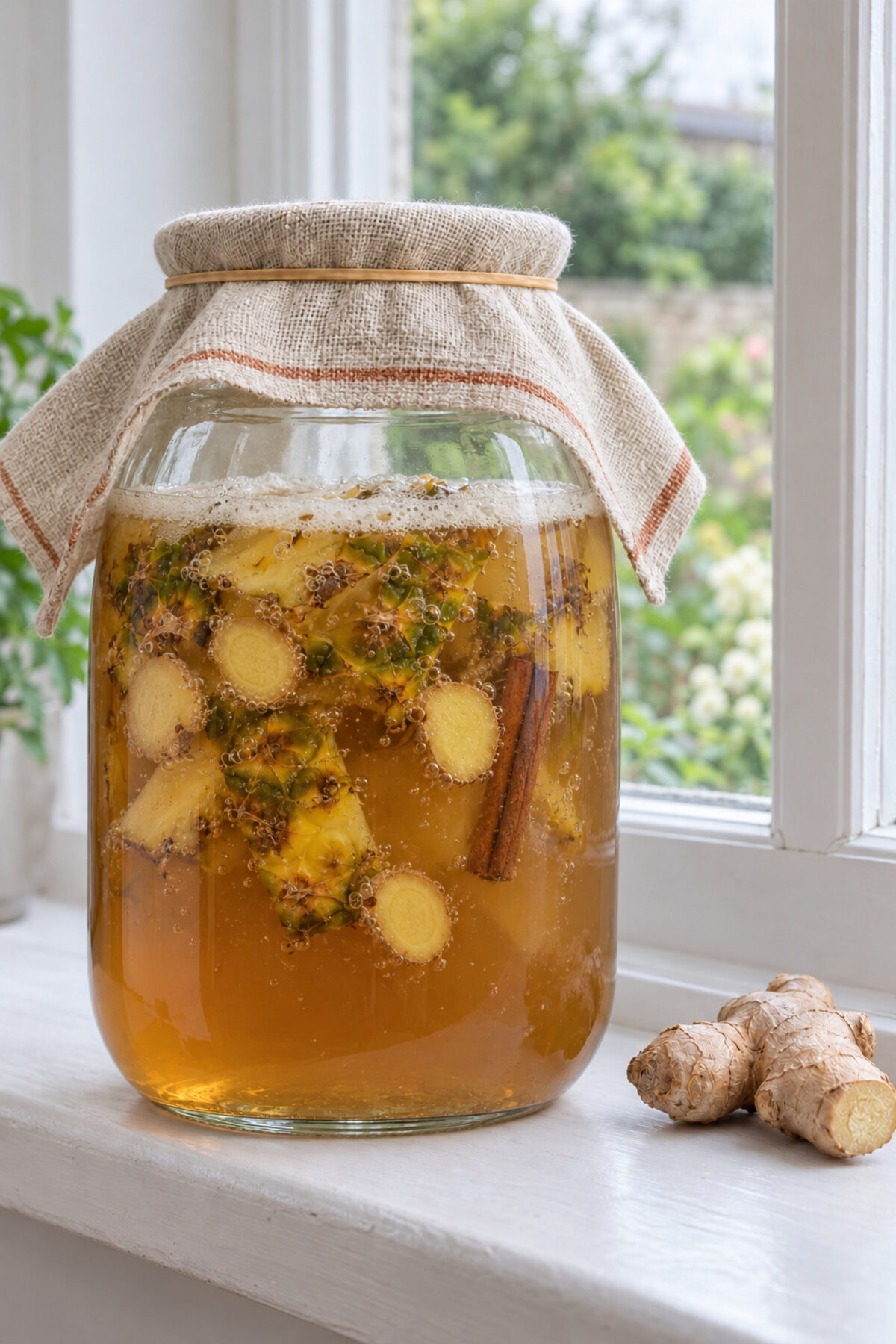
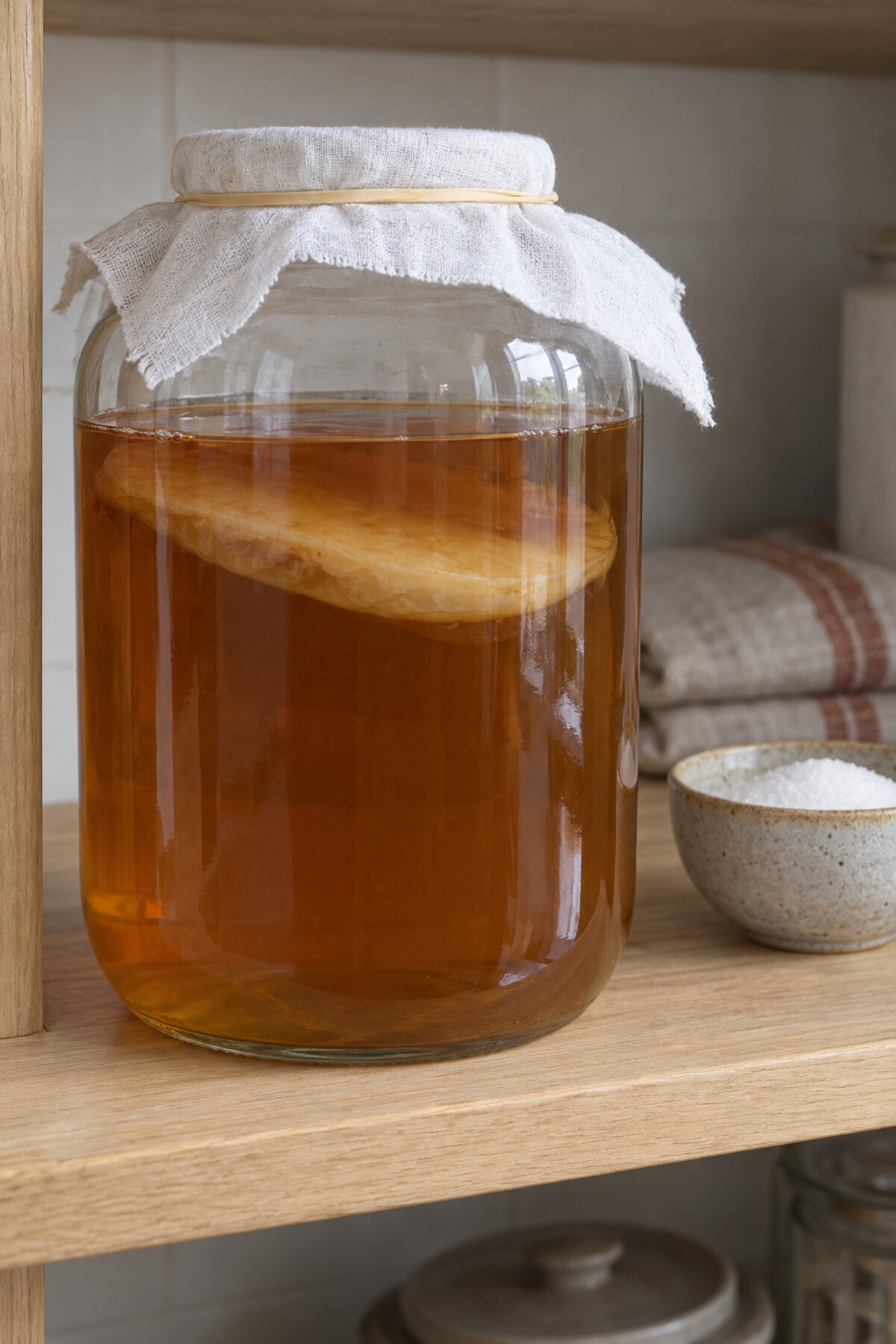
Add the SCOBY with its starter liquid and stir well. Dry the rim of the jar, cover it with a paper towel, a coffee filter or clean cheesecloth, and secure it with a rubber band. Write down the date: today is day 0.
 AI
Tip: Did your SCOBY come with less than 4 cups of starter? The minimum is 10% of the batch, about 425 ml: 2 cups is enough.
-
Let it ferment 7 to 10 days and check the pH
Keep it at 68–77 °F: cooler, it goes slower; warmer, faster. On day 7, check the pH with a calibrated meter. It must be 4.2 or below, and never below 2.5.
Tip: Bubbles, a tangy smell and a new layer on the surface are good signs.
-
Move it to the fridge and save the SCOBY
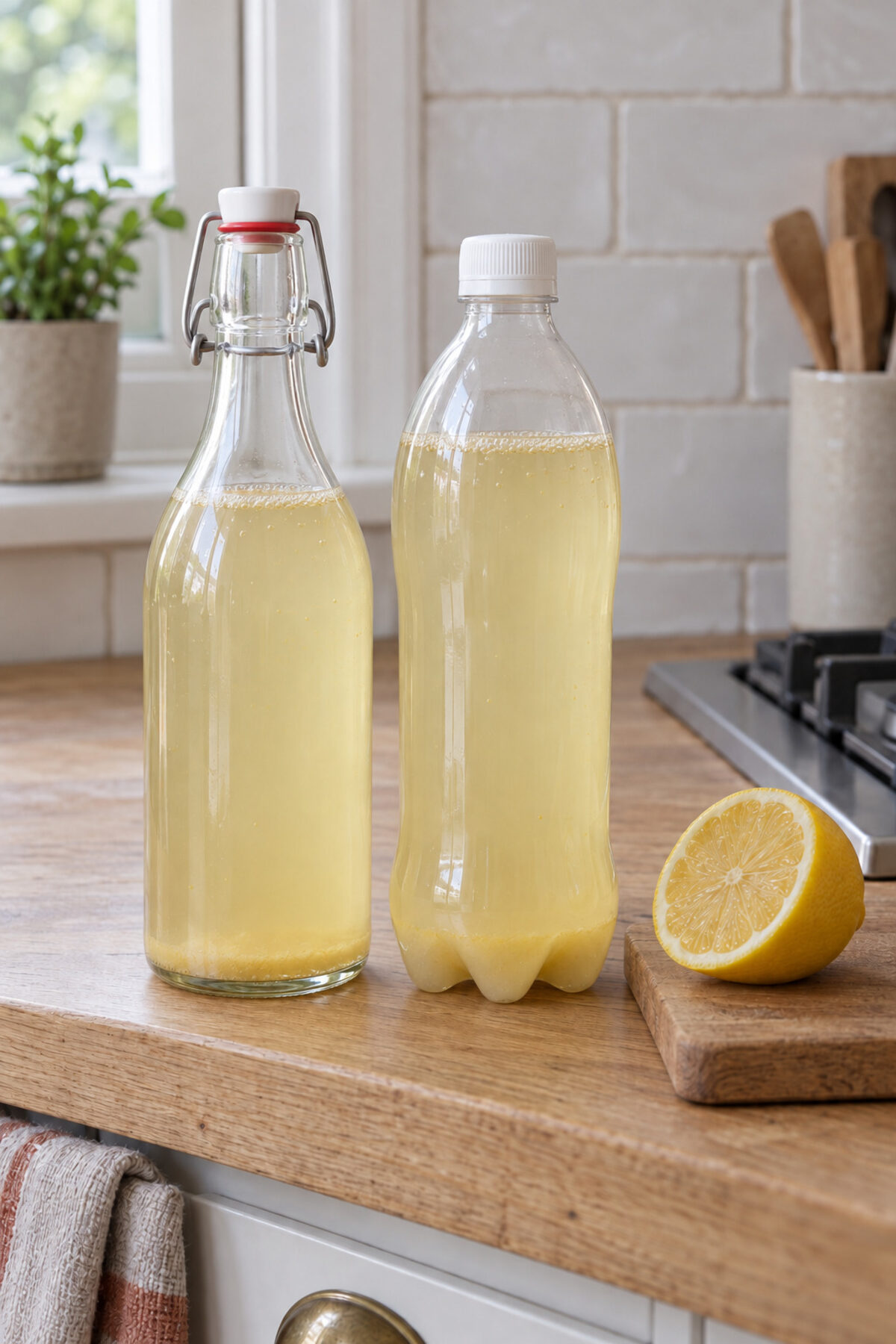
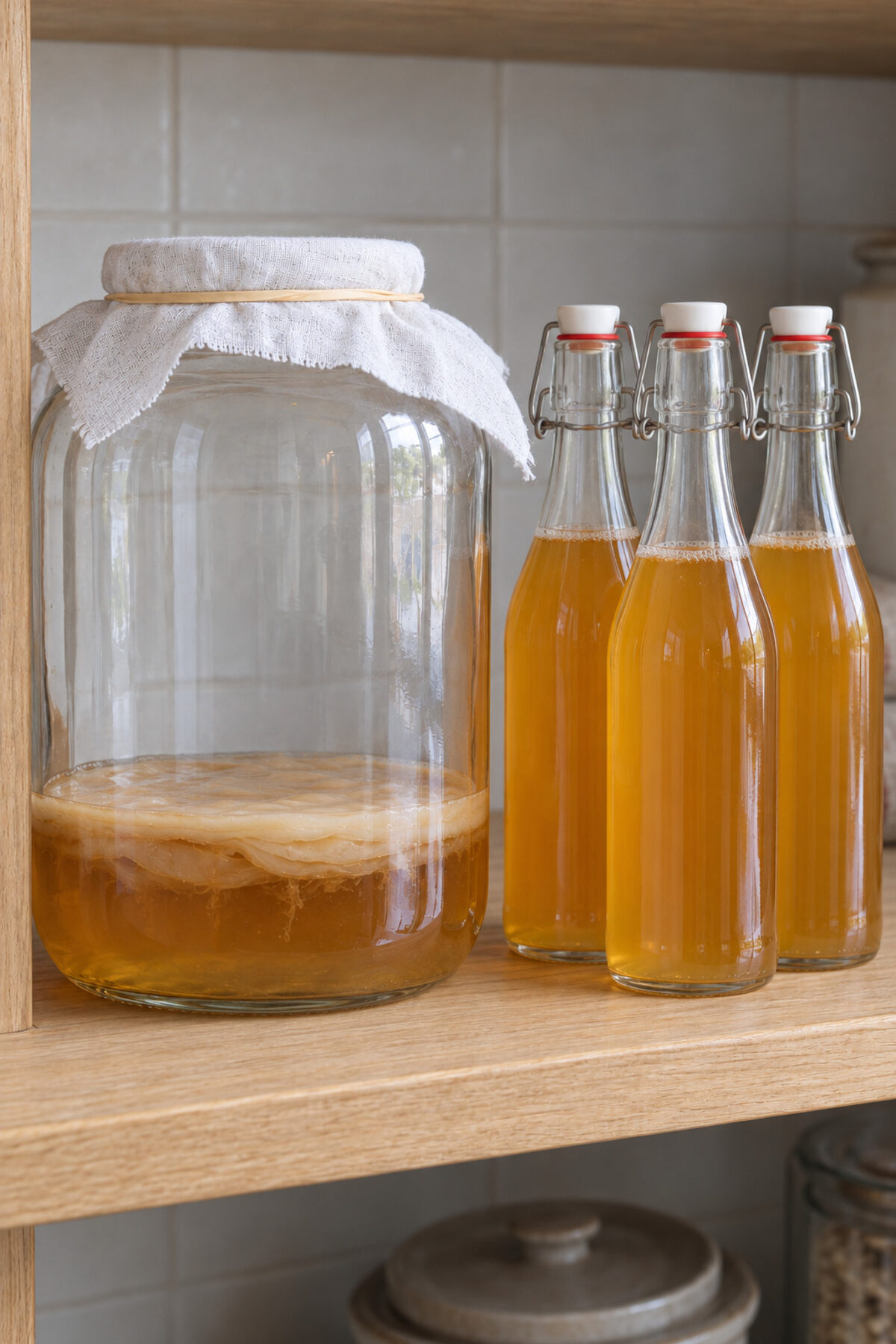
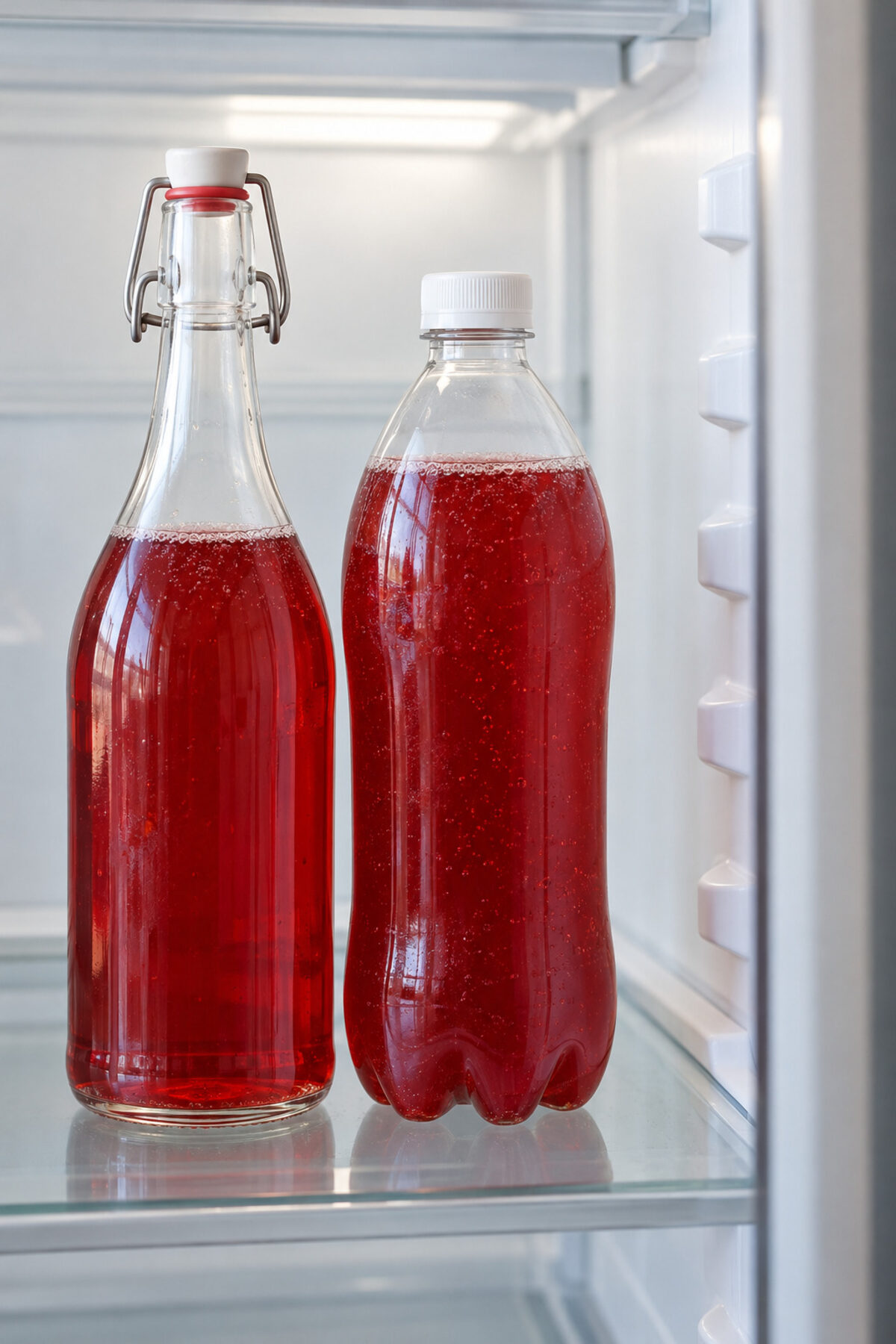
Between day 7 and day 10, once it's as tart as you like, pour it into clean bottles or jars and refrigerate at 40 °F or below. It keeps up to 30 days. Set the SCOBY aside with a fifth of the liquid: that's the starter for your next batch.
 AI
Tip: If you seal the bottles airtight, keep an eye on them: gas builds up and they can burst.
No sign-up. We guide you step by step, from the scale to the fridge.
Variations
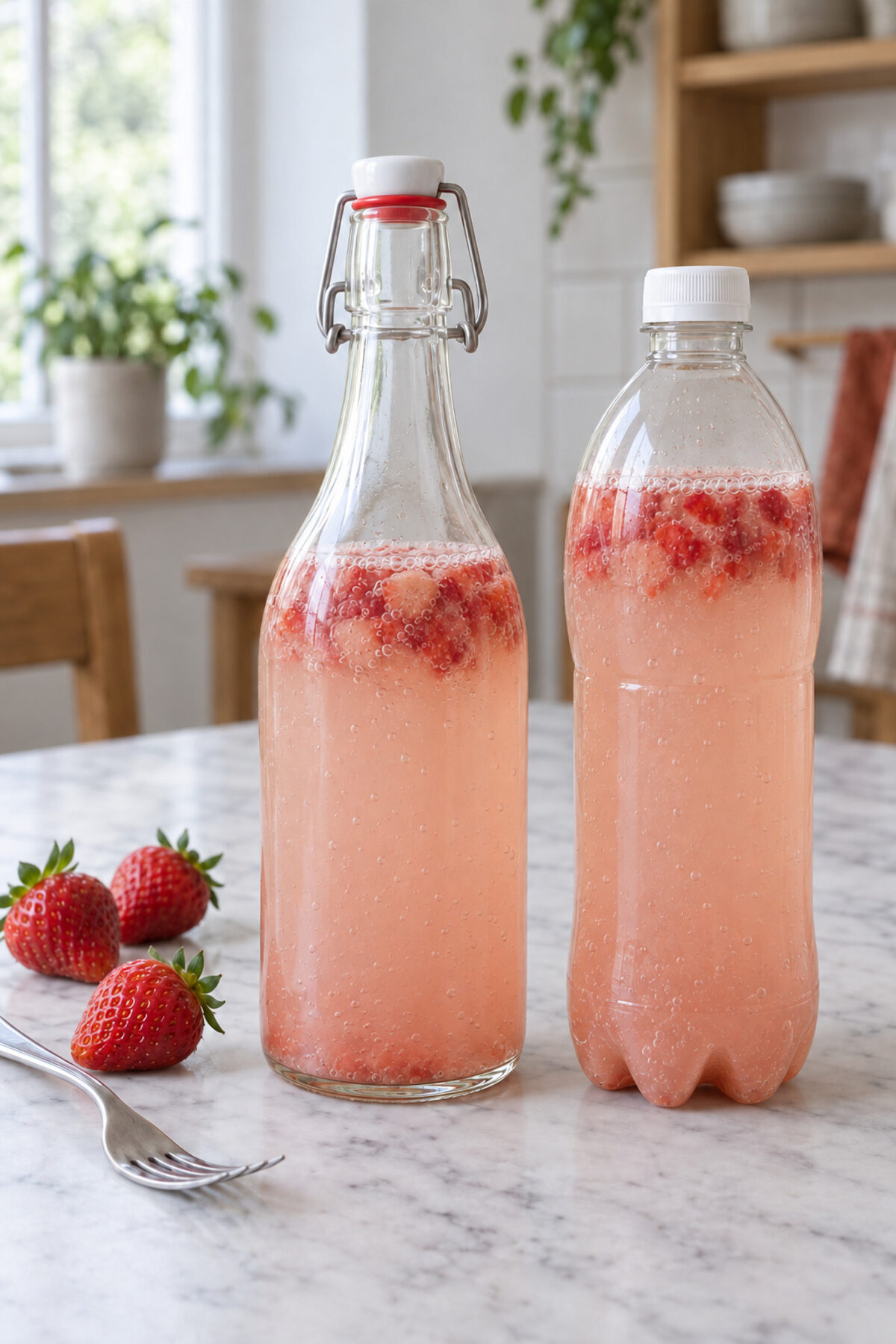
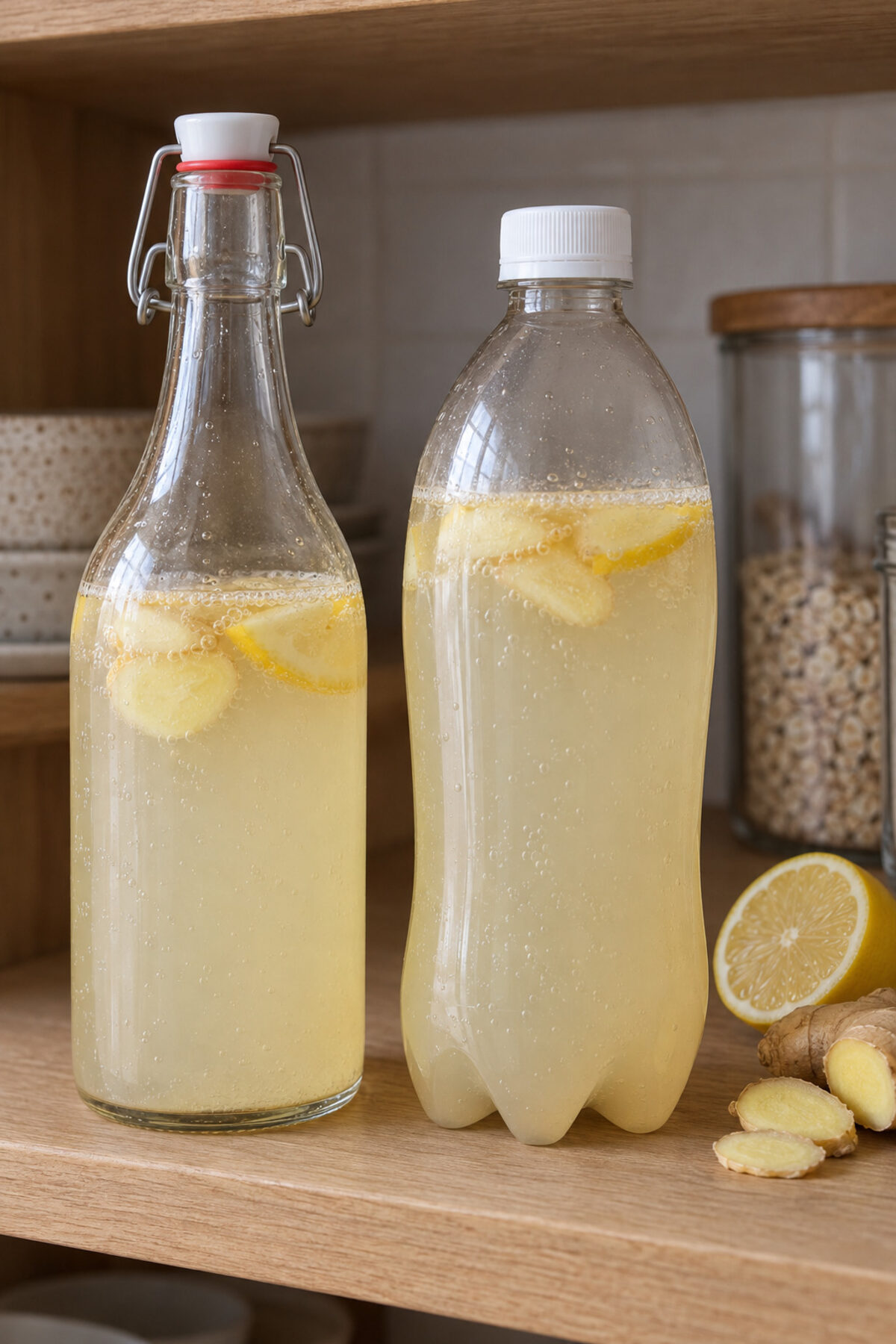
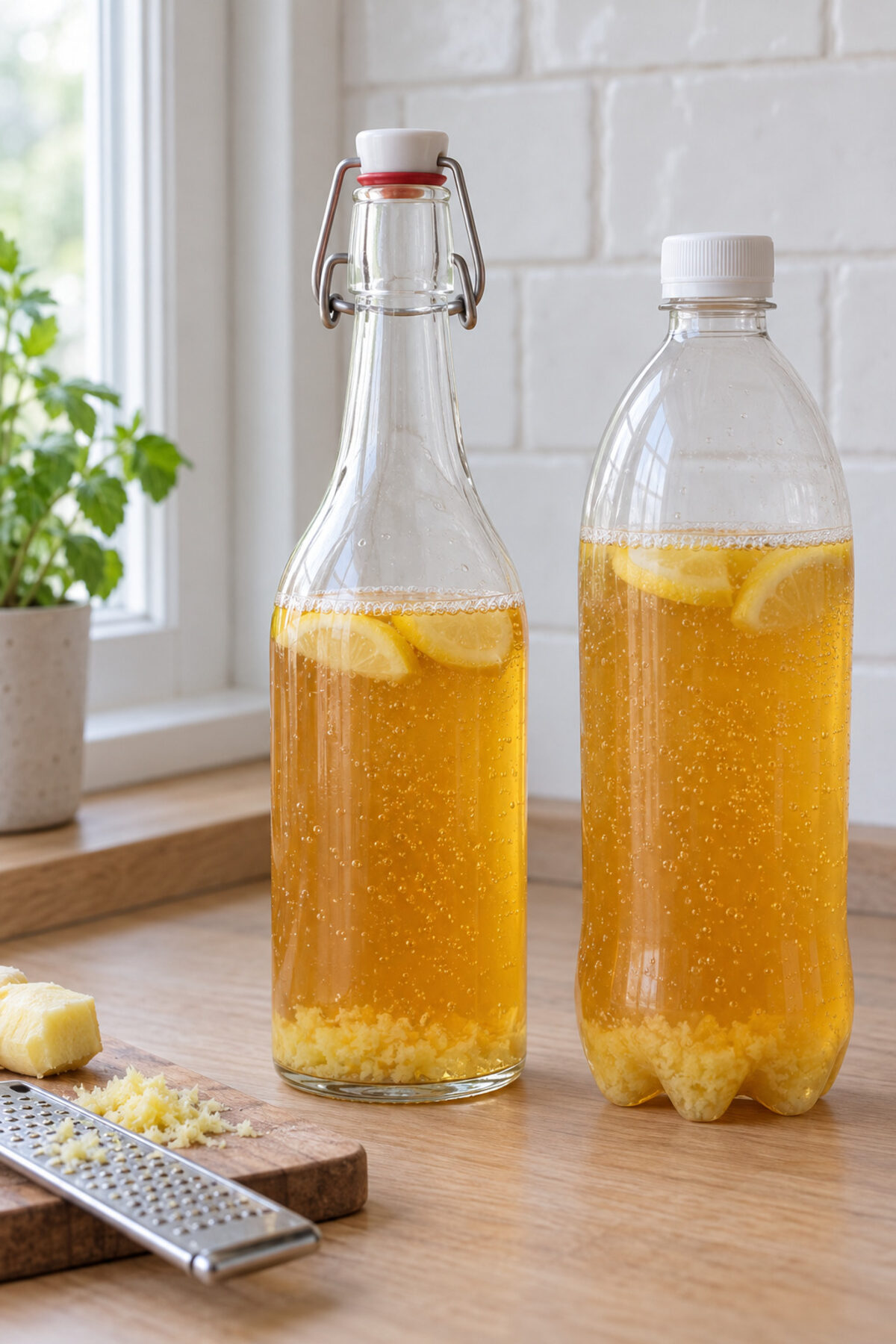
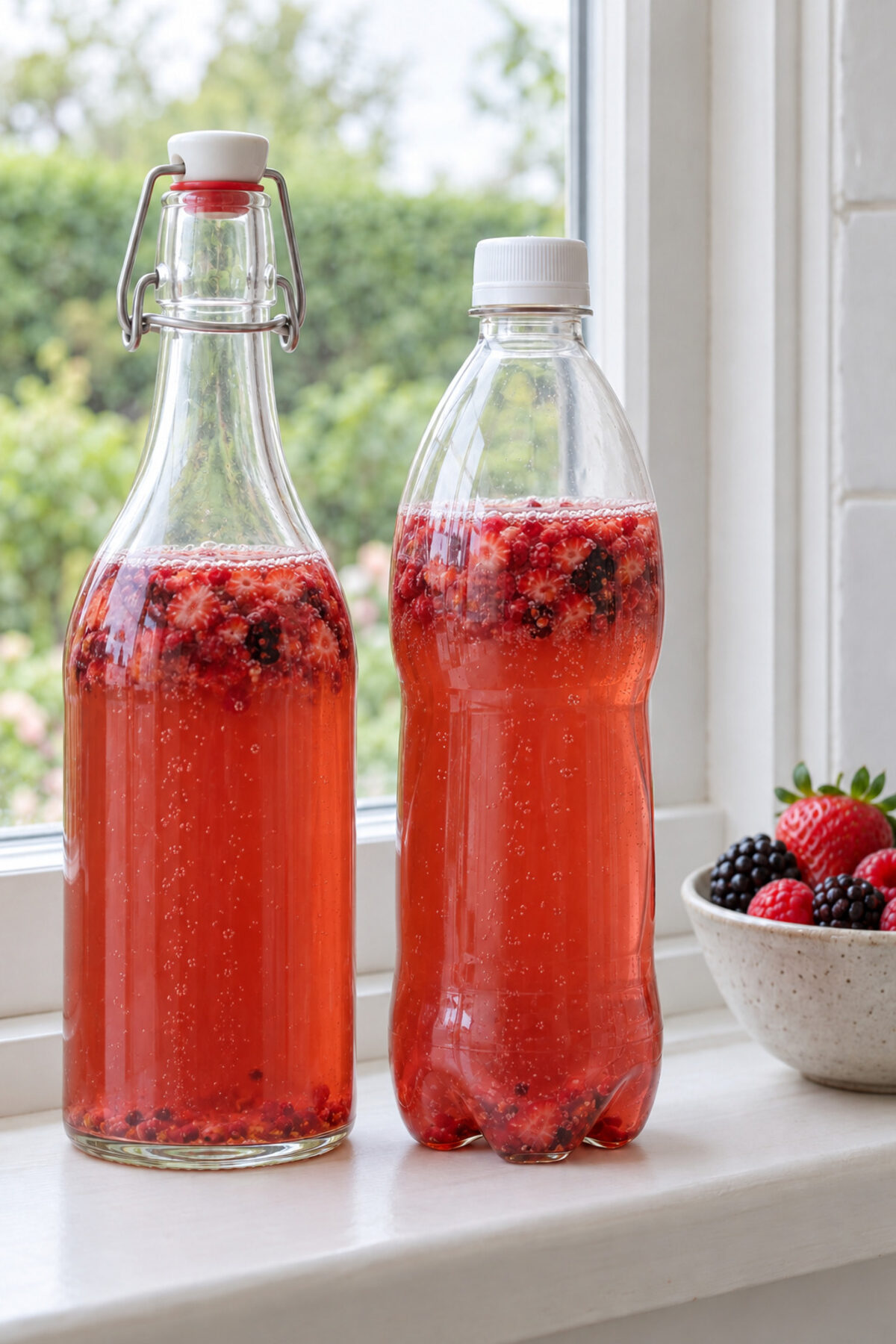
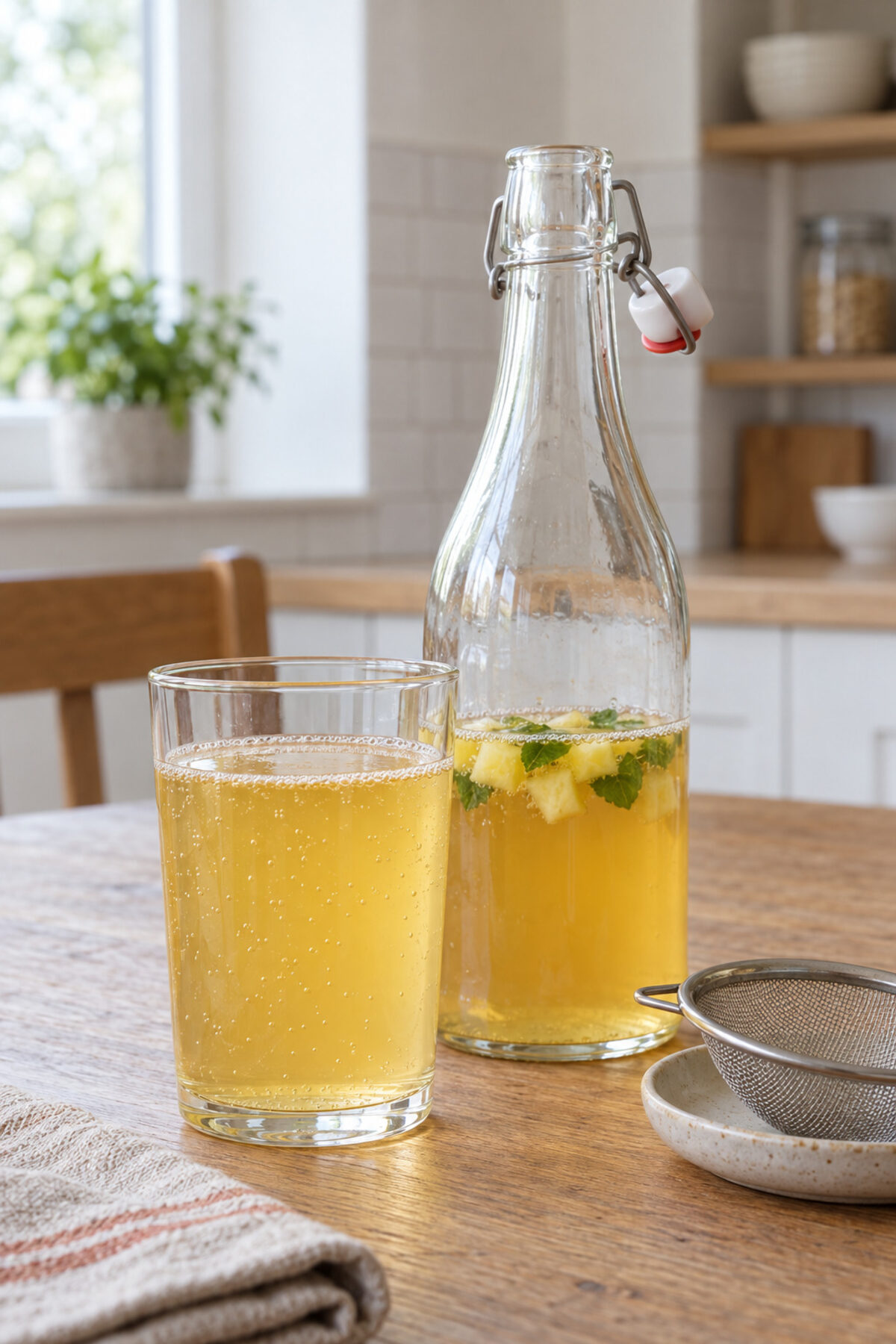
The same method, a different flavor. Once you have this one down, try one of these.
What you'll see
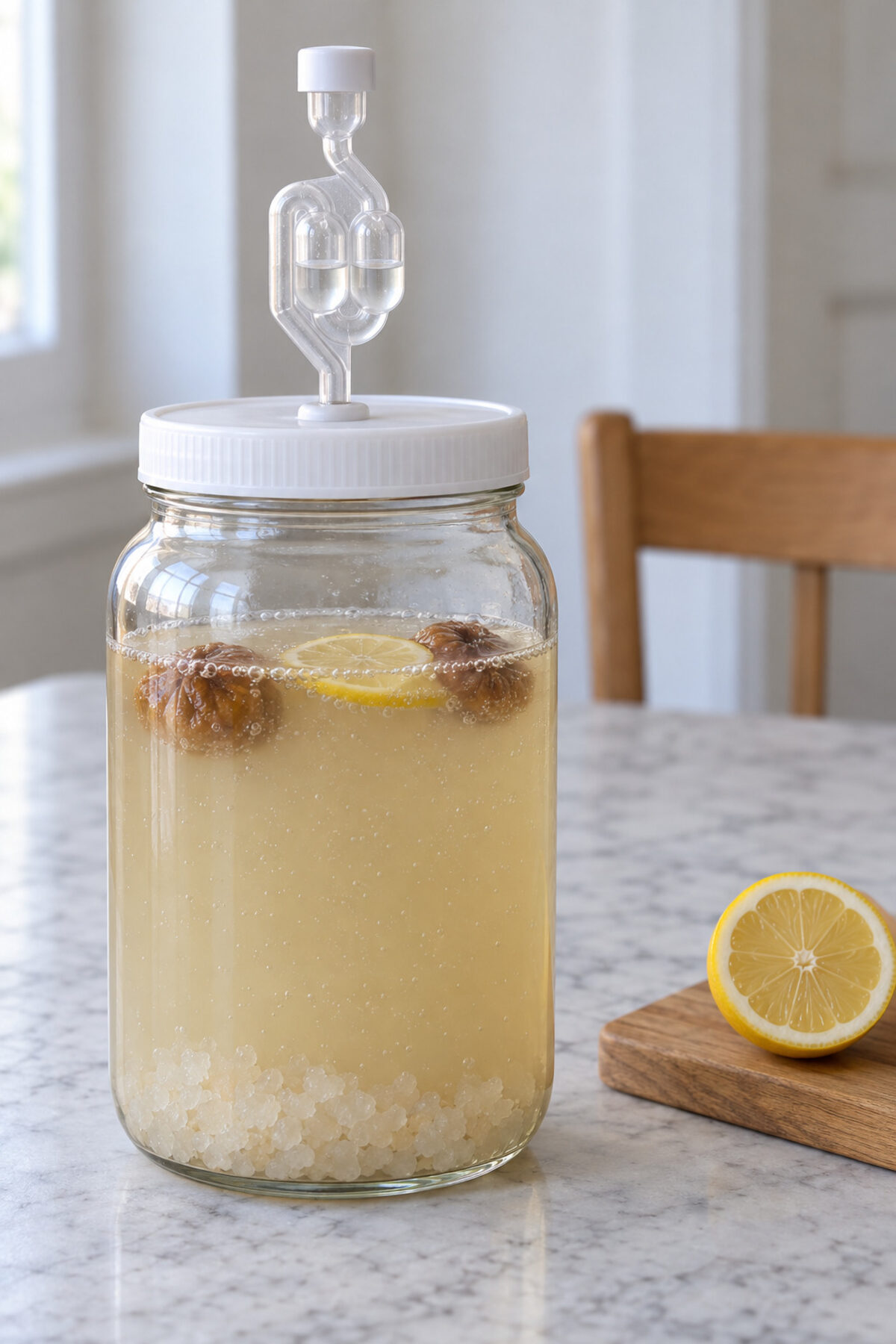
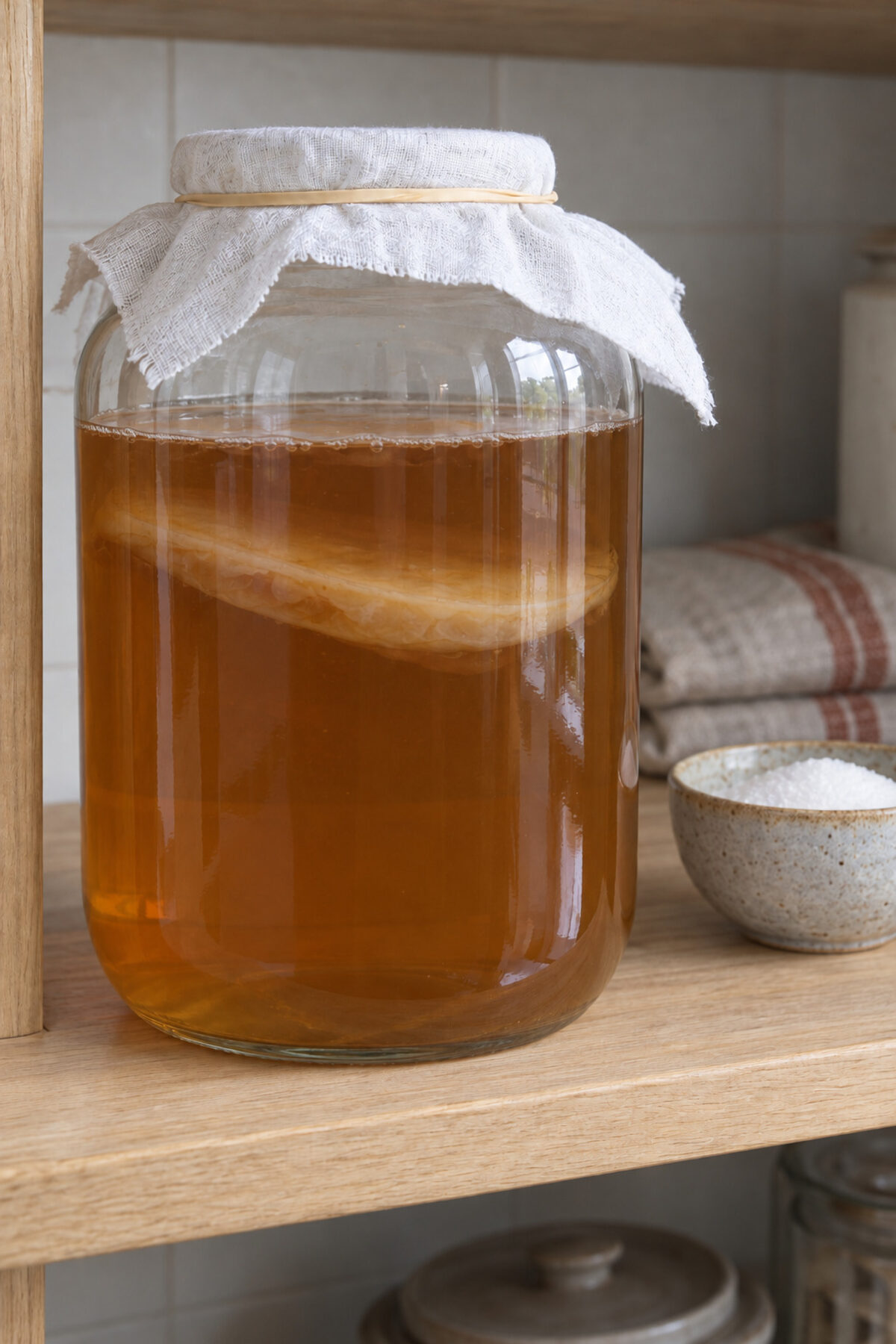
Kombucha is sweetened tea fermented by a SCOBY, a colony of bacteria and yeast. The yeast turns the sugar into alcohol and gas, and the bacteria turn that alcohol into acetic acid. This recipe comes from a study by the University of Georgia and Kansas State. Make the full batch: with half the recipe and the same SCOBY, it can turn too acidic.
AI
 AI
AI
How to tell it's going well
- Ferment in glass. No ceramic, lead crystal or metal: kombucha is acidic and can draw toxic elements from the container into the tea.
- Buy your first SCOBY. Don't use one passed from person to person.
- Starter at pH 4.0 or below, and at least 10% of the batch. Without that starting acidity, don't begin.
- pH 4.2 or below by day 7. If it hasn't gotten there, throw it out and start over with a store-bought SCOBY.
- Never below pH 2.5. The fridge slows the acid down: move it there between day 7 and day 10.
- Dry, fuzzy patches, white or colored, are mold. Throw out both the tea and the SCOBY. A new layer on the surface is the SCOBY growing.
- No more than 4 ounces a day. It isn't advised for people who are immunocompromised or pregnant, for children, or for people with certain health conditions.
Where every number comes from
Every number in this recipe comes from a food safety guide. We keep a copy of each source and quote its exact words.
-
1
Yeast makes alcohol and bacteria turn it into acetic acid
“In the first step, the yeast in the SCOBY ferments the added sugar and forms alcohol and carbon dioxide. In the second step, the bacteria in the SCOBY ferments the alcohol to produce vinegar (acetic acid).”
Virginia Cooperative Extension (Virginia Tech) · What do I need to know to sell KOMBUCHA at the farmers market? (FST-297, last reviewed November 2025) · read on October 20, 2026
-
2
The first SCOBY is store-bought, not passed from person to person
“It is highly recommended that you purchase your SCOBY commercially for first use. Do not pass SCOBY cultures from one person to another.”
Virginia Cooperative Extension (Virginia Tech) · What do I need to know to sell KOMBUCHA at the farmers market? (FST-297, last reviewed November 2025) · read on October 20, 2026
-
3
10% starter
“Add 10% inoculum (SCOBY)”
Virginia Cooperative Extension (Virginia Tech) · What do I need to know to sell KOMBUCHA at the farmers market? (FST-297, last reviewed November 2025) · read on October 20, 2026
-
4
A non-metal container
“Ferment in a non-metallic food grade container.”
Virginia Cooperative Extension (Virginia Tech) · What do I need to know to sell KOMBUCHA at the farmers market? (FST-297, last reviewed November 2025) · read on October 20, 2026
-
5
Brewing water above 165 °F
“Ensure that hot water (>165°F) is used to steep the tea.”
Virginia Cooperative Extension (Virginia Tech) · What do I need to know to sell KOMBUCHA at the farmers market? (FST-297, last reviewed November 2025) · read on October 20, 2026
-
6
pH 4.2 or below, with a calibrated meter
“Monitor the pH with a calibrated pH meter during fermentation to ensure the product gets to ≤4.2.”
Virginia Cooperative Extension (Virginia Tech) · What do I need to know to sell KOMBUCHA at the farmers market? (FST-297, last reviewed November 2025) · read on October 20, 2026
-
7
Never below pH 2.5
“To prevent the product from getting dangerously acidic, the pH should be no lower than 2.5.”
Virginia Cooperative Extension (Virginia Tech) · What do I need to know to sell KOMBUCHA at the farmers market? (FST-297, last reviewed November 2025) · read on October 20, 2026
-
8
Into the fridge between day 7 and day 10
“After 7-10 days, refrigerate the kombucha with a tight fitting lid.”
Virginia Cooperative Extension (Virginia Tech) · What do I need to know to sell KOMBUCHA at the farmers market? (FST-297, last reviewed November 2025) · read on October 20, 2026
Show the remaining 30 claims
-
9
The fridge slows alcohol and excess acid
“Refrigeration limits alcohol and excessive acid production.”
Virginia Cooperative Extension (Virginia Tech) · What do I need to know to sell KOMBUCHA at the farmers market? (FST-297, last reviewed November 2025) · read on October 20, 2026
-
10
No more than 4 ounces a day
“no more than 4 ounces per day is recommended”
Virginia Cooperative Extension (Virginia Tech) · What do I need to know to sell KOMBUCHA at the farmers market? (FST-297, last reviewed November 2025) · read on October 20, 2026
-
11
A recipe researched by the University of Georgia and Kansas State
“This research was conducted as a collaboration between University of Georgia Food Science and Technology, Kansas State University Food Science Institute, and University of Georgia Nutritional Sciences.”
National Center for Home Food Preservation (USDA, University of Georgia) · Kombucha Tea · read on October 20, 2026
-
12
1 gallon of water
“1 gallon water, divided”
National Center for Home Food Preservation (USDA, University of Georgia) · Kombucha Tea · read on October 20, 2026
-
13
6 black tea bags
“3 tablespoons (or 6 tea bags) black tea”
National Center for Home Food Preservation (USDA, University of Georgia) · Kombucha Tea · read on October 20, 2026
-
14
13 green tea bags
“1/3 cup + 2 tablespoons (or 13 tea bags) green tea”
National Center for Home Food Preservation (USDA, University of Georgia) · Kombucha Tea · read on October 20, 2026
-
15
1 cup of granulated sugar
“1 cup granulated sugar”
National Center for Home Food Preservation (USDA, University of Georgia) · Kombucha Tea · read on October 20, 2026
-
16
Test 1 tablespoon of starter
“Place 1 tablespoon of starter liquid in a small bowl or cup.”
National Center for Home Food Preservation (USDA, University of Georgia) · Kombucha Tea · read on October 20, 2026
-
17
Throw out the tablespoon you tested
“If the pH is 4.0 OR LESS, proceed to step 4 of the instructions above, discarding the starter liquid that you tested.”
National Center for Home Food Preservation (USDA, University of Georgia) · Kombucha Tea · read on October 20, 2026
-
18
Covered with a paper towel, filter or cheesecloth and a rubber band
“Dry the opening of the container, then cover with a paper towel, coffee filter, or clean cheese cloth and secure with a rubber band or string.”
National Center for Home Food Preservation (USDA, University of Georgia) · Kombucha Tea · read on October 20, 2026
-
19
Sanitize in water at 171 °F or hotter for 30 seconds
“Submerge cleaned equipment in hot water (at least 171°F) for at least 30 seconds to sanitize.”
National Center for Home Food Preservation (USDA, University of Georgia) · Kombucha Tea · read on October 20, 2026
-
20
Steep the tea 2 minutes in water at 160–170 °F
“Heat 4 cups of water to 160° - 170°F (use a food thermometer to check), and add the tea to steep for 2 minutes.”
National Center for Home Food Preservation (USDA, University of Georgia) · Kombucha Tea · read on October 20, 2026
-
21
Below 95 °F before the SCOBY goes in
“Add 12 cups of cold water and stir. Take the temperature of the tea to make sure it is below 95°F before proceeding to step 8.”
National Center for Home Food Preservation (USDA, University of Georgia) · Kombucha Tea · read on October 20, 2026
-
22
7 to 10 days at 68–77 °F
“Mark the container with the date (this is Day 0 of the fermentation) and allow the kombucha to ferment at room temperature (68° - 77°F) for 7 – 10 days.”
National Center for Home Food Preservation (USDA, University of Georgia) · Kombucha Tea · read on October 20, 2026
-
23
Sealed airtight, it builds up gas and can burst
“Storing kombucha in airtight containers can cause the accumulation of CO2 (carbonation), potentially leading to an explosion if not regularly monitored.”
National Center for Home Food Preservation (USDA, University of Georgia) · Kombucha Tea · read on October 20, 2026
-
24
A half batch can turn too acidic
“It's not recommended to make a half batch of kombucha. Doing so could lead to excessive acidity due to the same amount of SCOBY used”
University of Georgia Cooperative Extension (National Center for Home Food Preservation) · Crafting Kombucha at Home: Frequently Asked Questions (2026) · read on October 20, 2026
-
25
Other sugars aren't recommended
“It is not recommended to use other sugar types with our recipe.”
University of Georgia Cooperative Extension (National Center for Home Food Preservation) · Crafting Kombucha at Home: Frequently Asked Questions (2026) · read on October 20, 2026
-
26
Keep 20% of the liquid for the next batch
“After each batch, reserve 20% of the liquid and the SCOBY for the subsequent batch.”
University of Georgia Cooperative Extension (National Center for Home Food Preservation) · Crafting Kombucha at Home: Frequently Asked Questions (2026) · read on October 20, 2026
-
27
The starter provides the initial acidity
“This provides an initial acidity necessary for the safety of the product”
University of Georgia Cooperative Extension (National Center for Home Food Preservation) · Crafting Kombucha at Home: Frequently Asked Questions (2026) · read on October 20, 2026
-
28
A container of at least 1.5 gallons
“for our recipe at east 1.5 gallon food grade container”
University of Georgia Cooperative Extension (National Center for Home Food Preservation) · Crafting Kombucha at Home: Frequently Asked Questions (2026) · read on October 20, 2026
-
29
More days, more tartness
“For our recipe, the fermentation process takes between 7 to 10 days, depending on desired tartness.”
University of Georgia Cooperative Extension (National Center for Home Food Preservation) · Crafting Kombucha at Home: Frequently Asked Questions (2026) · read on October 20, 2026
-
30
Cooler is slower; warmer is faster
“Cooler temperatures may slow fermentation, while warmer temperatures can accelerate it.”
University of Georgia Cooperative Extension (National Center for Home Food Preservation) · Crafting Kombucha at Home: Frequently Asked Questions (2026) · read on October 20, 2026
-
31
Bubbles, a tangy smell and a new layer are good signs
“Signs of proper fermentation include the formation of bubbles, a tangy aroma, and a slightly sour taste. A new SCOBY may also form on the surface of the liquid.”
University of Georgia Cooperative Extension (National Center for Home Food Preservation) · Crafting Kombucha at Home: Frequently Asked Questions (2026) · read on October 20, 2026
-
32
In the fridge at 40 °F or below, up to 30 days
“kombucha should be stored in the refrigerator at 40 degrees Fahrenheit or below to slow down fermentation and preserve flavor. It can be stored under refrigeration temperatures for up to 30 days.”
University of Georgia Cooperative Extension (National Center for Home Food Preservation) · Crafting Kombucha at Home: Frequently Asked Questions (2026) · read on October 20, 2026
-
33
Not advised for immunocompromised people, pregnant women or children
“it may not be suitable for those with compromised immune systems, pregnant women, children, or individuals with certain health conditions.”
University of Georgia Cooperative Extension (National Center for Home Food Preservation) · Crafting Kombucha at Home: Frequently Asked Questions (2026) · read on October 20, 2026
-
34
Tested with 26, 53 and 80 g of sugar per liter
“sugar concentrations of 26 g/L, 53 g/L, and 80 g/L”
Food Protection Trends (Cullinan et al., IAFP) · Determining Critical Food Safety Factors for Safely Homebrewing Kombucha: A Study on Microbial Survivability (2025) · read on October 20, 2026
-
35
Starter at pH 4.0 or below
“the starter liquid that comes with the SCOBY you add to start your brew should not be higher than a pH of 4.0.”
UGA Extension Forsyth County · Relax, Unwind, and Safely Make Your Own Flavored Kombucha at Home (11-jul-2025) · read on October 20, 2026
-
36
No ceramic or lead crystal
“Because of the acidity of Kombucha tea, it should not be prepared or stored in containers made from materials such as ceramic or lead crystal, which both contain toxic elements than can leach into the tea.”
CDC, MMWR 44(48):892 · Unexplained Severe Illness Possibly Associated with Consumption of Kombucha Tea -- Iowa, 1995 · read on October 20, 2026
-
37
If it doesn't reach 4.2 in 7 days, throw it out
“If the pH does not reach pH ≤ 4.2 in seven days, the culture is most likely contaminated or the fermentation temperature is too cold. In either case, discarding the KT is recommended. Start a new batch with a newly purchased commercial culture.”
BC Centre for Disease Control, Environmental Health Services · Food Safety Assessment of Kombucha Tea Recipe and Food Safety Plan (2015, updated 2020) · read on October 20, 2026
-
38
Dry, fuzzy patches, white or colored, are mold
“If you see dry, fuzzy patches on your SCOBY and/or the liquid surface of the kombucha that are either white or colored, this is an indicator that the brew is spoiled. The tea and SCOBY should both be discarded”
University of Georgia Cooperative Extension · What’s the Word on Homemade Kombucha? (Circular 1312, 10-apr-2026) · read on October 20, 2026