 AI
Homemade yogurt
Level 1 · beginner
Milk, a little yogurt with live cultures and a few hours of steady warmth. With a thermometer it comes out the same every time.
- Time
- 4–7h
- Temperature
- 105–115°F
- Jar
- 1L
The golden rule: pasteurized milk, the temperature watched with a thermometer, and if it doesn't set, it goes.
No sign-up. We guide you step by step, from the scale to the fridge.
Reviewed October 26, 2026 · 35 facts, each with its source
Before you start
Yogurt is milk fermented by two bacteria, Streptococcus thermophilus and Lactobacillus bulgaricus. They like heat: at about 110 °F they turn the milk's sugar into lactic acid, and the acid thickens it. This recipe follows the National Center for Home Food Preservation (NCHFP), with what the Alaska and Illinois extension guides add. Everything hinges on temperature, so you can't make it without a thermometer.
You'll need
- 2-quart saucepan or a double boiler
- Kitchen thermometer, essential
- Spoon for stirring
- Cup or small bowl
- Glass jars with lids, 1 liter (about a quart) in all
- Yogurt maker, or a cooler with 110 °F water
Step by step
-
Heat the milk to 185–200 °F and hold it for 10 minutes
Wash the saucepan, jars, spoon and cup in hot soapy water, rinse them well and let them air-dry. Pour the milk into the pan and heat it gently, stirring, until the thermometer reads 185 to 200 °F. Hold it there for 10 minutes, or 20 for a thicker yogurt. Don't let it boil.
Tip: This heat changes the milk proteins so they set together instead of separating into curds and whey. It doesn't replace pasteurization: the milk has to be pasteurized already.
-
Cool it quickly to 112–115 °F
Set the pan in a sink of cold water and stir now and then until the milk drops to 112–115 °F. It should get there in less than 1 hour, and never take more than 2.
Tip: For a firmer yogurt next time, stir ⅓ cup of nonfat dry milk, about 25 g, into the cold milk before you heat it.
-
Mix the yogurt with a cup of milk and stir it back in
Take out a cup of the warm milk and stir it into the 60 g of yogurt in the cup until smooth. Pour it into the pan and stir. The mixture should be at 110–112 °F. Pour it into the jars right away and put the lids on. That's 60 g per liter, NCHFP's ratio of ¼ cup of yogurt per quart of milk.
Tip: Don't add the starter above 115 °F: the heat can kill its bacteria.
-
Keep the jars at about 110 °F for 4 to 7 hours
Put the jars in the yogurt maker or in a cooler. If you use a cooler, warm it first with almost-boiling water, pour that out and fill it with 110 °F water halfway up the jars. Check the temperature every hour: it should stay between 105 and 115 °F. If it drops, add hot water. Don't move the jars.
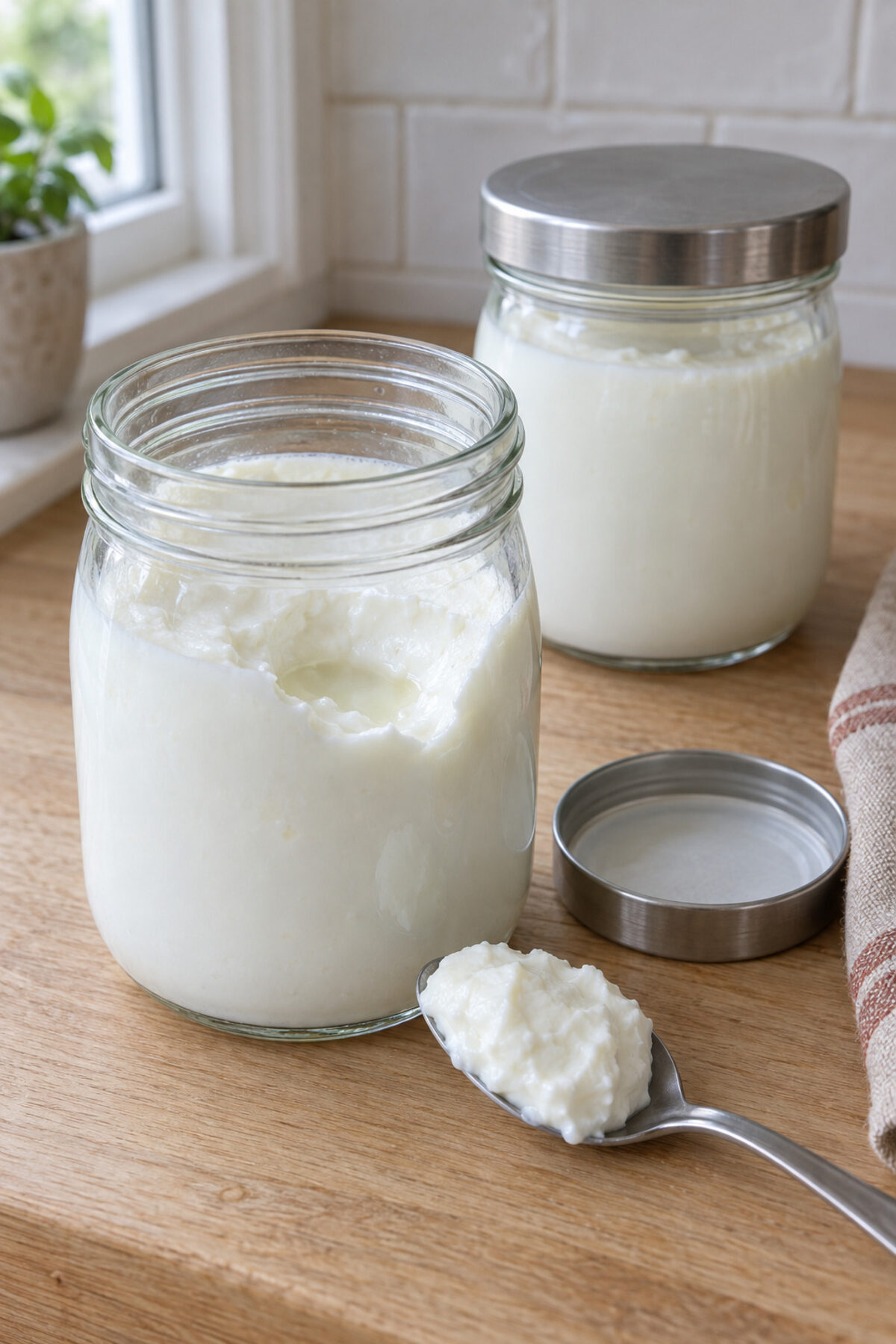
It's ready when it has set firm. In NCHFP's test it reached pH 4.6 at 5 hours and was firm at 6. If it hasn't set by 10 hours, throw it out and start again with a new starter. That's a house rule: 10 hours is the longest any guide gives, Illinois's.
Tip: A little whey on top is normal. The longer it sits after setting, the tangier it gets.
-
Refrigerate it as soon as it sets
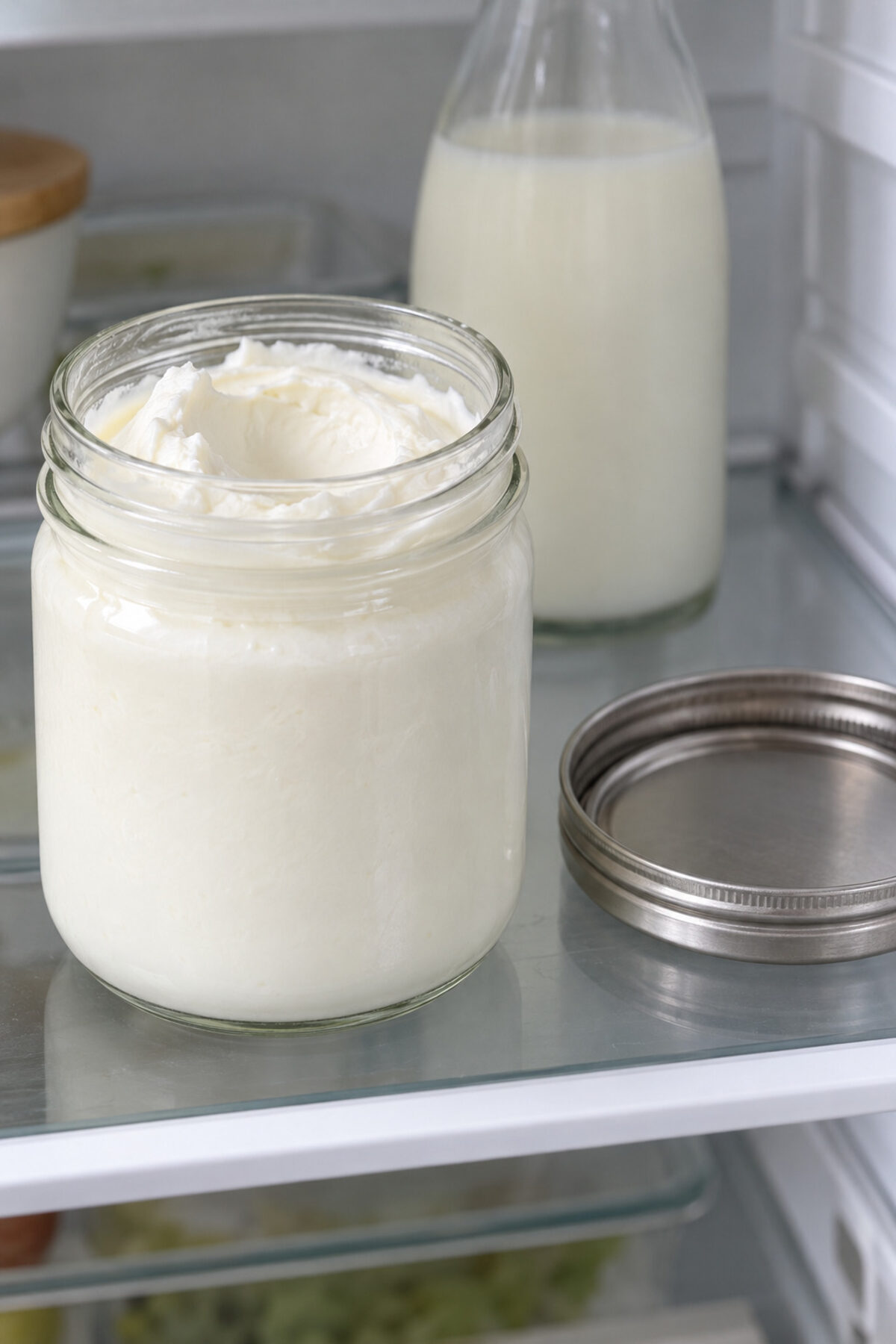
Move the jars to the fridge, at 40 °F or below: the cold stops the acid. The guides give it 10 to 21 days; count on 10, the shortest.
Tip: For the next batch, a store-bought plain yogurt is the most reliable starter. If you use your own, save 60 g and use it within 5 to 7 days.
No sign-up. We guide you step by step, from the scale to the fridge.
Variations
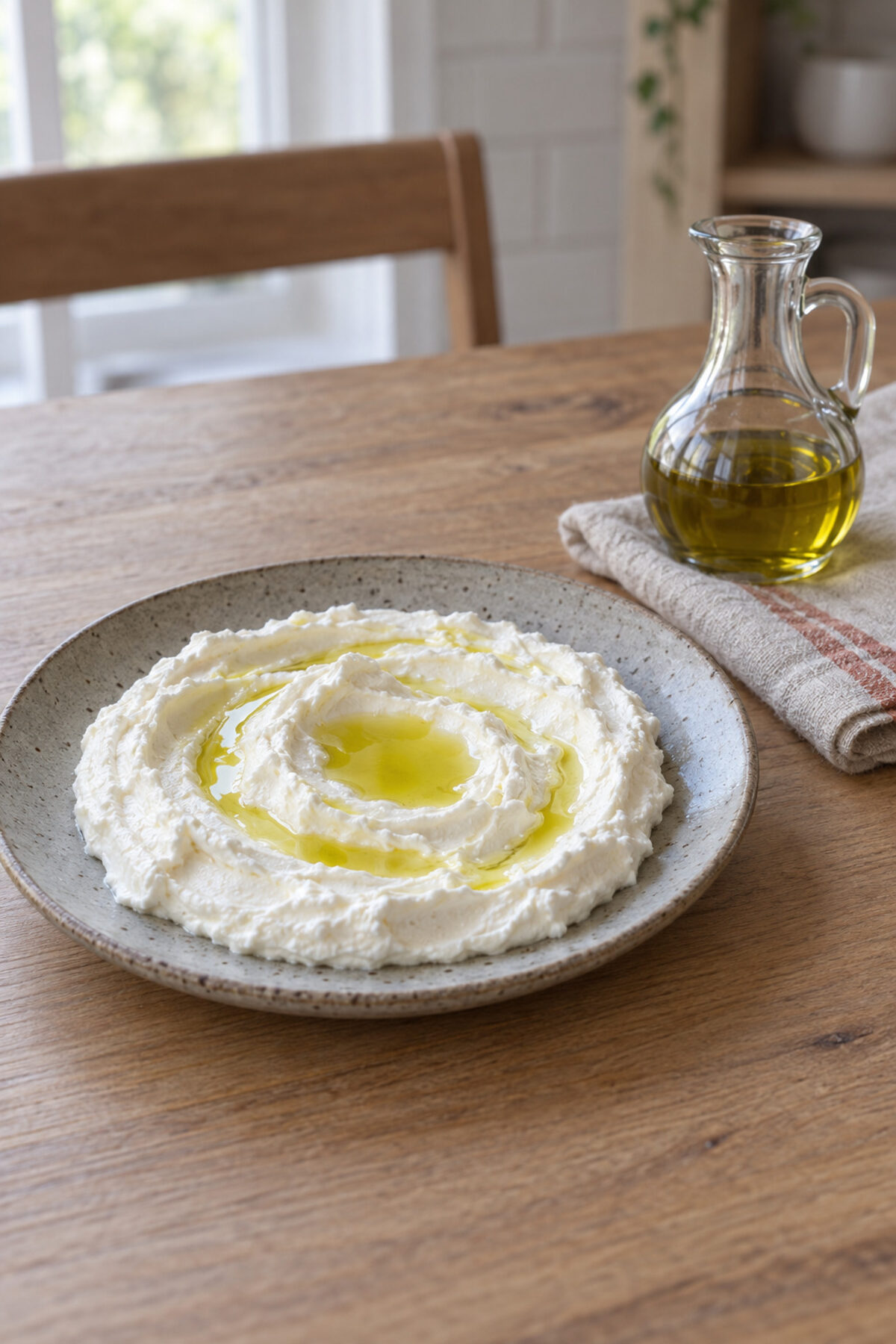
The same method, a different flavor. Once you have this one down, try one of these.
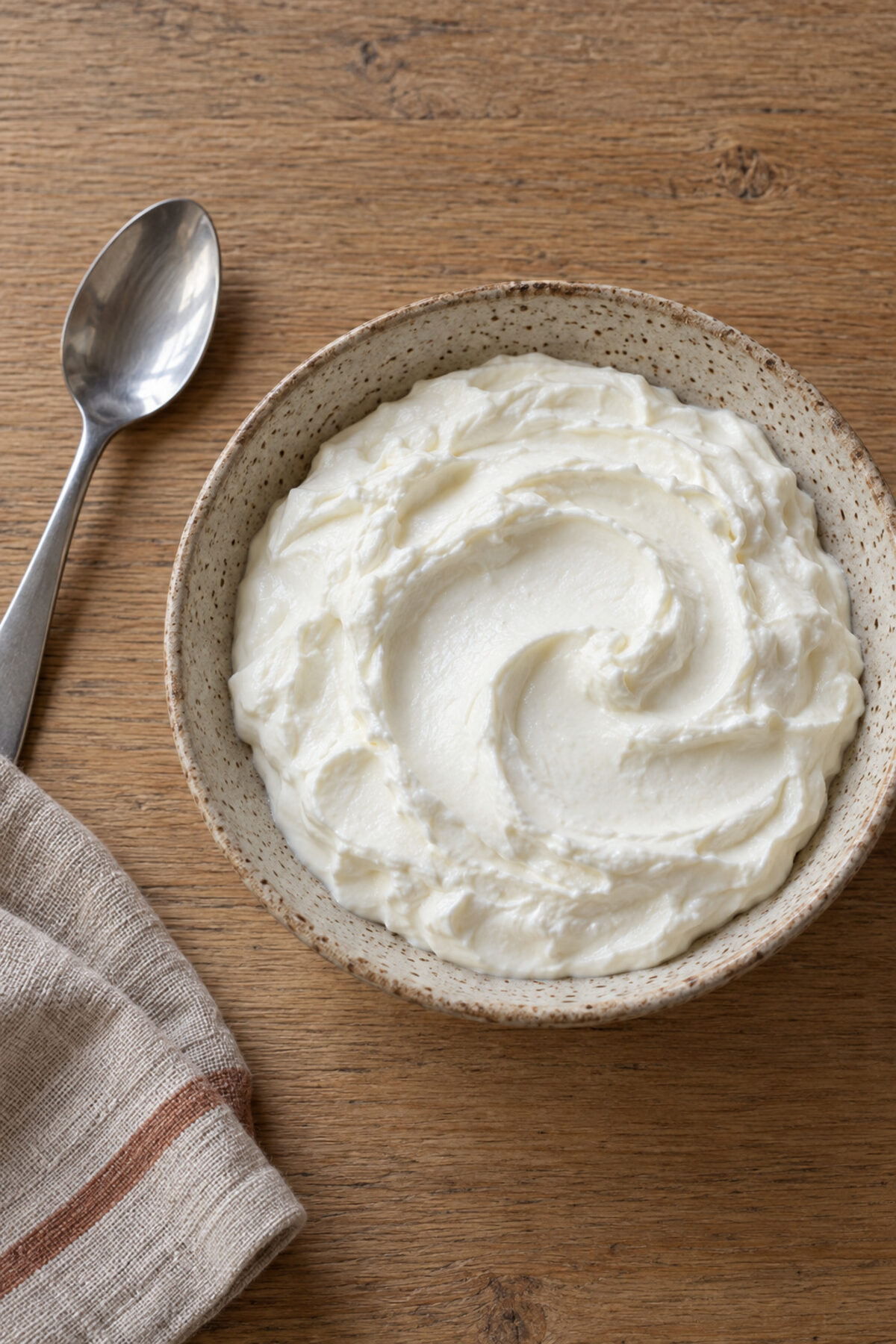
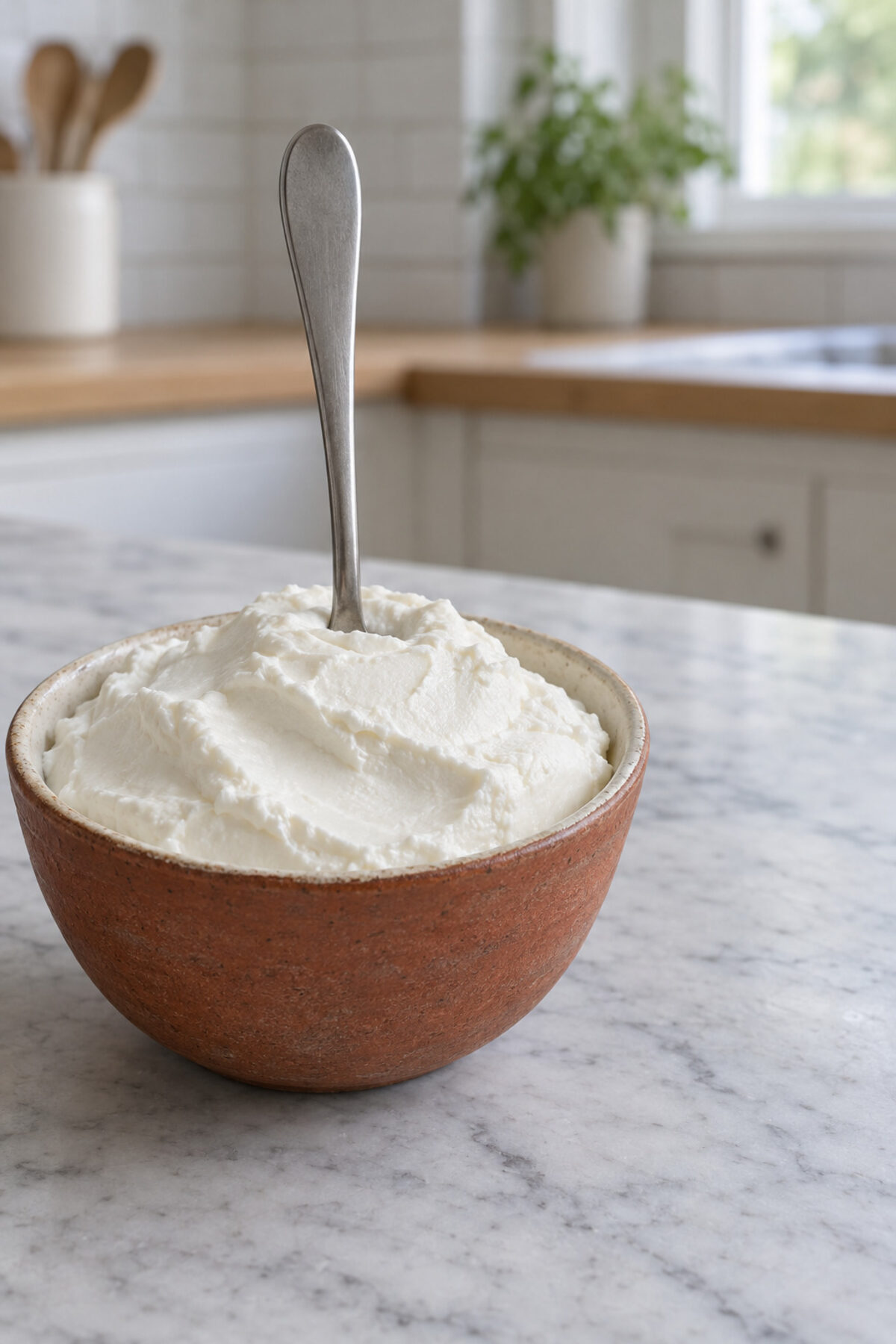
How to tell it's going well
- Always use pasteurized milk. The heating step doesn't replace pasteurization. If you have raw milk, pasteurize it first: heat it to 165 °F while stirring and cool it right away in ice water.
- Use a thermometer. The milk must cool to 112–115 °F in less than 1 hour, never more than 2, and incubate between 105 and 115 °F. Below 98 °F the bacteria grow poorly and the milk sits warm without souring.
- If it doesn't set, throw it out. It can mean a bad starter or microbes that shouldn't be there.
- In the fridge for 10 days at most. With fresh fruit stirred in, eat it the same day and within 3 days at most.
- If mold appears or it smells like anything but yogurt, throw it all out. Mold can reach below the surface. Don't sniff it.
Where every number comes from
Every number in this recipe comes from a food safety guide. We keep a copy of each source and quote its exact words.
-
1
Two bacteria make it, Streptococcus thermophilus and Lactobacillus bulgaricus
“Yogurt is made by adding Streptococcus thermophilus and Lactobacillus bulgaricus into heated milk.”
National Center for Home Food Preservation (Nummer, 2002); copy hosted by UC Davis Food Safety · Fermenting Yogurt at Home (October 2002) · read on October 25, 2026
-
2
Lactic acid is what thickens the milk
“The milk is coagulated (thickened) by an increase in acidity from lactic acid produced by the bacteria.”
National Center for Home Food Preservation (Nummer, 2002); copy hosted by UC Davis Food Safety · Fermenting Yogurt at Home (October 2002) · read on October 25, 2026
-
3
Always pasteurized milk
“Therefore, always pasteurize milk or use commercially pasteurized milk to make yogurt.”
National Center for Home Food Preservation (Nummer, 2002); copy hosted by UC Davis Food Safety · Fermenting Yogurt at Home (October 2002) · read on October 25, 2026
-
4
Heating the milk doesn't replace pasteurization
“Do not substitute this heating step for pasteurization.”
National Center for Home Food Preservation (Nummer, 2002); copy hosted by UC Davis Food Safety · Fermenting Yogurt at Home (October 2002) · read on October 25, 2026
-
5
Raw milk, heated to 165 °F while stirring and cooled right away
“Cover the milk and heat to 165°F while stirring constantly for uniform heating. Cool immediately by setting the top section of the double boiler in ice water or cold running water.”
National Center for Home Food Preservation (Nummer, 2002); copy hosted by UC Davis Food Safety · Fermenting Yogurt at Home (October 2002) · read on October 25, 2026
-
6
¼ cup of yogurt with live cultures
“Commercial, unflavored, cultured yogurt — Use ¼-cup.”
National Center for Home Food Preservation (Nummer, 2002); copy hosted by UC Davis Food Safety · Fermenting Yogurt at Home (October 2002) · read on October 25, 2026
-
7
Per quart of milk
“1-quart milk (cream, whole, low fat, or skim)”
National Center for Home Food Preservation (Nummer, 2002); copy hosted by UC Davis Food Safety · Fermenting Yogurt at Home (October 2002) · read on October 25, 2026
-
8
The label must say it contains live cultures
“Be sure the product label indicates that it contains a live culture.”
National Center for Home Food Preservation (Nummer, 2002); copy hosted by UC Davis Food Safety · Fermenting Yogurt at Home (October 2002) · read on October 25, 2026
Show the remaining 27 claims
-
9
With milk powder, a firmer yogurt
“Use 1/3-cup powder when using whole or low fat milk, or use 2/3-cup powder when using skim milk. The higher the milk solids the firmer the yogurt will be.”
National Center for Home Food Preservation (Nummer, 2002); copy hosted by UC Davis Food Safety · Fermenting Yogurt at Home (October 2002) · read on October 25, 2026
-
10
Equipment washed in hot soapy water and air-dried
“Clean equipment and containers in hot detergent water, then rinse well. Allow to air dry.”
National Center for Home Food Preservation (Nummer, 2002); copy hosted by UC Davis Food Safety · Fermenting Yogurt at Home (October 2002) · read on October 25, 2026
-
11
Accurate temperatures are the key
“Accurate temperatures are critical for successful processing.”
National Center for Home Food Preservation (Nummer, 2002); copy hosted by UC Davis Food Safety · Fermenting Yogurt at Home (October 2002) · read on October 25, 2026
-
12
Heat makes the proteins set instead of separating
“Heating the milk is a necessary step to change the milk proteins so that they set together rather than to form curds and whey.”
National Center for Home Food Preservation (Nummer, 2002); copy hosted by UC Davis Food Safety · Fermenting Yogurt at Home (October 2002) · read on October 25, 2026
-
13
Cooled quickly to 112–115 °F
“cool milk rapidly to 112-115°F”
National Center for Home Food Preservation (Nummer, 2002); copy hosted by UC Davis Food Safety · Fermenting Yogurt at Home (October 2002) · read on October 25, 2026
-
14
The yogurt goes into a cup of milk; the mix ends up at 110–112 °F
“Remove one cup of the warm milk and blend it with the yogurt starter culture. Add this to the rest of the warm milk. The temperature of the mixture should now be 110-112°F.”
National Center for Home Food Preservation (Nummer, 2002); copy hosted by UC Davis Food Safety · Fermenting Yogurt at Home (October 2002) · read on October 25, 2026
-
15
Above 115 °F the culture can die
“Adding culture to very hot milk (+115°F) can kill bacteria”
National Center for Home Food Preservation (Nummer, 2002); copy hosted by UC Davis Food Safety · Fermenting Yogurt at Home (October 2002) · read on October 25, 2026
-
16
4 to 7 hours at 105–115 °F
“incubate about 4 - 7 hours at 110°F ± 5°F”
National Center for Home Food Preservation (Nummer, 2002); copy hosted by UC Davis Food Safety · Fermenting Yogurt at Home (October 2002) · read on October 25, 2026
-
17
It sets firm once it reaches pH 4.6
“Yogurt should set firm when the proper acid level is achieved (pH 4.6).”
National Center for Home Food Preservation (Nummer, 2002); copy hosted by UC Davis Food Safety · Fermenting Yogurt at Home (October 2002) · read on October 25, 2026
-
18
In NCHFP's test, pH 4.6 at 5 hours
“Our yogurt reached pH 4.7 in approx. four hours, pH 4.6 in approx. five hours and pH 4.5 in approx. six hours.”
National Center for Home Food Preservation (Nummer, 2002); copy hosted by UC Davis Food Safety · Fermenting Yogurt at Home (October 2002) · read on October 25, 2026
-
19
More hours after it sets, more tang
“Incubating yogurt for several hours past the time after the yogurt has set will produce more acidity.”
National Center for Home Food Preservation (Nummer, 2002); copy hosted by UC Davis Food Safety · Fermenting Yogurt at Home (October 2002) · read on October 25, 2026
-
20
A little whey on top is normal
“This is called syneresis. Some syneresis is natural.”
National Center for Home Food Preservation (Nummer, 2002); copy hosted by UC Davis Food Safety · Fermenting Yogurt at Home (October 2002) · read on October 25, 2026
-
21
In the fridge at 40 °F or below, 10 to 21 days
“Rapid cooling stops the development of acid. Yogurt will keep for about 10-21 days if held in the refrigerator at 40°F or lower.”
National Center for Home Food Preservation (Nummer, 2002); copy hosted by UC Davis Food Safety · Fermenting Yogurt at Home (October 2002) · read on October 25, 2026
-
22
Throw it out if it has mold or smells like anything but yogurt
“Discard any yogurt samples with visible signs of microbial growth or any odors other than the acidity of fresh yogurt.”
National Center for Home Food Preservation (Nummer, 2002); copy hosted by UC Davis Food Safety · Fermenting Yogurt at Home (October 2002) · read on October 25, 2026
-
23
A store-bought starter each time
“Use a fresh, recently purchased culture from the grocery store each time you make yogurt.”
National Center for Home Food Preservation (Nummer, 2002); copy hosted by UC Davis Food Safety · Fermenting Yogurt at Home (October 2002) · read on October 25, 2026
-
24
Pasteurized or ultra-pasteurized milk both work
“must be pasteurized or ultra-pasteurized before the addition of the characterizing bacterial culture”
U.S. Food and Drug Administration, Code of Federal Regulations (eCFR) · 21 CFR 131.200 Yogurt · read on October 25, 2026
-
25
185 to 200 °F for 10 or 20 minutes, without boiling
“Hold temperature at 185° to 200°F for 10 minutes for thinner yogurt or up to 20 minutes for thicker yogurt. Do not boil.”
University of Alaska Fairbanks Cooperative Extension Service · Making Yogurt at Home (FNH-00062, reviewed October 2024) · read on October 25, 2026
-
26
It grows poorly below 98 °F and dies above 130 °F
“They like warm temperatures, but they can be killed at temperatures above 130°F and will not grow well below 98°F.”
University of Alaska Fairbanks Cooperative Extension Service · Making Yogurt at Home (FNH-00062, reviewed October 2024) · read on October 25, 2026
-
27
A cooler warmed first and filled with 110 °F water
“To use an insulated cooler, prewarm the cooler with almost-boiling water. Empty, then fill with 110°F water that comes halfway up the sides of jars filled with 110°F cultured milk.”
University of Alaska Fairbanks Cooperative Extension Service · Making Yogurt at Home (FNH-00062, reviewed October 2024) · read on October 25, 2026
-
28
Watch the temperature throughout incubation
“Monitor temperature throughout incubation, making adjustments as necessary.”
University of Alaska Fairbanks Cooperative Extension Service · Making Yogurt at Home (FNH-00062, reviewed October 2024) · read on October 25, 2026
-
29
If it doesn't set, throw it out
“Discard batches that fail to set properly since this may be an indication of a bad culture or unwanted microorganisms.”
University of Alaska Fairbanks Cooperative Extension Service · Making Yogurt at Home (FNH-00062, reviewed October 2024) · read on October 25, 2026
-
30
Cooled within 1 hour, and never more than 2
“Cooling milk to the inoculation temperature within 1 hour (best practice for commercial and smallscale), and up to a maximum of 2 hours (this is a CCP).”
BC Centre for Disease Control, Environmental Health Services · Safety of Fermented Foods, Section 3.6: Yogurt (April 2024, updated December 2024) · read on October 25, 2026
-
31
With fresh fruit, the same day and 3 days at most
“Controlling time, when fresh ingredients are added (e.g. added fruit berries). For example, use yogurt same day, up to a maximum of 3 days, then discard.”
BC Centre for Disease Control, Environmental Health Services · Safety of Fermented Foods, Section 3.6: Yogurt (April 2024, updated December 2024) · read on October 25, 2026
-
32
Illinois: 6 to 10 hours, undisturbed
“Incubate yogurt between 108-115 F for 6 to 10 hours, undisturbed.”
University of Illinois Extension · Making Yogurt at Home, Best Practice Guide (modified May 2024) · read on October 25, 2026
-
33
Your own yogurt as a starter, within 5 to 7 days
“If using a previous batch of homemade yogurt, use it as a starter within 5 to 7 days from when the yogurt was made.”
University of Illinois Extension · Making Yogurt at Home, Best Practice Guide (modified May 2024) · read on October 25, 2026
-
34
Moldy yogurt goes in the trash
“Yogurt and sour cream Discard Foods with high moisture content can be contaminated below the surface.”
USDA Food Safety and Inspection Service · Molds on Food: Are They Dangerous? · read on October 20, 2026
-
35
Don't sniff mold
“Don't sniff the moldy item. This can cause respiratory trouble.”
USDA Food Safety and Inspection Service · Molds on Food: Are They Dangerous? · read on October 20, 2026