 IA
Crème fraîche
Nivel 2 · con algo de práctica
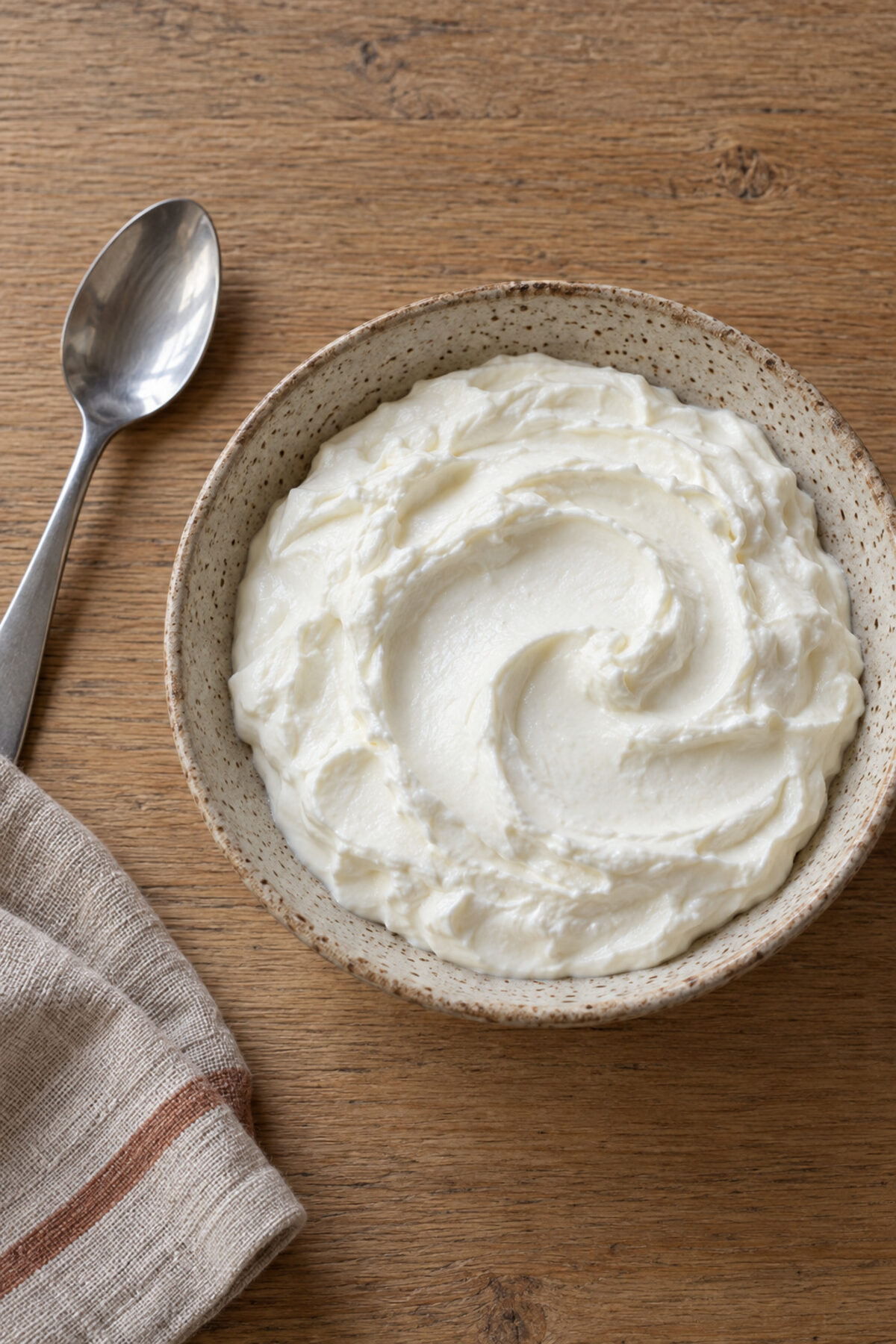
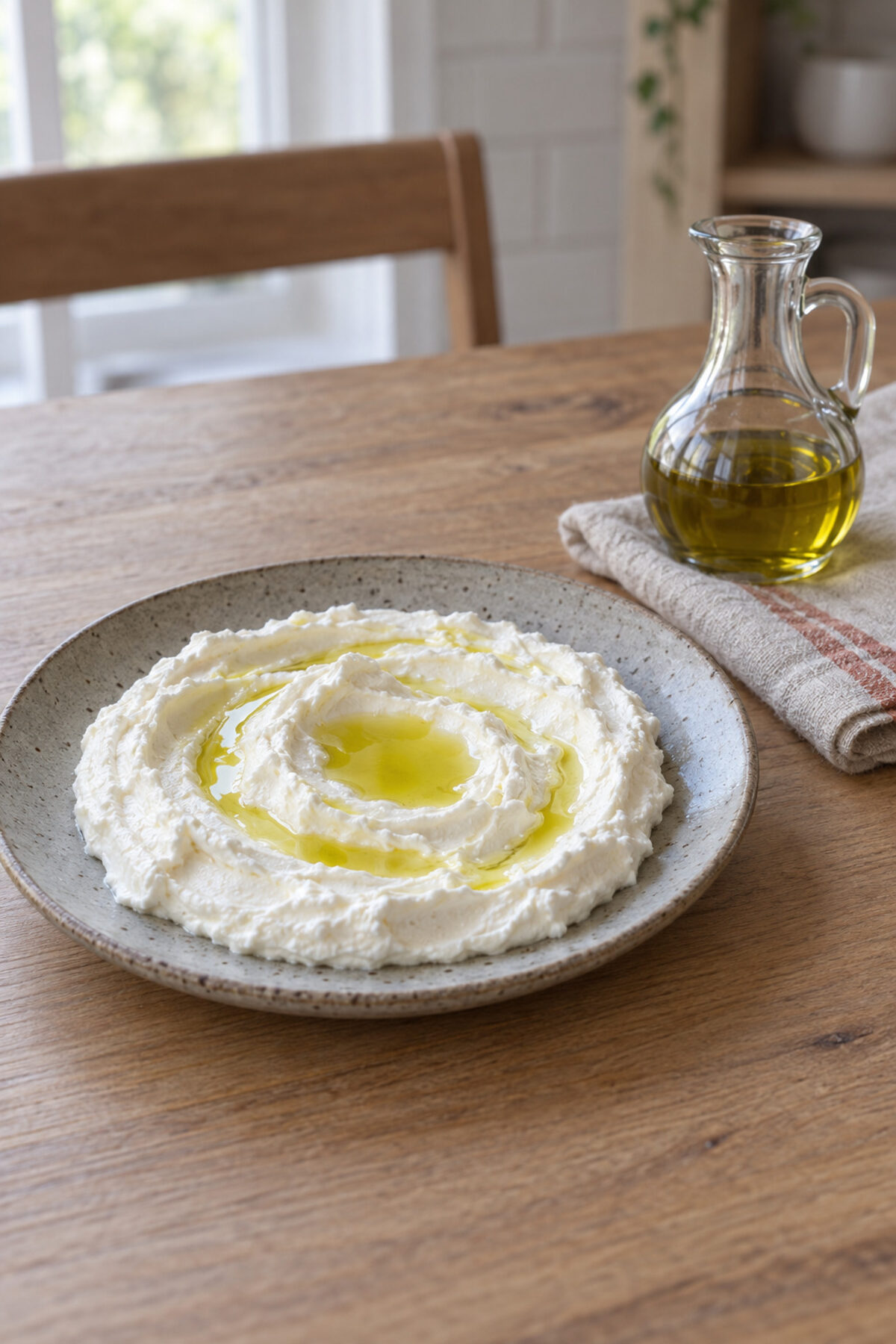
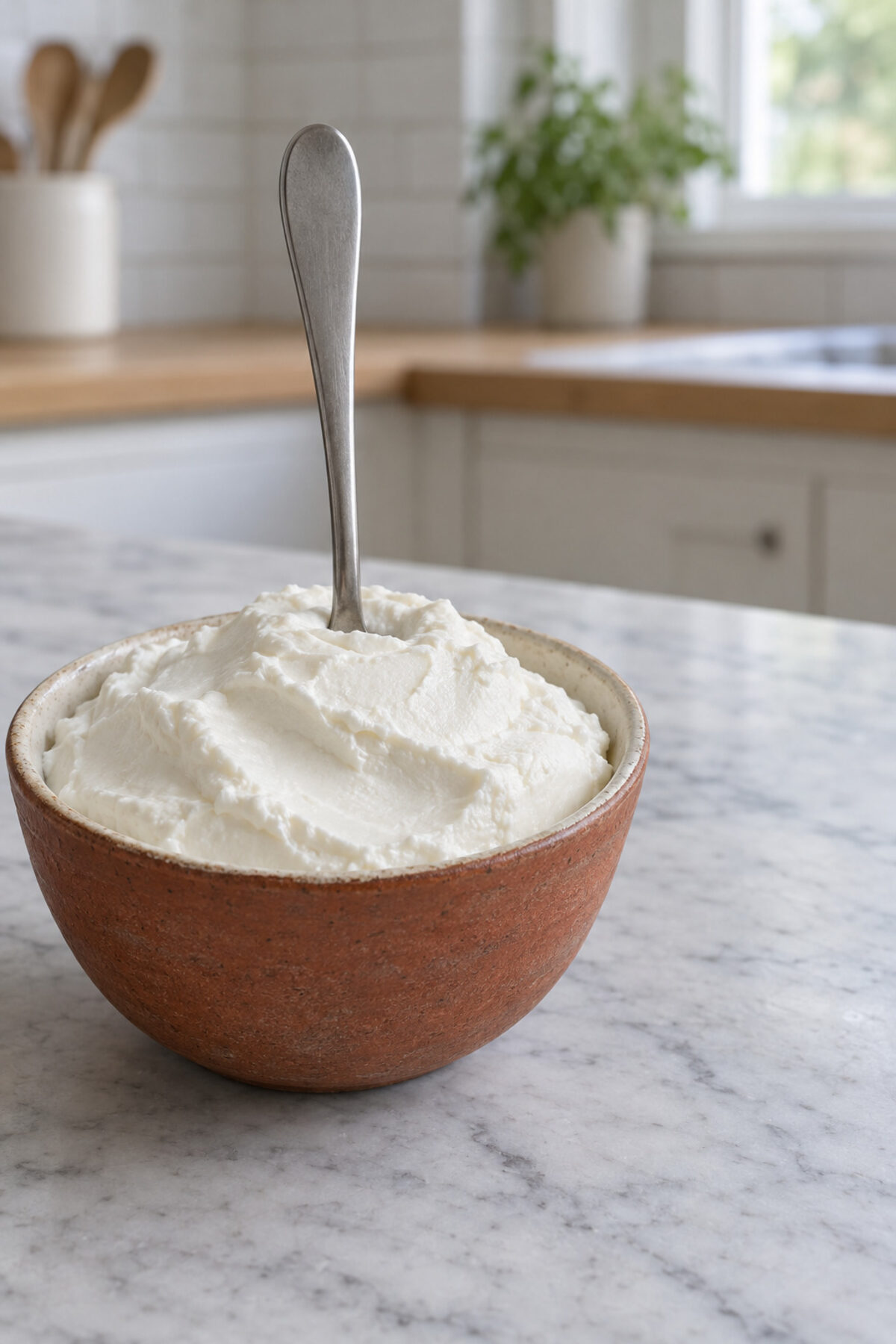
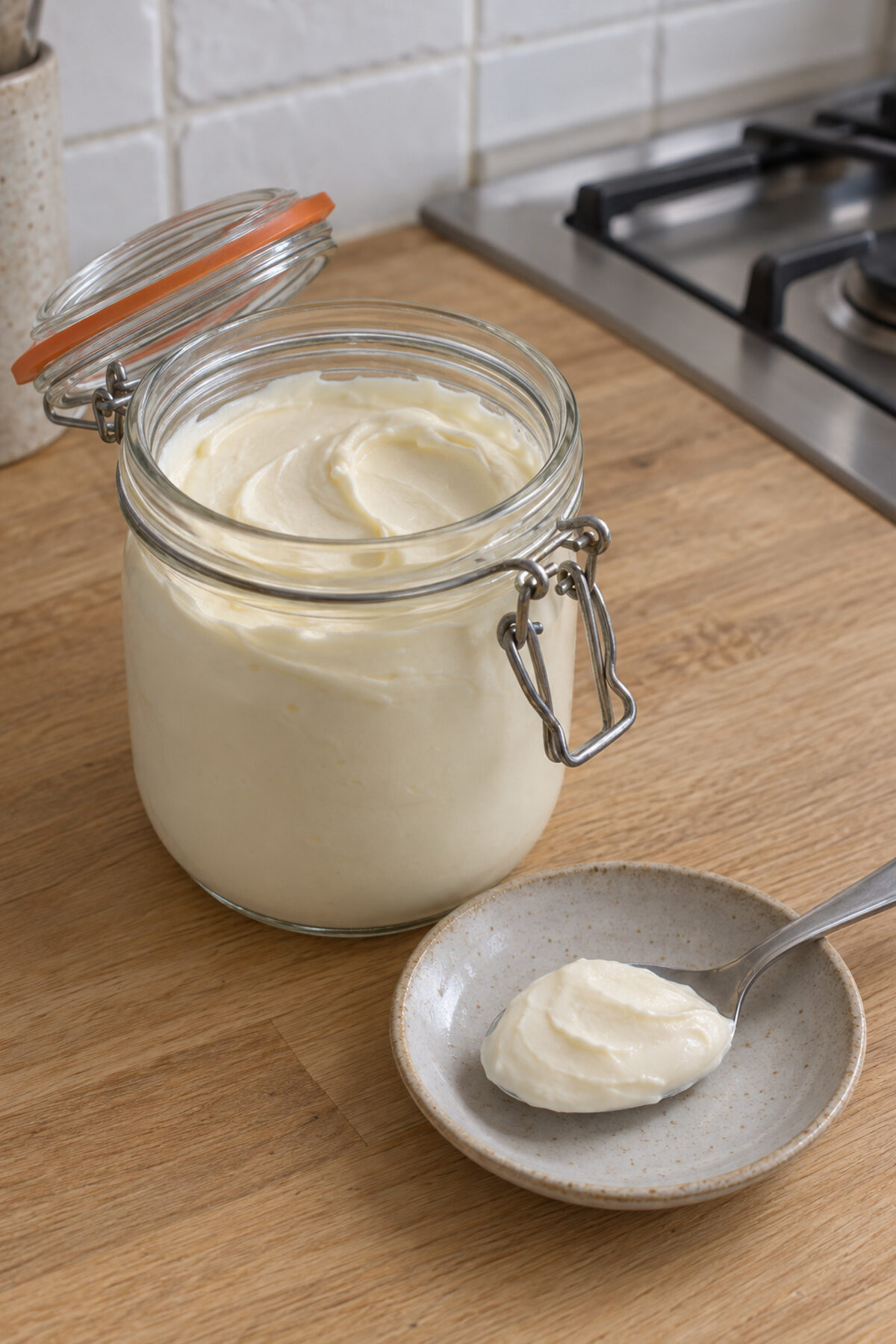
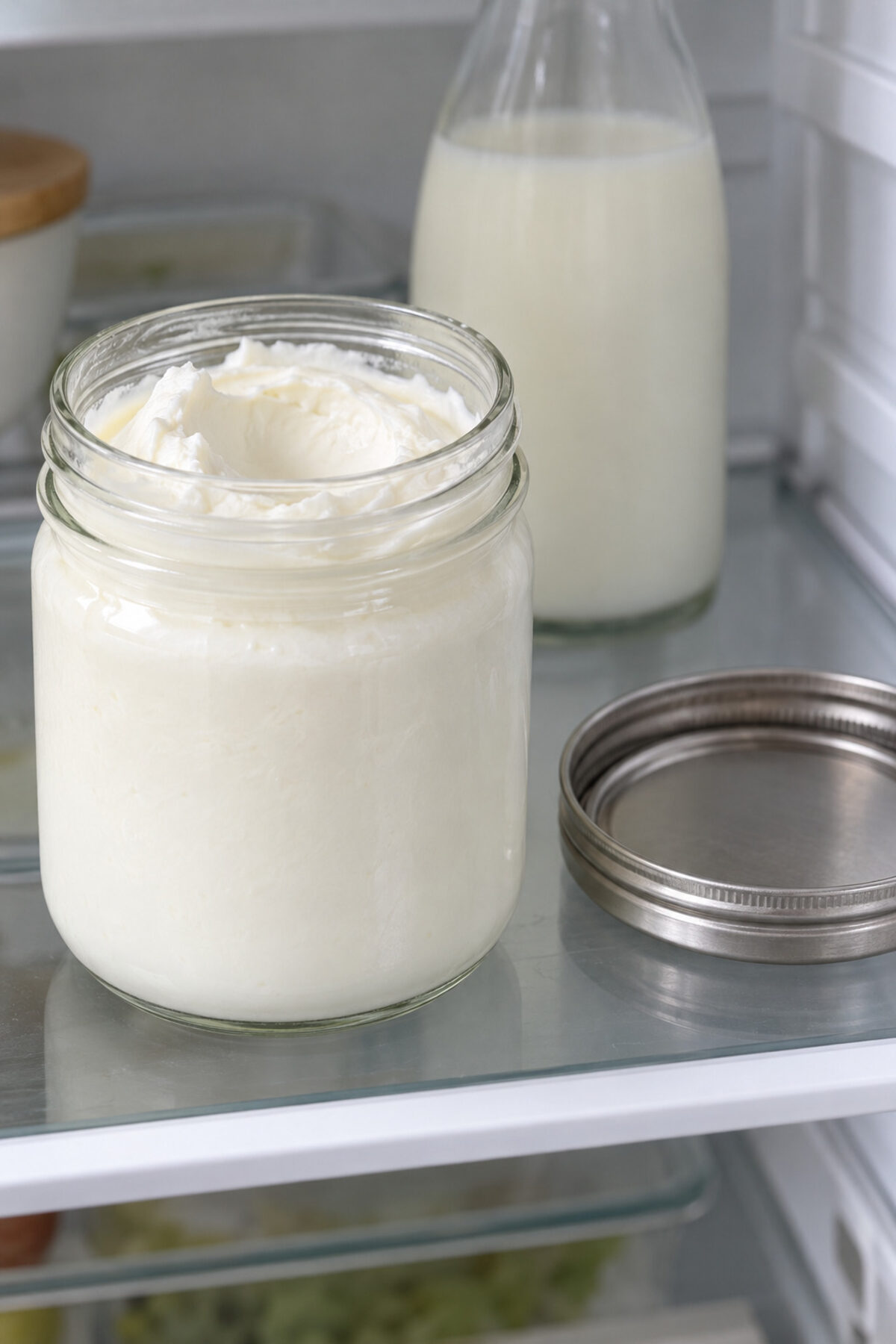
Nata fresca con un cultivo que trabaja a temperatura ambiente. Espesa, algo ácida y no se corta en las salsas calientes.
- Tiempo
- 16–20h
- Temperatura
- 20–25°C
- Tarro
- 0,5L
La regla de oro: nata o leche pasteurizadas, un cultivo comprado y a la nevera en cuanto espesa.
Sin registrarte. Te guiamos paso a paso, de la báscula a la nevera.
Revisada el 26 de octubre de 2026 · 25 datos, cada uno con su fuente
Antes de empezar
La crème fraîche es nata fermentada con un cultivo mesófilo, de los que trabajan a temperatura ambiente. Queda espesa y algo ácida y, como tiene tanta grasa, no se corta en salsas ni sopas calientes. No hay guías caseras con cifras para hacerla. Esta receta sigue la ficha de seguridad de Columbia Británica (Canadá) para cocinas profesionales, y el tiempo, el libro de ciencia láctea de la Universidad de Guelph. Necesitas un termómetro.
Necesitas
- Tarro de vidrio de 500 ml con tapa
- Olla para el baño maría
- Termómetro de cocina
- Cuchara limpia
Paso a paso
-
Lleva la nata a 20–25 °C al baño maría
Lava el tarro, la tapa y la cuchara con agua caliente y jabón, y acláralos bien. Echa la nata en el tarro y ponlo en una olla con agua templada. Remueve hasta que la nata llegue a 20–25 °C, o a la temperatura que indique el sobre del cultivo. Tiene que llegar en menos de 1 hora.
Truco: Mira bien la etiqueta de la nata: más del 33 % de grasa, pasteurizada y sin UHT ni estabilizantes como los carragenanos. Con nata UHT o con estabilizantes no espesa.
-
Añade el cultivo y remueve con suavidad
Espolvorea el cultivo sobre la nata, en la dosis que diga el fabricante para 500 ml. También puedes mezclarlo antes con un par de cucharadas de la misma nata. Remueve con suavidad hasta que esté repartido.
Truco: Usa siempre cultivo comercial. Las fichas de Columbia Británica no admiten un lote anterior de crème fraîche como fermento.
-
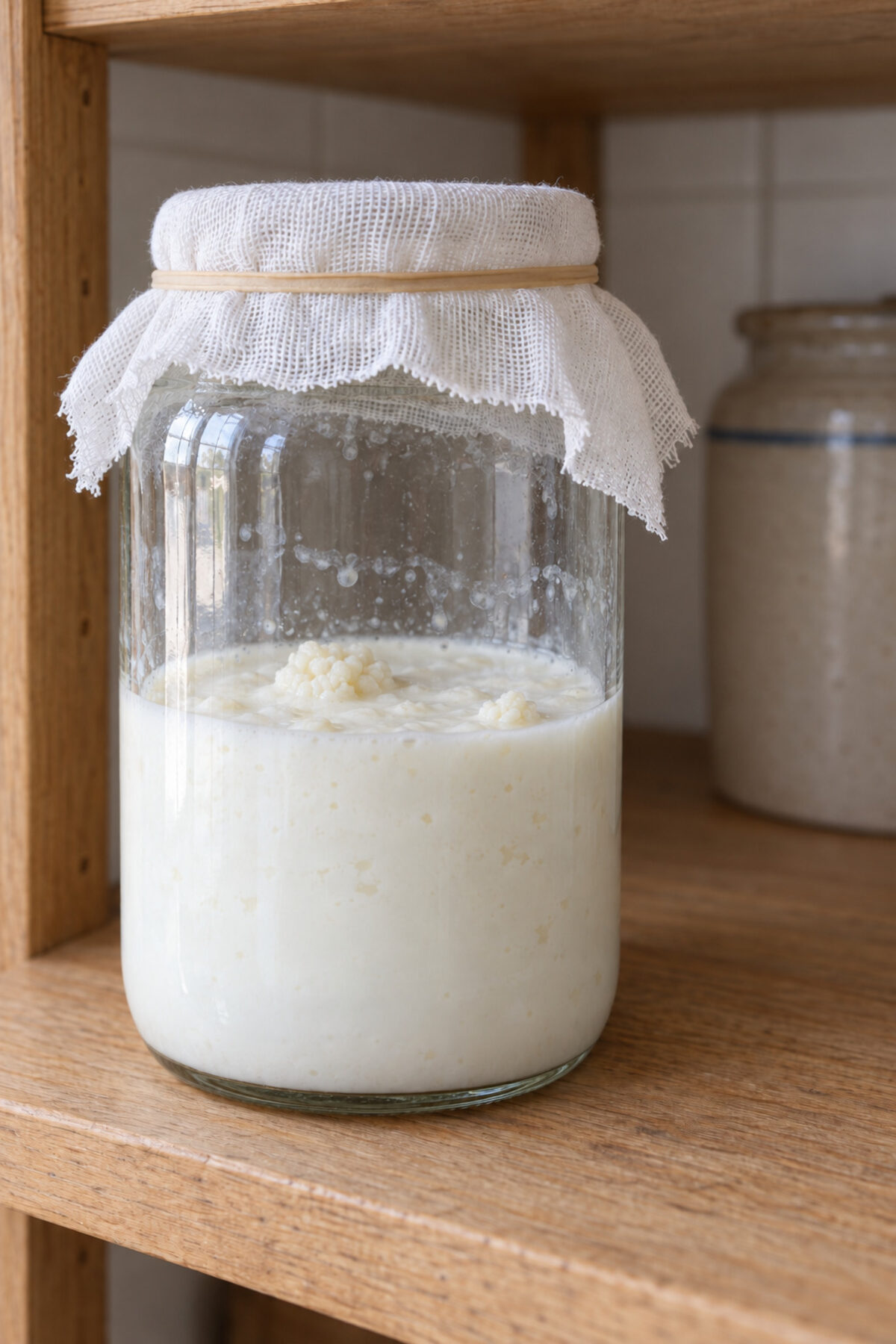
Déjala tapada a 20–25 °C de 16 a 20 horas
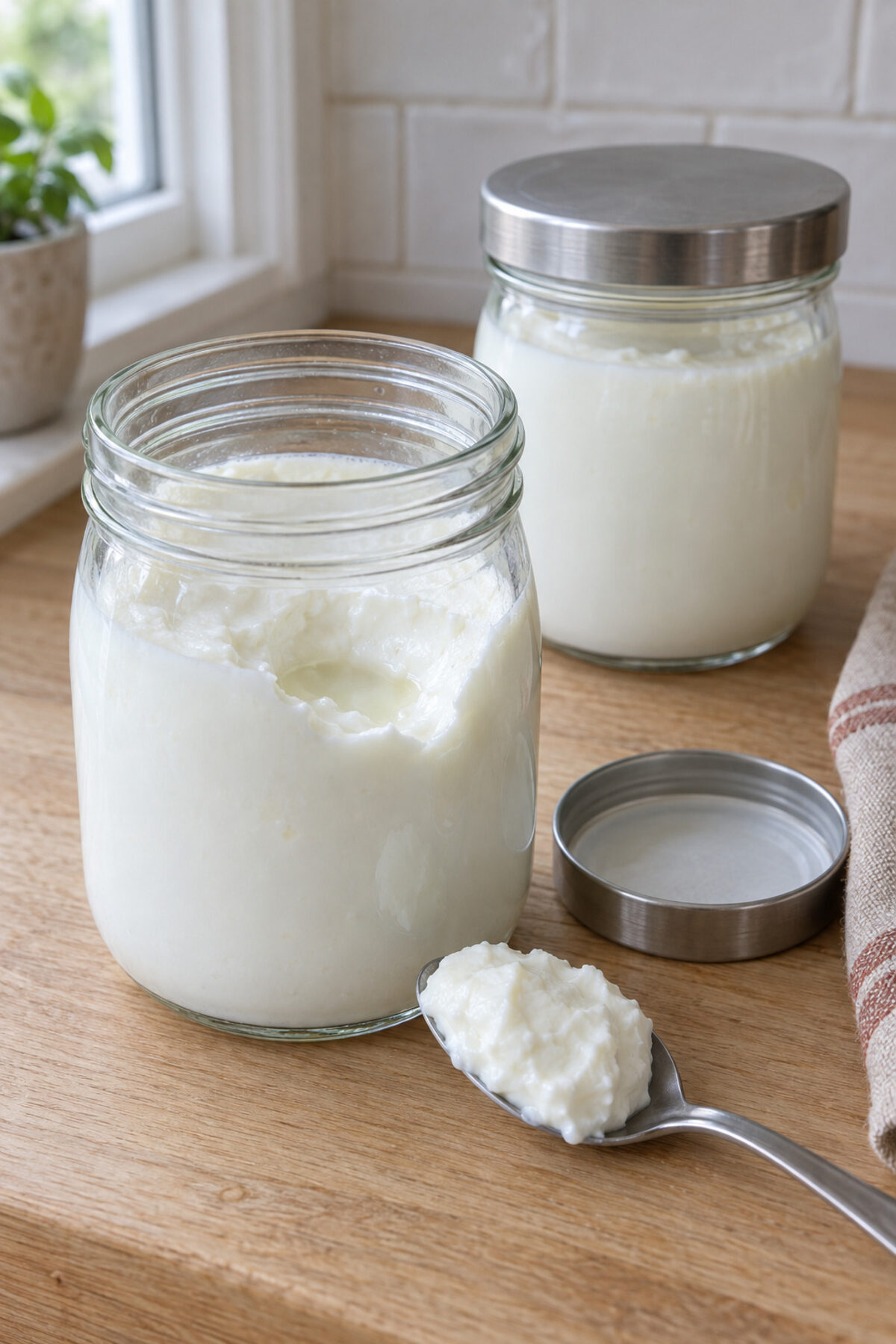
Cierra el tarro y déjalo a 20–25 °C, lejos de corrientes y sin moverlo. Hacerla en el propio tarro, sin pasarla de un recipiente a otro, reduce el riesgo de contaminarla. Está lista cuando ha espesado y huele ácida. Si tienes un medidor de pH, tiene que marcar 4,6 o menos.
Si a las 22 horas no ha espesado, tírala. Es regla de la casa: las fichas de Columbia Británica tiran el lote si no llega a pH 4,6 dos horas después de lo previsto, y aquí lo aplicamos a la textura.
-
Enfríala en menos de 6 horas
Mete el tarro en la nevera en cuanto esté lista. Tiene que bajar a 20 °C en menos de 2 horas y a 4 °C en menos de 4 horas más: 6 horas en total, como mucho. Si la nevera está llena o el tarro es grande, enfríalo antes en el fregadero con agua fría o con hielo.
-
Guárdala en la nevera y úsala en 3 días
Guárdala tapada, a 4 °C o menos. Úsala en 3 días y tira lo que sobre. Es la cifra de Columbia Británica para cocinas profesionales; no hay una cifra casera publicada, así que no contamos con más.
Truco: No guardes una parte para la siguiente tanda: compra cultivo nuevo.
Sin registrarte. Te guiamos paso a paso, de la báscula a la nevera.
Variaciones
El mismo método, otro sabor. Cuando domines esta, prueba una de estas.
Cómo saber si va bien
- Solo nata pasteurizada. La nata pasa horas a temperatura ambiente antes de tener ácido.
- Con cultivo comercial, en la dosis del fabricante. Un lote anterior no sirve como fermento.
- Si no ha espesado a las 22 horas, tírala. Con medidor de pH: si no ha llegado a 4,6 a las 22 horas, también.
- A la nevera enseguida: a 4 °C en menos de 6 horas.
- En la nevera, como mucho 3 días.
- Si sale moho, tírala entera. En la nata el moho llega por debajo de la superficie y puede traer bacterias. No la huelas.
De dónde sale cada dato
Cada cifra de esta receta sale de una guía de seguridad alimentaria. Guardamos una copia de cada fuente y citamos sus palabras exactas, en su idioma original.
-
1
Las fichas de Columbia Británica son para cocinas profesionales
“Production of Crème Fraîche in Food Service Establishment”
Province of British Columbia (Ministry of Health, BCCDC Environmental Health Services, Fraser Health), Guidelines for the Production of Dairy Products in Food Establishments · Sample documentation: Crème fraîche, production of dairy products in food service establishments (September 2022) · consultada el 25 de octubre de 2026
-
2
Se hace igual que el buttermilk y la nata agria, pero con nata para montar
“The process for making Crème Fraîche is the same as buttermilk and sour cream. However, it is made with heavy cream /whipping cream.”
Province of British Columbia (Ministry of Health, BCCDC Environmental Health Services, Fraser Health), Guidelines for the Production of Dairy Products in Food Establishments · Sample documentation: Crème fraîche, production of dairy products in food service establishments (September 2022) · consultada el 25 de octubre de 2026
-
3
Con tanta grasa no se corta en salsas y sopas calientes
“The high fat content of this product prevents it from curdling when added to hot sauces and soups.”
Province of British Columbia (Ministry of Health, BCCDC Environmental Health Services, Fraser Health), Guidelines for the Production of Dairy Products in Food Establishments · Sample documentation: Crème fraîche, production of dairy products in food service establishments (September 2022) · consultada el 25 de octubre de 2026
-
4
Nata de más del 33 % de grasa; con UHT o estabilizantes no sale
“Crème fraîche is made from high fat whipping cream (>33% BF). This recipe will not work with ultra-pasteurized (UHT) cream or cream that has added stabilizers.”
Province of British Columbia (Ministry of Health, BCCDC Environmental Health Services, Fraser Health), Guidelines for the Production of Dairy Products in Food Establishments · Sample documentation: Crème fraîche, production of dairy products in food service establishments (September 2022) · consultada el 25 de octubre de 2026
-
5
Solo lácteos pasteurizados
“Purchase and use only pasteurized dairy ingredients from approved sources.”
Province of British Columbia (Ministry of Health, BCCDC Environmental Health Services, Fraser Health), Guidelines for the Production of Dairy Products in Food Establishments · Sample documentation: Crème fraîche, production of dairy products in food service establishments (September 2022) · consultada el 25 de octubre de 2026
-
6
El cultivo es mesófilo y crece a temperatura ambiente
“The starter culture used for Crème fraîche is a mesophilic culture and grows at room temperature.”
Province of British Columbia (Ministry of Health, BCCDC Environmental Health Services, Fraser Health), Guidelines for the Production of Dairy Products in Food Establishments · Sample documentation: Crème fraîche, production of dairy products in food service establishments (September 2022) · consultada el 25 de octubre de 2026
-
7
Solo cultivo comercial
“Use only approved commercial starter culture.”
Province of British Columbia (Ministry of Health, BCCDC Environmental Health Services, Fraser Health), Guidelines for the Production of Dairy Products in Food Establishments · Sample documentation: Crème fraîche, production of dairy products in food service establishments (September 2022) · consultada el 25 de octubre de 2026
-
8
La dosis y la temperatura, las del fabricante
“Follow the manufacturer’s instructions for usage rate and incubation requirements.”
Province of British Columbia (Ministry of Health, BCCDC Environmental Health Services, Fraser Health), Guidelines for the Production of Dairy Products in Food Establishments · Sample documentation: Crème fraîche, production of dairy products in food service establishments (September 2022) · consultada el 25 de octubre de 2026
Ver los 17 datos que faltan
-
9
Un lote anterior no sirve como fermento
“Previous batches of crème fraîche are not approved for use as a bacterial culture.”
Province of British Columbia (Ministry of Health, BCCDC Environmental Health Services, Fraser Health), Guidelines for the Production of Dairy Products in Food Establishments · Sample documentation: Crème fraîche, production of dairy products in food service establishments (September 2022) · consultada el 25 de octubre de 2026
-
10
En el propio tarro hay menos riesgo de contaminarla
“Crème fraîche can be made by putting cream in mason jars, heating to inoculation temperature and then adding culture. The jars are then left to incubate. This reduces the risk of contamination during culturing and incubation.”
Province of British Columbia (Ministry of Health, BCCDC Environmental Health Services, Fraser Health), Guidelines for the Production of Dairy Products in Food Establishments · Sample documentation: Crème fraîche, production of dairy products in food service establishments (September 2022) · consultada el 25 de octubre de 2026
-
11
A la temperatura de siembra en menos de 1 hora
“Heat cream to desired temperature as per your recipe (reach temperature within 1 hour)”
Province of British Columbia (Ministry of Health, BCCDC Environmental Health Services, Fraser Health), Guidelines for the Production of Dairy Products in Food Establishments · Sample documentation: Crème fraîche, production of dairy products in food service establishments (September 2022) · consultada el 25 de octubre de 2026
-
12
Al baño maría y removiendo, para que no se queme
“Stir constantly to avoid burning the cream. Use of a water bath or double boiler is recommended.”
Province of British Columbia (Ministry of Health, BCCDC Environmental Health Services, Fraser Health), Guidelines for the Production of Dairy Products in Food Establishments · Sample documentation: Crème fraîche, production of dairy products in food service establishments (September 2022) · consultada el 25 de octubre de 2026
-
13
El cultivo, espolvoreado o mezclado con un poco de nata
“Sprinkle the bacterial culture directly into the processing container, or premix the culture with a small volume of the cream before adding to the processing container.”
Province of British Columbia (Ministry of Health, BCCDC Environmental Health Services, Fraser Health), Guidelines for the Production of Dairy Products in Food Establishments · Sample documentation: Crème fraîche, production of dairy products in food service establishments (September 2022) · consultada el 25 de octubre de 2026
-
14
Remover con suavidad hasta repartir el cultivo
“Mix gently and thoroughly to disperse the culture.”
Province of British Columbia (Ministry of Health, BCCDC Environmental Health Services, Fraser Health), Guidelines for the Production of Dairy Products in Food Establishments · Sample documentation: Crème fraîche, production of dairy products in food service establishments (September 2022) · consultada el 25 de octubre de 2026
-
15
Tapada, a temperatura ambiente y lejos de corrientes
“Crème fraîche may be incubated by leaving it covered at room temperature in an area away from drafts.”
Province of British Columbia (Ministry of Health, BCCDC Environmental Health Services, Fraser Health), Guidelines for the Production of Dairy Products in Food Establishments · Sample documentation: Crème fraîche, production of dairy products in food service establishments (September 2022) · consultada el 25 de octubre de 2026
-
16
pH de 4,6 o menos
“Endpoint pH <4.6 or lower within 2 hours of the expected incubation time.”
Province of British Columbia (Ministry of Health, BCCDC Environmental Health Services, Fraser Health), Guidelines for the Production of Dairy Products in Food Establishments · Sample documentation: Crème fraîche, production of dairy products in food service establishments (September 2022) · consultada el 25 de octubre de 2026
-
17
Si no llega a pH 4,6 dos horas después de lo previsto, se tira
“If the end point pH (pH 4.6 or lower) has not been reached after 2 hours past the expected incubation time, there is a problem with the batch and it must be discarded.”
Province of British Columbia (Ministry of Health, BCCDC Environmental Health Services, Fraser Health), Guidelines for the Production of Dairy Products in Food Establishments · Sample documentation: Crème fraîche, production of dairy products in food service establishments (September 2022) · consultada el 25 de octubre de 2026
-
18
A 20 °C en 2 horas y a 4 °C en 4 más, 6 horas en total
“Cool down to 20°C within 2 hours, and 20°C to 4°C within 4 hours. Total cooling time not to exceed 6 hours.”
Province of British Columbia (Ministry of Health, BCCDC Environmental Health Services, Fraser Health), Guidelines for the Production of Dairy Products in Food Establishments · Sample documentation: Crème fraîche, production of dairy products in food service establishments (September 2022) · consultada el 25 de octubre de 2026
-
19
En la nevera a 4 °C o menos
“Store at 4°C or colder.”
Province of British Columbia (Ministry of Health, BCCDC Environmental Health Services, Fraser Health), Guidelines for the Production of Dairy Products in Food Establishments · Sample documentation: Crème fraîche, production of dairy products in food service establishments (September 2022) · consultada el 25 de octubre de 2026
-
20
Se tira a los 3 días
“Discard product after 3 days.”
Province of British Columbia (Ministry of Health, BCCDC Environmental Health Services, Fraser Health), Guidelines for the Production of Dairy Products in Food Establishments · Sample documentation: Crème fraîche, production of dairy products in food service establishments (September 2022) · consultada el 25 de octubre de 2026
-
21
Guelph, para el buttermilk: de 16 a 20 horas a 20–25 °C
“Milk is usually heated to 95°C and cooled to 20-25°C before the addition of the starter culture. Starter is added at 1-2% and the fermentation is allowed to proceed for 16-20 hours”
University of Guelph, Department of Food Science (Goff, Hill & Ferrer) · Dairy Science and Technology eBook: Cultured Dairy Products and Cheese · consultada el 25 de octubre de 2026
-
22
Para enfriar, agua fría o con hielo
“Cool the pot in a sink with cold water or ice bath.”
Province of British Columbia (Ministry of Health, BCCDC Environmental Health Services, Fraser Health), Guidelines for the Production of Dairy Products in Food Establishments · Sample documentation: Buttermilk, production of dairy products in food service establishments · consultada el 25 de octubre de 2026
-
23
El yogur y la nata agria con moho se tiran enteros
“Yogurt and sour cream Discard Foods with high moisture content can be contaminated below the surface.”
USDA Food Safety and Inspection Service · Molds on Food: Are They Dangerous? · consultada el 20 de octubre de 2026
-
24
Con el moho puede haber bacterias
“Moldy foods may also have bacteria growing along with the mold.”
USDA Food Safety and Inspection Service · Molds on Food: Are They Dangerous? · consultada el 20 de octubre de 2026
-
25
El moho no se huele
“Don't sniff the moldy item. This can cause respiratory trouble.”
USDA Food Safety and Inspection Service · Molds on Food: Are They Dangerous? · consultada el 20 de octubre de 2026