 IA
Mantequilla cultivada
Nivel 2 · con algo de práctica
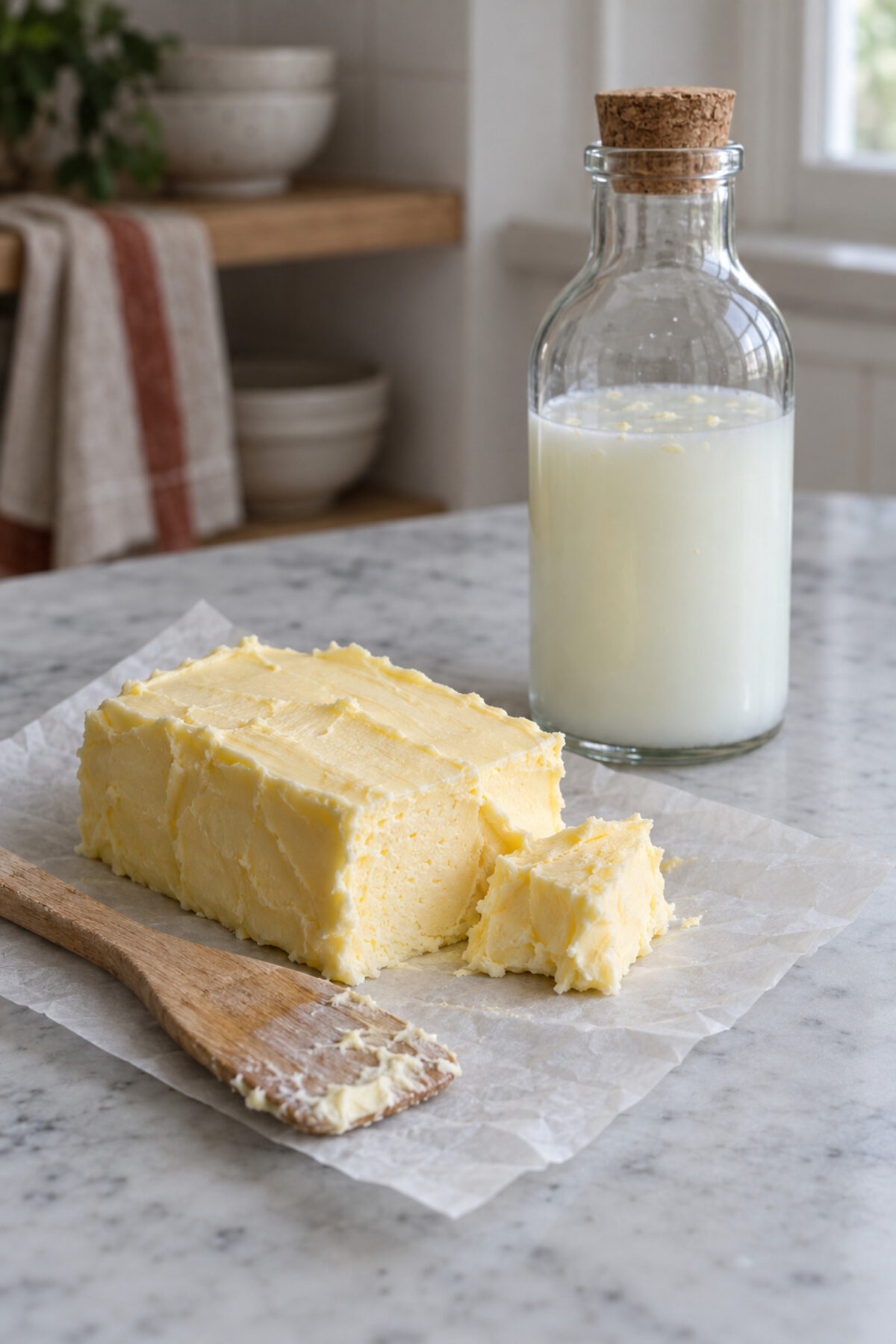
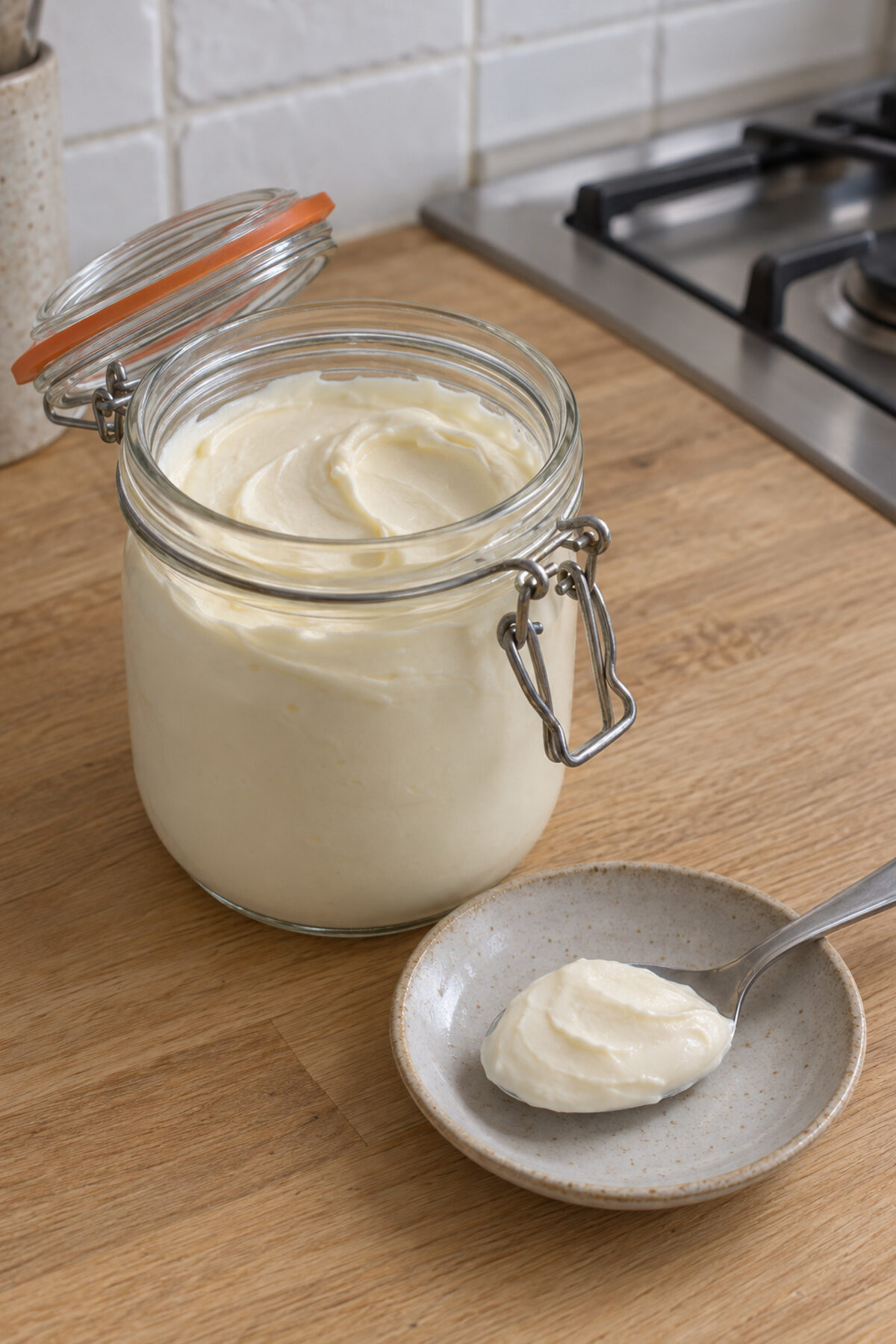
Nata cultivada un día, madurada en frío una noche y batida hasta que se separa en mantequilla y suero. Salen las dos cosas.
- Tiempo
- 16–20h
- Temperatura
- 20–25°C
- Tarro
- 1L
La regla de oro: nata o leche pasteurizadas, un cultivo comprado y a la nevera en cuanto espesa.
Sin registrarte. Te guiamos paso a paso, de la báscula a la nevera.
Revisada el 26 de octubre de 2026 · 39 datos, cada uno con su fuente
Antes de empezar
La mantequilla cultivada se hace con nata fermentada. Hasta bien entrado el siglo XIX se hacía con nata que se dejaba agriar sola, pero eso era delicado y los microbios de fuera la echaban a perder a menudo. Hoy se cultiva con un cultivo mesófilo comercial, como la crème fraîche, y después se bate hasta que se separa en mantequilla y suero de mantequilla cultivado, el buttermilk. La nata sigue la ficha de seguridad de Columbia Británica (Canadá) para cocinas profesionales, y el batido, el libro de ciencia láctea de la Universidad de Guelph. Necesitas un termómetro.
Necesitas
- Tarro de vidrio de 1 litro con tapa
- Olla para el baño maría
- Termómetro de cocina
- Batidora eléctrica de varillas
- Bol grande
- Colador
- Gasa o tela de quesería
- Espátula o cuchara de madera
- Botella o tarro con tapa para el suero
- Báscula de cocina, si la vas a salar
Paso a paso
-
Lleva la nata a 20–25 °C al baño maría
Lava el tarro, la tapa, el bol, el colador, las varillas y la espátula con agua caliente y jabón, y acláralos bien. Echa la nata en el tarro y ponlo en una olla con agua templada. Remueve hasta que la nata llegue a 20–25 °C, o a la temperatura que indique el sobre del cultivo. Tiene que llegar en menos de 1 hora.
Truco: Mira bien la etiqueta de la nata: más del 33 % de grasa, pasteurizada y sin UHT ni estabilizantes como los carragenanos. Con nata UHT o con estabilizantes no espesa.
-
Añade el cultivo y remueve con suavidad
Espolvorea el cultivo sobre la nata, en la dosis que diga el fabricante para 1 litro, y remueve con suavidad hasta que esté repartido.
Truco: Usa siempre cultivo comercial. Las fichas de Columbia Británica no admiten un lote anterior como fermento, y eso incluye el suero de esta misma receta.
-
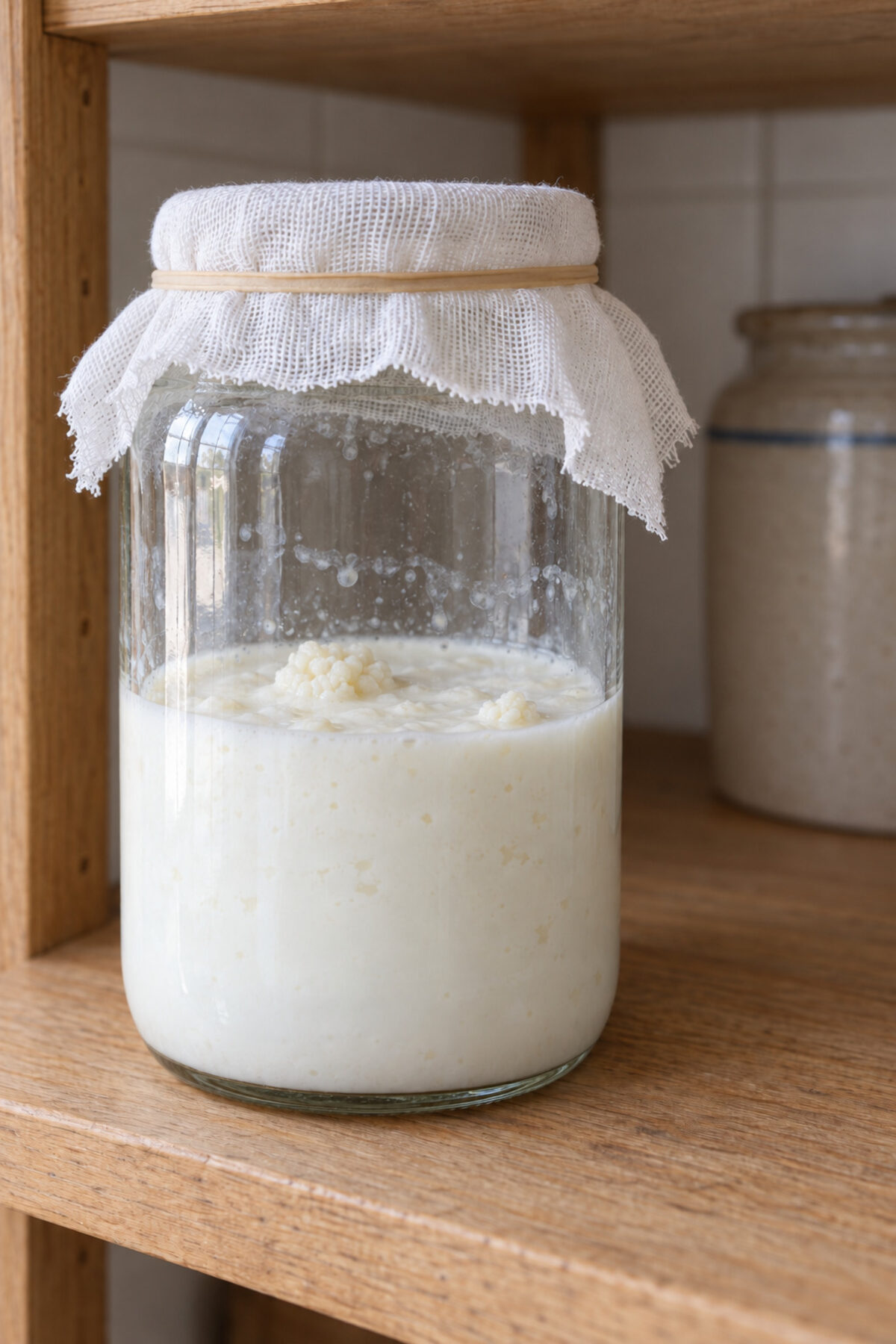
Déjala tapada a 20–25 °C de 16 a 20 horas
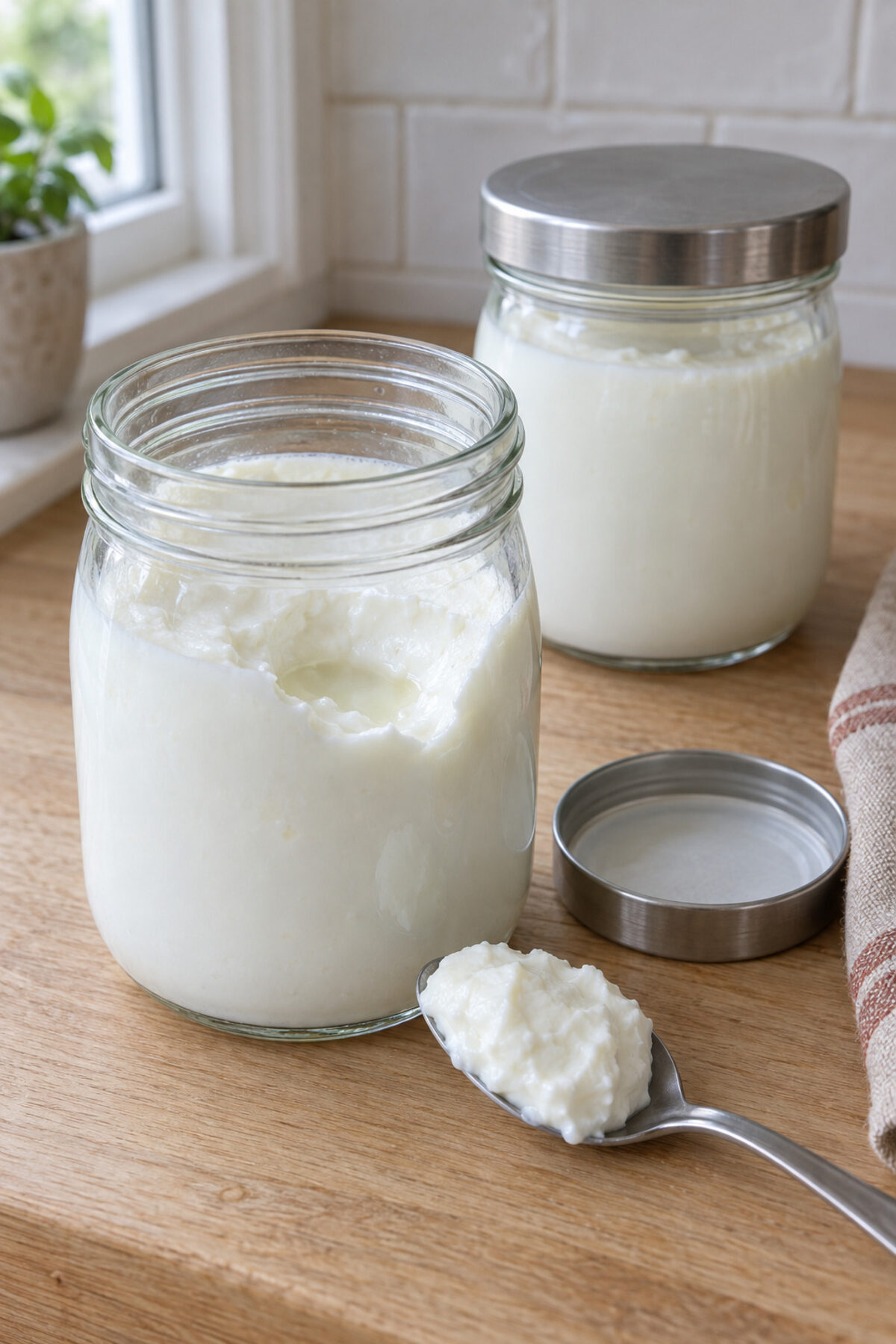
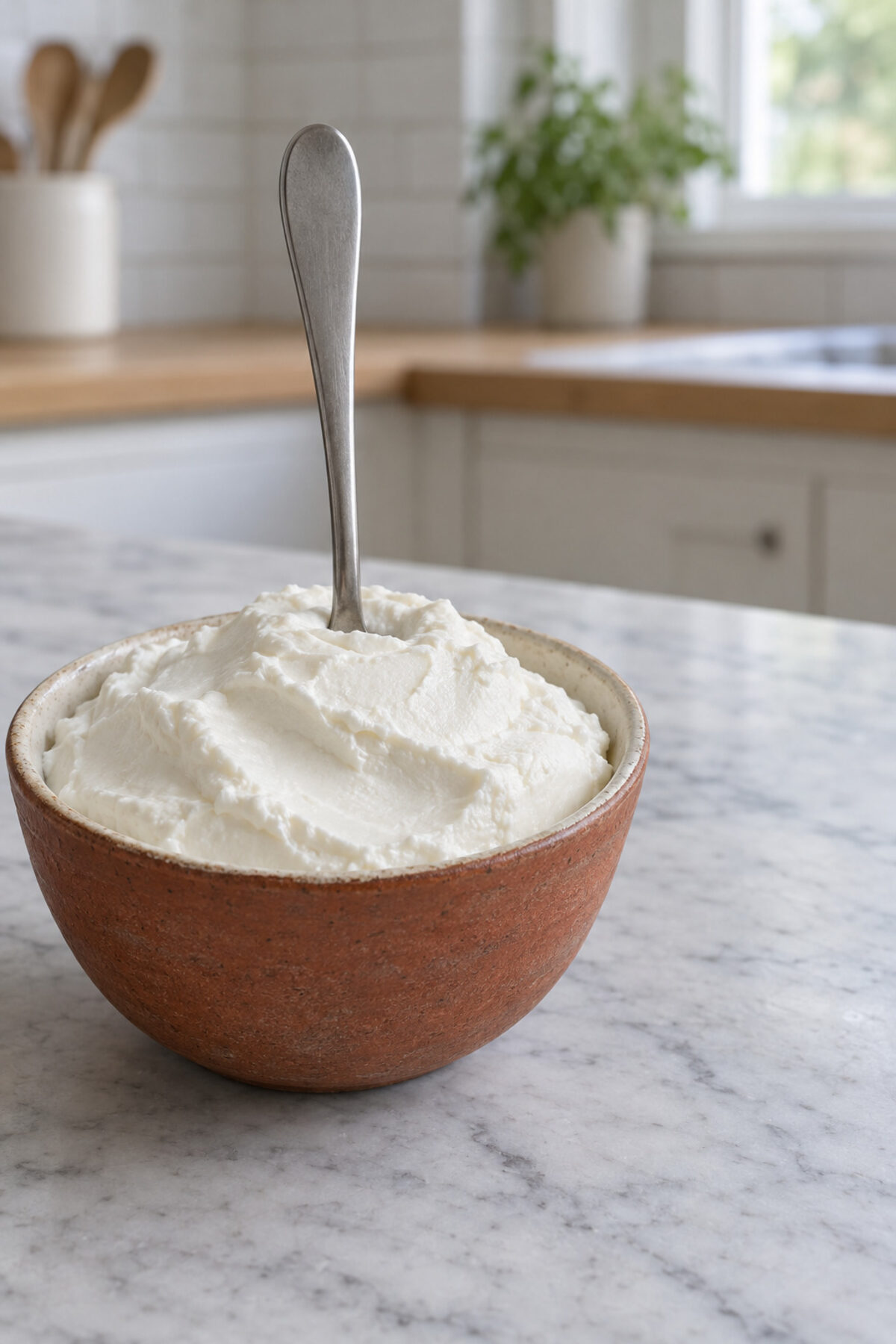
Cierra el tarro y déjalo a 20–25 °C, lejos de corrientes y sin moverlo. Está lista cuando ha espesado y huele ácida. Si tienes un medidor de pH, tiene que marcar 4,6 o menos.
Si a las 22 horas no ha espesado, tírala. Es regla de la casa: las fichas de Columbia Británica tiran el lote si no llega a pH 4,6 dos horas después de lo previsto, y aquí lo aplicamos a la textura.
-
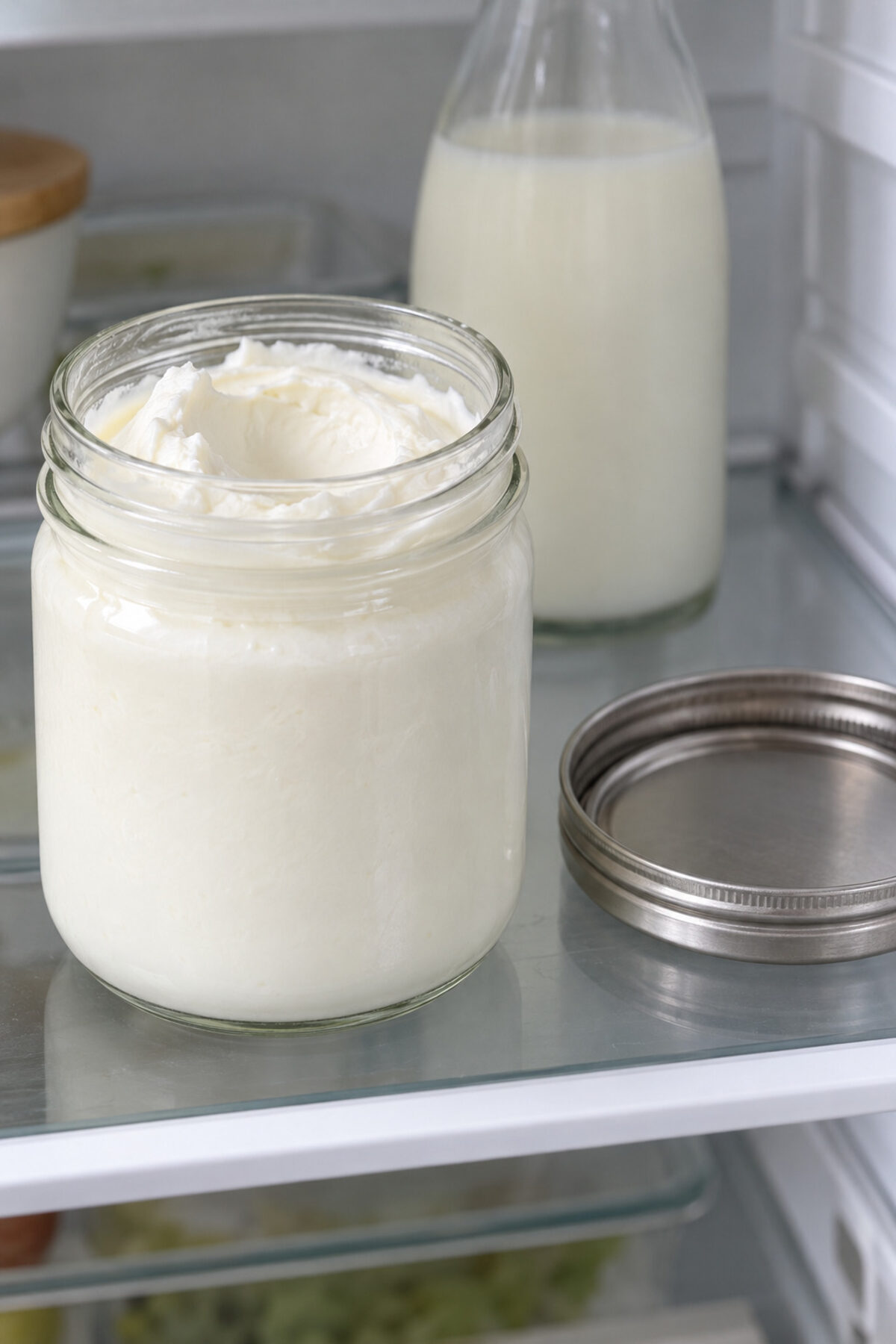
Enfríala y déjala madurar en la nevera de 12 a 15 horas
Mete el tarro en la nevera en cuanto esté lista. Tiene que bajar a 20 °C en menos de 2 horas y a 4 °C en menos de 4 horas más: 6 horas en total, como mucho. Si la nevera está llena, enfríalo antes en el fregadero con agua fría o con hielo. Déjala en la nevera de 12 a 15 horas: en frío, la grasa cristaliza y luego se bate mejor.
-
Bátela a 7–13 °C hasta que se separe
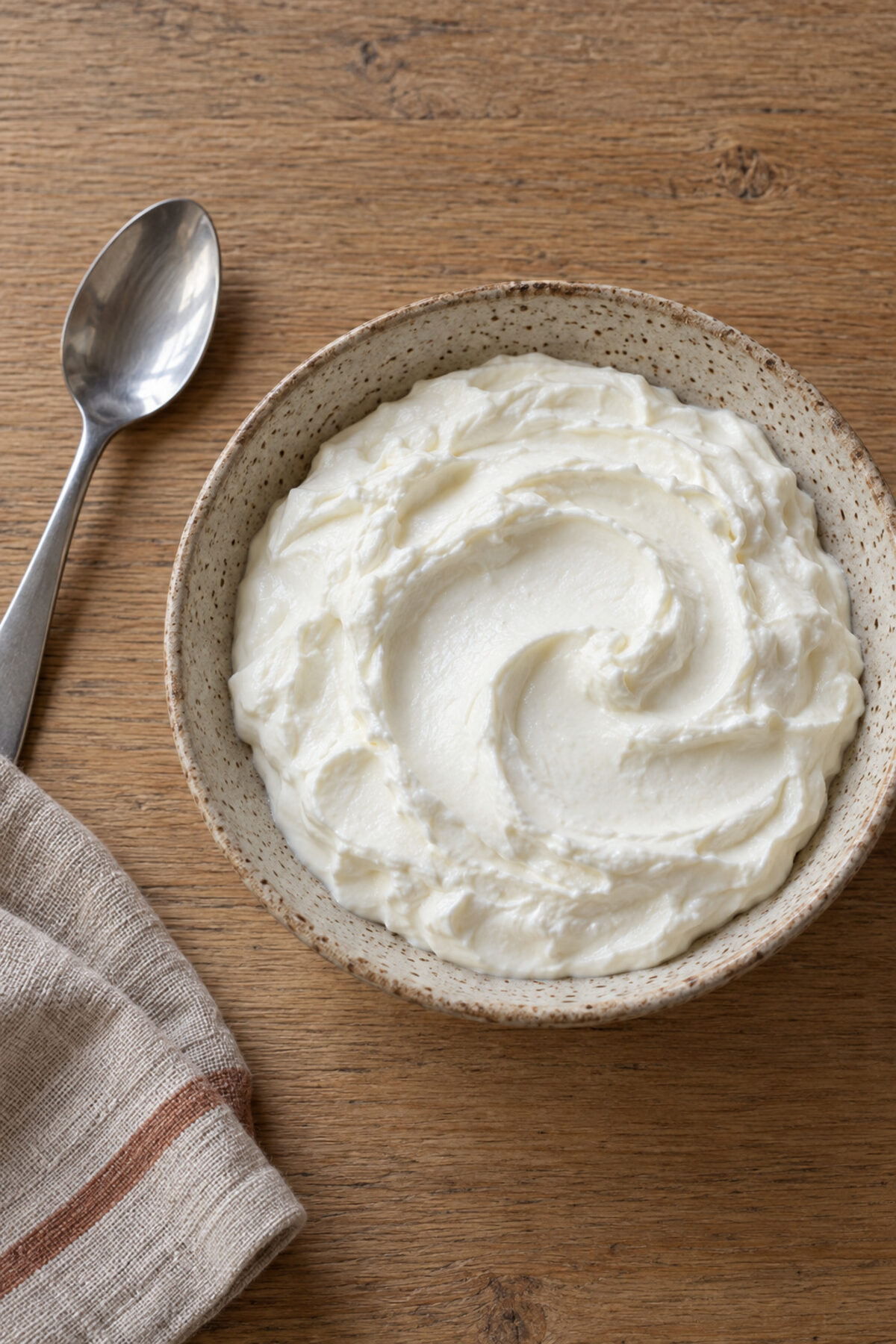
Saca la nata de la nevera y mídela: tiene que estar entre 7 y 13 °C. Guelph bate a 7–10 °C en verano y a 10–13 °C en invierno. Si está más fría, déjala un rato fuera. Échala en el bol y bátela con las varillas a velocidad media. Primero se monta como nata montada. Sigue batiendo: la espuma se rompe y aparecen granos amarillos de mantequilla en un líquido blanco y aguado.
Truco: Cuando empiece a cortarse, baja la velocidad y tapa el bol con un paño: el suero salpica.
-
Cuela la mantequilla y guarda el suero
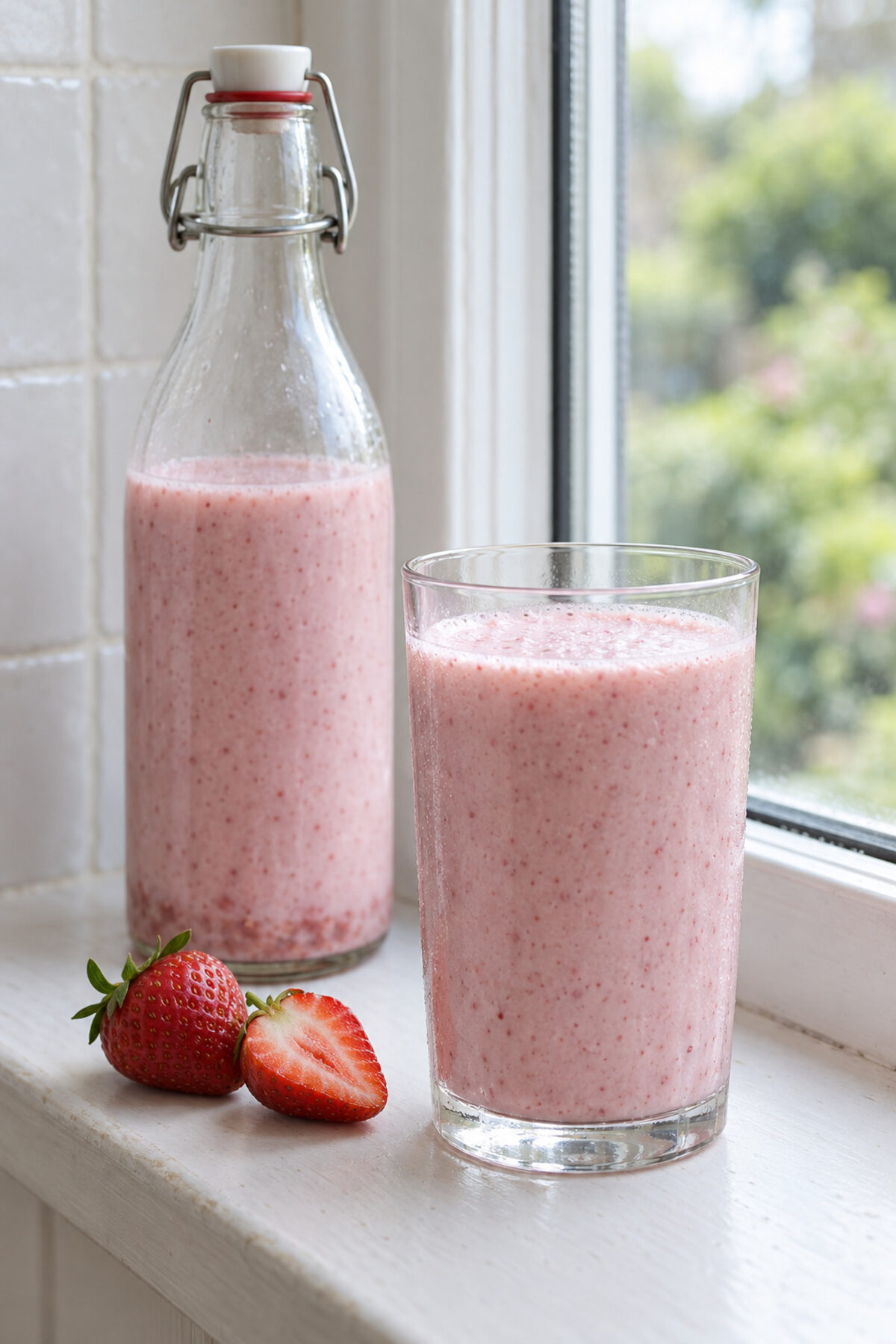
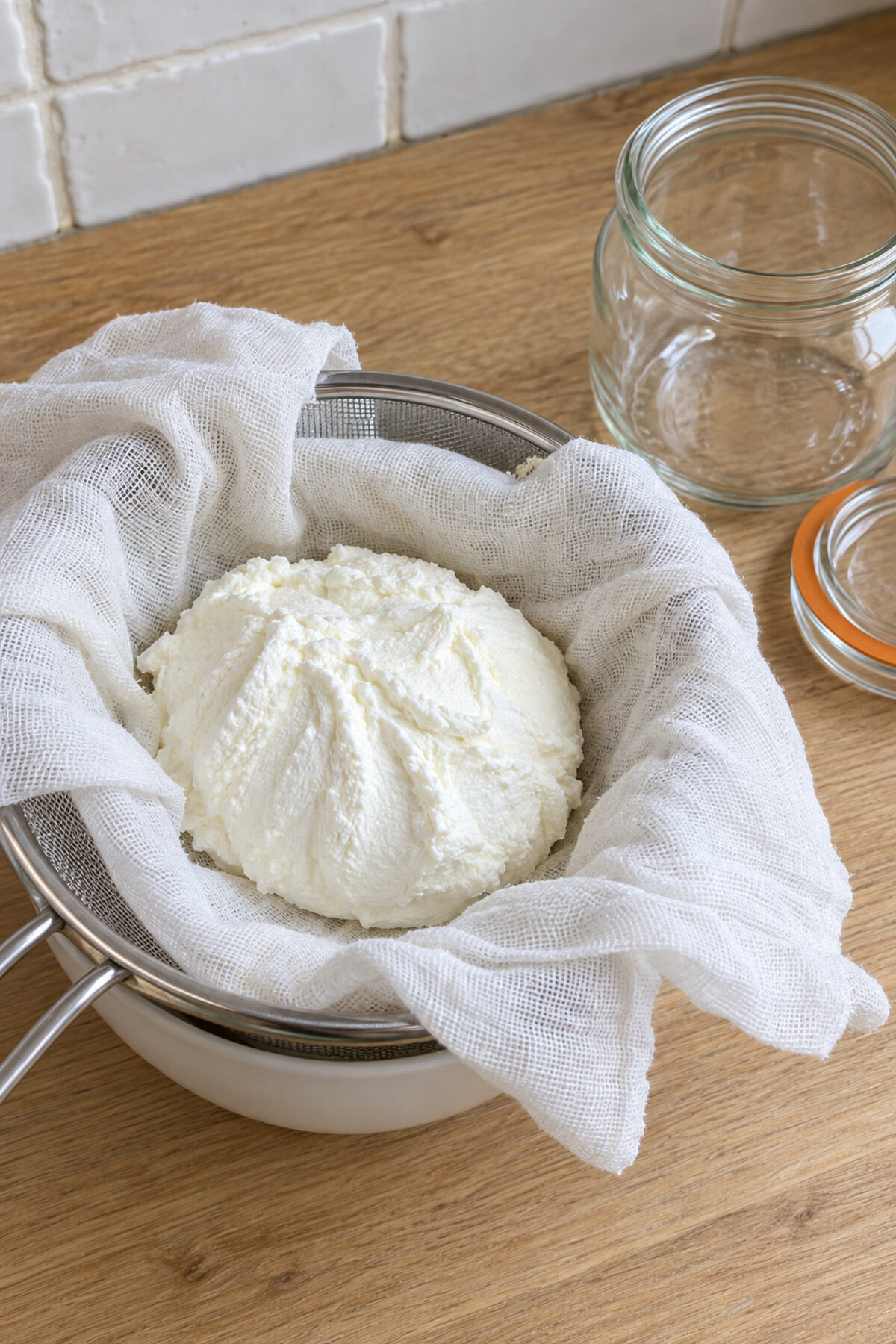
Forra el colador con la gasa, ponlo sobre otro bol y vuelca la mantequilla. El líquido que cae es el suero de mantequilla cultivado. Pásalo a la botella, ciérrala y guárdala en la nevera, a 4 °C o menos. Úsalo en 3 días y tira lo que sobre.
-
Lávala con agua muy fría y amásala
Pon la mantequilla en el bol limpio con un poco del agua muy fría y amásala con la espátula, apretando contra las paredes. Tira el agua turbia y repite con agua nueva hasta que salga casi clara. Después amásala sin agua y escurre lo que suelte, hasta que no se vean gotas.
Truco: Lavarla quita el suero que queda dentro. La industria ya casi no la lava; en casa la lavamos para que quede la menor cantidad de suero posible. Es regla de la casa.
-
Sálala si quieres, envuélvela y guárdala en frío
Si la quieres con sal, pésala y echa por encima de 10 a 30 g de sal fina por cada kilo de mantequilla, del 1 al 3 %. Amásala bien para repartirla: la sal mejora el sabor y la ayuda a conservarse. Envuélvela o métela en un tarro, y guárdala en la nevera. Úsala en una semana y congela la que no vayas a usar en ese tiempo.
Truco: La semana es regla de la casa. Para la mantequilla comprada, una vez abierta, la Universidad Estatal de Oregón da un par de semanas; la casera lleva más suero, así que contamos la mitad.
Sin registrarte. Te guiamos paso a paso, de la báscula a la nevera.
Variaciones
El mismo método, otro sabor. Cuando domines esta, prueba una de estas.
Cómo saber si va bien
- Solo nata pasteurizada. La nata pasa horas a temperatura ambiente antes de tener ácido.
- Con cultivo comercial, en la dosis del fabricante. Un lote anterior, o su suero, no sirven como fermento.
- Si no ha espesado a las 22 horas, tírala. Con medidor de pH: si no ha llegado a 4,6 a las 22 horas, también.
- A la nevera enseguida: a 4 °C en menos de 6 horas.
- El suero, como mucho 3 días en la nevera.
- La mantequilla, una semana en la nevera, y el resto al congelador.
- Si huele a rancio o cambia de color, es mantequilla rancia: sabe mal. Si sale moho, tírala. Con el moho puede haber bacterias que no se ven. No la huelas.
De dónde sale cada dato
Cada cifra de esta receta sale de una guía de seguridad alimentaria. Guardamos una copia de cada fuente y citamos sus palabras exactas, en su idioma original.
-
1
Hasta bien entrado el siglo XIX, la mantequilla se hacía con nata agriada sola
“Well into the 19th century butter was still made from cream that had been allowed to stand and sour naturally.”
University of Guelph, Department of Food Science (Goff, Hill & Ferrer) · Dairy Science and Technology eBook: Butter Manufacture · consultada el 25 de octubre de 2026
-
2
Agriarla sola es delicado, y los microbios de fuera solían echarla a perder
“The natural souring process is, however, a very sensitive one and infection by foreign micro-organisms often spoiled the result.”
University of Guelph, Department of Food Science (Goff, Hill & Ferrer) · Dairy Science and Technology eBook: Butter Manufacture · consultada el 25 de octubre de 2026
-
3
La mantequilla cultivada usa cultivos mesófilos mixtos
“If ripening is desired for the production of cultured butter, mixed cultures of S. cremoris, S. lactis diacetyl lactis, Leuconostocs, are used”
University of Guelph, Department of Food Science (Goff, Hill & Ferrer) · Dairy Science and Technology eBook: Butter Manufacture · consultada el 25 de octubre de 2026
-
4
El batido tradicional por tandas usa nata del 25 al 35 % de grasa
“traditional batch churning from 25- 35% mf. cream”
University of Guelph, Department of Food Science (Goff, Hill & Ferrer) · Dairy Science and Technology eBook: Butter Manufacture · consultada el 25 de octubre de 2026
-
5
La nata madura en frío de 12 a 15 horas antes de batirla
“As a rule, aging takes 12 – 15 hours.”
University of Guelph, Department of Food Science (Goff, Hill & Ferrer) · Dairy Science and Technology eBook: Butter Manufacture · consultada el 25 de octubre de 2026
-
6
Al batirla, la grasa se junta en granos de mantequilla
“In the churning process the cream is violently agitated to break down the fat globules, causing the fat to coagulate into butter grains, while the fat content of the remaining liquid, the buttermilk, decreases.”
University of Guelph, Department of Food Science (Goff, Hill & Ferrer) · Dairy Science and Technology eBook: Butter Manufacture · consultada el 25 de octubre de 2026
-
7
Primero se monta y después la espuma se rompe en mantequilla y suero
“If beating continues the fat clumps increase in size until they become too large and too few to enclose the air cells, hence air bubbles coalesce, the foam begins to “leak” and ultimately butter and butter milk remain.”
University of Guelph, Department of Food Science (Goff, Hill & Ferrer) · Dairy Science and Technology eBook: Butter Manufacture · consultada el 25 de octubre de 2026
-
8
Se bate a 7–10 °C en verano y a 10–13 °C en invierno
“7-10°C in summer and 10-13°C in winter”
University of Guelph, Department of Food Science (Goff, Hill & Ferrer) · Dairy Science and Technology eBook: Butter Manufacture · consultada el 25 de octubre de 2026
Ver los 31 datos que faltan
-
9
Muy caliente sale grasienta; muy fría, quebradiza
“If churning temperature is too warm or if the thermal cream aging cycle permits too much liquid fat, then a soft greasy texture results; if too cold or too much solid fat, then butter becomes too brittle.”
University of Guelph, Department of Food Science (Goff, Hill & Ferrer) · Dairy Science and Technology eBook: Butter Manufacture · consultada el 25 de octubre de 2026
-
10
La nata se separa en granos de mantequilla y suero
“Thus the cream is split into two fractions: butter grains and buttermilk.”
University of Guelph, Department of Food Science (Goff, Hill & Ferrer) · Dairy Science and Technology eBook: Butter Manufacture · consultada el 25 de octubre de 2026
-
11
Lavarla quita el suero que queda; la industria ya casi no lo hace
“It used to be common practice to wash the butter after churning to remove any residual buttermilk and milk solids but this is rarely done today.”
University of Guelph, Department of Food Science (Goff, Hill & Ferrer) · Dairy Science and Technology eBook: Butter Manufacture · consultada el 25 de octubre de 2026
-
12
Bien amasada, no se ven gotas de agua
“Water droplets decrease in size during working and should not be visible in properly worked butter.”
University of Guelph, Department of Food Science (Goff, Hill & Ferrer) · Dairy Science and Technology eBook: Butter Manufacture · consultada el 25 de octubre de 2026
-
13
Si se sala, del 1 al 3 % de sal
“If the butter is to be salted, salt (1-3%) is spread over its surface, in the case of batch production.”
University of Guelph, Department of Food Science (Goff, Hill & Ferrer) · Dairy Science and Technology eBook: Butter Manufacture · consultada el 25 de octubre de 2026
-
14
La sal mejora el sabor y la conserva
“Salt is used to improve the flavour and the shelf-life, as it acts as a preservative.”
University of Guelph, Department of Food Science (Goff, Hill & Ferrer) · Dairy Science and Technology eBook: Butter Manufacture · consultada el 25 de octubre de 2026
-
15
Después de salarla, se amasa bien para repartir la sal
“After salting, the butter must be worked vigorously to ensure even distribution of the salt.”
University of Guelph, Department of Food Science (Goff, Hill & Ferrer) · Dairy Science and Technology eBook: Butter Manufacture · consultada el 25 de octubre de 2026
-
16
Nata de más del 33 % de grasa; con UHT o estabilizantes no sale
“Crème fraîche is made from high fat whipping cream (>33% BF). This recipe will not work with ultra-pasteurized (UHT) cream or cream that has added stabilizers.”
Province of British Columbia (Ministry of Health, BCCDC Environmental Health Services, Fraser Health), Guidelines for the Production of Dairy Products in Food Establishments · Sample documentation: Crème fraîche, production of dairy products in food service establishments (September 2022) · consultada el 25 de octubre de 2026
-
17
La nata se cultiva igual que la crème fraîche
“The process for making Crème Fraîche is the same as buttermilk and sour cream. However, it is made with heavy cream /whipping cream.”
Province of British Columbia (Ministry of Health, BCCDC Environmental Health Services, Fraser Health), Guidelines for the Production of Dairy Products in Food Establishments · Sample documentation: Crème fraîche, production of dairy products in food service establishments (September 2022) · consultada el 25 de octubre de 2026
-
18
Las fichas de Columbia Británica son para cocinas profesionales
“Production of Crème Fraîche in Food Service Establishment”
Province of British Columbia (Ministry of Health, BCCDC Environmental Health Services, Fraser Health), Guidelines for the Production of Dairy Products in Food Establishments · Sample documentation: Crème fraîche, production of dairy products in food service establishments (September 2022) · consultada el 25 de octubre de 2026
-
19
Solo lácteos pasteurizados
“Purchase and use only pasteurized dairy ingredients from approved sources.”
Province of British Columbia (Ministry of Health, BCCDC Environmental Health Services, Fraser Health), Guidelines for the Production of Dairy Products in Food Establishments · Sample documentation: Crème fraîche, production of dairy products in food service establishments (September 2022) · consultada el 25 de octubre de 2026
-
20
Solo cultivo comercial
“Use only approved commercial starter culture.”
Province of British Columbia (Ministry of Health, BCCDC Environmental Health Services, Fraser Health), Guidelines for the Production of Dairy Products in Food Establishments · Sample documentation: Crème fraîche, production of dairy products in food service establishments (September 2022) · consultada el 25 de octubre de 2026
-
21
La dosis y la temperatura, las del fabricante
“Follow the manufacturer’s instructions for usage rate and incubation requirements.”
Province of British Columbia (Ministry of Health, BCCDC Environmental Health Services, Fraser Health), Guidelines for the Production of Dairy Products in Food Establishments · Sample documentation: Crème fraîche, production of dairy products in food service establishments (September 2022) · consultada el 25 de octubre de 2026
-
22
Un lote anterior no sirve como fermento
“Previous batches of crème fraîche are not approved for use as a bacterial culture.”
Province of British Columbia (Ministry of Health, BCCDC Environmental Health Services, Fraser Health), Guidelines for the Production of Dairy Products in Food Establishments · Sample documentation: Crème fraîche, production of dairy products in food service establishments (September 2022) · consultada el 25 de octubre de 2026
-
23
A la temperatura de siembra en menos de 1 hora
“Heat cream to desired temperature as per your recipe (reach temperature within 1 hour)”
Province of British Columbia (Ministry of Health, BCCDC Environmental Health Services, Fraser Health), Guidelines for the Production of Dairy Products in Food Establishments · Sample documentation: Crème fraîche, production of dairy products in food service establishments (September 2022) · consultada el 25 de octubre de 2026
-
24
Al baño maría y removiendo, para que no se queme
“Stir constantly to avoid burning the cream. Use of a water bath or double boiler is recommended.”
Province of British Columbia (Ministry of Health, BCCDC Environmental Health Services, Fraser Health), Guidelines for the Production of Dairy Products in Food Establishments · Sample documentation: Crème fraîche, production of dairy products in food service establishments (September 2022) · consultada el 25 de octubre de 2026
-
25
Remover con suavidad hasta repartir el cultivo
“Mix gently and thoroughly to disperse the culture.”
Province of British Columbia (Ministry of Health, BCCDC Environmental Health Services, Fraser Health), Guidelines for the Production of Dairy Products in Food Establishments · Sample documentation: Crème fraîche, production of dairy products in food service establishments (September 2022) · consultada el 25 de octubre de 2026
-
26
Tapada, a temperatura ambiente y lejos de corrientes
“Crème fraîche may be incubated by leaving it covered at room temperature in an area away from drafts.”
Province of British Columbia (Ministry of Health, BCCDC Environmental Health Services, Fraser Health), Guidelines for the Production of Dairy Products in Food Establishments · Sample documentation: Crème fraîche, production of dairy products in food service establishments (September 2022) · consultada el 25 de octubre de 2026
-
27
pH de 4,6 o menos
“Endpoint pH <4.6 or lower within 2 hours of the expected incubation time.”
Province of British Columbia (Ministry of Health, BCCDC Environmental Health Services, Fraser Health), Guidelines for the Production of Dairy Products in Food Establishments · Sample documentation: Crème fraîche, production of dairy products in food service establishments (September 2022) · consultada el 25 de octubre de 2026
-
28
Si no llega a pH 4,6 dos horas después de lo previsto, se tira
“If the end point pH (pH 4.6 or lower) has not been reached after 2 hours past the expected incubation time, there is a problem with the batch and it must be discarded.”
Province of British Columbia (Ministry of Health, BCCDC Environmental Health Services, Fraser Health), Guidelines for the Production of Dairy Products in Food Establishments · Sample documentation: Crème fraîche, production of dairy products in food service establishments (September 2022) · consultada el 25 de octubre de 2026
-
29
A 20 °C en 2 horas y a 4 °C en 4 más, 6 horas en total
“Cool down to 20°C within 2 hours, and 20°C to 4°C within 4 hours. Total cooling time not to exceed 6 hours.”
Province of British Columbia (Ministry of Health, BCCDC Environmental Health Services, Fraser Health), Guidelines for the Production of Dairy Products in Food Establishments · Sample documentation: Crème fraîche, production of dairy products in food service establishments (September 2022) · consultada el 25 de octubre de 2026
-
30
Guelph, para el buttermilk: de 16 a 20 horas a 20–25 °C
“Milk is usually heated to 95°C and cooled to 20-25°C before the addition of the starter culture. Starter is added at 1-2% and the fermentation is allowed to proceed for 16-20 hours”
University of Guelph, Department of Food Science (Goff, Hill & Ferrer) · Dairy Science and Technology eBook: Cultured Dairy Products and Cheese · consultada el 25 de octubre de 2026
-
31
Para enfriar, agua fría o con hielo
“Cool the pot in a sink with cold water or ice bath.”
Province of British Columbia (Ministry of Health, BCCDC Environmental Health Services, Fraser Health), Guidelines for the Production of Dairy Products in Food Establishments · Sample documentation: Buttermilk, production of dairy products in food service establishments · consultada el 25 de octubre de 2026
-
32
El suero, en la nevera a 4 °C o menos
“Store at 4°C or colder.”
Province of British Columbia (Ministry of Health, BCCDC Environmental Health Services, Fraser Health), Guidelines for the Production of Dairy Products in Food Establishments · Sample documentation: Buttermilk, production of dairy products in food service establishments · consultada el 25 de octubre de 2026
-
33
El suero se tira a los 3 días
“Discard product after 3 days.”
Province of British Columbia (Ministry of Health, BCCDC Environmental Health Services, Fraser Health), Guidelines for the Production of Dairy Products in Food Establishments · Sample documentation: Buttermilk, production of dairy products in food service establishments · consultada el 25 de octubre de 2026
-
34
La mantequilla comprada, una vez abierta, un par de semanas
“If the package was opened, stored in the door of the refrigerator, or left out for a period of time, then the storage time will be only a couple of weeks.”
Oregon State University Extension Service (Ask Extension) · Does butter expire? · consultada el 25 de octubre de 2026
-
35
La que no vayas a usar pronto, al congelador
“If you are not going to use the butter within a couple of weeks of purchasing it, the butter should be stored in the freezer.”
Oregon State University Extension Service (Ask Extension) · Does butter expire? · consultada el 25 de octubre de 2026
-
36
Con sal dura más
“Salted butter generally lasts longer.”
Oregon State University Extension Service (Ask Extension) · Does butter expire? · consultada el 25 de octubre de 2026
-
37
Rancia cambia de color y sabe mal
“The butter you used may have been rancid, which would cause a change in the color of the butter and an unpleasant flavor.”
Oregon State University Extension Service (Ask Extension) · Does butter expire? · consultada el 25 de octubre de 2026
-
38
Con el moho puede haber bacterias
“Foods that are moldy may also have invisible bacteria growing along with the mold.”
USDA Food Safety and Inspection Service · Molds on Food: Are They Dangerous? · consultada el 20 de octubre de 2026
-
39
El moho no se huele
“Don't sniff the moldy item. This can cause respiratory trouble.”
USDA Food Safety and Inspection Service · Molds on Food: Are They Dangerous? · consultada el 20 de octubre de 2026