 AI
Ginger beer
Level 2 · some practice
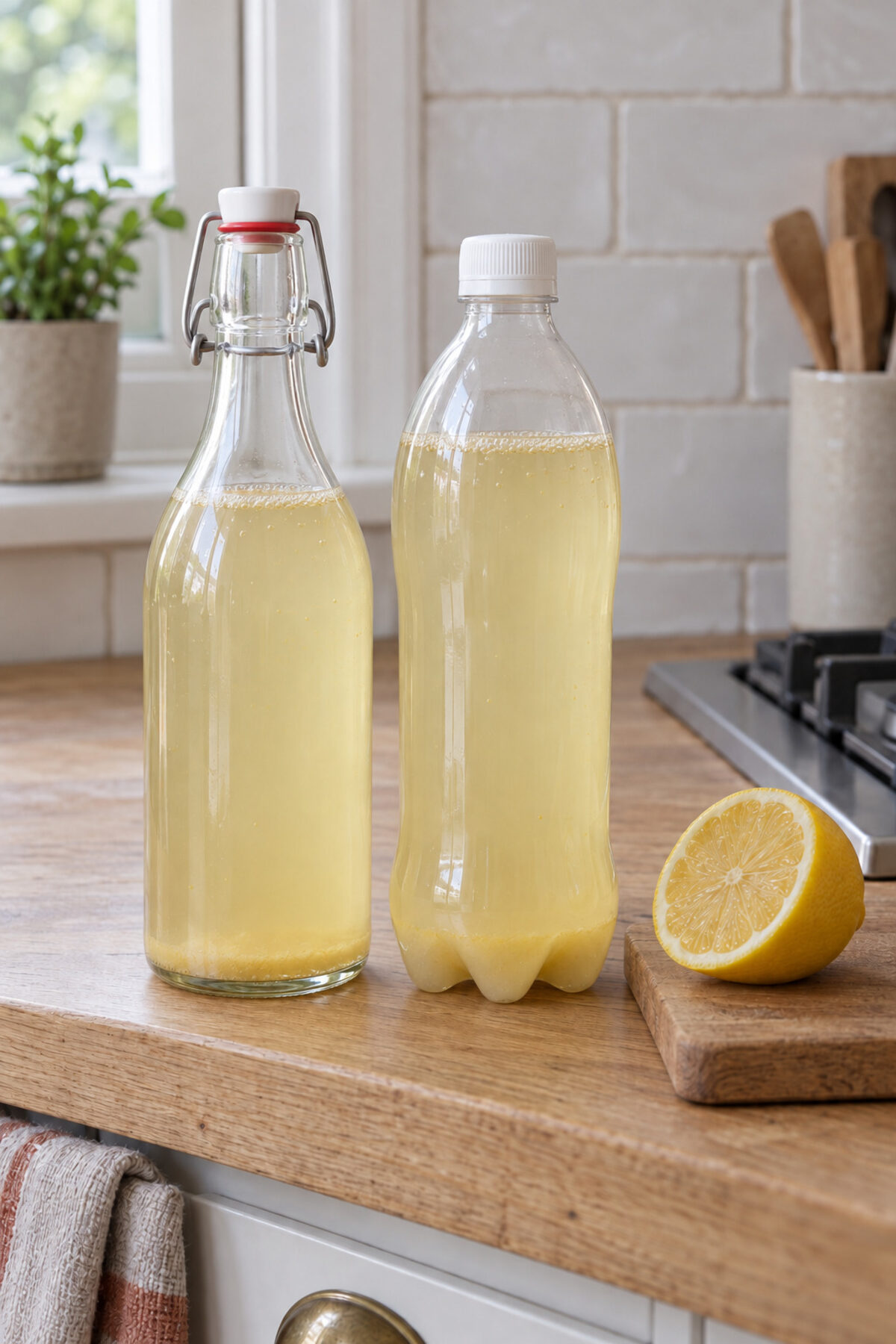
Ginger, lemon and sugar fermented with a ginger bug. It goes into PET soda bottles and into the fridge within 48 hours at most.
- Starter
- 10% of the batch
- Time
- 1–3days
- Temperature
- 68–77°F
- Jar
- 2L
The golden rule: bottles made for fizz, and never more than two days out of the fridge.
No sign-up. We guide you step by step, from the scale to the fridge.
Reviewed October 26, 2026 · 39 facts, each with its source
You'll need
- Pot with a lid
- Kettle or saucepan to boil the water
- Rolling pin and a heavy-duty plastic bag
- Zester and juicer
- Food thermometer
- 2-liter glass jar (about half a gallon)
- Clean cloth and a rubber band
- Calibrated pH meter
- Fine strainer and funnel
- PET soda bottles, never glass
- Kitchen scale
Step by step
-
Wash your equipment and get the bottles ready
Wash the pot, the jar, the utensils and the bottles in hot soapy water and rinse them well. The bottles must be PET soda bottles, never glass.
Tip: Have the ginger bug ready: it should bubble when you stir it and smell sour.
-
Make the brew with boiling water
Peel the ginger and cut it into 3–5 mm slices. Put them in a heavy-duty plastic bag and crush them with the rolling pin. Put them in the pot, zest the lemon over them, and add its juice and the sugar. Pour 1 liter (about 4 cups) of boiling water over it, not just hot water, and stir until the sugar dissolves. For kombucha, boiling is what removes the pathogens the tea or sugar may carry.
Tip: Don't skip the lemon: its juice has a pH of 2.0–2.6 and holds back bacteria, though not yeast. Ginger isn't acidic. For a milder ginger beer, the study used 30 g of ginger per liter.
-
Cool it and add the ginger bug
Cover the pot with a clean cloth and let it cool to 77–86 °F: it takes 60 to 90 minutes. Don't let it take more than 2 hours; if you need to, set the pot in cold water. Pour everything into the glass jar, ginger included, and add 125 ml (about ½ cup) of strained ginger bug. Stir.
Tip: 125 ml is 10% of the batch. It's a house rule: the same minimum share of starter asked of kombucha.
-
Let it ferment 1 to 3 days and check the pH
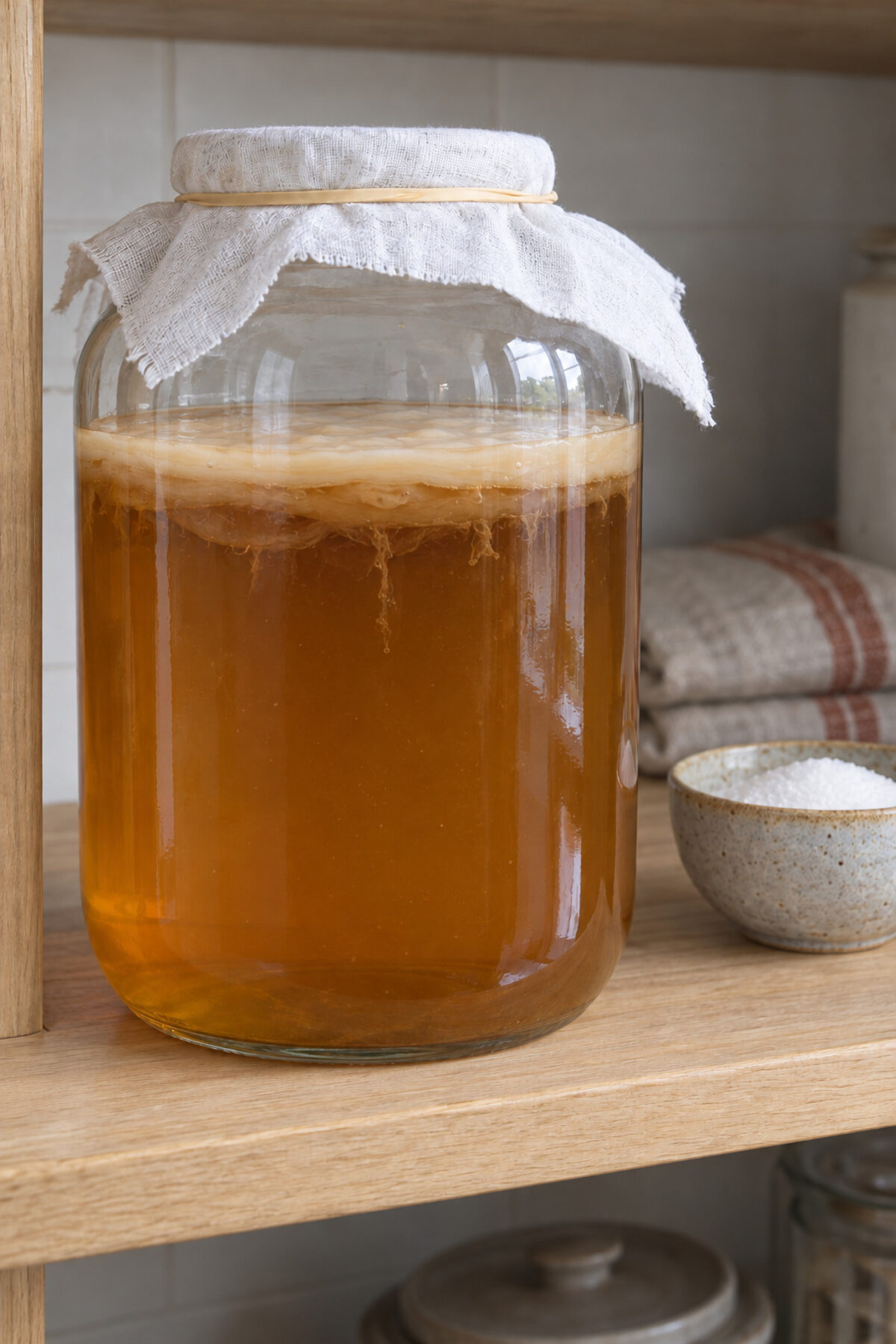
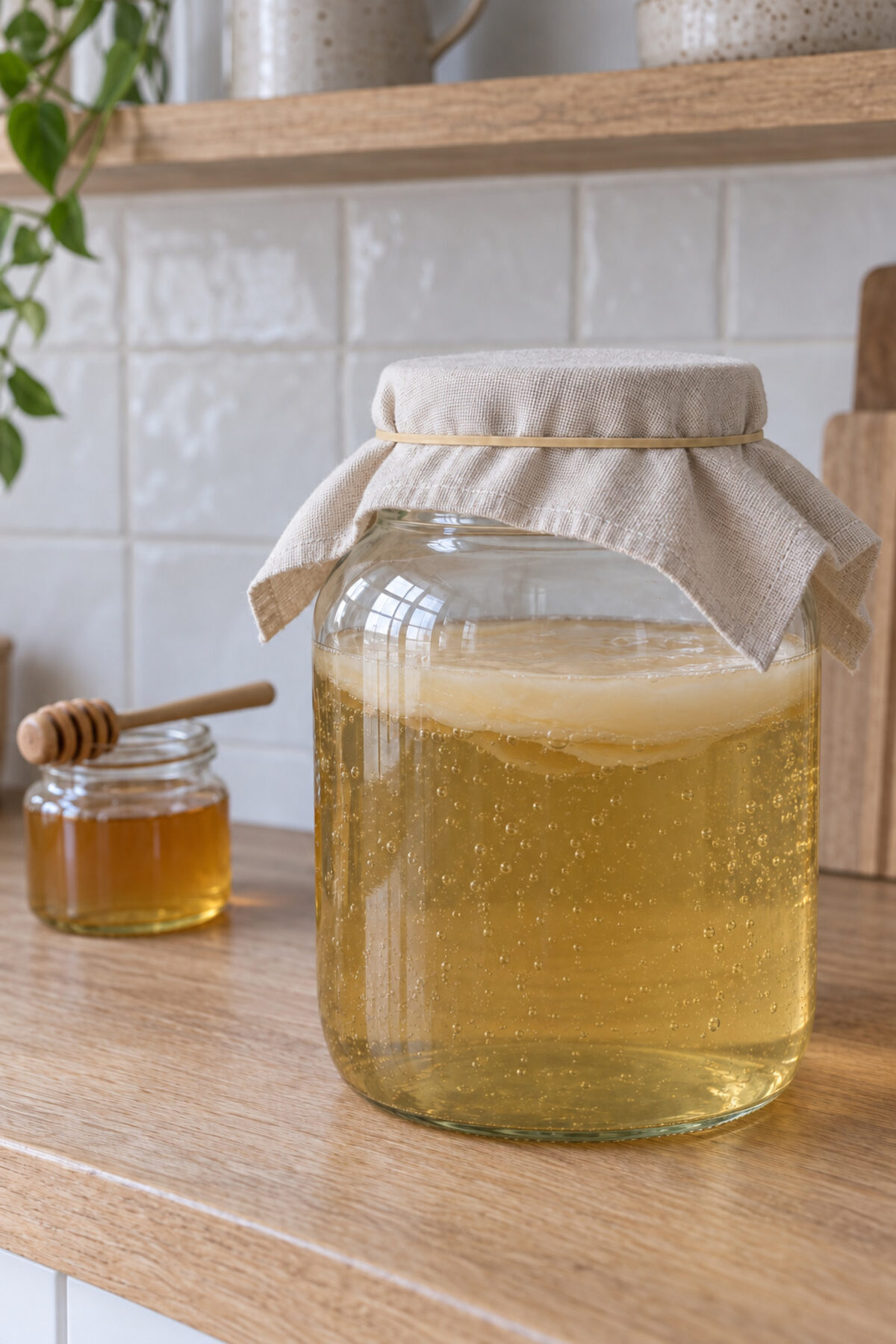
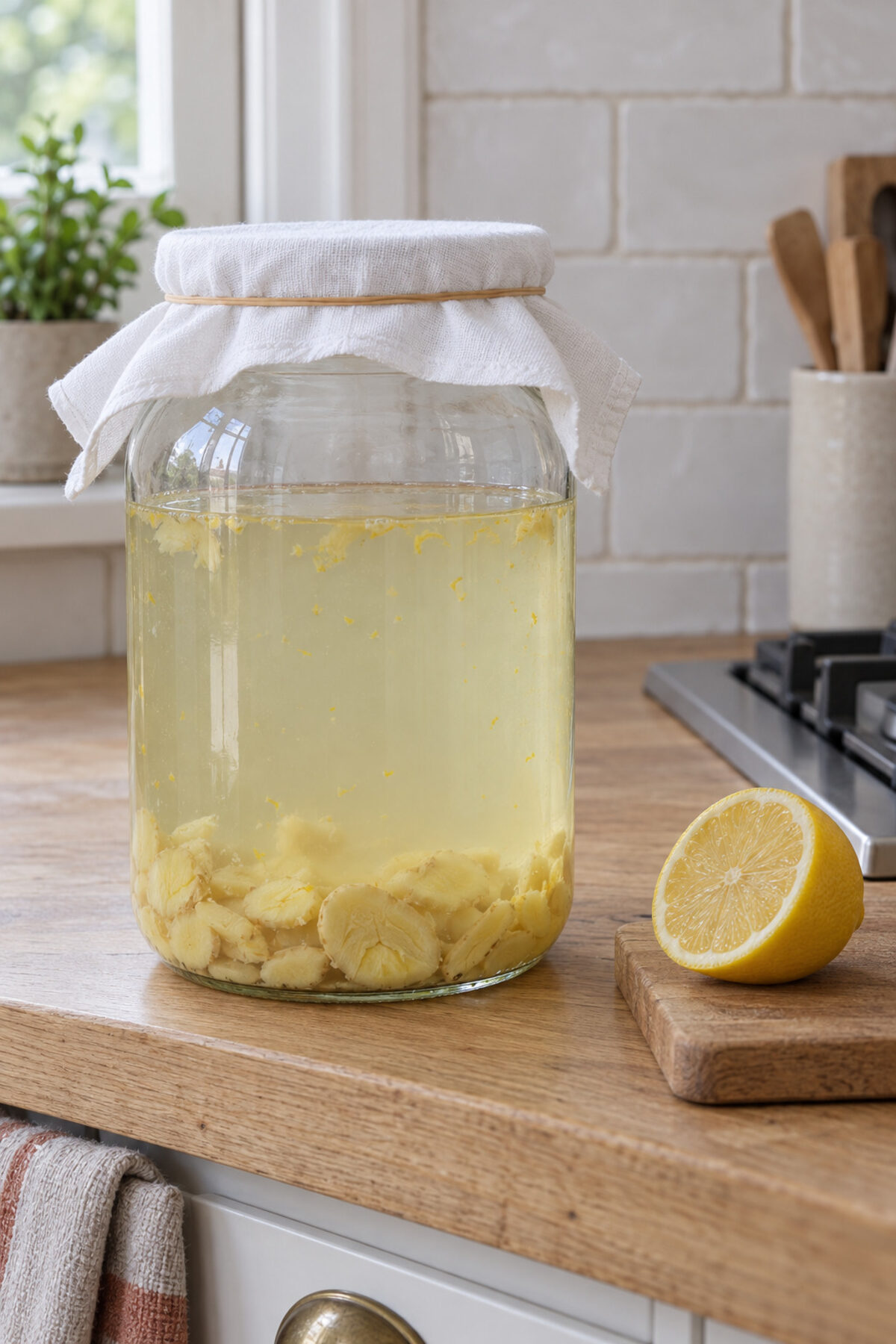
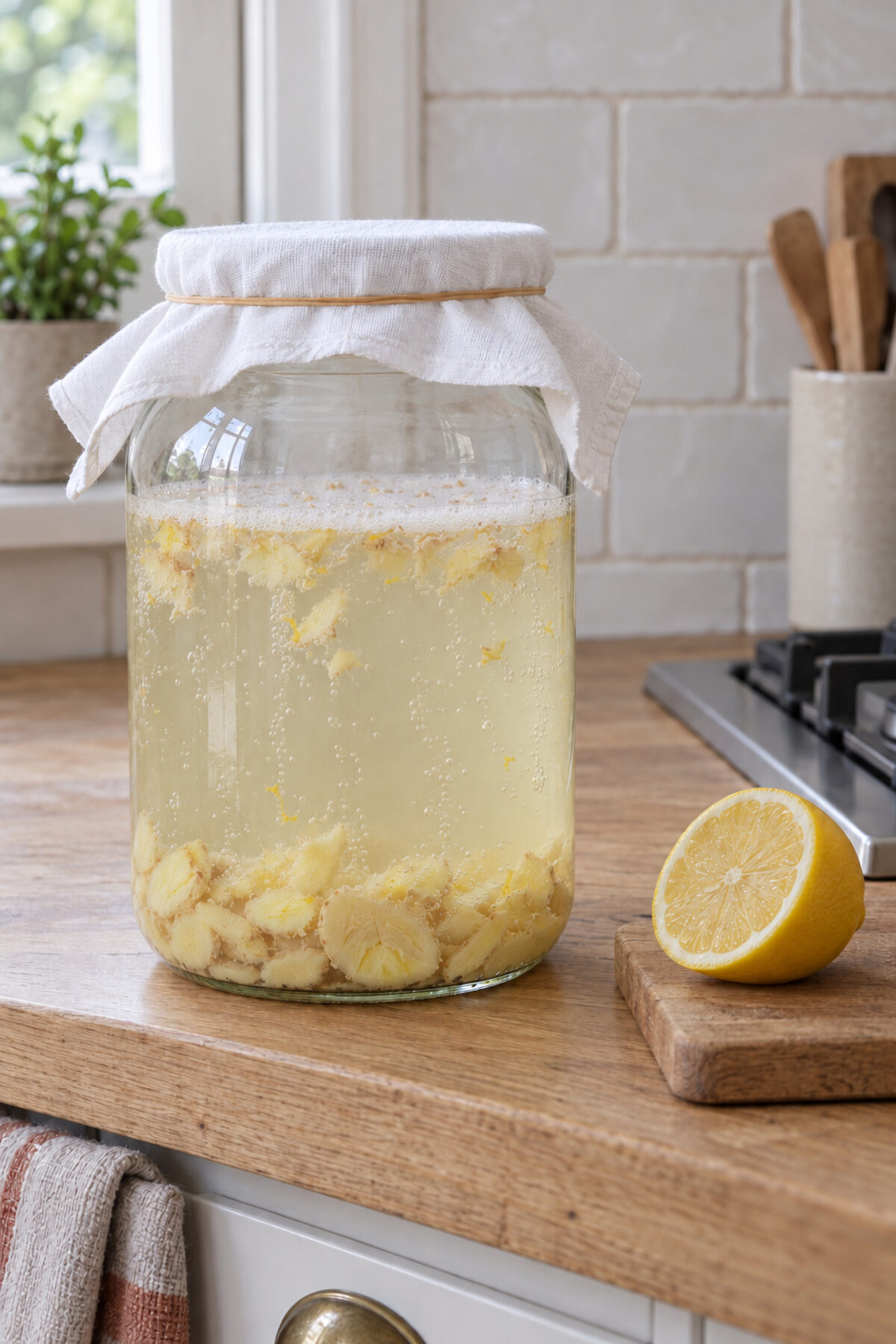
Cover the jar with the cloth and secure it with a rubber band. Keep it at 68–77 °F. It's ready when it has bubbles and tastes sour and less sweet. Check the pH with the meter: bottle it at 4.2 or below, and never above 4.6. If after 3 days it's just as sweet and still flat, or reads above 4.6, the bug didn't take: don't bottle it, throw it out.
Tip: The days and the pH are house rules. Ginger isn't acidic and no air gets into the bottle, so we hold it to the 4.6 line for fermented vegetables.
-
Strain it and fill the bottles
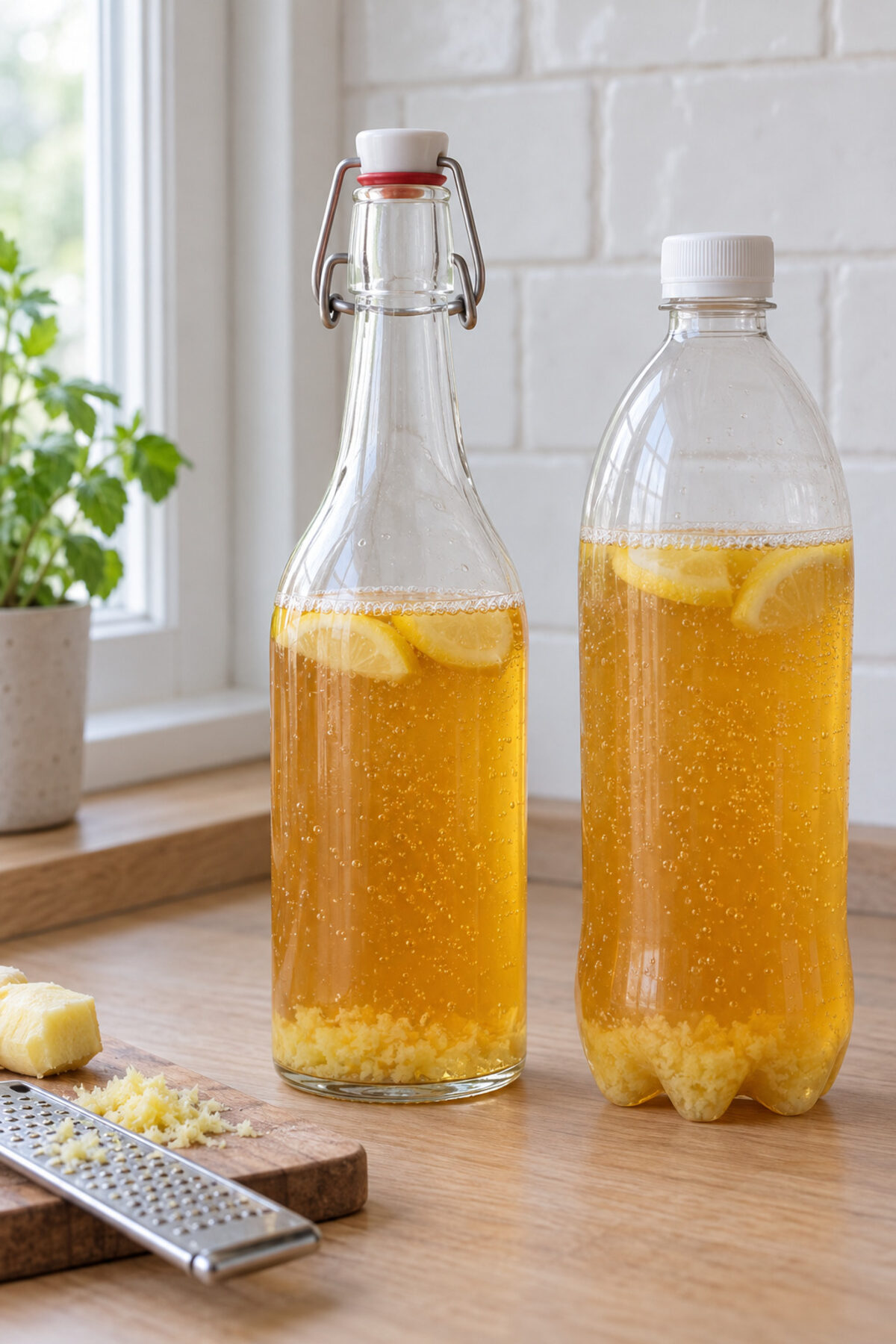
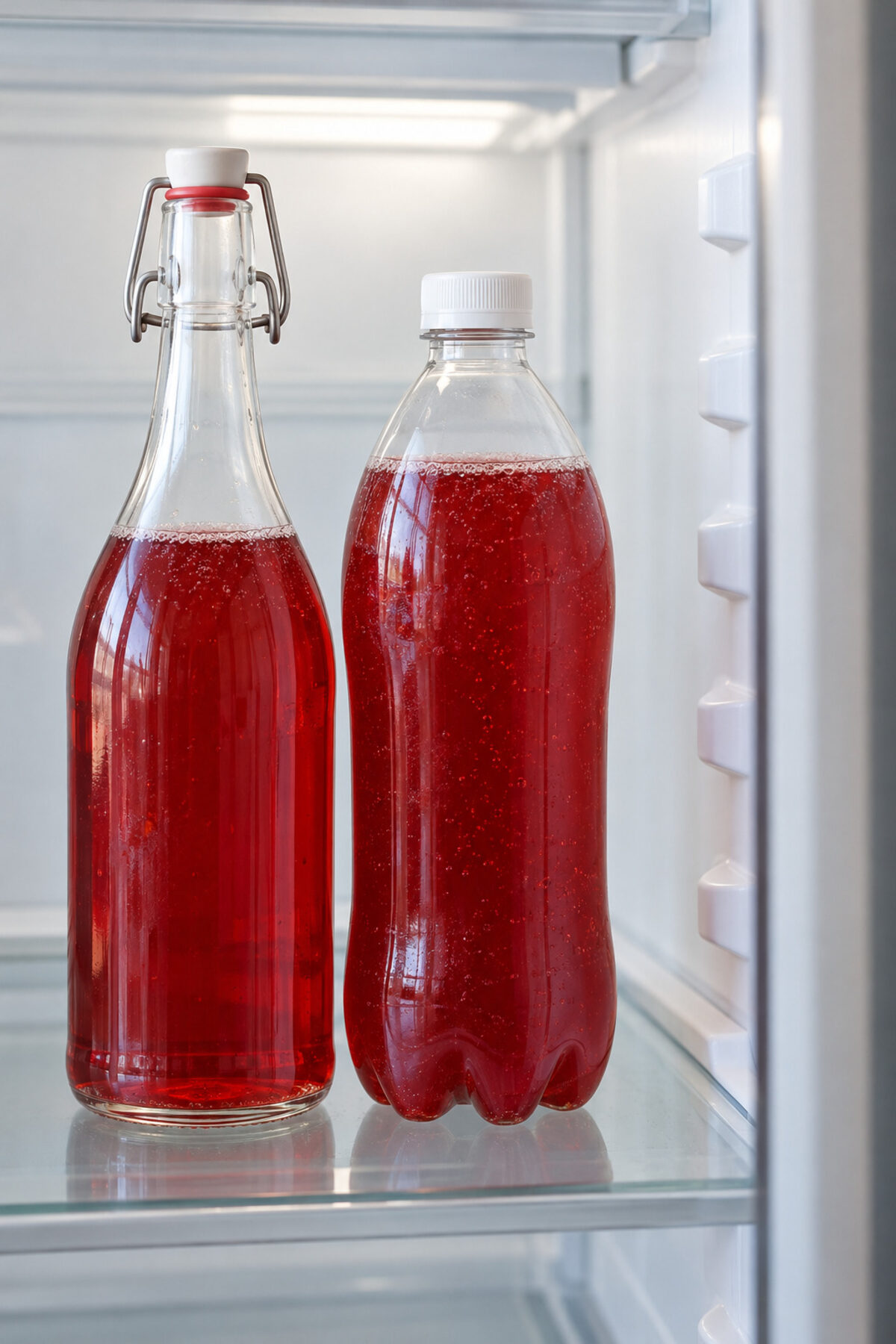
Strain the ginger beer through the fine strainer and fill the bottles with the funnel. Leave 3–5 cm (about 1¼–2 inches) of air at the top. Close them tightly.
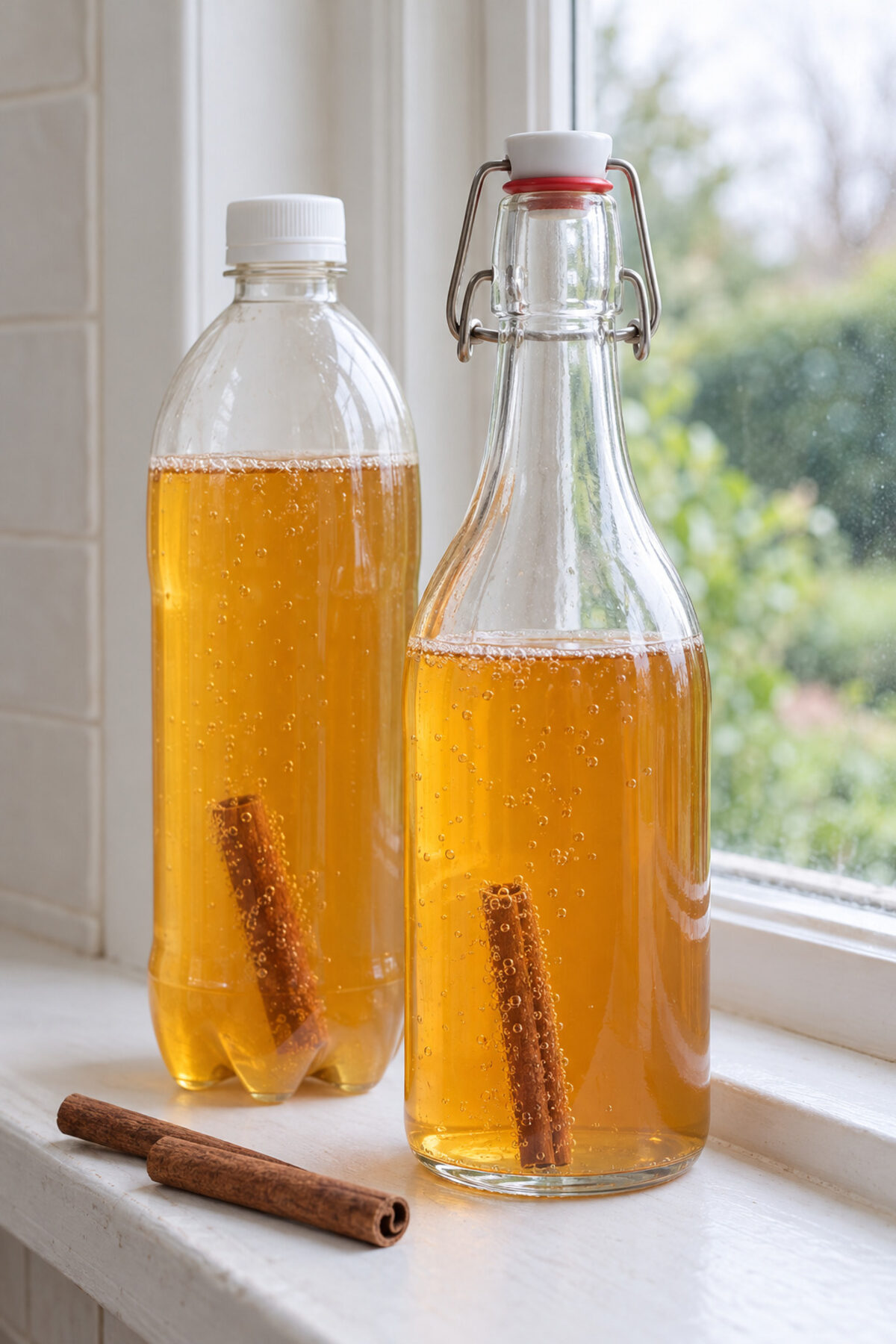
Tip: PET soda bottles only. No glass, not even swing-tops, and no jars or still-water bottles: the University of Reading school guide allows no glass at all, because the gas makes it explode, and this brew has a lot of sugar. And PET warns you: squeeze it and you feel the pressure.
-
Leave it out of the fridge for 48 hours at most
Keep the bottles at 77 °F or cooler. Every 12 hours, squeeze the bottles. As soon as one is as hard as an unopened soda, move them all to the fridge. Even if they're still soft, at 48 hours they go in the fridge.
Tip: The 48 hours and the checks every 12 hours are house rules. BCCDC gives jun 1 to 3 days in a sealed bottle; the Reading guide, 48 hours at most.
-
Keep it in the fridge and open it cold
In the fridge, at 39 °F or below, fermentation slows down. Drink it within 6 days. Don't shake the bottles. Open them cold, slowly, over the sink and pointed away from your face: the cap can pop off.
Tip: The 6 days are a house rule, the same as in the Reading guide. A short fermentation and the fridge keep the alcohol low.
No sign-up. We guide you step by step, from the scale to the fridge.
Variations
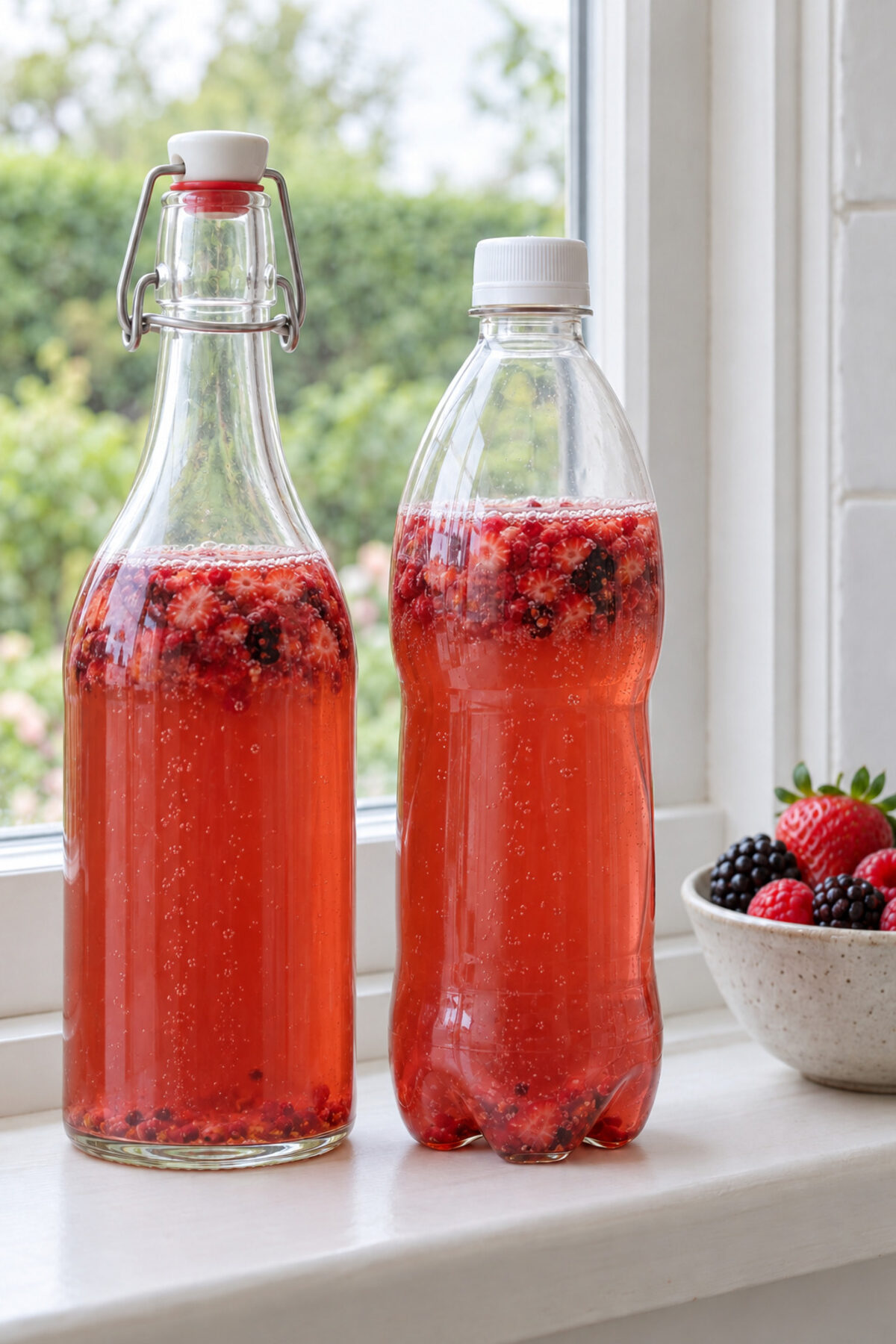
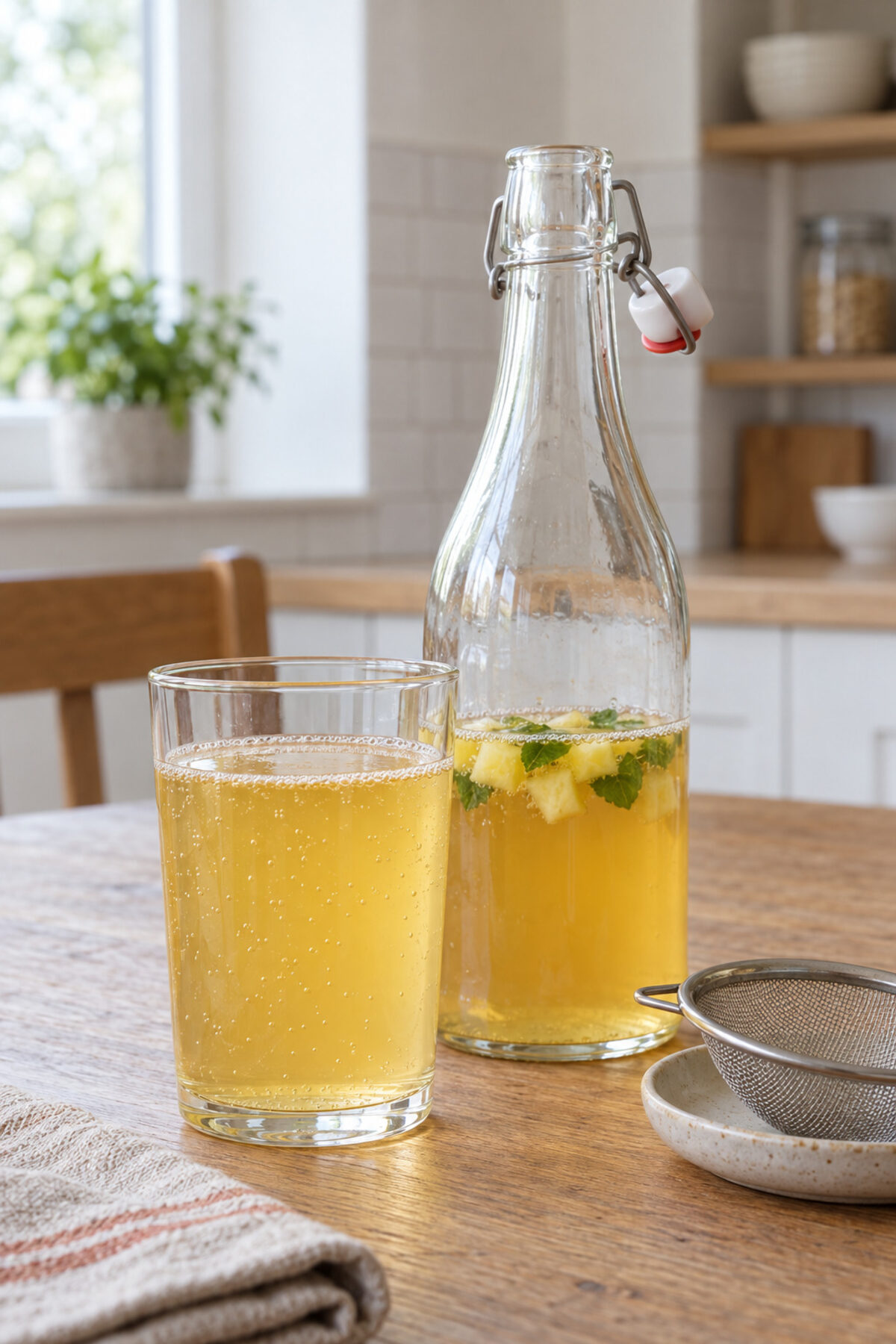
The same method, a different flavor. Once you have this one down, try one of these.
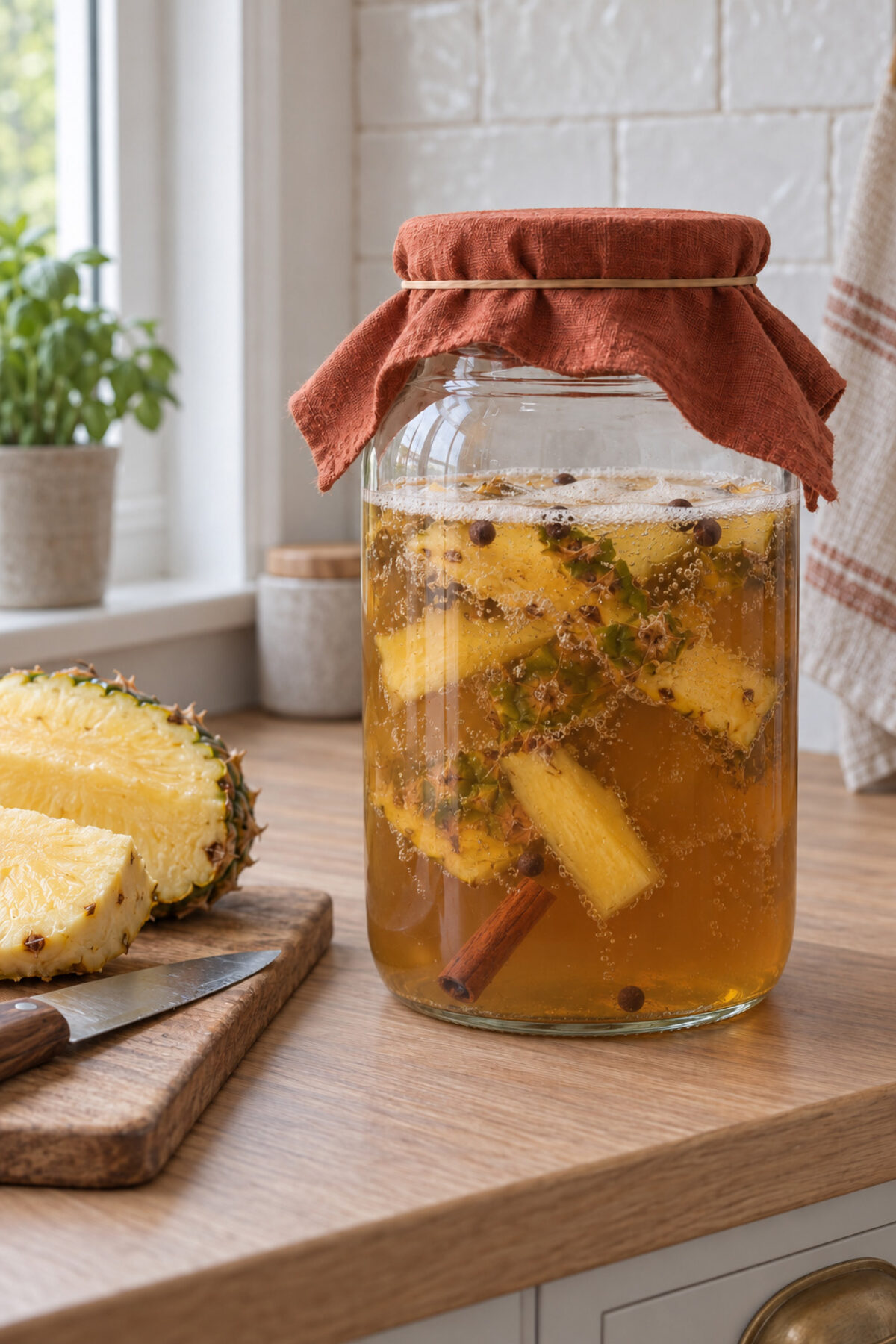
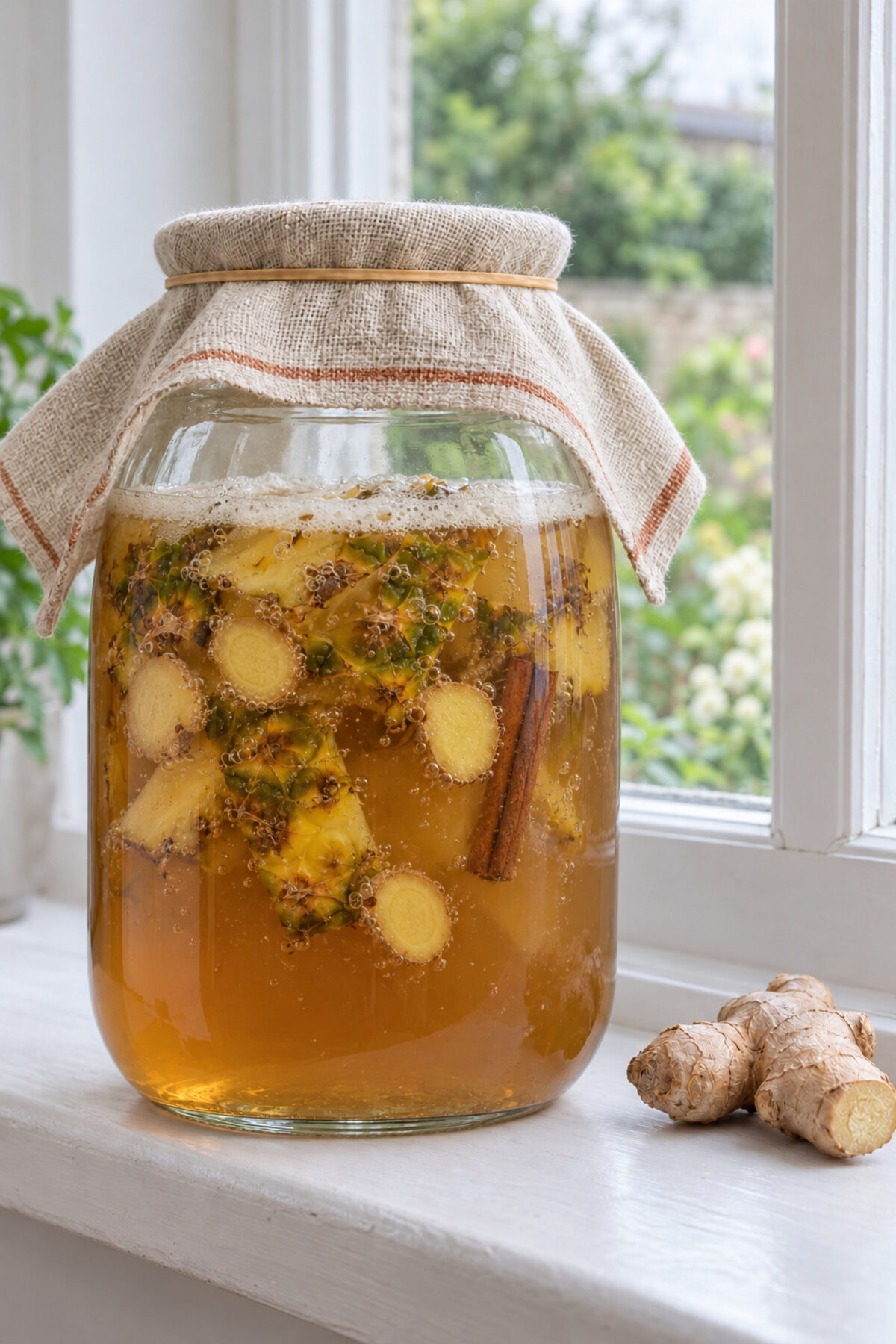
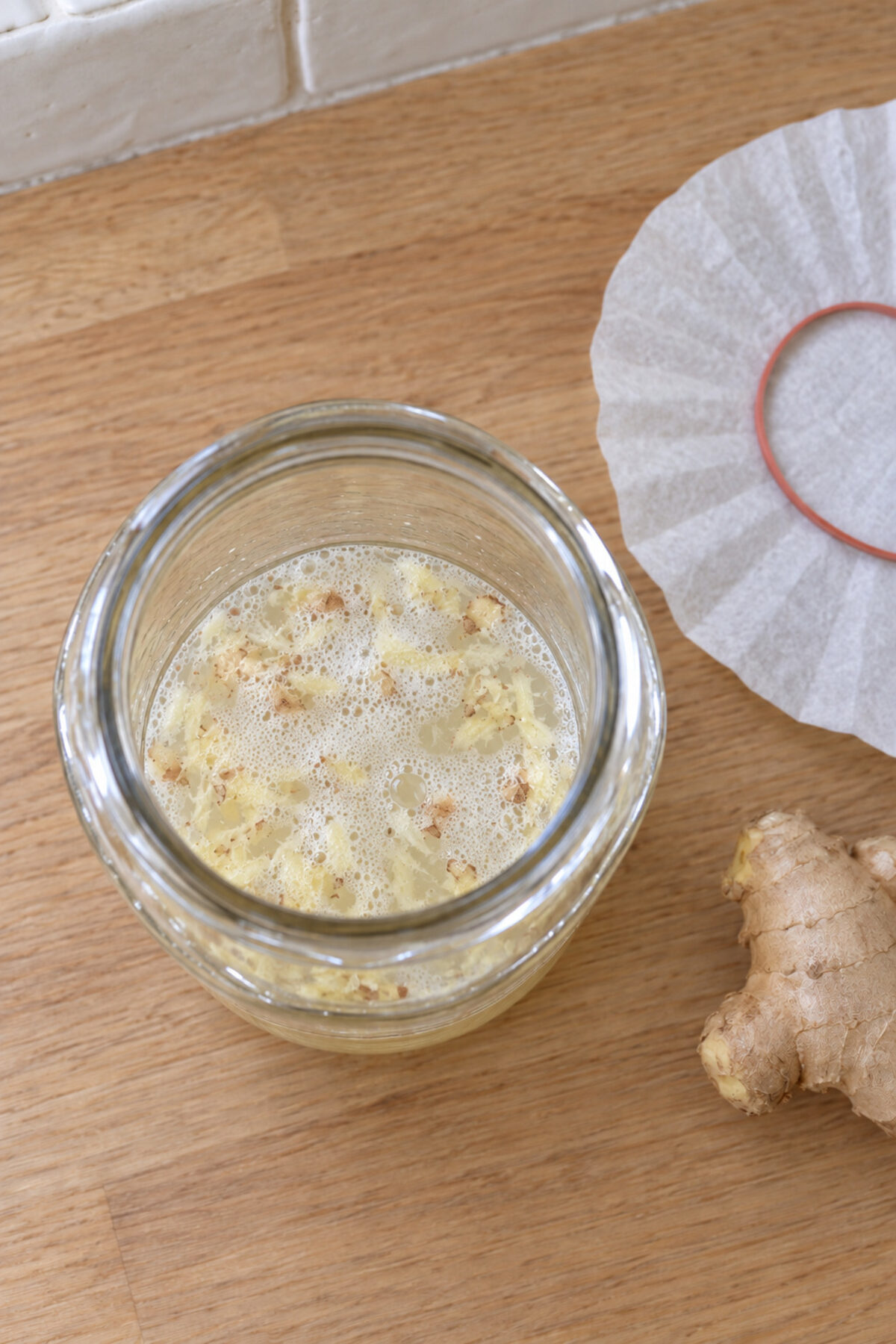
What you'll see
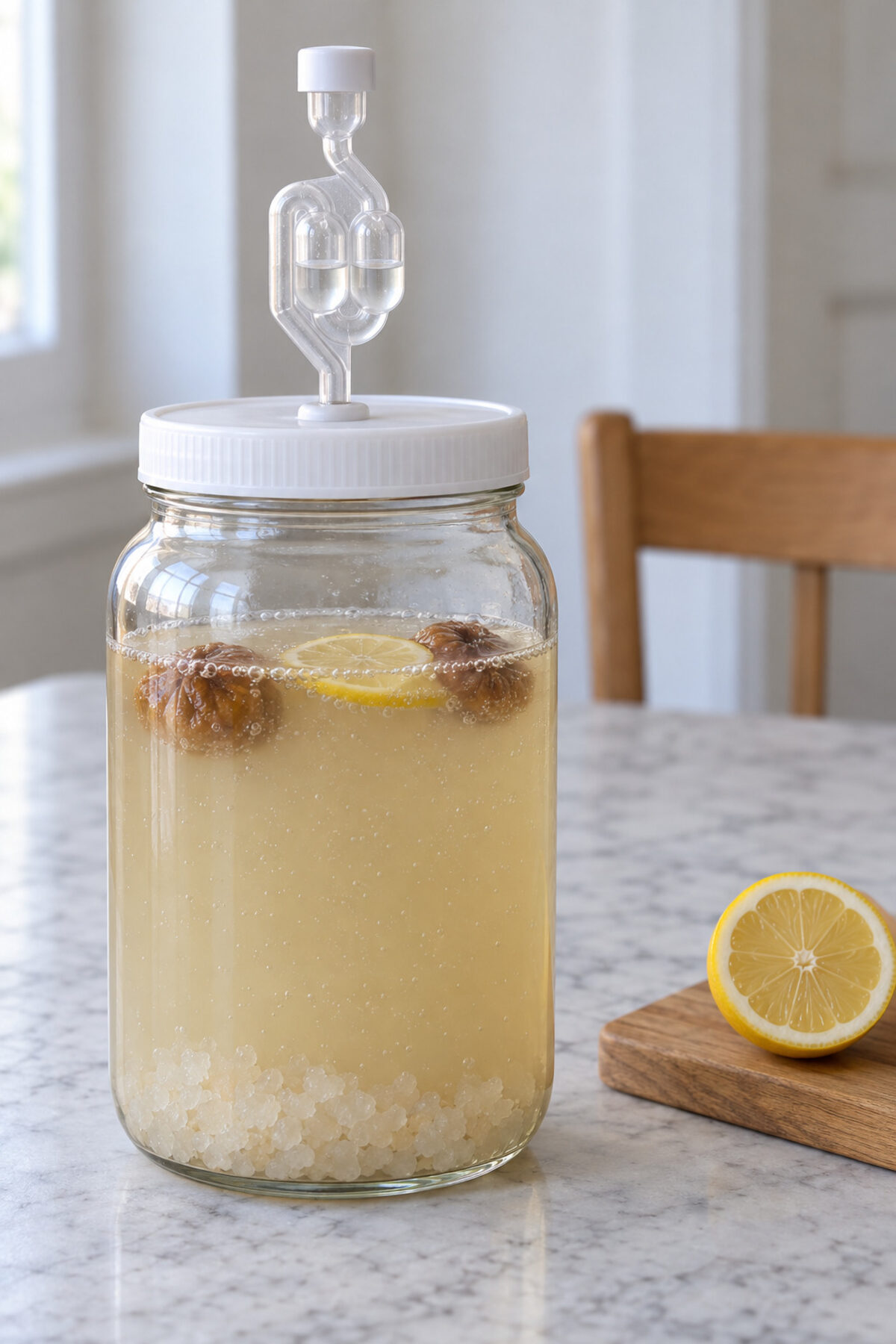
Ginger beer is sugar water and ginger, fermented into a drink with a little alcohol. This one has no added yeast: it gets going with a ginger bug, a culture of the microbes native to ginger. The amounts come from a school recipe by the University of Reading: 1 liter of water, 150 g of ginger, a lemon and 140 g of sugar. No food safety agency publishes guidance on homemade ginger beer. The amount of bug, the days and the pH are house rules. The bottles are PET only, as in the Reading guide: the brew has a lot of sugar and keeps making gas in the bottle.
 AI
 AI
AI
How to tell it's going well
- It contains alcohol. In the study, the batch made with a bug had 0.64% by day 5. It's not for young children or during pregnancy, even when it's sold as a soft drink. Don't add yeast: with yeast it reached 4.32%.
- PET soda bottles only, never glass. The brew has 140 g of sugar per liter and keeps fermenting in the bottle; the Reading guide allows no glass at all. In 2015, Canada recalled a ginger beer because its bottles were bursting.
- Never more than 48 hours out of the fridge, at 77 °F or cooler. It's a house rule; in warm weather, less time is better.
- pH 4.2 or below before bottling (house rule). Above 4.6, don't bottle it: throw it out.
- Only with an active ginger bug. Without one, it stayed at pH 4.09 in the study. If mold appears in the jar or the bottles, throw out the whole batch.
- Always in the fridge, at 39 °F or below, and drink it within 6 days (house rule). Without the fridge, bottles can explode.
- Open it cold and slowly, without shaking it. The cap can pop off and hurt someone.
Where every number comes from
Every number in this recipe comes from a food safety guide. We keep a copy of each source and quote its exact words.
-
1
Sugar water and ginger, fermented into a low-alcohol drink
“It is produced by fermenting a sugary solution with ginger, resulting in a drink with a relatively low alcohol content”
Revista de Ciências Agroveterinárias (UDESC; Alencar et al., Federal University of Amazonas) · Kinetic and sensory analysis of ginger beer produced by diversified fermentation methods (v.24 n.3, 2025) · read on October 25, 2026
-
2
It can be made with a ginger bug as the starter culture
“ginger beer can be produced through cascade fermentation using "ginger bug" as the initial culture”
Revista de Ciências Agroveterinárias (UDESC; Alencar et al., Federal University of Amazonas) · Kinetic and sensory analysis of ginger beer produced by diversified fermentation methods (v.24 n.3, 2025) · read on October 25, 2026
-
3
The study used 30 g of ginger per liter
“using ginger in a proportion of 30 g/L”
Revista de Ciências Agroveterinárias (UDESC; Alencar et al., Federal University of Amazonas) · Kinetic and sensory analysis of ginger beer produced by diversified fermentation methods (v.24 n.3, 2025) · read on October 25, 2026
-
4
With a bug, it dropped to pH 3.12 by day 5
“on the 5th day of fermentation in the group with ginger bug, a sharp drop to approximately 3.12 was observed”
Revista de Ciências Agroveterinárias (UDESC; Alencar et al., Federal University of Amazonas) · Kinetic and sensory analysis of ginger beer produced by diversified fermentation methods (v.24 n.3, 2025) · read on October 25, 2026
-
5
Without a bug, it stayed at pH 4.09 at the end of the study
“the group without the addition of ginger bug maintained a higher pH, around 4.09, on the last day of kinetic analysis”
Revista de Ciências Agroveterinárias (UDESC; Alencar et al., Federal University of Amazonas) · Kinetic and sensory analysis of ginger beer produced by diversified fermentation methods (v.24 n.3, 2025) · read on October 25, 2026
-
6
The study fermented at about 77 °F
“fermentation was initiated at a temperature of approximately 25°C”
Revista de Ciências Agroveterinárias (UDESC; Alencar et al., Federal University of Amazonas) · Kinetic and sensory analysis of ginger beer produced by diversified fermentation methods (v.24 n.3, 2025) · read on October 25, 2026
-
7
0.64% alcohol by day 5
“the alcohol content was 0.64 ± 0.18 ° GL on the 5th day of fermentation”
Revista de Ciências Agroveterinárias (UDESC; Alencar et al., Federal University of Amazonas) · Kinetic and sensory analysis of ginger beer produced by diversified fermentation methods (v.24 n.3, 2025) · read on October 25, 2026
-
8
With added yeast, 4.32% alcohol
“induced fermentation resulted in an alcohol content of 4.32 °GL”
Revista de Ciências Agroveterinárias (UDESC; Alencar et al., Federal University of Amazonas) · Kinetic and sensory analysis of ginger beer produced by diversified fermentation methods (v.24 n.3, 2025) · read on October 25, 2026
Show the remaining 31 claims
-
9
1 liter of water, 150 g of ginger and a medium lemon
“· 1 l water · 150 g root ginger (~130 g when peeled) · Medium-sized lemon (preferably unwaxed)”
Science in School (EIROforum), Dean Madden, National Centre for Biotechnology Education, University of Reading · Ginger beer: a traditional fermented low-alcohol drink (Issue 8, Spring 2008) · read on October 25, 2026
-
10
140 g of sugar, white or brown
“· 140 g sugar (brown or white)”
Science in School (EIROforum), Dean Madden, National Centre for Biotechnology Education, University of Reading · Ginger beer: a traditional fermented low-alcohol drink (Issue 8, Spring 2008) · read on October 25, 2026
-
11
Ginger peeled, cut into 3–5 mm slices and bruised
“Peel the ginger and cut it into slices 3–5 mm thick. Bruise the slices well by placing them in a strong, clean plastic bag and crushing them with a rolling pin.”
Science in School (EIROforum), Dean Madden, National Centre for Biotechnology Education, University of Reading · Ginger beer: a traditional fermented low-alcohol drink (Issue 8, Spring 2008) · read on October 25, 2026
-
12
Lemon zest and juice over the ginger
“Scrape the lemon zest over it, then add the juice from the lemon.”
Science in School (EIROforum), Dean Madden, National Centre for Biotechnology Education, University of Reading · Ginger beer: a traditional fermented low-alcohol drink (Issue 8, Spring 2008) · read on October 25, 2026
-
13
The lemon's acidity holds back bacteria, not yeast
“The low pH of the liquid (from the lemons) will also prevent bacteria (although not yeast) from growing.”
Science in School (EIROforum), Dean Madden, National Centre for Biotechnology Education, University of Reading · Ginger beer: a traditional fermented low-alcohol drink (Issue 8, Spring 2008) · read on October 25, 2026
-
14
Boiling water poured over
“then carefully pour on boiling water.”
Science in School (EIROforum), Dean Madden, National Centre for Biotechnology Education, University of Reading · Ginger beer: a traditional fermented low-alcohol drink (Issue 8, Spring 2008) · read on October 25, 2026
-
15
Cooled to 77–86 °F in 60 to 90 minutes
“leave the liquid to cool to 25–30 °C (this can take 60–90 min).”
Science in School (EIROforum), Dean Madden, National Centre for Biotechnology Education, University of Reading · Ginger beer: a traditional fermented low-alcohol drink (Issue 8, Spring 2008) · read on October 25, 2026
-
16
Covered with a clean cloth
“Cover the bowl with a clean cloth and leave it in a warm place for 24 h.”
Science in School (EIROforum), Dean Madden, National Centre for Biotechnology Education, University of Reading · Ginger beer: a traditional fermented low-alcohol drink (Issue 8, Spring 2008) · read on October 25, 2026
-
17
3–5 cm of air in each bottle
“leaving a 3–5 cm air gap at the top”
Science in School (EIROforum), Dean Madden, National Centre for Biotechnology Education, University of Reading · Ginger beer: a traditional fermented low-alcohol drink (Issue 8, Spring 2008) · read on October 25, 2026
-
18
The school guide allows no glass at all
“Glass bottles must NEVER be used, as the gas produced will cause them to explode.”
Science in School (EIROforum), Dean Madden, National Centre for Biotechnology Education, University of Reading · Ginger beer: a traditional fermented low-alcohol drink (Issue 8, Spring 2008) · read on October 25, 2026
-
19
No more than 48 hours out of the fridge, and drink it within six days
“Allow the beer to ferment at room temperature (~21 °C) for no more than 48 h, then place the bottles in a fridge. Drink within six days.”
Science in School (EIROforum), Dean Madden, National Centre for Biotechnology Education, University of Reading · Ginger beer: a traditional fermented low-alcohol drink (Issue 8, Spring 2008) · read on October 25, 2026
-
20
A short fermentation and the fridge keep the alcohol low
“The short fermentation period and refrigeration ensure that the alcohol content of the drink remains low.”
Science in School (EIROforum), Dean Madden, National Centre for Biotechnology Education, University of Reading · Ginger beer: a traditional fermented low-alcohol drink (Issue 8, Spring 2008) · read on October 25, 2026
-
21
Everything washed in hot soapy water and rinsed well
“Wash all surfaces and containers that will be used with hot sudsy water and rinse well before use.”
K-State Research and Extension (Kansas State University) · Taking a New Look at Fermented Foods (MF3491, June 2020) · read on October 20, 2026
-
22
Lemon juice has a pH of 2.0–2.6
“Lemon Juice 2.00 - 2.60”
U.S. FDA, CFSAN (copy hosted by RiverStone Health, Yellowstone County public health department) · Approximate pH of Foods and Food Products (April 2007) · read on October 25, 2026
-
23
Ginger has a pH of 5.6–5.9
“Ginger 5.60 - 5.90”
U.S. FDA, CFSAN (copy hosted by RiverStone Health, Yellowstone County public health department) · Approximate pH of Foods and Food Products (April 2007) · read on October 25, 2026
-
24
For kombucha, boiling removes pathogens from the tea and sugar
“Boiling removes pathogens that may be present on tea leaves or sugar before starter culture is added”
BC Centre for Disease Control, Environmental Health Services · Safety of Fermented Foods, Section 3.11: Kombucha and Jun (September 2023, updated December 2024) · read on October 25, 2026
-
25
Bottles that can take the pressure
“Glass bottles, cans or kegs should be resistant to acid leaching and pressure build-up.”
BC Centre for Disease Control, Environmental Health Services · Safety of Fermented Foods, Section 3.11: Kombucha and Jun (September 2023, updated December 2024) · read on October 25, 2026
-
26
Canada recalled a ginger beer in 2015 for bursting bottles
“A fermented ginger beer product, also made in the U.S., was recalled in Canada in 2015 for bursting bottles presumed due to extreme pressure.”
BC Centre for Disease Control, Environmental Health Services · Safety of Fermented Foods, Section 3.11: Kombucha and Jun (September 2023, updated December 2024) · read on October 25, 2026
-
27
Jun sits 1 to 3 days in the bottle before the fridge
“This is left to sit for 1 to 3 days before refrigerating.”
BC Centre for Disease Control, Environmental Health Services · Safety of Fermented Foods, Section 3.11: Kombucha and Jun (September 2023, updated December 2024) · read on October 25, 2026
-
28
In warm weather, no long second fermentations
“A prolonged second fermentation period when temperatures are warm should be avoided.”
BC Centre for Disease Control, Environmental Health Services · Safety of Fermented Foods, Section 3.11: Kombucha and Jun (September 2023, updated December 2024) · read on October 25, 2026
-
29
At 39 °F or below to stop fermentation
“Once fermentation is completed, kombucha and jun should be bottled and refrigerated to 4°C or lower to stop further fermentation”
BC Centre for Disease Control, Environmental Health Services · Safety of Fermented Foods, Section 3.11: Kombucha and Jun (September 2023, updated December 2024) · read on October 25, 2026
-
30
Without the fridge, bottles can explode
“Some jun and kombucha products can explode if not refrigerated.”
BC Centre for Disease Control, Environmental Health Services · Safety of Fermented Foods, Section 3.11: Kombucha and Jun (September 2023, updated December 2024) · read on October 25, 2026
-
31
Caps can pop off and hurt someone
“If fermentation is not properly controlled, the container lids may come off under extreme pressure or containers may break. This poses a potential risk of injury.”
BC Centre for Disease Control, Environmental Health Services · Safety of Fermented Foods, Section 3.11: Kombucha and Jun (September 2023, updated December 2024) · read on October 25, 2026
-
32
Do not shake, contents under pressure
“Precautionary statement labels on bottles are recommended to advise consumers “Do not shake. Contents under pressure.””
BC Centre for Disease Control, Environmental Health Services · Safety of Fermented Foods, Section 3.11: Kombucha and Jun (September 2023, updated December 2024) · read on October 25, 2026
-
33
From 140 °F to culture temperature in under 2 hours
“from 60oC to 21-24°C within 2 hours”
BC Centre for Disease Control, Environmental Health Services · Safety of Fermented Foods, Section 3.12: Kefir, milk and water (December 2024) · read on October 25, 2026
-
34
Kombucha's minimum starter, 10%
“Add 10% inoculum (SCOBY)”
Virginia Cooperative Extension (Virginia Tech) · What do I need to know to sell KOMBUCHA at the farmers market? (FST-297, last reviewed November 2025) · read on October 20, 2026
-
35
Fermented vegetables must reach pH 4.6 or below
“Ensure effective fermentation and end pH of ≤4.6 is achieved.”
BC Centre for Disease Control, Environmental Health Services · Safety of Fermented Foods, Section 3.1: Fermented Vegetables (August 2024, updated December 2024) · read on October 25, 2026
-
36
Ginger beer is among the drinks with undeclared alcohol
“Health Canada acknowledges ethanol in non-alcoholic fermented beverages as a concern in kombucha, kefir, and some soft drinks including ginger beer.”
BC Centre for Disease Control, Environmental Health Services · Safety of Fermented Foods, Section 2: Starter cultures and fermented food standards (August 2024, updated December 2024) · read on October 25, 2026
-
37
Not for young children or during pregnancy
“not a suitable beverage for young children or during pregnancy”
BC Centre for Disease Control, Environmental Health Services · Safety of Fermented Foods, Section 2: Starter cultures and fermented food standards (August 2024, updated December 2024) · read on October 25, 2026
-
38
If there's mold, throw out the whole batch
“If you confirm mold growth on any part of a ferment, it should be immediately discarded.”
UC Davis, Department of Food Science and Technology · Common issues with fermented fruits and vegetables (v1.0, 15-mar-2022) · read on October 20, 2026
-
39
Mold is usually green, blue, brown or black
“Mold is typically green, blue, brown, or black in color.”
UC Davis, Department of Food Science and Technology · Common issues with fermented fruits and vegetables (v1.0, 15-mar-2022) · read on October 20, 2026