 AI
Homemade shio koji
Level 2 · some practice
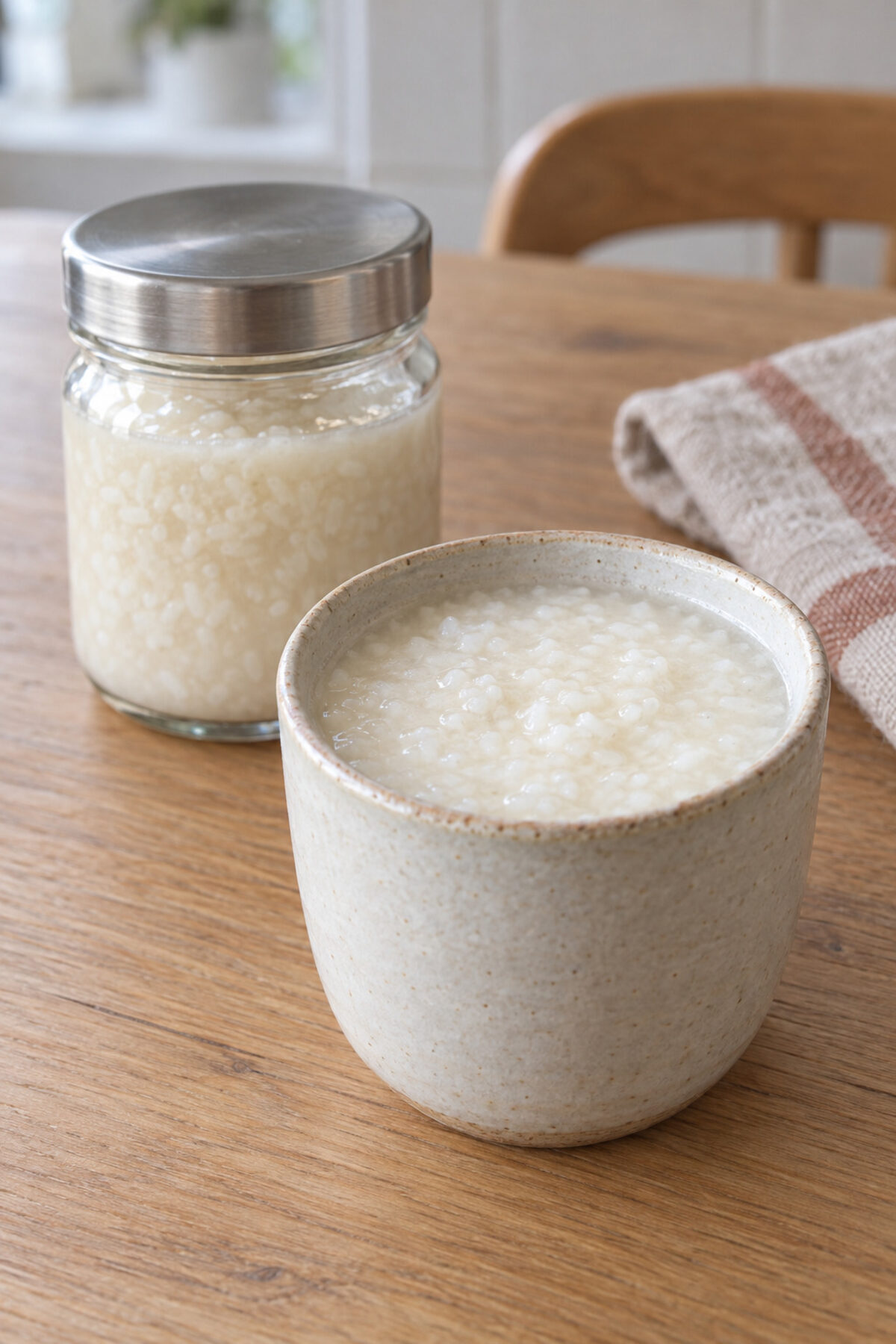
Koji, water and salt in a jar, stirred every day for a week. You get a salty, slightly sweet paste to use in place of salt.
- Salt
- 12% 120 g per kilo of the whole, salt included
- Time
- 7–10days
- Temperature
- 68–77°F
- Jar
- 1L
The golden rule: never less than 10% salt on the weight of everything, and into the fridge when done.
No sign-up. We guide you step by step, from the scale to the fridge.
Reviewed October 26, 2026 · 19 facts, each with its source
You'll need
- 1-liter glass jar (about a quart), with a lid
- Clean spoon
- Kitchen scale
Step by step
-
Dissolve the salt in the water and mix it with the koji
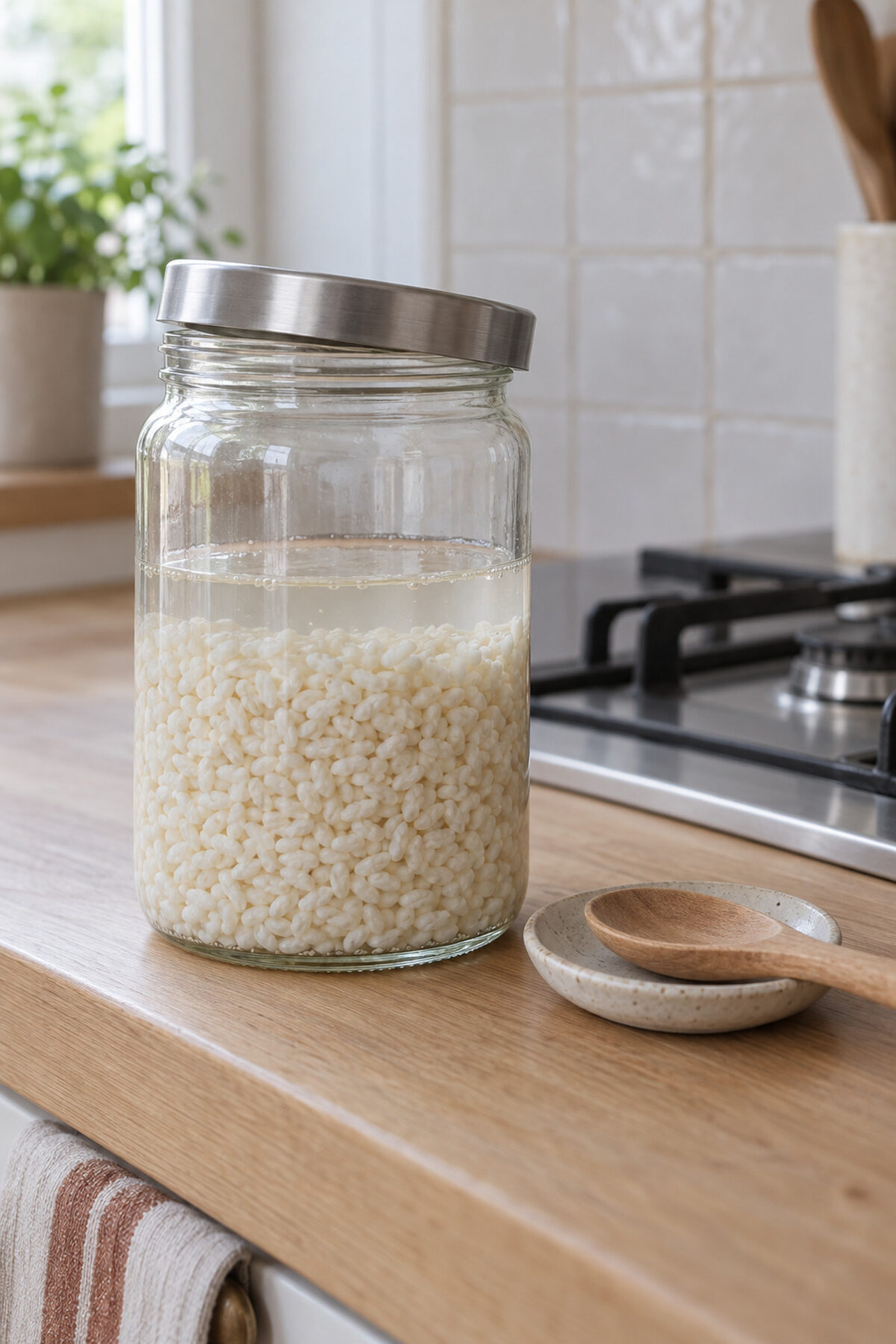
Wash the jar and spoon with hot, soapy water and rinse them well. Break up 200 g of koji with clean hands to separate the grains. Weigh 300 g of water and 68.2 g of salt, and stir until the salt dissolves. Put it all in the jar and mix.
The salt is 12% of the weight of everything, salt included: 68.2 g out of 568.2 g. The koji and water are in the same proportion as a Japanese study: 50 g of dried koji to 75 ml of water.
Tip: With fresh koji, use less water: just enough to cover it. Weigh everything you add and work out the salt on the total.
-
Rest the lid on loosely and keep it at 68–77 °F
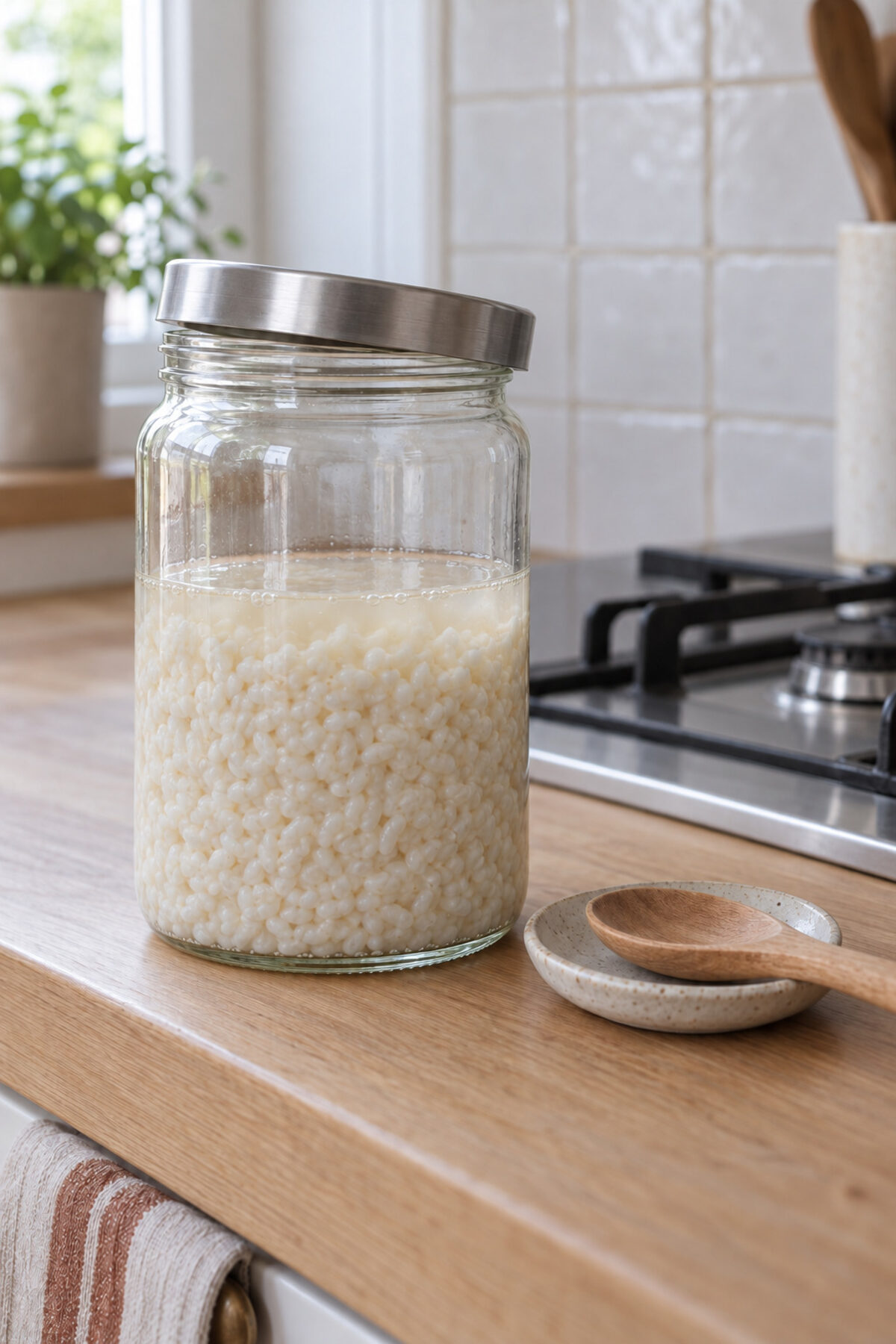
Rest the lid on top without screwing it down: the koji gives off a little gas as it matures (our house rule). Keep it somewhere at 68–77 °F, out of the sun. By the next day the koji will have soaked up some of the water. If it pokes out dry, add water to cover and 13.6 g of salt for every 100 g of new water, so it stays at 12%.
Tip: If your home is warmer than 77 °F, wait for a cooler season (our house rule). Shio koji holds more water than miso, and at 86 °F the risk of contamination rises so much that industry adds alcohol or other preservatives.
-
Stir it once a day for 7 to 10 days
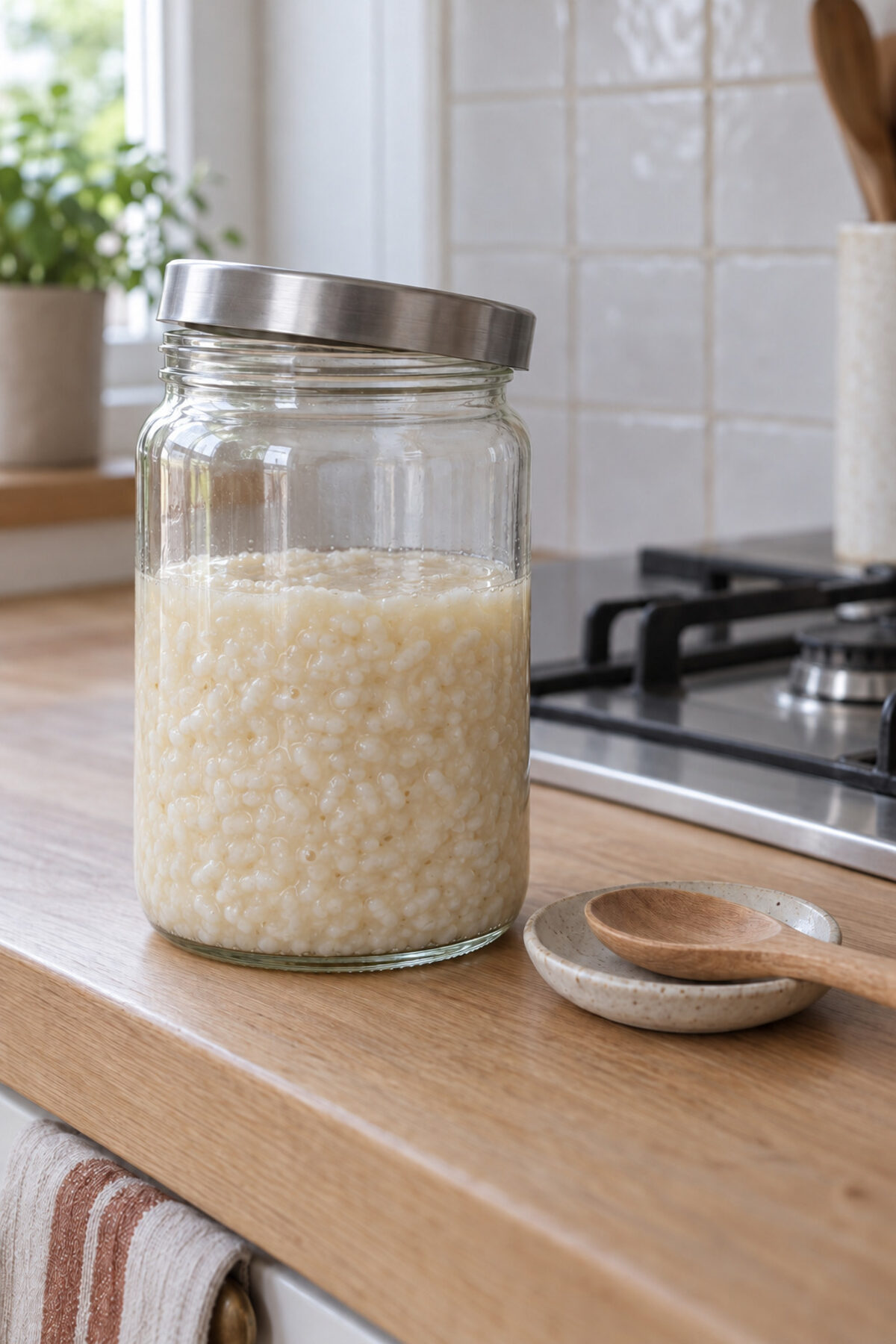
Stir from the bottom with the clean spoon once a day and rest the lid back on. It starts to smell of koji, sweet and salty, sometimes a little like sake. It's ready when the grains crush between your fingers: at home this usually takes 7 to 10 days, longer when it's cool. Don't leave it out of the fridge for more than 10 days (our house rule).
-
Close the jar and keep it in the fridge
Close the jar and keep it in the fridge. Use it within 2 months (our house rule: that's how long a study followed it, with the salt steady at about 11%). Use it in place of salt in dressings, sauces and marinades, or to marinate vegetables, tofu, meat or fish before cooking.
Tip: If you like it smooth, blend it before storing. It's quite salty: start with a little and taste.
No sign-up. We guide you step by step, from the scale to the fridge.
Variations
The same method, a different flavor. Once you have this one down, try one of these.
What you'll see
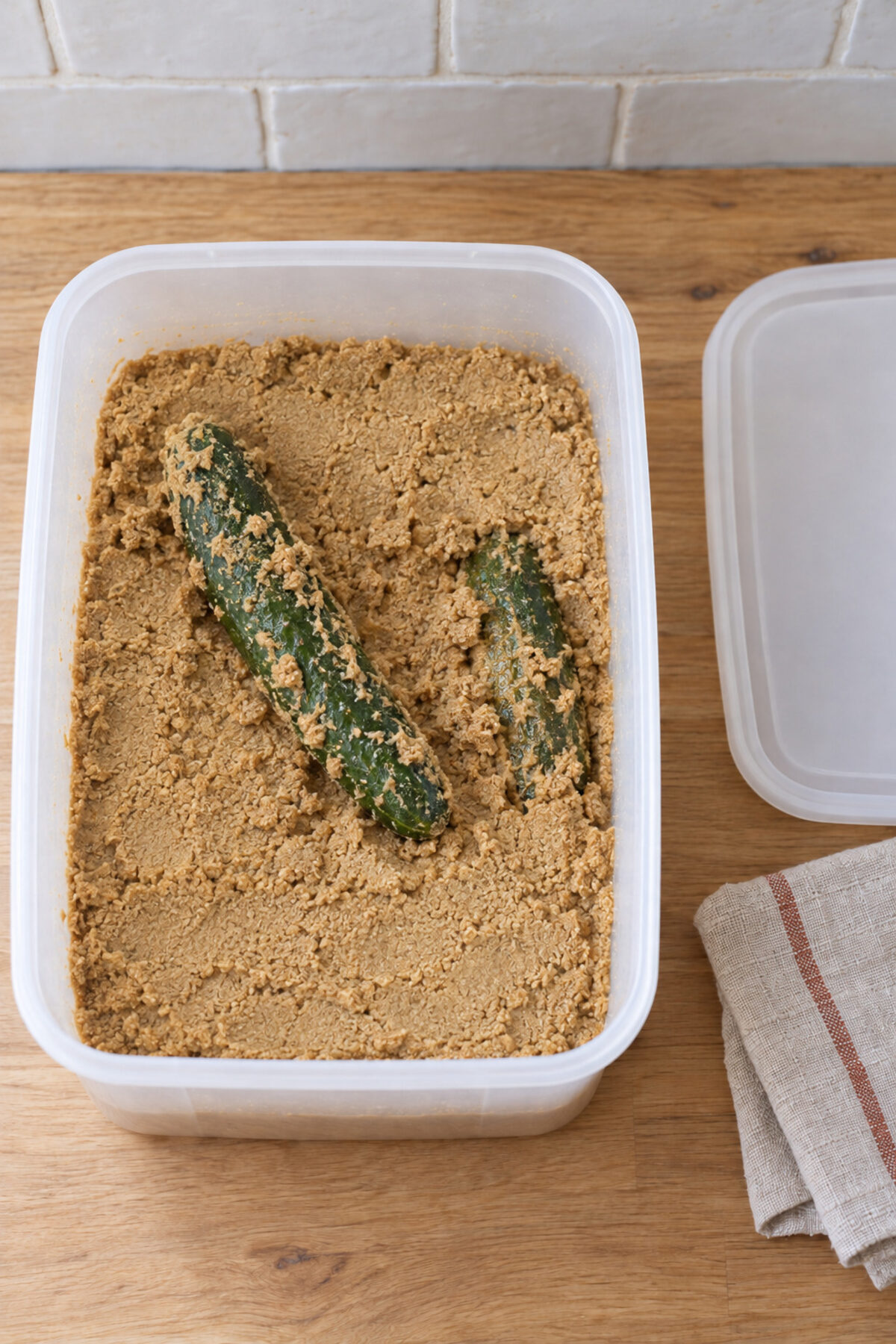
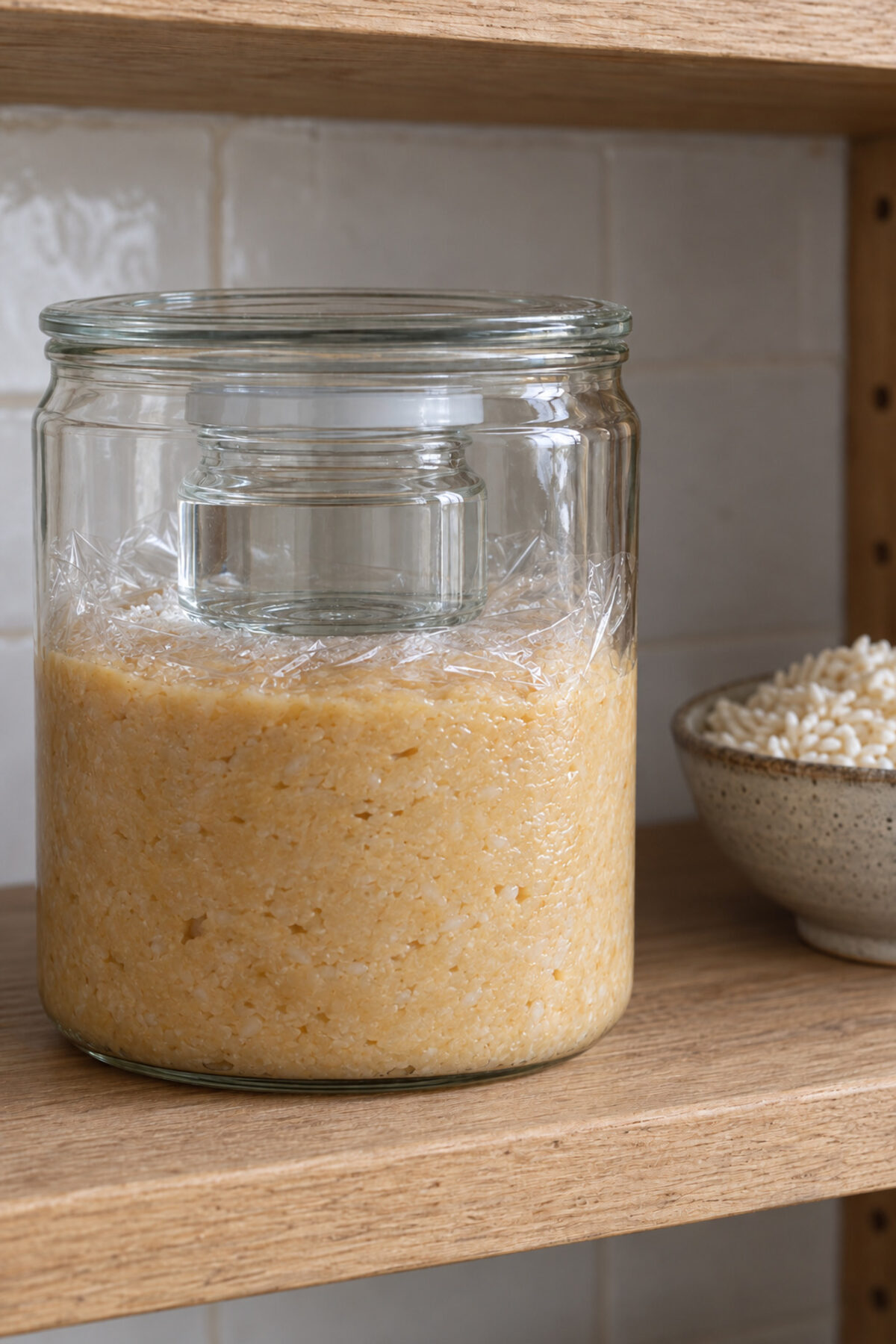
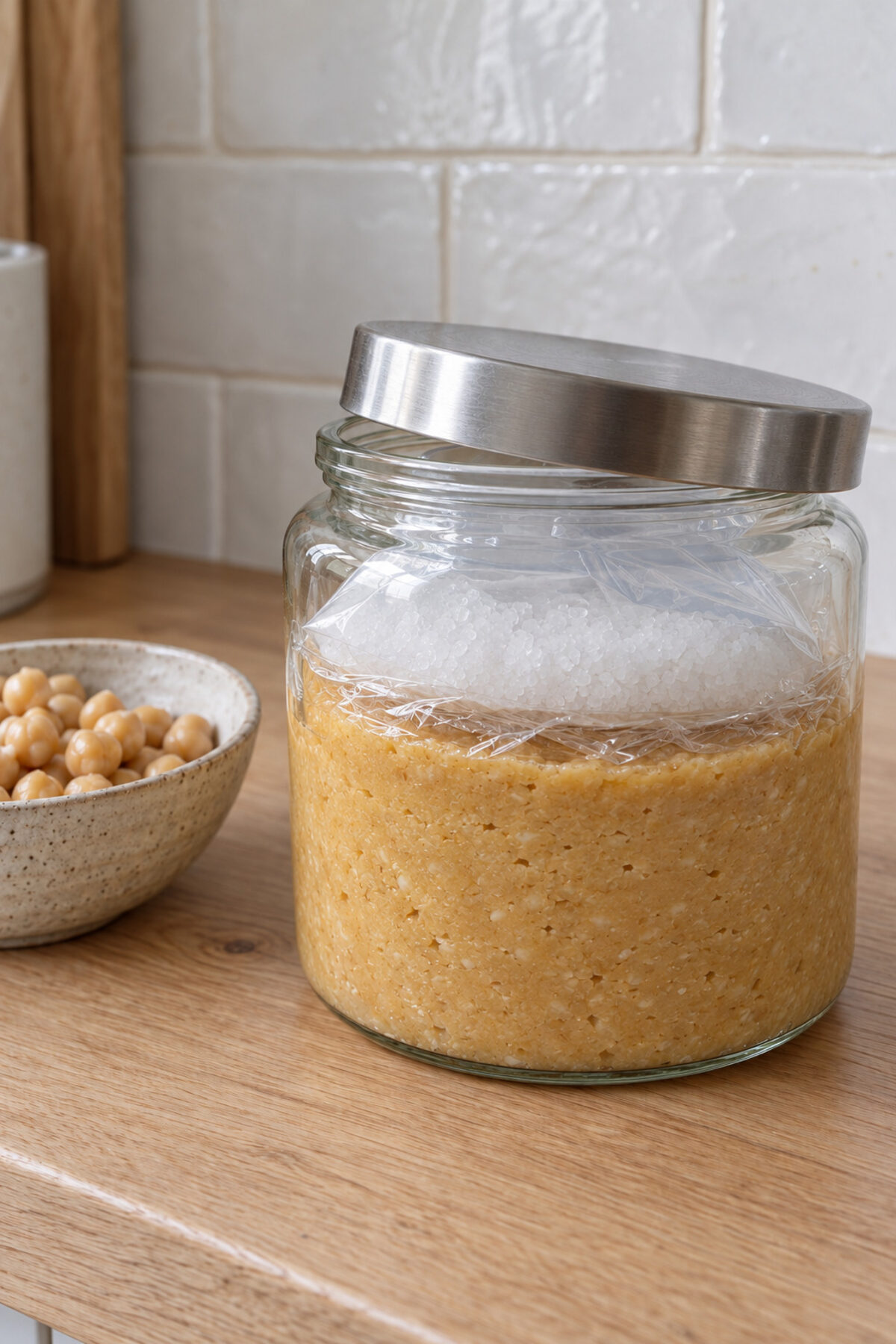
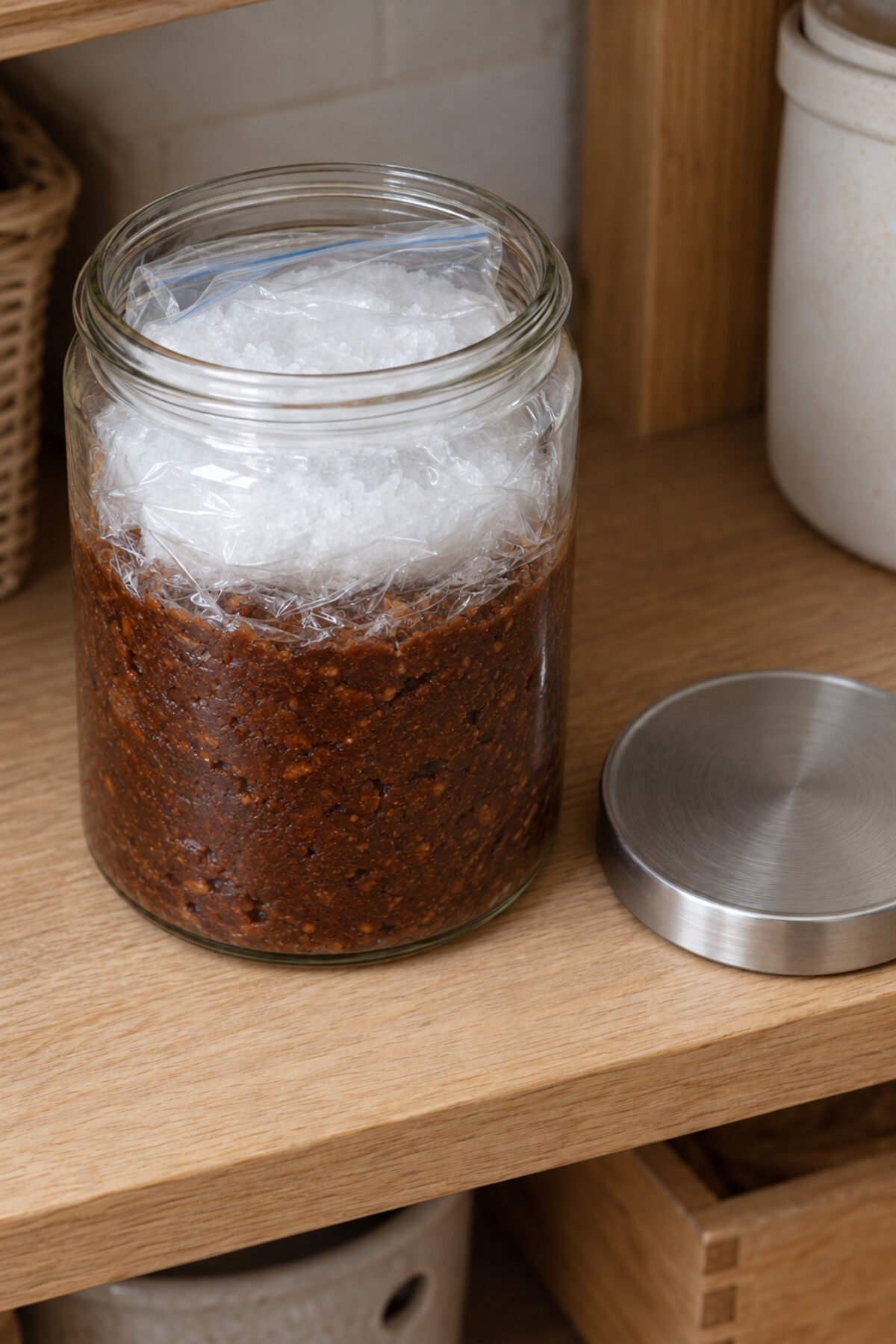
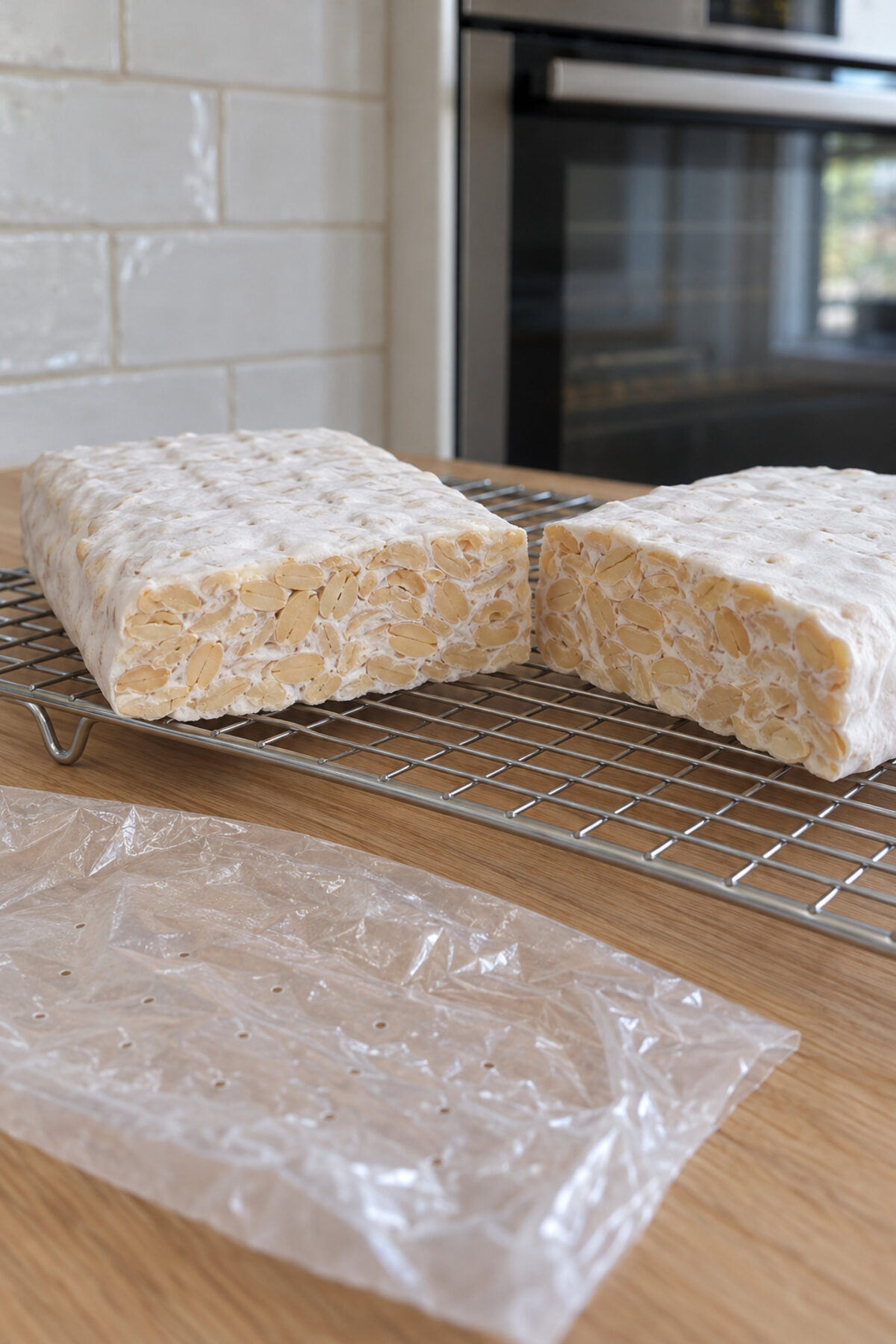
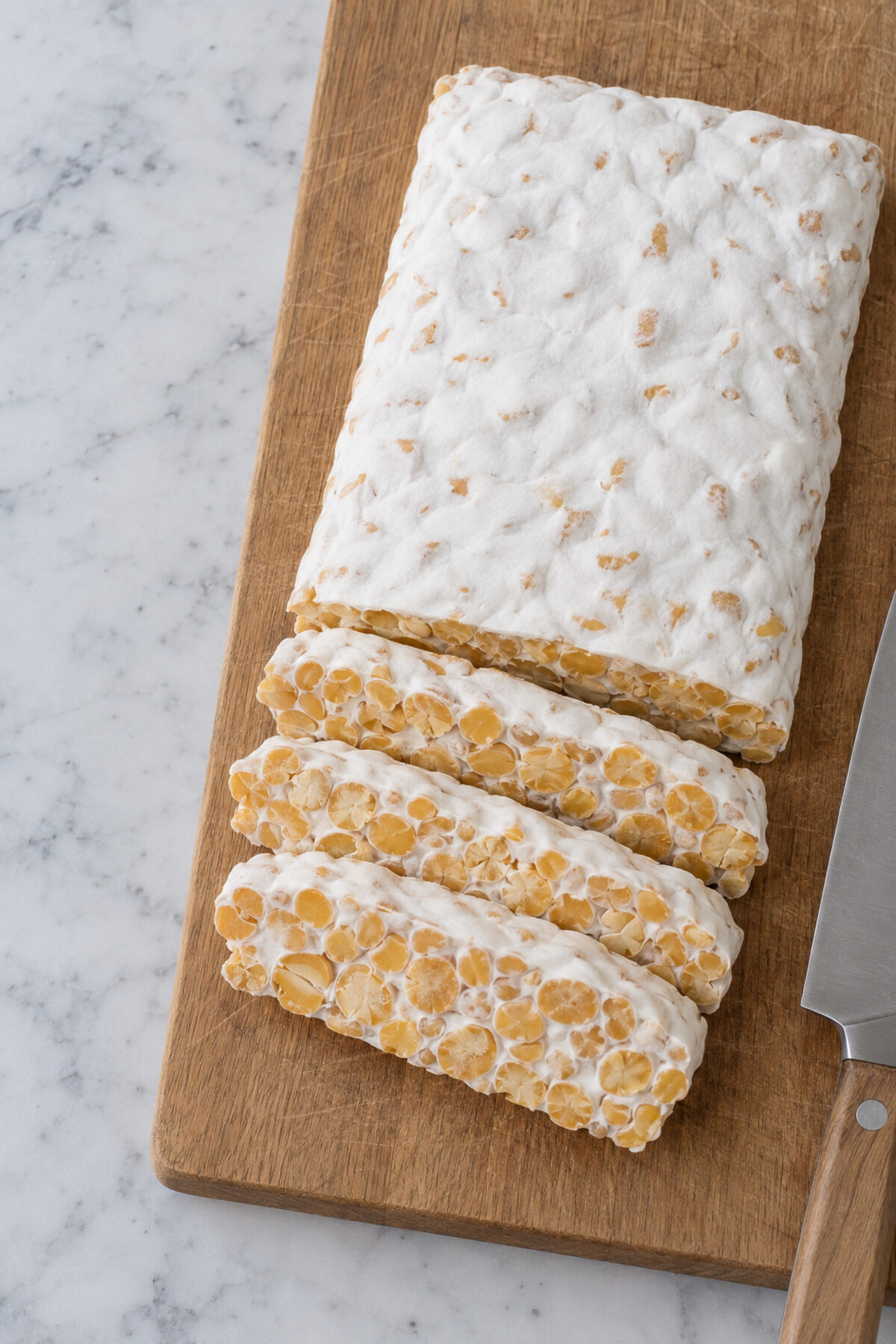
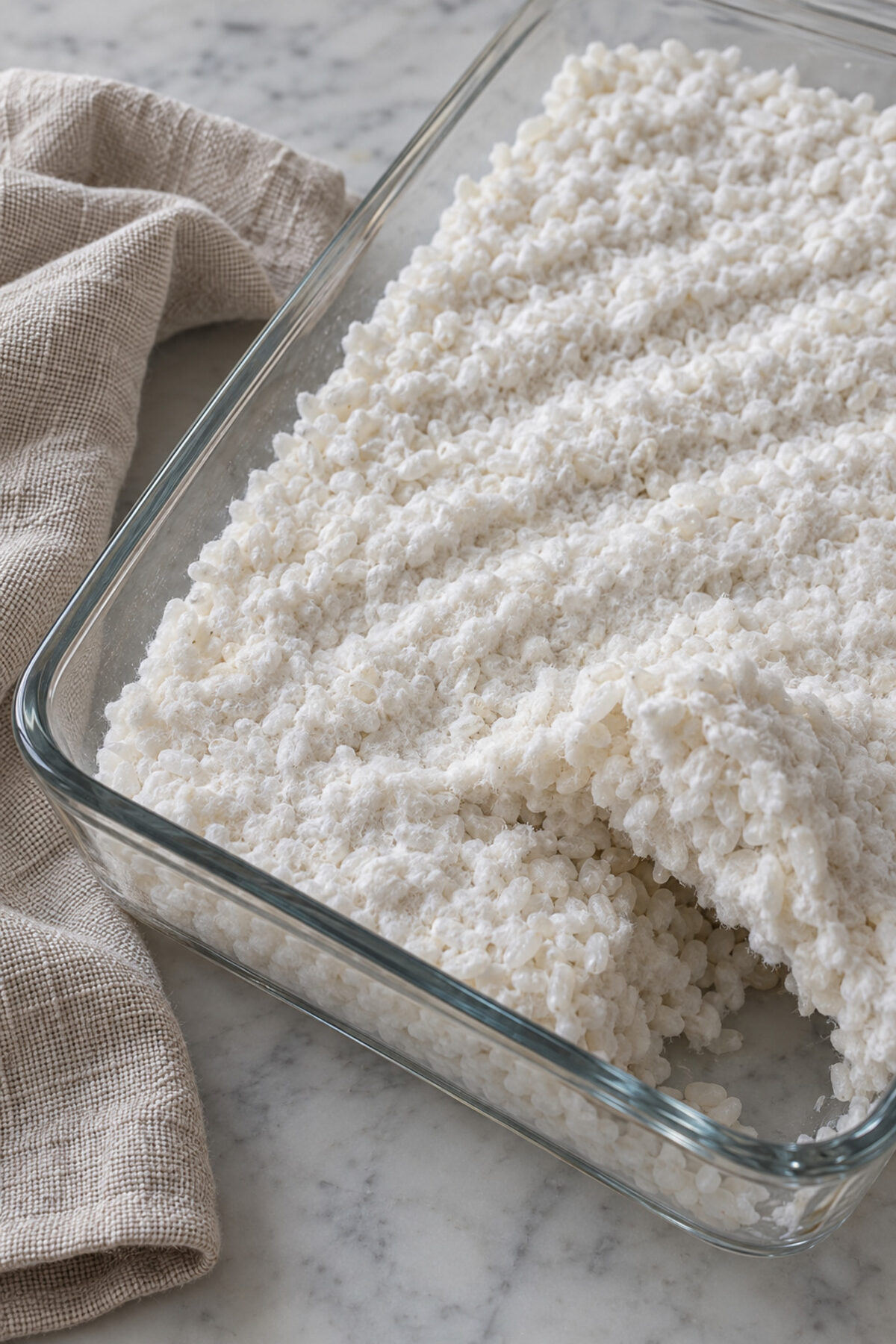
Koji is steamed rice that a mold, Aspergillus oryzae, has grown on. Its enzymes turn starch into sugars and proteins into flavor. Shio means salt in Japanese: shio koji is koji with salt and water, left to mature for a week in a jar. You get a salty, slightly sweet paste full of umami that you use in place of salt. It isn't acidic: the salt is what keeps it, which is why the salt is weighed against the total.
 AI
 AI
AI
How to tell it's going well
- Never less than 10% salt by total weight (our house rule). It takes about 12% for it to keep. Without salt, koji and water go rotten.
- The salt is weighed against everything: koji, water and salt. If you add water, add its salt.
- It isn't acidic (its average pH is 5.2), so pH won't tell you whether it's going well. Salt is what keeps it, leaving little free water for microbes.
- Never above 77 °F while it matures (our house rule). With that much water, the risk of contamination rises at 86 °F.
- A loose lid while it matures, and 7 to 10 days at most out of the fridge.
- Mold of any color, a slimy pink or orange layer, or a rotten smell: throw it all out. In a moist paste, mold reaches inside and can bring bacteria with it. Don't sniff it up close.
- Only store-bought koji, or koji you made yourself from store-bought spores.
- In the fridge for 2 months at most (our house rule).
Where every number comes from
Every number in this recipe comes from a food safety guide. We keep a copy of each source and quote its exact words.
-
1
Shio koji is koji with salt, a seasoning
“The word koji can also be used to describe the final food being formed, such as salt koji, named “shio koji”, which is a flavouring ingredient.”
BC Centre for Disease Control, Environmental Health Services · Safety of Fermented Foods, Section 3.10: Koji foods: miso, soy sauce and amazake (September 2023, updated December 2024) · read on October 25, 2026
-
2
With salt, its water activity drops below 0.85
“Miso and salt koji (with added salt) should have aw of less than 0.85; rice koji without added salt may or”
BC Centre for Disease Control, Environmental Health Services · Safety of Fermented Foods, Section 3.10: Koji foods: miso, soy sauce and amazake (September 2023, updated December 2024) · read on October 25, 2026
-
3
The culture, always store-bought
“Starter culture must be purchased from commercial sources to ensure purity.”
BC Centre for Disease Control, Environmental Health Services · Safety of Fermented Foods, Section 3.10: Koji foods: miso, soy sauce and amazake (September 2023, updated December 2024) · read on October 25, 2026
-
4
At home, dried koji with salt and water, for about a week
“塩麹は家庭において,乾燥麹に食塩と水を加え,約 1 週”
日本調理科学会誌 (Enguchi N., Yukawa N., Nakanishi Y.) · 自家製塩麹のカゼイン分解活性 (Caseinolytic Activity of Homemade Shio-Koji, 2016) · read on October 25, 2026
-
5
About 12% salt so it keeps
“塩麹は保存に耐えうる 12%前後の食塩”
日本調理科学会誌 (Enguchi N., Yukawa N., Nakanishi Y.) · 自家製塩麹のカゼイン分解活性 (Caseinolytic Activity of Homemade Shio-Koji, 2016) · read on October 25, 2026
-
6
Salt stayed at about 11% in the fridge
“The salt concentration of the shio-koji was maintained at about 11% during the entire storage period.”
日本調理科学会誌 (Enguchi N., Yukawa N., Nakanishi Y.) · 自家製塩麹のカゼイン分解活性 (Caseinolytic Activity of Homemade Shio-Koji, 2016) · read on October 25, 2026
-
7
Without salt, the koji and water smelled rotten
“この間腐敗臭を確認したの”
日本調理科学会誌 (Enguchi N., Yukawa N., Nakanishi Y.) · 自家製塩麹のカゼイン分解活性 (Caseinolytic Activity of Homemade Shio-Koji, 2016) · read on October 25, 2026
-
8
50 g dried koji, 75 ml water and 15 g salt
“に乾燥米麹 50 g と 60℃に冷ました純水 75 ml に NaCl 15 g”
日本調理科学会誌 (Enguchi N., Yukawa N., Nakanishi Y.) · 自家製塩麹のカゼイン分解活性 (Caseinolytic Activity of Homemade Shio-Koji, 2016) · read on October 25, 2026
Show the remaining 11 claims
-
9
7 days, stirred once a day
“整した恒温器中に 7 日間置き,1 日 1 回撹拌操作を行って”
日本調理科学会誌 (Enguchi N., Yukawa N., Nakanishi Y.) · 自家製塩麹のカゼイン分解活性 (Caseinolytic Activity of Homemade Shio-Koji, 2016) · read on October 25, 2026
-
10
Once ready, into the fridge
“熟成完了後は冷蔵庫(6℃)に保存した。”
日本調理科学会誌 (Enguchi N., Yukawa N., Nakanishi Y.) · 自家製塩麹のカゼイン分解活性 (Caseinolytic Activity of Homemade Shio-Koji, 2016) · read on October 25, 2026
-
11
Followed for 2 months in the fridge
“however, after 2 months of refrigeration, the same level of activity was maintained.”
日本調理科学会誌 (Enguchi N., Yukawa N., Nakanishi Y.) · 自家製塩麹のカゼイン分解活性 (Caseinolytic Activity of Homemade Shio-Koji, 2016) · read on October 25, 2026
-
12
Average pH of 5.2, so it isn't acidic
“pH は平均 5.2 程度で”
日本食品科学工学会誌 (Maehashi K., Ohto A., Yamamoto T., Asari M., Kashiwagi Y.) · 塩麹製造での熟成温度が残存酵素活性に及ぼす影響 (Effect of Temperature on Enzymatic Stability in Shio-Koji During the Maturation Process, 2015) · read on October 25, 2026
-
13
Store-bought, 8% to 13% salt
“ンプル G と J や極端に高いサンプル H を除いて 8∼13 %”
日本食品科学工学会誌 (Maehashi K., Ohto A., Yamamoto T., Asari M., Kashiwagi Y.) · 塩麹製造での熟成温度が残存酵素活性に及ぼす影響 (Effect of Temperature on Enzymatic Stability in Shio-Koji During the Maturation Process, 2015) · read on October 25, 2026
-
14
At home, 7 to 10 days at room temperature
“一般家庭での塩麹作りは常温で 7 日間∼10 日間かけて”
日本食品科学工学会誌 (Maehashi K., Ohto A., Yamamoto T., Asari M., Kashiwagi Y.) · 塩麹製造での熟成温度が残存酵素活性に及ぼす影響 (Effect of Temperature on Enzymatic Stability in Shio-Koji During the Maturation Process, 2015) · read on October 25, 2026
-
15
With that much water, the risk of contamination rises at 86 °F
“よりも水分量が多いため,室温や 30℃で熟成させると微生”
日本食品科学工学会誌 (Maehashi K., Ohto A., Yamamoto T., Asari M., Kashiwagi Y.) · 塩麹製造での熟成温度が残存酵素活性に及ぼす影響 (Effect of Temperature on Enzymatic Stability in Shio-Koji During the Maturation Process, 2015) · read on October 25, 2026
-
16
Industry makes up for it with alcohol or other preservatives
“物汚染の危険性が高くなりアルコール等の保存料が必要と”
日本食品科学工学会誌 (Maehashi K., Ohto A., Yamamoto T., Asari M., Kashiwagi Y.) · 塩麹製造での熟成温度が残存酵素活性に及ぼす影響 (Effect of Temperature on Enzymatic Stability in Shio-Koji During the Maturation Process, 2015) · read on October 25, 2026
-
17
The percentage is by the weight of all ingredients
“Calculations of percent amounts to add are based on the weight of all ingredients.”
BC Centre for Disease Control, Environmental Health Services · Safety of Fermented Foods, Section 2: Starter cultures and fermented food standards (August 2024, updated December 2024) · read on October 25, 2026
-
18
In moist foods, mold reaches inside and brings bacteria
“Foods with high moisture content can be contaminated below the surface. Moldy foods may also have bacteria growing along with the mold.”
USDA Food Safety and Inspection Service · Molds on Food: Are They Dangerous? · read on October 20, 2026
-
19
Don't sniff mold
“Don't sniff the moldy item. This can cause respiratory trouble.”
USDA Food Safety and Inspection Service · Molds on Food: Are They Dangerous? · read on October 20, 2026