 AI
Ginger bug
Level 1 · beginner
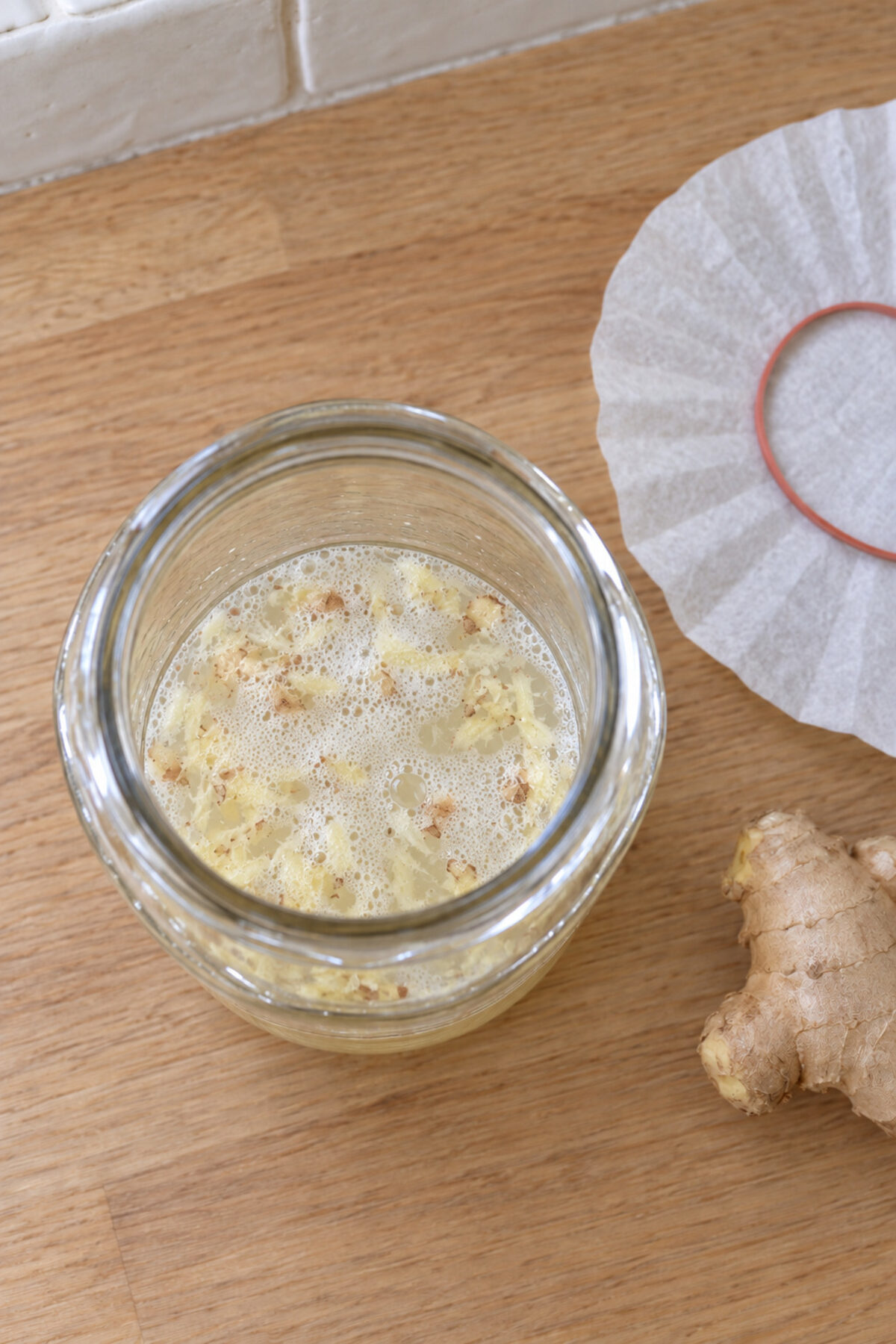
Grated ginger, sugar and water, fed every day. Once it bubbles and smells sour, it's the starter for ginger beer.
- Time
- 3–7days
- Temperature
- 68–86°F
- Jar
- 0.5L
The golden rule: if it isn't bubbling after seven days, or mold shows, throw it out and start again.
No sign-up. We guide you step by step, from the scale to the fridge.
Reviewed October 26, 2026 · 20 facts, each with its source
You'll need
- Half-liter glass jar (about 1 pint)
- Clean cloth or coffee filter, plus a rubber band
- Grater
- Clean spoon
- Kitchen scale that weighs to the gram
- pH strips (optional)
Step by step
-
Grate the ginger and mix it with the sugar and water
Wash the jar and spoon in hot soapy water and rinse them well. Rinse the ginger without scrubbing it, and don't peel it: scrubbing can remove the good bacteria it needs to ferment. Grate 4.8 g and put it in the jar with 10 g of sugar and 160 ml of water. Stir until the sugar dissolves.
Tip: Use filtered or spring water: tap water usually contains chlorine. Never use distilled water.
-
Cover the jar with a cloth and keep it somewhere warm
Cover the mouth with a clean cloth or a coffee filter and secure it with a rubber band. Keep it at 68–86 °F. Write down the date: today is day 0.
Tip: The 68–86 °F range is a house rule: no source gives a temperature for a ginger bug.
-
Feed it every day
Every day, at about the same time, add 10 g of sugar and 3 g of grated ginger, and stir. In the study, it was fed this way three days in a row. Keep going until it's ready: 3 to 7 days, by our house rule.
Tip: For the first few days it barely moves and the ginger floats. That's normal.
-
Check whether it's ready
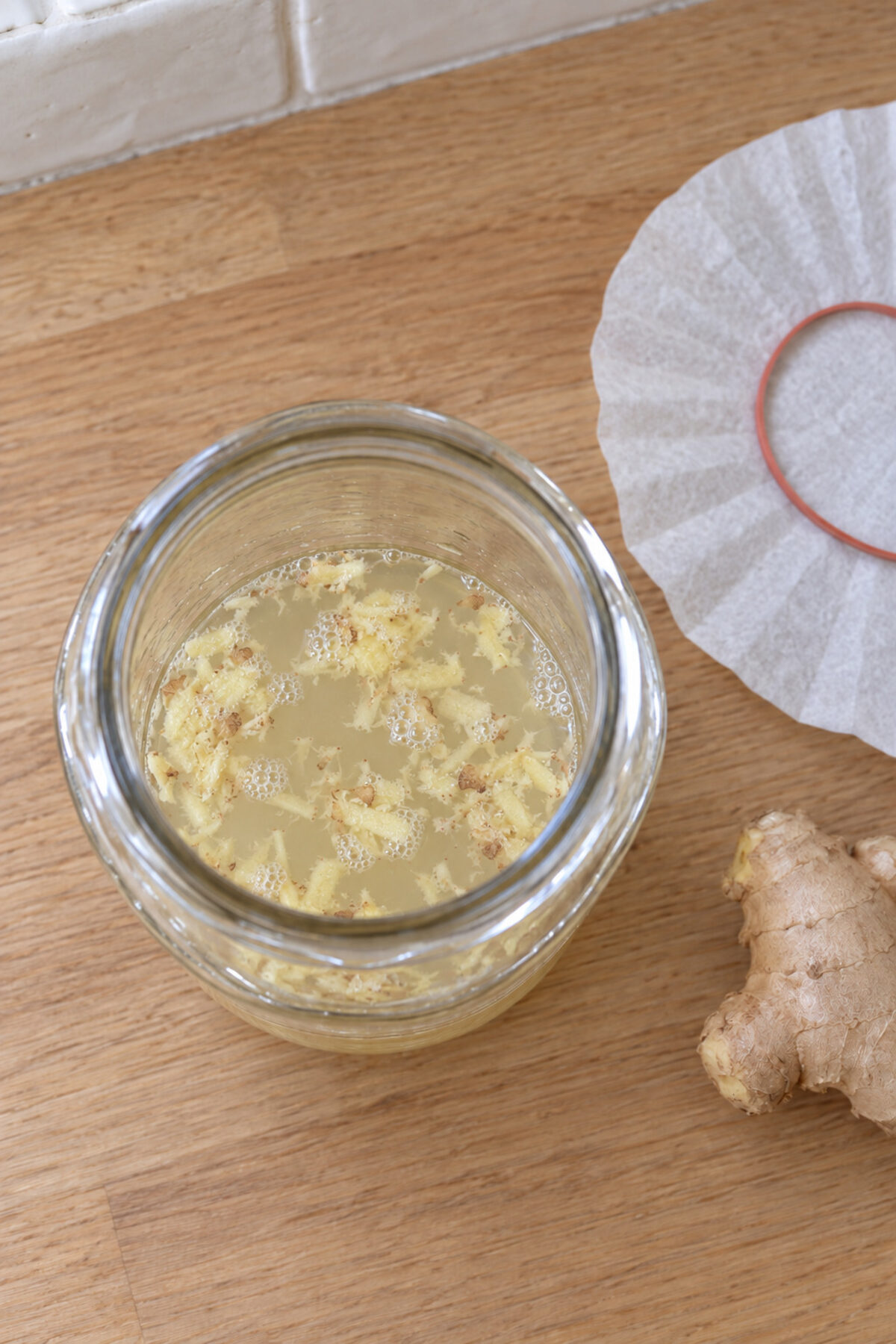
It's ready when it bubbles as you stir it, smells yeasty and sour, and looks a little cloudy. If you have pH strips, they should read 4.0 or below. That's the figure asked of a kombucha starter; here it's a house rule. If it isn't bubbling or smelling sour by day 7, throw it out and start over.
Tip: A thin white film on the surface is usually kahm yeast: skim it off and keep an eye on it. Fuzz or colored spots are mold: throw it out.
-
Use it, or keep it in the fridge
For ginger beer, strain 125 ml for every liter of water in the brew. If you won't use it right away, keep it in the fridge under the cloth or with the lid loose, and feed it once a week. Take it out and feed it the day before you use it.
Tip: Keeping it this way is a house rule: no source has studied it.
No sign-up. We guide you step by step, from the scale to the fridge.
Variations
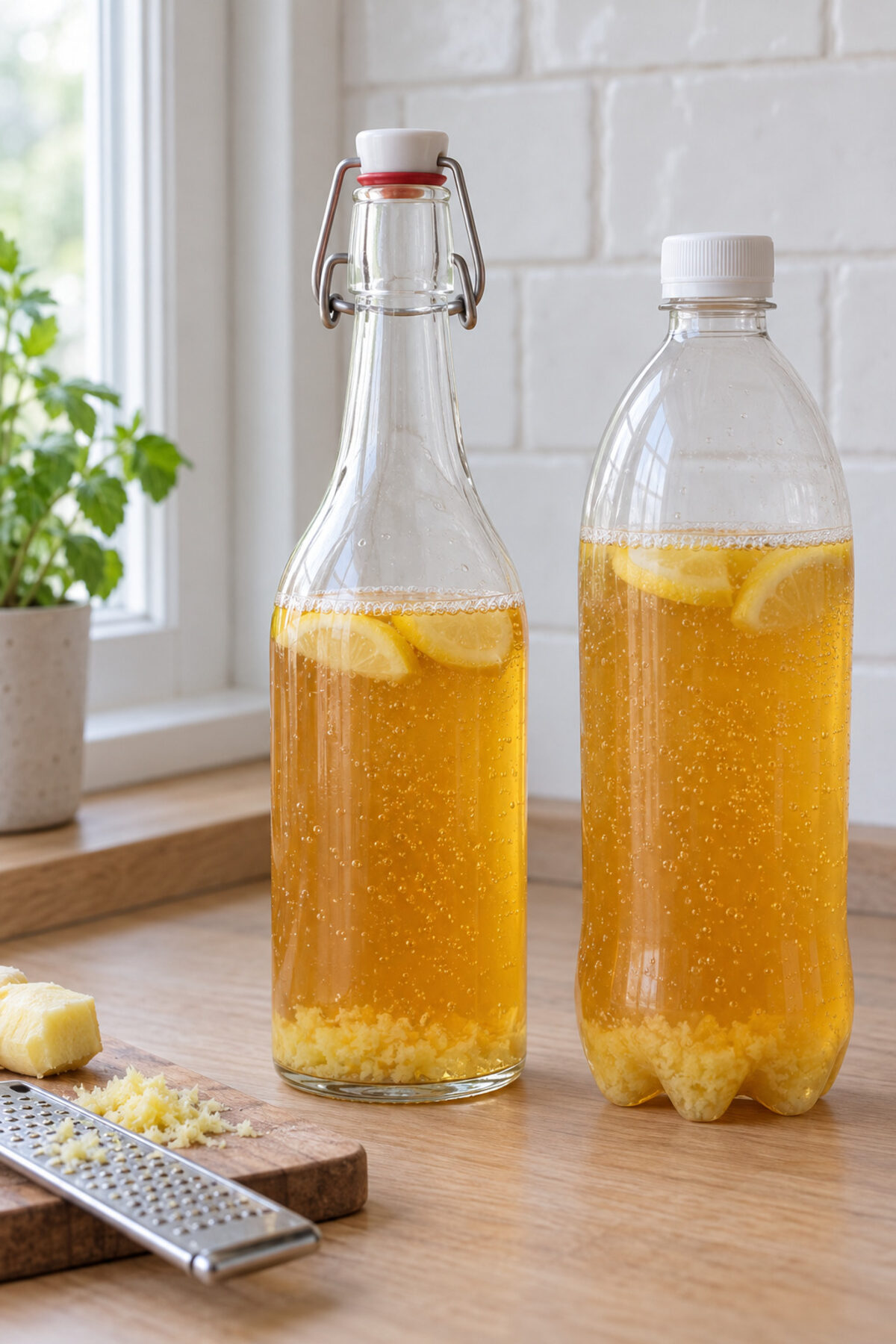
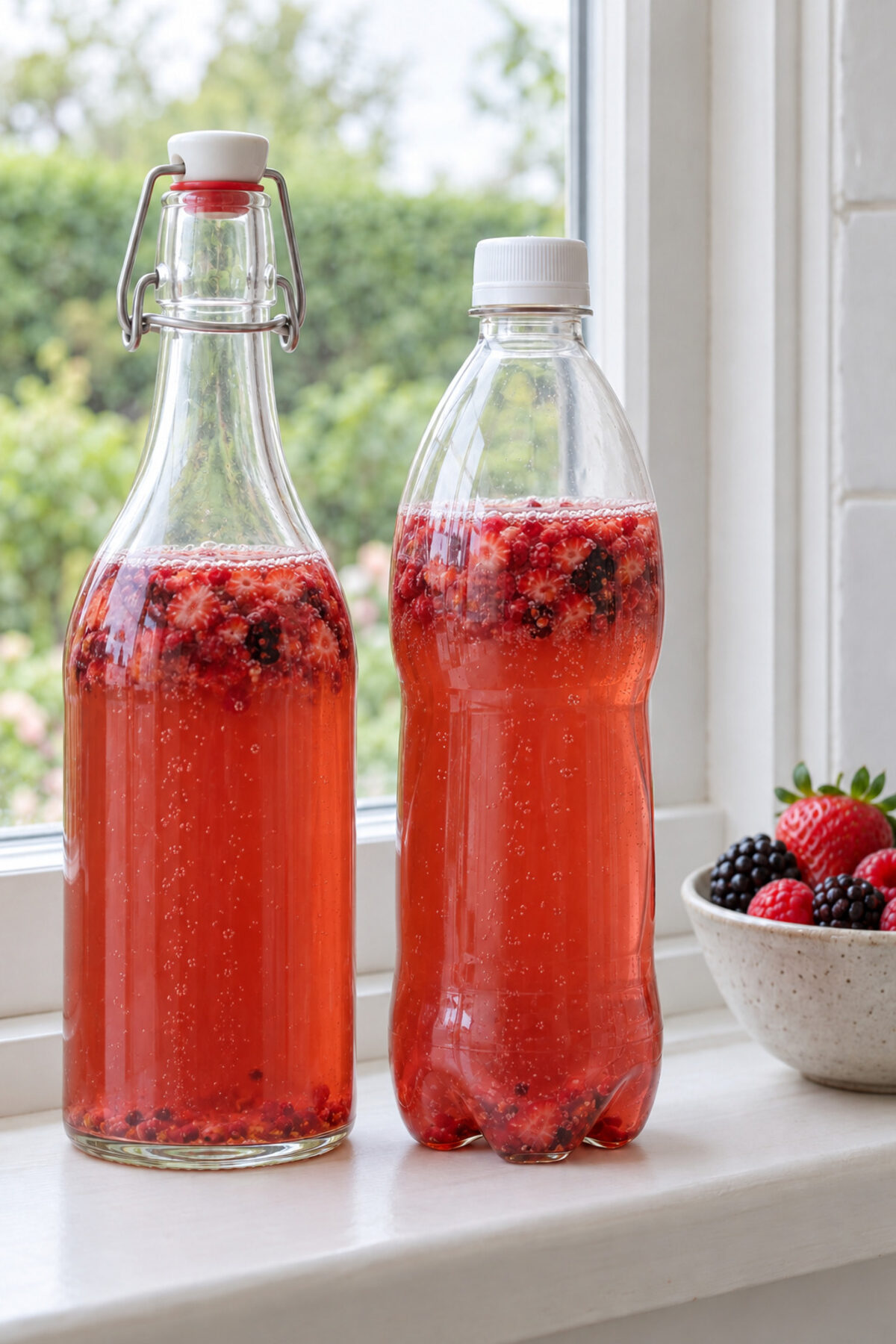
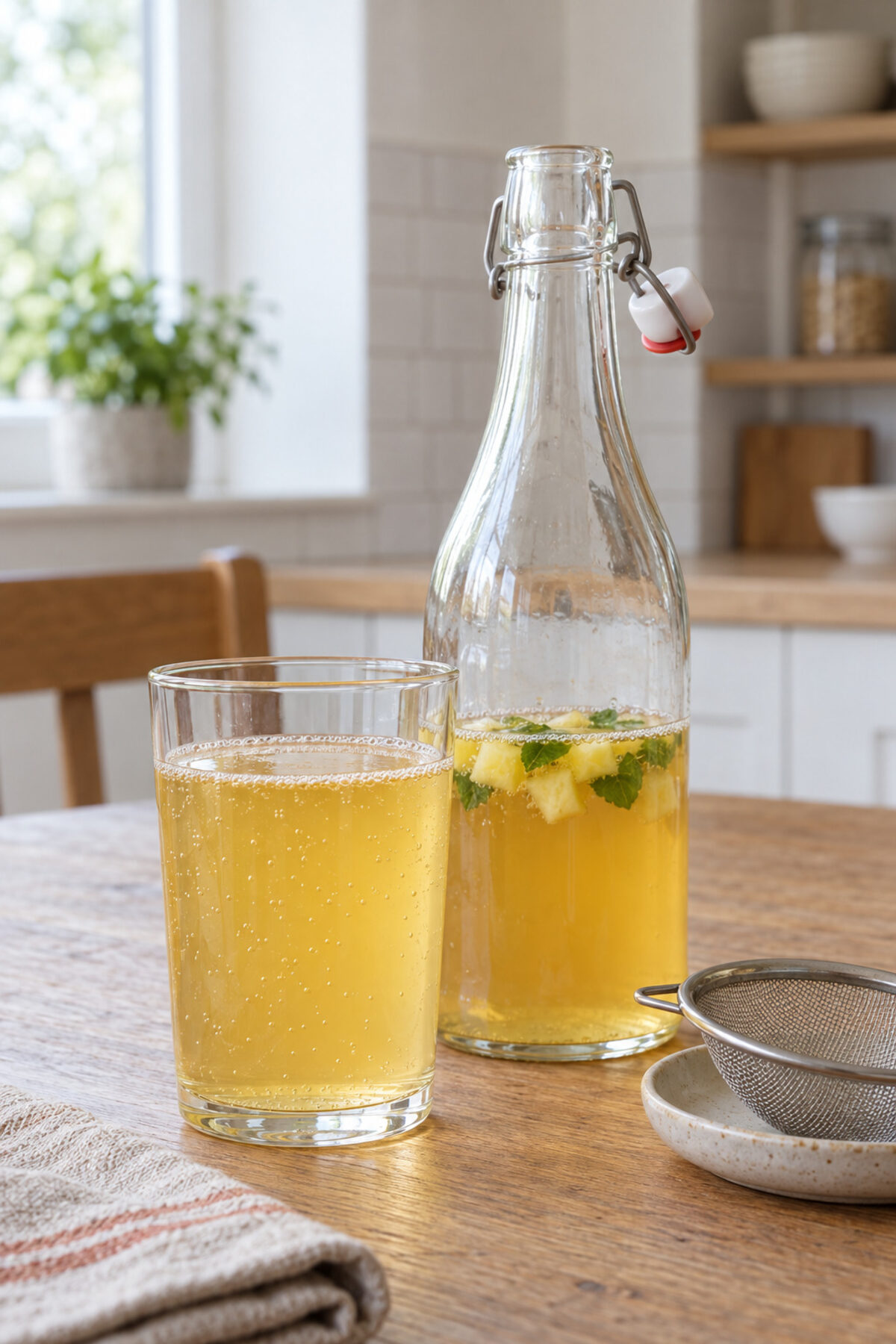
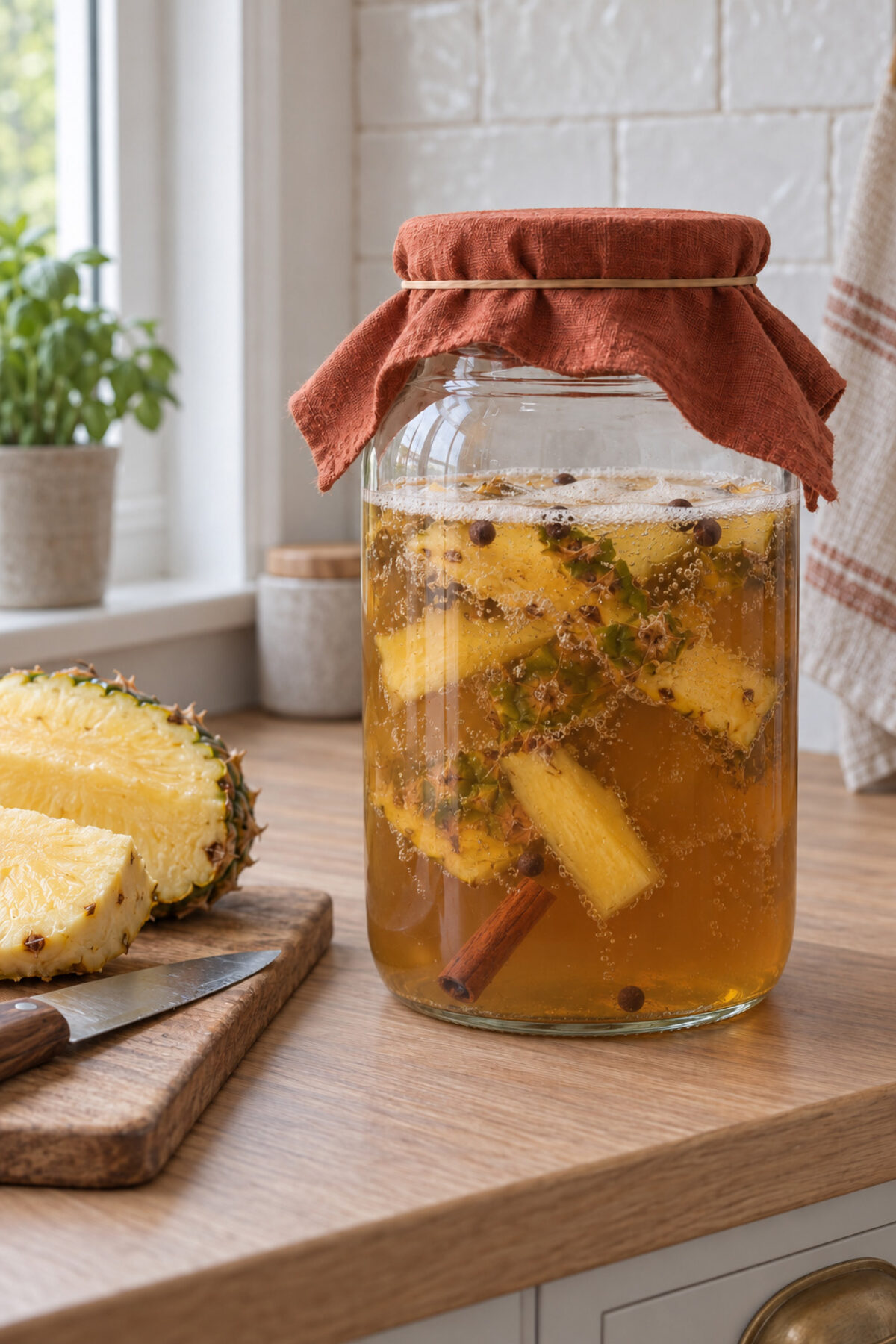
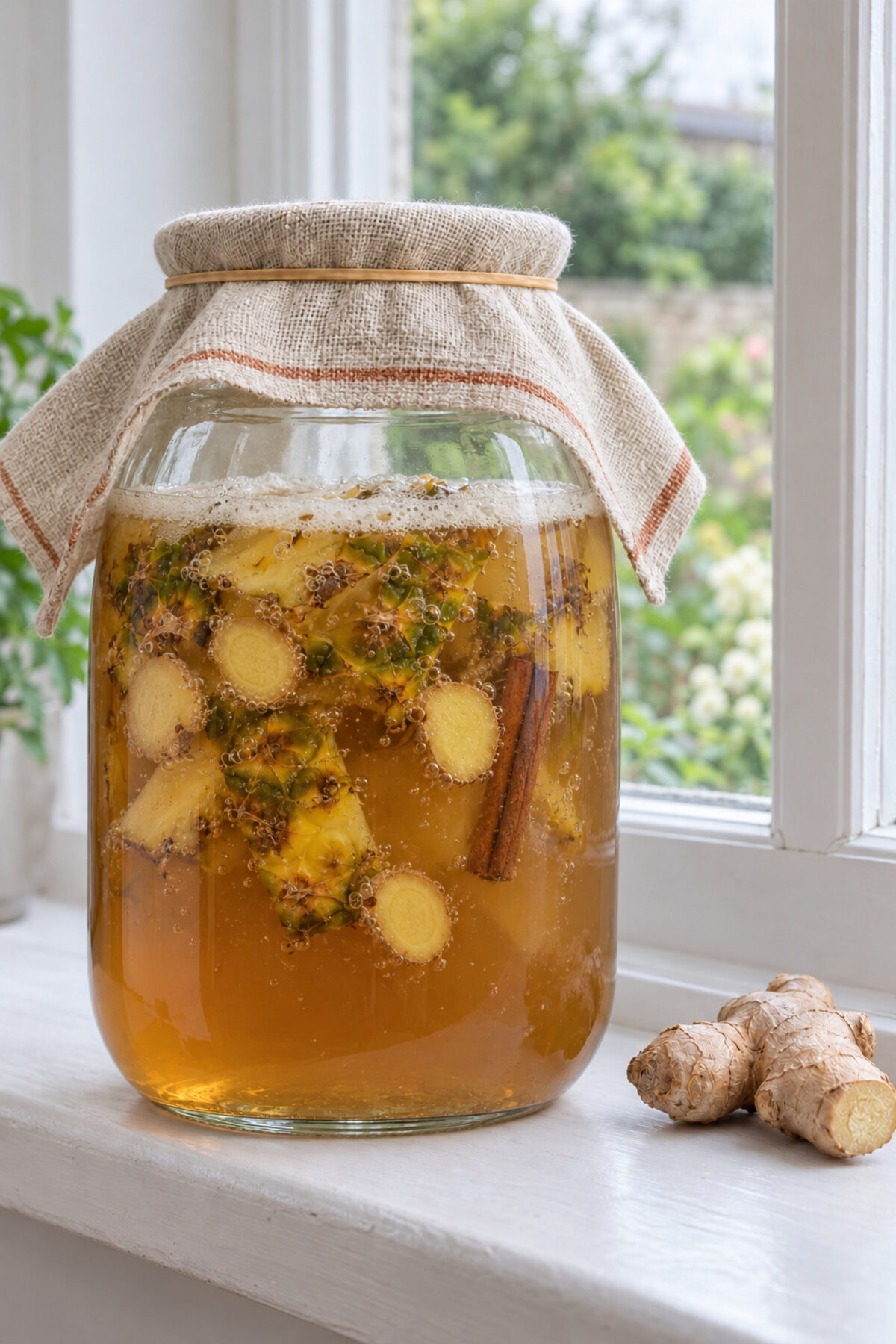
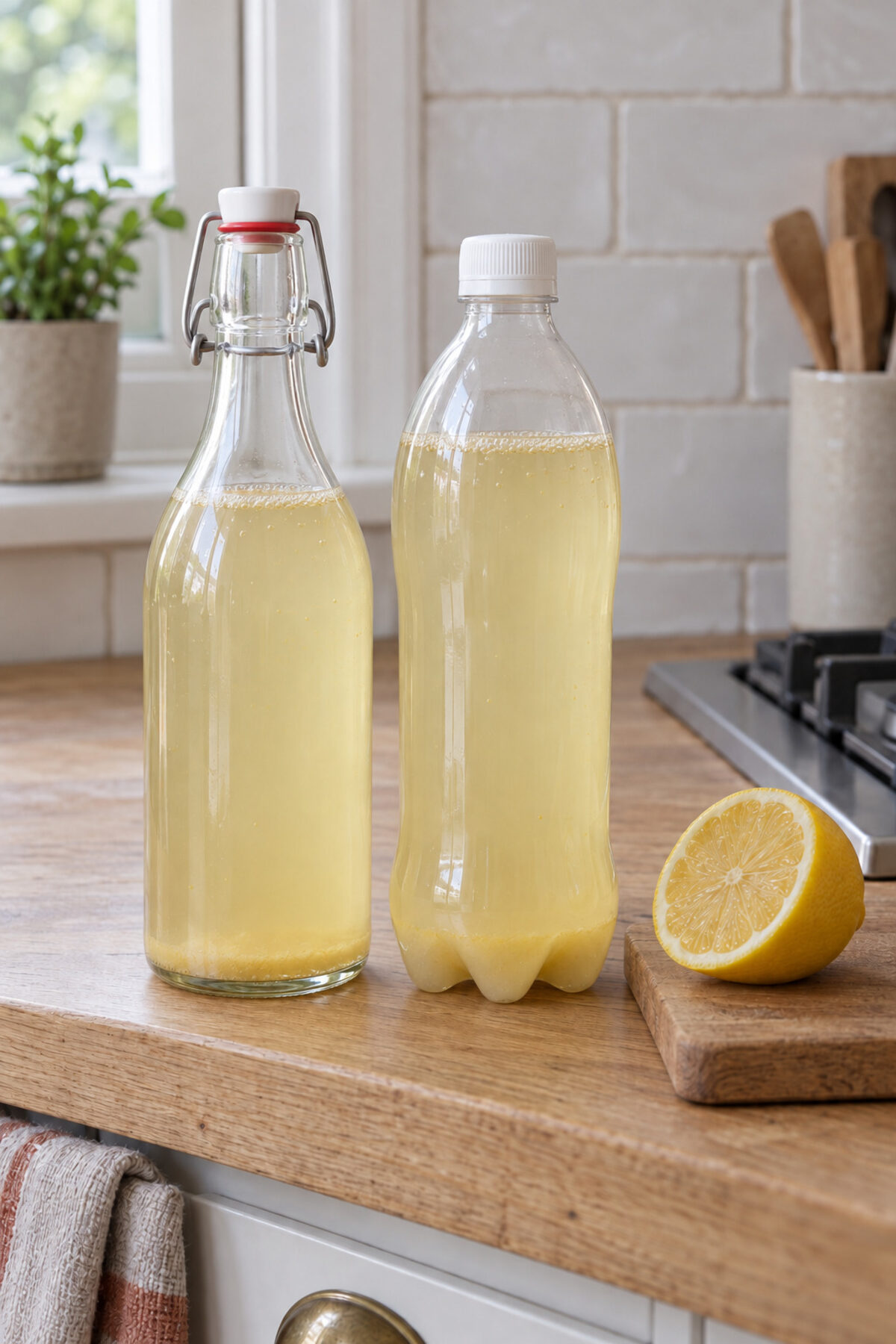
The same method, a different flavor. Once you have this one down, try one of these.
What you'll see
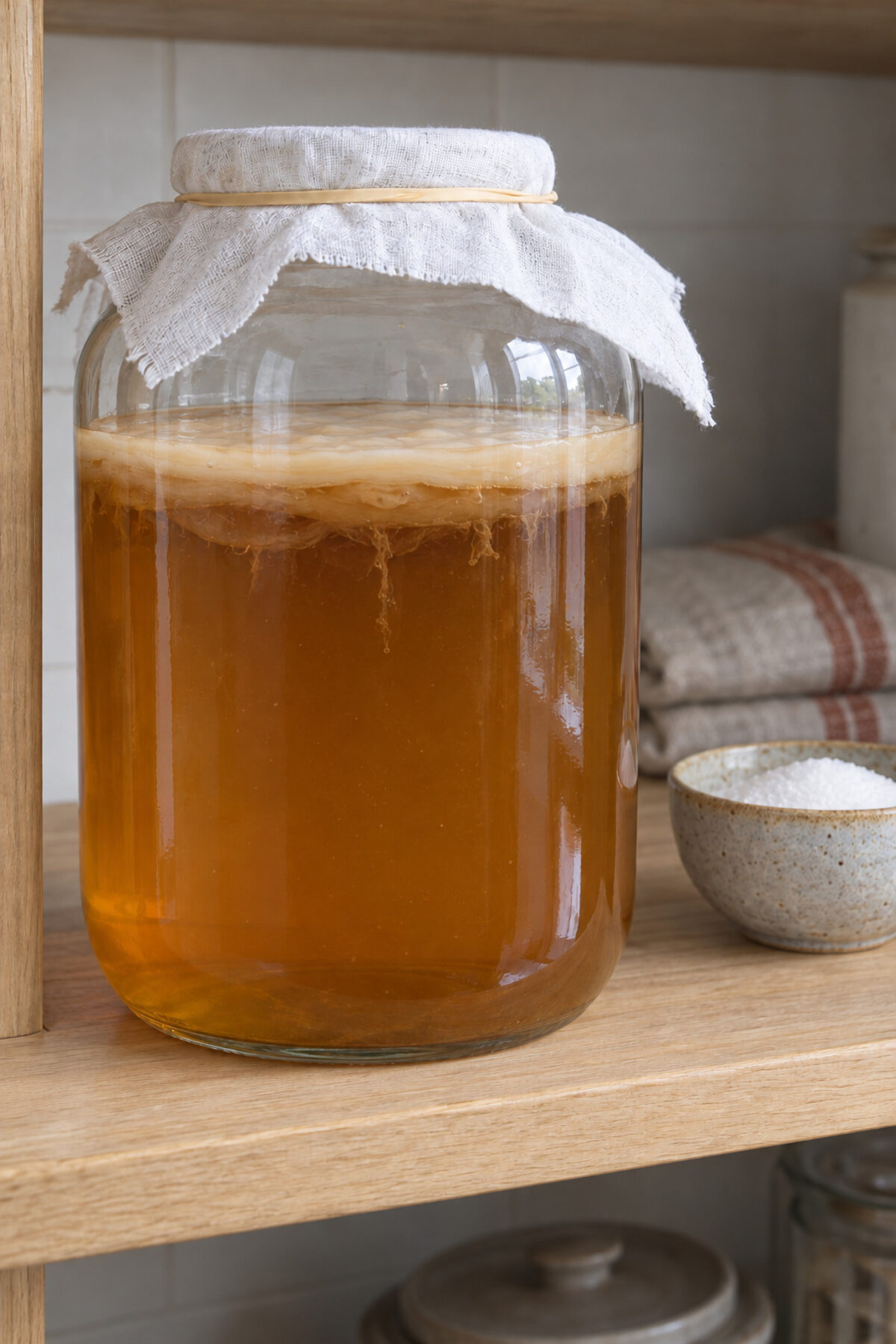
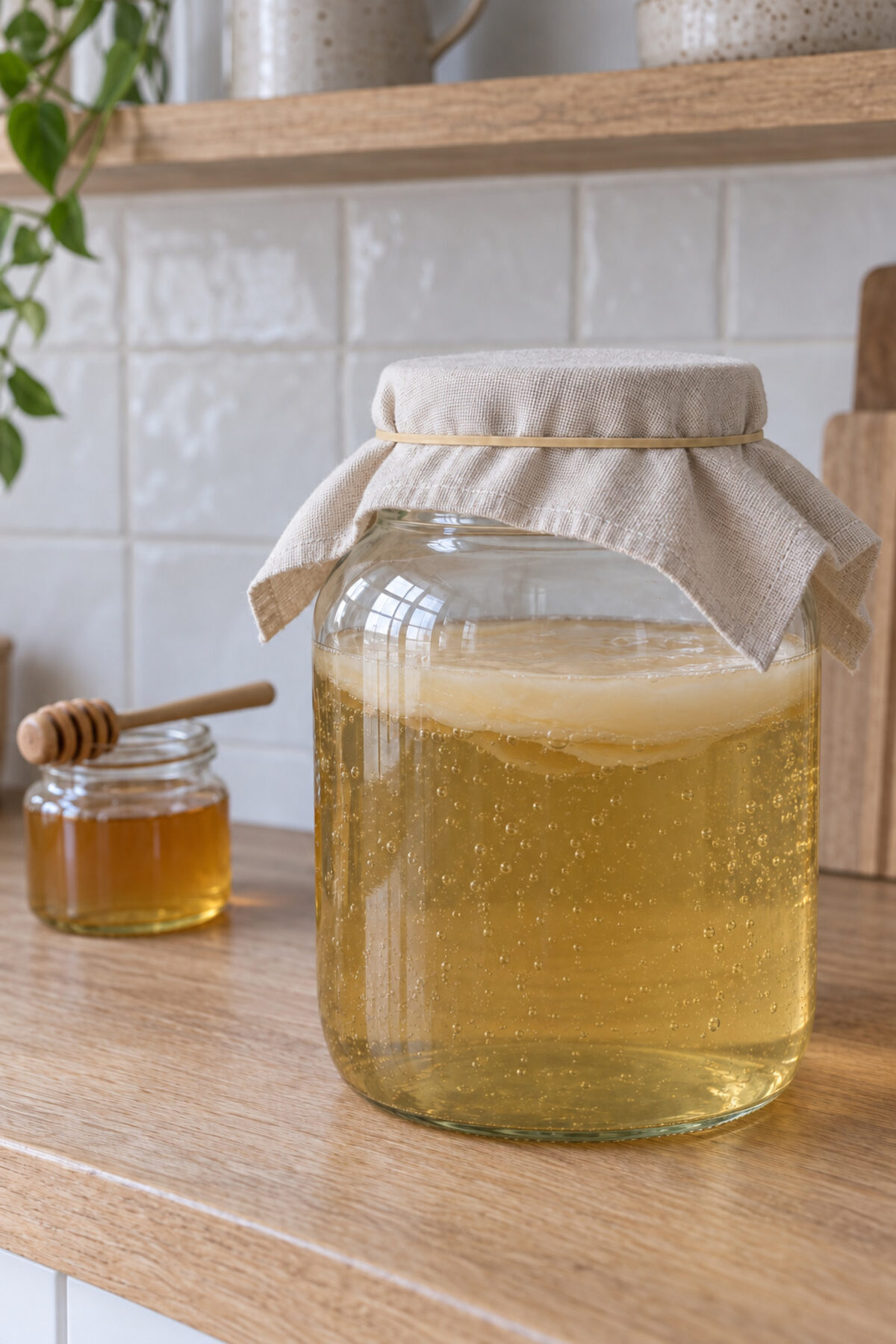
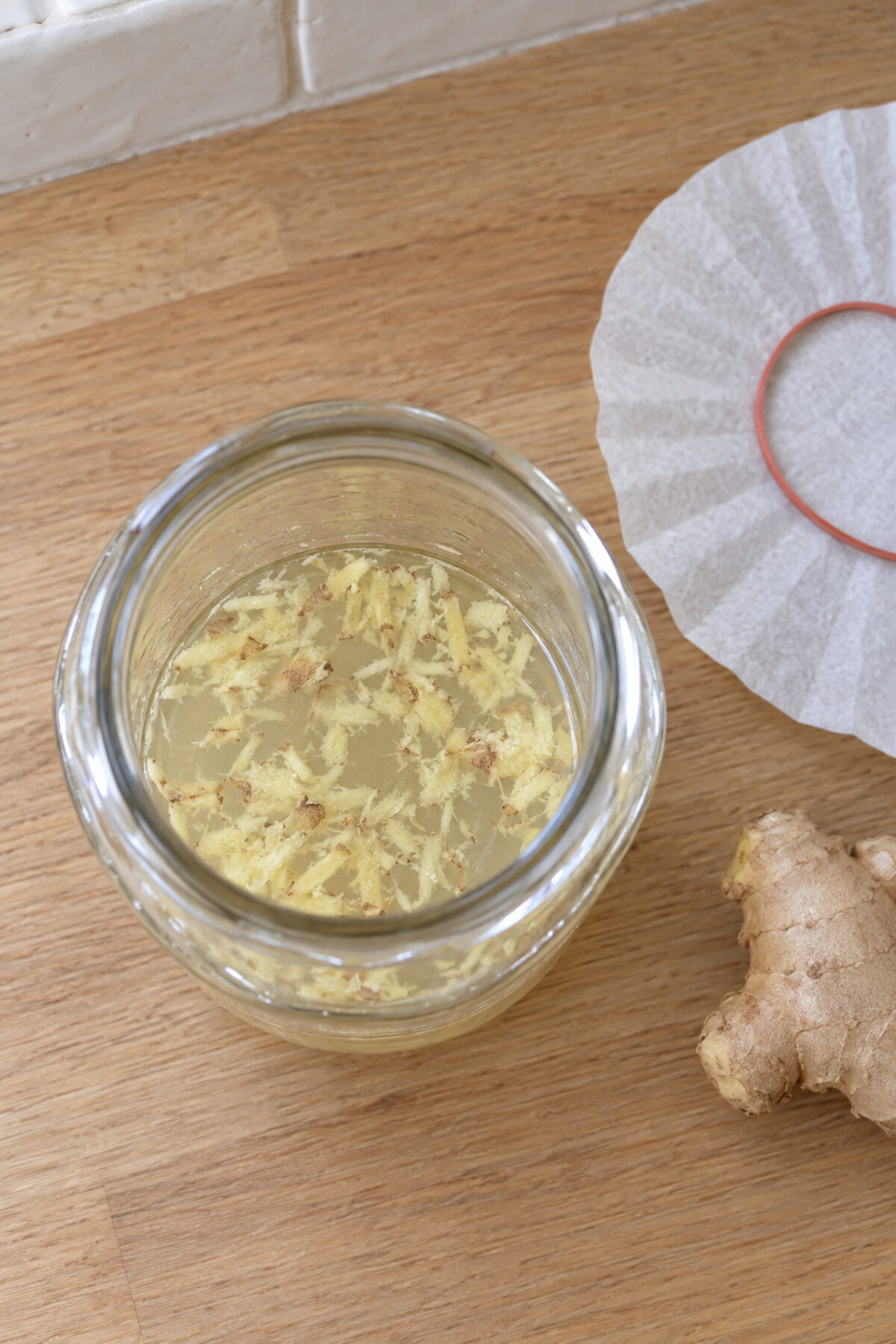
A ginger bug is a culture of the microbes native to ginger. You make it with grated ginger, sugar and water, and feed it every day until it bubbles. It's the starter for ginger beer. Ginger isn't acidic, so everything depends on the bug getting going: in one study, ginger beer made with a bug dropped to pH 3.12 in five days, while the batch without one stayed at 4.09. No food safety agency publishes guidance on ginger bugs. The amounts come from that study; the days, the temperature and the pH are house rules.
 AI
 AI
AI
How to tell it's going well
- If mold appears, throw out the whole thing. Mold is usually green, blue, brown or black, and it can't be scooped out.
- If it isn't bubbling or smelling sour by day 7, throw it out. This is a house rule, using the same window BCCDC gives fermented vegetables to turn acidic. Don't use it for ginger beer.
- A white, gray or pink film is usually kahm yeast. Skim it off and keep an eye on it.
- A putrid smell: throw it out. The ferment has failed.
- With pH strips, 4.0 or below before you use it (house rule). Ginger has a pH of 5.6–5.9: if the bug doesn't turn acidic, the ginger beer won't either.
- Between uses, keep it in the fridge, fed once a week (house rule).
Where every number comes from
Every number in this recipe comes from a food safety guide. We keep a copy of each source and quote its exact words.
-
1
A culture of the microbes native to ginger
“which is a fermented culture of microorganisms native to ginger”
Revista de Ciências Agroveterinárias (UDESC; Alencar et al., Federal University of Amazonas) · Kinetic and sensory analysis of ginger beer produced by diversified fermentation methods (v.24 n.3, 2025) · read on October 25, 2026
-
2
To start, 10 g of sugar, 160 ml of water and 4.8 g of ginger
“Ginger bug Sugar Water Ginger Initial quantity 10 g 160 mL 4.8 g”
Revista de Ciências Agroveterinárias (UDESC; Alencar et al., Federal University of Amazonas) · Kinetic and sensory analysis of ginger beer produced by diversified fermentation methods (v.24 n.3, 2025) · read on October 25, 2026
-
3
Every day, 10 g of sugar and 3 g of ginger, three days in a row
“it was fed daily with 10 g of sugar and 3 g of ginger for three consecutive days”
Revista de Ciências Agroveterinárias (UDESC; Alencar et al., Federal University of Amazonas) · Kinetic and sensory analysis of ginger beer produced by diversified fermentation methods (v.24 n.3, 2025) · read on October 25, 2026
-
4
With a bug, ginger beer dropped to pH 3.12 by day 5
“on the 5th day of fermentation in the group with ginger bug, a sharp drop to approximately 3.12 was observed”
Revista de Ciências Agroveterinárias (UDESC; Alencar et al., Federal University of Amazonas) · Kinetic and sensory analysis of ginger beer produced by diversified fermentation methods (v.24 n.3, 2025) · read on October 25, 2026
-
5
Without a bug, it stayed at pH 4.09 at the end of the study
“the group without the addition of ginger bug maintained a higher pH, around 4.09, on the last day of kinetic analysis”
Revista de Ciências Agroveterinárias (UDESC; Alencar et al., Federal University of Amazonas) · Kinetic and sensory analysis of ginger beer produced by diversified fermentation methods (v.24 n.3, 2025) · read on October 25, 2026
-
6
Ginger has a pH of 5.6–5.9
“Ginger 5.60 - 5.90”
U.S. FDA, CFSAN (copy hosted by RiverStone Health, Yellowstone County public health department) · Approximate pH of Foods and Food Products (April 2007) · read on October 25, 2026
-
7
Everything washed in hot soapy water and rinsed well
“Wash all surfaces and containers that will be used with hot sudsy water and rinse well before use.”
K-State Research and Extension (Kansas State University) · Taking a New Look at Fermented Foods (MF3491, June 2020) · read on October 20, 2026
-
8
Don't scrub, so the good bacteria stay on
“Do not scrub the produce, as you may remove the good bacteria needed for fermentation.”
University of Minnesota Extension · Preserving food at home: Fermentation (reviewed 2026) · read on October 25, 2026
Show the remaining 12 claims
-
9
Best left unpeeled
“Avoid peeling the produce.”
University of Minnesota Extension · Preserving food at home: Fermentation (reviewed 2026) · read on October 25, 2026
-
10
Filtered or spring water is best
“Filtered water or spring water are preferred.”
University of Illinois Extension · Fermentation handout (2020) · read on October 20, 2026
-
11
Tap water usually contains chlorine
“Tap water usually contains chlorine, chloramines and fluoride that must be removed before culturing.”
University of Illinois Extension · Fermentation handout (2020) · read on October 20, 2026
-
12
Never distilled water
“Do not use distilled water.”
University of Illinois Extension · Fermentation handout (2020) · read on October 20, 2026
-
13
Kombucha starter at pH 4.0 or below
“Verify that the starter liquid has a pH of ≤ 4.0.”
University of Georgia Cooperative Extension (National Center for Home Food Preservation) · Crafting Kombucha at Home: Frequently Asked Questions (2026) · read on October 20, 2026
-
14
For vegetables, if the pH doesn't reach 4.6 within a week, throw it out
“If pH has not dropped to 4.6 within one week consider this a failed fermentation and discard product.”
BC Centre for Disease Control, Environmental Health Services · Safety of Fermented Foods, Section 3.1: Fermented Vegetables (August 2024, updated December 2024) · read on October 25, 2026
-
15
If there's mold, throw out the whole thing
“If you confirm mold growth on any part of a ferment, it should be immediately discarded.”
UC Davis, Department of Food Science and Technology · Common issues with fermented fruits and vegetables (v1.0, 15-mar-2022) · read on October 20, 2026
-
16
Mold is usually green, blue, brown or black
“Mold is typically green, blue, brown, or black in color.”
UC Davis, Department of Food Science and Technology · Common issues with fermented fruits and vegetables (v1.0, 15-mar-2022) · read on October 20, 2026
-
17
A white, gray or pink film may form
“White, grey, or pink films may form on the surface of fermenting fruits or vegetables.”
UC Davis, Department of Food Science and Technology · Common issues with fermented fruits and vegetables (v1.0, 15-mar-2022) · read on October 20, 2026
-
18
That film is usually kahm yeast
“This film is typically yeast, often referred to by home fermenters as Kahm yeast.”
UC Davis, Department of Food Science and Technology · Common issues with fermented fruits and vegetables (v1.0, 15-mar-2022) · read on October 20, 2026
-
19
A putrid smell means the ferment failed
“A putrid smell indicates a failed fermentation.”
UC Davis, Department of Food Science and Technology · Common issues with fermented fruits and vegetables (v1.0, 15-mar-2022) · read on October 20, 2026
-
20
Mold can't be scooped out
“The mold cannot be scooped out, as the roots will still be in your food and could make you sick.”
Ask Extension (Clackamas County Extension, Oregon State University) · Pickle/olive brine surface mold spots #889210 · read on October 20, 2026