 AI
Water kefir
Level 1 · beginner
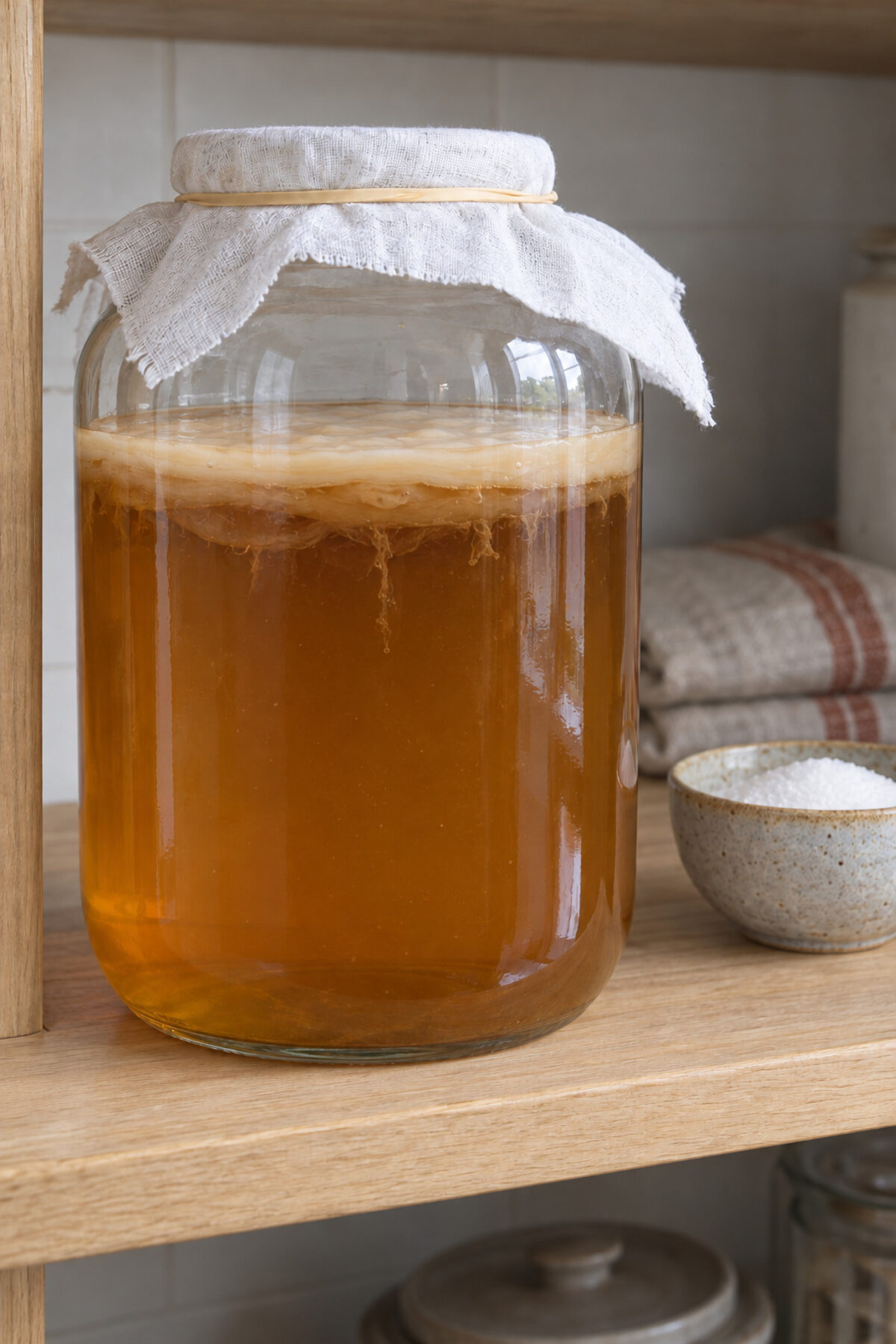
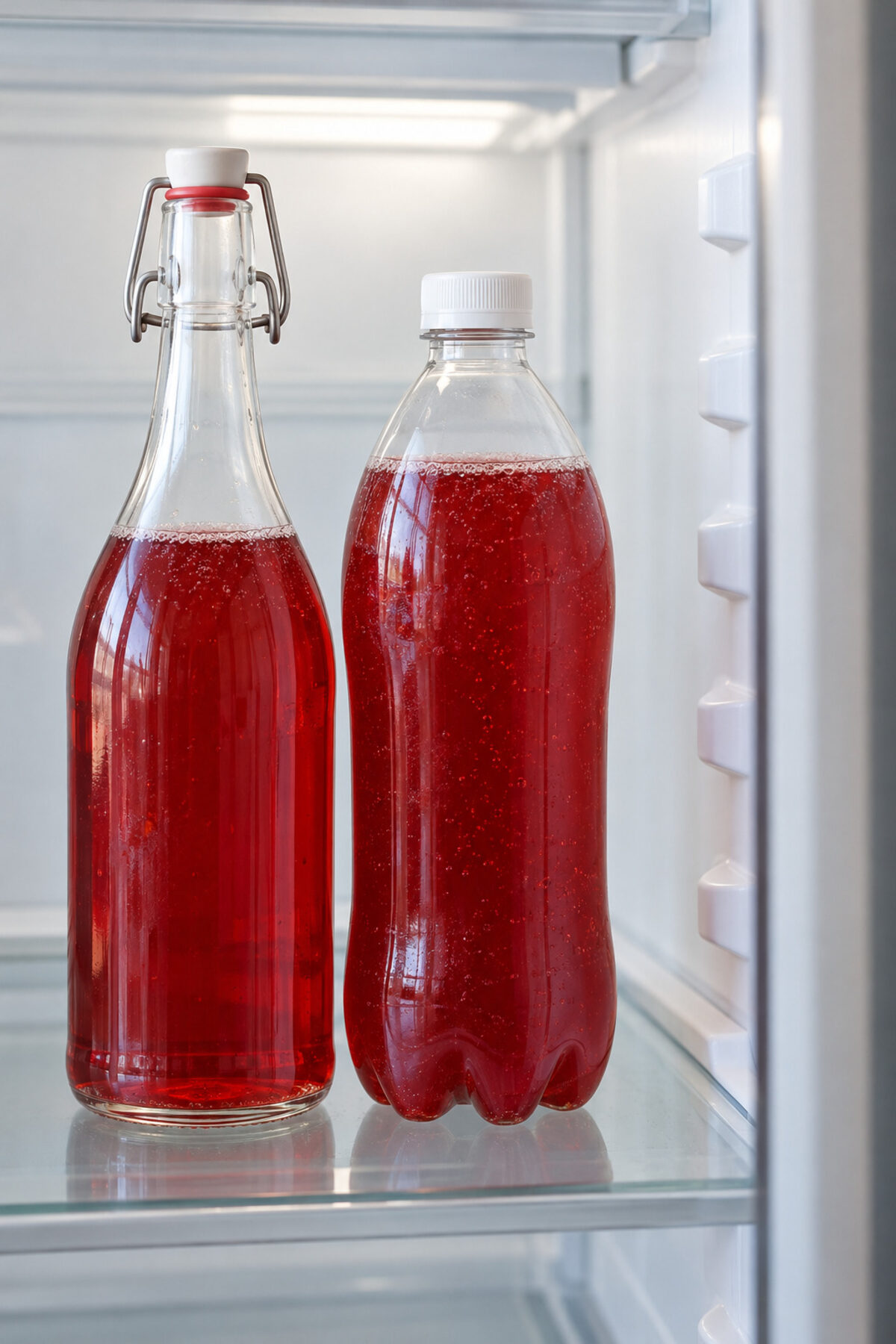
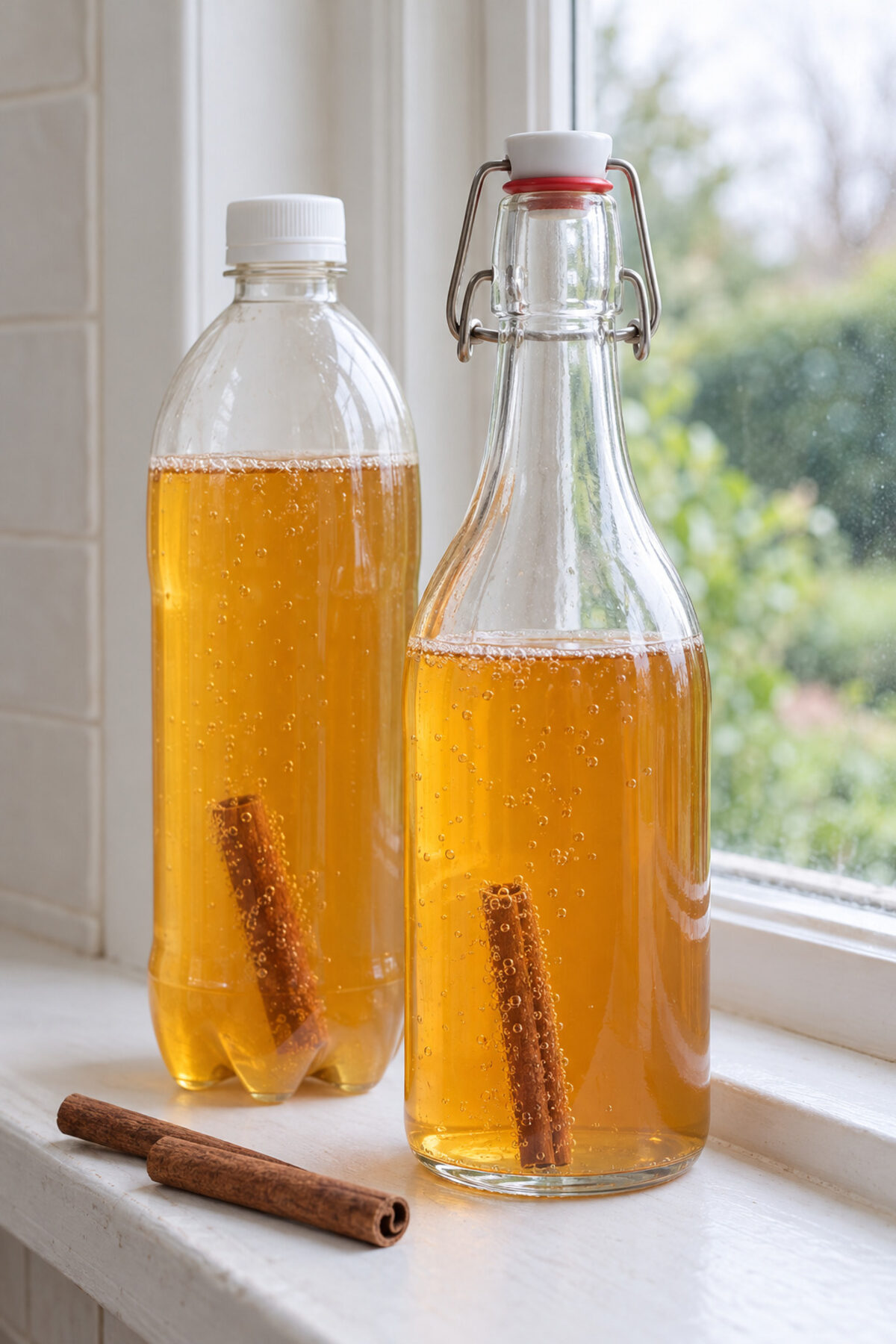
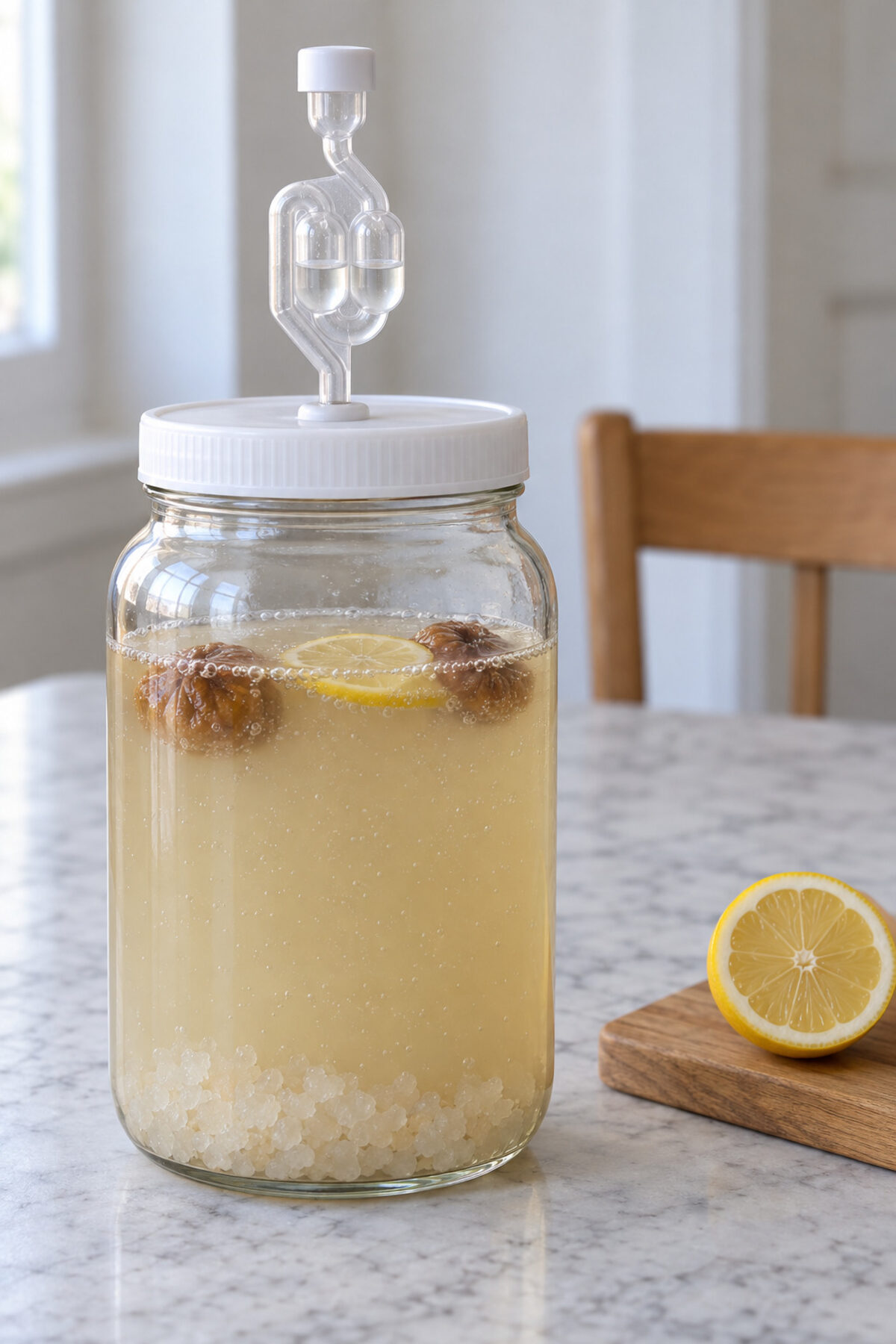
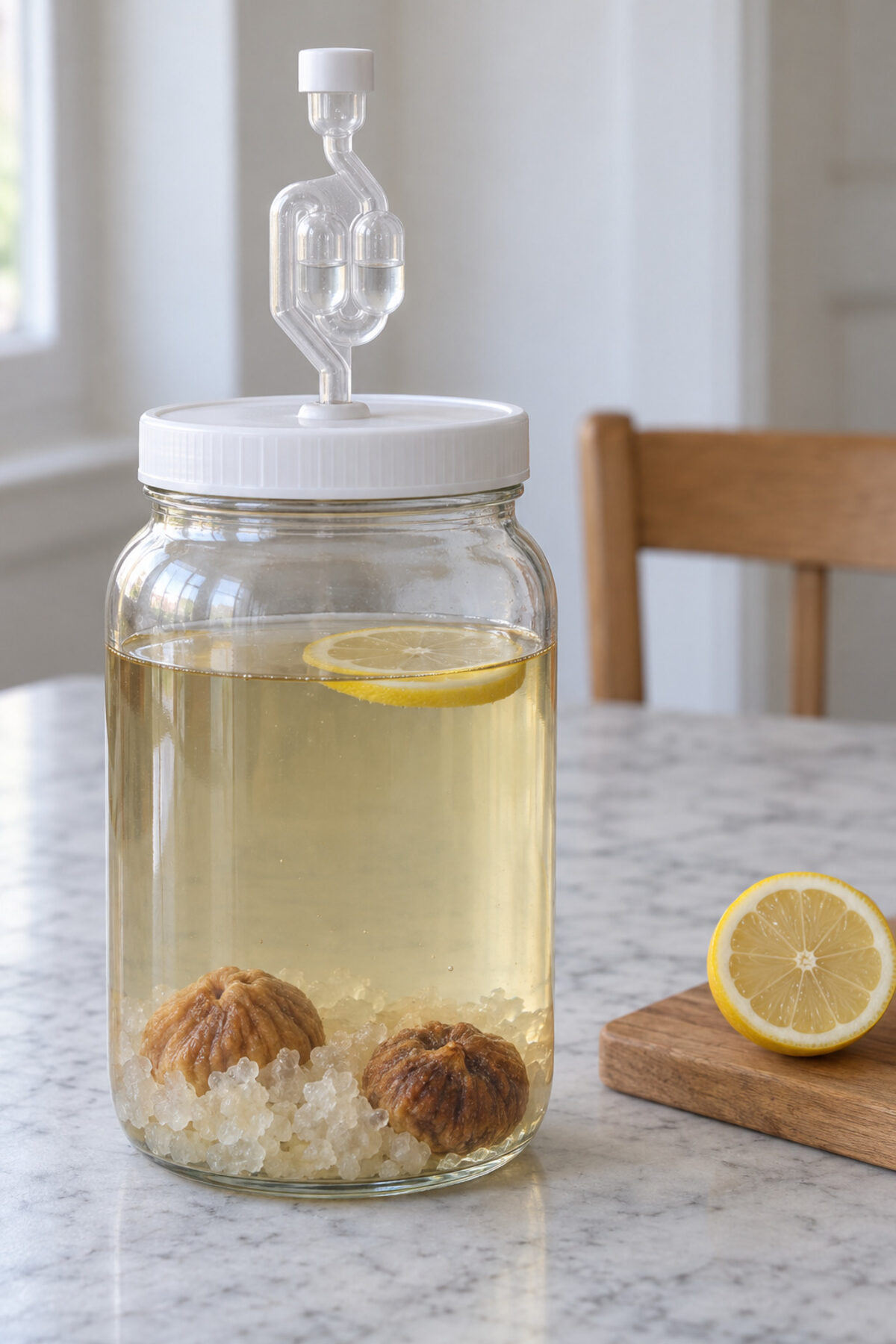
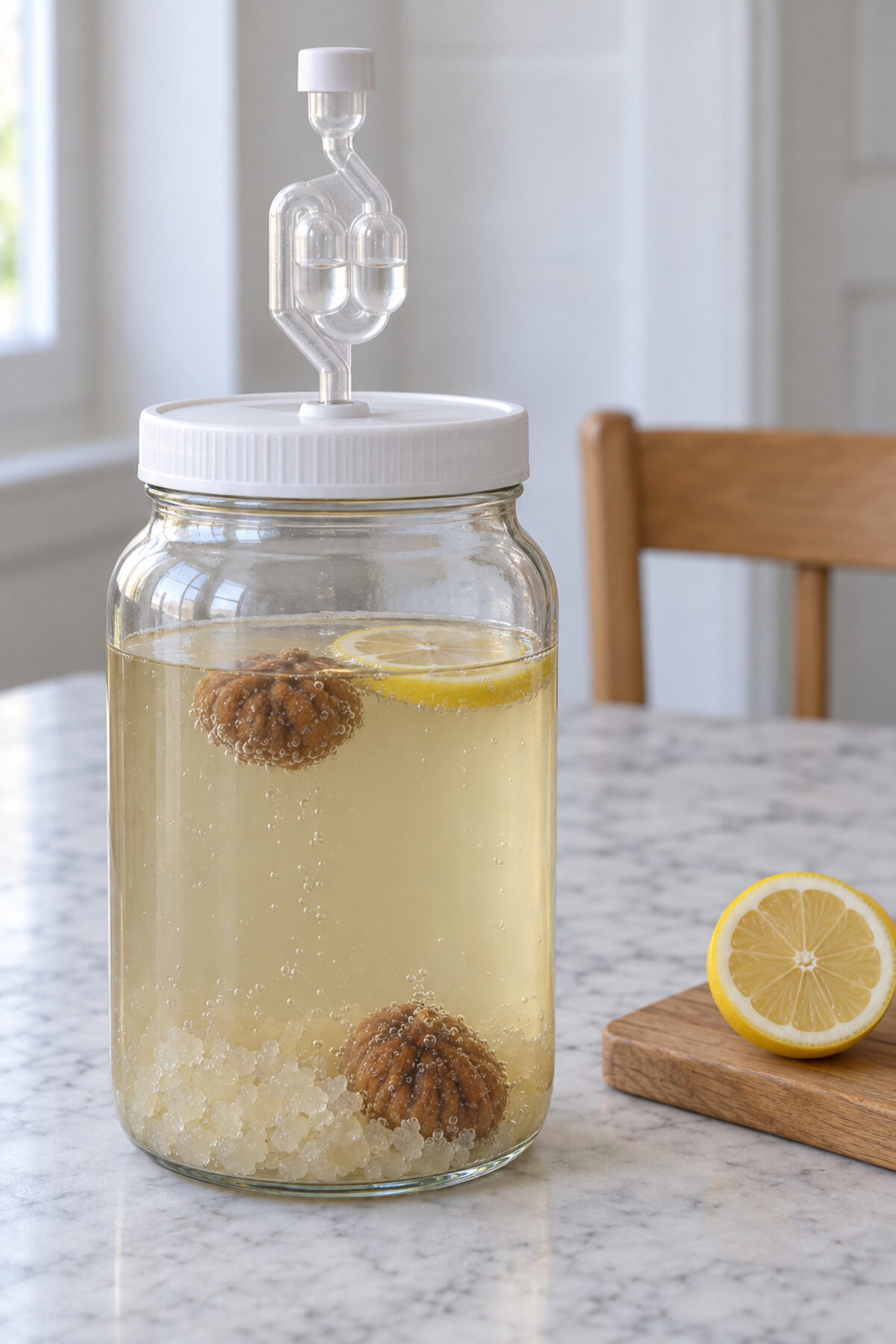
Sugar water, two dried figs and a slice of lemon, boiled and cooled before the grains go in. In one to four days you have a tart, fizzy drink.
- Sugar
- 60g per liter of water
- Time
- 24–96h
- Temperature
- 68–77°F
- Jar
- 1.5L
The golden rule: sugar water boiled and cooled before the grains go in, and into the fridge as soon as you strain it.
No sign-up. We guide you step by step, from the scale to the fridge.
Reviewed October 26, 2026 · 47 facts, each with its source
You'll need
- 1.5-liter glass jar
- Its lid, set on loosely, or an airlock lid
- Saucepan
- Food thermometer
- Long plastic spoon
- Plastic strainer
- pH strips or a pH meter
- Kitchen scale
- Clean glass bottle with a lid, for the fridge
Step by step
-
Wash your hands and sanitize your equipment
Wash your hands well with soap and water. Wash the jar, the spoon, the strainer and the bottle. Sanitize the strainer before each use: submerge it in boiling water for one minute.
Tip: Use a plastic spoon and strainer: the grains react with iron, copper, aluminum and other metals.
-
Boil the water with the sugar, figs and lemon
Put 1 liter of water, 60 g of sugar, the 2 dried figs and the lemon slice in the saucepan. Bring it to a boil and turn off the heat. Boiling the base kills any microbes the water, sugar or fruit bring with them before the grains go in.
The 60 g per liter is a house rule, within the 5 to 10% sugar the studies use. Don't go over 100 g per liter, the maximum from BCCDC, British Columbia's public health agency: with a lot of sugar, pathogens compete better with the grains.
Tip: Use mineral water: the grains need minerals. Distilled, reverse osmosis and carbon-filtered water have very few, and chlorinated tap water isn't recommended. Figs add calcium, which helps the grains grow.
-
Cool the base to 70–77 °F in under 2 hours
Cover the saucepan and set it in the sink, in cold water with ice. Stir now and then and check with the thermometer. It has to drop from 140 °F to 70–77 °F within 2 hours, and never take more than 6.
Tip: Change the water in the sink when it warms up: it cools faster that way.
-
Pour it into the jar, add the grains and close the lid loosely
Pour the cooled base into the jar, with the figs and the lemon. Add 50 g of grains, 5% of the water, and stir with the spoon. Set the lid on without tightening it, or use an airlock lid: water kefir ferments without air, but the gas has to get out.
Don't add more grains than that: with more, the sugar is used up sooner and you get more alcohol.
Tip: Did your grains come dehydrated? Activate them first in water with 10–15% sugar, boiled and cooled, for 3 to 4 days at 68–86 °F, until they look plump and translucent.
-
Let it ferment 24 to 96 hours and check the pH
Keep it at 68–77 °F. After 24 hours, taste it: it's ready when it's no longer very sweet, has bubbles and tastes tart. Before 96 hours, check the pH. It must read 4.6 or below, and never below 2.5. If it hasn't reached 4.6 by 96 hours, don't drink it: throw it out.
Warmer, it goes faster: at 77–86 °F, 20 to 24 hours is enough, based on the little research there is. Don't ferment it above 86 °F. That's a house rule: there's no data.
Tip: After 3 days at 70 °F, a pH of 3.3 to 3.6 is normal. In Argentina, the water kefir standard calls for a pH of 3 to 4.5.
-
Strain it, bottle it and refrigerate it
Take out the figs and the lemon. Strain the kefir through the sanitized strainer and keep the grains. Pour the kefir into the bottle, close it and put it in the fridge right away: it has to reach 39 °F within 4 hours. Drink it within 7 days. That's a house rule, because no source says how long it keeps.
Tip: It keeps making gas in the bottle: open it slowly, over the sink.
-
Start again or store the grains
It's best to use the grains right away in a new base. If you're taking a break, keep them in the fridge, at 39 °F, in boiled and cooled water with 5% sugar (50 g per liter). In one study they kept that way for 30 days, and better than frozen. Out of the fridge, they may take longer to get going.
Tip: Brown sugar tints the grains tan, and that's not a defect. But if they grow slowly, change color or smell, or stop fermenting, throw them out.
No sign-up. We guide you step by step, from the scale to the fridge.
Variations
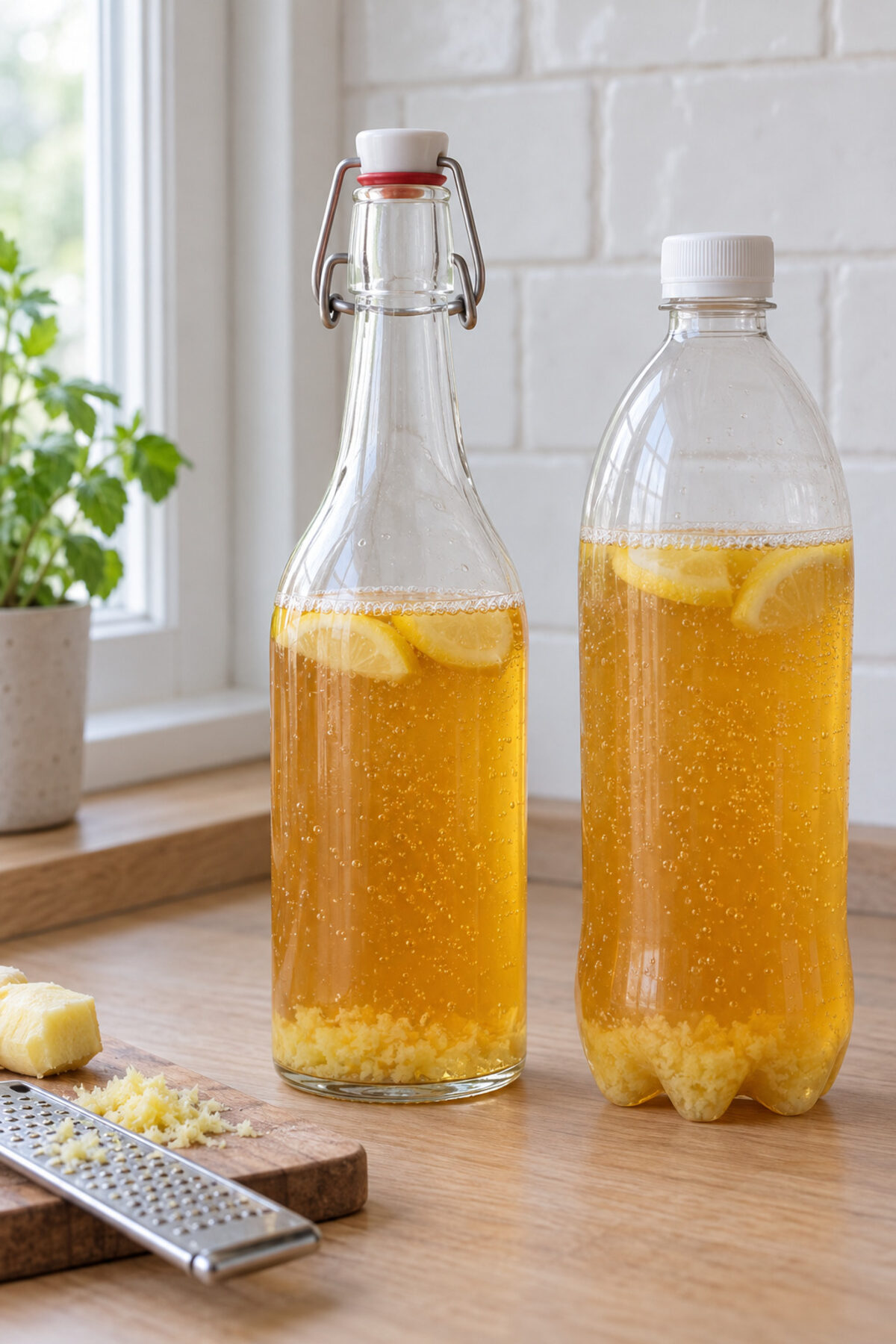
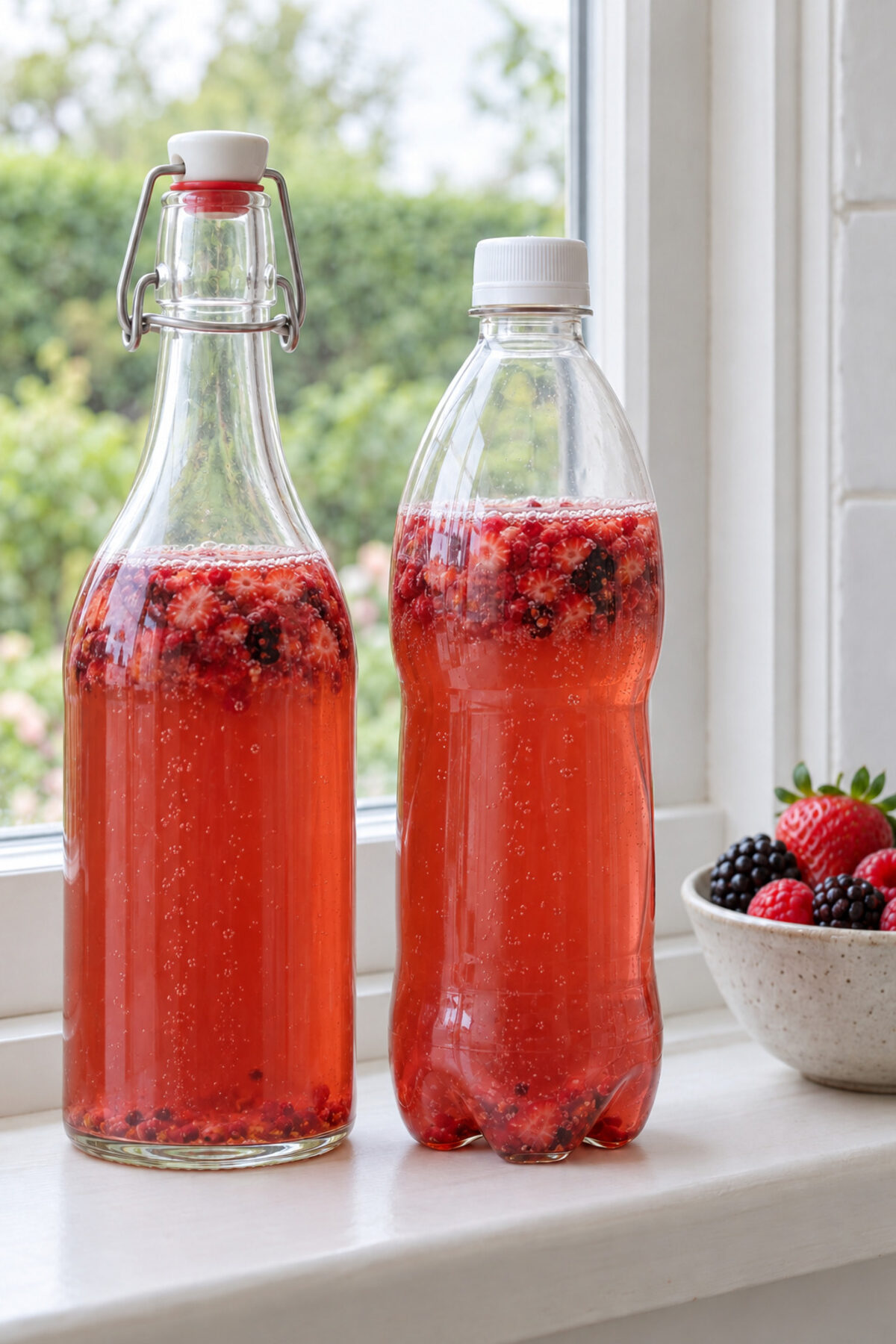
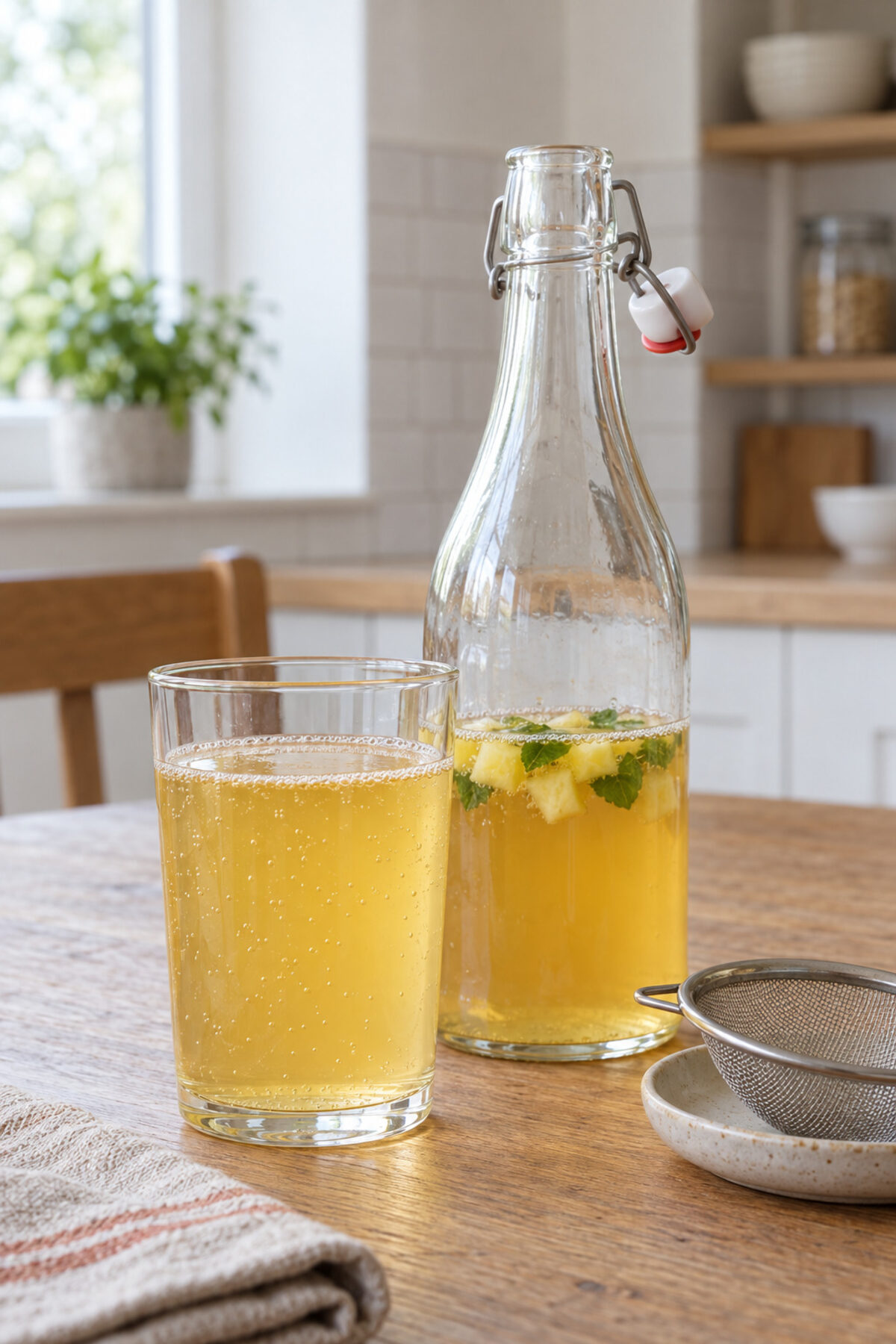
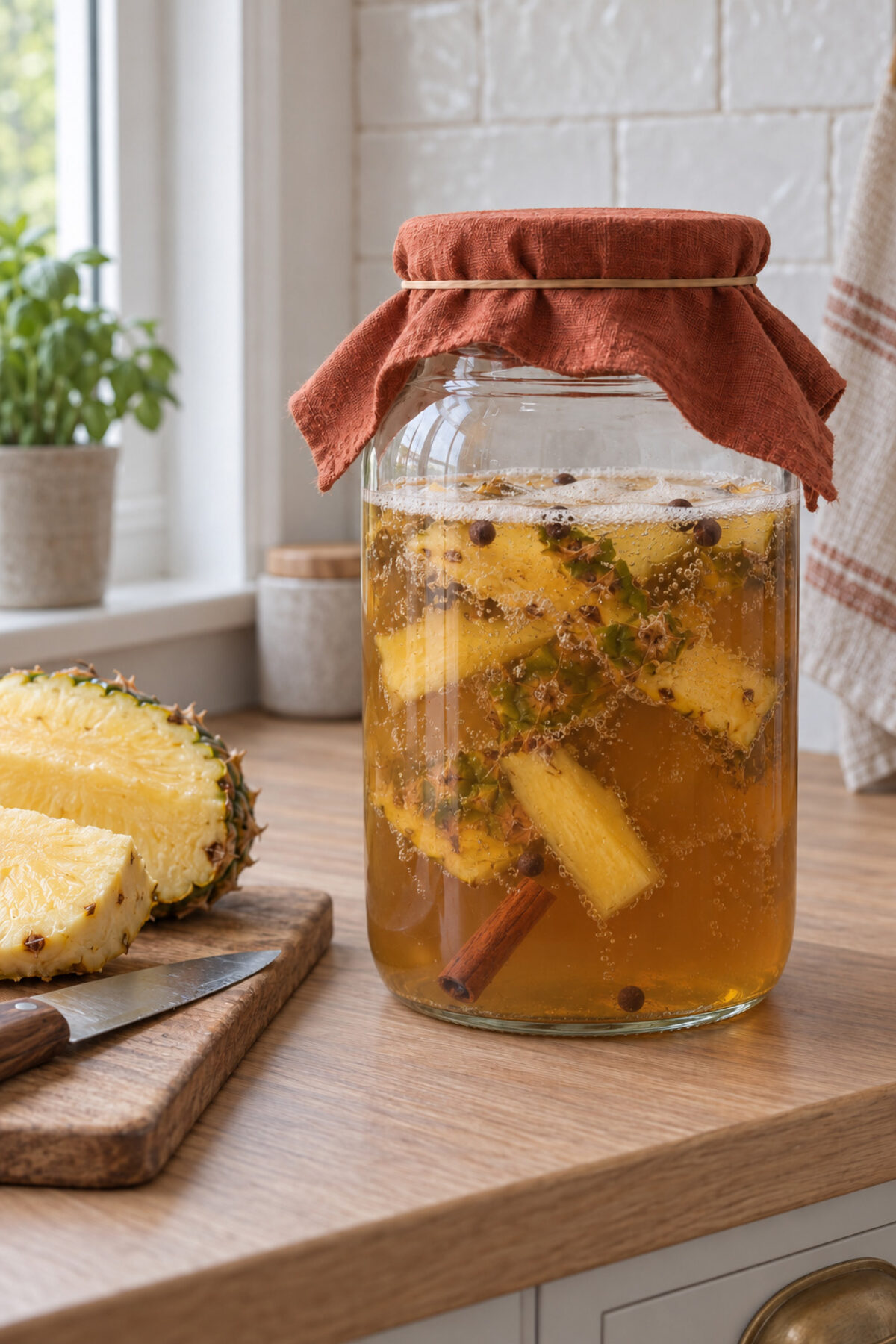
The same method, a different flavor. Once you have this one down, try one of these.
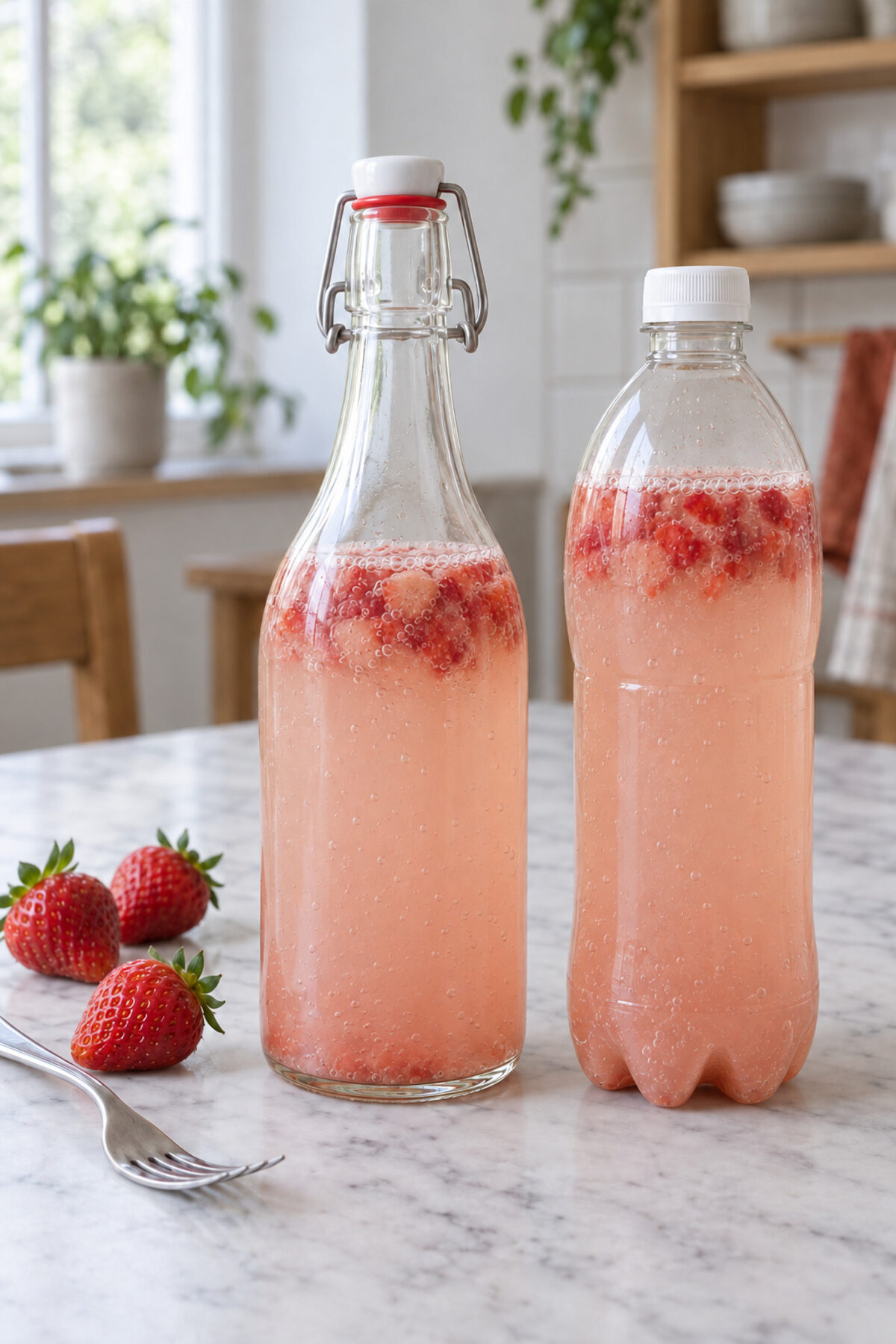
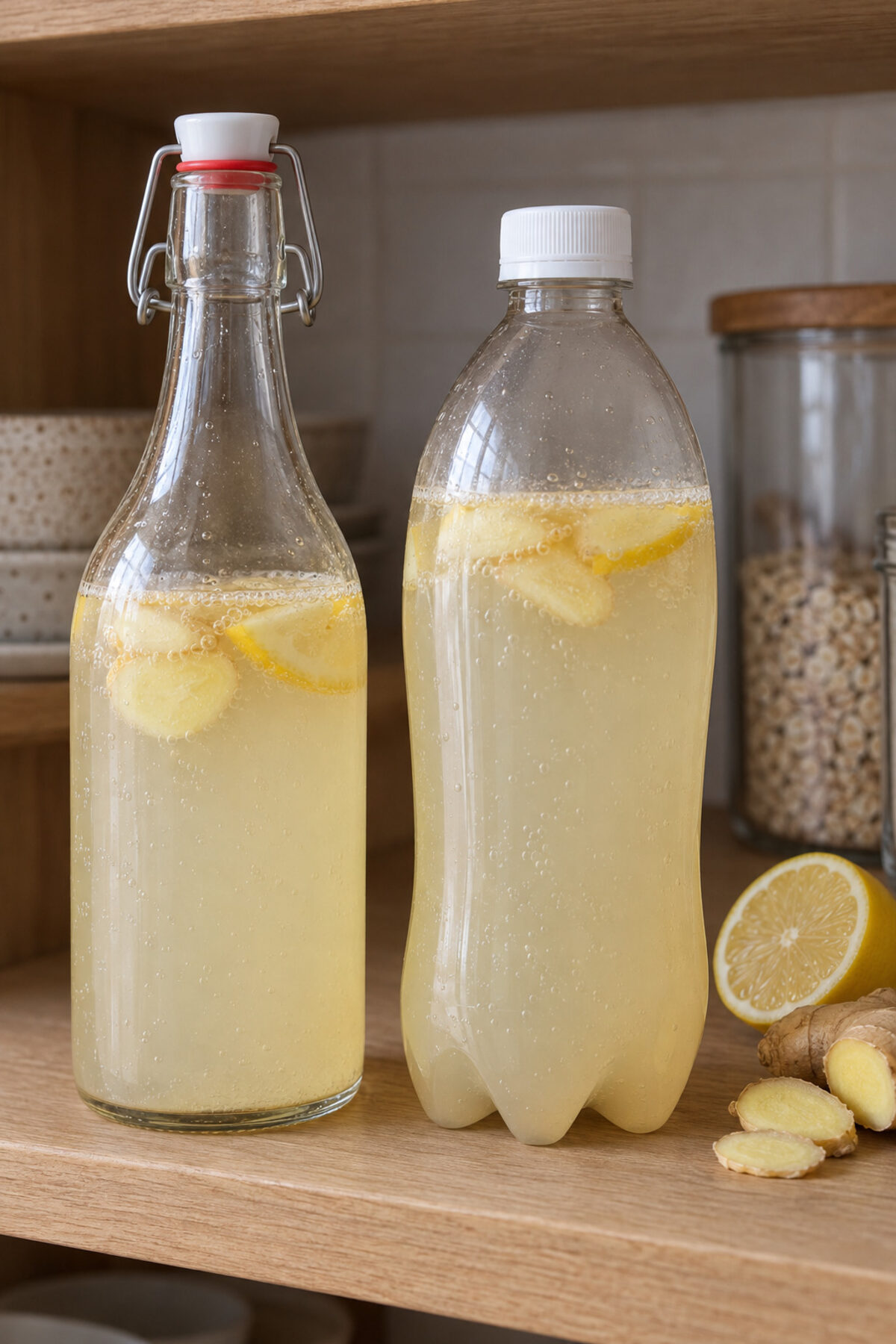
What you'll see
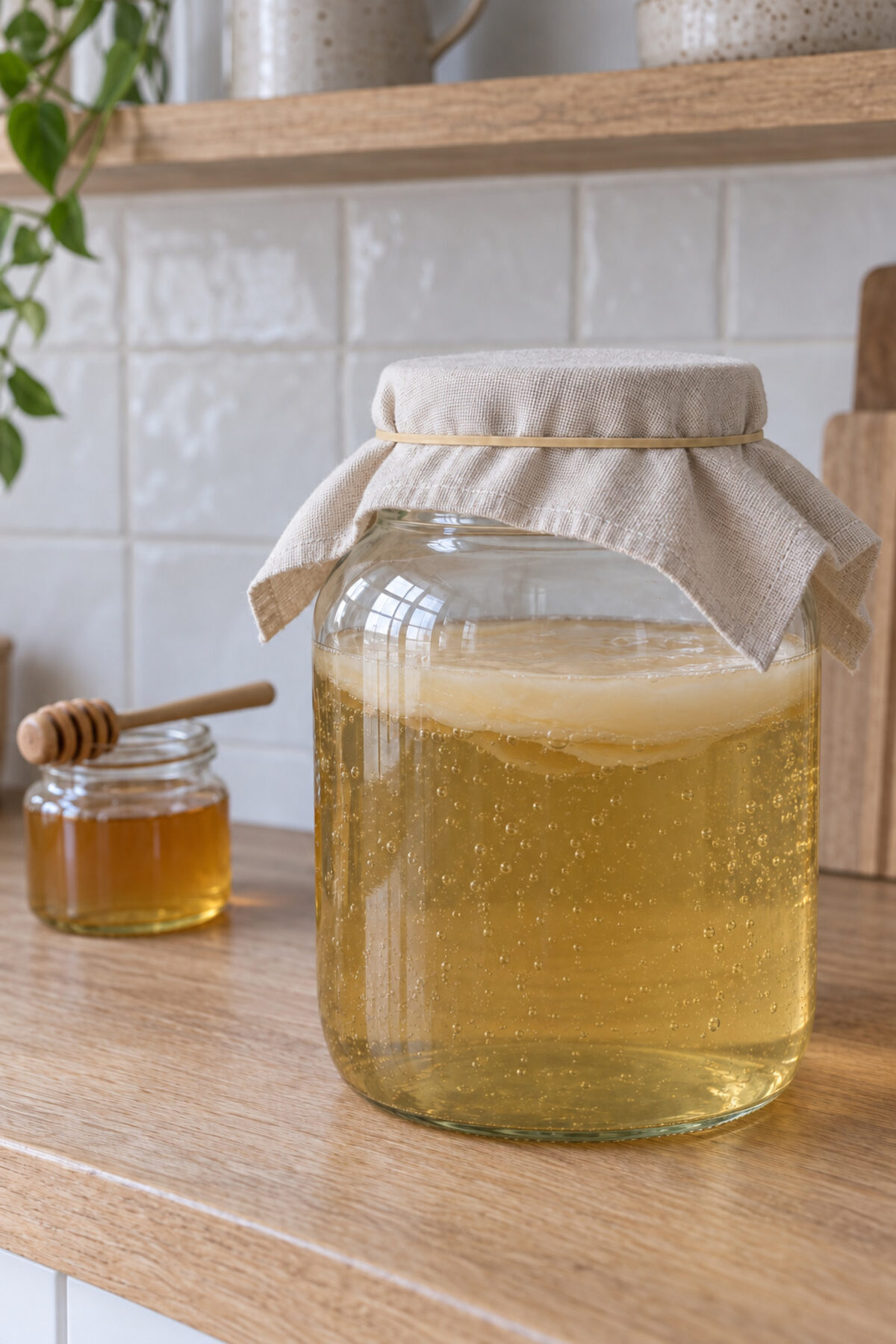
Water kefir grains, also called tibicos, are lactic acid bacteria, acetic acid bacteria and yeasts. They ferment sugar water and fruit, and in 24 to 96 hours they make a cloudy, tart, fizzy drink with a little alcohol. This is the classic recipe: 1 liter of water, two dried figs and a slice of lemon. The grains are strained out and used again. Milk kefir grains don't work for water, or the other way around.
 AI
 AI
AI
How to tell it's going well
- Always boil the base. The water, sugar and fruit together, then cool it to 70–77 °F in under 2 hours before the grains go in.
- Ferment in glass, with no metal. Kefir is acidic and the grains react with metals: a glass jar, a plastic spoon and a plastic strainer.
- Don't leave out the fruit or the sugar, and don't go over 100 g per liter. Without fruit or sugar it ferments slowly, the pH stays high and pathogens can grow.
- pH 4.6 or below before 96 hours, and never below 2.5. If it doesn't get there, throw it out.
- Green, blue, brown or black mold, or a putrid smell: throw it all out, grains included.
- Into the fridge as soon as you strain it, at 39 °F or below, and drink it within 7 days (house rule).
- It contains alcohol. In Argentina, 13 samples tested had between 0.58 and 2.55%. It isn't for young children or during pregnancy: at 2% alcohol, 200 ml is already too much for a 22-pound child.
Where every number comes from
Every number in this recipe comes from a food safety guide. We keep a copy of each source and quote its exact words.
-
1
Lactic acid bacteria, acetic acid bacteria and yeasts
“Generally, the microorganisms used for the production of water kefir grains belong to lactic acid bacteria (LAB), acetic acid bacteria (AAB), and yeasts”
Heliyon (Elsevier), open access via PubMed Central · Challenges in water kefir production and limitations in human consumption: A comprehensive review of current knowledge (2024) · read on October 25, 2026
-
2
1 liter of water, two dried figs and a slice of lemon
“1 L tap water, sucrose solution (100 g/L), two dry figs and a slice of organic lemon”
Heliyon (Elsevier), open access via PubMed Central · Challenges in water kefir production and limitations in human consumption: A comprehensive review of current knowledge (2024) · read on October 25, 2026
-
3
The grains react with metals
“equipment made from iron, copper, aluminium, or other metals is not suggested to be used since grains are reactive to these metals”
Heliyon (Elsevier), open access via PubMed Central · Challenges in water kefir production and limitations in human consumption: A comprehensive review of current knowledge (2024) · read on October 25, 2026
-
4
5 to 10% grains and sugar, at 68–77 °F
“Traditionally, water kefir is prepared by the addition of 5–10 % (w/v) of water kefir grains in 5–10 % (w/v) sucrose solution, followed by fermentation at room temperature of 20–25 °C in anaerobic conditions for 24–72 h”
Heliyon (Elsevier), open access via PubMed Central · Challenges in water kefir production and limitations in human consumption: A comprehensive review of current knowledge (2024) · read on October 25, 2026
-
5
Cloudy, fizzy, tart and slightly alcoholic
“After 2 to 4 days of anaerobic incubation at room temperature, a sparkling, yellowish fermented beverage is obtained that has a fruity, acidic, slightly sweet, and slightly alcoholic taste and aroma.”
Applied and Environmental Microbiology (Laureys & De Vuyst), via PubMed Central · Microbial species diversity, community dynamics, and metabolite kinetics of water kefir fermentation (2014) · read on October 25, 2026
-
6
Milk grains don't work for water
“milk grains cannot be used to make water kefir or vice versa.”
Colorado State University Extension (FoodSmart Colorado) · Understanding and Making Kefir · read on October 20, 2026
-
7
Dried figs are the most common fruit
“Dried figs are the most common fruit added”
BC Centre for Disease Control, Environmental Health Services · Safety of Fermented Foods, Section 3.12: Kefir, milk and water (December 2024) · read on October 25, 2026
-
8
The calcium in figs helps the grains grow
“Of interest, figs are high in calcium, and reports that both figs and hard water (containing more calcium and magnesium ions) promotes water kefir grain growth in comparison to other fruits lower in calcium and soft water.”
BC Centre for Disease Control, Environmental Health Services · Safety of Fermented Foods, Section 3.12: Kefir, milk and water (December 2024) · read on October 25, 2026
Show the remaining 39 claims
-
9
Lemon lowers the pH
“Reduce pH by adding citric acid (lemon slices) or equivalent to lower pH.”
BC Centre for Disease Control, Environmental Health Services · Safety of Fermented Foods, Section 3.12: Kefir, milk and water (December 2024) · read on October 25, 2026
-
10
No distilled, reverse osmosis or chlorinated tap water
“As trace minerals are required by the kefir grains, use of reverse osmosis, carbon filtered, and distilled water was not recommended, as was use of tap water containing chlorine or fluorides”
BC Centre for Disease Control, Environmental Health Services · Safety of Fermented Foods, Section 3.12: Kefir, milk and water (December 2024) · read on October 25, 2026
-
11
Clean, sanitized surfaces and equipment
“Prevent cross contamination, clean, sanitize food surface areas and equipment.”
BC Centre for Disease Control, Environmental Health Services · Safety of Fermented Foods, Section 3.12: Kefir, milk and water (December 2024) · read on October 25, 2026
-
12
The strainer, sanitized before each use
“Sanitize sieves before each use.”
BC Centre for Disease Control, Environmental Health Services · Safety of Fermented Foods, Section 3.12: Kefir, milk and water (December 2024) · read on October 25, 2026
-
13
One minute in boiling water
“For example, immerse sieves in boiling water for a minute to sterilize before use.”
BC Centre for Disease Control, Environmental Health Services · Safety of Fermented Foods, Section 3.12: Kefir, milk and water (December 2024) · read on October 25, 2026
-
14
The base, boiled or pasteurized
“Heat to boiling and/or pasteurize water, juice, added sugars and fruits to achieve a 5-log reduction (e.g., to 85oC for 16 sec or equivalent).”
BC Centre for Disease Control, Environmental Health Services · Safety of Fermented Foods, Section 3.12: Kefir, milk and water (December 2024) · read on October 25, 2026
-
15
At most 10% sugar
“Add up to 10% w/v sucrose (sugar) along with dried fruits (e.g., figs) or juice extracts.”
BC Centre for Disease Control, Environmental Health Services · Safety of Fermented Foods, Section 3.12: Kefir, milk and water (December 2024) · read on October 25, 2026
-
16
With a lot of sugar, pathogens compete better
“High sugar concentration in the starting mixture can also encourage pathogenic bacteria to compete with kefir grains microorganisms.”
BC Centre for Disease Control, Environmental Health Services · Safety of Fermented Foods, Section 3.12: Kefir, milk and water (December 2024) · read on October 25, 2026
-
17
Without fruit or sugar, it ferments slowly and the pH stays high
“Low nutrient concentration (i.e., absence of fruits or added sugars) in the starting mixture can slow fermentation, resulting in lower metabolic activity of kefir grain culture, higher kefir pH and create potential for pathogenic growth.”
BC Centre for Disease Control, Environmental Health Services · Safety of Fermented Foods, Section 3.12: Kefir, milk and water (December 2024) · read on October 25, 2026
-
18
Brown sugar tints the grains
“use of brown sugar adds tan colour to water kefir grains”
BC Centre for Disease Control, Environmental Health Services · Safety of Fermented Foods, Section 3.12: Kefir, milk and water (December 2024) · read on October 25, 2026
-
19
From 140 °F to the grains' temperature in 2 hours
“Kefir is cooled from 60oC to inoculation temperature within 2 hrs (no longer than 6 hrs).”
BC Centre for Disease Control, Environmental Health Services · Safety of Fermented Foods, Section 3.12: Kefir, milk and water (December 2024) · read on October 25, 2026
-
20
Cool to 70–77 °F
“Cool mixture to 21oC to 25oC”
BC Centre for Disease Control, Environmental Health Services · Safety of Fermented Foods, Section 3.12: Kefir, milk and water (December 2024) · read on October 25, 2026
-
21
Active grains, about 5%
“Kefir grains must be activated (active), and sufficient grains added (approx. 5% w/v).”
BC Centre for Disease Control, Environmental Health Services · Safety of Fermented Foods, Section 3.12: Kefir, milk and water (December 2024) · read on October 25, 2026
-
22
More grains, more alcohol
“Higher volumes of water kefir grains can consume sucrose rapidly in the first 24 hours of fermentation, leading to higher alcohol contents.”
BC Centre for Disease Control, Environmental Health Services · Safety of Fermented Foods, Section 3.12: Kefir, milk and water (December 2024) · read on October 25, 2026
-
23
Activate in water with 10–15% sugar
“inactivated water kefir grains can be activated by placing the grains in 10-15% sugar solution.”
BC Centre for Disease Control, Environmental Health Services · Safety of Fermented Foods, Section 3.12: Kefir, milk and water (December 2024) · read on October 25, 2026
-
24
3 to 4 days at 68–86 °F
“hold at 20-30°C for 3-4 days, until the grains look plump and translucent.”
BC Centre for Disease Control, Environmental Health Services · Safety of Fermented Foods, Section 3.12: Kefir, milk and water (December 2024) · read on October 25, 2026
-
25
A closed container with a vent for the gas
“Typically water kefir fermentations are conducted in sealed containers that are vented to allow gases to escape.”
BC Centre for Disease Control, Environmental Health Services · Safety of Fermented Foods, Section 3.12: Kefir, milk and water (December 2024) · read on October 25, 2026
-
26
48 to 96 hours at 70–77 °F
“The mixture is fermented at 21-25oC for 48-96 hrs, under anaerobic conditions.”
BC Centre for Disease Control, Environmental Health Services · Safety of Fermented Foods, Section 3.12: Kefir, milk and water (December 2024) · read on October 25, 2026
-
27
At 77–86 °F, 20 to 24 hours
“Fermentation time may be shortened by a higher incubation temperature (e.g. 20-24 hrs at 25-30oC) based on limited research.”
BC Centre for Disease Control, Environmental Health Services · Safety of Fermented Foods, Section 3.12: Kefir, milk and water (December 2024) · read on October 25, 2026
-
28
pH 4.6 or below within 2 to 4 days
“a pH of 4.6 or lower should be verified, regardless within 2 to 4 days (48-96 hrs).”
BC Centre for Disease Control, Environmental Health Services · Safety of Fermented Foods, Section 3.12: Kefir, milk and water (December 2024) · read on October 25, 2026
-
29
pH 4.6 or below, never below 2.5
“Ensure the pH of final product is 4.6 or less, but not lower than pH of 2.5.”
BC Centre for Disease Control, Environmental Health Services · Safety of Fermented Foods, Section 3.12: Kefir, milk and water (December 2024) · read on October 25, 2026
-
30
pH 3.3 to 3.6 after 3 days at 70 °F
“A few studies have reported a final pH of 3.3-3.6 for water kefir fermented at 21oC for 72 hours”
BC Centre for Disease Control, Environmental Health Services · Safety of Fermented Foods, Section 3.12: Kefir, milk and water (December 2024) · read on October 25, 2026
-
31
Down to 39 °F within 4 hours
“Cool to 4oC immediately, within 4 hrs (no longer than 6 hrs)”
BC Centre for Disease Control, Environmental Health Services · Safety of Fermented Foods, Section 3.12: Kefir, milk and water (December 2024) · read on October 25, 2026
-
32
In the fridge, at 39 °F or below
“Store kefir refrigerated at 4°C or less.”
BC Centre for Disease Control, Environmental Health Services · Safety of Fermented Foods, Section 3.12: Kefir, milk and water (December 2024) · read on October 25, 2026
-
33
No data on how long it keeps in the fridge
“No information on the shelf life of kefir made with water kefir grains can be found.”
BC Centre for Disease Control, Environmental Health Services · Safety of Fermented Foods, Section 3.12: Kefir, milk and water (December 2024) · read on October 25, 2026
-
34
Gas builds up and pushes the liquid out
“Excess pressure can build-up from carbon dioxide, causing fluids to leak out.”
BC Centre for Disease Control, Environmental Health Services · Safety of Fermented Foods, Section 3.12: Kefir, milk and water (December 2024) · read on October 25, 2026
-
35
The grains are reused right away
“Grains can be reused immediately in a new fermentation or at a later time if preserved in appropriate conditions.”
BC Centre for Disease Control, Environmental Health Services · Safety of Fermented Foods, Section 3.12: Kefir, milk and water (December 2024) · read on October 25, 2026
-
36
After the cold, they take longer to get going
“Acidified water and low temperatures will stress water kefir grain activity, requiring longer periods to reactivate.”
BC Centre for Disease Control, Environmental Health Services · Safety of Fermented Foods, Section 3.12: Kefir, milk and water (December 2024) · read on October 25, 2026
-
37
If they grow slowly or change color or smell, throw them out
“If kefir grains grow slowly, if the grains develop unusual colour, odour, or if grains lose activity, grain function is compromised, and they should be discarded.”
BC Centre for Disease Control, Environmental Health Services · Safety of Fermented Foods, Section 3.12: Kefir, milk and water (December 2024) · read on October 25, 2026
-
38
Not suitable for young children or during pregnancy
“Not a suitable beverage for young children or during pregnancy.”
BC Centre for Disease Control, Environmental Health Services · Safety of Fermented Foods, Section 3.12: Kefir, milk and water (December 2024) · read on October 25, 2026
-
39
At 2% alcohol, 200 ml is already too much for a 22-pound child
“If a kefir beverage contained only 2% ABV, 200 mL or 2 dL (an amount that is less than one cup, 250 mL) would exceed the 50 mg/dL amount in a 10kg or lighter weight child.”
BC Centre for Disease Control, Environmental Health Services · Safety of Fermented Foods, Section 3.12: Kefir, milk and water (December 2024) · read on October 25, 2026
-
40
Metal reacts with acid
“Metal containers are not suitable due to their reactivity with acid.”
BC Centre for Disease Control, Environmental Health Services · Safety of Fermented Foods, Section 3.1: Fermented Vegetables (August 2024, updated December 2024) · read on October 25, 2026
-
41
In Argentina, pH 3 to 4.5
“Parámetro Mínimo Máximo pH 3 4.5 Grado Alcohólico (% vol. a 20ºC) - 3”
ANMAT, Código Alimentario Argentino (Ley 18.284) · Capítulo XIII: Bebidas fermentadas (actualizado al 18-11-2025): art. 1084 bis Kombucha, art. 1084 tris Kéfir de agua · read on October 25, 2026
-
42
Refrigerated until it's drunk
“El producto debe ser conservado refrigerado hasta su consumo”
ANMAT, Código Alimentario Argentino (Ley 18.284) · Capítulo XIII: Bebidas fermentadas (actualizado al 18-11-2025): art. 1084 bis Kombucha, art. 1084 tris Kéfir de agua · read on October 25, 2026
-
43
30 days in the fridge, in water with 5% sugar
“One group was stored in sterile 5% (w/v) sugared water at +4°C for 30 days”
Food Science & Nutrition (Gökırmaklı, Şatır & Guzel-Seydim), via PubMed Central · Microbial viability and nutritional content of water kefir grains under different storage conditions (2024) · read on October 25, 2026
-
44
They keep better in the fridge than frozen
“Storage of the water kefir grains at +4°C is a better option for the viability of the microbial populations from the grains.”
Food Science & Nutrition (Gökırmaklı, Şatır & Guzel-Seydim), via PubMed Central · Microbial viability and nutritional content of water kefir grains under different storage conditions (2024) · read on October 25, 2026
-
45
Green, blue, brown or black mold gets thrown out
“If you confirm mold growth on any part of a ferment, it should be immediately discarded. Mold is typically green, blue, brown, or black in color.”
UC Davis, Department of Food Science and Technology · Common issues with fermented fruits and vegetables (v1.0, 15-mar-2022) · read on October 20, 2026
-
46
A putrid smell means a failed ferment
“A putrid smell indicates a failed fermentation.”
UC Davis, Department of Food Science and Technology · Common issues with fermented fruits and vegetables (v1.0, 15-mar-2022) · read on October 20, 2026
-
47
Between 0.58 and 2.55% alcohol in 13 samples
“un contenido de alcohol entre 0,58 y 2,55 (%, v/v)”
Revista Argentina de Microbiología (Teijeiro et al.; INAL-ANMAT, CONICET) · Análisis de muestras de kéfir de agua para el desarrollo de un marco regulatorio en el Código Alimentario Argentino (2025) · read on October 25, 2026