





Fermented vegetables
A vegetable, salt and time. The oldest and simplest way to ferment.
- Recipes
- 31
- Time
- From days to weeks
- Levels
- From first steps to advanced
 AI
Fermenting vegetables means letting the lactic acid bacteria that already live on them do the work. Salt draws the water out and holds back the microbes that would rot them; lactic acid bacteria tolerate it, eat the sugars and turn them into acid. Within days the jar bubbles. Within weeks it is sour, crunchy and keeps for months in the fridge.
How it works
Two ways to salt
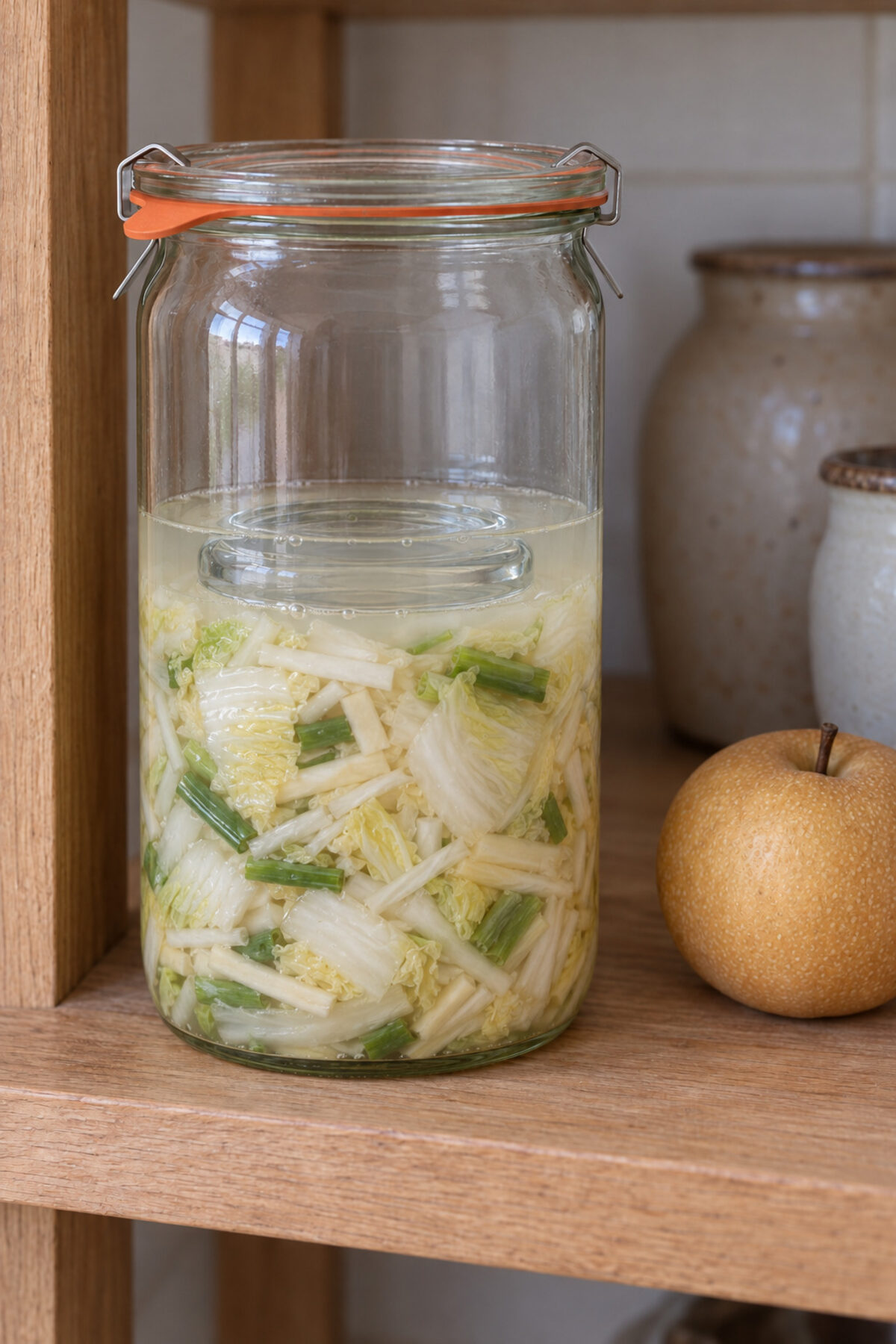
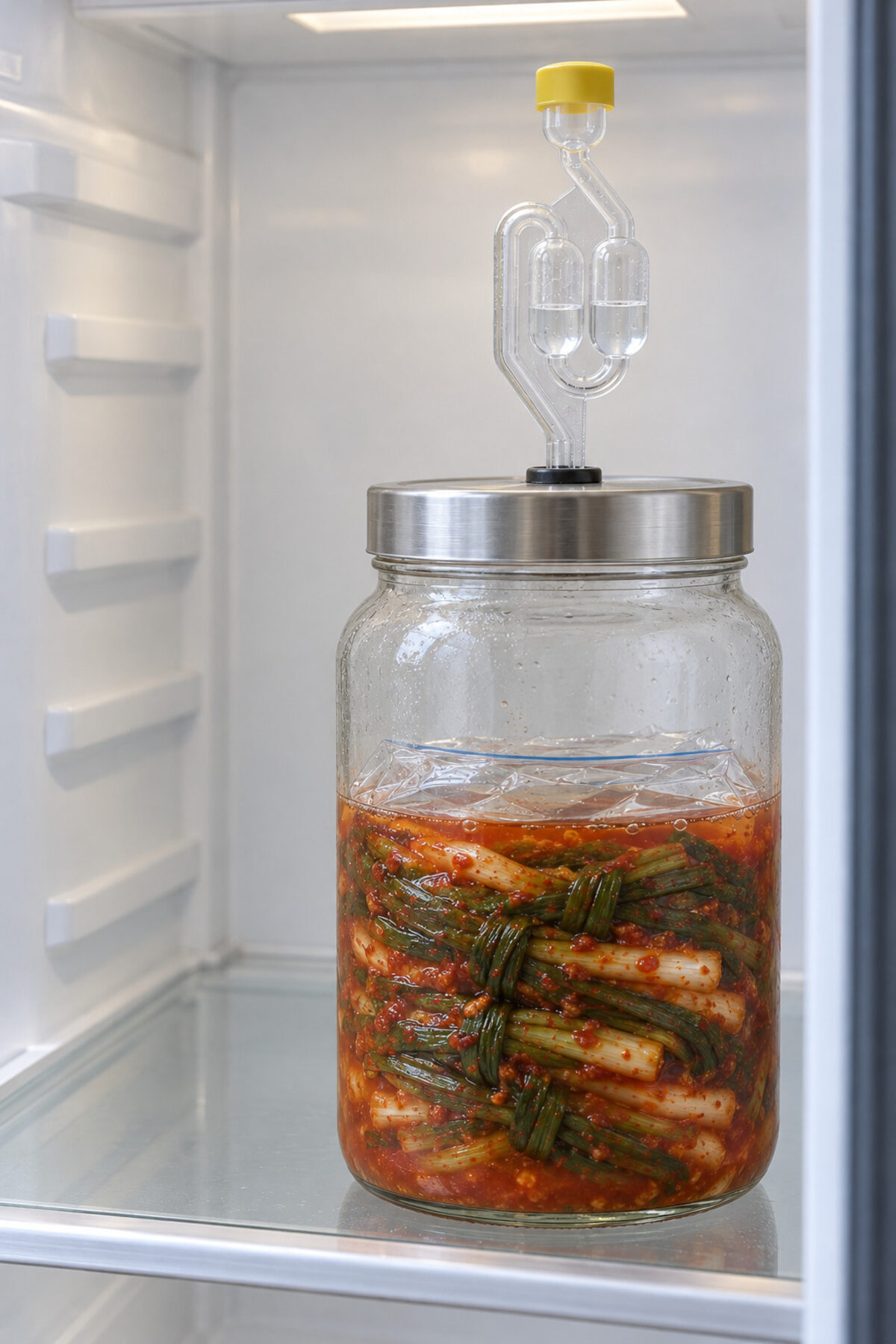
Dry-salted. Shredded or thinly cut vegetables are mixed with salt and release their own juice, which ends up covering them. That is how sauerkraut and kimchi are made.
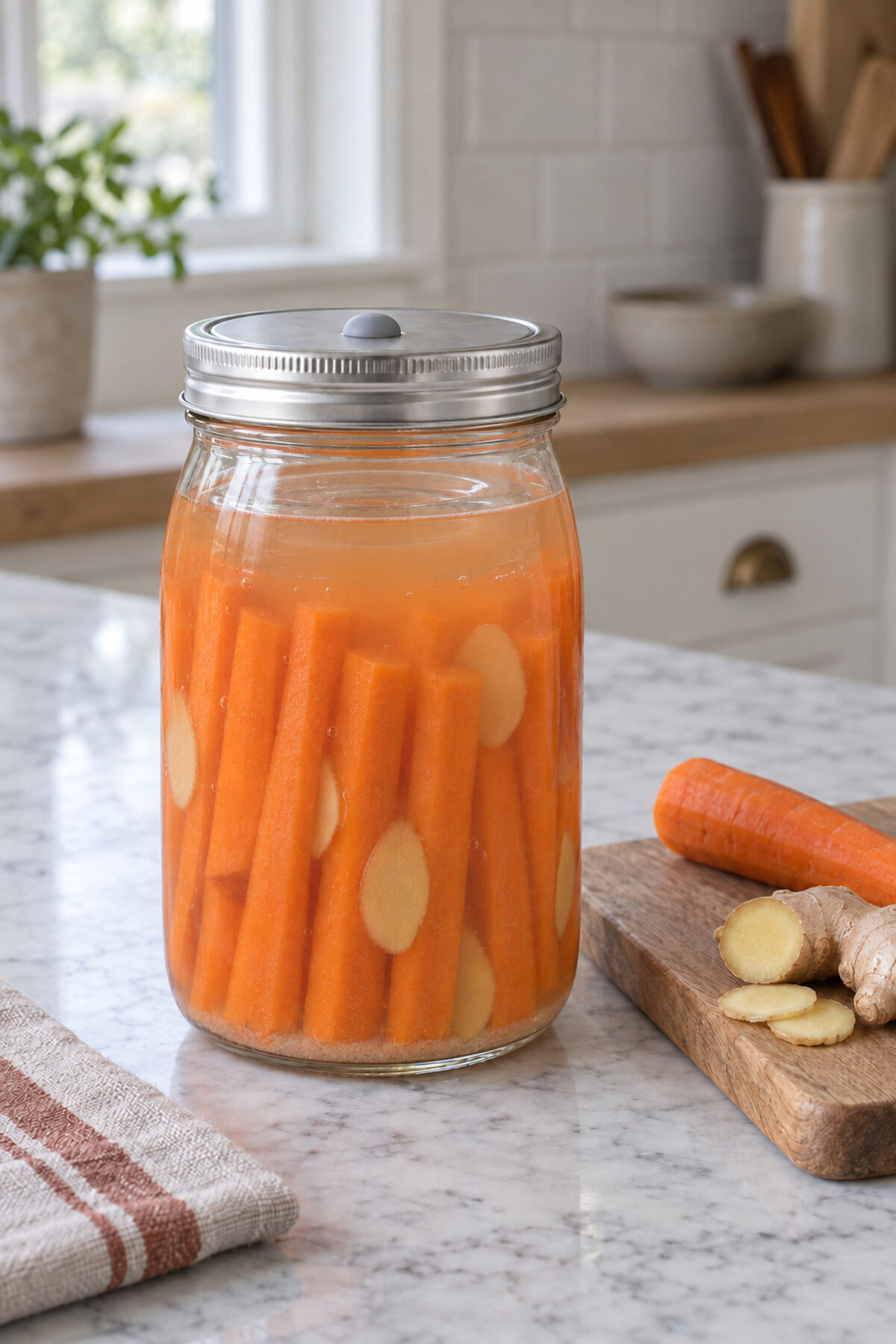
In brine. Whole or chunked pieces don't release enough juice, so they are covered with salted water. That is how pickles, carrots or cauliflower are made.
The rules
- Everything under the liquid: mold needs air.
- Never less than 2% salt, weighed on a scale.
- Temperature sets the time: cold slows it down, heat softens it.
- It smells clean and sour. If it smells rotten or you see colored fuzz, throw the whole batch out.
Recipes
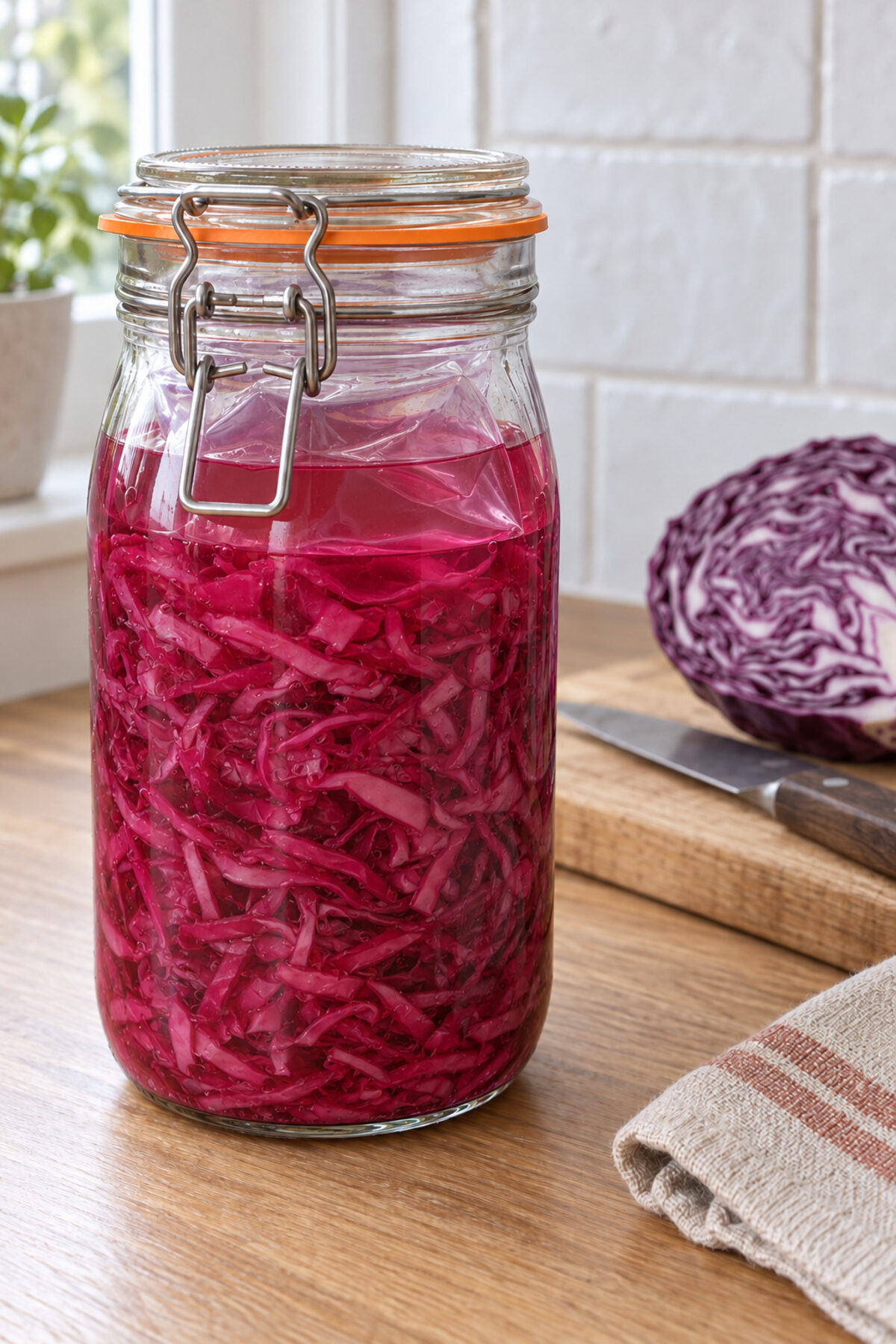
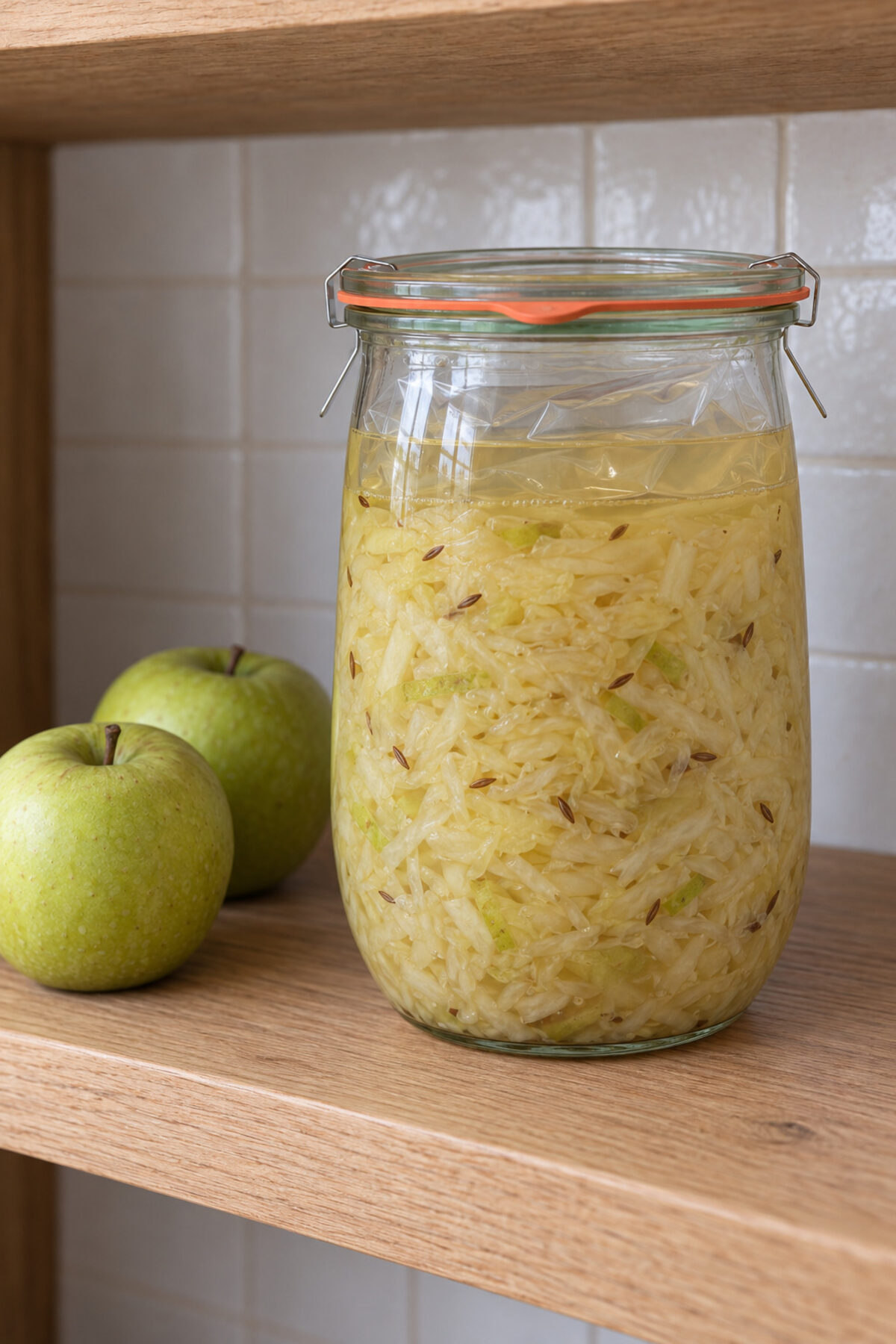
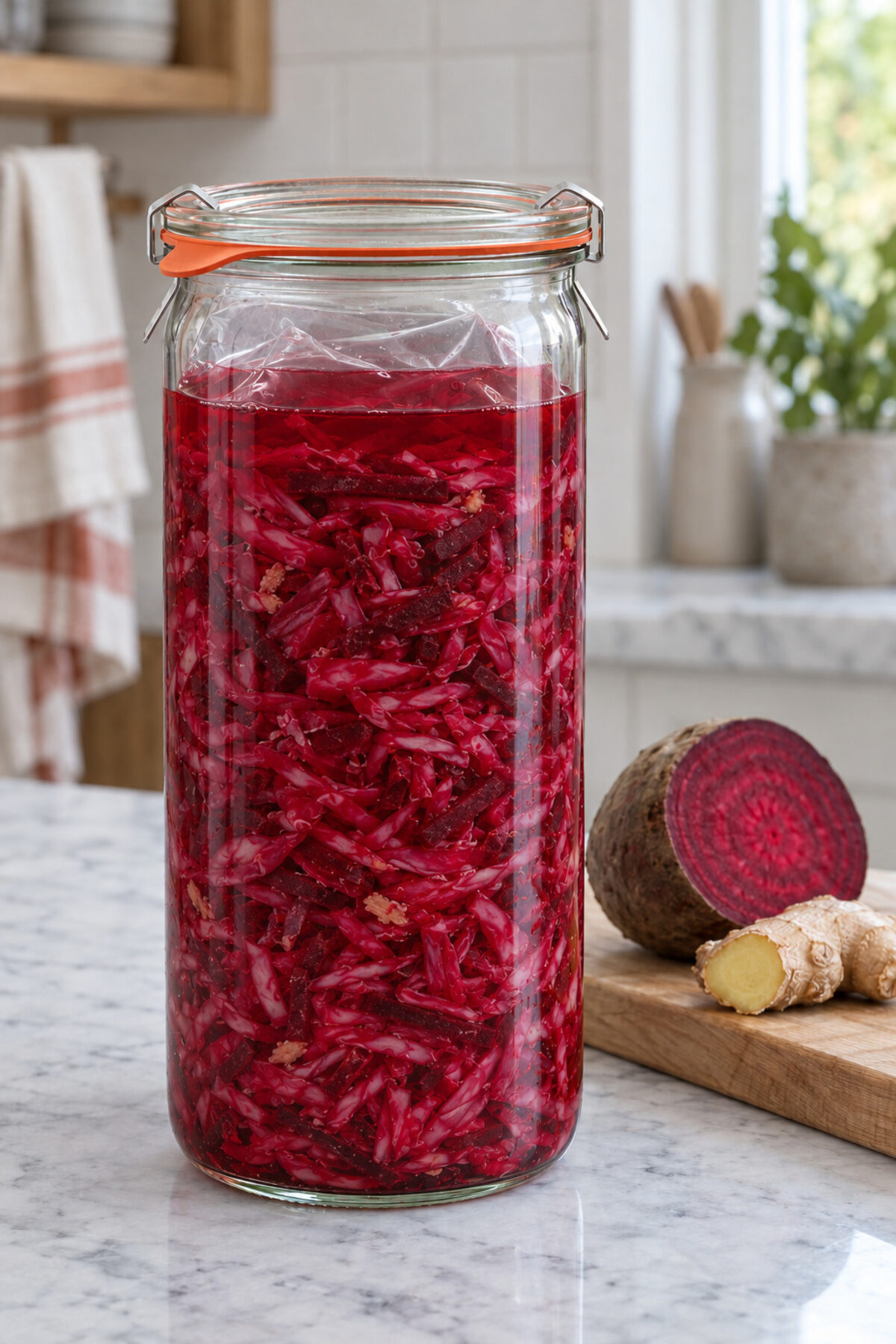
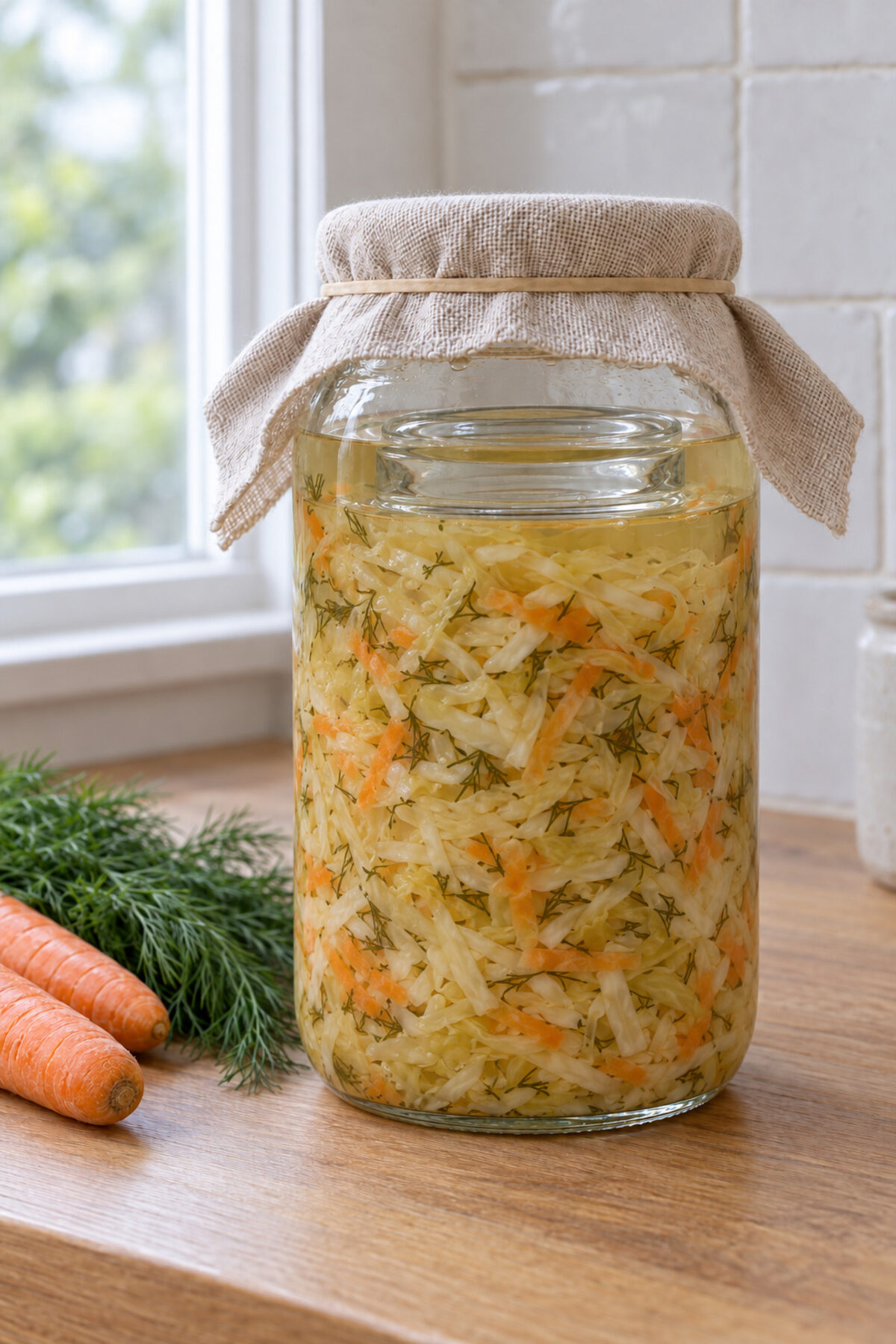
Sauerkraut
9 recipes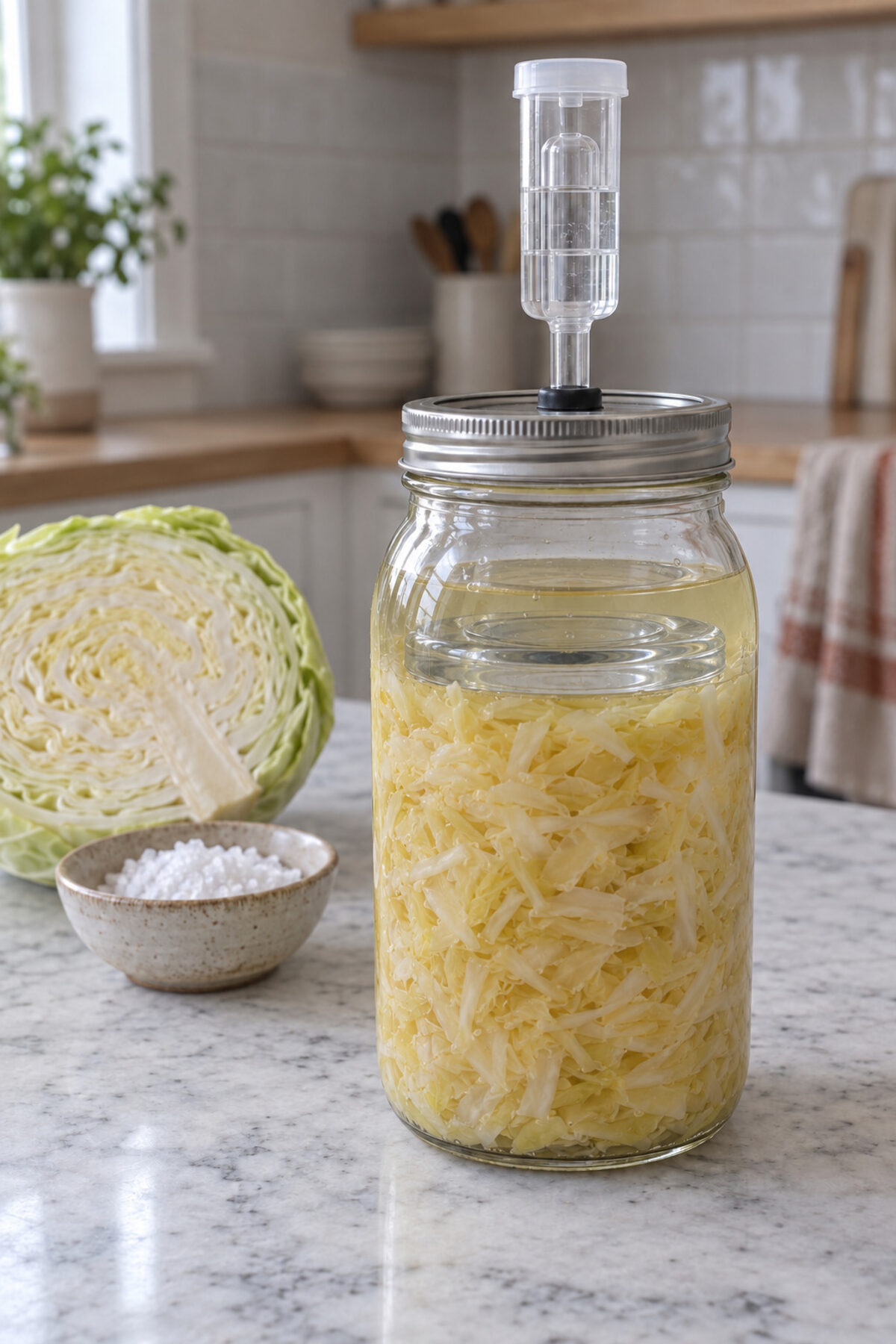
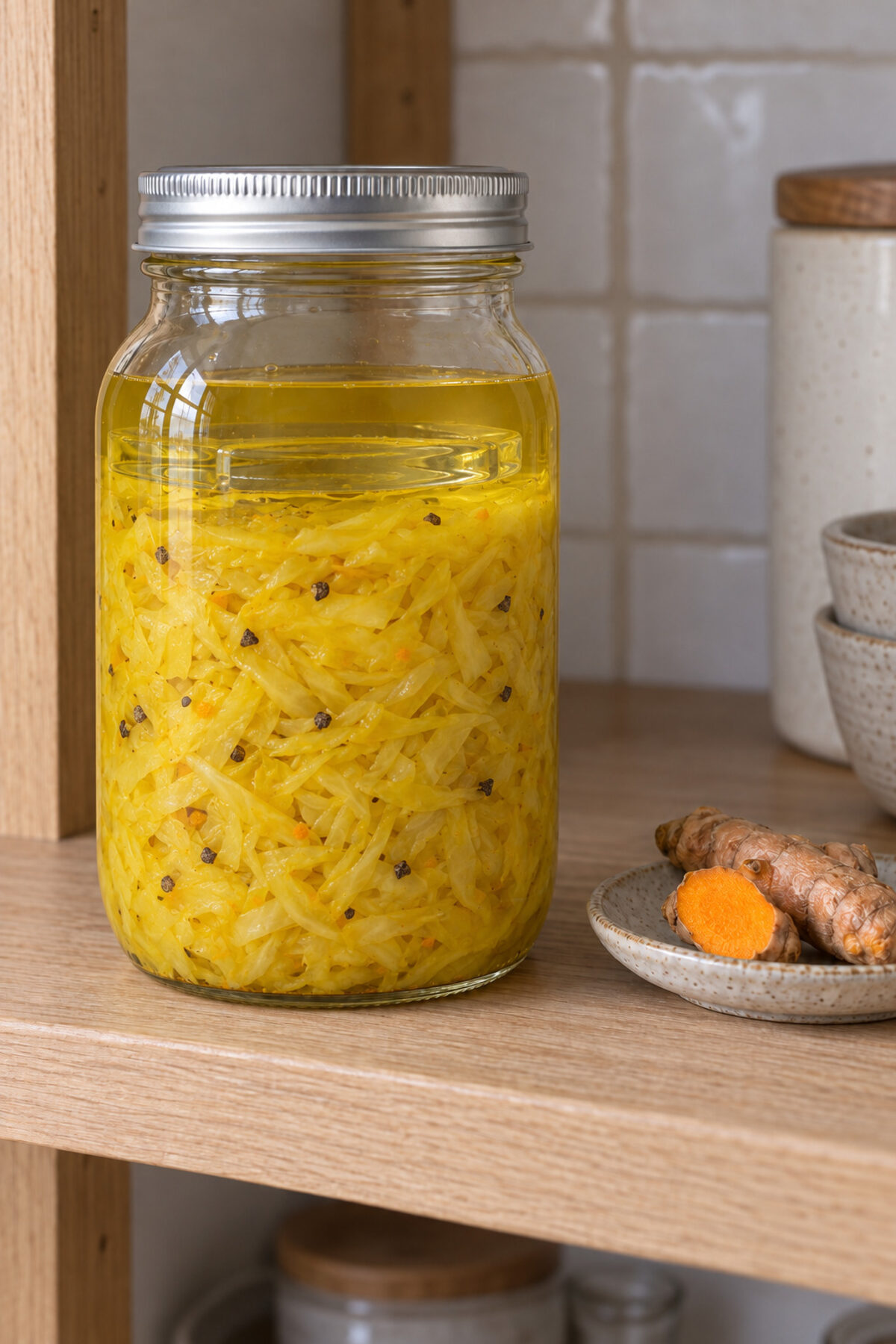
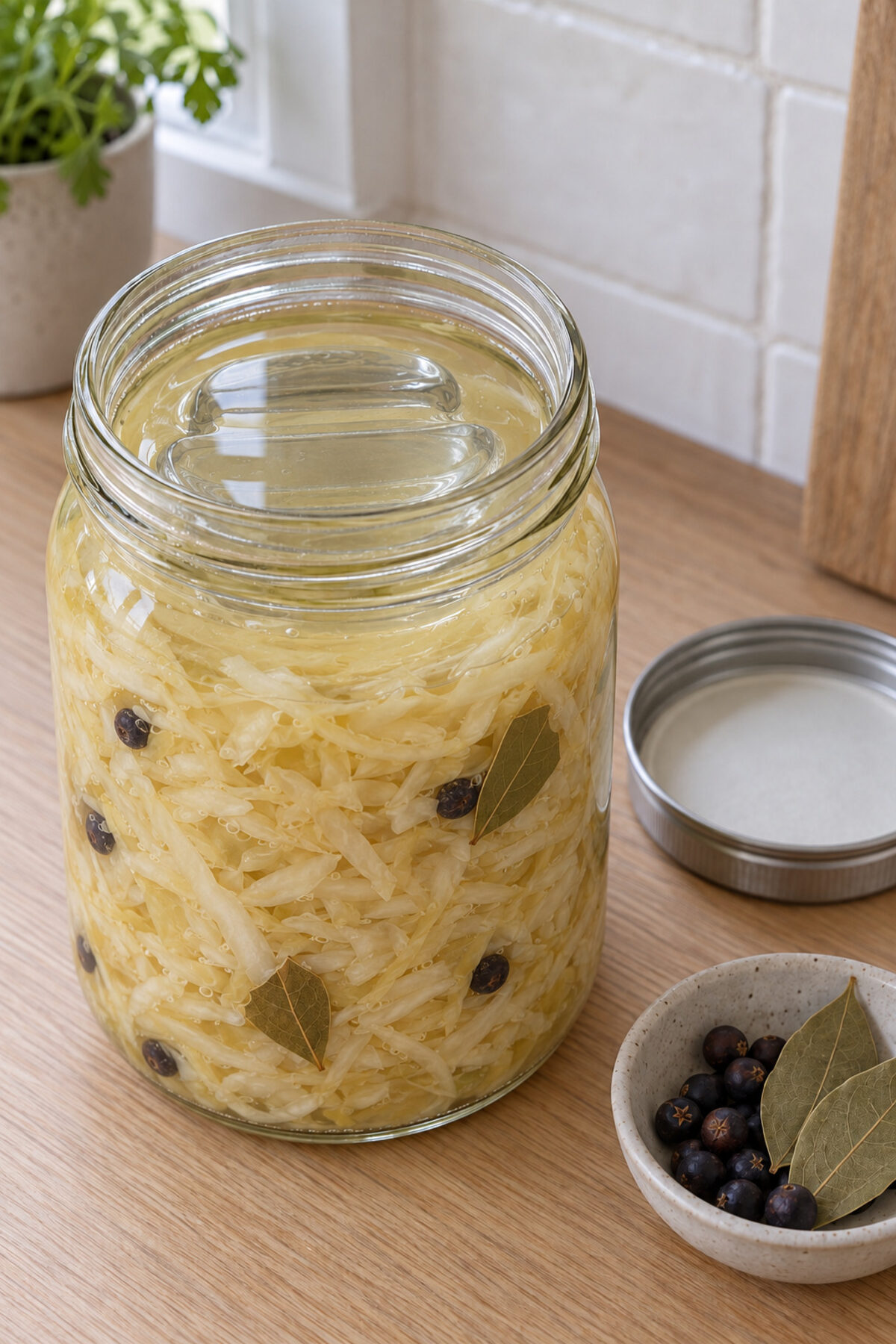
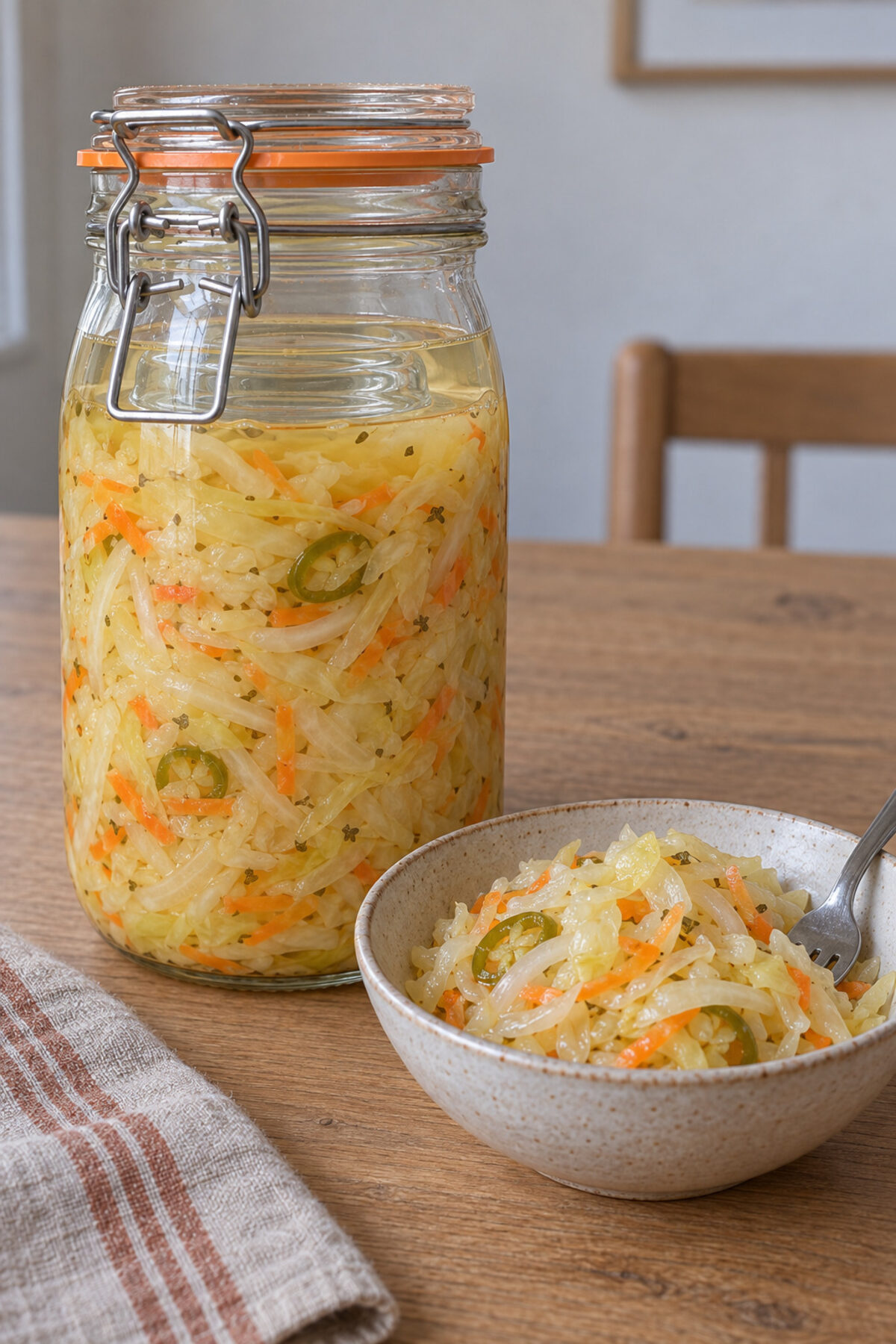
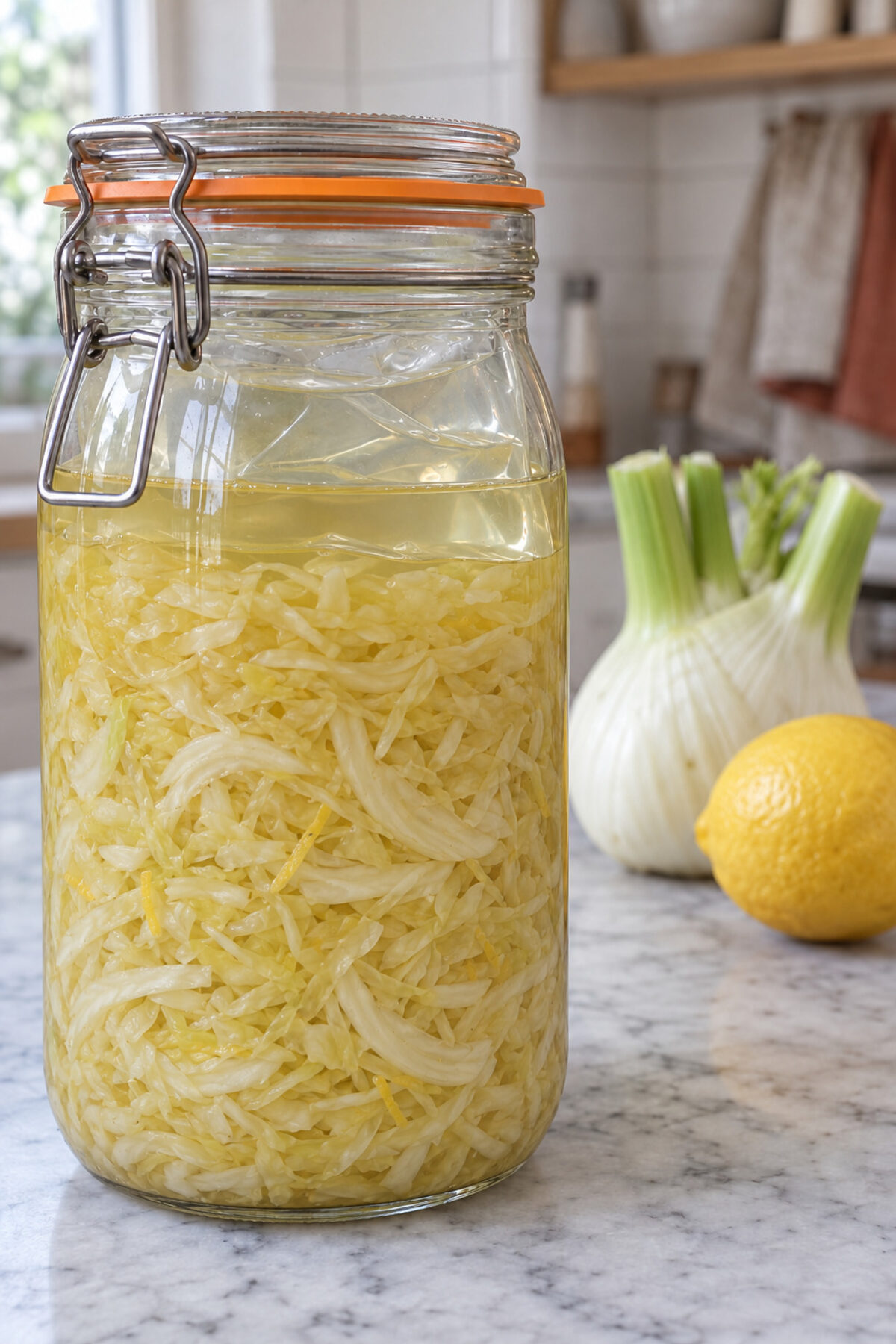
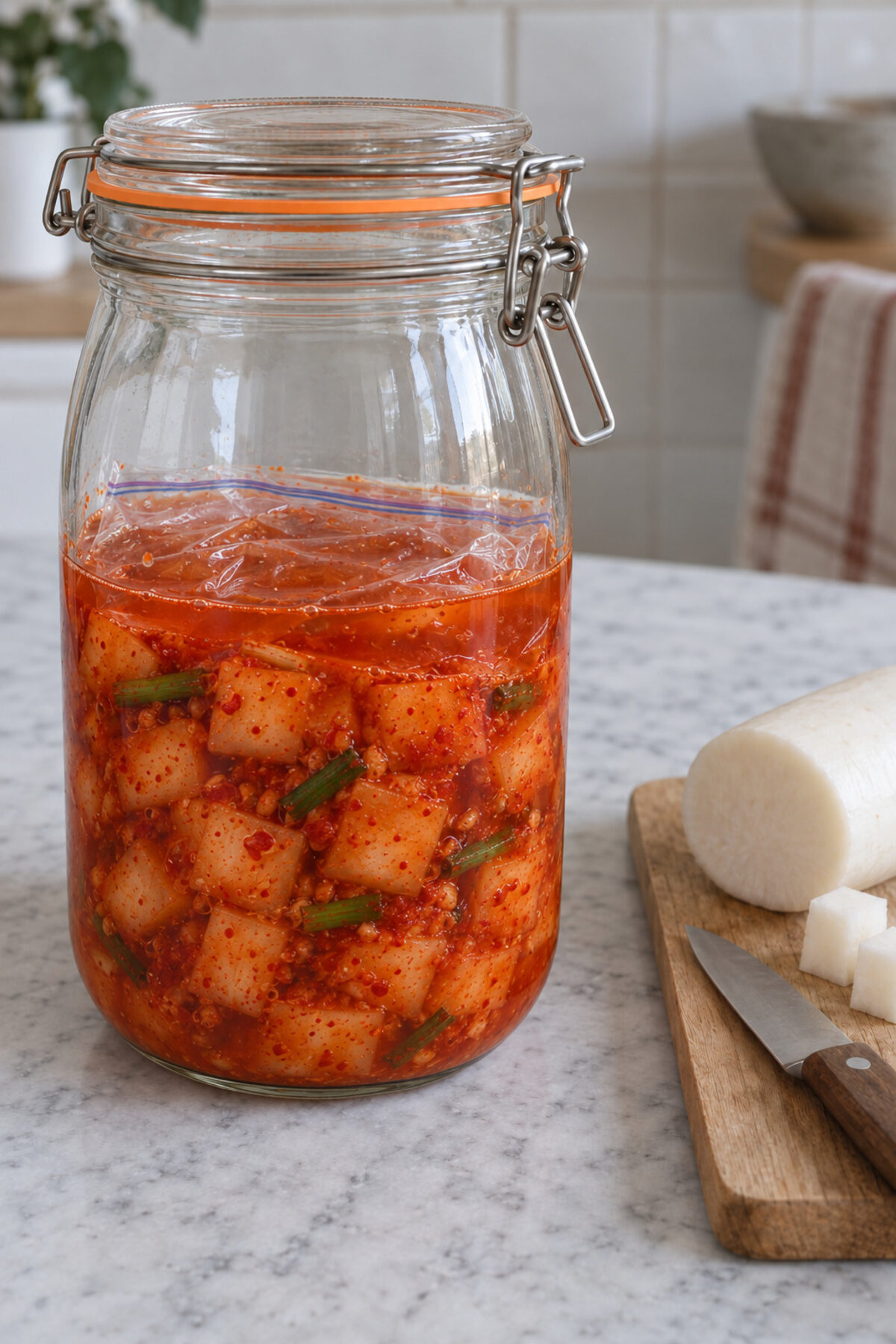
Kimchi
5 recipes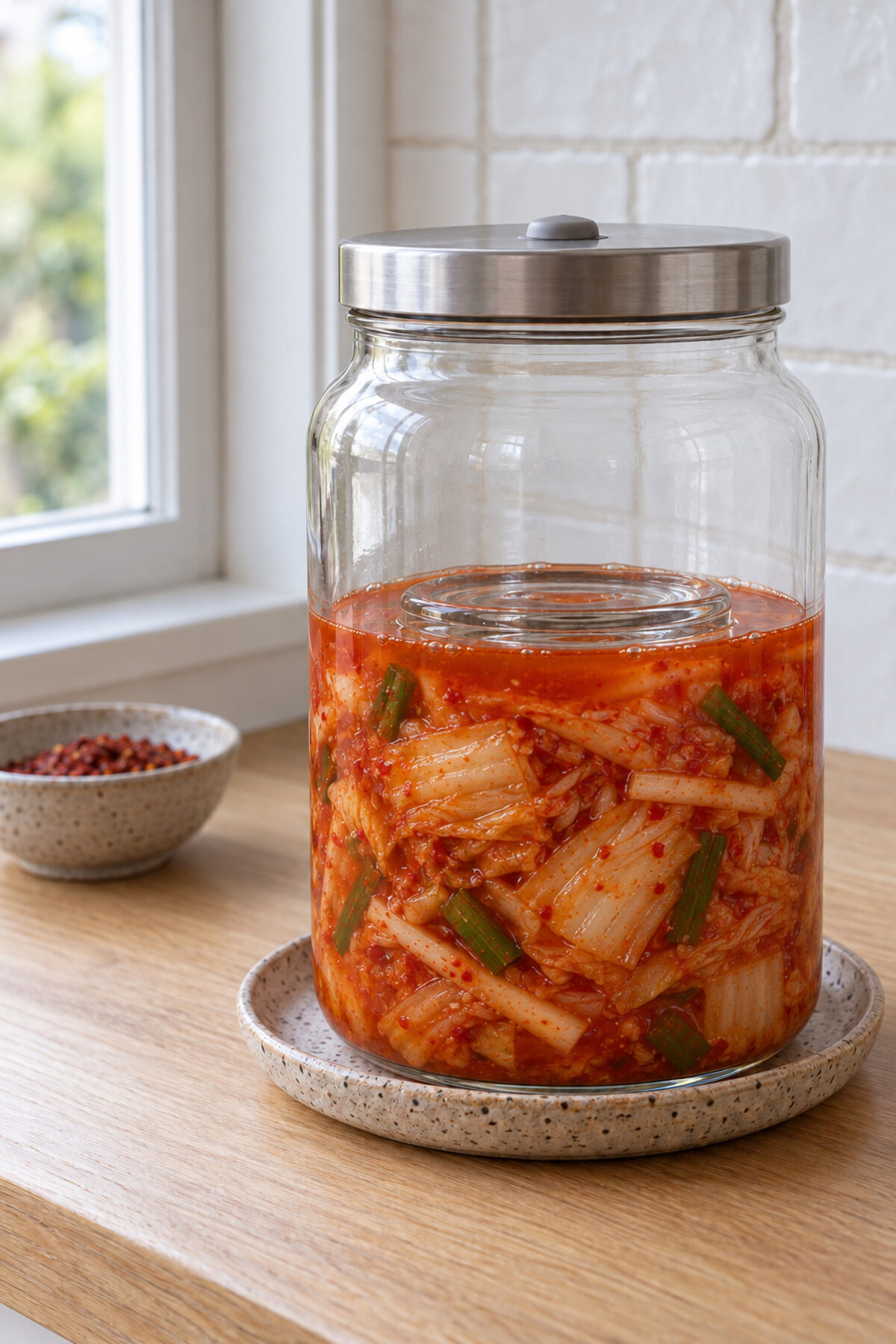
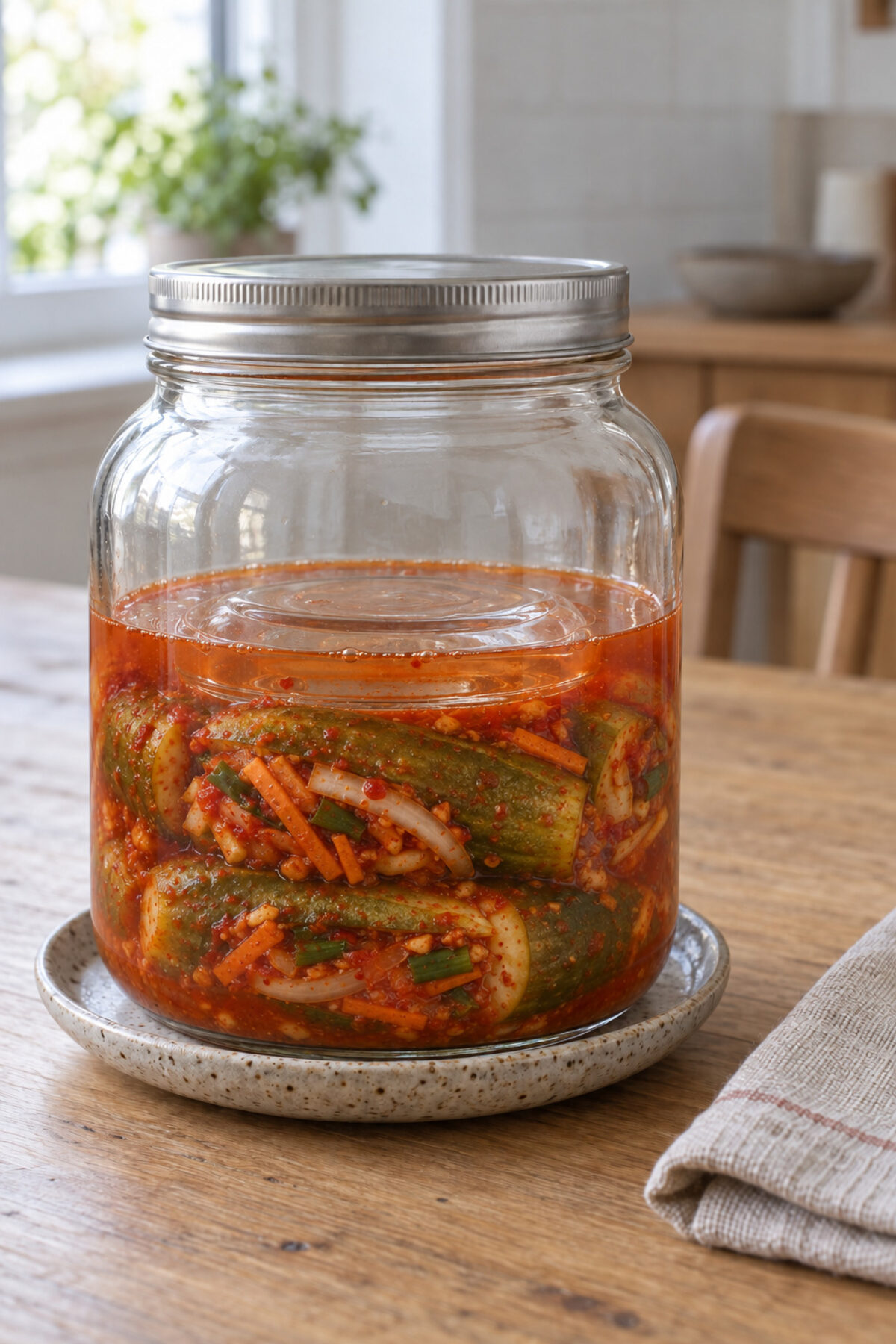
Brine pickles
11 recipes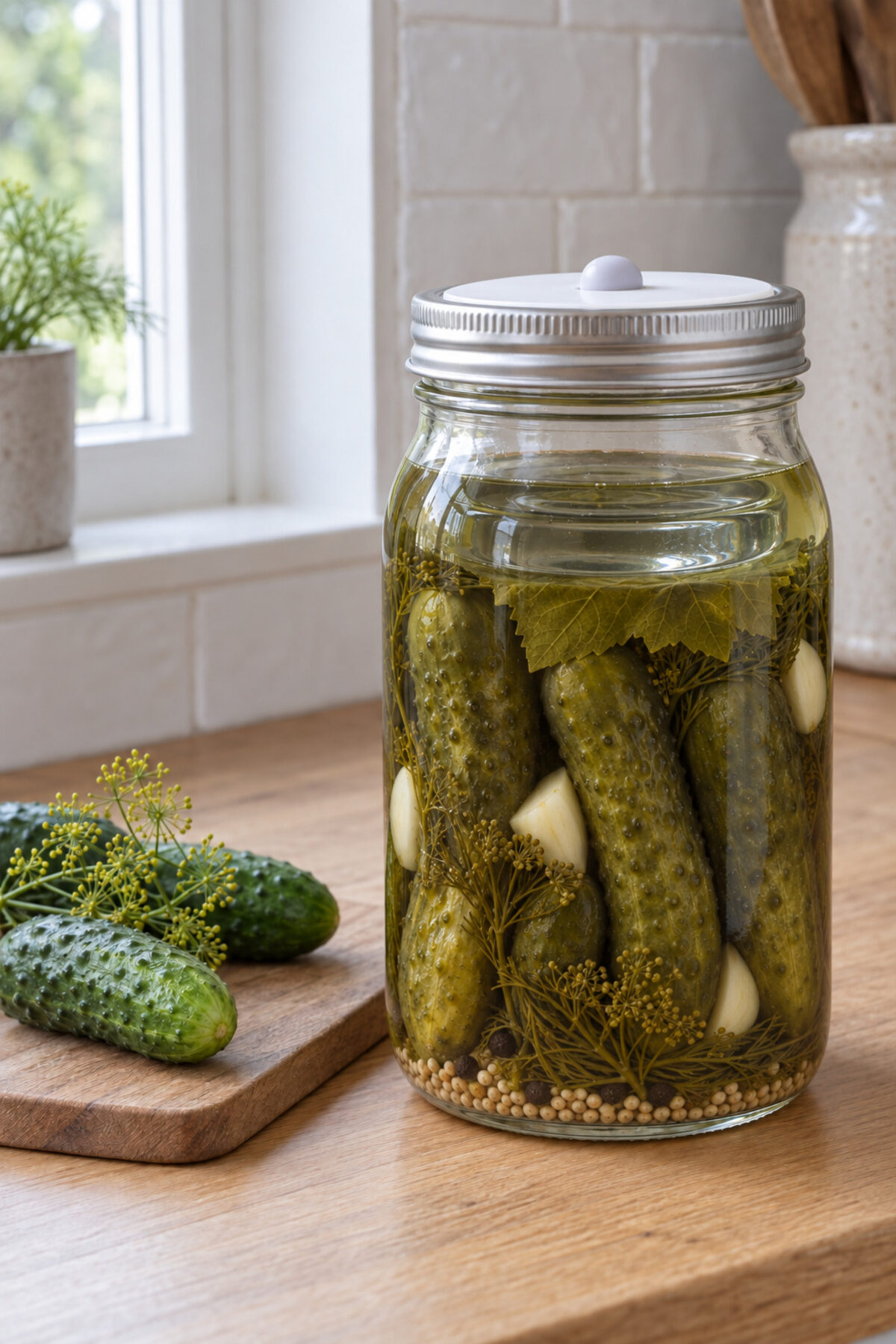 AI
Fermented dill pickles
 AI
Brine-fermented carrots with ginger
 AI
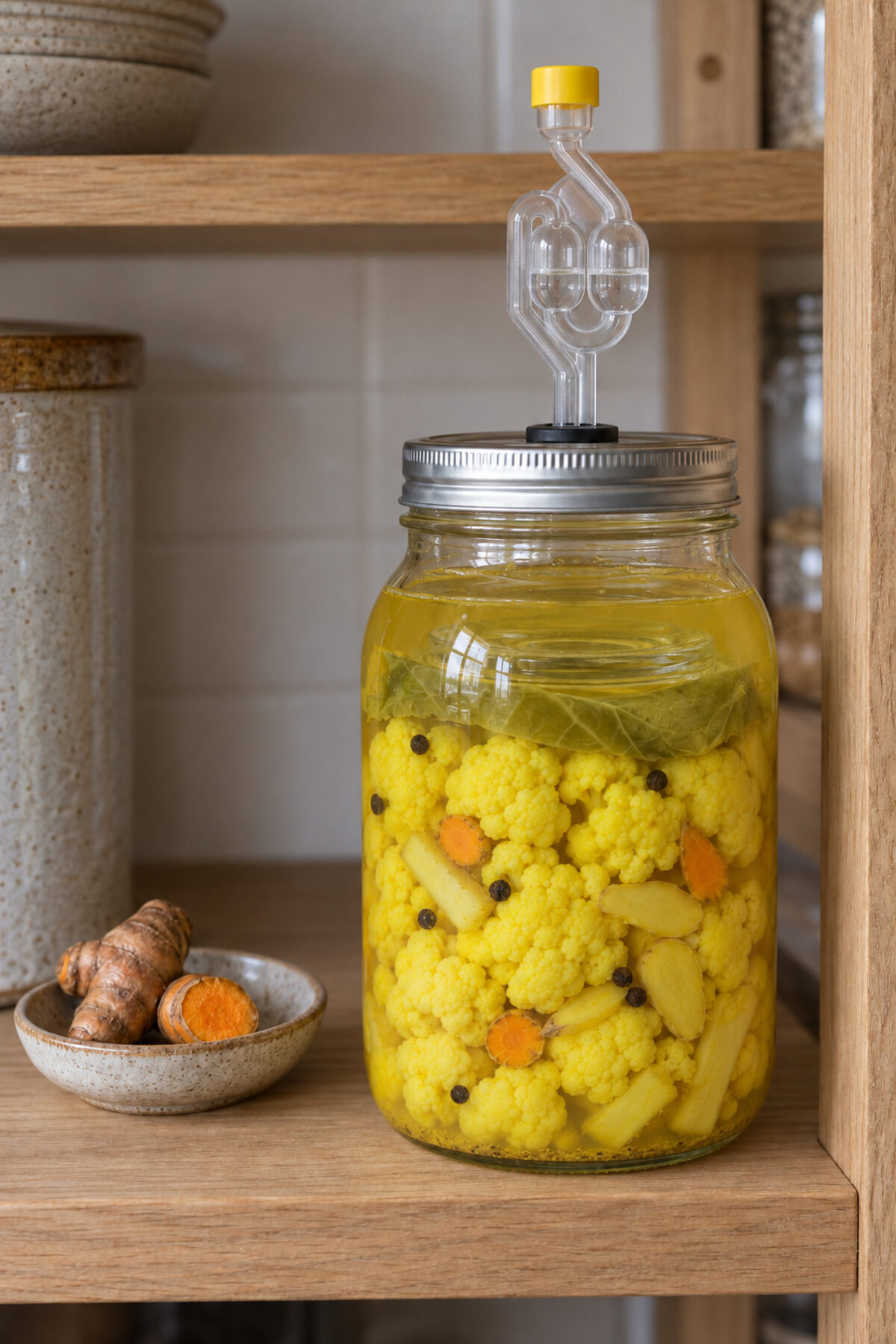
Fermented cauliflower with turmeric
 AI
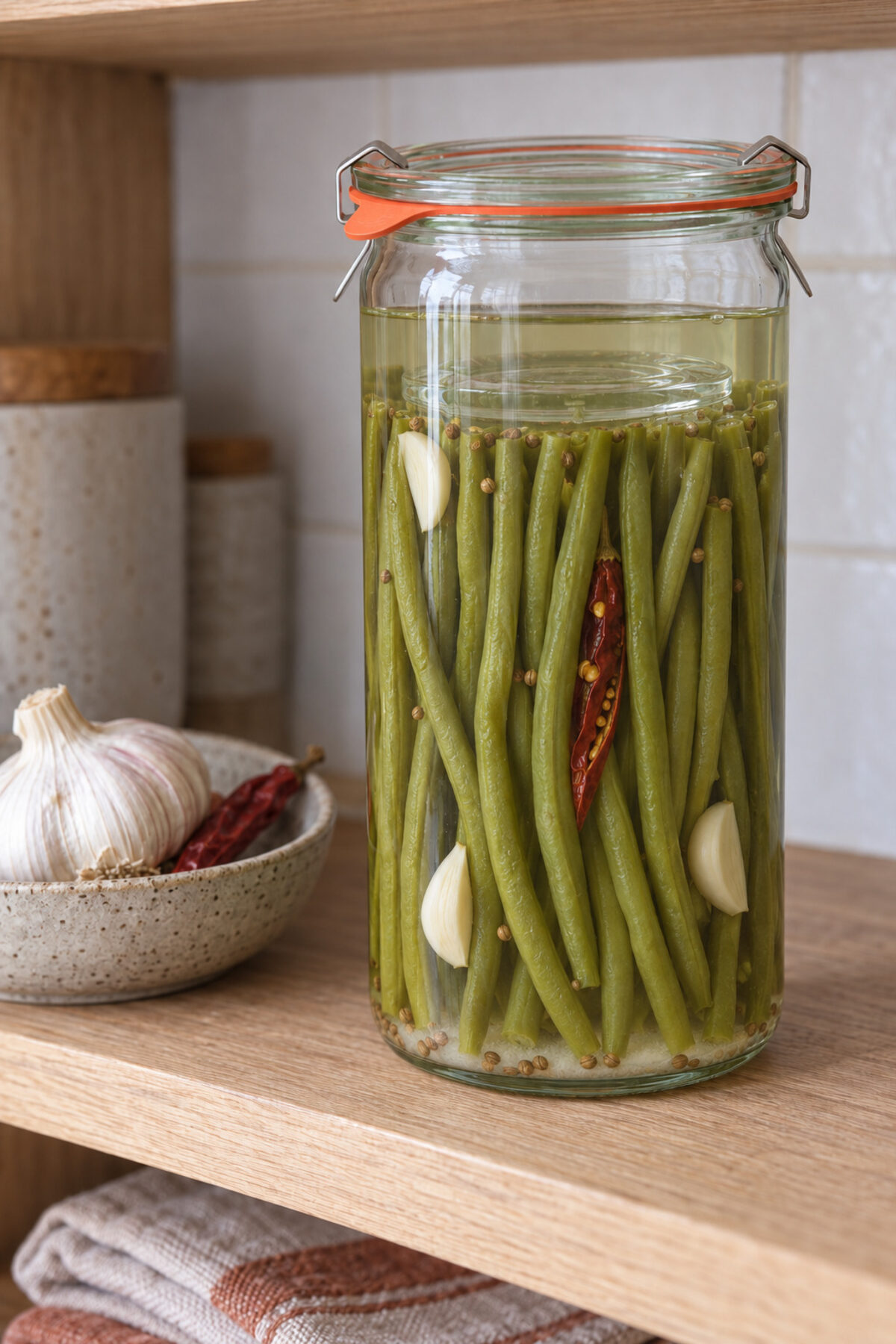
Fermented green beans with garlic
 AI
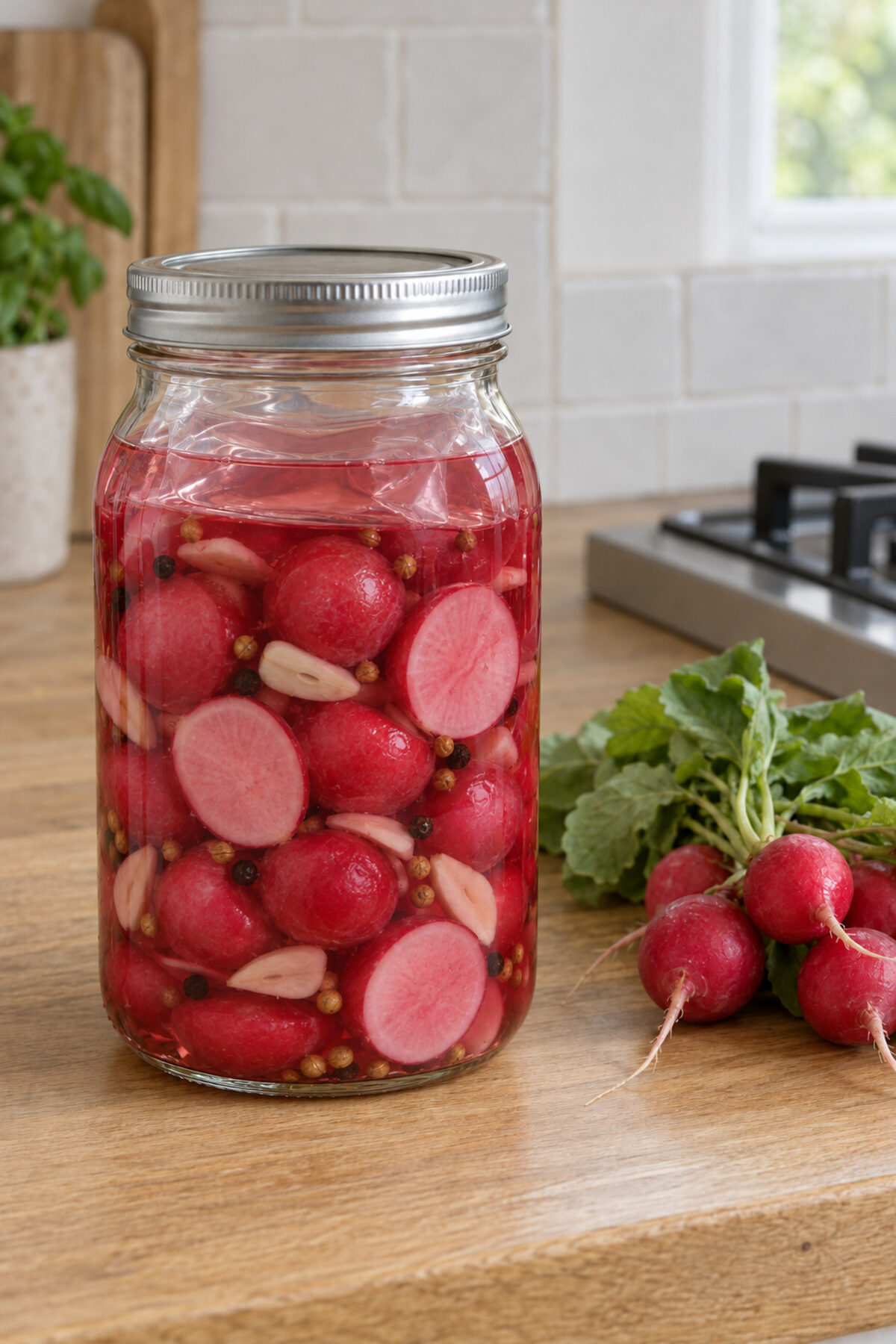
Fermented radishes
 AI
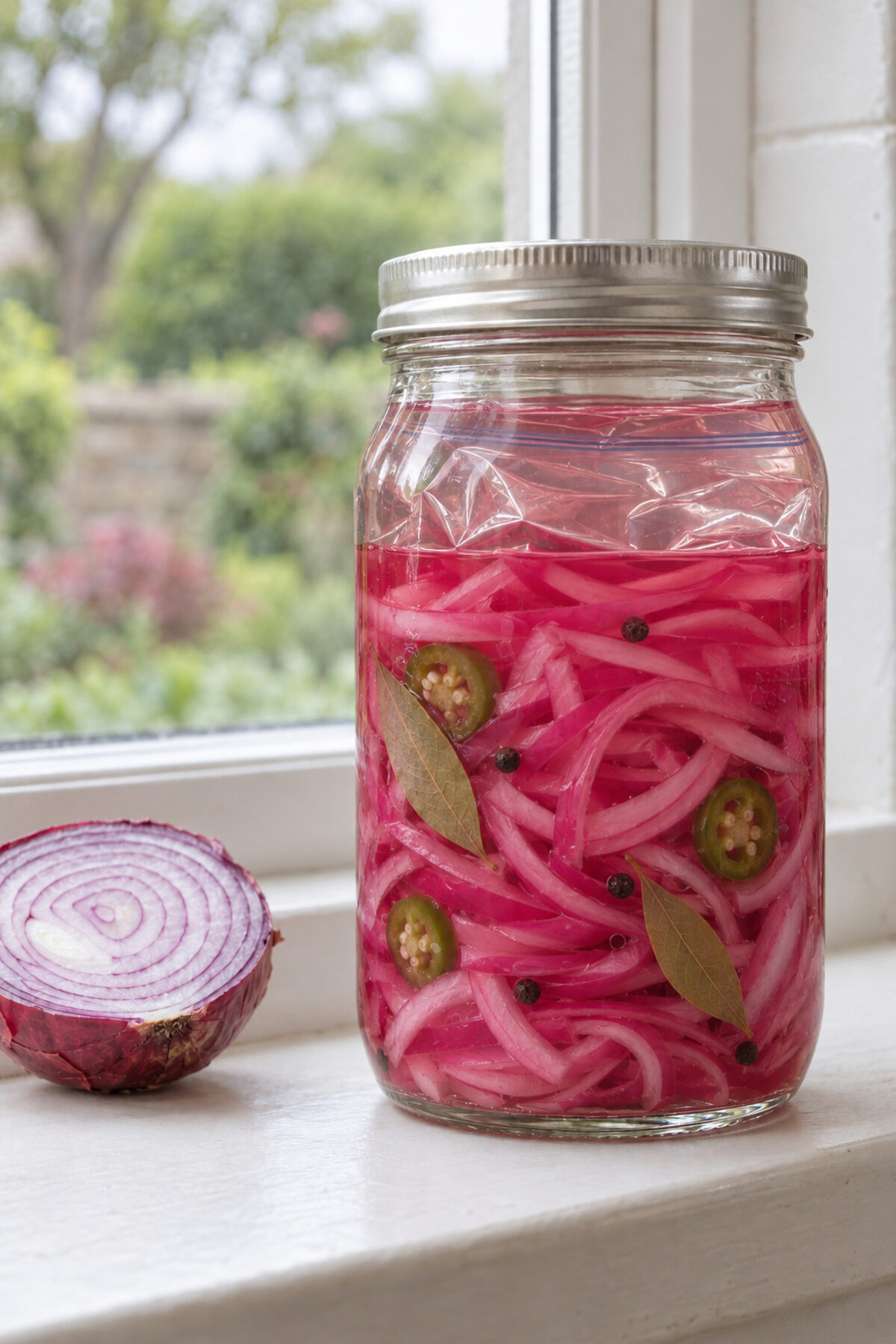
Fermented red onions
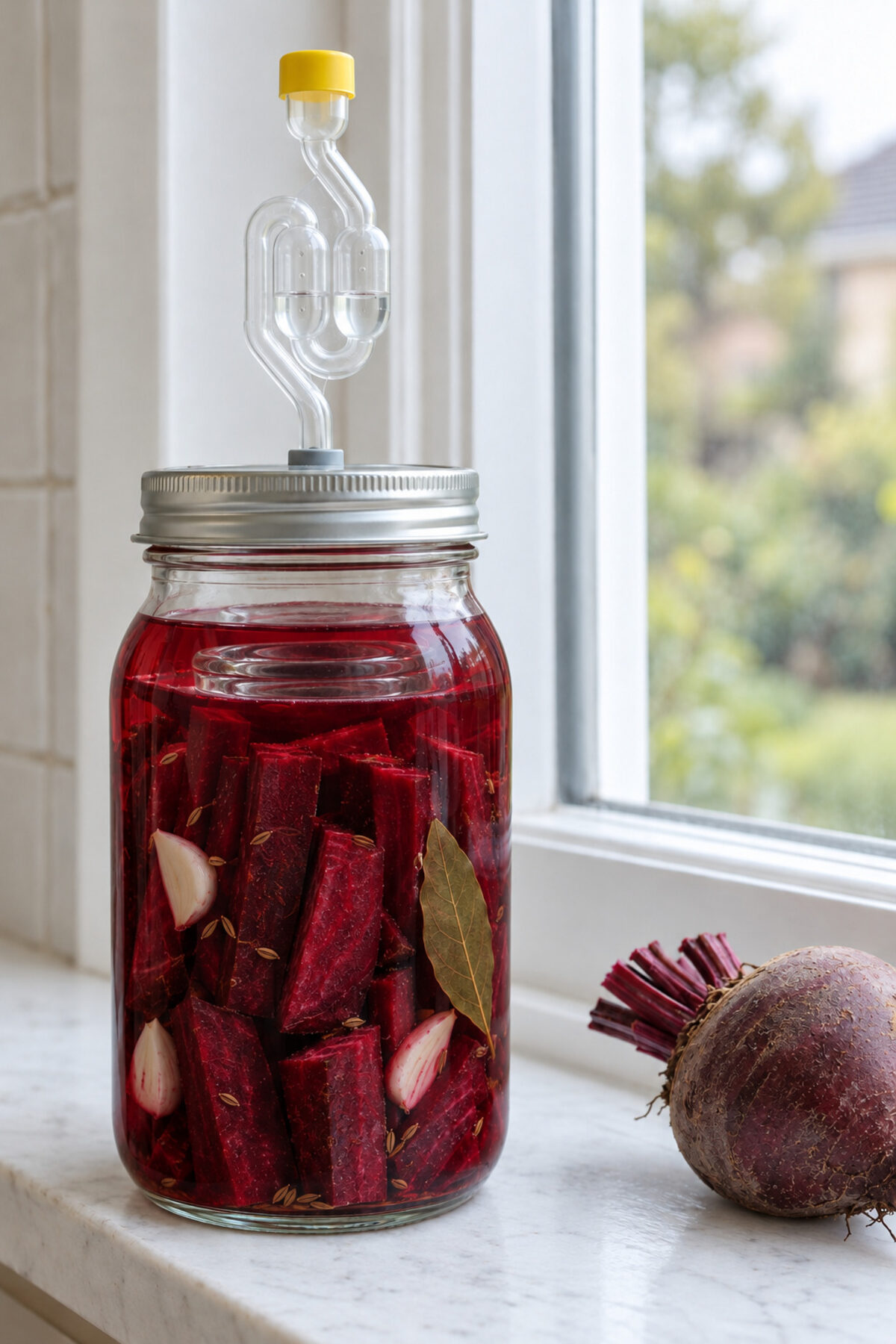 AI
Fermented beets
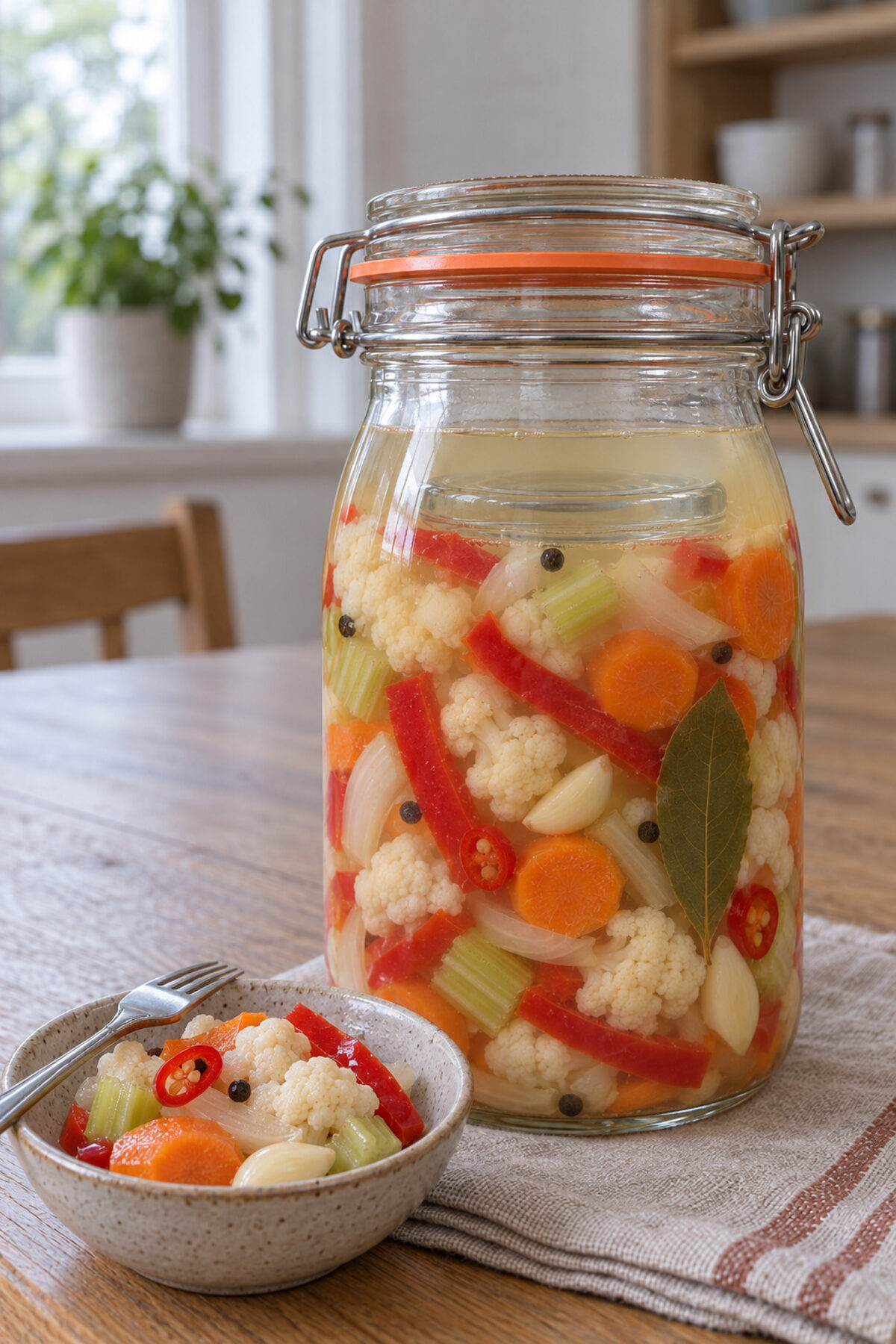 AI
Fermented giardiniera
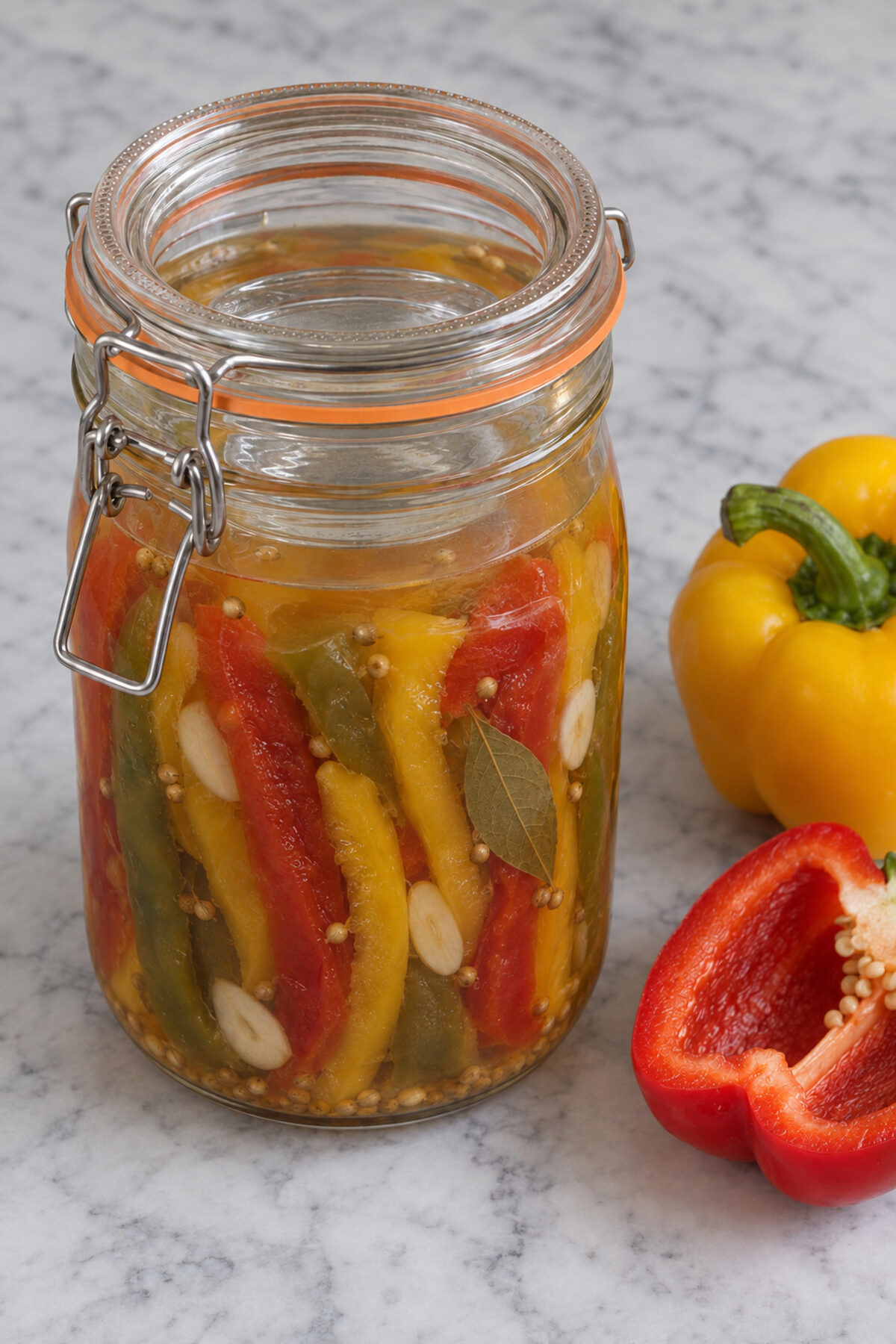 AI
Fermented bell peppers
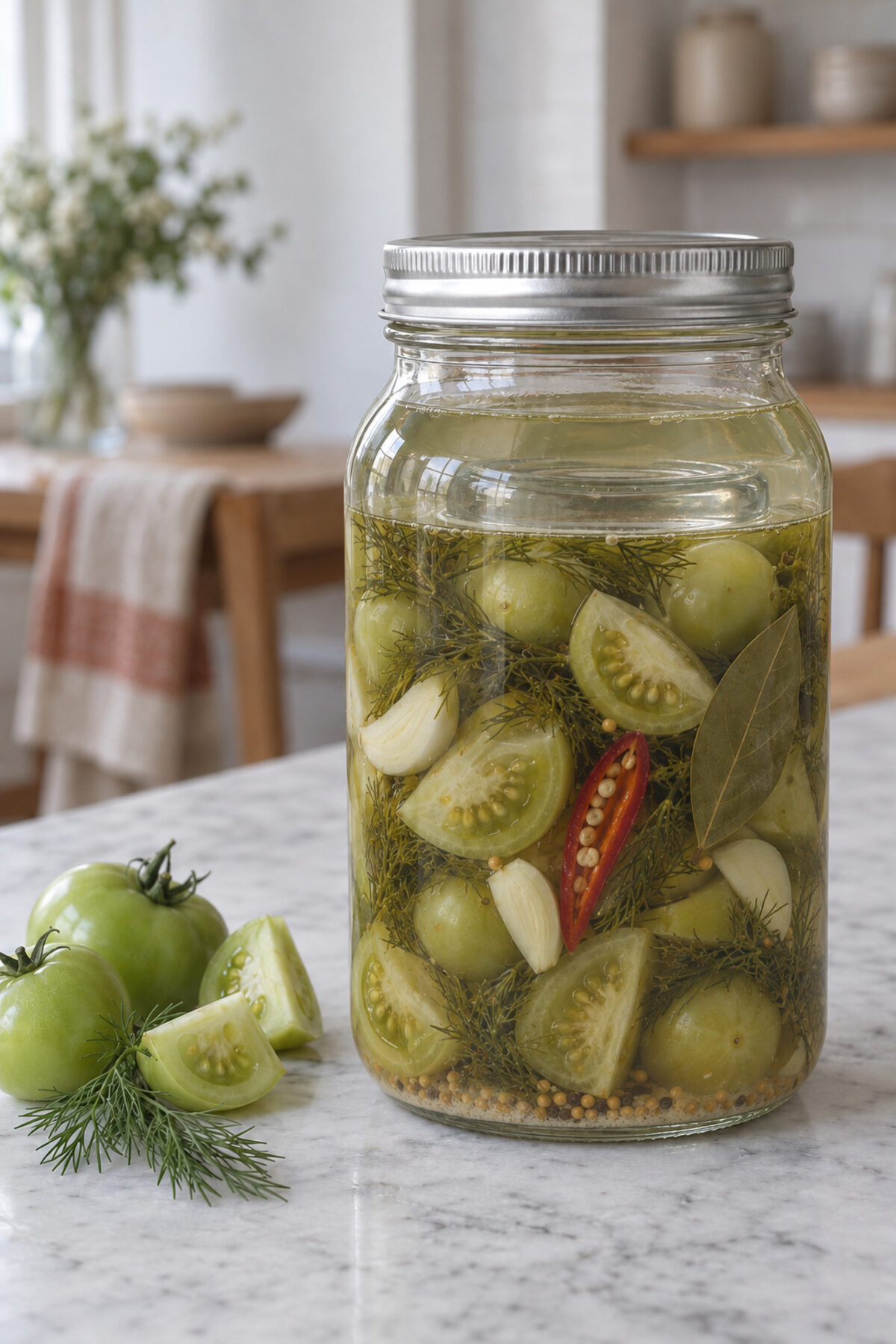 AI
Fermented green tomatoes
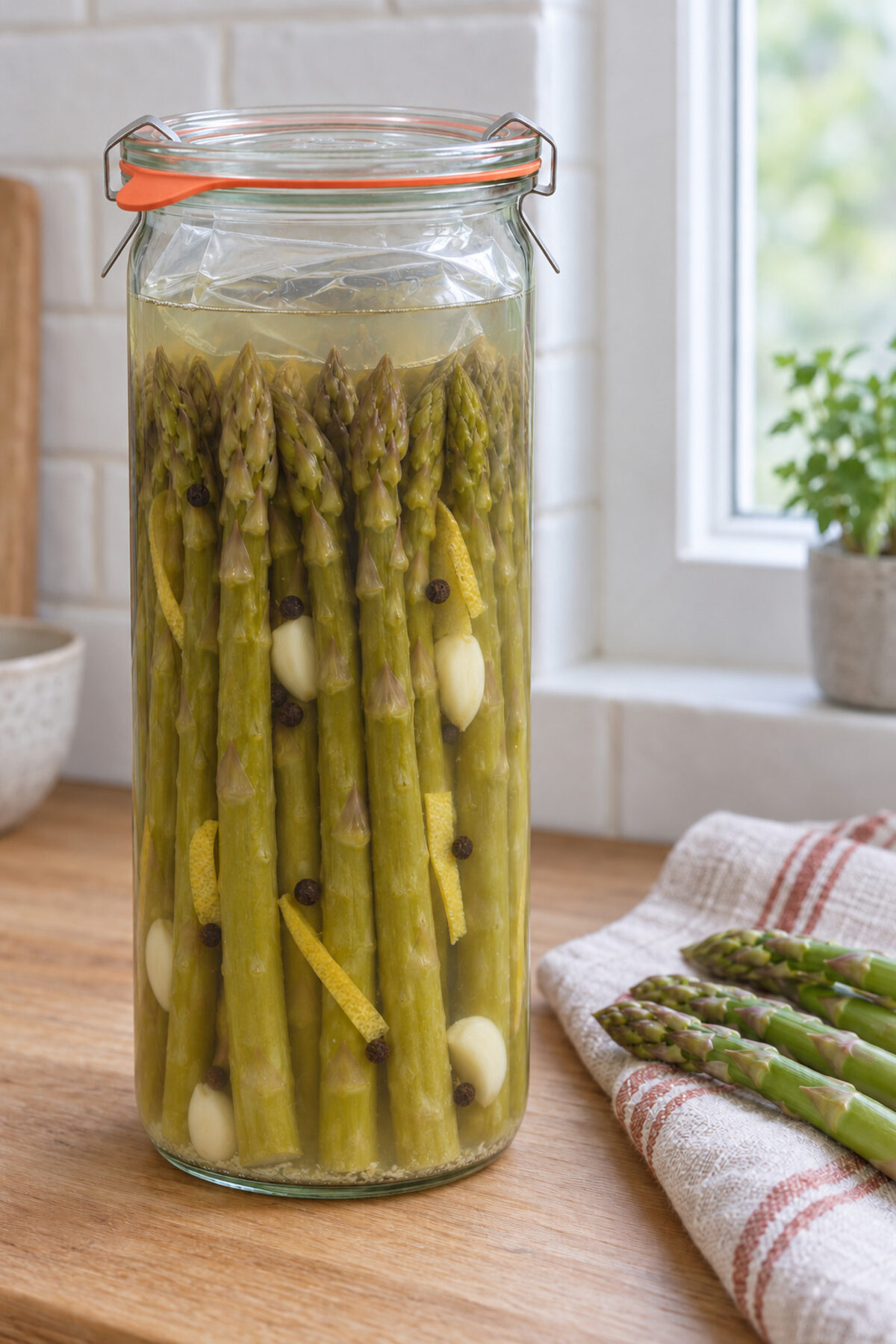 AI
Fermented asparagus
Problems
Other families