 AI
Rye sourdough starter
Level 1 · beginner
Just whole rye flour and water. Rye gets going fast and rises high; it raises rye bread and wheat bread alike.
- Time
- 7–14days
- Temperature
- 70–82°F
- Jar
- 1L
The golden rule: raw flour and dough aren't for tasting; throw the starter out if mold appears.
No sign-up. We guide you step by step, from the scale to the fridge.
Reviewed October 26, 2026 · 47 facts, each with its source
You'll need
- 1-liter wide-mouth glass jar (about a quart), with a lid
- A rubber band, to mark the level
- Spatula or spoon, not copper or iron
- Kitchen scale that weighs in 1 g steps
- Room thermometer (optional)
Step by step
-
Day 1: mix the rye with the water and mark the level
Clean the counter, the jar and the spatula, and wash your hands. Weigh the empty jar and write the weight down. Put 50 g of whole rye flour and 55 g of water in the jar and stir until no dry flour is left. Put a rubber band around the jar, right at the level of the mixture.
Put the lid on without tightening the band: the starter gives off gas and needs no air. Leave it for 24 hours somewhere warm, at 70–82 °F.
Tip: Tap water usually carries chlorine or chloramine, which can kill the good bacteria. Use filtered or spring water, or let a pitcher of tap water stand overnight.
-
Days 2 and 3: feed it once a day
Stir it and discard most of it, leaving just 50 g in the jar. Add 50 g of whole rye and 50 to 55 g of water, and stir until no dry flour is left. Move the rubber band to the new level, cover loosely and leave it for another 24 hours at 70–82 °F.
That's the minimum ratio: equal weights of starter, flour and water. You discard some because otherwise it piles up and gets too sour.
Tip: It's normal for little to change on day 1. What you discard in the first week goes in the trash or the compost, not into cooking (our house rule).
-
From day 4: two feedings a day, 12 hours apart
Carry on the same way, but twice a day, 12 hours apart: keep 50 g, add 50 g of rye and 50 to 55 g of water, stir, move the band and cover loosely. A starter takes 14 days to a month to get established.
Tip: The closer to 82 °F, the more active it is. If it's slow, move it somewhere warmer. Illinois suggests switching sluggish wheat starters to rye: with this one, you're already there.
-
Check whether it's ready
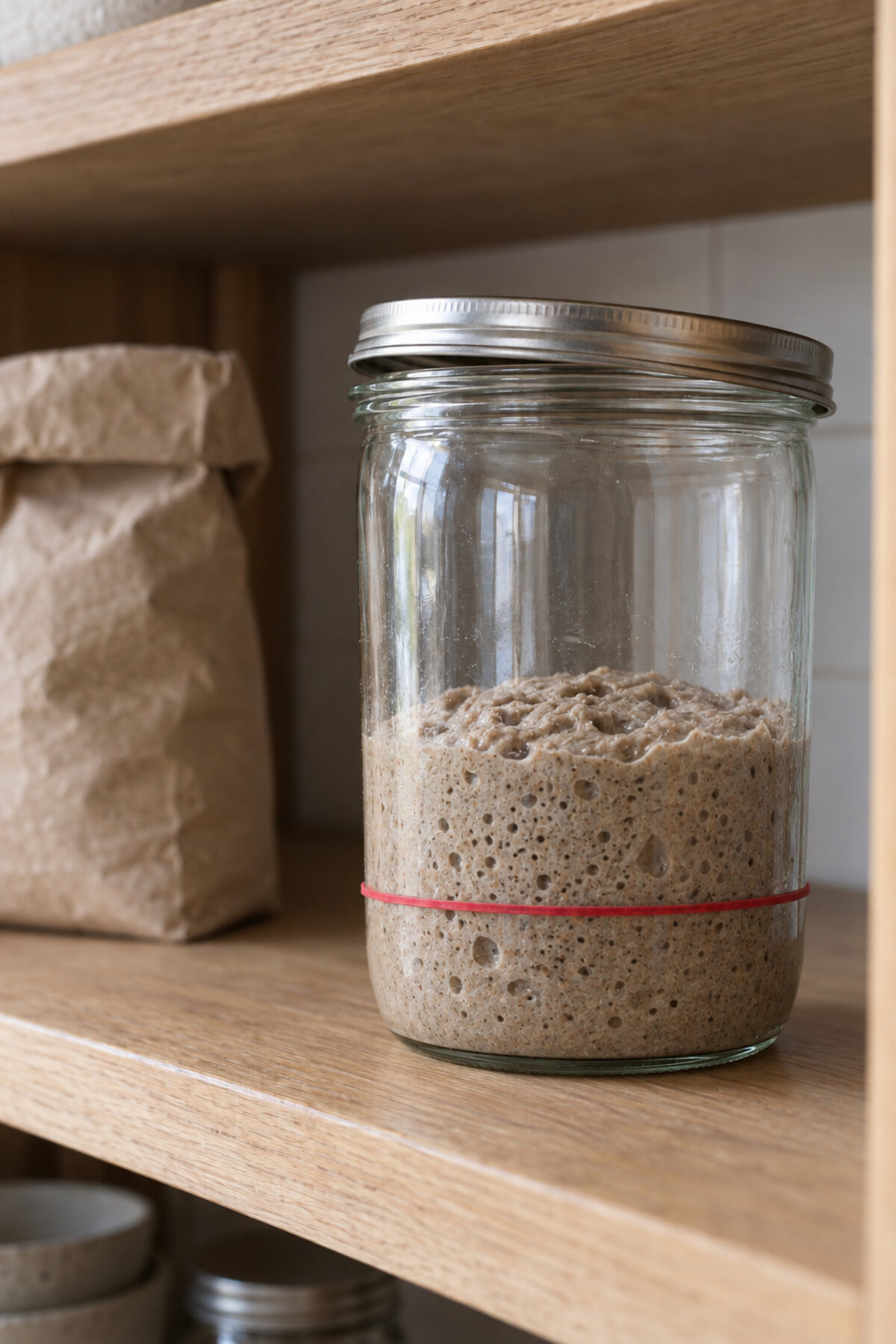
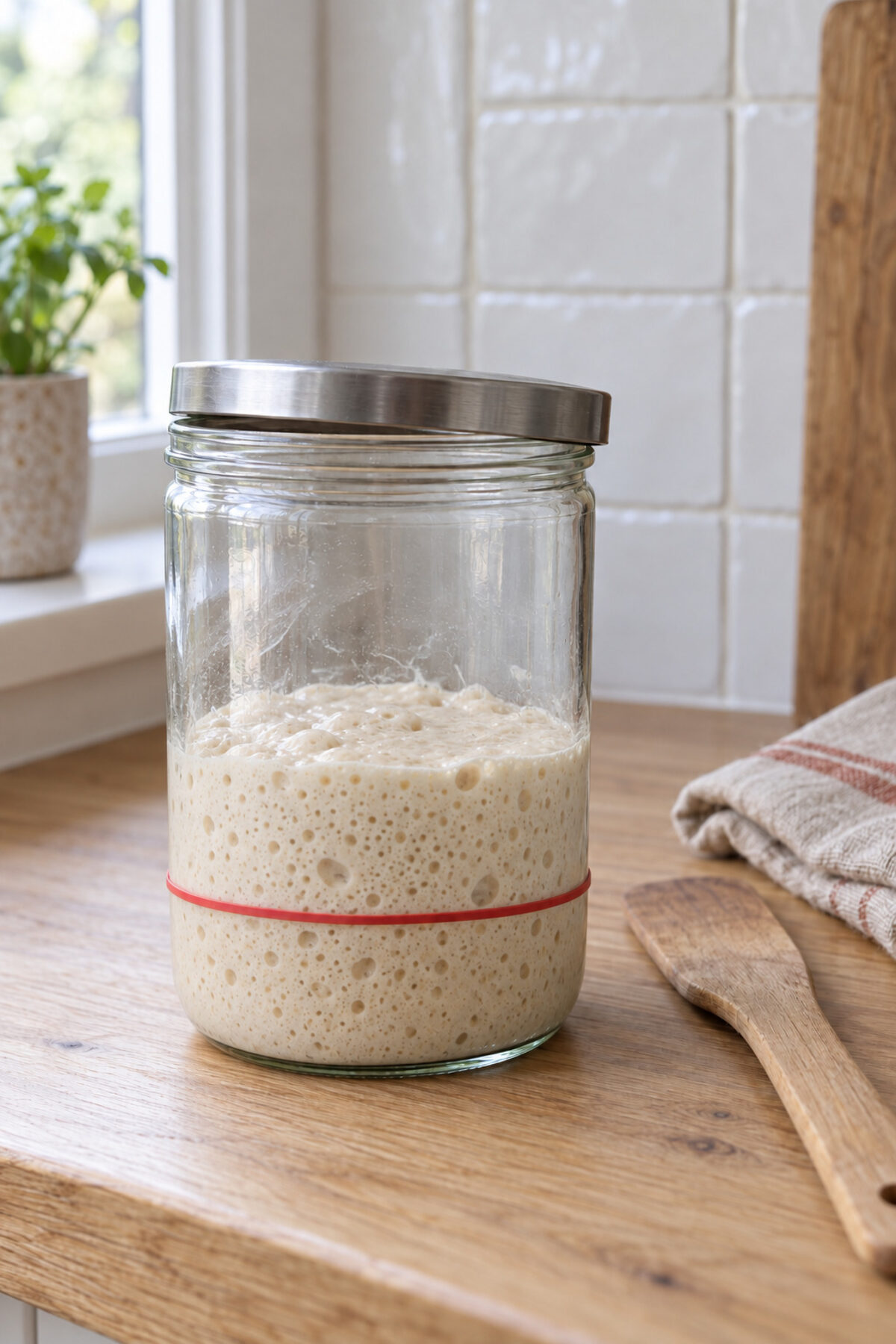
It's ready when it rises and falls on schedule and doubles within 4 to 6 hours of a feeding, has bubbles on top and some large ones on the sides, and smells yeasty and pleasant. As the days go by, the smell turns sour, like fermented fruit.
A rye starter doesn't stretch or turn into the elastic foam of a wheat one: go by how much it rises, the bubbles and the smell, not the texture (our house rule).
It can raise bread from day 7, but it bakes better from day 14 on. In one study every starter was mature and stable by day 10, with the pH at 3.6, although the rye ones kept rising until day 14.
Tip: If it has already fallen by the time you look, check the mark it leaves on the glass, like a high-tide line: it shows how high it rose. Don't taste it to tell if it's ready; go by the signs and your notes.
-
Use it at its peak and keep feeding it
To make bread, use it at its peak: when it has doubled, about 4 to 6 hours after a feeding and before it falls back. If you bake every day or 3 or 4 times a week, keep it on the counter and feed it once a day. If you bake less often, keep it covered in the fridge and feed it once a week, as in "Keep your starter going".
No sign-up. We guide you step by step, from the scale to the fridge.
Variations
The same method, a different flavor. Once you have this one down, try one of these.
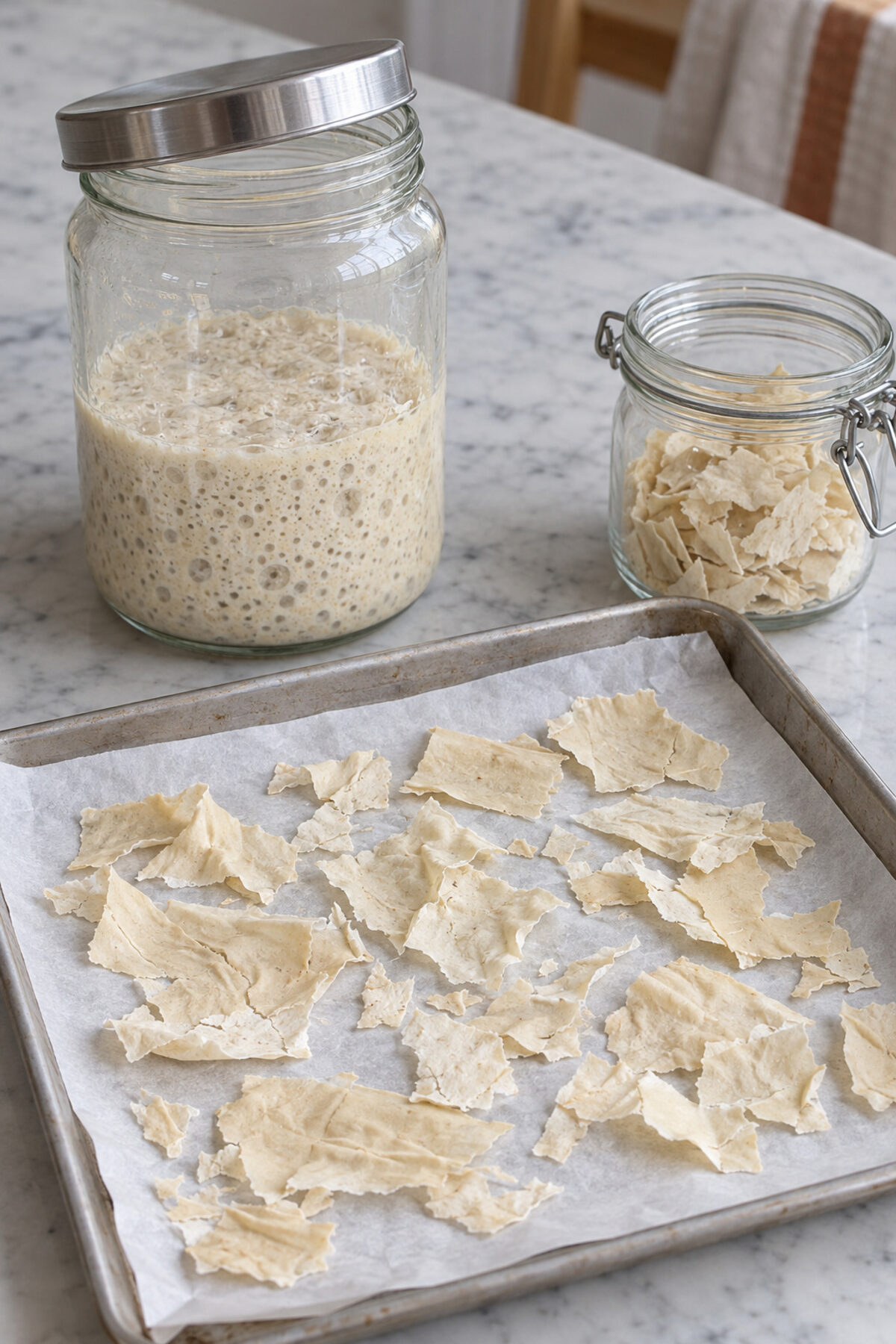
What you'll see
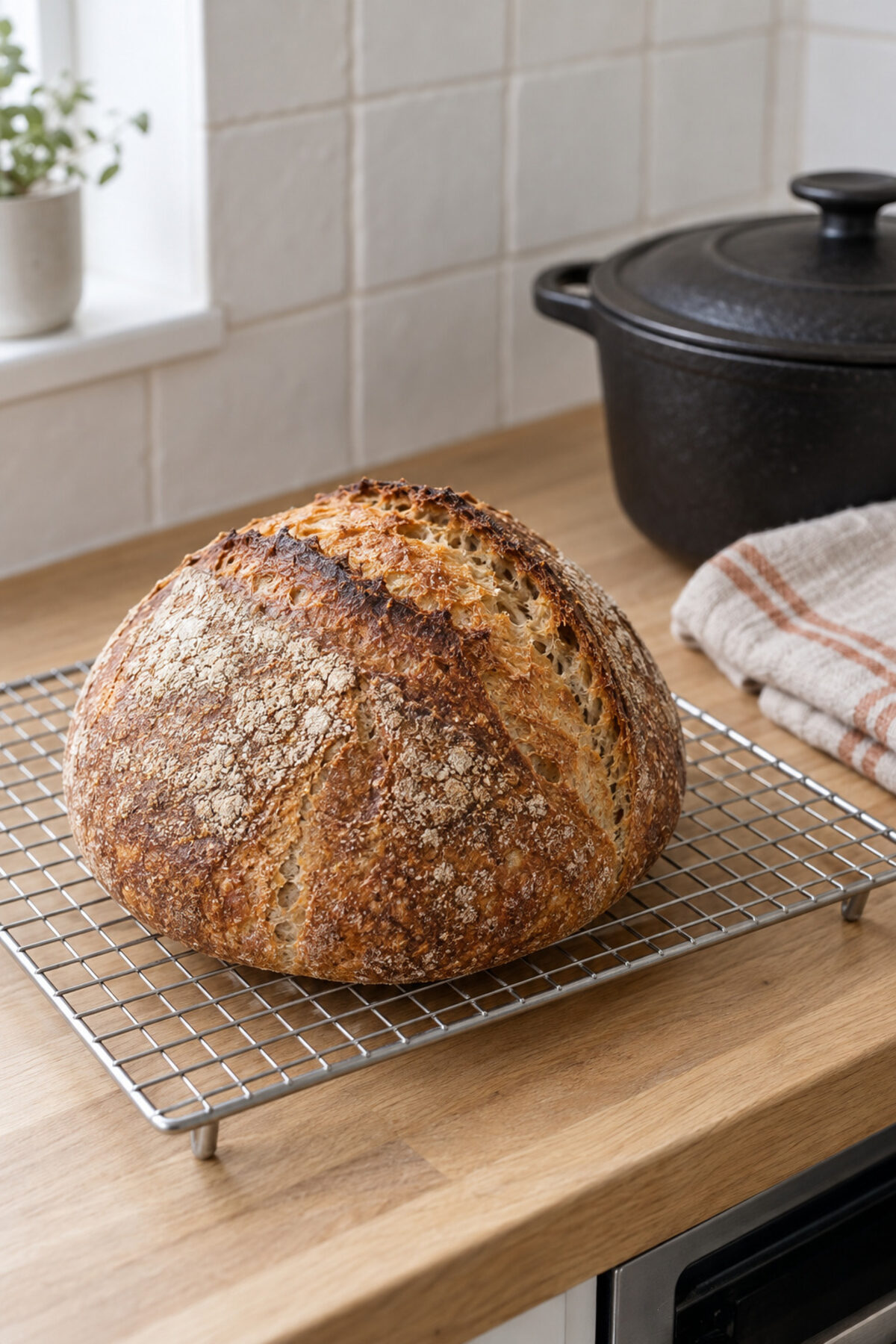
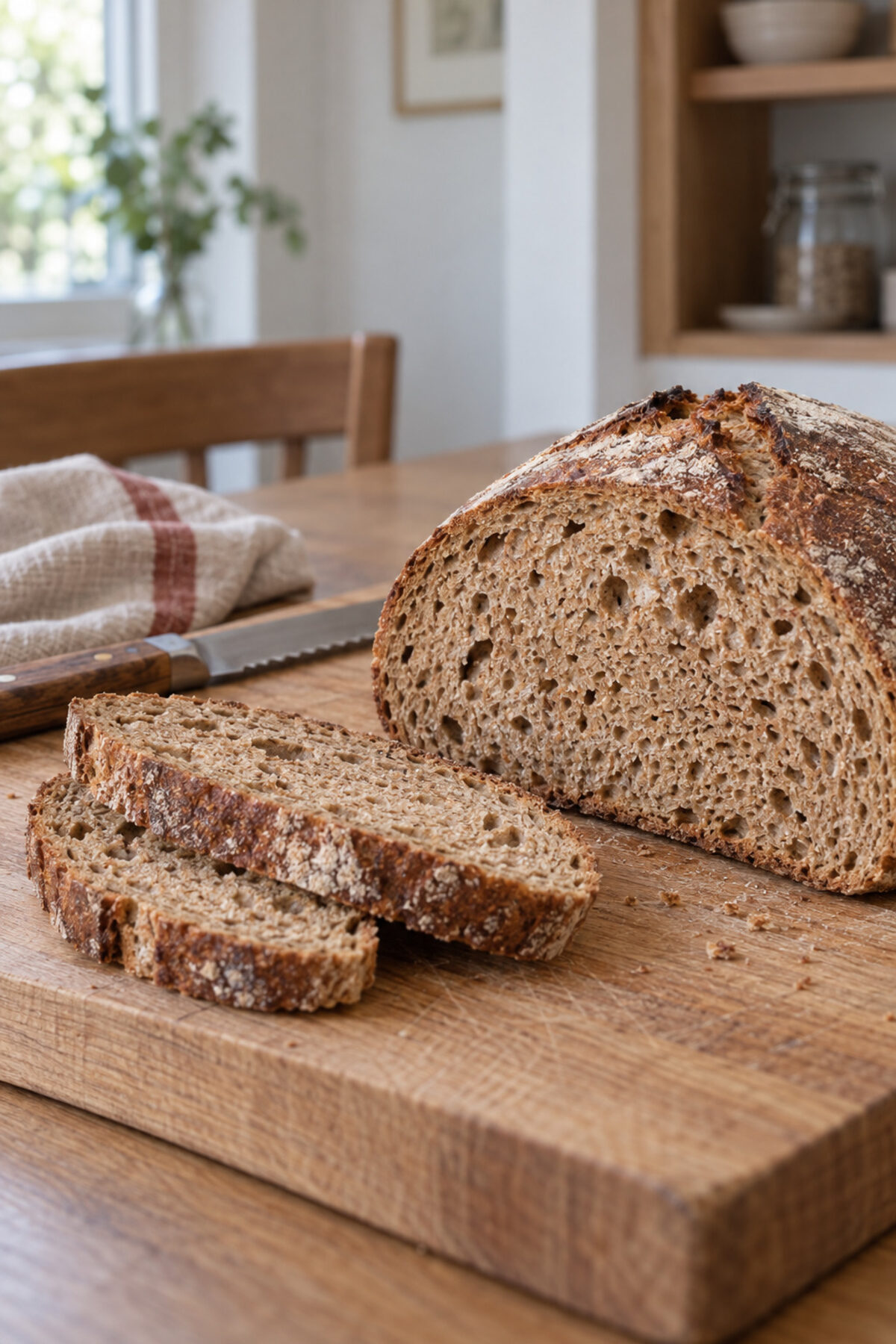
This starter is made with nothing but whole rye flour and water. The wild yeasts and bacteria that ferment it already live on the flour and in the air, and they like rye: its starch breaks down easily and frees more sugars for them. In a study of ten flours, rye starters were among those that rose highest. As it ferments it turns sour, and that acidity helps hold back the microbes we don't want. It raises bread, rye or wheat.
The steps and timings are the University of Illinois method, but with rye throughout. Illinois got better results with half rye and half wheat; if you'd rather use that mix, follow "Make a sourdough starter". Whole rye flour is the dark, whole-grain kind.
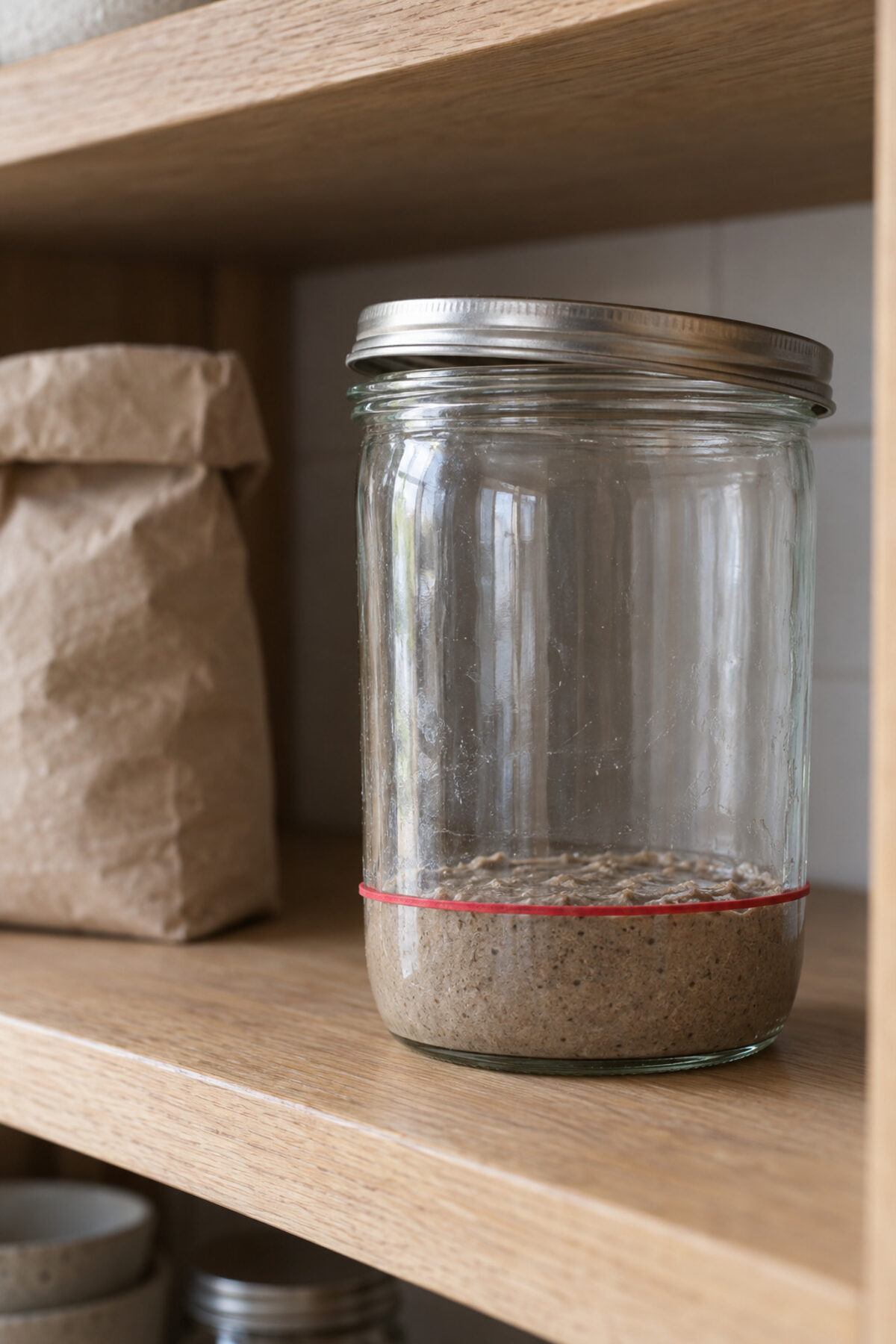 AI
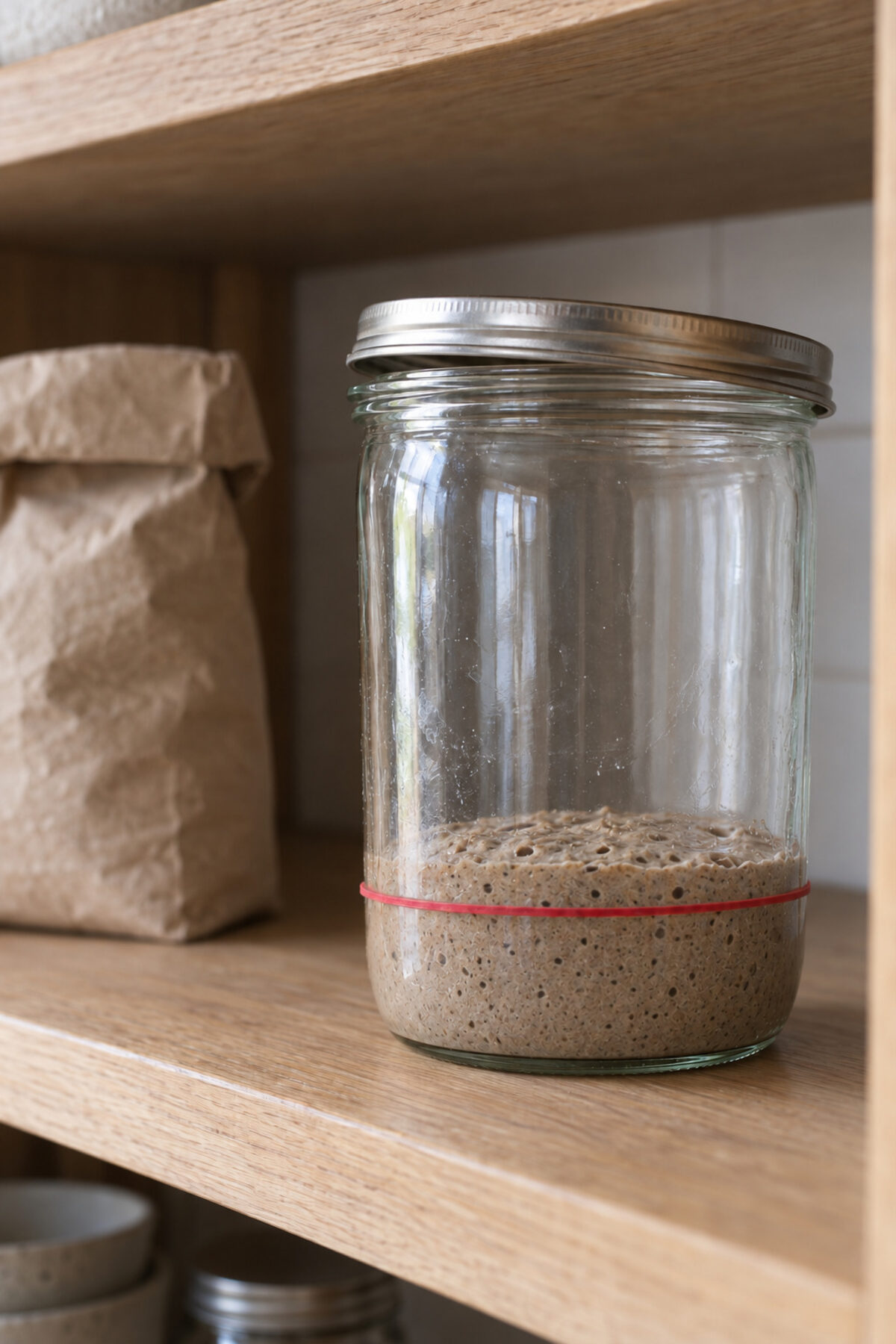 AI
AI
How to tell it's going well
- Don't taste it, or any raw dough. Flour is a raw food: it hasn't been treated to kill germs such as E. coli or Salmonella, and they die only when it's baked or cooked. Wash your hands with soap and water after handling it.
- Fuzz or colored spots mean mold. Throw the whole starter out, clean the jar well and start again. Don't sniff it.
- Pink or orange streaks: throw it out too. In Alaska, where sourdough is a tradition, discolored starters aren't used today.
- A dark liquid on top that smells of alcohol is normal. It's called hooch: pour it off or stir it in.
- Keep the lid loose. The starter gives off gas.
- Glass, food-grade plastic or stainless steel. Never copper, iron or galvanized metal.
Where every number comes from
Every number in this recipe comes from a food safety guide. We keep a copy of each source and quote its exact words.
-
1
Wild yeast is already on the flour and in the air
“Wild yeast is naturally on the flour and in the air.”
Colorado State University Extension (Farm to Table) · Sourdough Starter Best Practices (March 2020) · read on October 25, 2026
-
2
Fermentation acidifies it, which helps hold back pathogens
“The fermentation process will acidify the starter, which helps prevent pathogen growth.”
Colorado State University Extension (Farm to Table) · Sourdough Starter Best Practices (March 2020) · read on October 25, 2026
-
3
A loose lid lets the gas out; it needs no air
“The starter should be loosely covered in order to safely release the gas, but the culture does not require oxygen.”
Colorado State University Extension (Farm to Table) · Sourdough Starter Best Practices (March 2020) · read on October 25, 2026
-
4
Judge it by bubbles, smell, texture and rise, not by tasting
“Instead, a bubbly appearance, tangy smell, batter-like consistency, expansion, and records of preparation steps should be used to determine when your starter is ready.”
Colorado State University Extension (Farm to Table) · Sourdough Starter Best Practices (March 2020) · read on October 25, 2026
-
5
Don't taste raw starter
“Do not taste raw sourdough starter before baking.”
Colorado State University Extension (Farm to Table) · Sourdough Starter Best Practices (March 2020) · read on October 25, 2026
-
6
With mold, throw it out and clean the jar well
“Sourdough starter that shows any sign of mold (colored and/or fuzzy) should NOT be used, and the container should be thoroughly cleaned and rinsed before starting over.”
Colorado State University Extension (Farm to Table) · Sourdough Starter Best Practices (March 2020) · read on October 25, 2026
-
7
Whole rye works well on day one
“Whole rye or other whole grain flour is great on day one, as wild yeasts love it.”
University of Illinois Extension · Sourdough Bread: 101, Sourdough Starter Recipe and Sourdough Recipes #1-3 (modified December 2025) · read on October 25, 2026
-
8
Day 1, 50 g whole rye flour and 55 g water
“Add 50 grams (½ cup) of whole rye flour* and 55 grams (¼ cup) of unchlorinated water* to the mason jar”
University of Illinois Extension · Sourdough Bread: 101, Sourdough Starter Recipe and Sourdough Recipes #1-3 (modified December 2025) · read on October 25, 2026
Show the remaining 39 claims
-
9
A rubber band marks the level
“Place a rubber band around the jar, marking the starter’s top, indicating rise.”
University of Illinois Extension · Sourdough Bread: 101, Sourdough Starter Recipe and Sourdough Recipes #1-3 (modified December 2025) · read on October 25, 2026
-
10
Loosely covered, 24 hours at 70–82 °F
“Cover loosely and place somewhere warm (70-82 F is best) for 24 hours.”
University of Illinois Extension · Sourdough Bread: 101, Sourdough Starter Recipe and Sourdough Recipes #1-3 (modified December 2025) · read on October 25, 2026
-
11
Chlorine and chloramine in tap water can kill good bacteria
“Tap water is usually treated with chlorine or chloramine, which can kill good bacteria.”
University of Illinois Extension · Sourdough Bread: 101, Sourdough Starter Recipe and Sourdough Recipes #1-3 (modified December 2025) · read on October 25, 2026
-
12
Filter the water or let it stand overnight
“To dechlorinate tap water, use a water filter or fill a pitcher of water and let it stand overnight.”
University of Illinois Extension · Sourdough Bread: 101, Sourdough Starter Recipe and Sourdough Recipes #1-3 (modified December 2025) · read on October 25, 2026
-
13
Days 2 and 3, one feeding a day
“Begin feeding the starter once per day.”
University of Illinois Extension · Sourdough Bread: 101, Sourdough Starter Recipe and Sourdough Recipes #1-3 (modified December 2025) · read on October 25, 2026
-
14
Keep 50 g and discard the rest
“discard enough starter so that 50 grams (¼ cup) remain.”
University of Illinois Extension · Sourdough Bread: 101, Sourdough Starter Recipe and Sourdough Recipes #1-3 (modified December 2025) · read on October 25, 2026
-
15
Each feeding, 50 to 55 g water
“and 50-55 grams (¼ cup) unchlorinated water to the starter”
University of Illinois Extension · Sourdough Bread: 101, Sourdough Starter Recipe and Sourdough Recipes #1-3 (modified December 2025) · read on October 25, 2026
-
16
From day 4, two feedings a day, 12 hours apart
“Begin two feedings per day, 12 hours apart”
University of Illinois Extension · Sourdough Bread: 101, Sourdough Starter Recipe and Sourdough Recipes #1-3 (modified December 2025) · read on October 25, 2026
-
17
Rye starch breaks down easily and frees more sugars
“Rye contains starches that are easily degraded by amylase compared to more resistant wheat starches (Perten, 1964), making sugars more immediately available for microbial metabolism.”
PeerJ, McKenney et al. · Sourdough starters exhibit similar succession patterns but develop flour-specific climax communities (2023) · read on October 25, 2026
-
18
Rye starters were among those that rose highest
“Regarding potential leavening power, rye, emmer, and millet starters achieved the highest rise”
PeerJ, McKenney et al. · Sourdough starters exhibit similar succession patterns but develop flour-specific climax communities (2023) · read on October 25, 2026
-
19
Rye starters reached their peak height on day 14
“starters grown from rye, emmer, and all purpose didn’t reach peach height until day 14”
PeerJ, McKenney et al. · Sourdough starters exhibit similar succession patterns but develop flour-specific climax communities (2023) · read on October 25, 2026
-
20
Little changes on day 1
“On day 1, starters showed little to no change in either pH or height compared to day 0.”
PeerJ, McKenney et al. · Sourdough starters exhibit similar succession patterns but develop flour-specific climax communities (2023) · read on October 25, 2026
-
21
The mark on the glass shows how high it rose
“This point of maximum height can be identified by the residue left on the side of the jar, which resembles a “high tide” mark in cases where an active starter has subsequently deflated by the time of measurement.”
PeerJ, McKenney et al. · Sourdough starters exhibit similar succession patterns but develop flour-specific climax communities (2023) · read on October 25, 2026
-
22
In one study, mature and stable by day 10
“Our results confirm that sourdough starters are functionally mature and stable (i.e., suitable for baking) by day 10 across flour types”
PeerJ, McKenney et al. · Sourdough starters exhibit similar succession patterns but develop flour-specific climax communities (2023) · read on October 25, 2026
-
23
Mature, it smells of sour, fermented fruit
“However, by day 14, mature starters smelled like sour, fermented fruit”
PeerJ, McKenney et al. · Sourdough starters exhibit similar succession patterns but develop flour-specific climax communities (2023) · read on October 25, 2026
-
24
The pH settled at 3.6
“after which starters stabilized at a pH of 3.6”
PeerJ, McKenney et al. · Sourdough starters exhibit similar succession patterns but develop flour-specific climax communities (2023) · read on October 25, 2026
-
25
A sluggish starter can be switched to rye
“If it’s sluggish and not rising, consider putting it in a warmer environment and/or switching the flour, such as all-purpose or bread flour to rye flour.”
University of Illinois Extension · Sourdough Bread: 101 (modified December 2025) · read on October 25, 2026
-
26
Counters and equipment washed and sanitized
“Wash and sanitize countertops and equipment.”
University of Illinois Extension · Sourdough Bread: 101 (modified December 2025) · read on October 25, 2026
-
27
At least equal weights of starter, flour and water
“Feed a minimum 1:1:1 ratio, equal parts by weight of starter, flour, and water.”
University of Illinois Extension · Sourdough Bread: 101 (modified December 2025) · read on October 25, 2026
-
28
It takes 14 days to a month to establish
“It can take 14 days to a month to establish a starter. It must be fed daily and twice daily starting on day 4.”
University of Illinois Extension · Sourdough Bread: 101 (modified December 2025) · read on October 25, 2026
-
29
Ready when it doubles within 4–6 hours of feeding
“It consistently falls and rises; the starter at least doubles within 4-6 hours after feeding.”
University of Illinois Extension · Sourdough Bread: 101 (modified December 2025) · read on October 25, 2026
-
30
Smells yeasty and pleasant
“It smells yeasty and pleasant.”
University of Illinois Extension · Sourdough Bread: 101 (modified December 2025) · read on October 25, 2026
-
31
Bubbles on top and some large ones on the sides
“It has bubbles on the top and some large bubbles on the sides.”
University of Illinois Extension · Sourdough Bread: 101 (modified December 2025) · read on October 25, 2026
-
32
Bakeable from day 7; better from day 14
“It’s been at least 14 days (while a starter can be used to make bread on day 7”
University of Illinois Extension · Sourdough Bread: 101 (modified December 2025) · read on October 25, 2026
-
33
Use it at its peak, doubled and before it falls
“it’s best to use it when it has at least doubled in size, usually about 4-6 hours after you’ve fed it, before falling back down.”
University of Illinois Extension · Sourdough Bread: 101 (modified December 2025) · read on October 25, 2026
-
34
If you bake often, on the counter and fed daily
“Every day or 3-4 times per week: Feed it daily and leave it on the counter or in a warm place.”
University of Illinois Extension · Sourdough Bread: 101 (modified December 2025) · read on October 25, 2026
-
35
The liquid on top is hooch; pour it off or stir it in
“This liquid is known as “hooch.” Pour it off or stir it in”
University of Illinois Extension · Sourdough Bread: 101 (modified December 2025) · read on October 25, 2026
-
36
Non-reactive containers; never copper, iron or galvanized metal
“Non-reactive containers. Include wide-mouth mason jars, plastic containers, glass bowls, or crocks. Do not use copper, iron, or galvanized metal.”
University of Illinois Extension · Sourdough Bread: 101 (modified December 2025) · read on October 25, 2026
-
37
Illinois got better results with half rye and half wheat
“We simply found better results when we used at least 50% rye and 50% all-purpose or bread flour to make a starter”
University of Illinois Extension · Sourdough Bread: From Starter to Loaf Webinars FAQs (modified December 2024) · read on October 25, 2026
-
38
Lid on, screw band loose
“Cover the jar loosely. Just the lid; don’t tighten the screw band.”
University of Illinois Extension · Sourdough Bread: From Starter to Loaf Webinars FAQs (modified December 2024) · read on October 25, 2026
-
39
You discard some because it grows too big and too sour
“Both! You'll have too much quantity built, but also it can become too acidic.”
University of Illinois Extension · Sourdough Bread: From Starter to Loaf Webinars FAQs (modified December 2024) · read on October 25, 2026
-
40
The closer to 82 °F, the more active
“you generally want to keep it in the range of 70-82°F, but the higher range, the more active your starter will be.”
University of Illinois Extension · Sourdough Bread: From Starter to Loaf Webinars FAQs (modified December 2024) · read on October 25, 2026
-
41
Stainless steel is non-reactive
“Yes, stainless steel is non-reactive.”
University of Illinois Extension · Sourdough Bread: From Starter to Loaf Webinars FAQs (modified December 2024) · read on October 25, 2026
-
42
If not, covered in the fridge and fed weekly
“Keep your starter covered in an air-tight container and refrigerated when not in use. Ideally, feed and use the starter weekly.”
Colorado State University Extension (FoodSmart Colorado) · Sourdough Basics: Caring for your Starter and Making Bread (reviewed October 2025) · read on October 25, 2026
-
43
Raw flour can carry E. coli and Salmonella
“That means it hasn't been treated to kill germs that cause food poisoning, such as Escherichia coli (E. coli) and Salmonella.”
CDC · Raw Flour and Dough · read on October 25, 2026
-
44
Germs are killed only by baking or cooking
“Germs are killed only when flour is baked or cooked.”
CDC · Raw Flour and Dough · read on October 25, 2026
-
45
Hands washed with soap and water after handling flour
“Wash your hands with soap and water after handling flour, raw eggs, or any surfaces they have touched.”
CDC · Raw Flour and Dough · read on October 25, 2026
-
46
Don't sniff mold
“Don't sniff the moldy item. This can cause respiratory trouble.”
USDA Food Safety and Inspection Service · Molds on Food: Are They Dangerous? · read on October 20, 2026
-
47
In Alaska, discolored starters aren't used
“Modern Alaskans do not use discolored starters”
University of Alaska Fairbanks Cooperative Extension Service · Sourdough (FNH-00061, revised October 2024) · read on October 25, 2026