 AI
Berry melomel
Level 3 · experienced
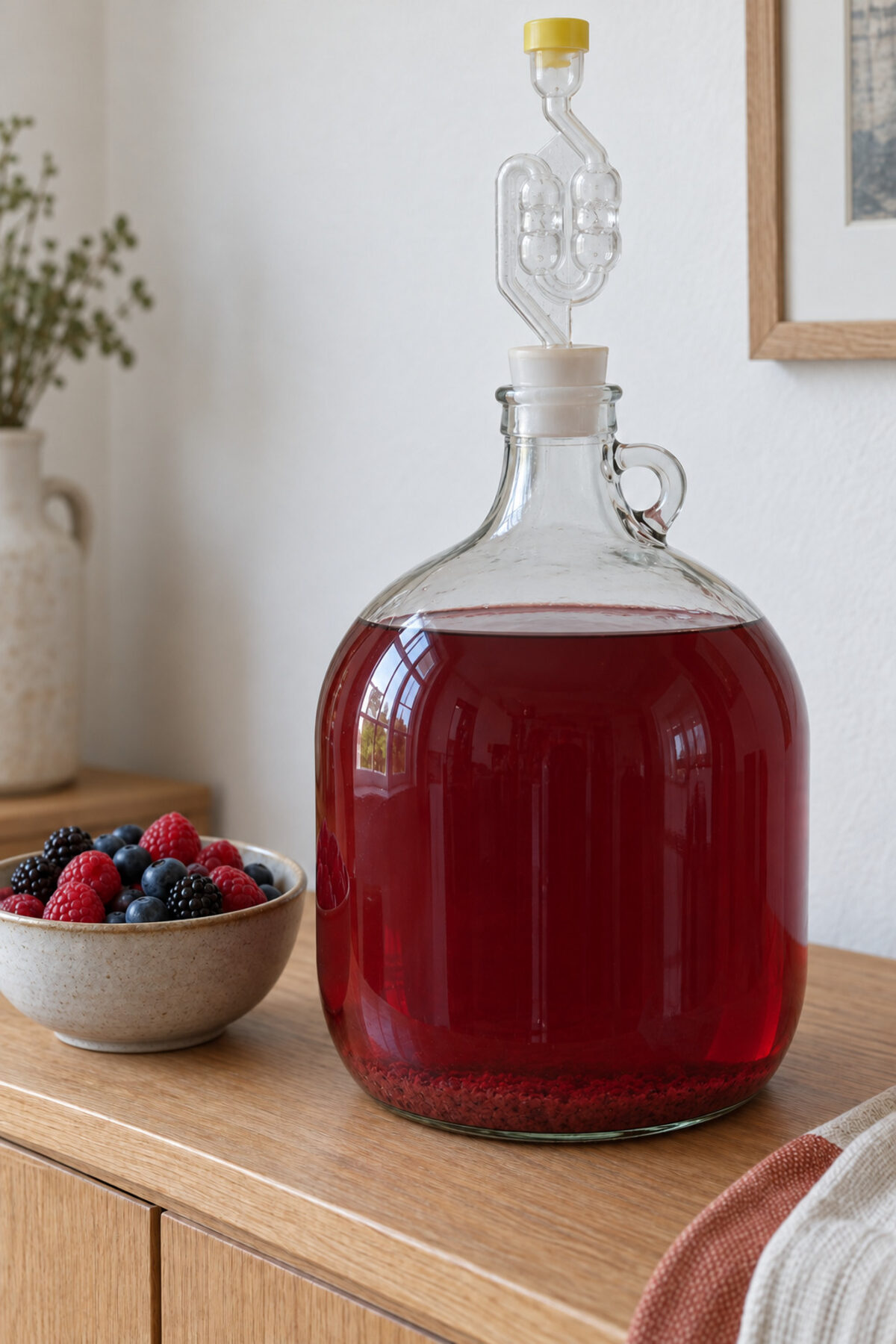
Honey, water and raspberries, blackberries or blueberries. The fruit ferments for the first weeks in a straining bag, then it's squeezed out and the mead clears for months.
- Time
- 4–8weeks
- Temperature
- 65–80°F
- Jar
- 8L
The golden rule: everything sanitized, an airlock, bottled only once the gravity has stopped dropping, and stabilized first if it stays sweet.
No sign-up. We guide you step by step, from the scale to the fridge.
Reviewed October 26, 2026 · 69 facts, each with its source
You'll need
- 8-liter (about 2-gallon) food-grade plastic fermenting bucket with a lid
- Nylon straining bag
- Two 5-liter (about 1.3-gallon) glass jugs
- Two airlocks: one for the bucket lid and one with a stopper for the jug
- Hydrometer and test jar
- Siphon tube for racking
- Saucepan
- Funnel
- Kitchen scale
- Thermometer
- Winemaking or brewing sanitizer (metabisulfite or a no-rinse one)
- Clean wine bottles, with new corks or screw caps
Step by step
-
Wash and sanitize everything that touches the must
Wash your hands. Wash the bucket and its lid, the bag, the jugs, the airlocks, the funnel, the tube, the test jar and the spoon in hot soapy water and rinse everything with hot water. Then sanitize it as the sanitizer's maker directs. The bucket must be food-grade plastic.
Tip: Do it again every time something is about to touch the mead: the hydrometer, the tube, the jugs. Cleanliness is what keeps mold and vinegar away.
-
Get 1.6 kg of berries ready
Use raspberries, blackberries, blueberries or currants, alone or mixed: 1.6 kg (3.5 lb) for about 4.5 liters of mead. Many fruit wine recipes use 3 to 5 pounds per gallon.
If they're fresh, pick sound, ripe fruit that isn't overripe, with no mold, bruises or insects. Remove the leaves and stems, rinse the berries gently and freeze them: once thawed, they soften and give up their juice more easily. If they're store-bought imported frozen berries, or the label doesn't say where they're from, boil them for 1 minute and let them cool. Berries from your own garden, frozen after picking, don't need it.
Tip: Ireland's food safety authority (FSAI) advises boiling imported frozen berries because of hepatitis A and norovirus outbreaks in Europe. Heat releases pectin and can leave the mead hazy: to avoid that, add pectic enzyme to the must as the maker directs.
-
Make the must in the bucket and wait 24 hours
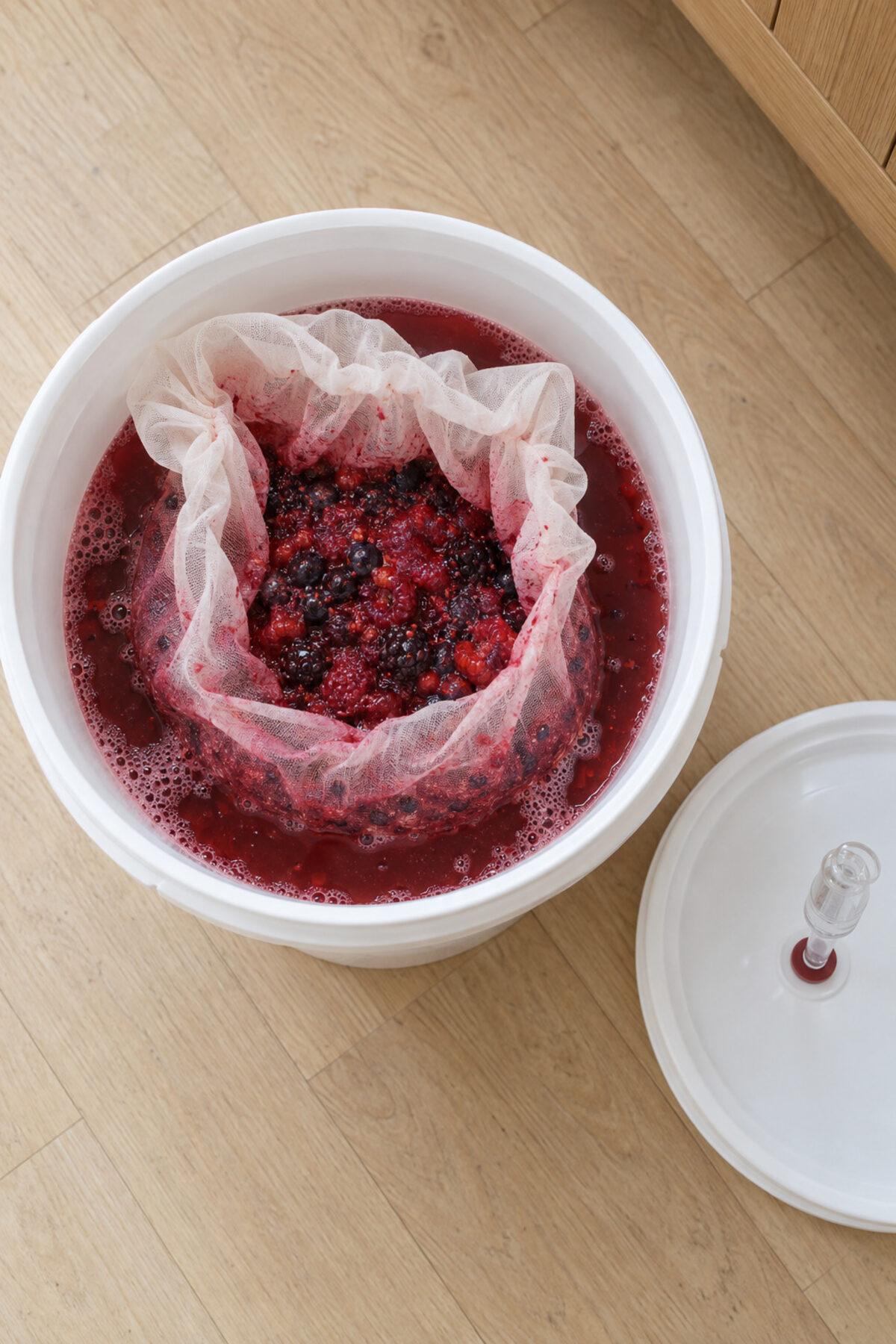
Put the fruit in the straining bag, tie it, set it in the bucket and crush it with clean hands. Heat 1 liter of the water in the saucepan, without letting it boil, and dissolve 1.2 kg (2.6 lb) of honey in it. Pour it over the fruit and add the rest of the water, 1.4 liters (about 6 cups), cold. Add 4 g of nutrient and one crushed Campden tablet, and stir.
Read the liquid with the hydrometer: it must read 1.080 or higher. If it reads lower, add a little more dissolved honey and measure again. Write the reading down. Fit the lid with its airlock and wait 24 hours.
Tip: The honey goes 1:2 with the water, one of the dilutions in the scientific review, and the fruit adds its juice. The review doesn't say whether it's by weight or by volume: by weight is our house rule.
-
Add the yeast
After the 24 hours, rehydrate the yeast as the packet says and pour it into the bucket. Put the lid and airlock back, with water up to the line.
Tip: Use wine yeast, never baking yeast. White wine yeasts are the ones recommended for mead.
-
Let it ferment at 65–80 °F and check the gravity
Keep it somewhere at 65–80 °F, without sudden temperature swings. Below 59 °F it ferments much worse. Within a few days you'll see bubbles and the airlock will release gas: the yeast is eating the sugar.
After 3 to 5 days, draw a sample with the sanitized tube, read the gravity and throw the sample out. After that, check it every few days. If the bag floats, push it under with a sanitized spoon and close the lid again right away: keep fruit flies out, they carry vinegar bacteria. Plan on 4 to 8 weeks in all (our house rule), but don't go by the date: mead can take months.
Tip: If it smells of rotten eggs, the yeast is short of nutrients. That alone is no reason to throw it out.
-
Take the fruit out at 1.020–1.030 and move it to the jug
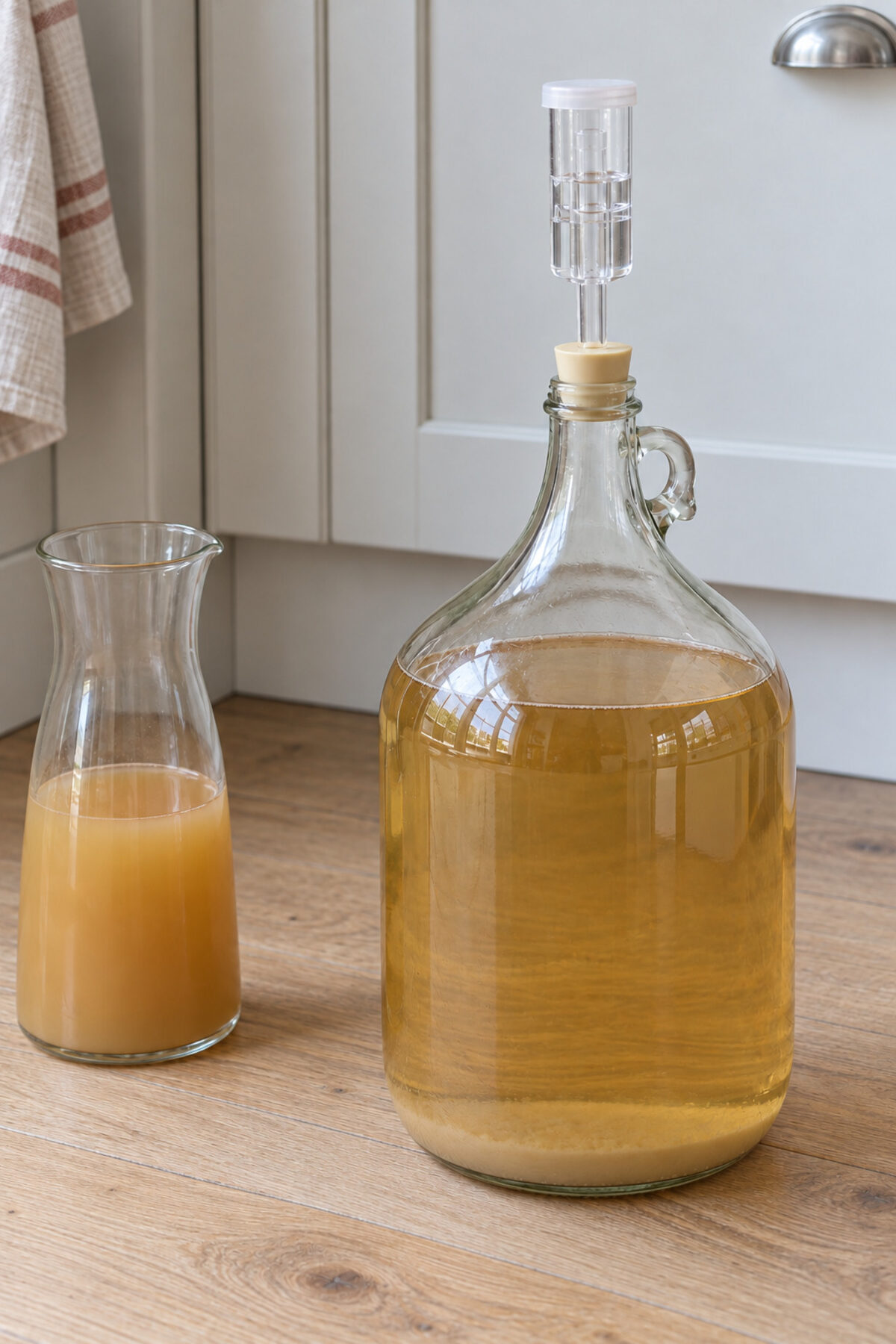
When the gravity drops to 1.020–1.030, lift out the bag and squeeze it well over the bucket with clean hands. Throw the fruit away. Siphon the liquid into a cleaned and sanitized jug and leave the sediment at the bottom of the bucket. Don't fill it above the shoulders: it's still fermenting and needs room. Fit the stopper and airlock.
Tip: Set the bucket higher than the jug and let the mead run down the side, without splashing.
-
When it's done, top it up and let it clear
It's done when you no longer see bubbles and the gravity reads 0.996 or lower and doesn't change over three readings across 7 days (our house rule). A dry mead can drop as low as 0.990. It normally ends below 1.000, because alcohol is lighter than water. If it holds between 0.996 and 1.000 and tastes sweet, there's sugar left: treat it as if it had stopped above.
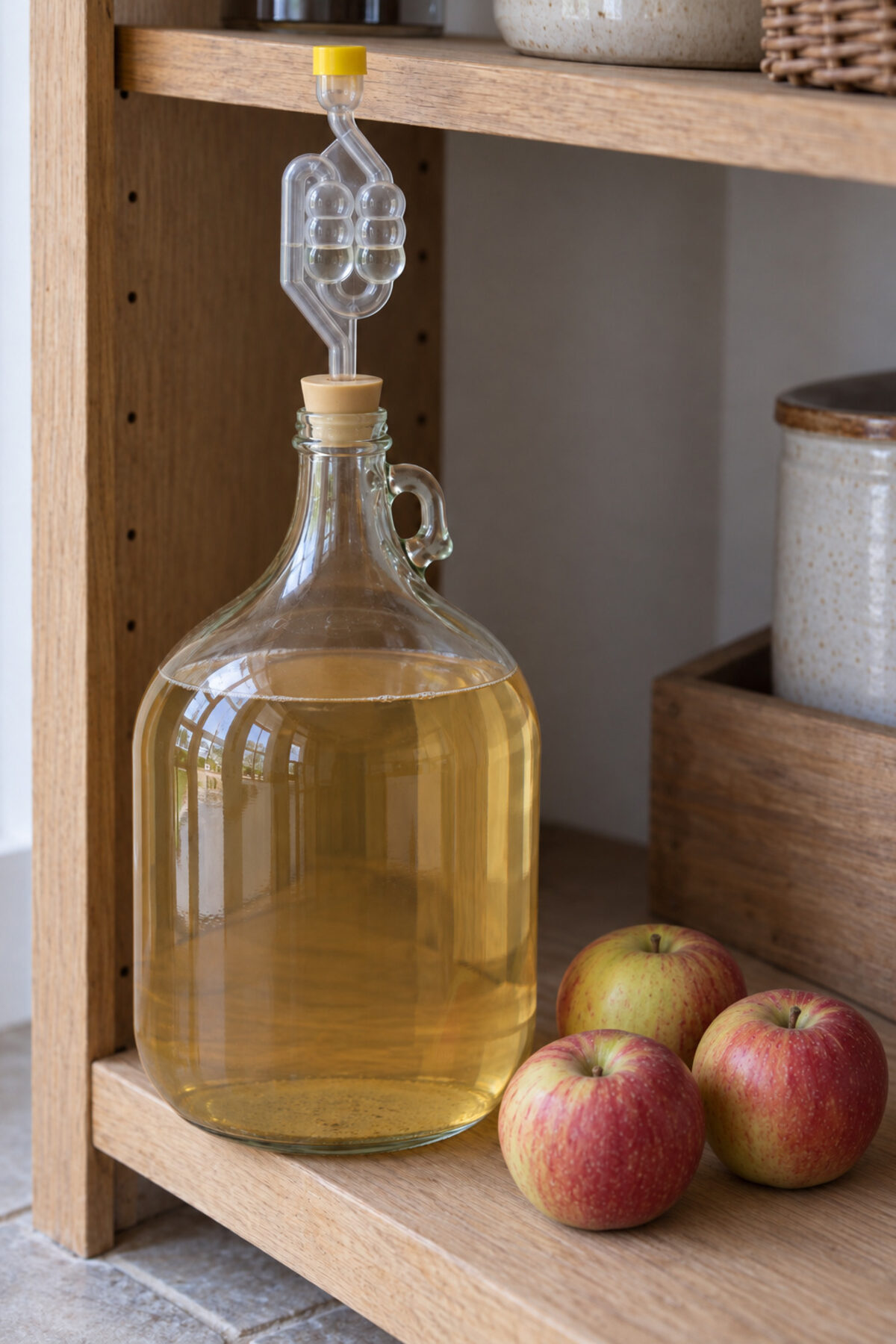
Then top up the jug to a couple of inches below the airlock, with water or sanitized marbles, so little air touches it. Let it clear. Every few weeks, rack it into the other jug, cleaned and sanitized, to leave the sediment behind, and top it up again. This can take weeks or months.
Tip: If it stops above 0.996, there may be sugar left. Don't bottle it like that: it can start fermenting again in the bottle and burst it. To bottle it sweet you need to stabilize it with potassium sorbate, and sorbate alone won't stop a fermentation that's still going.
-
Bottle it when it's clear and stable
Bottle once it's clear, with no sediment left to rack off and the gravity stable at 0.996 or lower. Scrub the bottles inside with a bottle brush and dish soap, then rinse them. Just before filling, rinse them with the no-rinse sanitizer and let them drain. Fill them with the siphon tube, without picking up sediment, and close them with new corks or screw caps.
Tip: Don't clean the bottles with bleach or with antibacterial soaps containing triclosan. With corks, stand the bottles upright for a few days so the cork expands.
-
Let it age at least 2 months
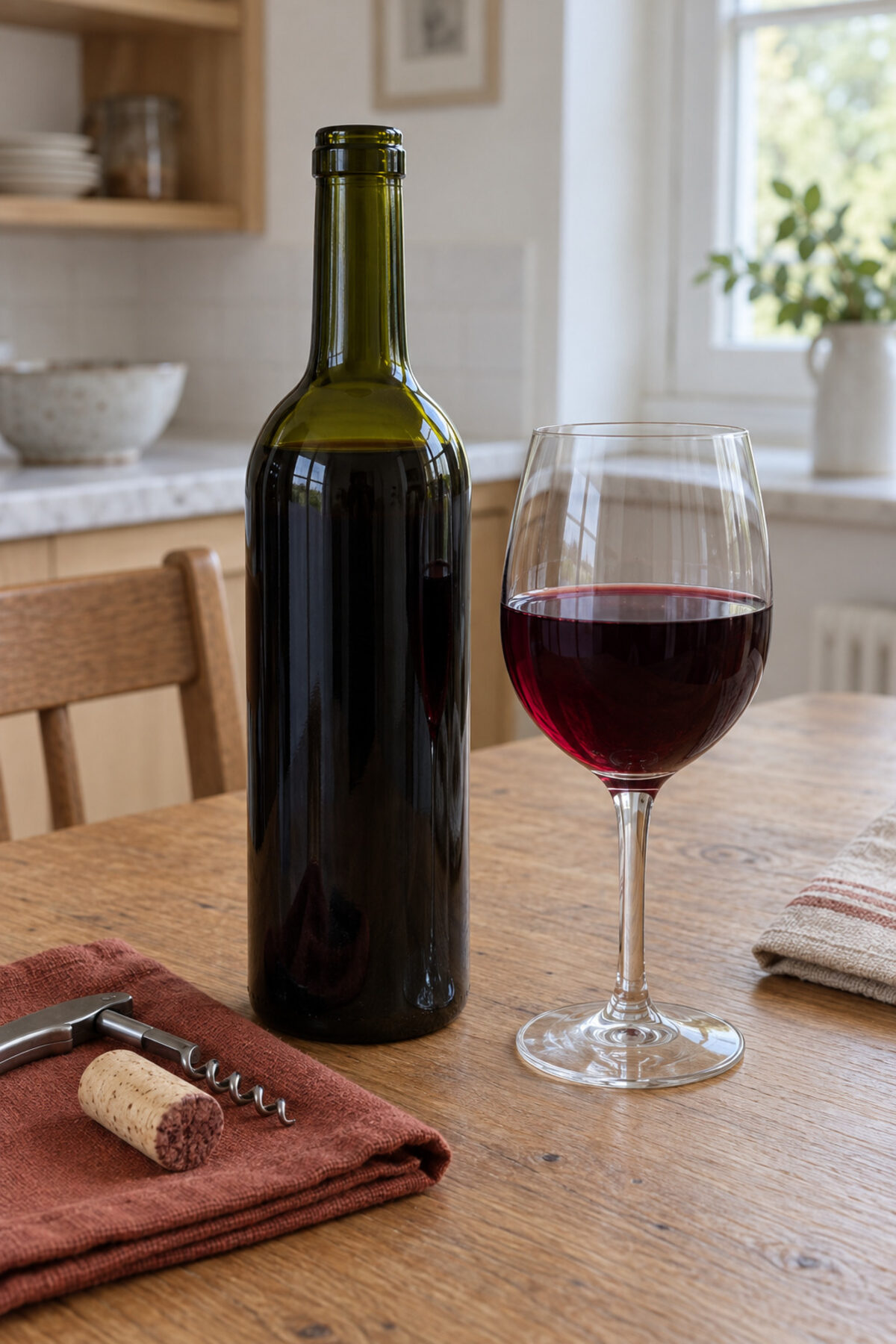
Store the bottles on their sides somewhere cool and dark. You can drink it from bottling day, but it gets better with time: wait at least 2 months, and a year is better. Meanwhile, keep an eye on them: a cork pushing out, or fizz in a bottle that shouldn't have any, means it's fermenting inside. Move it to the fridge and open it carefully, pointed away from your face.
Tip: Write the date, the fruit and the starting and final gravity on each bottle.
No sign-up. We guide you step by step, from the scale to the fridge.
Variations
The same method, a different flavor. Once you have this one down, try one of these.
What you'll see
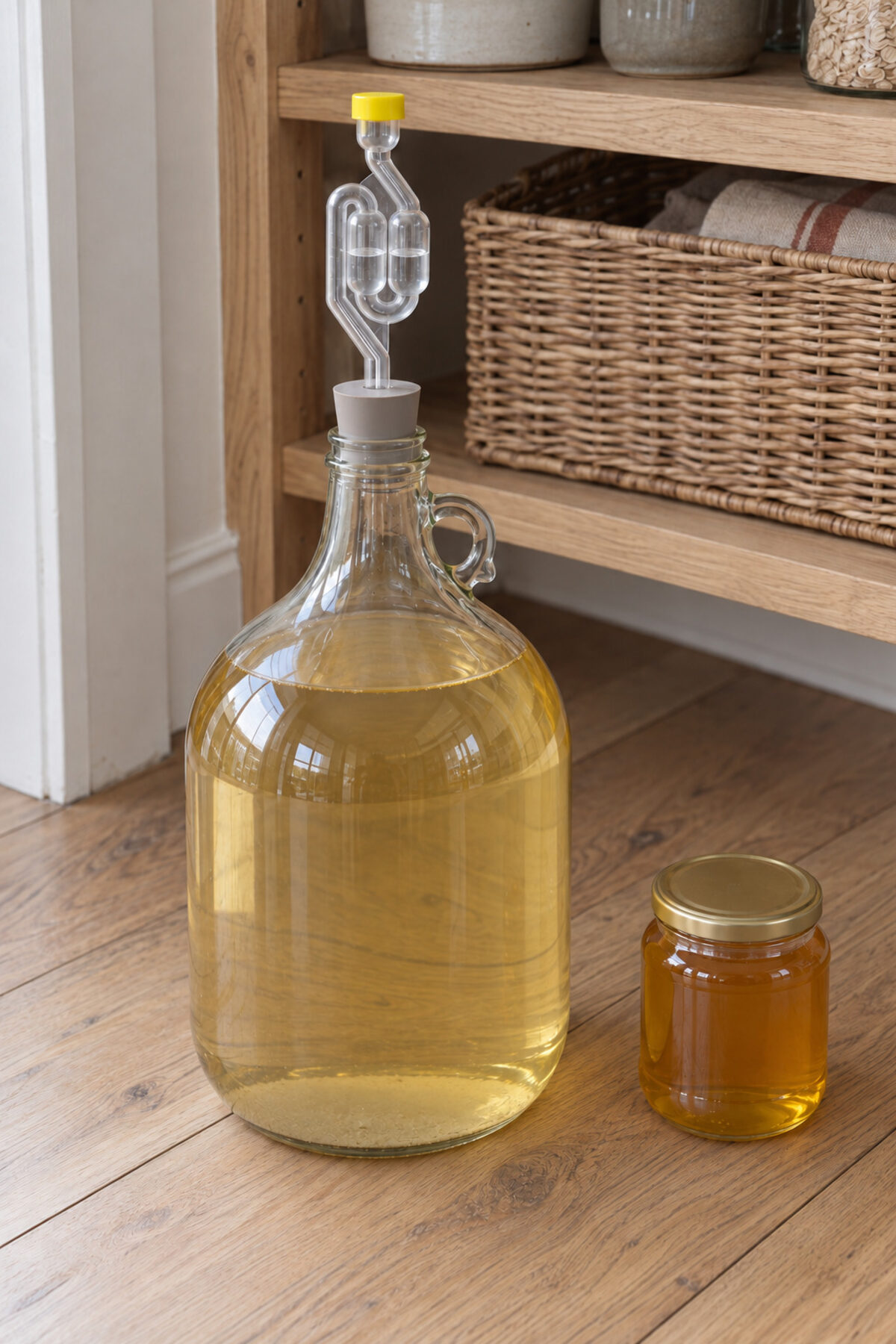
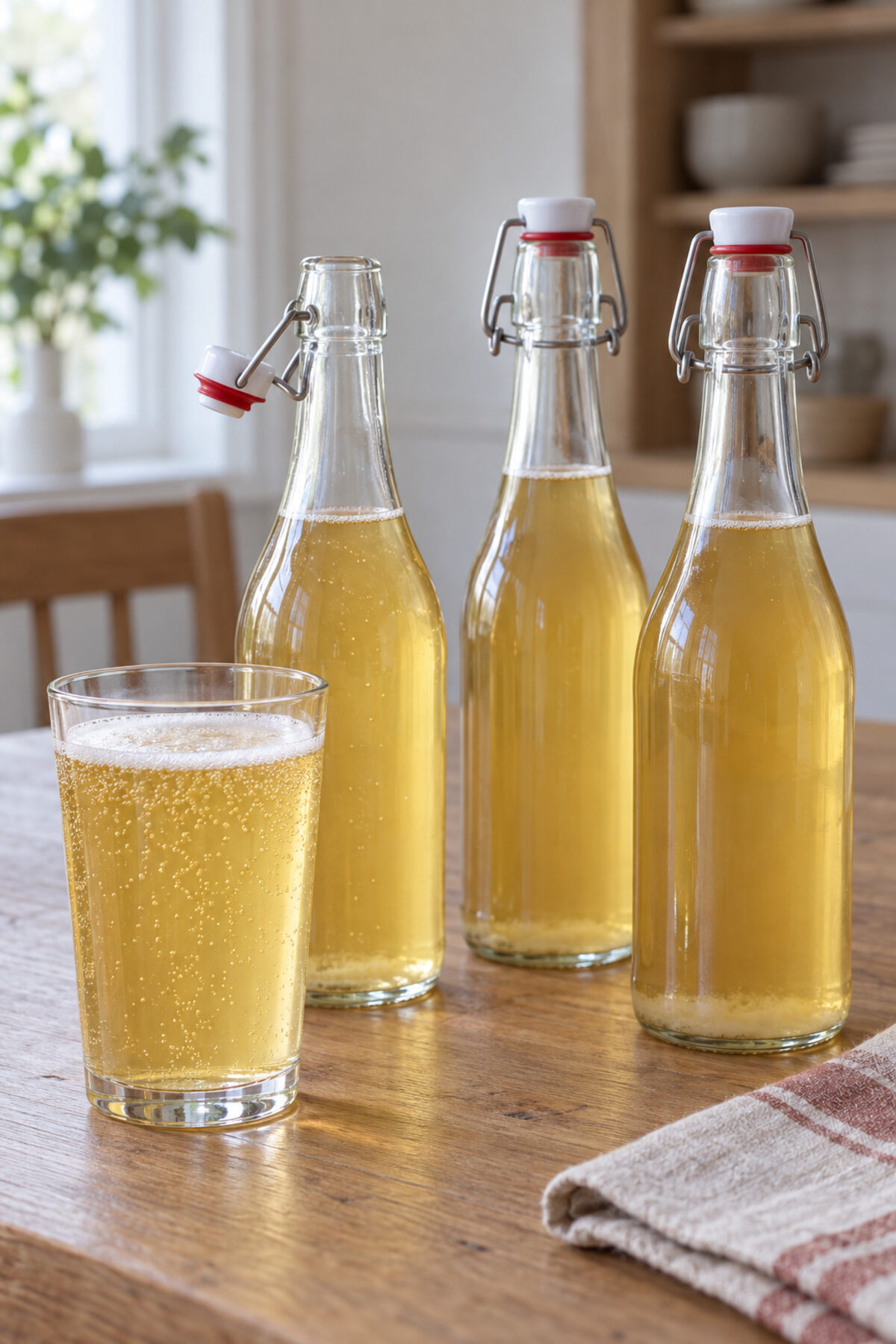
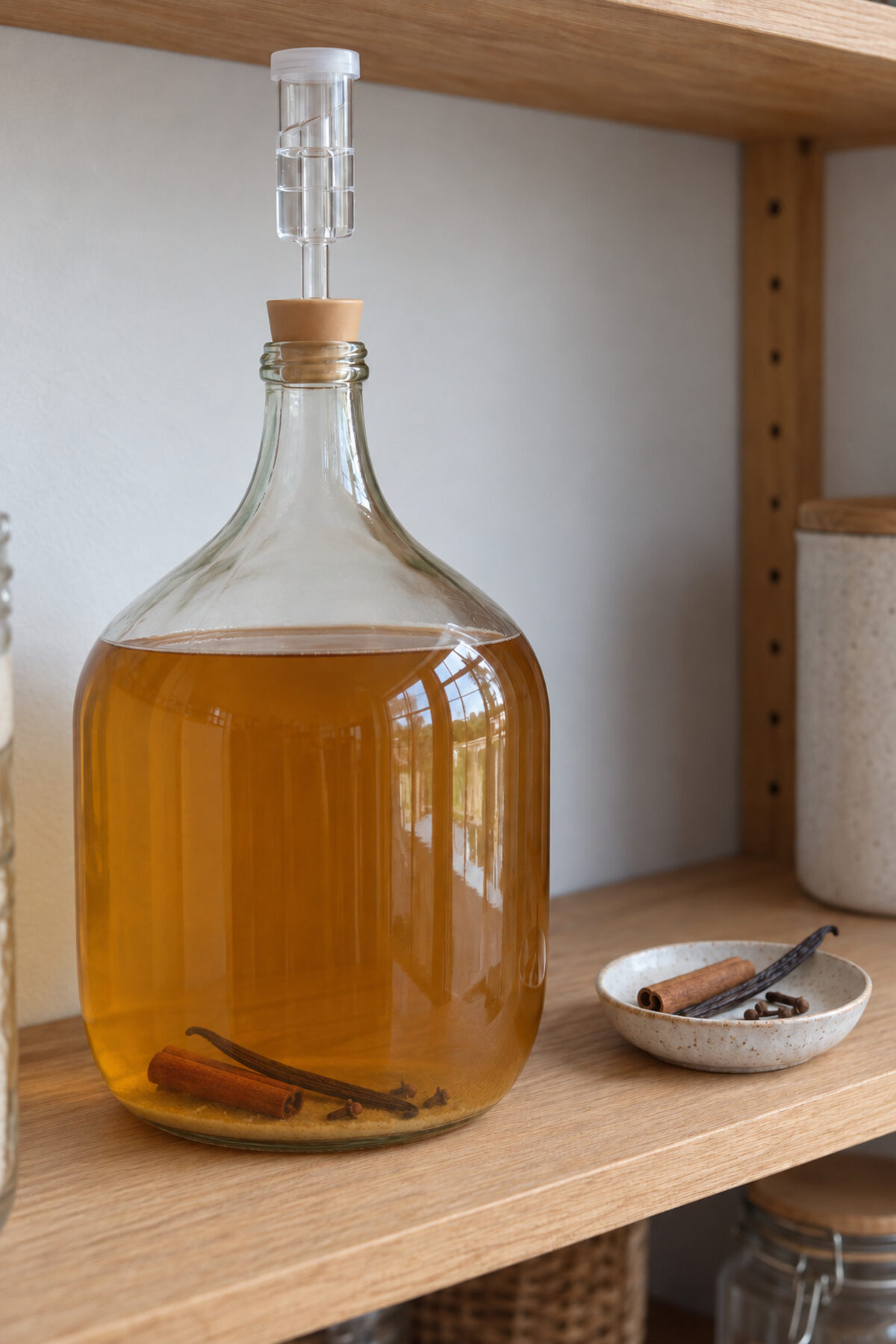
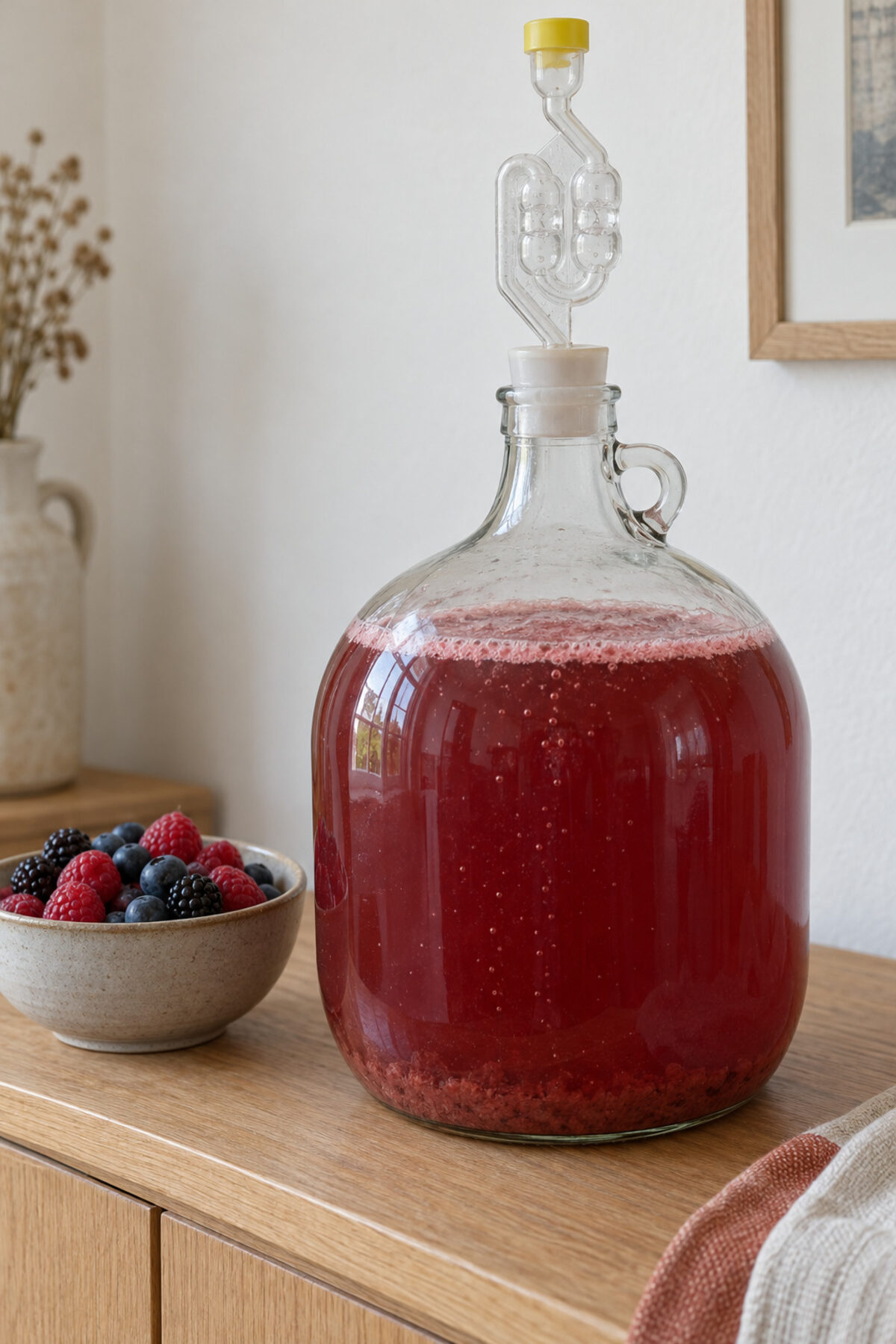
A melomel is mead with fruit. This one has berries, which give it color and aroma. It's made like traditional mead, but the fruit ferments for the first weeks inside a straining bag, in a wide-mouthed bucket, and is then squeezed out and removed. That way fruit juice takes the place of some of the water. It's alcoholic, from 8% to 18%. No food safety agency publishes a home mead recipe, so the steps follow North Dakota State University (NDSU) Extension's home winemaking guide, which treats every fruit wine the same way, and a scientific review of mead.
 AI
 AI
AI
How to tell it's going well
- It's alcoholic, 8% to 18%. Not for anyone under the legal drinking age, or if you are or may be pregnant.
- It has honey. Never for babies under a year old.
- It contains sulfites, from the Campden tablet. Anyone sensitive to sulfites, especially people with asthma, shouldn't drink it; if you share it, say so.
- Sound fruit, with no mold or bruises. If it's store-bought imported frozen fruit, or you don't know where it's from, boil it for 1 minute before using it.
- Sanitize everything that touches the must, every time, and use a food-grade plastic bucket. Keep fruit flies out: they carry vinegar bacteria.
- Bottle it dry and stable: at 0.996 or lower and unchanged over 7 days (our house rule). With sugar and live yeast, bottles can burst.
- If you want it sweet, stabilize it before bottling with potassium sorbate.
- Mold on the surface or on the fruit: throw it all out.
- For your own use, never for sale. In the US, adults may make wine and beer at home for personal or family use, but may not sell it. In the UK, what you make only for your own use pays no duty as long as it isn't a spirit. Elsewhere, check your country's rules.
- Never distill it. Distilling at home is prohibited in the US, and Fervida doesn't teach it.
Where every number comes from
Every number in this recipe comes from a food safety guide. We keep a copy of each source and quote its exact words.
-
1
Diluted honey, fermented, with 8–18% alcohol
“Mead is a traditional alcoholic beverage containing from 8% to 18% of ethanol (v/v) produced by the fermentation of a diluted solution of honey”
Molecules (MDPI), Iglesias et al. · Developments in the Fermentation Process and Quality Improvement Strategies for Mead Production (2014) · read on October 25, 2026
-
2
Melomel is mead with fruit
“melomel (mead with fruit juices)”
Molecules (MDPI), Iglesias et al. · Developments in the Fermentation Process and Quality Improvement Strategies for Mead Production (2014) · read on October 25, 2026
-
3
Honey and water at 1:0.5, 1:1, 1:2 or 1:3
“The proportion to which honey is diluted determines the type of mead obtained: the finest at 1:0.5 (honey:water) and the other variants at 1:1, 1:2 and 1:3.”
Molecules (MDPI), Iglesias et al. · Developments in the Fermentation Process and Quality Improvement Strategies for Mead Production (2014) · read on October 25, 2026
-
4
Fruit juice can take the place of some of the water
“the water proportion can be replaced by fruit juice depending on the type of mead to be produced”
Molecules (MDPI), Iglesias et al. · Developments in the Fermentation Process and Quality Improvement Strategies for Mead Production (2014) · read on October 25, 2026
-
5
Honey is low in nitrogen and minerals
“honey presents low levels of nitrogen and mineral substances”
Molecules (MDPI), Iglesias et al. · Developments in the Fermentation Process and Quality Improvement Strategies for Mead Production (2014) · read on October 25, 2026
-
6
0.88 g of nutrient per liter in one study
“the nutrients concentration of 0.88 g/L (88 g/hL)”
Molecules (MDPI), Iglesias et al. · Developments in the Fermentation Process and Quality Improvement Strategies for Mead Production (2014) · read on October 25, 2026
-
7
Metabisulfite holds back or kills most microbes
“the addition of metabisulphite, either sodium or potassium salts that liberate sulphur dioxide which inhibits or eliminates the majority of microorganisms”
Molecules (MDPI), Iglesias et al. · Developments in the Fermentation Process and Quality Improvement Strategies for Mead Production (2014) · read on October 25, 2026
-
8
Commercial white wine yeast is recommended
“the inoculation of the honey-must with commercial yeasts used in the production of white wines is recommended”
Molecules (MDPI), Iglesias et al. · Developments in the Fermentation Process and Quality Improvement Strategies for Mead Production (2014) · read on October 25, 2026
Show the remaining 61 claims
-
9
Below 59 °F it ferments much worse
“temperatures lower than 15 °C are associated with significant decreases on the fermentative performance”
Molecules (MDPI), Iglesias et al. · Developments in the Fermentation Process and Quality Improvement Strategies for Mead Production (2014) · read on October 25, 2026
-
10
Fermentation often takes several months
“this fermentation often takes several months to complete”
Molecules (MDPI), Iglesias et al. · Developments in the Fermentation Process and Quality Improvement Strategies for Mead Production (2014) · read on October 25, 2026
-
11
Fermenting and maturing takes weeks to months
“Mead fermentation and maturing is a time-consuming process taking from weeks to several months to complete”
Molecules (MDPI), Iglesias et al. · Developments in the Fermentation Process and Quality Improvement Strategies for Mead Production (2014) · read on October 25, 2026
-
12
Many recipes use 3 to 5 pounds of fruit per gallon
“Many recipes call for 3 to 5 pounds of fruit per gallon of wine, with added water making up the rest of the volume.”
NDSU Extension (North Dakota State University) · From the Garden or Orchard to the Table: Getting Started With Home Winemaking (FN1638, reviewed August 2026) · read on October 25, 2026
-
13
Everything that touches the must is washed, rinsed and sanitized
“Everything that touches the juice or wine, including the primary fermenter, measuring containers and stirring spoons, must be washed, rinsed and sanitized.”
NDSU Extension (North Dakota State University) · From the Garden or Orchard to the Table: Getting Started With Home Winemaking (FN1638, reviewed August 2026) · read on October 25, 2026
-
14
Hot soapy water, a rinse, and sanitizer as the maker directs
“Begin by washing the equipment that will come into contact with any of the wine ingredients with hot, soapy water, and then rinse thoroughly with hot water. Finally, sanitize with potassium metabisulfite (Campden tablets) or sodium metabisulfite prepared according to the manufacturer’s directions.”
NDSU Extension (North Dakota State University) · From the Garden or Orchard to the Table: Getting Started With Home Winemaking (FN1638, reviewed August 2026) · read on October 25, 2026
-
15
A food-grade plastic bucket as the primary fermenter
“Large food-grade plastic pail (6 to 8 gallons): used as a primary fermenter”
NDSU Extension (North Dakota State University) · From the Garden or Orchard to the Table: Getting Started With Home Winemaking (FN1638, reviewed August 2026) · read on October 25, 2026
-
16
The fermenter, made of food-grade material
“Many kinds of vessels can be used for primary fermenters, but they must be made of food-grade materials.”
NDSU Extension (North Dakota State University) · From the Garden or Orchard to the Table: Getting Started With Home Winemaking (FN1638, reviewed August 2026) · read on October 25, 2026
-
17
Sound fruit, not overripe, free of disease, blemishes and insects
“Be sure to choose high-quality fruit that is not overripe. The fruit should be free from diseases, blemishes and insect damage.”
NDSU Extension (North Dakota State University) · From the Garden or Orchard to the Table: Getting Started With Home Winemaking (FN1638, reviewed August 2026) · read on October 25, 2026
-
18
No stems, leaves, or diseased, overripe or insect-damaged fruit
“Remove stems, leaves and any diseased, overripe or insect-infested fruit.”
NDSU Extension (North Dakota State University) · From the Garden or Orchard to the Table: Getting Started With Home Winemaking (FN1638, reviewed August 2026) · read on October 25, 2026
-
19
Berries gently rinsed and crushed
“Gently rinse and then crush the strawberries.”
NDSU Extension (North Dakota State University) · From the Garden or Orchard to the Table: Getting Started With Home Winemaking (FN1638, reviewed August 2026) · read on October 25, 2026
-
20
Freezing and thawing softens fruit and releases the juice
“Freezing and then thawing softens many kinds of fruit and helps with juice extraction.”
NDSU Extension (North Dakota State University) · From the Garden or Orchard to the Table: Getting Started With Home Winemaking (FN1638, reviewed August 2026) · read on October 25, 2026
-
21
Heating fruit releases too much pectin
“Avoid heating fruit because the heat may cause too much pectin to be released.”
NDSU Extension (North Dakota State University) · From the Garden or Orchard to the Table: Getting Started With Home Winemaking (FN1638, reviewed August 2026) · read on October 25, 2026
-
22
Pectic enzyme keeps it from turning hazy
“This chemical helps break down pectin and prevents “pectic haze,” or cloudiness, in the resulting wine.”
NDSU Extension (North Dakota State University) · From the Garden or Orchard to the Table: Getting Started With Home Winemaking (FN1638, reviewed August 2026) · read on October 25, 2026
-
23
The fruit can ferment inside the straining bag
“Some recipes call for leaving the fruit in the bag during the fermenting process.”
NDSU Extension (North Dakota State University) · From the Garden or Orchard to the Table: Getting Started With Home Winemaking (FN1638, reviewed August 2026) · read on October 25, 2026
-
24
Without nutrient, stressed yeast smells of rotten eggs
“lack of yeast nutrient can stress the yeast, causing your wine to develop an unpleasant (hydrogen sulfide or rotten egg) odor”
NDSU Extension (North Dakota State University) · From the Garden or Orchard to the Table: Getting Started With Home Winemaking (FN1638, reviewed August 2026) · read on October 25, 2026
-
25
With fresh fruit, one Campden tablet per gallon
“If the juice has been prepared from fresh fruit, plan to add potassium metabisulfite at the rate of 50 parts per million of SO2 (or one Campden tablet per gallon) to neutralize any wild yeast or bacteria.”
NDSU Extension (North Dakota State University) · From the Garden or Orchard to the Table: Getting Started With Home Winemaking (FN1638, reviewed August 2026) · read on October 25, 2026
-
26
24 hours before adding the yeast
“Wait about 24 hours before adding winemaking yeast to the prepared juice.”
NDSU Extension (North Dakota State University) · From the Garden or Orchard to the Table: Getting Started With Home Winemaking (FN1638, reviewed August 2026) · read on October 25, 2026
-
27
A hydrometer measures the gravity of the must
“A hydrometer is used to measure the SG of the must.”
NDSU Extension (North Dakota State University) · From the Garden or Orchard to the Table: Getting Started With Home Winemaking (FN1638, reviewed August 2026) · read on October 25, 2026
-
28
Must starts at 1.080 or higher
“Must has a starting SG of 1.080 (“ten-eighty”) or higher.”
NDSU Extension (North Dakota State University) · From the Garden or Orchard to the Table: Getting Started With Home Winemaking (FN1638, reviewed August 2026) · read on October 25, 2026
-
29
Add sugar in small amounts
“Add small amounts of sugar at a time to keep the SG from going higher than the recommended level.”
NDSU Extension (North Dakota State University) · From the Garden or Orchard to the Table: Getting Started With Home Winemaking (FN1638, reviewed August 2026) · read on October 25, 2026
-
30
Wine yeast, not baking yeast
“Be sure to use winemaking yeast; do not use baking yeast.”
NDSU Extension (North Dakota State University) · From the Garden or Orchard to the Table: Getting Started With Home Winemaking (FN1638, reviewed August 2026) · read on October 25, 2026
-
31
Rehydrate the yeast as the maker directs
“Follow the manufacturer’s recommendations for rehydrating the wine yeast”
NDSU Extension (North Dakota State University) · From the Garden or Orchard to the Table: Getting Started With Home Winemaking (FN1638, reviewed August 2026) · read on October 25, 2026
-
32
The airlock lets gas out and keeps air and microbes out
“Fermentation locks: allows carbon dioxide to escape from fermenters and prevents oxygen and microbial contamination”
NDSU Extension (North Dakota State University) · From the Garden or Orchard to the Table: Getting Started With Home Winemaking (FN1638, reviewed August 2026) · read on October 25, 2026
-
33
An even 65–80 °F
“try to keep the must maintained at an even temperature between 65 and 80 degrees Fahrenheit”
NDSU Extension (North Dakota State University) · From the Garden or Orchard to the Table: Getting Started With Home Winemaking (FN1638, reviewed August 2026) · read on October 25, 2026
-
34
Bubbles are normal, the yeast is eating the sugar
“As the juice starts to ferment, you will notice bubbles forming at the surface; this is normal and indicates that the yeast cells are consuming the sugar.”
NDSU Extension (North Dakota State University) · From the Garden or Orchard to the Table: Getting Started With Home Winemaking (FN1638, reviewed August 2026) · read on October 25, 2026
-
35
Fruit flies carry vinegar bacteria
“Keeping out any fruit flies is very important because they can transmit vinegar-producing bacteria to your wine.”
NDSU Extension (North Dakota State University) · From the Garden or Orchard to the Table: Getting Started With Home Winemaking (FN1638, reviewed August 2026) · read on October 25, 2026
-
36
Check the gravity after 3 to 5 days
“In three to five days, measure the specific gravity”
NDSU Extension (North Dakota State University) · From the Garden or Orchard to the Table: Getting Started With Home Winemaking (FN1638, reviewed August 2026) · read on October 25, 2026
-
37
At 1.020–1.030, take out the bag and squeeze the fruit
“when it has decreased to 1.020 to 1.030, remove the straining bag and squeeze the wine from the pulp”
NDSU Extension (North Dakota State University) · From the Garden or Orchard to the Table: Getting Started With Home Winemaking (FN1638, reviewed August 2026) · read on October 25, 2026
-
38
Into the jug at about 1.020–1.030
“Monitor the specific gravity and when it reaches a level of about 1.020 to 1.030, move the wine into a secondary fermenter”
NDSU Extension (North Dakota State University) · From the Garden or Orchard to the Table: Getting Started With Home Winemaking (FN1638, reviewed August 2026) · read on October 25, 2026
-
39
Leave the sediment behind
“try to keep from transferring much of the sediment at the bottom of the fermenter”
NDSU Extension (North Dakota State University) · From the Garden or Orchard to the Table: Getting Started With Home Winemaking (FN1638, reviewed August 2026) · read on October 25, 2026
-
40
No higher than the shoulders while it ferments
“do not fill above the shoulders of the carboy to allow for expansion during the remaining fermentation”
NDSU Extension (North Dakota State University) · From the Garden or Orchard to the Table: Getting Started With Home Winemaking (FN1638, reviewed August 2026) · read on October 25, 2026
-
41
Dry wine can drop as low as 0.990
“Finished dry wine can have an SG as low as 0.990 (“nine-ninety”).”
NDSU Extension (North Dakota State University) · From the Garden or Orchard to the Table: Getting Started With Home Winemaking (FN1638, reviewed August 2026) · read on October 25, 2026
-
42
Once it's done, fill it to just below the airlock
“After fermentation is complete, filling the carboy to within a few inches of the airlock is important; this prevents too much exposure to oxygen.”
NDSU Extension (North Dakota State University) · From the Garden or Orchard to the Table: Getting Started With Home Winemaking (FN1638, reviewed August 2026) · read on October 25, 2026
-
43
Top up with water or sanitized marbles
“Be sure to top up the carboy after each racking with water or a similar wine. Sanitized marbles can be placed in the carboy in lieu of topping up.”
NDSU Extension (North Dakota State University) · From the Garden or Orchard to the Table: Getting Started With Home Winemaking (FN1638, reviewed August 2026) · read on October 25, 2026
-
44
More rackings over weeks or months to leave the sediment
“For the next several weeks or months, additional racking from one container to another will be needed to remove the wine from the lees (sediment).”
NDSU Extension (North Dakota State University) · From the Garden or Orchard to the Table: Getting Started With Home Winemaking (FN1638, reviewed August 2026) · read on October 25, 2026
-
45
With sugar left or to sweeten it, potassium sorbate
“it should be used if your wine has residual sugar left after fermentation or if you plan to resweeten the wine before bottling.”
NDSU Extension (North Dakota State University) · From the Garden or Orchard to the Table: Getting Started With Home Winemaking (FN1638, reviewed August 2026) · read on October 25, 2026
-
46
Without sorbate, bottles can explode
“Failure to add potassium sorbate may cause bottles to explode if fermentation restarts.”
NDSU Extension (North Dakota State University) · From the Garden or Orchard to the Table: Getting Started With Home Winemaking (FN1638, reviewed August 2026) · read on October 25, 2026
-
47
Bottle it only off the sediment and clear
“Bottling and storage is the final step and should be done only when the wine has been racked off any remaining sediment and has achieved good clarity.”
NDSU Extension (North Dakota State University) · From the Garden or Orchard to the Table: Getting Started With Home Winemaking (FN1638, reviewed August 2026) · read on October 25, 2026
-
48
New wine bottles, or reused ones cleaned and sanitized
“Glass wine bottles: buy new bottles or reuse commercial wine bottles if they are thoroughly cleaned and sanitized”
NDSU Extension (North Dakota State University) · From the Garden or Orchard to the Table: Getting Started With Home Winemaking (FN1638, reviewed August 2026) · read on October 25, 2026
-
49
A no-rinse sanitizer on the bottles just before filling
“Just prior to bottling, rinse the bottle with a “no-rinse” sanitizing agent, then allow the bottle to drain before filling with wine.”
NDSU Extension (North Dakota State University) · From the Garden or Orchard to the Table: Getting Started With Home Winemaking (FN1638, reviewed August 2026) · read on October 25, 2026
-
50
No bleach or triclosan soaps on the bottles
“Never use bleach or antibacterial soaps containing triclosan when cleaning bottles.”
NDSU Extension (North Dakota State University) · From the Garden or Orchard to the Table: Getting Started With Home Winemaking (FN1638, reviewed August 2026) · read on October 25, 2026
-
51
Always new corks
“Always use new corks.”
NDSU Extension (North Dakota State University) · From the Garden or Orchard to the Table: Getting Started With Home Winemaking (FN1638, reviewed August 2026) · read on October 25, 2026
-
52
A few days upright, then on their sides
“After bottling, stand the bottles in an upright position for a few days to allow the cork to thoroughly expand, and then store the bottles on their sides until ready to use.”
NDSU Extension (North Dakota State University) · From the Garden or Orchard to the Table: Getting Started With Home Winemaking (FN1638, reviewed August 2026) · read on October 25, 2026
-
53
Age at least 2 months, and a year is better
“wine should be aged for at least two months, but one year of storage prior to consumption is better.”
NDSU Extension (North Dakota State University) · From the Garden or Orchard to the Table: Getting Started With Home Winemaking (FN1638, reviewed August 2026) · read on October 25, 2026
-
54
On their sides, somewhere cool and dark
“Store wine bottles on their sides in a cool, dark place.”
NDSU Extension (North Dakota State University) · From the Garden or Orchard to the Table: Getting Started With Home Winemaking (FN1638, reviewed August 2026) · read on October 25, 2026
-
55
No alcohol for anyone under the legal drinking age
“People under the legal drinking age”
NDSU Extension (North Dakota State University) · From the Garden or Orchard to the Table: Getting Started With Home Winemaking (FN1638, reviewed August 2026) · read on October 25, 2026
-
56
Nor if you are or may be pregnant
“Pregnant women and those who may be pregnant”
NDSU Extension (North Dakota State University) · From the Garden or Orchard to the Table: Getting Started With Home Winemaking (FN1638, reviewed August 2026) · read on October 25, 2026
-
57
Imported frozen berries, boiled for 1 minute
“As a result of outbreaks of norovirus and hepatitis A virus in imported frozen berries across Europe in recent years, the FSAI recommends boiling imported frozen berries for one minute before consumption.”
Food Safety Authority of Ireland (FSAI) · Advice to boil imported frozen berries · read on October 26, 2026
-
58
If the label doesn't give the origin, assume they're imported
“If the label does not state the country of origin, you should assume that the berries are imported.”
Food Safety Authority of Ireland (FSAI) · Advice to boil imported frozen berries · read on October 26, 2026
-
59
Not needed for berries from your garden, frozen after picking
“this advice does not apply to berries grown in your own garden and frozen after picking”
Food Safety Authority of Ireland (FSAI) · Advice to boil imported frozen berries · read on October 26, 2026
-
60
When it's done, below 1.000: alcohol is lighter than water
“It should be less than 1.000 (alcohol is lighter than water; the sugar has all been converted to alcohol and CO2).”
Virginia Cooperative Extension (Virginia Tech) · Wine making for the home gardener (HORT-213) · read on October 26, 2026
-
61
Watch for pushing corks: a sign of fermentation in the bottle
“monitor for pushing corks, a sign of fermentation in the bottle, and for carbonation/sediments.”
Virginia Cooperative Extension (Virginia Tech) · Wine making for the home gardener (HORT-213) · read on October 26, 2026
-
62
Sorbate alone won't stop a fermentation
“Sorbates will not stop a ferment on their own”
University of Vermont Extension (T. Bradshaw) · Commercial Production of Unpasteurized and Fermented Ciders in Vermont (2010) · read on October 25, 2026
-
63
If it molds, throw it out
“If you confirm mold growth on any part of a ferment, it should be immediately discarded.”
UC Davis, Department of Food Science and Technology · Common issues with fermented fruits and vegetables (v1.0, 15-mar-2022) · read on October 20, 2026
-
64
No honey for babies under a year old
“evitando el consumo de miel y de infusiones de especies vegetales en niños menores de un año (recomendaciones AESAN)”
Instituto de Salud Carlos III, Centro Nacional de Epidemiología (RENAVE) · Informe de botulismo 2023 · read on October 25, 2026
-
65
People with asthma are most at risk from sulfites
“Those who have asthma are most at risk to sulphite sensitivity and other forms of sulphite reactions.”
Health Canada · Sulphites - Priority allergens (2017) · read on October 27, 2026
-
66
Sulfites can trigger asthma and, very rarely, anaphylaxis
“Sulphites can trigger asthma and, in very rare cases, cause symptoms of anaphylaxis.”
Health Canada · Sulphites - Priority allergens (2017) · read on October 27, 2026
-
67
In the US you can make wine at home, but not distill
“While individuals of legal drinking age may produce wine or beer at home for personal or family use, Federal law strictly prohibits individuals from producing distilled spirits at home”
Alcohol and Tobacco Tax and Trade Bureau (TTB, U.S. Department of the Treasury) · Home Distilling · read on October 25, 2026
-
68
Wine made for personal use may never be sold
“wine produced for personal or family use may never be sold or offered for sale”
Alcohol and Tobacco Tax and Trade Bureau (TTB, U.S. Department of the Treasury) · Wine FAQs · read on October 25, 2026
-
69
UK, no duty if it's for your own use and not a spirit
“by a person who produces alcoholic products only for the person’s own domestic use, and (b)are not spirits.”
UK legislation (legislation.gov.uk, The National Archives) · Finance (No. 2) Act 2023, section 72: Exemption: production for personal consumption · read on October 25, 2026