 AI
Homemade white miso
Level 3 · experienced
Cooked soybeans, more koji than beans, and salt, pressed into a jar. In a few weeks you get a pale, sweet miso that finishes in the fridge.
- Salt
- 8% 80 g per kilo of the whole, salt included
- Time
- 2–4weeks
- Temperature
- 59–77°F
- Jar
- 1L
The golden rule: never less than 6% salt on the weight of everything, and into the fridge when done.
No sign-up. We guide you step by step, from the scale to the fridge.
Reviewed October 26, 2026 · 26 facts, each with its source
You'll need
- Pressure cooker, or a large pot
- Colander
- Kitchen thermometer
- Potato masher, fork or food processor
- Large bowl
- 1-liter glass jar (about a quart), with a lid
- Plastic wrap or parchment paper
- A weight, such as a bag of salt or a small jar of water
- Kitchen scale
Step by step
-
Soak the soybeans in the fridge
Rinse 200 g of dried yellow soybeans and put them in a bowl with plenty of water. Leave them in the fridge for 15 to 17 hours: out of the fridge, never more than 4 hours. You may end up with a few cooked beans left over.
-
Cook them until they crush between two fingers
Drain off the soaking water. Cook the soybeans in fresh water until they crush easily between two fingers. In a pressure cooker, follow your cooker's instructions: it's the recommended way, because it does a better job against bacterial spores. Boiling in a regular pot, allow at least 3 hours. Drain them and save the cooking water.
-
Mash them and cool them to 95 °F within 2 hours
Weigh 400 g of cooked soybeans and mash them with the masher or blend them; a few pieces can stay. Spread them on a wide dish so they cool quickly and check with the thermometer: they need to drop from 140 °F to 95 °F or below within 2 hours at most.
Tip: If they took more than 6 hours to cool, throw them out and start again (our house rule, on the guide's limit).
-
Mix the koji with the salt, then with the soybeans
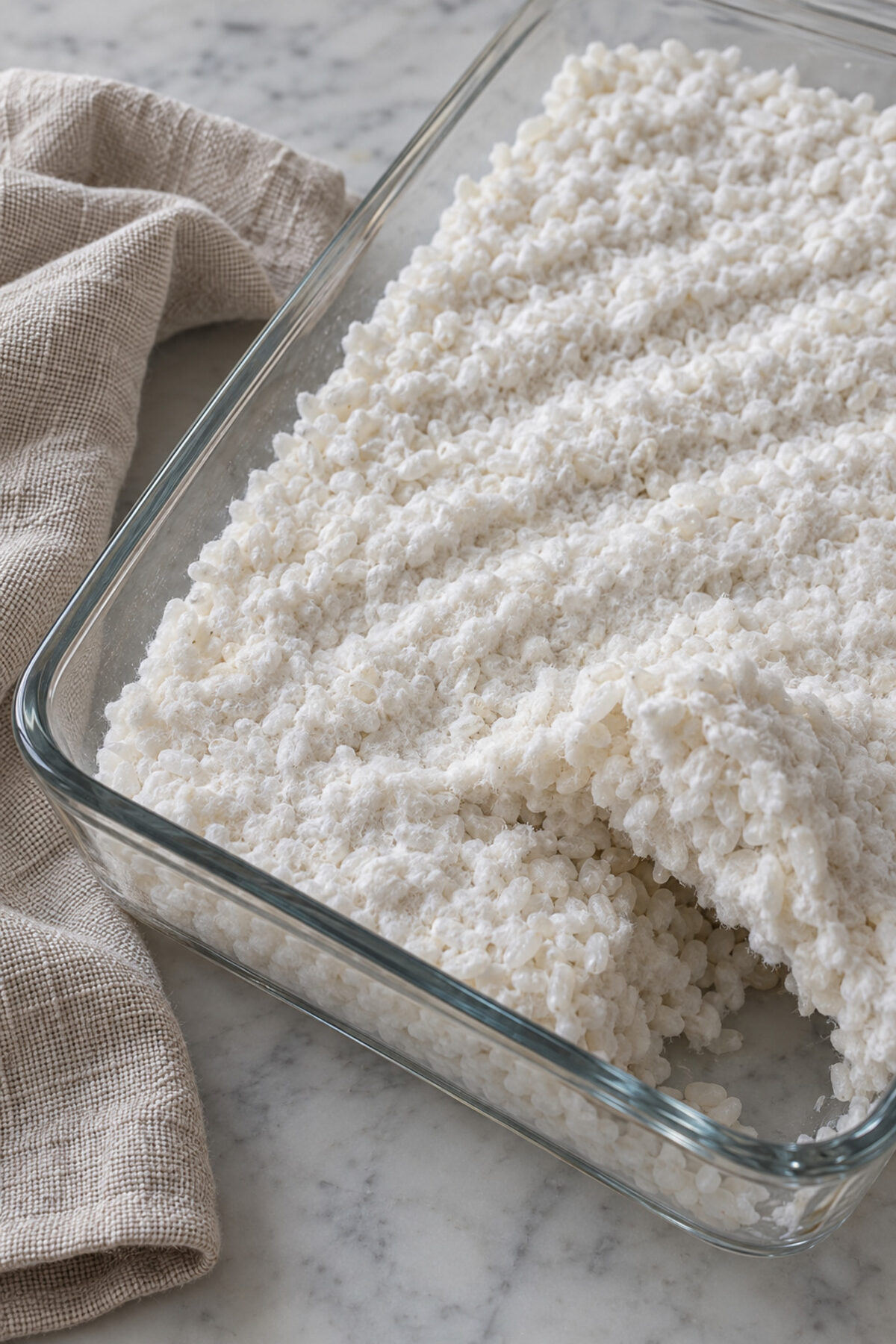
Weigh 80 g of salt and set aside a tablespoon for the top. In the clean bowl, break up 450 g of koji with clean hands and mix it with the rest of the salt. Add the cooled soybeans, at 95 °F or below, and mix it all together. Work in the 70 g of cooking water, lukewarm or cold, until it feels like soft clay.
The salt is 8% of the weight of everything, salt included: 80 g out of 1,000 g. If you need more water, add 8.7 g of salt for every extra 100 g of water.
Tip: This miso has more koji than soybeans. More koji makes it sweeter; less makes it saltier.
-
Press the paste into the jar, with no air
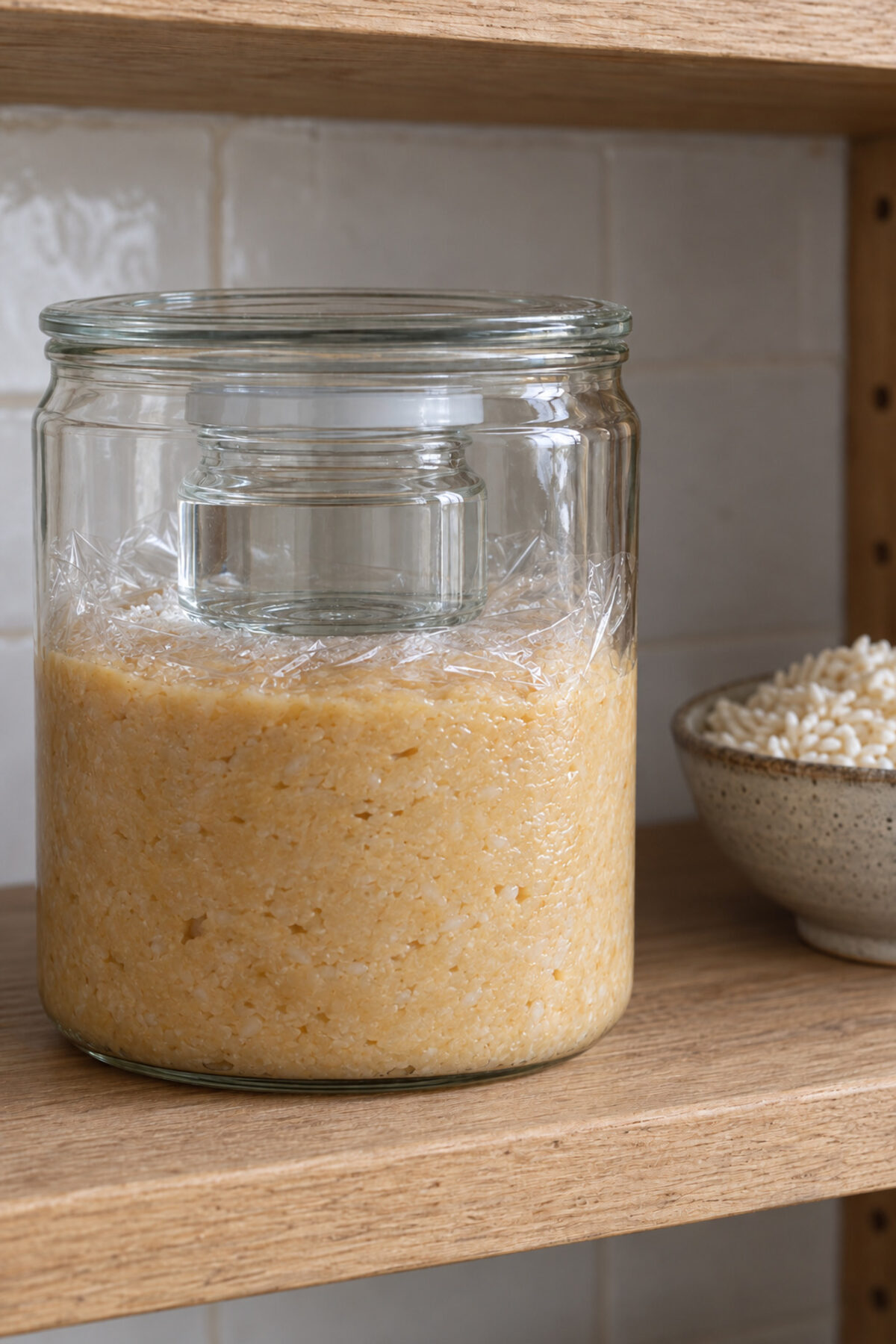
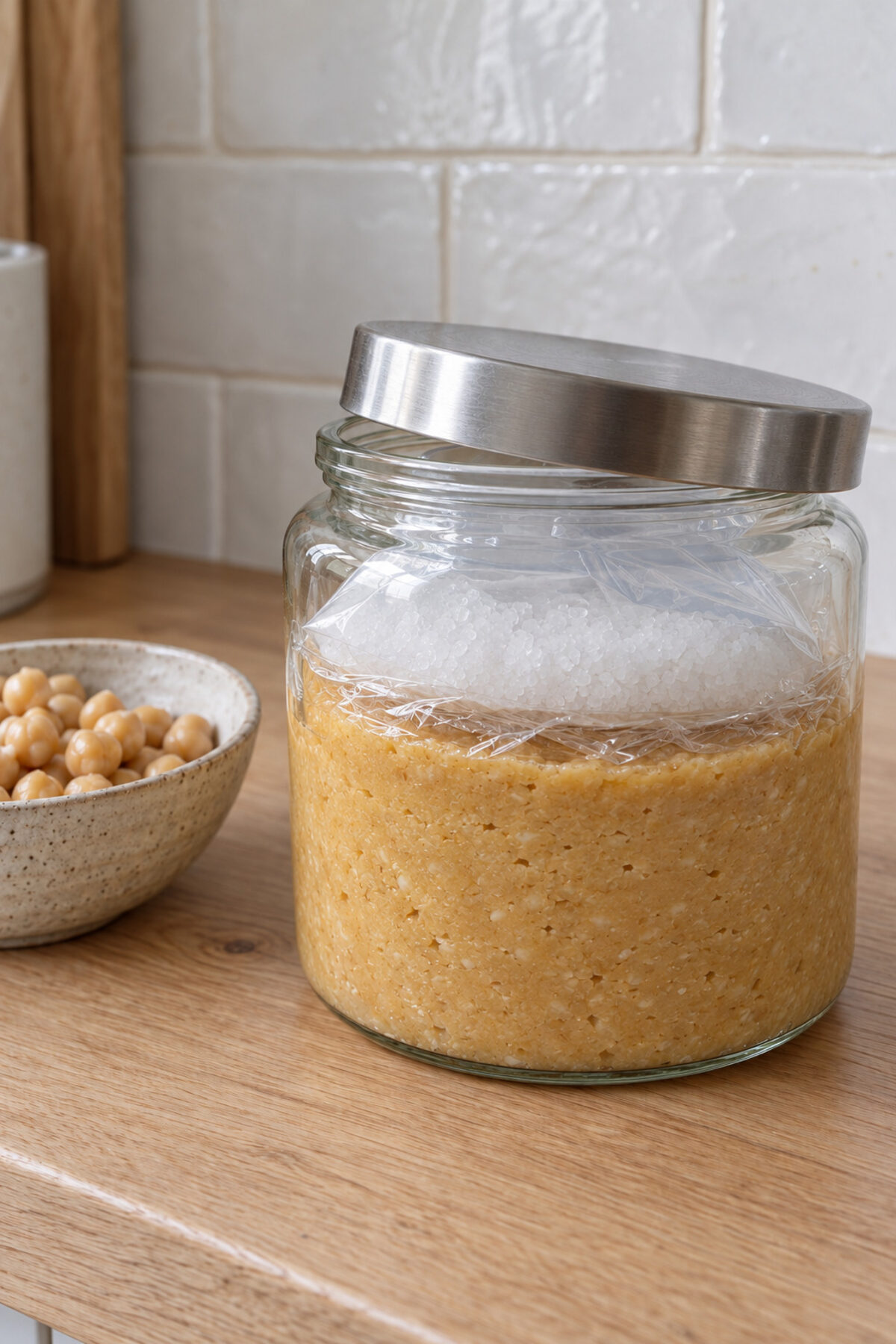
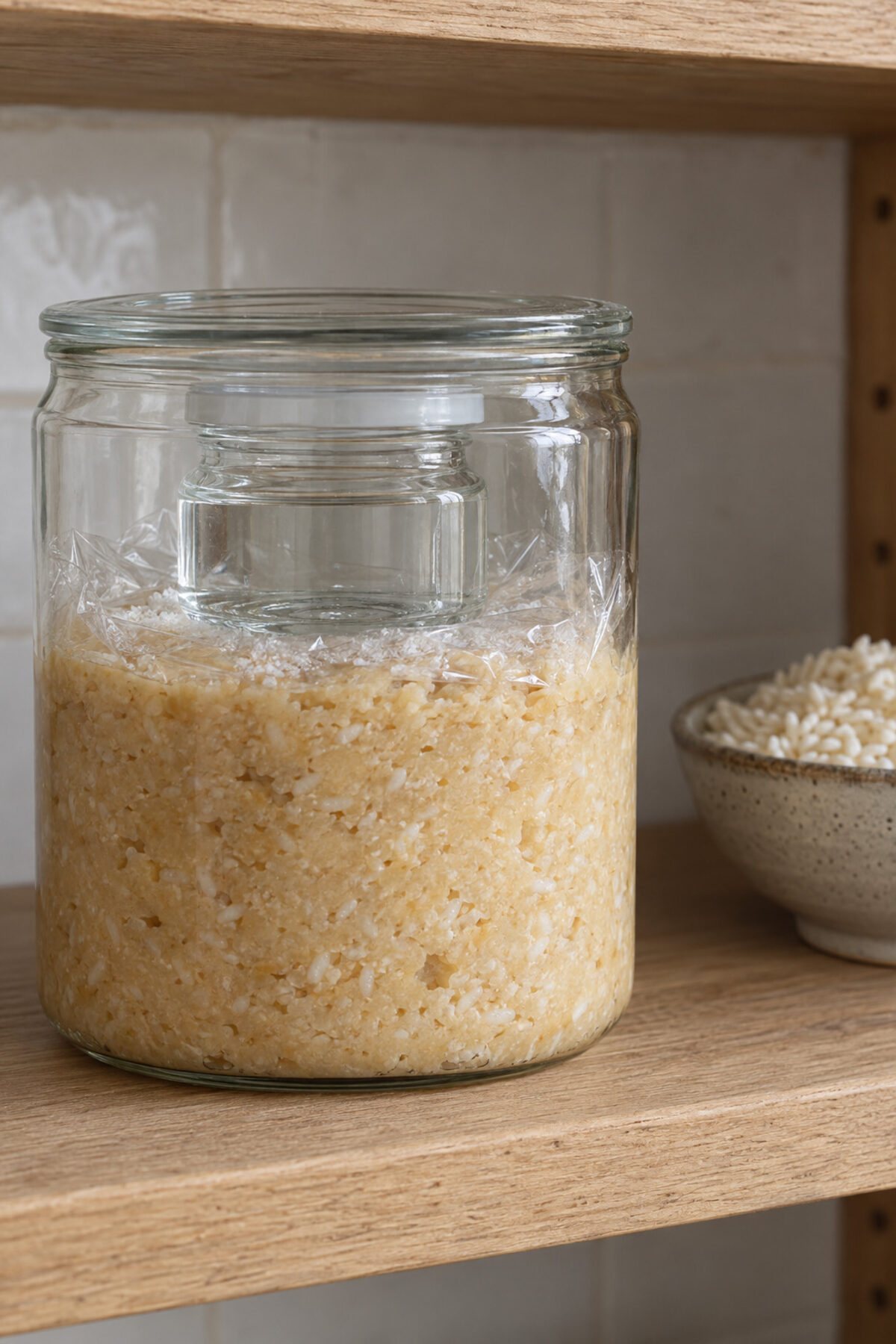
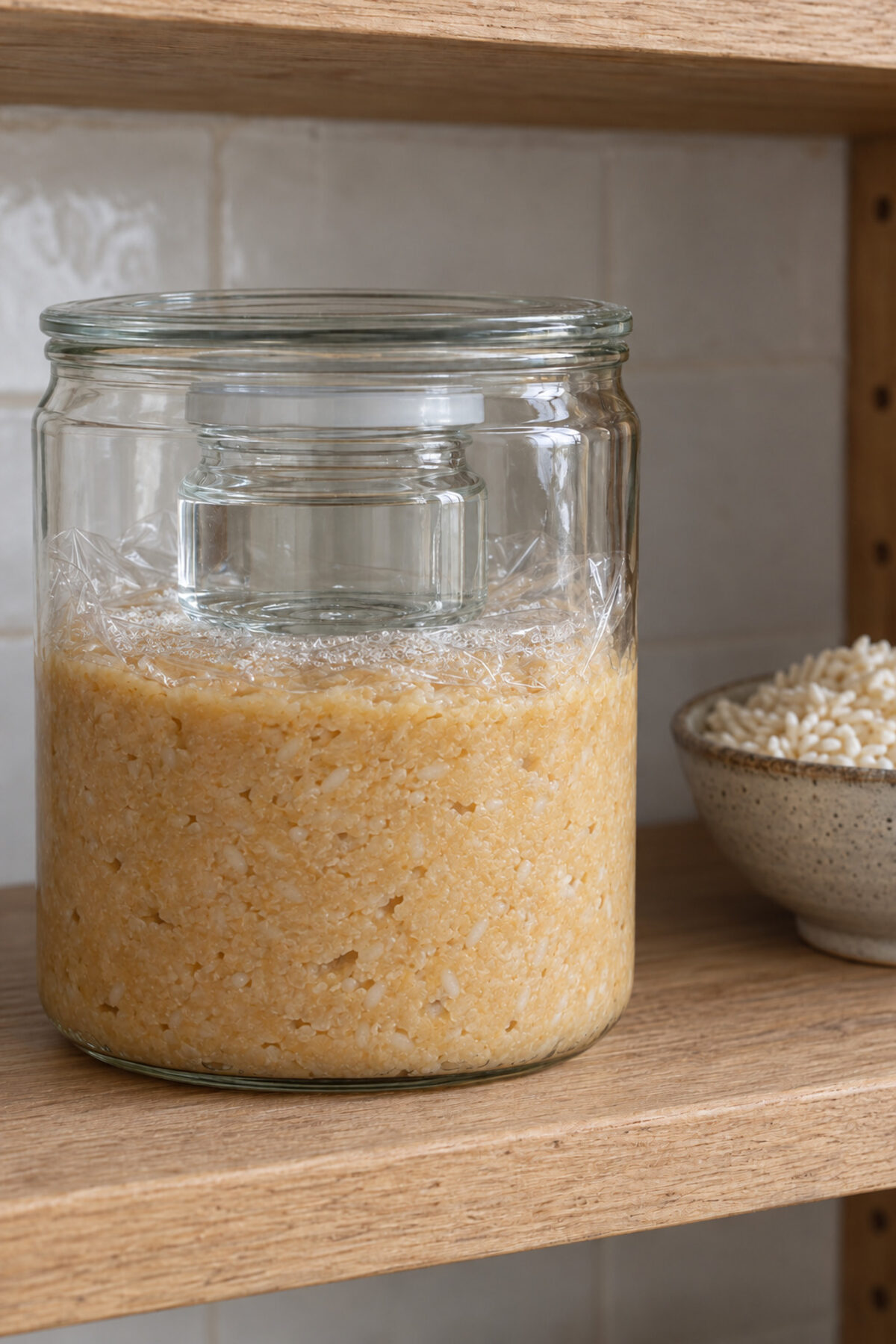
Roll the paste into balls and drop them into the clean jar one at a time, pressing down, so no air pockets are left. Smooth the top, wipe the rim and sprinkle on the salt you set aside. Cover with plastic wrap pressed onto the miso, set the weight on top and rest the lid on loosely: the yeasts in miso need some air.
-
Let it mature for 2 to 4 weeks
Keep it somewhere cool and dark, at 59–77 °F (our house rule), for 2 to 4 weeks. Sweet miso usually matures in 10 to 15 days; at lower temperatures it takes longer. Start tasting it in the second week. It smells of koji and beans, and gets sweeter and rounder. A dark liquid, tamari, may rise to the top: mix it back into the paste (our house rule).
Tip: If spots of white or pale green mold appear on the surface, scrape them off with a margin, wipe the rim and replace the plastic wrap.
-
When you like it, into the fridge
When you like the flavor, close the jar and keep it in the fridge. It keeps changing there, very slowly. Don't leave it out of the fridge for more than 2 months (our house rule).
No sign-up. We guide you step by step, from the scale to the fridge.
Variations
The same method, a different flavor. Once you have this one down, try one of these.
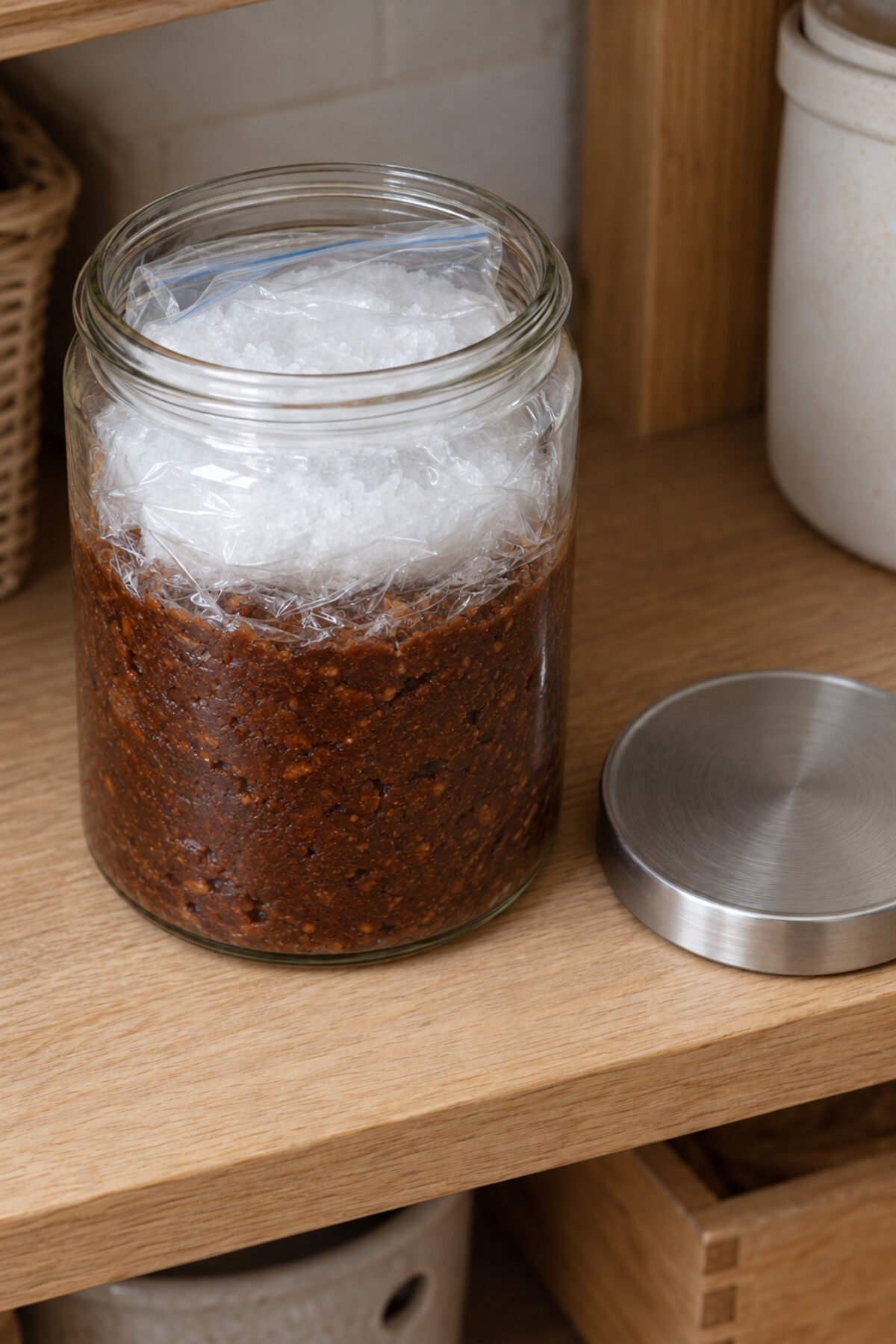
What you'll see
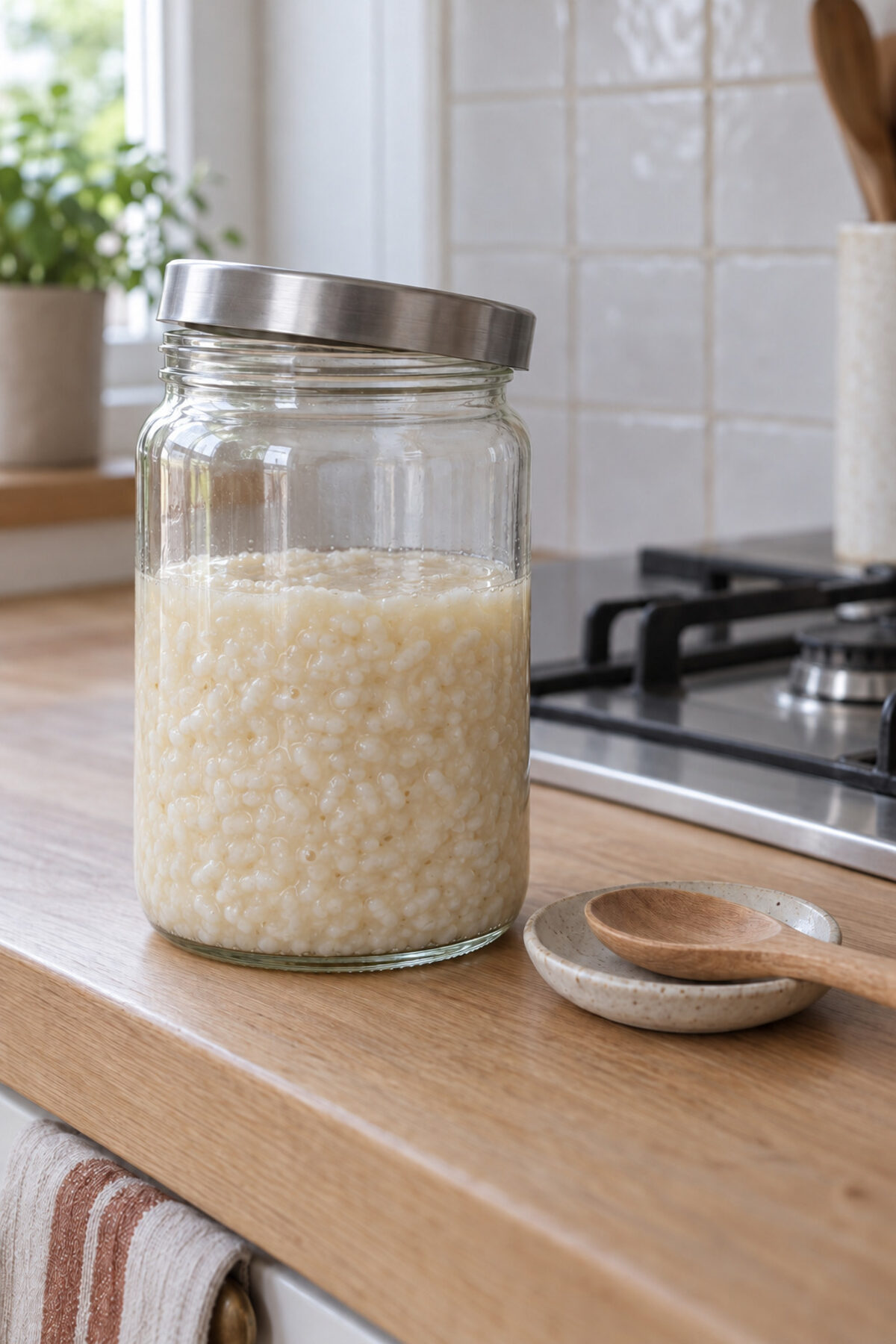
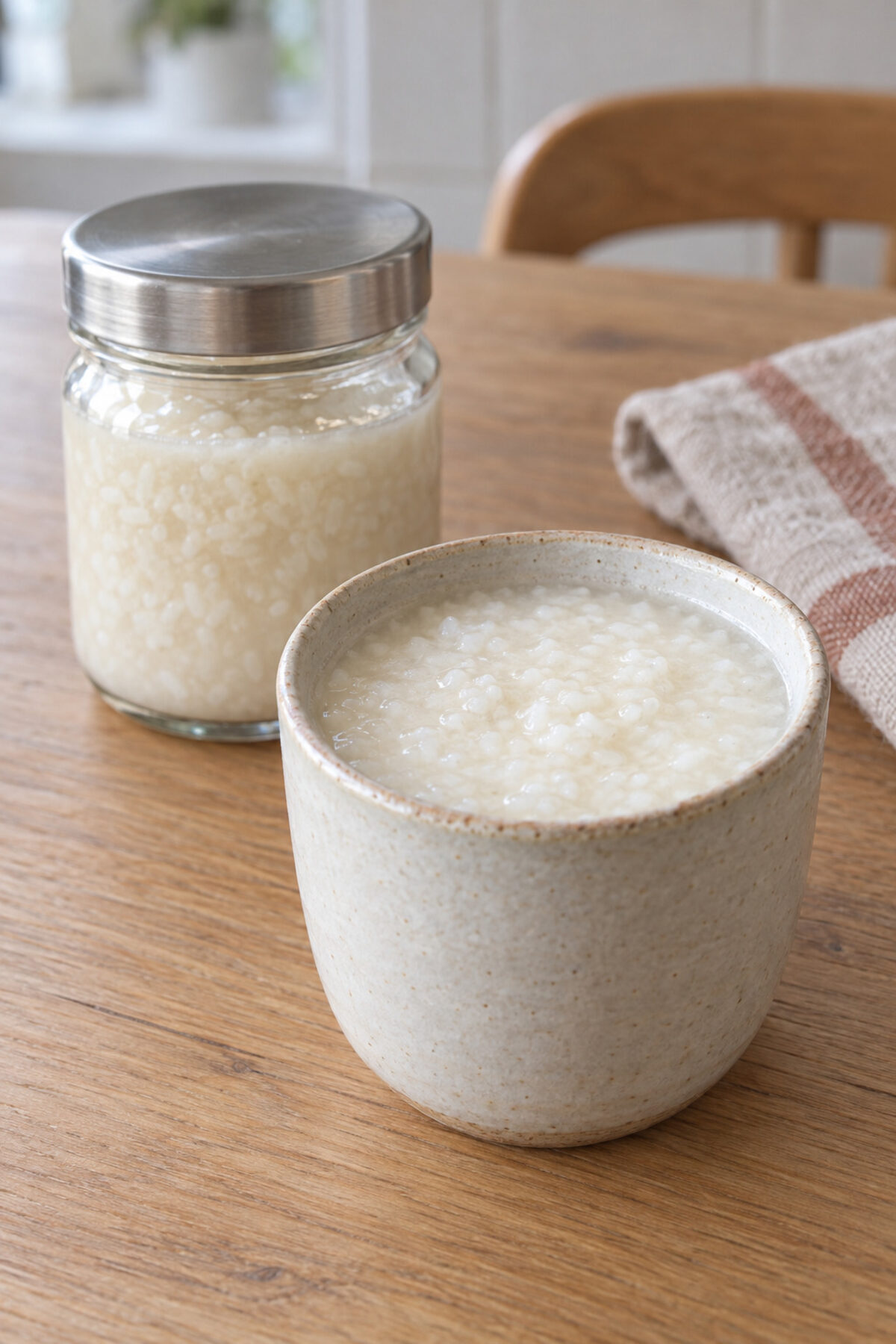
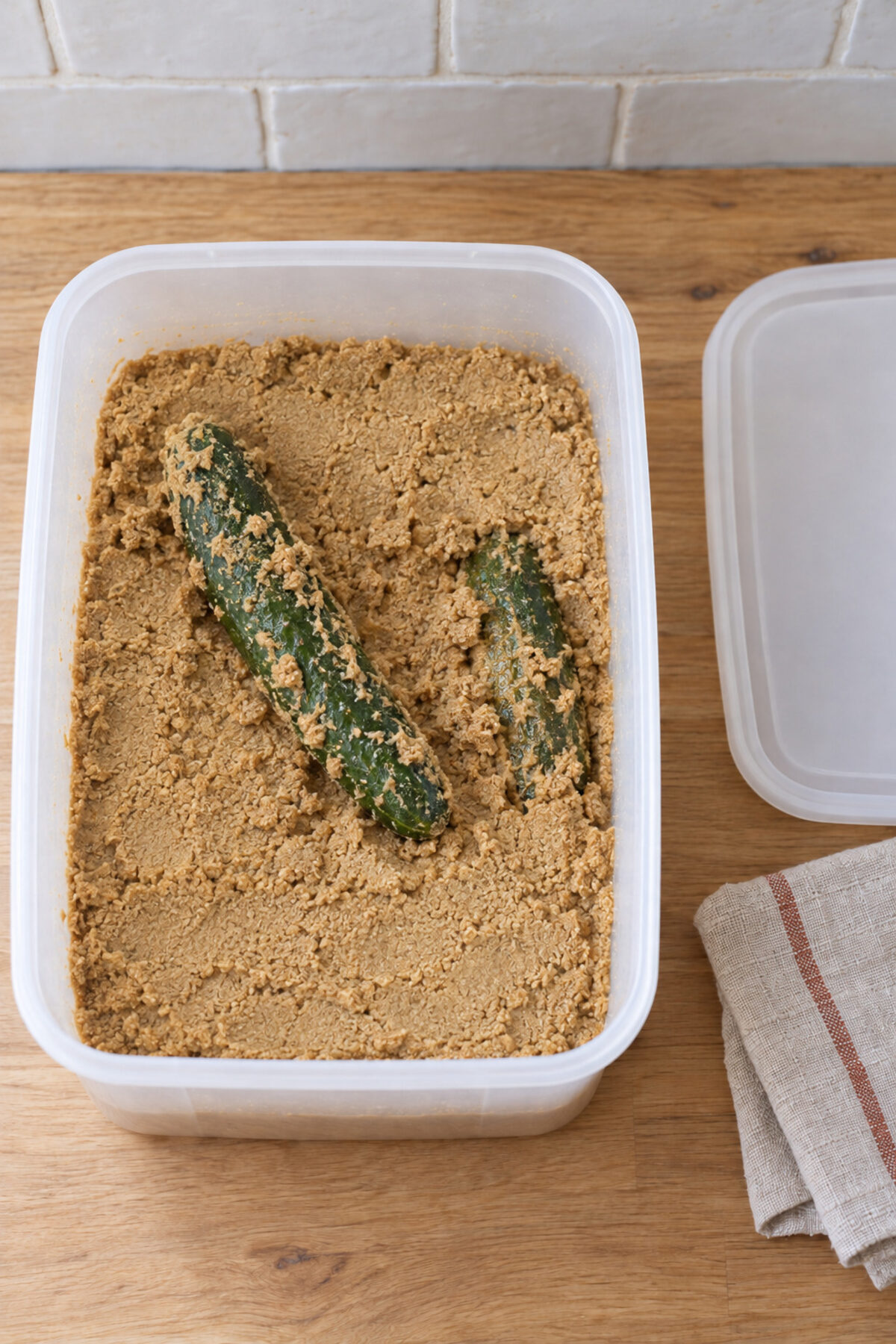
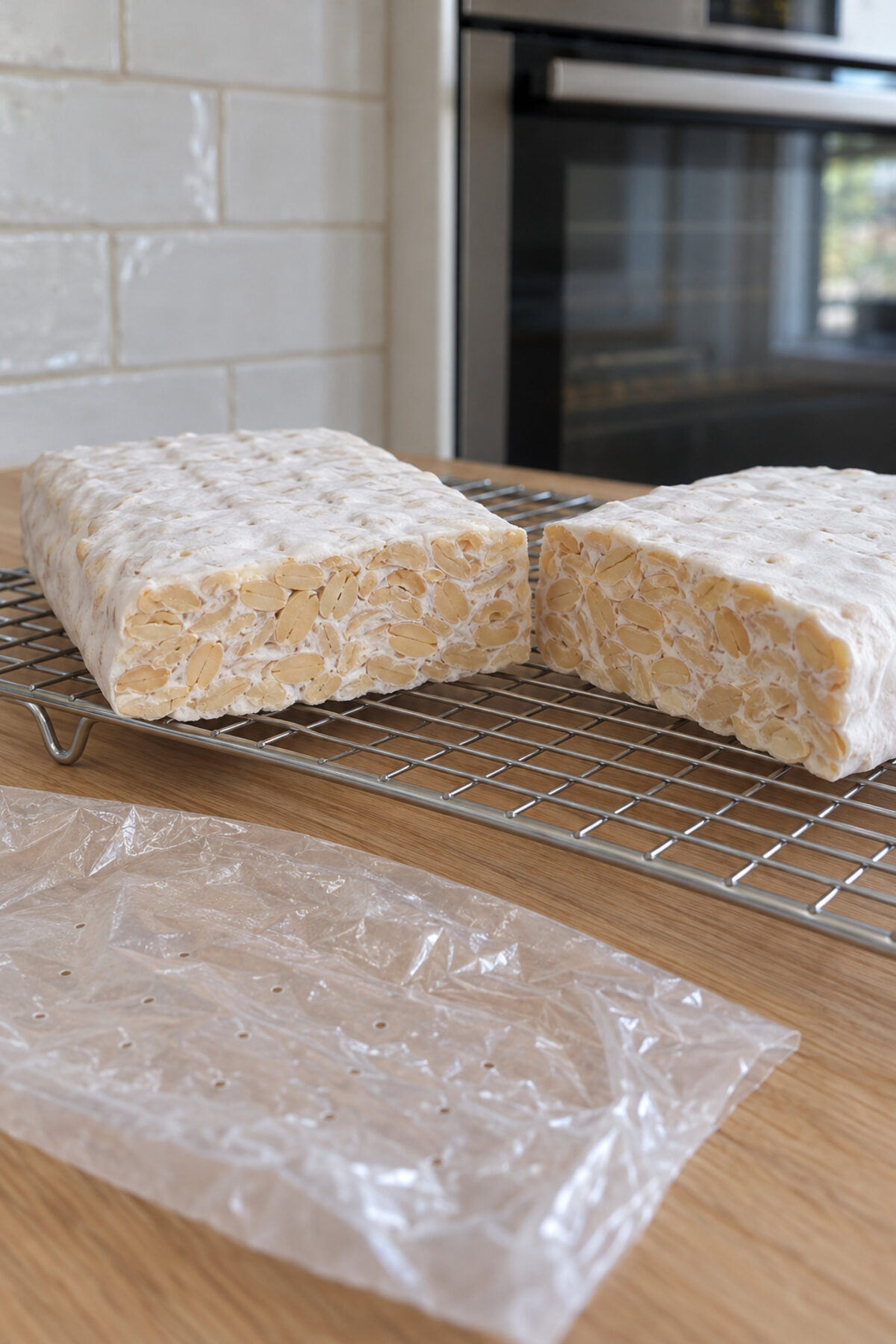
Miso is a paste of cooked beans, koji and salt that matures for weeks or months. Koji is steamed rice that a mold, Aspergillus oryzae, has grown on: its enzymes turn starch into sugar and proteins into umami. White miso has more koji than soybeans and matures briefly, so it comes out pale and sweet. The kind you buy is made warm, at about 122 °F, in a few days and with 5% to 7% salt. At home it matures at room temperature, which is why we give it more salt and a few weeks.
 AI
 AI
AI
How to tell it's going well
- Never less than 6% salt by total weight (our house rule); this recipe has 8%. The guide asks for more than 4%, typical miso runs from 6% to 16%, and with 25% less salt miso spoils.
- Soak in the fridge. Out of it, never more than 4 hours.
- Soybeans well cooked and cooled quickly: from 140 °F to 95 °F within 2 hours. If they took more than 6, throw them out (our house rule).
- The koji always goes onto soybeans at 95 °F or below.
- It isn't acidic: its pH stays above 4.6, so pH won't tell you whether it's going well. Salt is what keeps it, leaving little free water for microbes.
- White or pale green mold on the surface: scrape it off with a margin and replace the wrap. Pink, red, orange or black, across the whole surface or into the paste, slimy or smelling rotten: throw the whole miso out (our house rule).
- A loose lid while it matures, never vacuum-sealed.
- After 2 to 4 weeks, into the fridge, and never more than 2 months out of it (our house rule).
- Only store-bought koji, or koji you made yourself from store-bought spores. Don't start it with miso from another batch: it isn't recommended for ferments that aren't acidic.
Where every number comes from
Every number in this recipe comes from a food safety guide. We keep a copy of each source and quote its exact words.
-
1
It isn't an acidic fermentation; its pH stays above 4.6
“This is not an acidic fermentation. The final pH of koji and other koji products are above a pH of 4.6.”
BC Centre for Disease Control, Environmental Health Services · Safety of Fermented Foods, Section 3.10: Koji foods: miso, soy sauce and amazake (September 2023, updated December 2024) · read on October 25, 2026
-
2
Water activity of 0.85 or lower, usually 0.80
“Matured miso should have aw of 0.85 or lower; finished miso usually has an aw of approximately 0.80.”
BC Centre for Disease Control, Environmental Health Services · Safety of Fermented Foods, Section 3.10: Koji foods: miso, soy sauce and amazake (September 2023, updated December 2024) · read on October 25, 2026
-
3
More than 4% salt, which holds back mold
“Salt concentration should be >4%. Salt inhibits further mould, i.e., Aspergillus growth”
BC Centre for Disease Control, Environmental Health Services · Safety of Fermented Foods, Section 3.10: Koji foods: miso, soy sauce and amazake (September 2023, updated December 2024) · read on October 25, 2026
-
4
Typically 6% to 16% salt
“Typical salt concentration is 6 to 16%,”
BC Centre for Disease Control, Environmental Health Services · Safety of Fermented Foods, Section 3.10: Koji foods: miso, soy sauce and amazake (September 2023, updated December 2024) · read on October 25, 2026
-
5
Soaking for more than 4 hours, in the fridge
“Soaking of rice, soy beans and other substrates in excess of four hours should occur in refrigerated conditions or in”
BC Centre for Disease Control, Environmental Health Services · Safety of Fermented Foods, Section 3.10: Koji foods: miso, soy sauce and amazake (September 2023, updated December 2024) · read on October 25, 2026
-
6
Soybeans steamed or boiled for at least 3 hours
“Steaming or boiling for minimum time of 3 hr (soybeans) and”
BC Centre for Disease Control, Environmental Health Services · Safety of Fermented Foods, Section 3.10: Koji foods: miso, soy sauce and amazake (September 2023, updated December 2024) · read on October 25, 2026
-
7
Always at 165 °F or above
“Minimum cooking and steaming temperature steps should occur at 74oC, or higher.”
BC Centre for Disease Control, Environmental Health Services · Safety of Fermented Foods, Section 3.10: Koji foods: miso, soy sauce and amazake (September 2023, updated December 2024) · read on October 25, 2026
-
8
Pressure cooking is recommended
“Cooking under pressure is recommended for this reason.”
BC Centre for Disease Control, Environmental Health Services · Safety of Fermented Foods, Section 3.10: Koji foods: miso, soy sauce and amazake (September 2023, updated December 2024) · read on October 25, 2026
Show the remaining 18 claims
-
9
From 140 °F to the koji's temperature within 2 hours
“Cooling from 60oC to target inoculation temperature should occur within two hours.”
BC Centre for Disease Control, Environmental Health Services · Safety of Fermented Foods, Section 3.10: Koji foods: miso, soy sauce and amazake (September 2023, updated December 2024) · read on October 25, 2026
-
10
Koji added at 95 °F or below
“Koji should be added at or below 35oC”
BC Centre for Disease Control, Environmental Health Services · Safety of Fermented Foods, Section 3.10: Koji foods: miso, soy sauce and amazake (September 2023, updated December 2024) · read on October 25, 2026
-
11
The culture, always store-bought
“Starter culture must be purchased from commercial sources to ensure purity.”
BC Centre for Disease Control, Environmental Health Services · Safety of Fermented Foods, Section 3.10: Koji foods: miso, soy sauce and amazake (September 2023, updated December 2024) · read on October 25, 2026
-
12
Covered with parchment or cloth
“the mixture is placed into a fermentation vessel, then covered with parchment or fabric.”
BC Centre for Disease Control, Environmental Health Services · Safety of Fermented Foods, Section 3.10: Koji foods: miso, soy sauce and amazake (September 2023, updated December 2024) · read on October 25, 2026
-
13
A weight and a loose lid, because yeast needs air
“Weights are placed on top of a lid that is loosely applied (fermentation with yeast requires oxygen).”
BC Centre for Disease Control, Environmental Health Services · Safety of Fermented Foods, Section 3.10: Koji foods: miso, soy sauce and amazake (September 2023, updated December 2024) · read on October 25, 2026
-
14
At room temperature, from 1 month to over a year
“Ambient temperature incubation for 1 month to more than one year.”
BC Centre for Disease Control, Environmental Health Services · Safety of Fermented Foods, Section 3.10: Koji foods: miso, soy sauce and amazake (September 2023, updated December 2024) · read on October 25, 2026
-
15
Sweet miso, 10 to 15 days
“Sweet miso has a shorter holding time (10 to 15 days)”
BC Centre for Disease Control, Environmental Health Services · Safety of Fermented Foods, Section 3.10: Koji foods: miso, soy sauce and amazake (September 2023, updated December 2024) · read on October 25, 2026
-
16
At lower temperatures, it takes longer
“Ambient temperature maturation is typical in smaller operations, is acceptable, with times to maturation of the miso likewise extended in lower temperatures.”
BC Centre for Disease Control, Environmental Health Services · Safety of Fermented Foods, Section 3.10: Koji foods: miso, soy sauce and amazake (September 2023, updated December 2024) · read on October 25, 2026
-
17
Surface mold is scraped off and the cover replaced
“Visible mould growth on miso surface (Aspergillus or others) should be scraped off, removed and covers replaced during the”
BC Centre for Disease Control, Environmental Health Services · Safety of Fermented Foods, Section 3.10: Koji foods: miso, soy sauce and amazake (September 2023, updated December 2024) · read on October 25, 2026
-
18
Once ready, into the fridge
“Miso is stored and labelled to require refrigeration to limit”
BC Centre for Disease Control, Environmental Health Services · Safety of Fermented Foods, Section 3.10: Koji foods: miso, soy sauce and amazake (September 2023, updated December 2024) · read on October 25, 2026
-
19
The percentage is by the weight of all ingredients
“Calculations of percent amounts to add are based on the weight of all ingredients.”
BC Centre for Disease Control, Environmental Health Services · Safety of Fermented Foods, Section 2: Starter cultures and fermented food standards (August 2024, updated December 2024) · read on October 25, 2026
-
20
2 hours, with 6 as the limit
“CCP. 2 hours (critical limit is 6 hrs)”
BC Centre for Disease Control, Environmental Health Services · Safety of Fermented Foods, Section 2: Starter cultures and fermented food standards (August 2024, updated December 2024) · read on October 25, 2026
-
21
Non-acidic ferments aren't started with an earlier batch
“In summary, backslopping in non-acid fermentations or in fermentations where the culture creates low acid conditions are not recommended.”
BC Centre for Disease Control, Environmental Health Services · Safety of Fermented Foods, Section 2: Starter cultures and fermented food standards (August 2024, updated December 2024) · read on October 25, 2026
-
22
With 25% less salt, miso spoils
“○みそには、発酵に適切な塩分と水分の範囲が存在し、25%以上の低減では変敗が生じ、安全”
Consumer Commission, Cabinet Office of Japan (消費者委員会), with an annex prepared by MAFF (農林水産省) · 資料3-2: ナトリウムに係る低減された旨の表示(25%以上の相対差)の特例を設けることについて (15-oct-2014) · read on October 25, 2026
-
23
Store-bought sweet miso, with 5% to 7% salt
“they are sweeter and lower in salt (5 to 7%)”
Journal of Fungi (MDPI), Kusumoto K.-I. et al. · Japanese Traditional Miso and Koji Making (2021) · read on October 25, 2026
-
24
Made in a few days at about 122 °F
“completes within a matter of several days at around 50 °C”
Journal of Fungi (MDPI), Kusumoto K.-I. et al. · Japanese Traditional Miso and Koji Making (2021) · read on October 25, 2026
-
25
More koji, sweeter; less koji, saltier
“Higher proportions of rice or barley koji create a sweeter taste, while lower proportions of koji produce saltiness.”
Journal of Fungi (MDPI), Kusumoto K.-I. et al. · Japanese Traditional Miso and Koji Making (2021) · read on October 25, 2026
-
26
Soybeans soaked for 15 to 17 hours
“Soybeans are washed and soaked in water typically for 15 to 17 h.”
Journal of Fungi (MDPI), Kusumoto K.-I. et al. · Japanese Traditional Miso and Koji Making (2021) · read on October 25, 2026