 AI
Ginger lemon kombucha
Level 1 · beginner
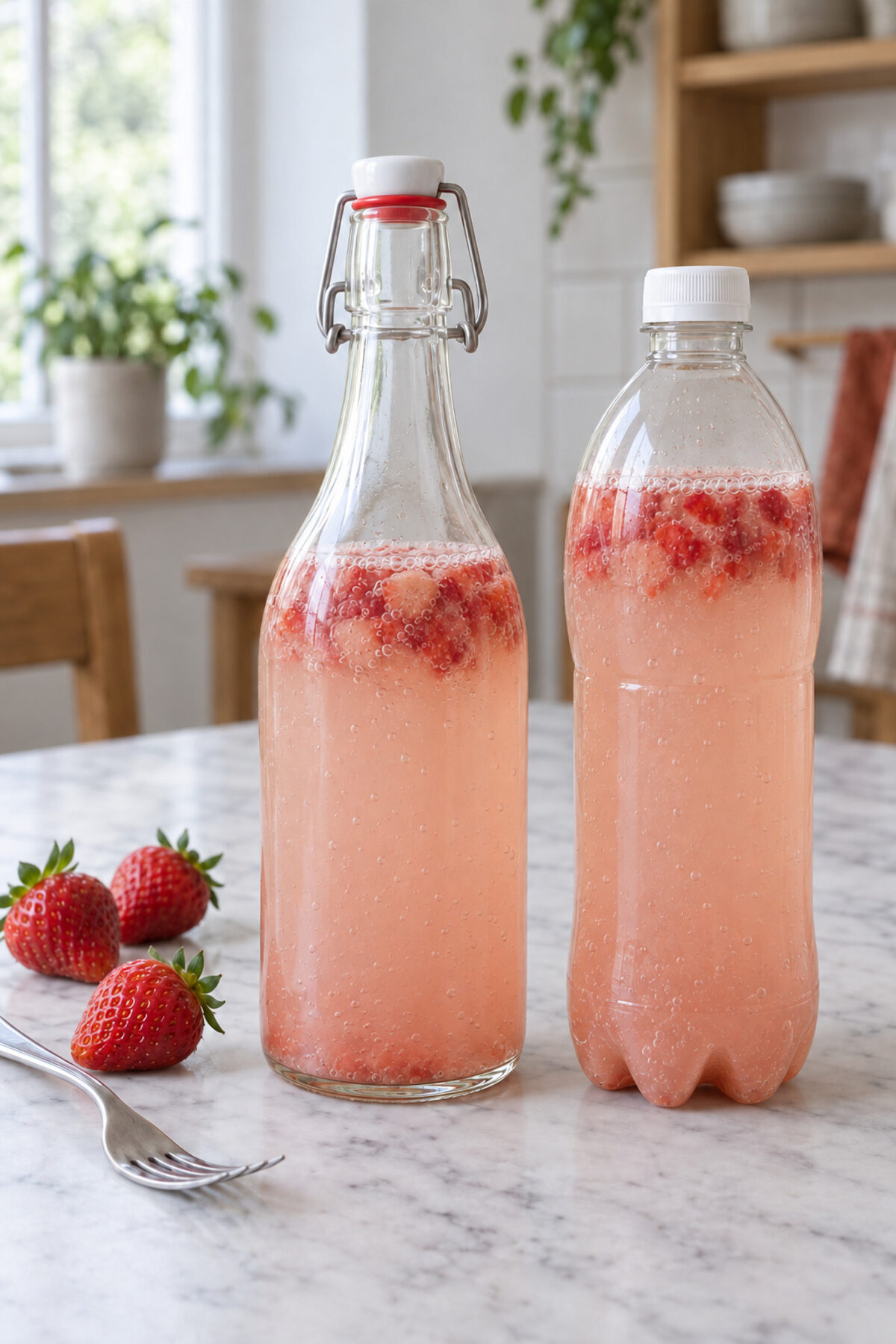
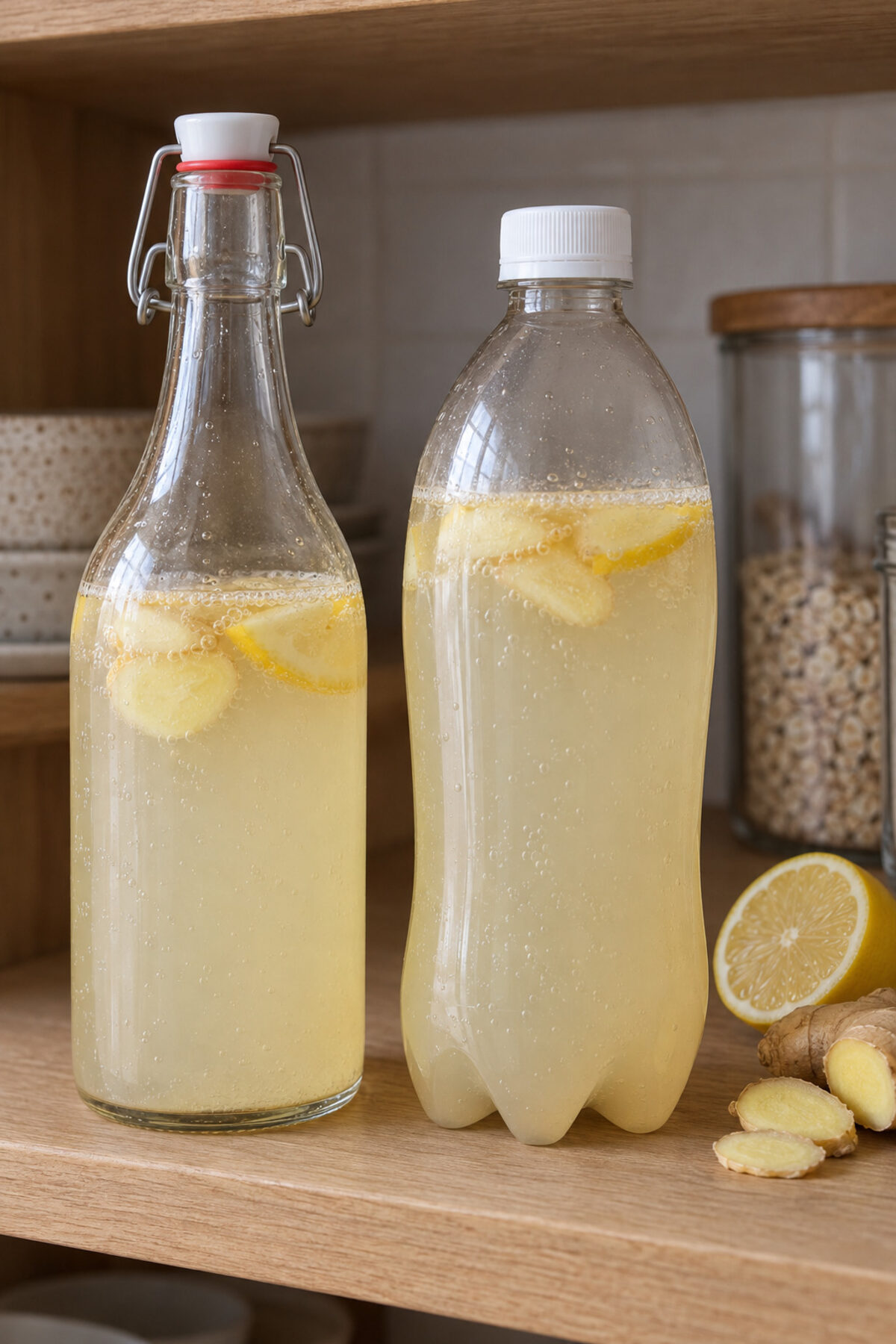
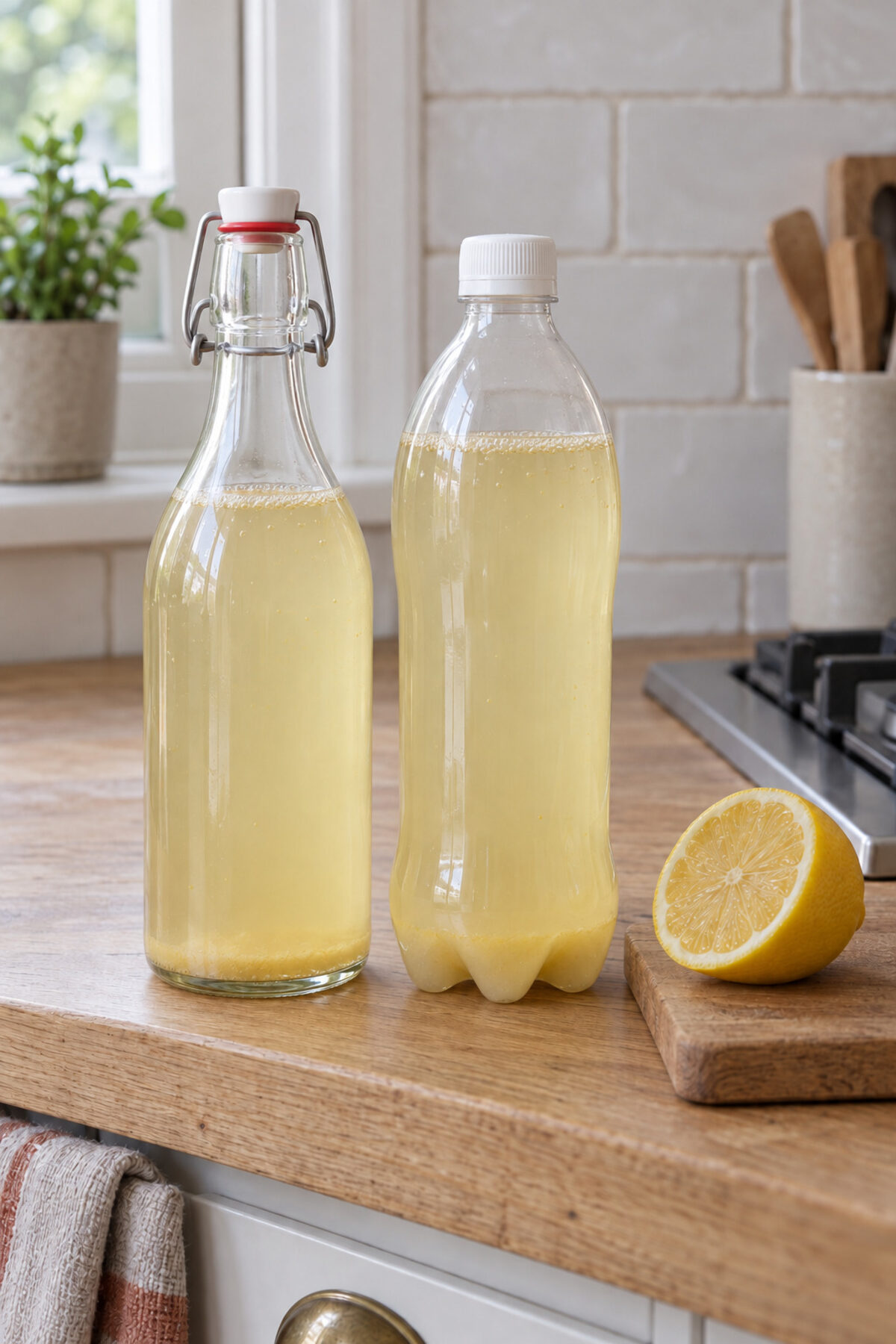
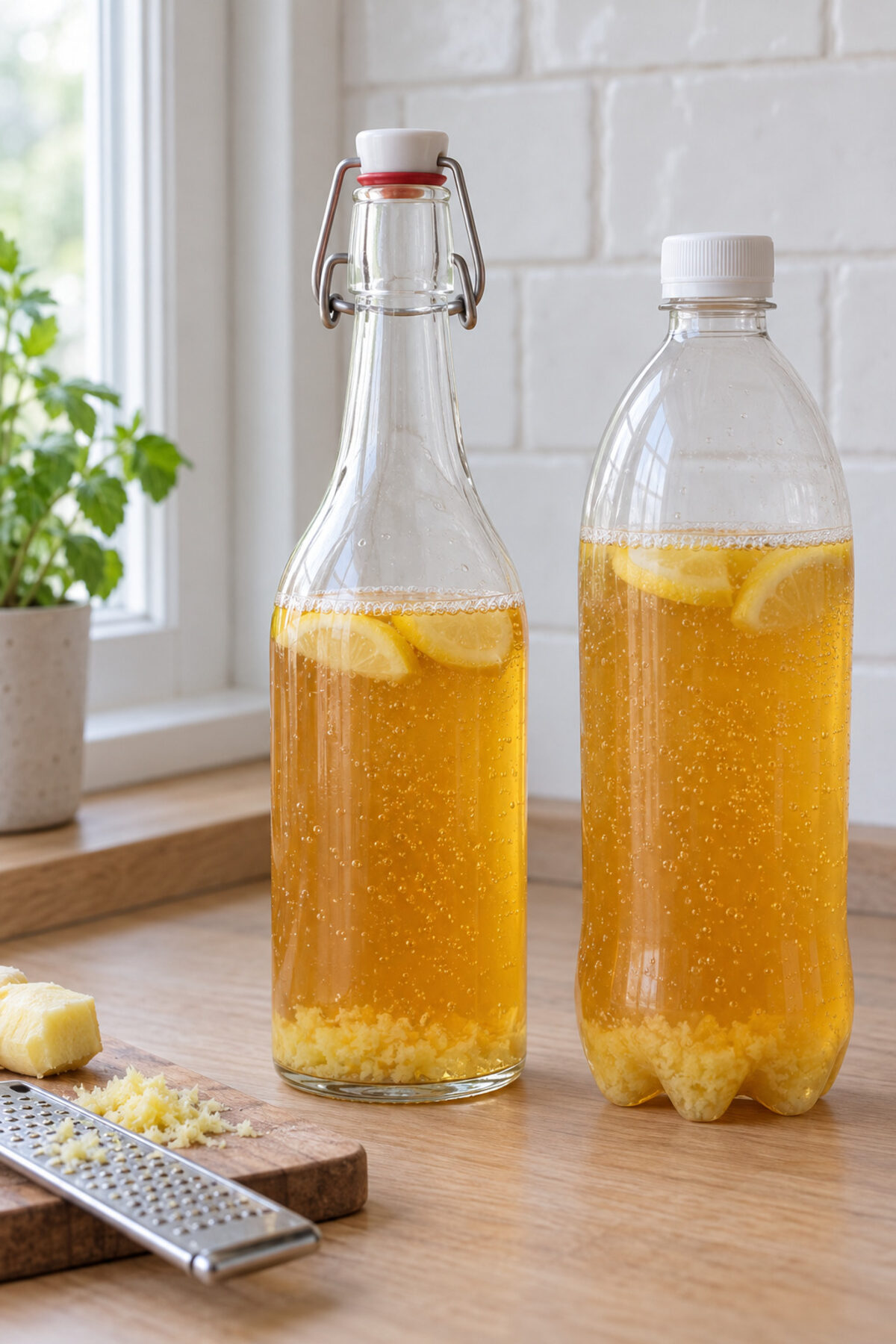
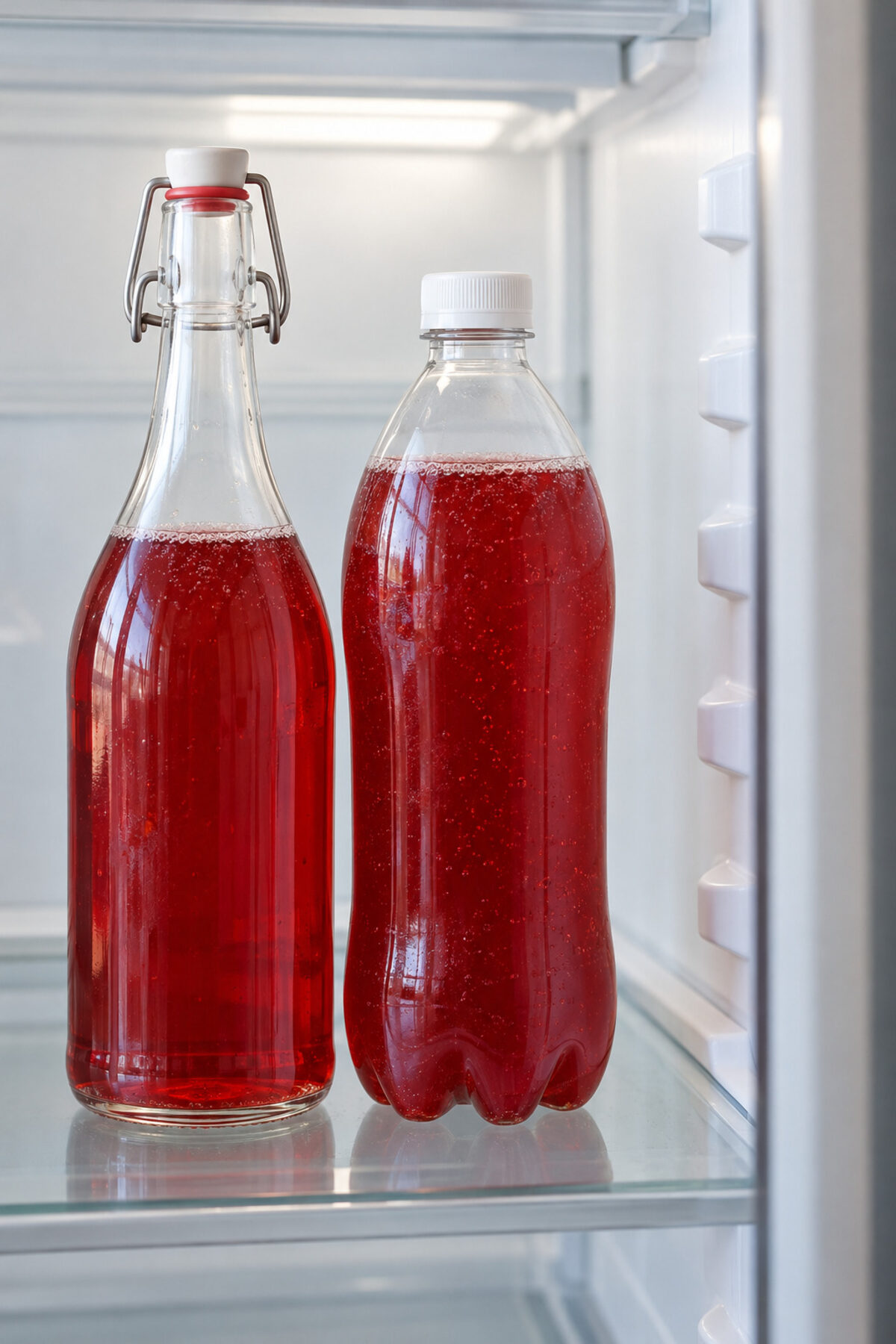
Finished kombucha, grated ginger and a few lemon slices, in bottles made for fizz. A day or two out of the fridge, then drink it within two days.
- Time
- 24–48h
- Temperature
- 68–77°F
- Bottles
- 1L
The golden rule: the drink already sour before it is bottled, bottles made for pressure, and never more than 48 h out of the fridge.
No sign-up. We guide you step by step, from the scale to the fridge.
Reviewed October 26, 2026 · 26 facts, each with its source
Before you start
This is the second fermentation of homemade kombucha. Finished kombucha goes into bottles with ginger and lemon and sits out of the fridge for a day or two to build fizz. In the sealed bottle, the yeast keeps eating the sugar left in the kombucha: it makes gas, and some alcohol too. That's why it has its own limits: bottles made for fizz, 48 hours at most out of the fridge, and two days to drink it.
You'll need
- One 500 ml swing-top glass bottle, made for carbonated drinks
- One 500 ml PET soda bottle, the test bottle
- 1-liter glass pitcher
- Fine grater
- Funnel
- Fine strainer
- Calibrated pH meter
- Kitchen scale
Step by step
-
Wash and sanitize the bottles
Wash the bottles, the cap, the pitcher, the funnel and the strainer with hot, soapy water and rinse them well. Sanitize the glass bottle with its gasket, the pitcher and the funnel by submerging them in water at 171 °F or hotter for at least 30 seconds. Only wash and rinse the PET bottle: water that hot warps it.
Tip: A soda or sparkling water bottle works as the test bottle: it's made to hold pressure.
-
Check the pH of the kombucha
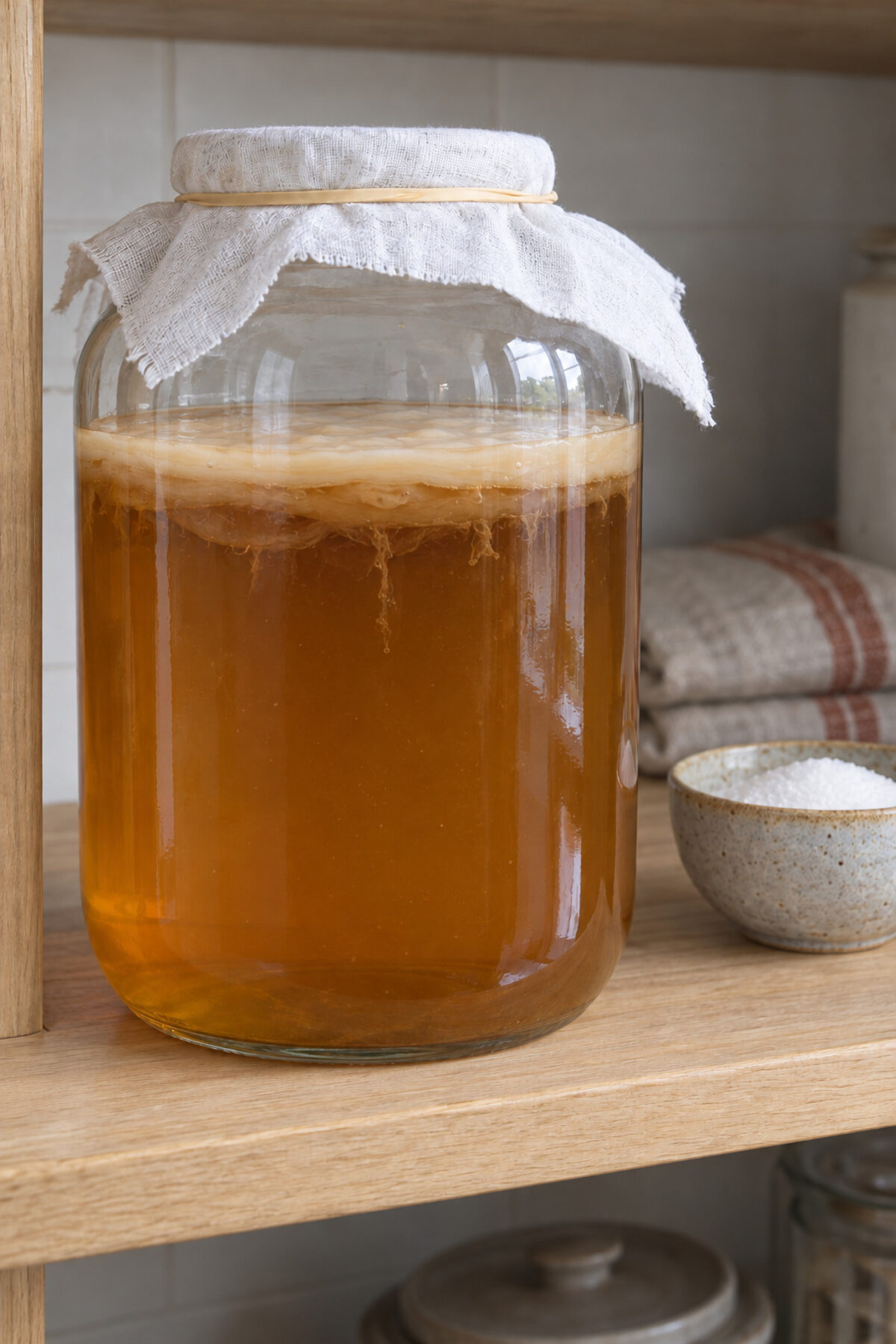
Use finished kombucha, the batch you were about to refrigerate, with the SCOBY and its starter already set aside for the next batch. Check the pH with the calibrated meter: it must be 4.2 or below. If it reads higher, don't bottle it.
Tip: Don't add sugar. Finished kombucha still has some left, and that's what makes the fizz.
-
Grate the ginger and slice the lemon
Wash and peel the ginger, then grate it finely: 20 g. Wash the lemon under running water and cut it into thin slices, about 40 g, without the seeds.
Tip: Want it milder and easier to strain? Cut the ginger into thin slices and crush them a little instead of grating it.
-
Mix, test again and bottle
Put the kombucha, ginger and lemon in the pitcher and stir. Check the pH again: it must still be 4.2 or below. Split the ginger and lemon slices between the two bottles and fill them with kombucha through the funnel. Leave 1¼–2 inches (3–5 cm) of air at the top and close them.
Tip: Write the date and time on both bottles: the 48 hours start now.
-
Leave them out of the fridge for 24 to 48 hours
Keep them in the kitchen at 68–77 °F, out of direct sun. Every 12 hours, squeeze the test bottle. Once it's as hard as an unopened soda, move both bottles to the fridge, even if 24 hours haven't passed. Even if it's still soft, they go in the fridge at 48 hours: that's a house rule.
Expect gentle fizz: ginger and lemon bring hardly any sugar, so the bubbles come from what's left in the kombucha. A thin film or a few strands in the bottle are a new SCOBY. Dry, fuzzy patches are mold: throw it out.
Tip: If your kitchen is warmer than 77 °F, don't leave it out: let it ferment in the fridge, more slowly. The guidelines say to avoid long second fermentations in warm weather.
-
Move them to the fridge and drink it within 2 days
Keep the bottles in the fridge at 40 °F or below, and drink it within 2 days. Open it cold, after a few hours in the fridge: slowly, over the sink, with a towel on top and pointed away from your face. Pour it through the strainer to catch the ginger.
Tip: Don't shake the bottle before opening it.
No sign-up. We guide you step by step, from the scale to the fridge.
Variations
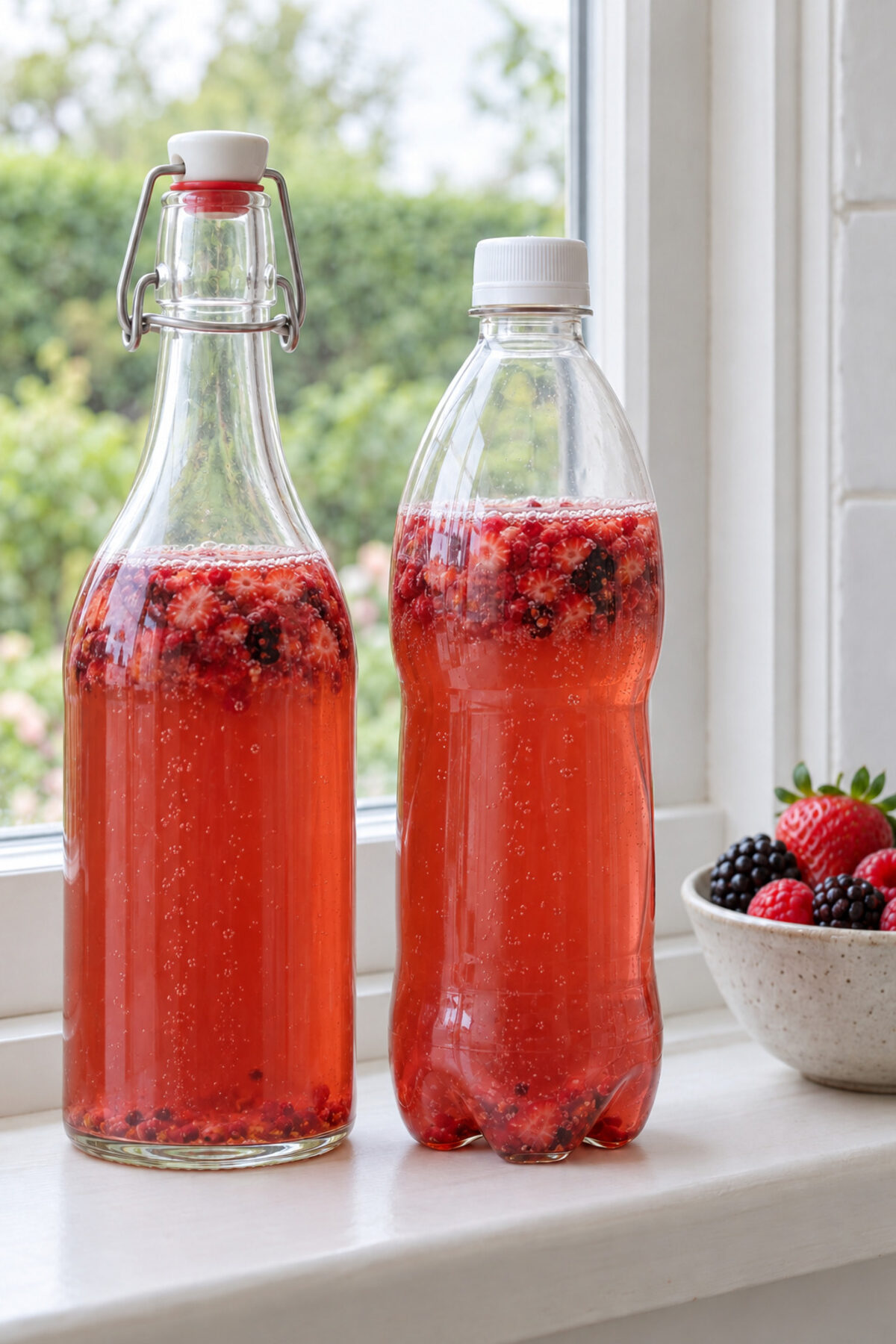
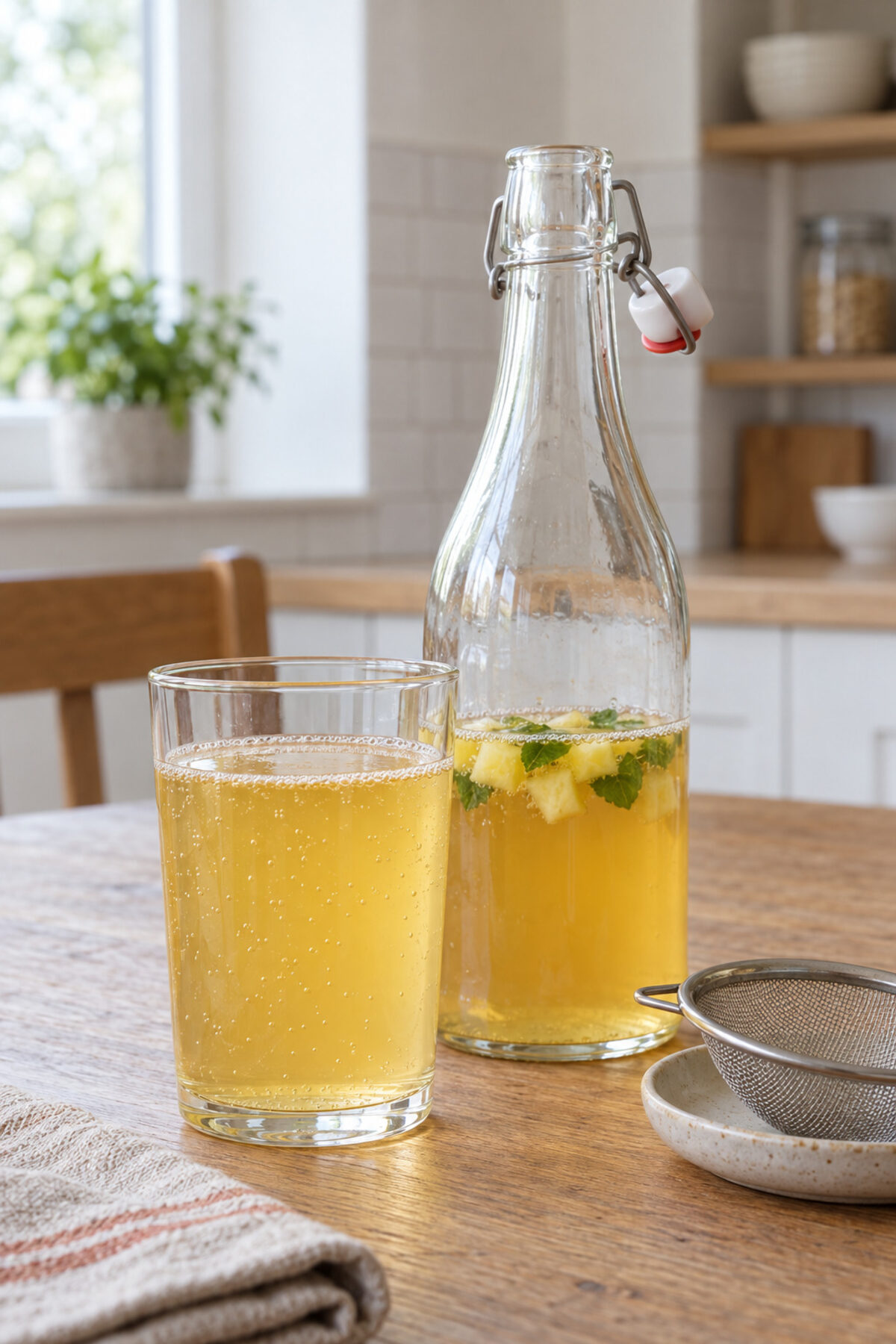
The same method, a different flavor. Once you have this one down, try one of these.
How to tell it's going well
- Only with acidic kombucha. Bottle only kombucha at pH 4.2 or below, and test again once the ginger and lemon are in.
- Bottles made for fizz, plus a PET test bottle. Swing-top or beer glass bottles, or PET soda bottles. Never jars or wine, oil or still water bottles: in a sealed container, gas builds up and can burst it. Squeeze the test bottle every 12 hours.
- Never more than 48 hours out of the fridge, and never above 77 °F. These are house rules: the guidelines give no hours for kombucha at home, and for jun BCCDC gives 1 to 3 days. Without refrigeration, some kombuchas explode.
- Open it cold, slowly and away from your face. In Australia, a kombucha was recalled because the cap could pop off and injure.
- It has more alcohol than the kombucha you started with, and it keeps gaining it in the fridge. It's not for young children or during pregnancy.
- Drink it within 2 days. Once flavored, that's what the guidelines give.
- Pasteurized juice only. If you swap the lemon for juice, make it pasteurized and store-bought.
Where every number comes from
Every number in this recipe comes from a food safety guide. We keep a copy of each source and quote its exact words.
-
1
Kombucha is flavored once it has finished fermenting, with fruit, herbs, spices or juice
“Kombucha can be flavored after the fermentation process is done. You can get creative and add fruit, herbs, spices, or fruit juices.”
University of Georgia Cooperative Extension (National Center for Home Food Preservation) · Crafting Kombucha at Home: Frequently Asked Questions (2026) · read on October 20, 2026
-
2
Once flavored, refrigerate it and drink it within 2 days
“Once flavors have been added kombucha should be stored under refrigeration and consumed within 2 days.”
University of Georgia Cooperative Extension (National Center for Home Food Preservation) · Crafting Kombucha at Home: Frequently Asked Questions (2026) · read on October 20, 2026
-
3
NCHFP suggests mixing kombucha with fresh or dried ginger
“Roots – Mix kombucha with fresh or dried ginger”
National Center for Home Food Preservation (USDA, University of Georgia) · Kombucha Tea · read on October 20, 2026
-
4
Sanitize in water at 171 °F or hotter for 30 seconds
“Submerge cleaned equipment in hot water (at least 171°F) for at least 30 seconds to sanitize.”
National Center for Home Food Preservation (USDA, University of Georgia) · Kombucha Tea · read on October 20, 2026
-
5
In an airtight container, gas builds up and can burst it
“Storing kombucha in airtight containers can cause the accumulation of CO2 (carbonation), potentially leading to an explosion if not regularly monitored.”
National Center for Home Food Preservation (USDA, University of Georgia) · Kombucha Tea · read on October 20, 2026
-
6
Some prefer grated ginger to crushed slices (school ginger beer guide, practice)
“some suggest that the ginger should be grated rather than sliced and crushed.”
Science in School (EIROforum), Dean Madden, National Centre for Biotechnology Education, University of Reading · Ginger beer: a traditional fermented low-alcohol drink (Issue 8, Spring 2008) · read on October 25, 2026
-
7
Leave 3–5 cm of air at the top (school ginger beer guide, practice)
“leaving a 3–5 cm air gap at the top”
Science in School (EIROforum), Dean Madden, National Centre for Biotechnology Education, University of Reading · Ginger beer: a traditional fermented low-alcohol drink (Issue 8, Spring 2008) · read on October 25, 2026
-
8
Flavor goes in after the first fermentation, once the pH has dropped below 4.2
“Flavouring agents should be added after initial fermentation, when the pH has dropped below 4.2.”
BC Centre for Disease Control, Environmental Health Services · Safety of Fermented Foods, Section 3.11: Kombucha and Jun (September 2023, updated December 2024) · read on October 25, 2026
Show the remaining 18 claims
-
9
Once the flavor is in, the pH is tested again and must stay below 4.2 and above 2.5
“After juice or other flavouring agents have been added, the pH must again be tested to ensure the pH of the finished product is less than 4.2 but above 2.5.”
BC Centre for Disease Control, Environmental Health Services · Safety of Fermented Foods, Section 3.11: Kombucha and Jun (September 2023, updated December 2024) · read on October 25, 2026
-
10
Herbs and fruit are washed and handled so they don't contaminate the kombucha
“Other products added to change flavour (herbs, fruit, etc.) must be processed and handled in a manner that prevents contamination of the kombucha or jun, including washing and refrigeration where appropriate.”
BC Centre for Disease Control, Environmental Health Services · Safety of Fermented Foods, Section 3.11: Kombucha and Jun (September 2023, updated December 2024) · read on October 25, 2026
-
11
The kombucha's leftover sugar and the flavorings start a second fermentation
“Flavourings and residual sugars may cause secondary fermentation.”
BC Centre for Disease Control, Environmental Health Services · Safety of Fermented Foods, Section 3.11: Kombucha and Jun (September 2023, updated December 2024) · read on October 25, 2026
-
12
Bottles that resist acid and pressure
“Glass bottles, cans or kegs should be resistant to acid leaching and pressure build-up.”
BC Centre for Disease Control, Environmental Health Services · Safety of Fermented Foods, Section 3.11: Kombucha and Jun (September 2023, updated December 2024) · read on October 25, 2026
-
13
Jun sits 1 to 3 days at 68–79 °F before the fridge
“Secondary fermentation occurs in anaerobic environment and lasts 1 to 3 days at ambient temperature (20°C to 26°C) before refrigeration.”
BC Centre for Disease Control, Environmental Health Services · Safety of Fermented Foods, Section 3.11: Kombucha and Jun (September 2023, updated December 2024) · read on October 25, 2026
-
14
In warm weather, no long second fermentations
“A prolonged second fermentation period when temperatures are warm should be avoided.”
BC Centre for Disease Control, Environmental Health Services · Safety of Fermented Foods, Section 3.11: Kombucha and Jun (September 2023, updated December 2024) · read on October 25, 2026
-
15
Without refrigeration, some kombuchas explode
“Some jun and kombucha products can explode if not refrigerated.”
BC Centre for Disease Control, Environmental Health Services · Safety of Fermented Foods, Section 3.11: Kombucha and Jun (September 2023, updated December 2024) · read on October 25, 2026
-
16
A SCOBY can grow again in the bottle
“Even after filtration, as the culture is live, there is a possibility for regrowth of SCOBY after bottling.”
BC Centre for Disease Control, Environmental Health Services · Safety of Fermented Foods, Section 3.11: Kombucha and Jun (September 2023, updated December 2024) · read on October 25, 2026
-
17
Into the fridge at 40 °F or below to stop fermentation
“Once fermentation is completed, kombucha and jun should be bottled and refrigerated to 4°C or lower to stop further fermentation”
BC Centre for Disease Control, Environmental Health Services · Safety of Fermented Foods, Section 3.11: Kombucha and Jun (September 2023, updated December 2024) · read on October 25, 2026
-
18
Recommended label, "Do not shake. Contents under pressure."
“Precautionary statement labels on bottles are recommended to advise consumers “Do not shake. Contents under pressure.””
BC Centre for Disease Control, Environmental Health Services · Safety of Fermented Foods, Section 3.11: Kombucha and Jun (September 2023, updated December 2024) · read on October 25, 2026
-
19
Added sugar and flavorings can produce excess alcohol
“Sugars and flavourings with added sugar added after this second step may cause formation of excess alcohol if fermentation persists.”
BC Centre for Disease Control, Environmental Health Services · Safety of Fermented Foods, Section 3.11: Kombucha and Jun (September 2023, updated December 2024) · read on October 25, 2026
-
20
It may contain alcohol, so it's not for young children or during pregnancy
“May contain alcohol. Not a suitable beverage for young children or during pregnancy.”
BC Centre for Disease Control, Environmental Health Services · Safety of Fermented Foods, Section 3.11: Kombucha and Jun (September 2023, updated December 2024) · read on October 25, 2026
-
21
If you use juice, pasteurized and store-bought
“If juice is added for flavouring after the fermentation step, a pasteurized, commercially produced juice is recommended.”
BC Centre for Disease Control, Environmental Health Services · Safety of Fermented Foods, Section 3.11: Kombucha and Jun (September 2023, updated December 2024) · read on October 25, 2026
-
22
pH 4.2 or below, with a calibrated meter
“Monitor the pH with a calibrated pH meter during fermentation to ensure the product gets to ≤4.2.”
Virginia Cooperative Extension (Virginia Tech) · What do I need to know to sell KOMBUCHA at the farmers market? (FST-297, last reviewed November 2025) · read on October 20, 2026
-
23
Don't add sugar to finished kombucha
“Don’t add more sugar to your kombucha to make it sweeter after it’s done fermenting.”
UGA Extension Forsyth County · Relax, Unwind, and Safely Make Your Own Flavored Kombucha at Home (11-jul-2025) · read on October 20, 2026
-
24
Dry, fuzzy patches, white or colored, are mold
“If you see dry, fuzzy patches on your SCOBY and/or the liquid surface of the kombucha that are either white or colored, this is an indicator that the brew is spoiled.”
University of Georgia Cooperative Extension · What’s the Word on Homemade Kombucha? (Circular 1312, 10-apr-2026) · read on October 20, 2026
-
25
A kombucha recalled because the cap could pop off and injure
“This product may cause injury due to cap popping off.”
NSW Food Authority · Recall: LoBros Lemon Lime and Bitters Kombucha, high pressure, cap may pop off (27 Feb 2019) · read on October 25, 2026
-
26
In sealed bottles, kombucha reached 1.6–1.7% alcohol after 30 days in the fridge
“After refrigeration for 30 days at 4 °C, ethanol content changed significantly (p < 0.05) in all samples and reached values of 13.41 ± 0.09, 13.10 ± 0.31, 12.84 ± 0.15 g/L or 1.70 ± 0.01, 1.66 ± 0.04, 1.61 ± 0.02% (v/v)”
Foods (MDPI), via PubMed Central · Kombucha Fermentation of Olympus Mountain Tea (Sideritis scardica) Sweetened with Thyme Honey (2023) · read on October 25, 2026