 AI
Keep your starter going
Level 1 · beginner
A ready starter is fed according to how often you bake. Daily on the counter, weekly or monthly in the fridge, or dried in a jar for a long break.
- Time
- 7–14days
- Temperature
- 70–82°F
- Jar
- 1L
The golden rule: raw flour and dough aren't for tasting; throw the starter out if mold appears.
No sign-up. We guide you step by step, from the scale to the fridge.
Reviewed October 26, 2026 · 47 facts, each with its source
Before you start
A sourdough starter is a living culture: it needs fresh flour and water on a regular schedule to stay alive. How you care for it depends on how often you bake. This recipe starts once it's ready, meaning it doubles within 4 to 6 hours of a feeding. If you don't have one yet, start with "Make a sourdough starter", which takes 7 to 14 days at 70–82 °F.
You'll need
- 1-liter wide-mouth glass jar (about a quart), with a lid
- Spatula or spoon, not copper or iron
- Kitchen scale that weighs in 1 g steps
- Parchment paper, for drying
- Baking sheet, for drying
- Airtight jar or bag, for the dried starter
Step by step
-
Feed it: keep 50 g and add flour and water
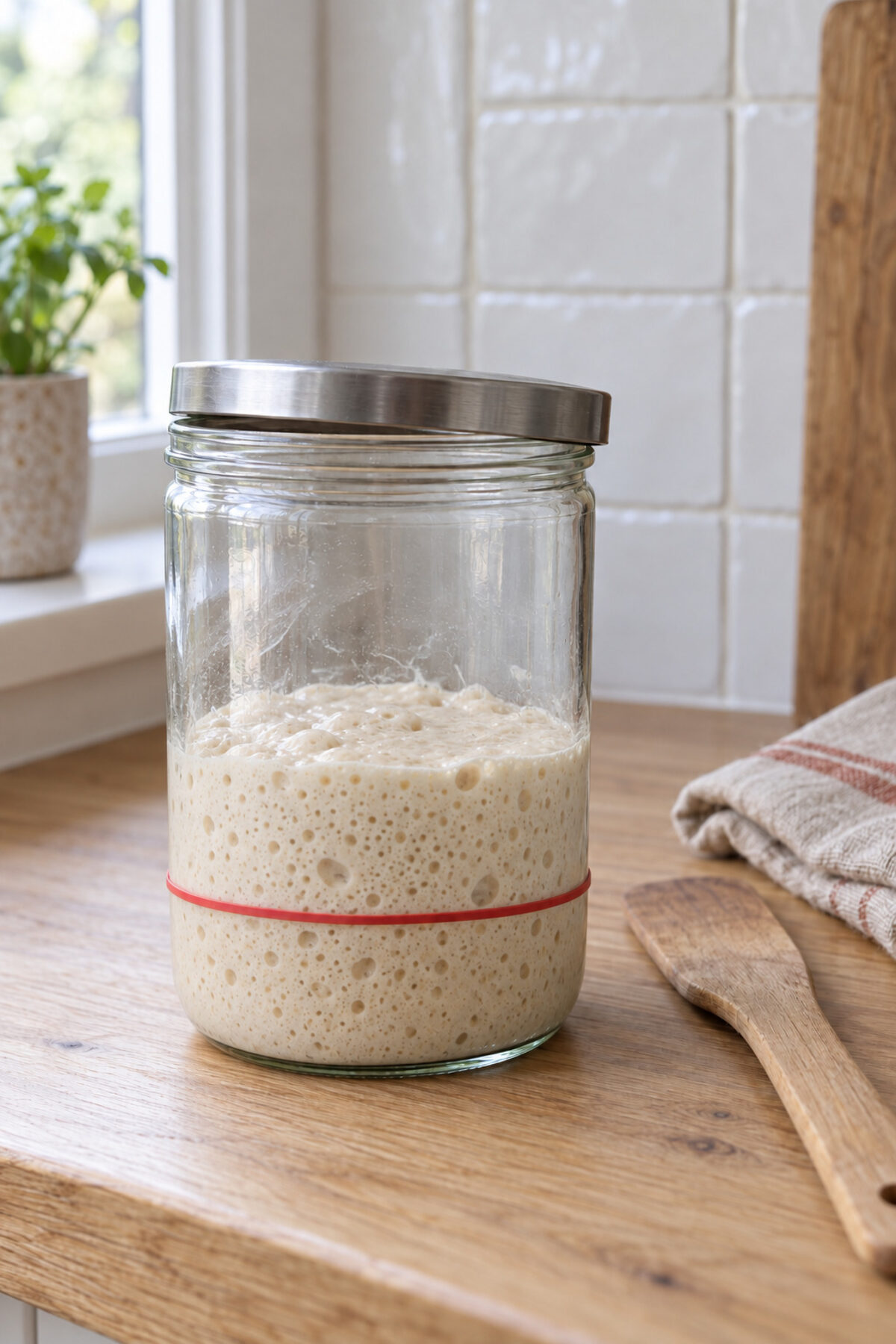
Stir the starter, keep 50 g in the jar and remove the rest. Add 50 g of flour and 50 g of water and stir until no dry flour is left. That's the minimum ratio: equal weights of starter, flour and water. Put the lid on without tightening the band.
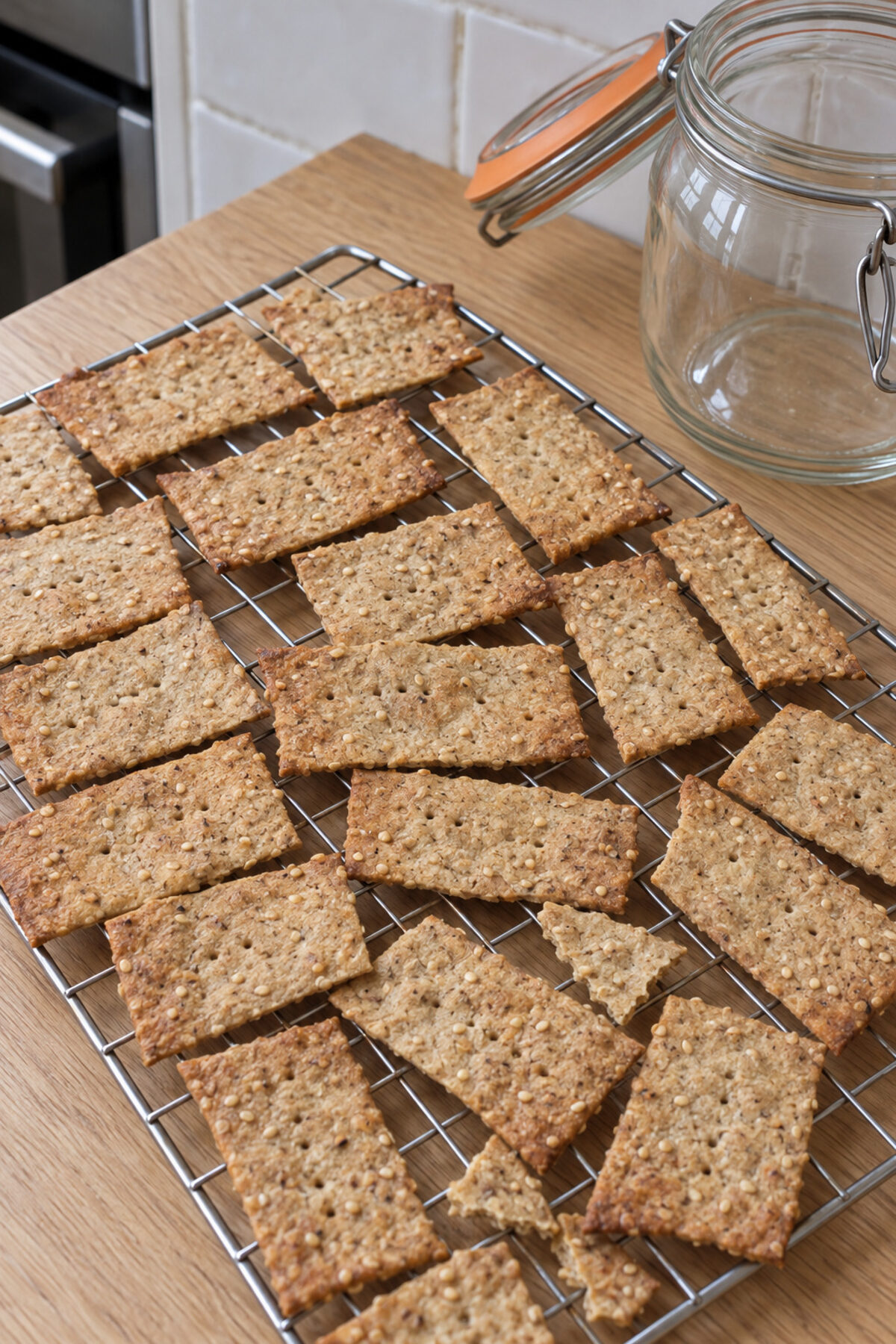
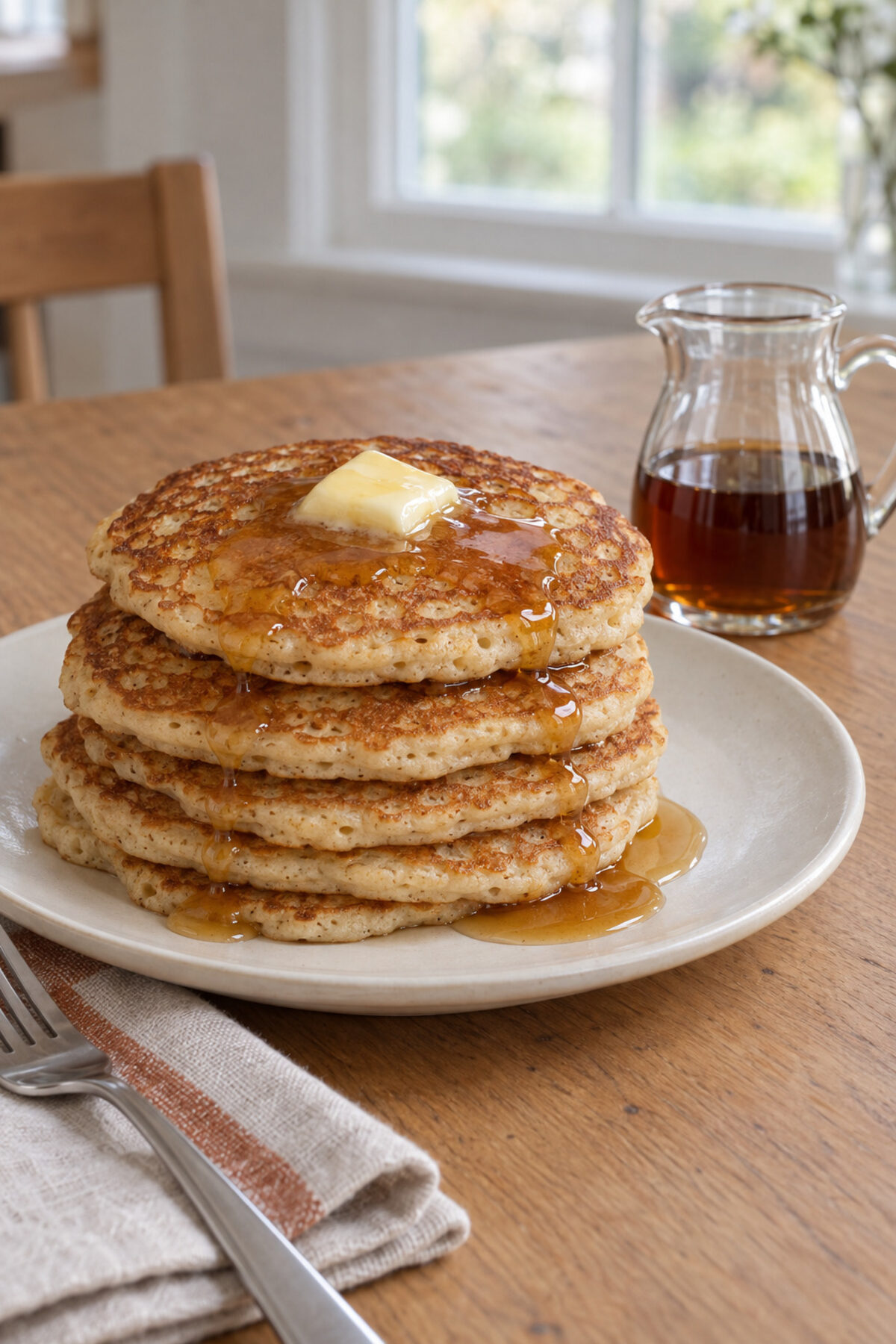
What you remove is called discard, and it has to go: otherwise the starter grows too big and too sour. Removing some at each feeding keeps it stable and well fed. Discard can be shared, frozen, composted or used in other recipes, such as discard crackers or pancakes.
Tip: You can feed it all-purpose, bread or whole wheat flour. Tap water is usually fine; if it's very hard or heavily chlorinated, the starter may not ferment well. More flour and water slow it down: 10 g of starter with 100 g of flour and 100 g of water at night will peak in the morning.
-
If you bake often, keep it on the counter
If you bake every day or 3 or 4 times a week, keep it on the counter somewhere warm, at 70–82 °F, and feed it once a day. Use it at its peak: when it has doubled, about 4 to 6 hours after a feeding and before it falls back.
Tip: A dark liquid on top that smells of alcohol is hooch: it forms when the starter hasn't been fed in a while. Pour it off or stir it in. If it gets crusty around the lid, move it to a clean jar.
-
If you bake weekly, keep it in the fridge
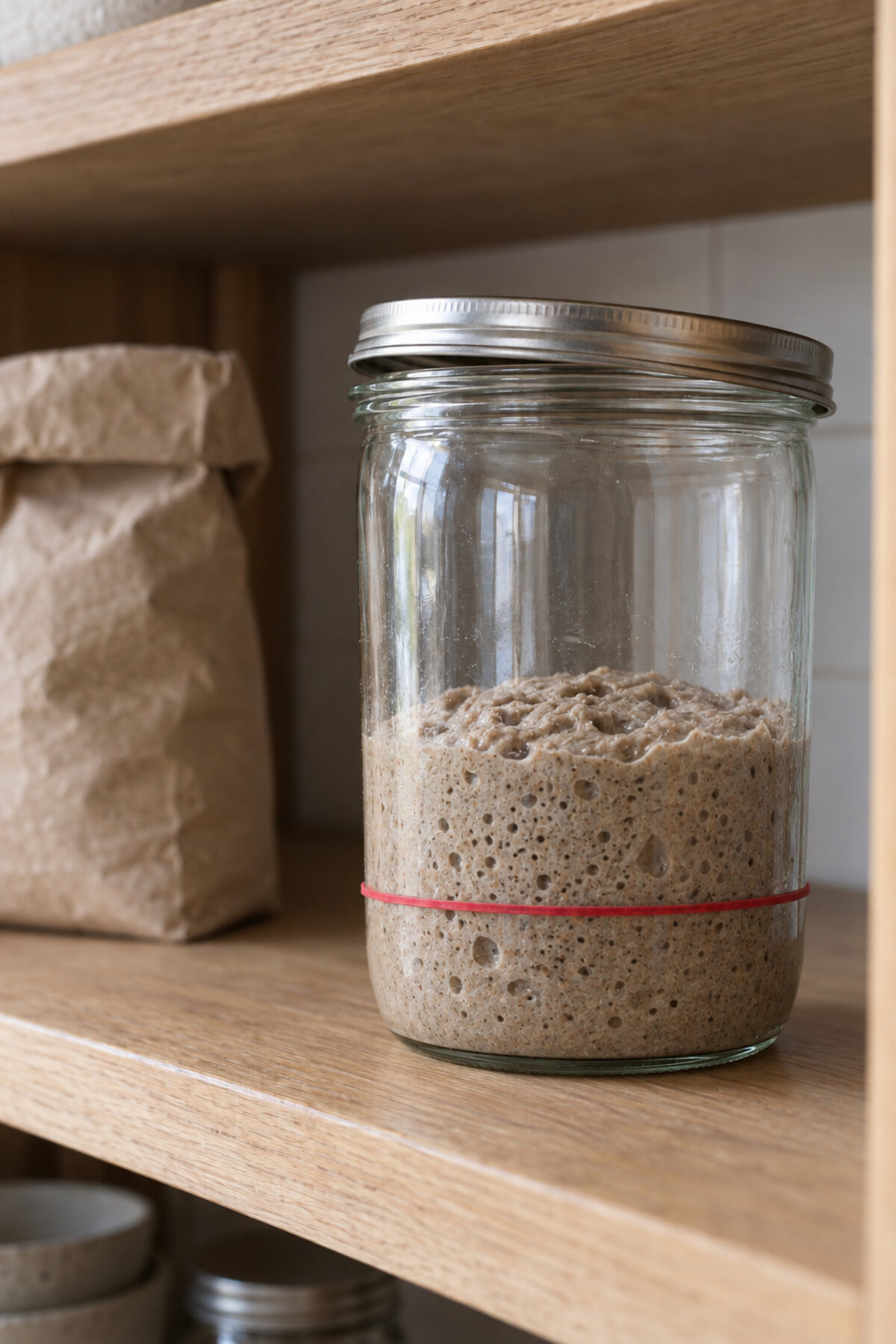
Feed it and leave it at room temperature, loosely covered, until it doubles and falls back: 5 to 8 hours, depending on how warm it is. Then close it and put it in the fridge, with plenty of headroom in the jar. From then on, feeding and using it once a week is enough.
Tip: Over the days, liquid separates from the batter: that's fine, stir it in and feed it. Whitish clumps on that liquid are yeasts, not mold.
-
The day before you bake, take it out and feed it
If you feed it weekly, take it out of the fridge the day before you bake and feed it; there's no need to let it warm up first. If you bake once a month, take it out the day before too: it may need two feedings, 12 hours apart, to get going. It's ready when it doubles within 4 to 6 hours again.
Tip: A starter is tough and nearly always revives. But the longer it goes without food, the more sour it gets, and with too much acid the good bacteria can't survive.
-
For a long break, dry it
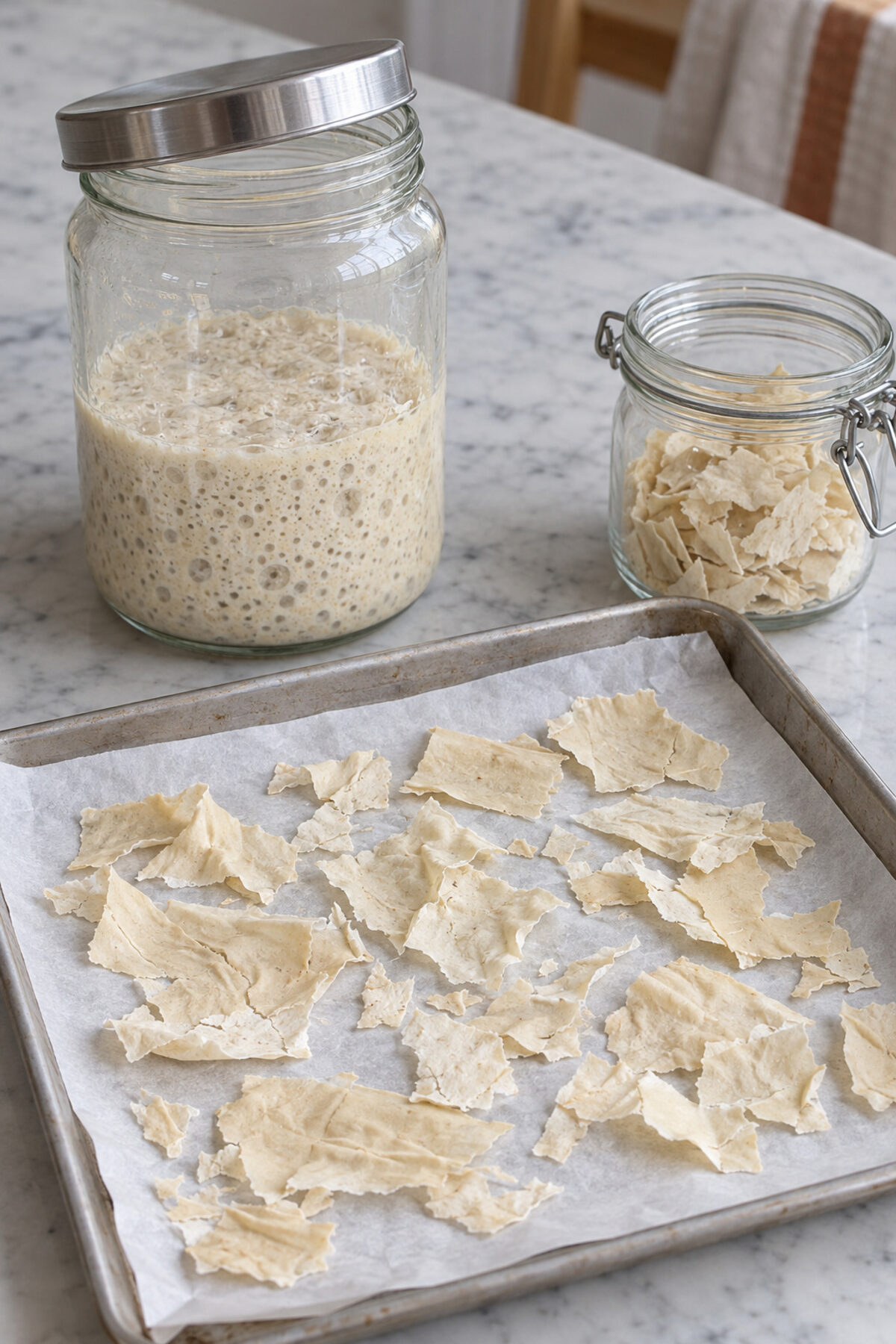
Feed it and let it double. Line a baking sheet with parchment paper and spread the starter on it in a very thin layer. Let it dry at room temperature, turning it often, until it's completely dry and brittle: in Alaska it takes about 24 hours. Break it into pieces and keep them in a labeled airtight jar, away from sunlight and heat.
Tip: Freezing works too, but it can damage the cells and the starter performs worse after thawing. For long storage, dry it.
-
To revive it, soak it and feed it
Crumble two or three pieces of dried starter into ½ cup (about 120 ml) of warm water and leave them overnight, or until bubbly. Add ½ cup of water and ½ cup of flour, stir, and leave it a second night, or until bubbly. Then feed it as usual until it doubles within 4 to 6 hours again: it may take several days.
No sign-up. We guide you step by step, from the scale to the fridge.
Variations
The same method, a different flavor. Once you have this one down, try one of these.
How to tell it's going well
- Don't taste it, or the discard. It's raw flour: it can carry germs such as E. coli or Salmonella, which die only when it's baked or cooked. Wash your hands with soap and water after handling it.
- Fuzz or colored spots mean mold. Don't use it: throw it all out, clean the jar well and start again. Don't sniff it.
- Pink or orange streaks: throw it out too. In Alaska, where sourdough is a tradition, discolored starters aren't used today.
- Whitish clumps on the liquid in the fridge are yeasts. A dark liquid that smells of alcohol is normal too.
- Glass or food-grade plastic. Never copper, iron or galvanized metal. A stainless steel bowl is non-reactive.
- On the counter, keep the lid loose. The starter gives off gas.
Where every number comes from
Every number in this recipe comes from a food safety guide. We keep a copy of each source and quote its exact words.
-
1
It needs fresh flour and water regularly to stay alive
“The fermenting microorganisms in sourdough starter need to be fed fresh flour and water regularly to survive and grow.”
Colorado State University Extension (Farm to Table) · Sourdough Starter Best Practices (March 2020) · read on October 25, 2026
-
2
Removing some at each feeding keeps it stable and well fed
“Regular removal of some starter is an important step when feeding, to stabilize the volume of microorganisms and ensure nourishment for metabolic processes.”
Colorado State University Extension (Farm to Table) · Sourdough Starter Best Practices (March 2020) · read on October 25, 2026
-
3
A liquid layer that smells of alcohol is fine
“Sourdough starter may develop a liquid layer that smells of alcohol, and this is fine.”
Colorado State University Extension (Farm to Table) · Sourdough Starter Best Practices (March 2020) · read on October 25, 2026
-
4
The fridge stretches the time between feedings
“Refrigeration can be used to prolong time between feedings in an active starter, but is not needed if feeding regularly.”
Colorado State University Extension (Farm to Table) · Sourdough Starter Best Practices (March 2020) · read on October 25, 2026
-
5
Whitish clumps on the liquid are yeasts, not mold
“A sourdough starter that is kept in the refrigerator and not fed regularly may develop whitish clumps on the surface of the liquid layer that are safe yeasts, but not mold.”
Colorado State University Extension (Farm to Table) · Sourdough Starter Best Practices (March 2020) · read on October 25, 2026
-
6
Reviving it takes several days of feedings
“Creating a starter or rehydrating a dried starter will take several days of regular feeding.”
Colorado State University Extension (Farm to Table) · Sourdough Starter Best Practices (March 2020) · read on October 25, 2026
-
7
Don't taste raw starter
“Do not taste raw sourdough starter before baking.”
Colorado State University Extension (Farm to Table) · Sourdough Starter Best Practices (March 2020) · read on October 25, 2026
-
8
With mold, throw it out and clean the jar well
“Sourdough starter that shows any sign of mold (colored and/or fuzzy) should NOT be used, and the container should be thoroughly cleaned and rinsed before starting over.”
Colorado State University Extension (Farm to Table) · Sourdough Starter Best Practices (March 2020) · read on October 25, 2026
Show the remaining 39 claims
-
9
How you keep it depends on how often you bake
“Maintaining your starter depends on your schedule and how often you plan to bake.”
University of Illinois Extension · Sourdough Bread: 101 (modified December 2025) · read on October 25, 2026
-
10
At least equal weights of starter, flour and water
“Feed a minimum 1:1:1 ratio, equal parts by weight of starter, flour, and water.”
University of Illinois Extension · Sourdough Bread: 101 (modified December 2025) · read on October 25, 2026
-
11
Tap water is usually fine unless it's very hard or heavily chlorinated
“Tap water is usually fine, but if the water is very hard or heavily chlorinated, the starter may not ferment well.”
University of Illinois Extension · Sourdough Bread: 101 (modified December 2025) · read on October 25, 2026
-
12
More flour and water slow it down
“Feeding a higher ratio of flour and water will slow the starter down.”
University of Illinois Extension · Sourdough Bread: 101 (modified December 2025) · read on October 25, 2026
-
13
1:10:10 at night so it peaks in the morning
“consider feeding a high ratio of 1:10:10 the night before so that it peaks in the morning (10 g starter, 100 g flour, 100 g water)”
University of Illinois Extension · Sourdough Bread: 101 (modified December 2025) · read on October 25, 2026
-
14
Baking daily or 3–4 times a week, on the counter and fed daily
“Every day or 3-4 times per week: Feed it daily and leave it on the counter or in a warm place.”
University of Illinois Extension · Sourdough Bread: 101 (modified December 2025) · read on October 25, 2026
-
15
Best at 70–82 °F
“Generally, temperatures in the 70-82 F range work best.”
University of Illinois Extension · Sourdough Bread: 101 (modified December 2025) · read on October 25, 2026
-
16
The liquid on top is hooch; pour it off or stir it in
“This liquid is known as “hooch.” Pour it off or stir it in”
University of Illinois Extension · Sourdough Bread: 101 (modified December 2025) · read on October 25, 2026
-
17
Hooch forms when it hasn't been fed in a while
“which forms as a dark liquid at the top of the starter when it hasn’t been fed in a while.”
University of Illinois Extension · Sourdough Bread: 101 (modified December 2025) · read on October 25, 2026
-
18
Baking weekly, keep it in the fridge; take it out the day before, no need to warm it
“Weekly: Keep the starter in the refrigerator and get it out the day before you start making the bread. You do not need to bring it to room temperature before feeding it.”
University of Illinois Extension · Sourdough Bread: 101 (modified December 2025) · read on October 25, 2026
-
19
Baking monthly, it may need two feedings 12 hours apart
“Monthly: Keep the starter in the refrigerator and get it out the day before you plan to make bread. May need to feed it a couple of times 12 hours apart to get it going.”
University of Illinois Extension · Sourdough Bread: 101 (modified December 2025) · read on October 25, 2026
-
20
Use it at its peak, doubled and before it falls
“it’s best to use it when it has at least doubled in size, usually about 4-6 hours after you’ve fed it, before falling back down.”
University of Illinois Extension · Sourdough Bread: 101 (modified December 2025) · read on October 25, 2026
-
21
Starters are tough and nearly always revive
“Starters are highly resilient and more than likely can be revived.”
University of Illinois Extension · Sourdough Bread: 101 (modified December 2025) · read on October 25, 2026
-
22
Left unfed, it gets so sour the good bacteria can't survive
“the longer a starter goes without food, the higher the acidity; too much acid and beneficial bacteria can’t survive.”
University of Illinois Extension · Sourdough Bread: 101 (modified December 2025) · read on October 25, 2026
-
23
Dried in a thin layer on parchment and kept in an airtight jar
“Feed the starter and allow it to double in size. Lay parchment paper onto a baking sheet. Spread the starter very thinly and dry it at room temperature until it is brittle. Break into pieces and store in a labeled airtight container from direct sunlight and heat.”
University of Illinois Extension · Sourdough Bread: 101 (modified December 2025) · read on October 25, 2026
-
24
It can be frozen, but it performs worse after; drying is better
“Yes, but it can damage the cell structure, causing poor performance when thawed. It is better to dehydrate it for long-term storage.”
University of Illinois Extension · Sourdough Bread: 101 (modified December 2025) · read on October 25, 2026
-
25
If mold appears, throw it out
“Discard the starter if mold appears.”
University of Illinois Extension · Sourdough Bread: 101 (modified December 2025) · read on October 25, 2026
-
26
Non-reactive containers; never copper, iron or galvanized metal
“Non-reactive containers. Include wide-mouth mason jars, plastic containers, glass bowls, or crocks. Do not use copper, iron, or galvanized metal.”
University of Illinois Extension · Sourdough Bread: 101 (modified December 2025) · read on October 25, 2026
-
27
Keep 50 g and remove the rest
“discard enough starter so that 50 grams (¼ cup) remain.”
University of Illinois Extension · Sourdough Bread: 101, Sourdough Starter Recipe and Sourdough Recipes #1-3 (modified December 2025) · read on October 25, 2026
-
28
You remove some because it grows too big and too sour
“Both! You'll have too much quantity built, but also it can become too acidic.”
University of Illinois Extension · Sourdough Bread: From Starter to Loaf Webinars FAQs (modified December 2024) · read on October 25, 2026
-
29
Once active, it can live on all-purpose flour
“when your starter is ready and active, you can make it all 100% all-purpose.”
University of Illinois Extension · Sourdough Bread: From Starter to Loaf Webinars FAQs (modified December 2024) · read on October 25, 2026
-
30
Lid on, screw band loose
“Cover the jar loosely. Just the lid; don’t tighten the screw band.”
University of Illinois Extension · Sourdough Bread: From Starter to Loaf Webinars FAQs (modified December 2024) · read on October 25, 2026
-
31
Crusty around the lid, move it to a new jar
“What do I do if my starter is getting crusty around the lid? a. Transfer to a new jar.”
University of Illinois Extension · Sourdough Bread: From Starter to Loaf Webinars FAQs (modified December 2024) · read on October 25, 2026
-
32
Stainless steel is non-reactive
“Yes, stainless steel is non-reactive.”
University of Illinois Extension · Sourdough Bread: From Starter to Loaf Webinars FAQs (modified December 2024) · read on October 25, 2026
-
33
Discard can be shared, frozen, composted or used in other recipes
“If there is more removed starter than needed, excess starter can be shared, frozen, used in other recipes, composted, or discarded.”
Colorado State University Extension (FoodSmart Colorado) · Sourdough Basics: Caring for your Starter and Making Bread (reviewed October 2025) · read on October 25, 2026
-
34
Covered in the fridge, ideally fed and used weekly
“Keep your starter covered in an air-tight container and refrigerated when not in use. Ideally, feed and use the starter weekly.”
Colorado State University Extension (FoodSmart Colorado) · Sourdough Basics: Caring for your Starter and Making Bread (reviewed October 2025) · read on October 25, 2026
-
35
At room temperature it doubles in 5 to 8 hours
“Loosely cover the container and let starter ferment at room temperature until double (depending on room temperature, can be anywhere from 5-8 hours).”
Colorado State University Extension (FoodSmart Colorado) · Sourdough Basics: Caring for your Starter and Making Bread (reviewed October 2025) · read on October 25, 2026
-
36
Once doubled and fallen back, into the fridge
“Once the starter has doubled and then collapses back to its initial level, cover the container tightly and store in the refrigerator, ideally using and feeding weekly.”
Colorado State University Extension (FoodSmart Colorado) · Sourdough Basics: Caring for your Starter and Making Bread (reviewed October 2025) · read on October 25, 2026
-
37
Plenty of headroom, or the lid loose
“Leave lots of room for expansion in the container, or put the lid on without tightening it.”
University of Alaska Fairbanks Cooperative Extension Service · Sourdough (FNH-00061, revised October 2024) · read on October 25, 2026
-
38
If liquid separates, stir it in and feed it
“When it stands several days, the liquid will separate from the batter. This does not matter; just stir it in and feed it.”
University of Alaska Fairbanks Cooperative Extension Service · Sourdough (FNH-00061, revised October 2024) · read on October 25, 2026
-
39
In Alaska it dries in about 24 hours
“In Interior Alaska, drying takes about 24 hours.”
University of Alaska Fairbanks Cooperative Extension Service · Sourdough (FNH-00061, revised October 2024) · read on October 25, 2026
-
40
Turn it often until fully dry
“Turn frequently until completely dry.”
University of Alaska Fairbanks Cooperative Extension Service · Sourdough (FNH-00061, revised October 2024) · read on October 25, 2026
-
41
Revived in warm water and fed over two nights
“To reconstitute a starter, crumble two or three circles of starter in ½ cup of warm water. Let stand overnight or until bubbly. Add ½ cup water and ½ cup flour. Stir. Let stand for a second night or until bubbly.”
University of Alaska Fairbanks Cooperative Extension Service · Sourdough (FNH-00061, revised October 2024) · read on October 25, 2026
-
42
In Alaska, discolored starters aren't used
“Modern Alaskans do not use discolored starters”
University of Alaska Fairbanks Cooperative Extension Service · Sourdough (FNH-00061, revised October 2024) · read on October 25, 2026
-
43
It keeps well in a clean, covered glass jar in the fridge
“Starter will keep well in a clean, covered glass container in the refrigerator.”
University of Alaska Fairbanks Cooperative Extension Service · Sourdough (FNH-00061, revised October 2024) · read on October 25, 2026
-
44
Raw flour can carry E. coli and Salmonella
“That means it hasn't been treated to kill germs that cause food poisoning, such as Escherichia coli (E. coli) and Salmonella.”
CDC · Raw Flour and Dough · read on October 25, 2026
-
45
Germs are killed only by baking or cooking
“Germs are killed only when flour is baked or cooked.”
CDC · Raw Flour and Dough · read on October 25, 2026
-
46
Hands washed with soap and water after handling flour
“Wash your hands with soap and water after handling flour, raw eggs, or any surfaces they have touched.”
CDC · Raw Flour and Dough · read on October 25, 2026
-
47
Don't sniff mold
“Don't sniff the moldy item. This can cause respiratory trouble.”
USDA Food Safety and Inspection Service · Molds on Food: Are They Dangerous? · read on October 20, 2026