 AI
Preserved lemons
Level 1 · beginner
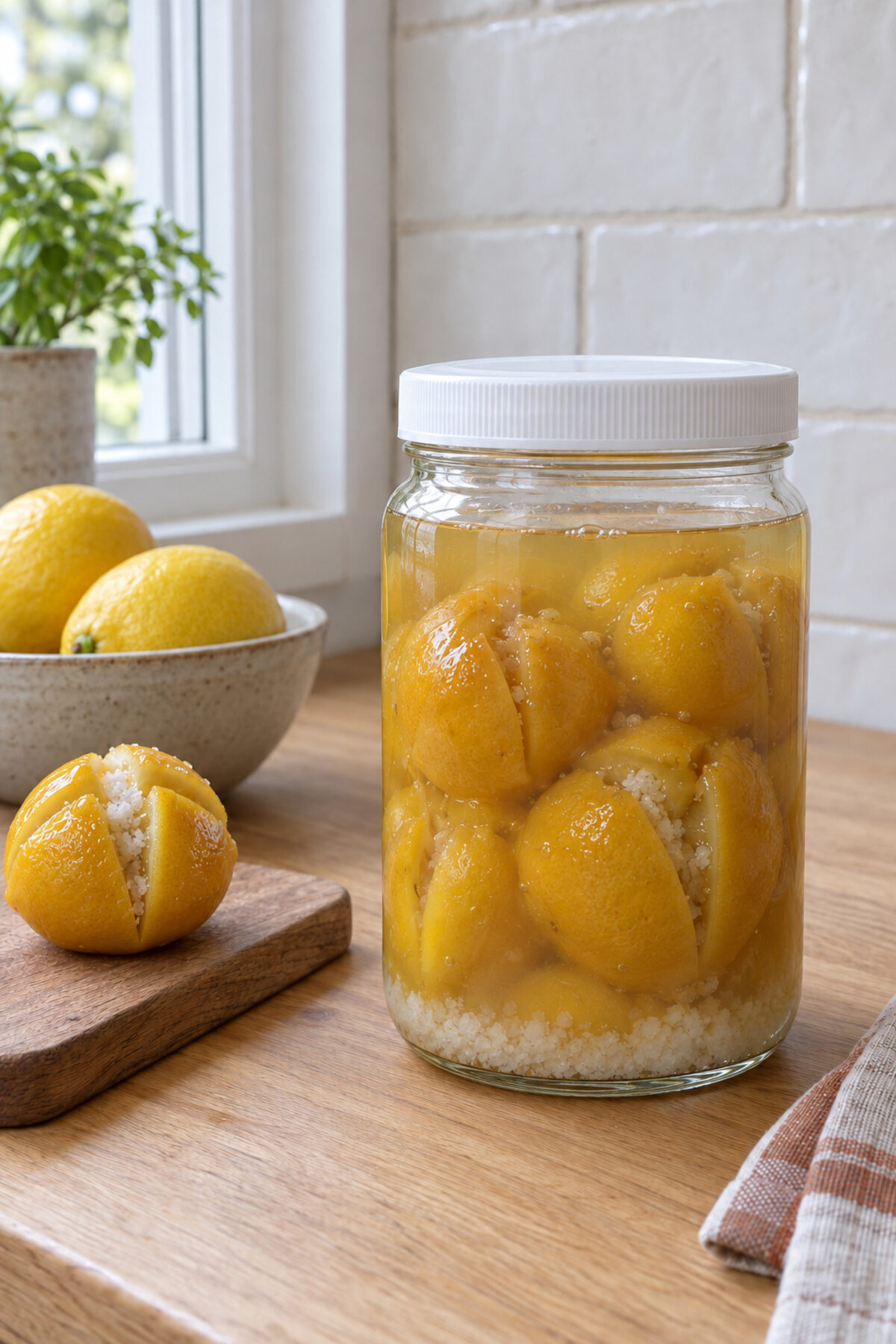
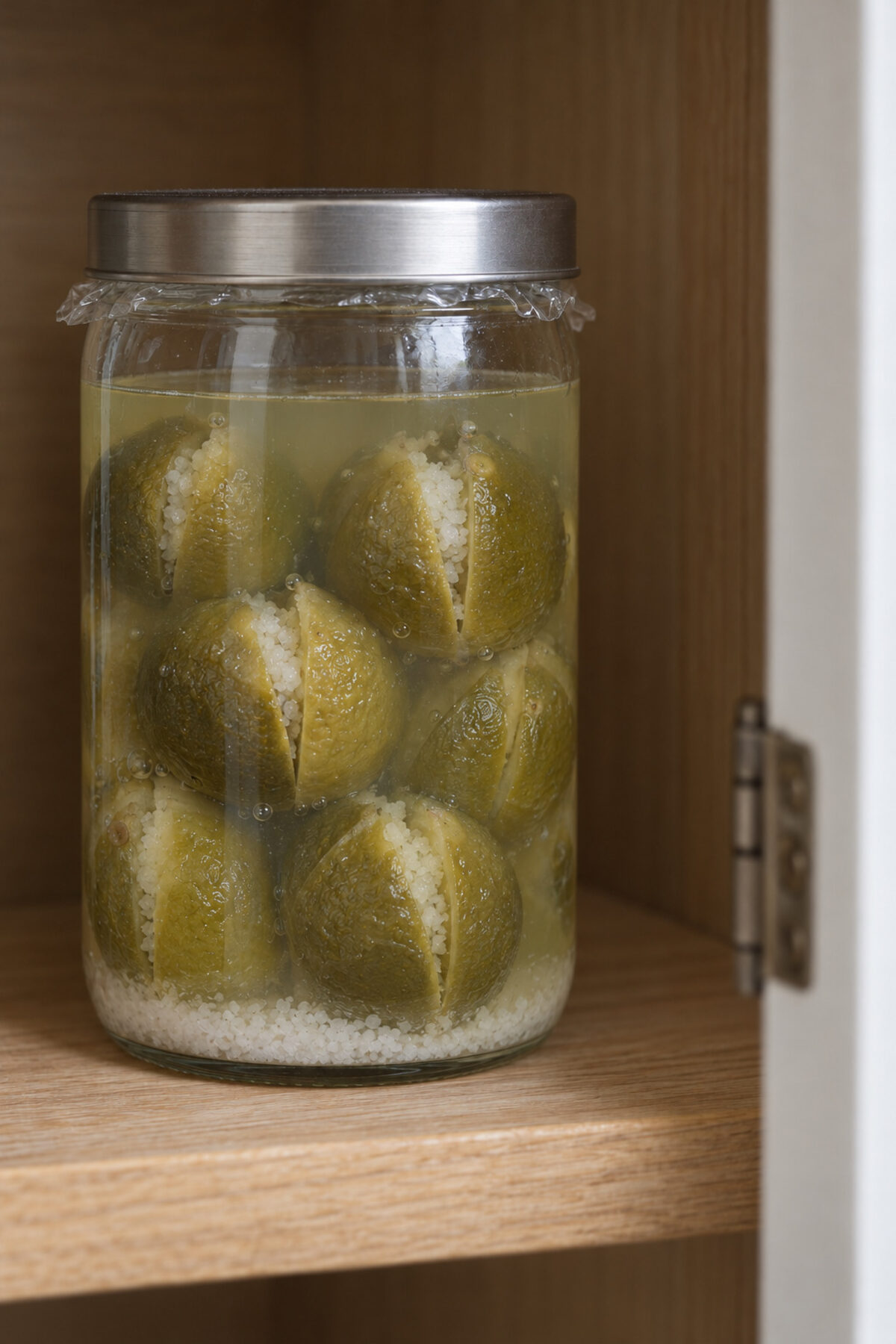
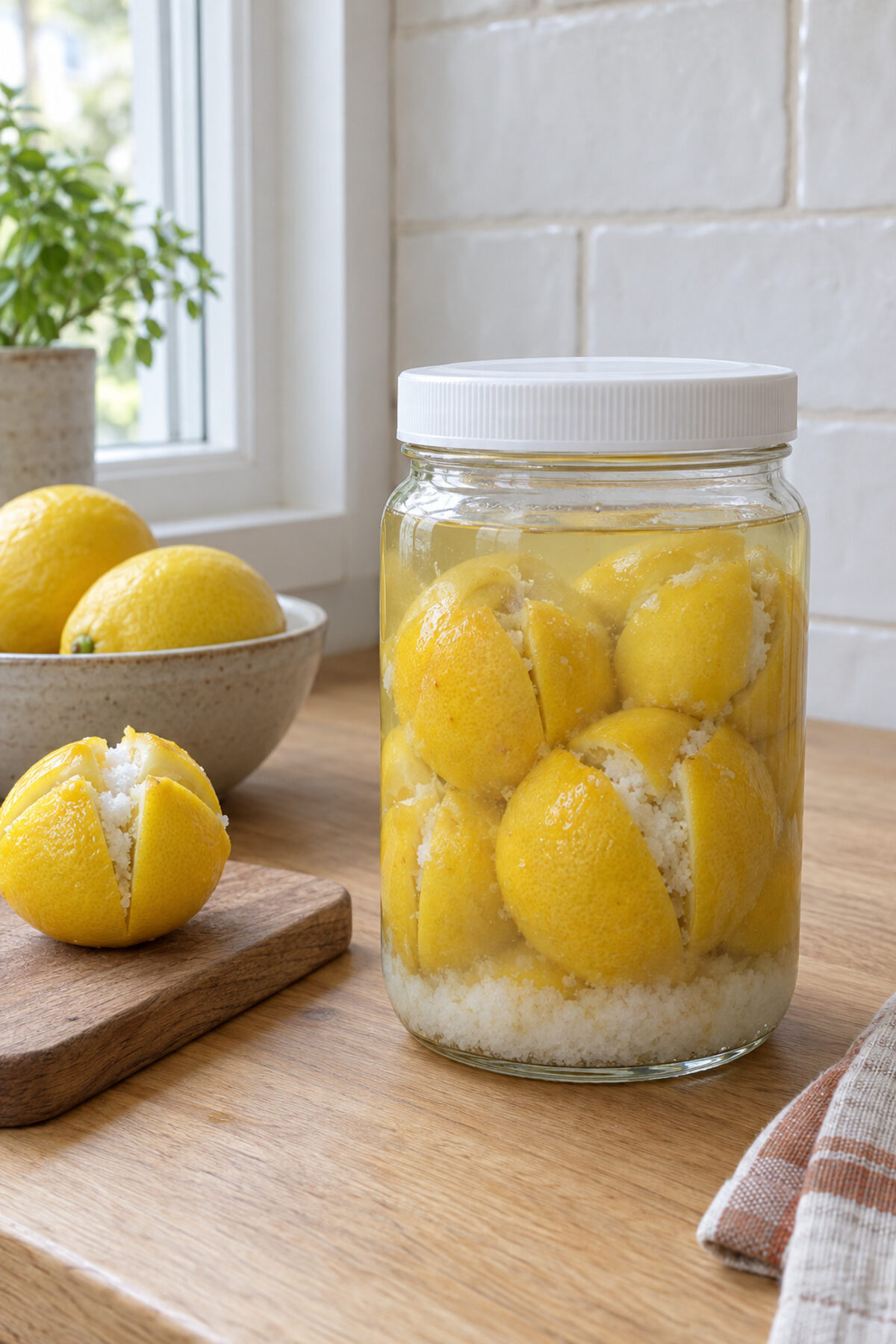
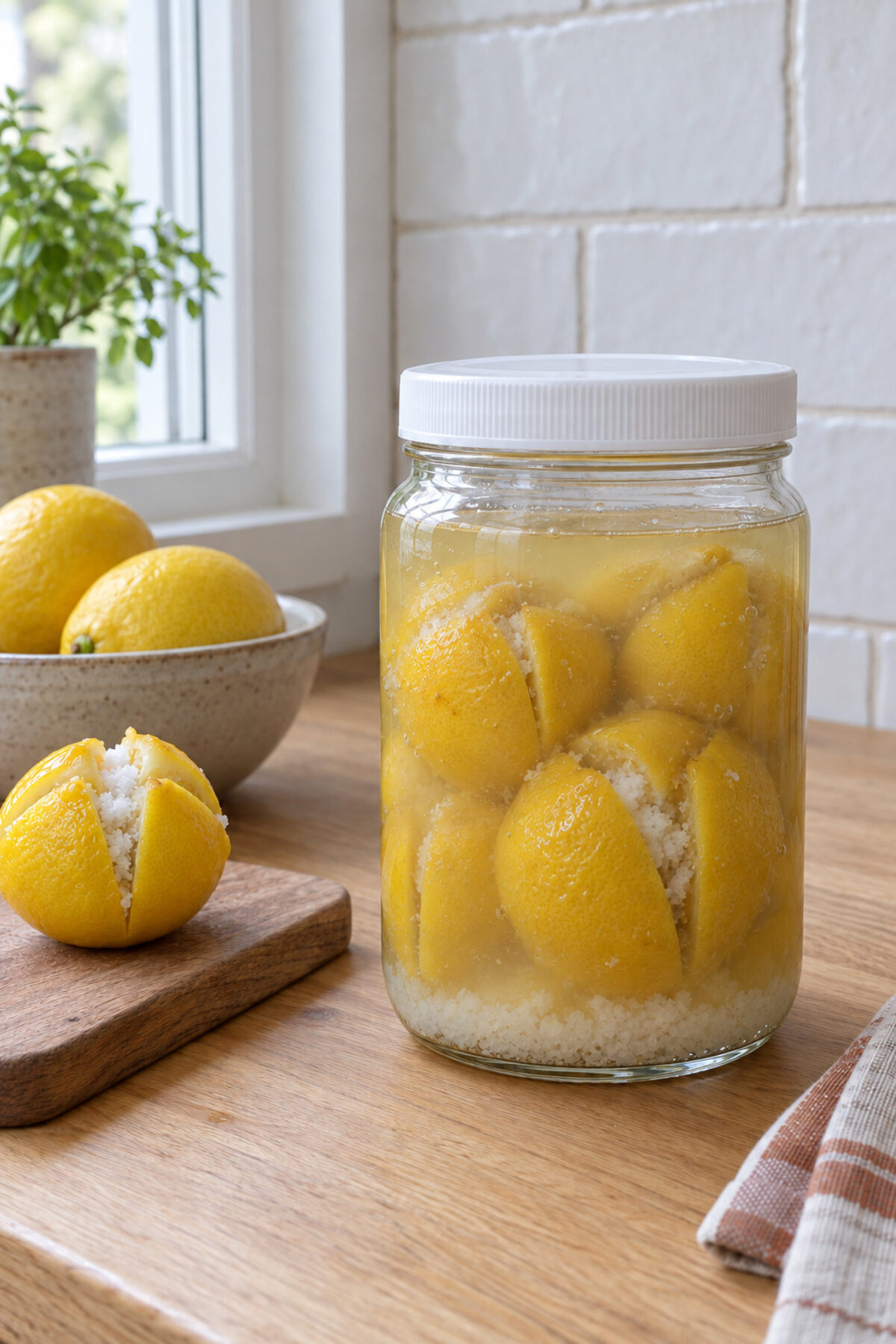
Lemons opened into quarters, packed with salt and covered in their own juice. In two weeks the peel softens and loses its bitterness.
- Salt
- 15% 150 g per kilo of fruit
- Time
- 3–14days
- Temperature
- 59–77°F
- Jar
- 1L
The golden rule: the lemons always covered by their juice, and only dried spices.
No sign-up. We guide you step by step, from the scale to the fridge.
Reviewed October 26, 2026 · 31 facts, each with its source
You'll need
- 1-liter glass jar (about a quart)
- Plastic lid, or a metal lid lined with plastic wrap
- Large pot to boil the jar
- Clean knife and cutting board
- Juicer
- Kitchen scale
Step by step
-
Sterilize the jar
Boil the jar in water for 10 minutes if you live below 1,000 feet, adding 1 minute for every additional 1,000 feet. Keep it in the hot water until you use it.
-
Wash the lemons and open them into quarters
Wash your hands well. Wash about 5 lemons in warm water, scrubbing off any dirt and wax, and dry them with paper towels. Slice a thin piece, about 1/8 inch, off the stem end. Starting from that end, cut them into quarters lengthwise without cutting through the base, so they open up but stay in one piece. Squeeze roughly 5 more lemons until you have 350 g (about 1½ cups) of juice.
-
Weigh the salt and pack the lemons
Weigh the opened lemons and the juice together; in this recipe that's 950 g. The salt is 15% of that weight: 142.5 g, the half cup of the original recipe. Sprinkle a tablespoon of salt over the bottom of the jar. Working over a bowl, pack a heaping tablespoon of salt into each lemon and put it in the jar, cut end up. Press each one against the others. Once they're all in, add the rest of the salt on top.
Tip: If you like, add dried spices such as bay leaves, cinnamon sticks or whole peppercorns. Never fresh ones: they can change the pH.
-
Cover them with juice and close the jar
Pour in the juice to within 1/2 inch of the top. Press the lemons down so the juice fills the gaps and they're all submerged. Close it with a plastic lid, or a metal one lined with plastic wrap, without screwing it down all the way: lemon and salt corrode metal.
-
Leave them in a cool cupboard for 3 days to 2 weeks
Keep the jar in a dark, cool cupboard; our house rule is 59–77 °F. Shake it every day to spread the salt and, if gas builds up, open it for a moment. The sources range from a few days to 2 weeks: by 2 weeks the pH stabilizes and the flavor deepens.
Tip: Over time, the peel softens and loses its bitterness.
-
Move them to the fridge
Close the jar with an airtight lid and keep it in the fridge, where they last up to 6 months. To use them, take out a piece, remove the pulp and membranes, and keep the peel. Rinse it under the tap to remove the excess salt, and pat it dry.
No sign-up. We guide you step by step, from the scale to the fridge.
Variations
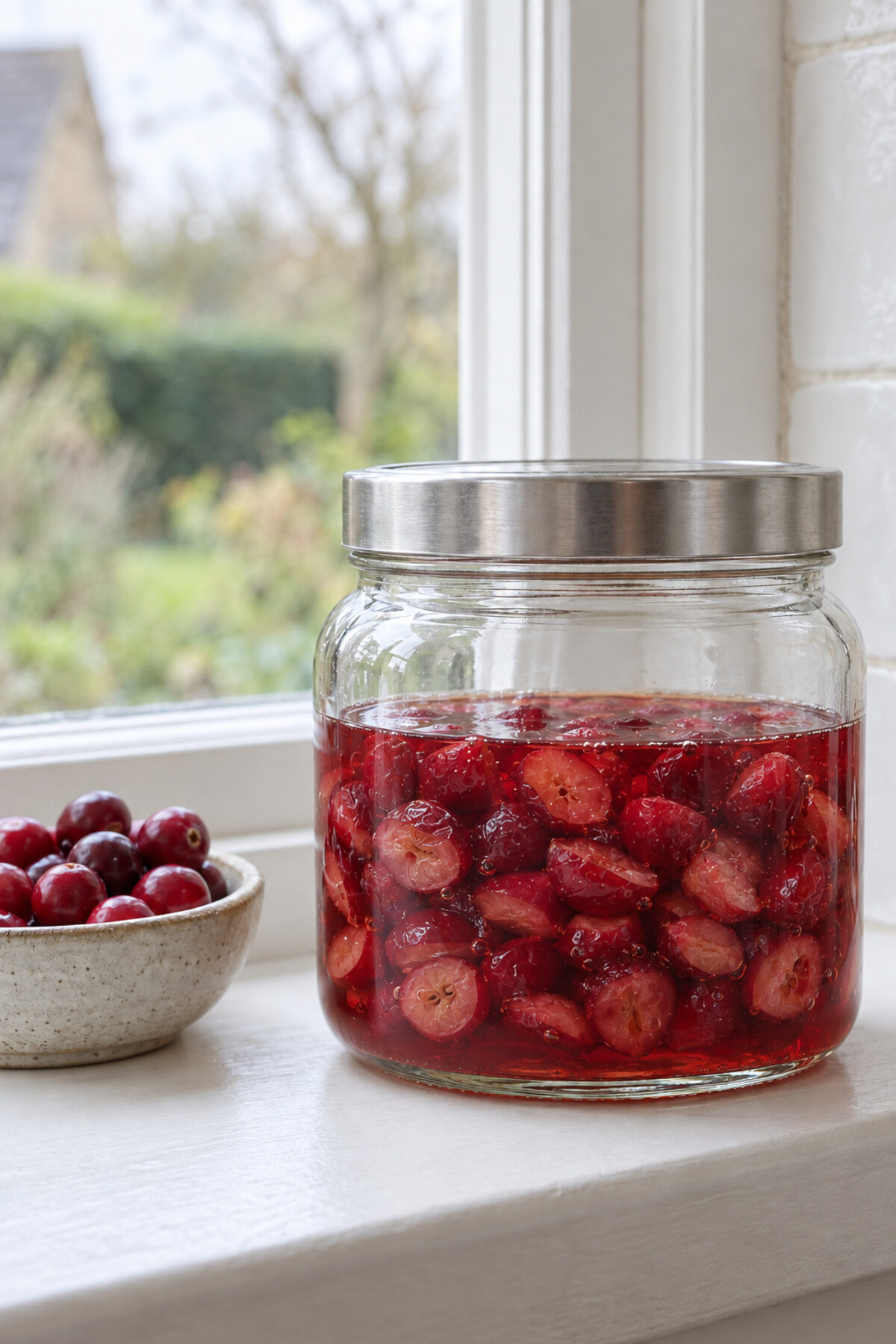
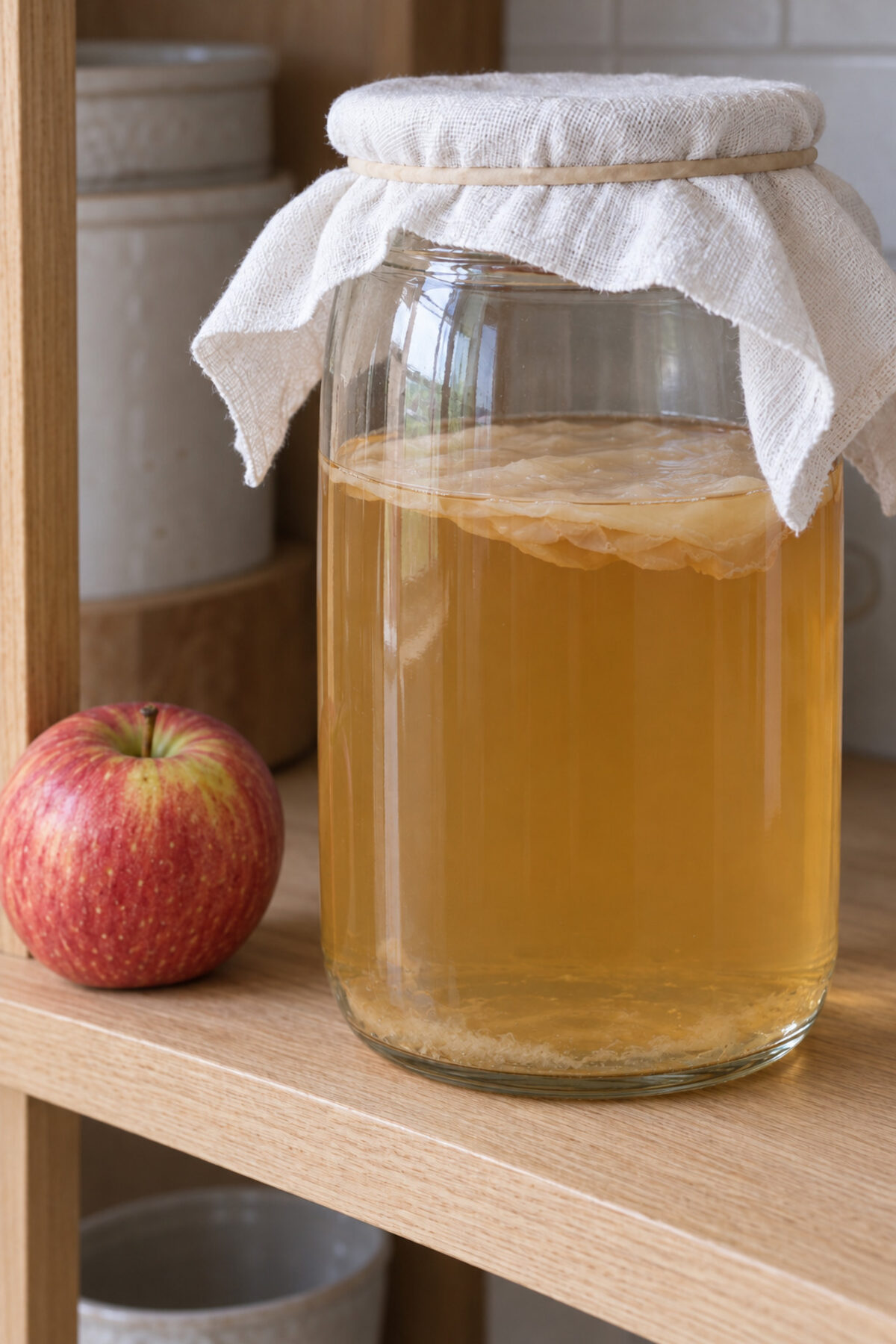
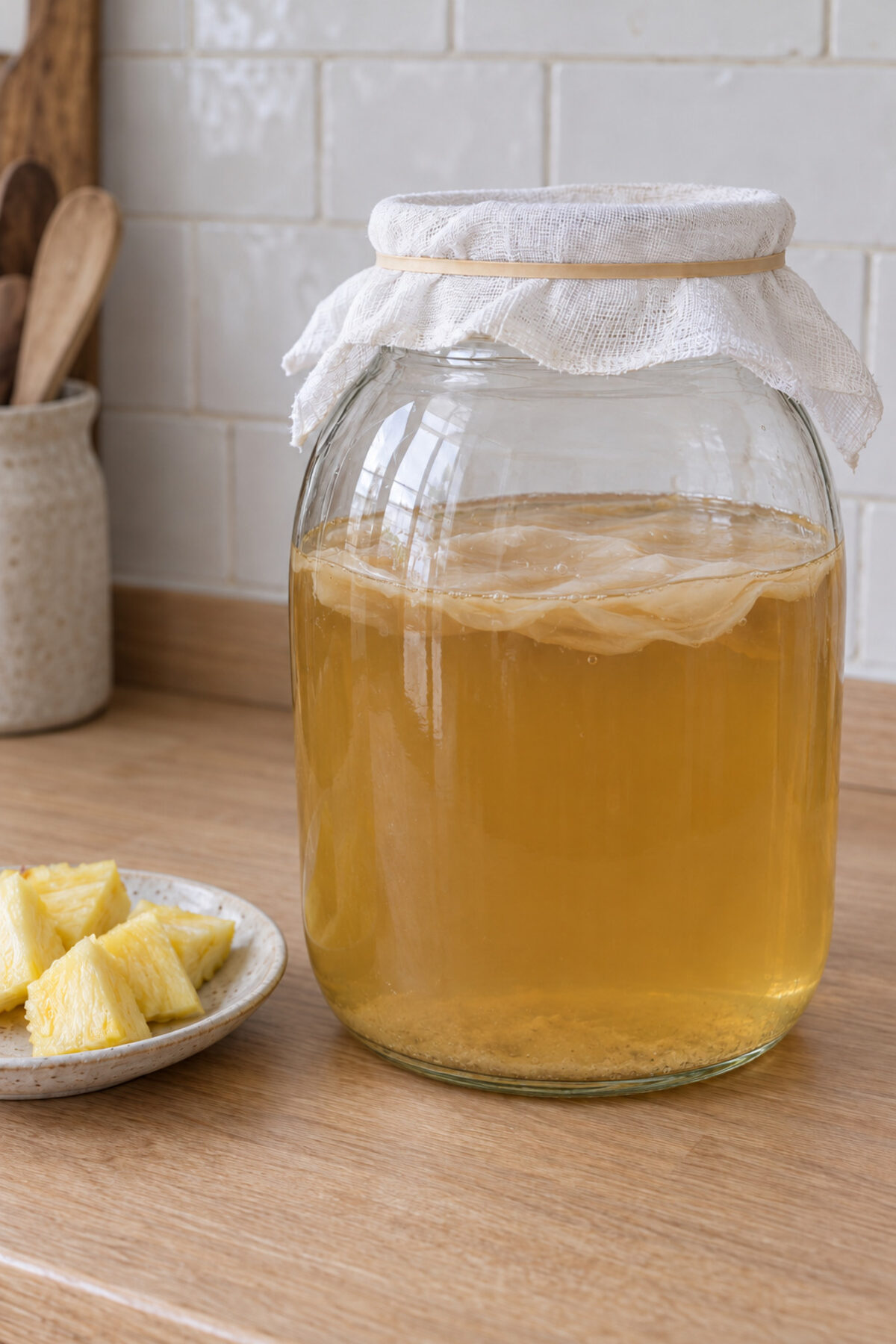
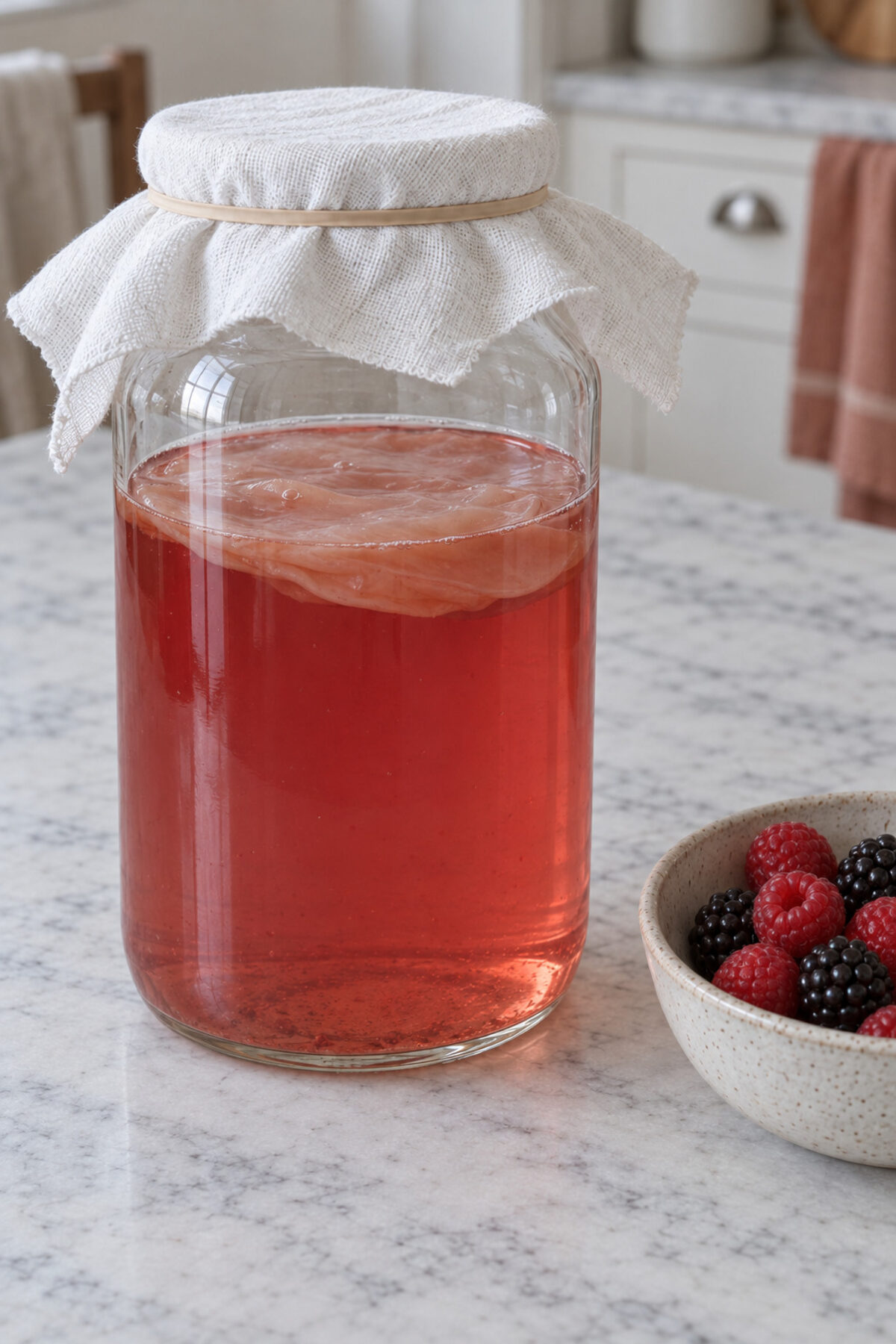
The same method, a different flavor. Once you have this one down, try one of these.
What you'll see
Preserved lemons are among the lowest-risk ferments: lemon juice sits at pH 2.0 to 2.6, and salt draws out the juice and holds back the microbes that spoil fruit. The lactic acid bacteria on the peel do the rest. This is the Ball recipe that the University of California and Clemson publish, with the salt by weight: 15% of the lemons and juice together. We worked out that percentage ourselves, since the sources give the salt in tablespoons.
 AI
 AI
AI
How to tell it's going well
- Never less than 5% salt. That's a house rule: the lowest that follows from the recipes Oregon State has seen, from 1 teaspoon to 2 tablespoons per lemon. Salt only protects the lemons if there's enough of it.
- Keep the lemons under the juice.
- Only dried spices. Fresh herbs, garlic or chili can change the pH.
- A plastic lid, or a lined metal one. Lemon and salt corrode metal.
- Slimy or moldy: throw them out. In the fridge or out of it, at any point.
- Don't water-bath or pressure can them. There's no science-based recipe for it.
Where every number comes from
Every number in this recipe comes from a food safety guide. We keep a copy of each source and quote its exact words.
-
1
The Ball recipe published by UC and Clemson
“Preserved Lemon Recipe (Ball Complete Book of Home Preserving)”
Clemson Cooperative Extension, Home & Garden Information Center (Jessica Hardiman) · Traditional Preserved Lemons: How to Make and Use Preserved Lemons at Home (January 2026) · read on October 25, 2026
-
2
Bacteria on the peel make lactic acid and lower the pH
“The lactic acid bacteria from the lemons will begin to convert the sugars in the lemon pulp and peel into lactic acid, which lowers the pH of the entire product.”
Clemson Cooperative Extension, Home & Garden Information Center (Jessica Hardiman) · Traditional Preserved Lemons: How to Make and Use Preserved Lemons at Home (January 2026) · read on October 25, 2026
-
3
Salt draws out the juice and holds back spoilage microbes
“The salt in the mixture helps draw out the lemon juice and suppresses spoilage microbes, while encouraging the growth of lactic acid bacteria.”
Clemson Cooperative Extension, Home & Garden Information Center (Jessica Hardiman) · Traditional Preserved Lemons: How to Make and Use Preserved Lemons at Home (January 2026) · read on October 25, 2026
-
4
Only dried spices, never fresh
“If adding additional ingredients, be sure to only use dried spices or herbs, not fresh, as this can alter the pH.”
Clemson Cooperative Extension, Home & Garden Information Center (Jessica Hardiman) · Traditional Preserved Lemons: How to Make and Use Preserved Lemons at Home (January 2026) · read on October 25, 2026
-
5
Burp the jar if needed
“burping the jar if needed”
Clemson Cooperative Extension, Home & Garden Information Center (Jessica Hardiman) · Traditional Preserved Lemons: How to Make and Use Preserved Lemons at Home (January 2026) · read on October 25, 2026
-
6
After 2 weeks the pH stabilizes
“After approximately 2 weeks of fermenting, the lactic acid bacteria will dominate, stabilizing the pH, and the flavor of the preserved lemons will deepen.”
Clemson Cooperative Extension, Home & Garden Information Center (Jessica Hardiman) · Traditional Preserved Lemons: How to Make and Use Preserved Lemons at Home (January 2026) · read on October 25, 2026
-
7
The peel softens and loses its bitterness
“Over time, enzymes and acid will break down the lemon peel, softening it and mellowing out the bitter taste.”
Clemson Cooperative Extension, Home & Garden Information Center (Jessica Hardiman) · Traditional Preserved Lemons: How to Make and Use Preserved Lemons at Home (January 2026) · read on October 25, 2026
-
8
Lemons and salt, very low risk for pathogens
“The combination of lemons and salt makes this product very low risk for any pathogens.”
Ask Extension (Jeanne Brandt, Oregon State University; Tillamook County, Oregon) · how to preserve lemons with salt #441067 (2018) · read on October 25, 2026
Show the remaining 23 claims
-
9
From 1 teaspoon to 2 tablespoons per lemon
“I have seen recipes from 1 teaspoon to 2 tablespoons salt used for each lemon.”
Ask Extension (Jeanne Brandt, Oregon State University; Tillamook County, Oregon) · how to preserve lemons with salt #441067 (2018) · read on October 25, 2026
-
10
Salt protects them, if there's enough
“The salt will keep the lemons from decaying and molding for an extended period of time, so it needs to be an adequate amount.”
Ask Extension (Jeanne Brandt, Oregon State University; Tillamook County, Oregon) · how to preserve lemons with salt #441067 (2018) · read on October 25, 2026
-
11
Pressed in so the juice fills the gaps
“They are then pressed into a jar to allow juice to fill in air spaces.”
Ask Extension (Jeanne Brandt, Oregon State University; Tillamook County, Oregon) · how to preserve lemons with salt #441067 (2018) · read on October 25, 2026
-
12
Lemons under the juice
“Make sure the lemons are submerged in juice.”
Ask Extension (Jeanne Brandt, Oregon State University; Tillamook County, Oregon) · how to preserve lemons with salt #441067 (2018) · read on October 25, 2026
-
13
Lemon and salt corrode metal lids
“The lemon and salt will corrode a canning jar lid, so a loose plastic lid or lining a metal lid with plastic wrap and leaving that loose is suggested.”
Ask Extension (Jeanne Brandt, Oregon State University; Tillamook County, Oregon) · how to preserve lemons with salt #441067 (2018) · read on October 25, 2026
-
14
A few days at room temperature, then the fridge
“These can be safely left at room temperature for the first few days to allow the salt to dissolve. Then we suggest storing it in the refrigerator.”
Ask Extension (Jeanne Brandt, Oregon State University; Tillamook County, Oregon) · how to preserve lemons with salt #441067 (2018) · read on October 25, 2026
-
15
Slimy or moldy, throw them out
“Watch for any signs of sliminess or mold and discard the mixture if that happens.”
Ask Extension (Jeanne Brandt, Oregon State University; Tillamook County, Oregon) · how to preserve lemons with salt #441067 (2018) · read on October 25, 2026
-
16
Good hygiene while preparing them
“Practice good hygiene when preparing this to reduce the likelihood of contamination.”
Ask Extension (Jeanne Brandt, Oregon State University; Tillamook County, Oregon) · how to preserve lemons with salt #441067 (2018) · read on October 25, 2026
-
17
Lemon juice at pH 2.0–2.6
“Lemon Juice 2.00 - 2.60”
U.S. FDA, CFSAN (copy hosted by RiverStone Health, Yellowstone County public health department) · Approximate pH of Foods and Food Products (April 2007) · read on October 25, 2026
-
18
Jar boiled 10 minutes up to 1,000 feet of altitude
“Boil jar in water for 10 minutes at altitudes of 0-1000 feet above sea level, plus 1 additional minute for each additional 1000 of altitude”
UC Cooperative Extension Master Food Preservers of El Dorado County (UC ANR) · Preserving Citrus (October 11, 2025) · read on October 25, 2026
-
19
Washed in warm water, scrubbed and dried
“Wash 5 of the lemons in warm water, scrubbing well to remove any dirt and wax, and dry well using paper towels.”
UC Cooperative Extension Master Food Preservers of El Dorado County (UC ANR) · Preserving Citrus (October 11, 2025) · read on October 25, 2026
-
20
1/8 inch off the end, then quartered without separating
“Cut a thin (1/8 inch) slice off the stem end. From stem end, cut each lemon into quarters, without cutting through the bottom end and leaving it intact.”
UC Cooperative Extension Master Food Preservers of El Dorado County (UC ANR) · Preserving Citrus (October 11, 2025) · read on October 25, 2026
-
21
1½ cups of juice from 5 more lemons
“Juice the remaining 5 lemons to measure 1-1/2 cups juice.”
UC Cooperative Extension Master Food Preservers of El Dorado County (UC ANR) · Preserving Citrus (October 11, 2025) · read on October 25, 2026
-
22
Half a cup of salt for 10 lemons
“10 lemons, divided 1/2 cup pickling or canning salt, divided”
UC Cooperative Extension Master Food Preservers of El Dorado County (UC ANR) · Preserving Citrus (October 11, 2025) · read on October 25, 2026
-
23
A tablespoon at the bottom and a heaping one in each lemon
“Sprinkle 1 tablespoon pickling salt over the bottom of sterilized jar. Working over a bowl, pack 1 heaping tablespoon salt into each lemon before placing in the jar, stem end up.”
UC Cooperative Extension Master Food Preservers of El Dorado County (UC ANR) · Preserving Citrus (October 11, 2025) · read on October 25, 2026
-
24
The rest of the salt on top
“Cover with the remaining salt.”
UC Cooperative Extension Master Food Preservers of El Dorado County (UC ANR) · Preserving Citrus (October 11, 2025) · read on October 25, 2026
-
25
Juice up to 1/2 inch from the top
“Fill jar with lemon juice to within 1/2 inch of top of jar.”
UC Cooperative Extension Master Food Preservers of El Dorado County (UC ANR) · Preserving Citrus (October 11, 2025) · read on October 25, 2026
-
26
2 weeks in a dark, cool cupboard, shaken every day
“Place jar in a dark, cool cupboard for 2 weeks, shaking every day to distribute the salt.”
UC Cooperative Extension Master Food Preservers of El Dorado County (UC ANR) · Preserving Citrus (October 11, 2025) · read on October 25, 2026
-
27
In the fridge, with an airtight lid
“Store preserved lemons in a container with an airtight lid.”
UC Cooperative Extension Master Food Preservers of El Dorado County (UC ANR) · Preserving Citrus (October 11, 2025) · read on October 25, 2026
-
28
Up to 6 months in the fridge
“Cover and refrigerate for up to six months.”
UC Cooperative Extension Master Food Preservers of El Dorado County (UC ANR) · Preserving Citrus (October 11, 2025) · read on October 25, 2026
-
29
Only the peel, rinsed
“To use remove pulp and membrane, using only the peel. Rinse under water to remove excess salt and dry with a paper towel.”
UC Cooperative Extension Master Food Preservers of El Dorado County (UC ANR) · Preserving Citrus (October 11, 2025) · read on October 25, 2026
-
30
A cup of salt weighs about 285 g
“If it doesn’t specify Kosher salt, 285 g / cup is close.”
UC Master Food Preservers, Inyo-Mono · Brine Math Made Easy · read on October 20, 2026
-
31
There's no tested recipe for canning them
“There is not a science based recipe for canning the lemons whole”
Ask Extension (Julie H. Buck, UC Cooperative Extension; Santa Cruz County, California) · May I water bath or pressure can salt preserved lemons/limes #860764 (2024) · read on October 25, 2026