 AI
Tepache
Level 1 · beginner
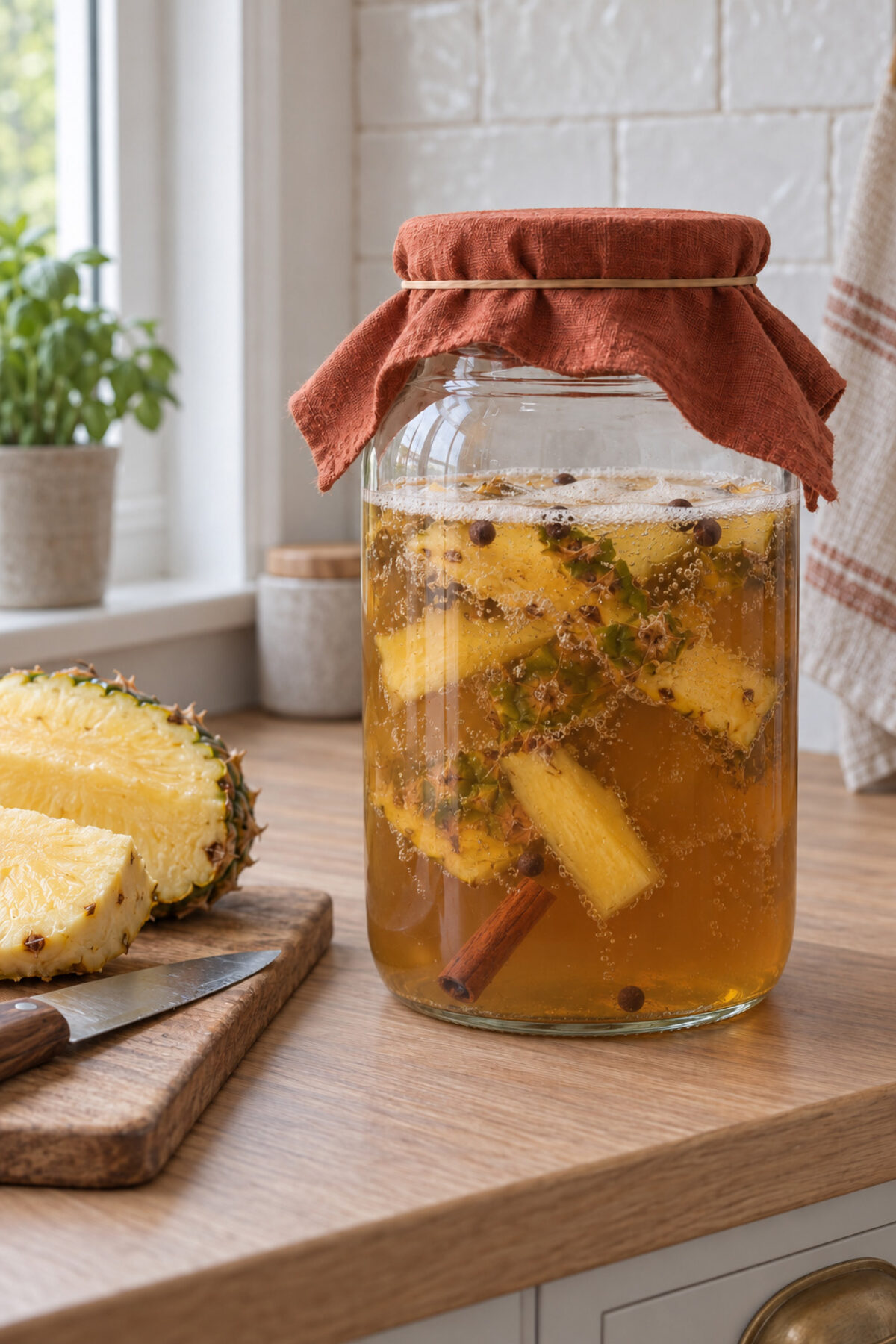
Pineapple rind, piloncillo and water, with no starter. It ferments on its own in a few days; you taste it daily and move it to the fridge before it turns to vinegar.
- Sugar
- 50g per liter of water
- Time
- 2–4days
- Temperature
- 68–77°F
- Jar
- 3L
The golden rule: a few days in the kitchen, then into the fridge: left longer, it turns to vinegar.
No sign-up. We guide you step by step, from the scale to the fridge.
Reviewed October 26, 2026 · 27 facts, each with its source
You'll need
- 3-liter glass jar
- Tightly woven cotton cloth and a rubber band
- Saucepan
- Clean knife and cutting board
- Strainer
- Kitchen scale
- pH strips (optional)
- Clean bottles or jars for the fridge
Step by step
-
Wash the pineapple and cut off the rind and core
Wash your hands with soap and warm water for at least 20 seconds. Wash the whole pineapple under running water, rubbing it with your hands. Wash it before you peel it, so dirt from the outside doesn't get onto the fruit when you cut it. Peel it, cut out the core and throw away any bruised, rotten or moldy parts. You'll use the rind and the core; eat the flesh.
Tip: Don't use soap or produce wash: they aren't recommended, and the microbes that ferment tepache live on the rind.
-
Dissolve the piloncillo in the water
Heat 500 ml of the water with 100 g of chopped piloncillo until it dissolves. Turn off the heat and add the remaining 1.5 liters of water, cold. Wait until it's at room temperature before you go on.
The 100 g in 2 liters is 50 g per liter, a house rule. The homemade recipe in one study uses less, ½ cup of piloncillo in 4 liters.
Tip: If you can't find piloncillo, use panela or brown sugar.
-
Add the pineapple and spices and cover with cloth
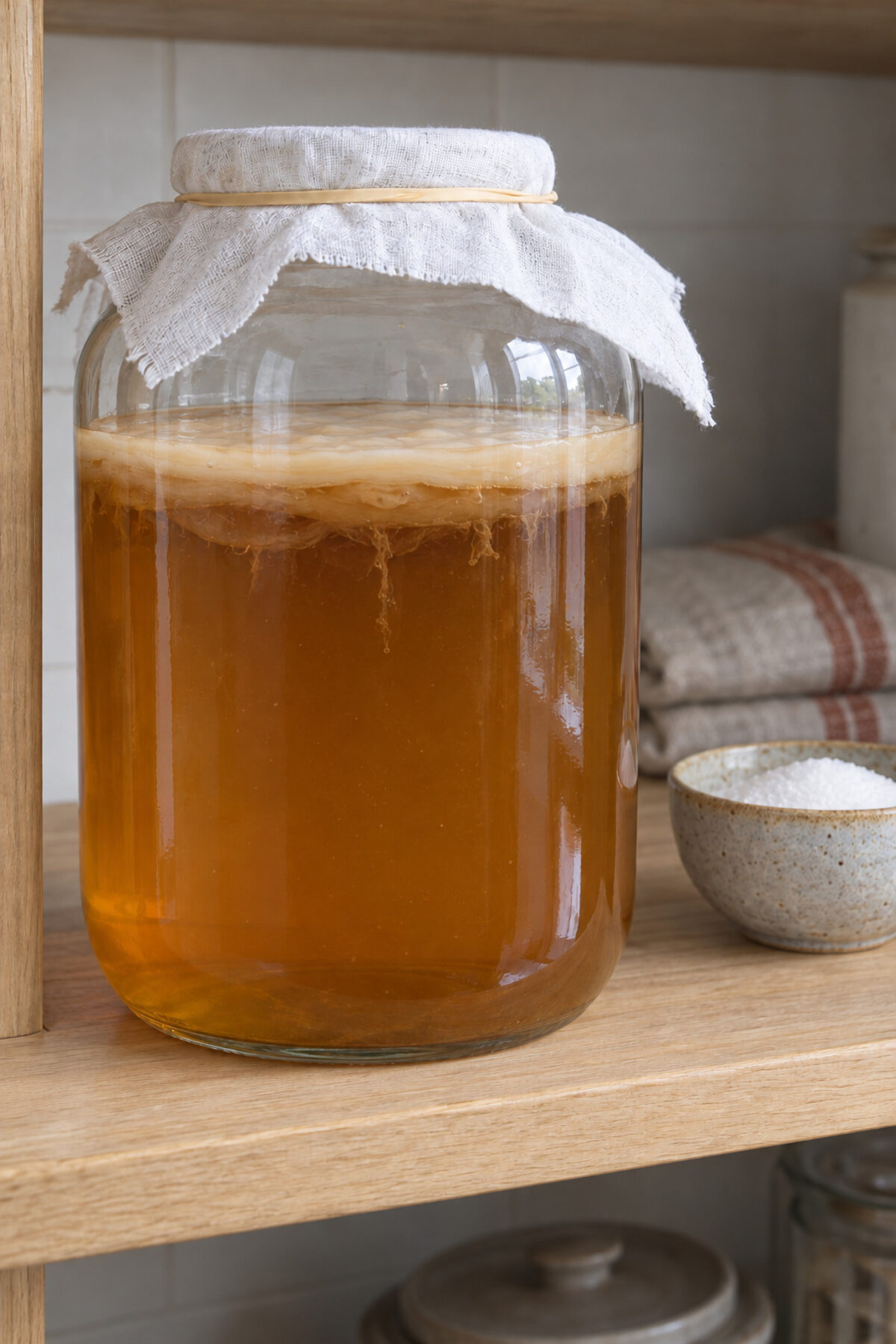
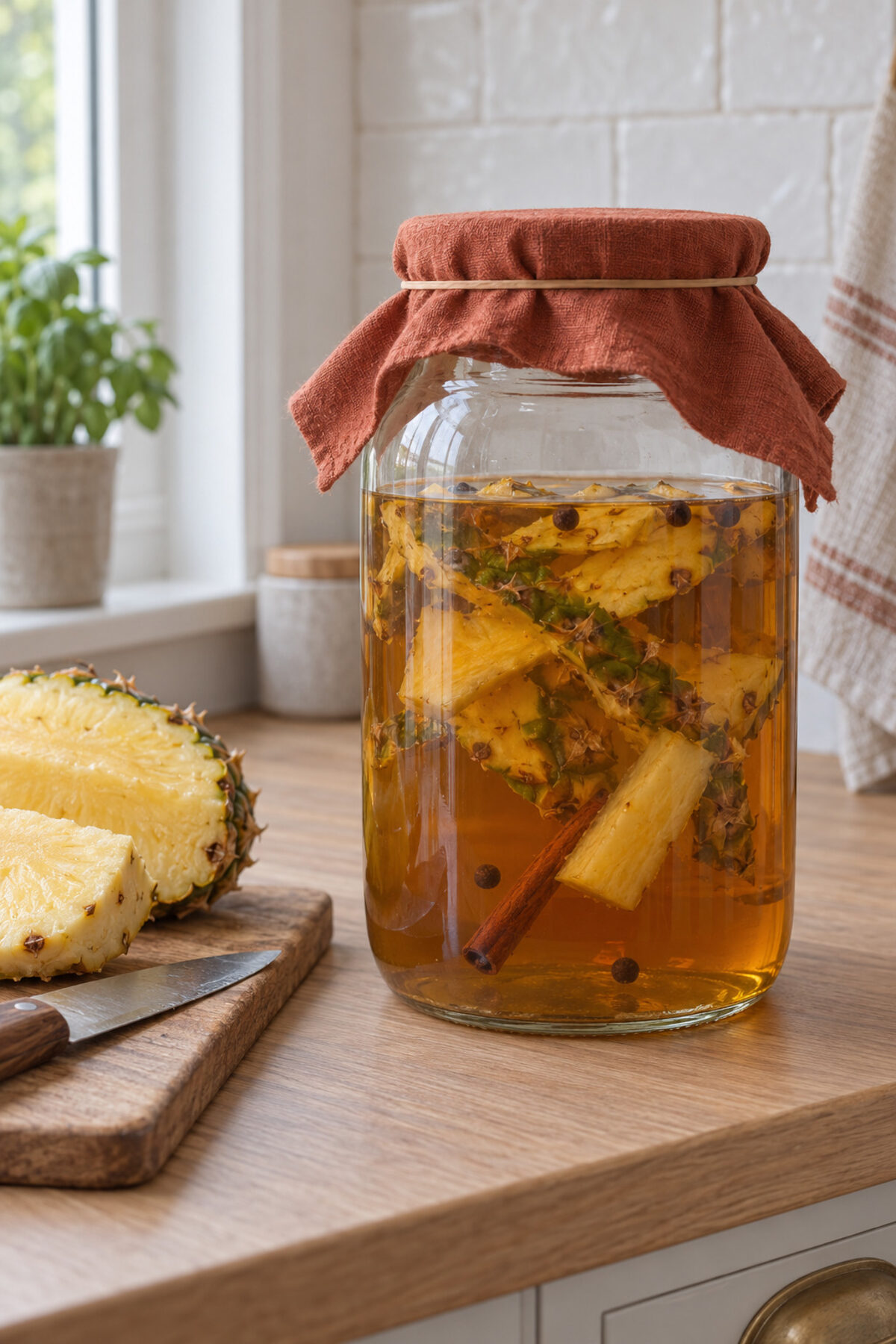
Pour the sweetened water into the jar. Add the pineapple rind and core, the cinnamon stick and the allspice, and stir. Cover the opening with the cloth and hold it in place with the rubber band, to keep flies out. Leave it at 68–77 °F for 2 to 4 days. Warmer, it goes faster: above 77 °F, 1 to 2 days.
These times are house rules. One study measured it at 72 hours, and a homemade batch in another was left 4 days at about 72 °F. There's no data beyond that.
Tip: It's traditionally made in a wooden pot, the tepachera. At home, use glass and never metal: tepache is acidic.
-
Taste it every day from day 2
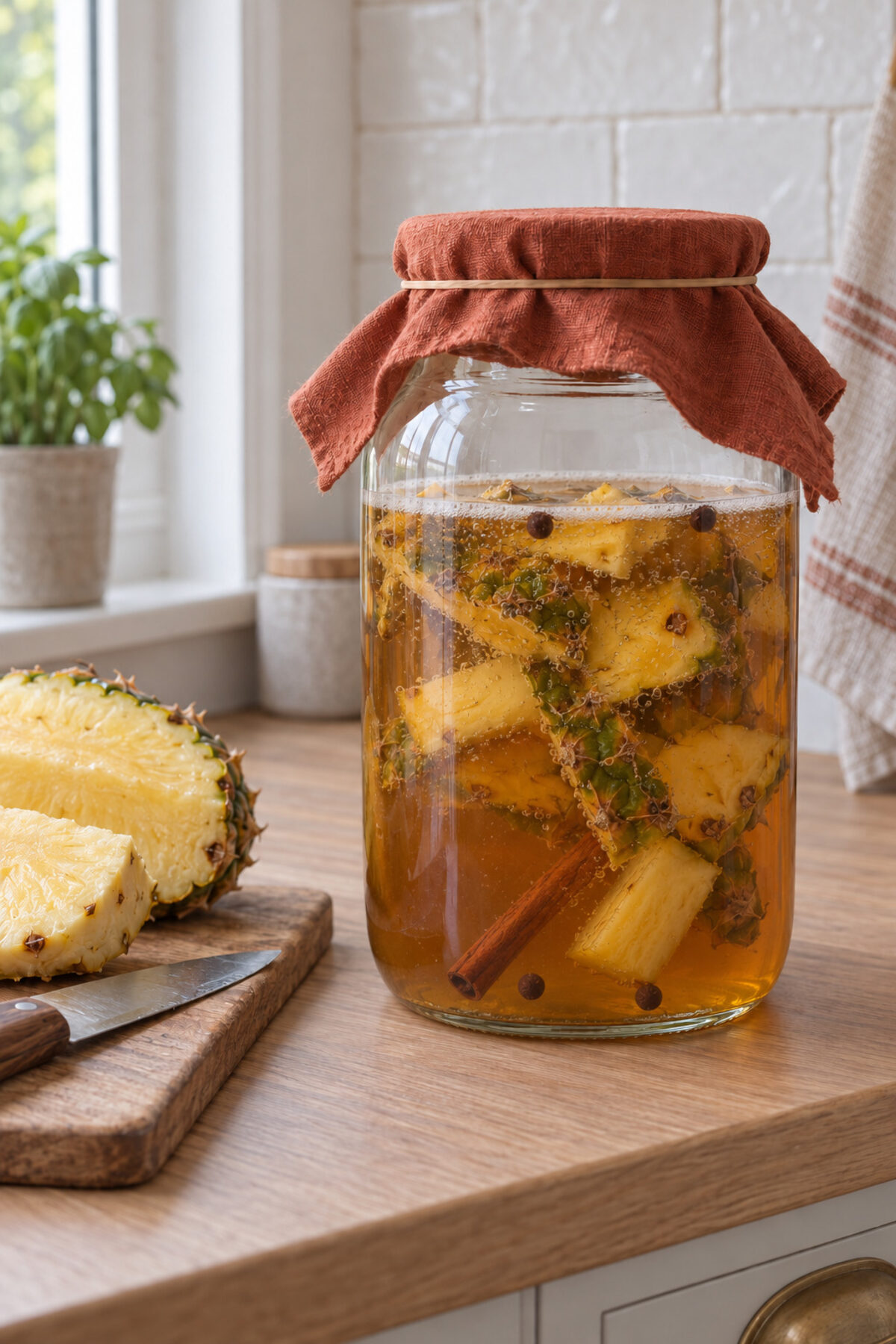
From day 2, taste it with a clean spoon. It's ready when it's foamy and bubbly, tastes tart and is still a little sweet. Don't go past 4 days: it turns to vinegar and the alcohol rises. If you have pH strips, wait until they read 4.2 or below (house rule). Above 4.6, don't drink it.
Tip: A white or gray film on the surface is usually yeast: skim it off. Green, blue, brown or black mold isn't skimmed: throw it all out.
-
Strain it and refrigerate it
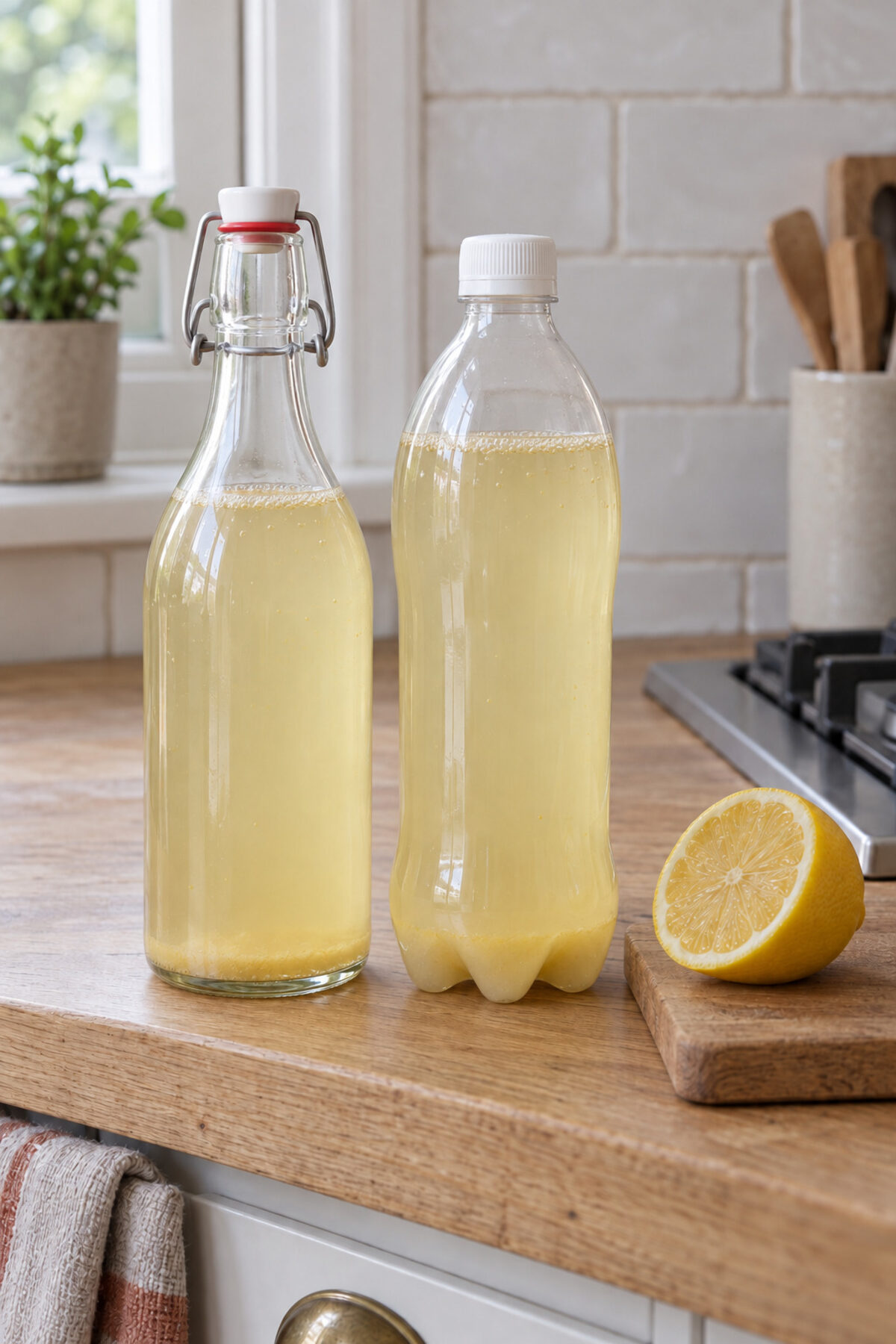
Strain the tepache and throw out the pineapple and spices. Pour it into clean bottles or jars and keep it in the fridge, at 39 °F. Drink it within 3 days. That's a house rule: it's raw, unpasteurized fruit and there's no data on how long it keeps.
Tip: Serve it cold, over ice.
No sign-up. We guide you step by step, from the scale to the fridge.
Variations
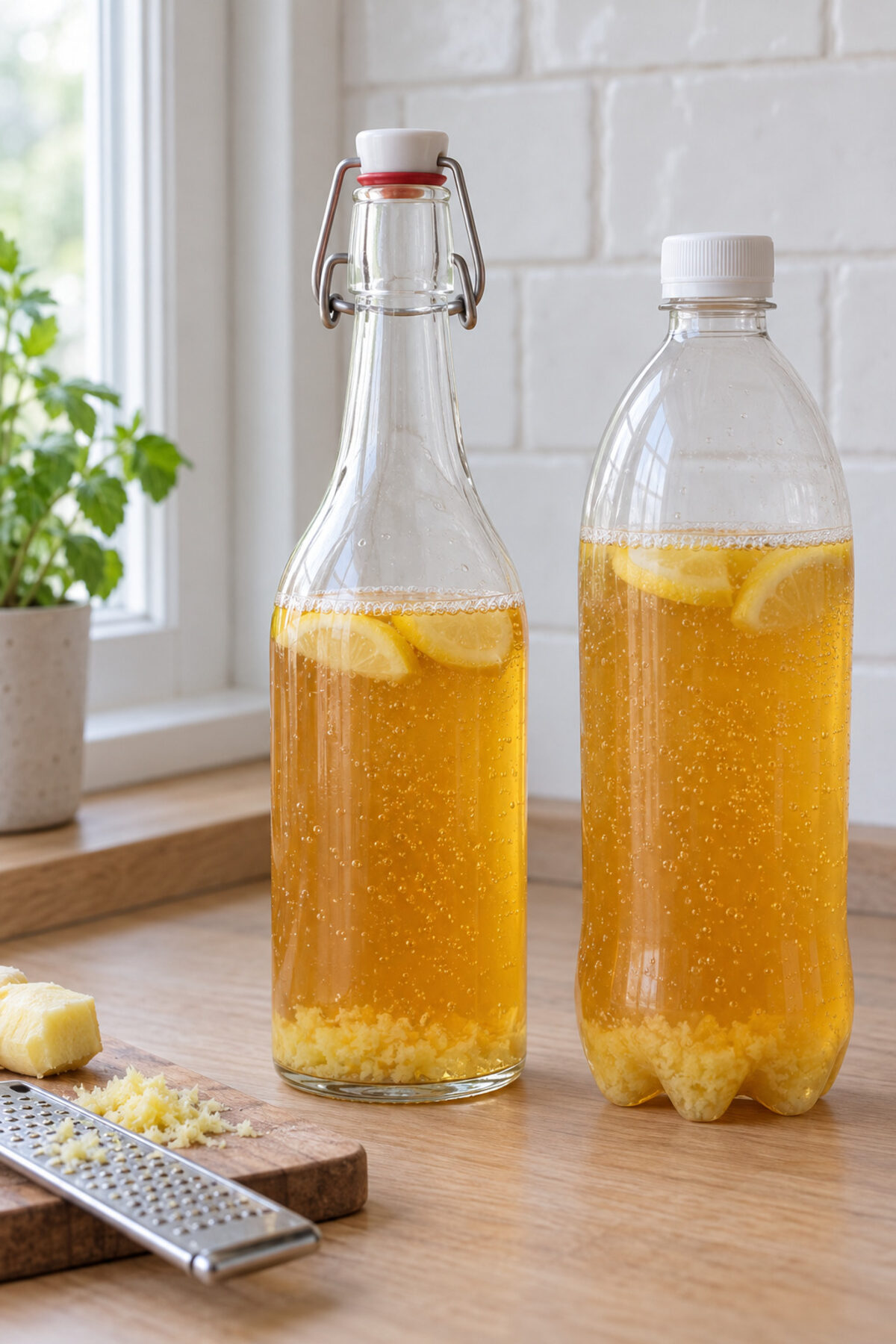
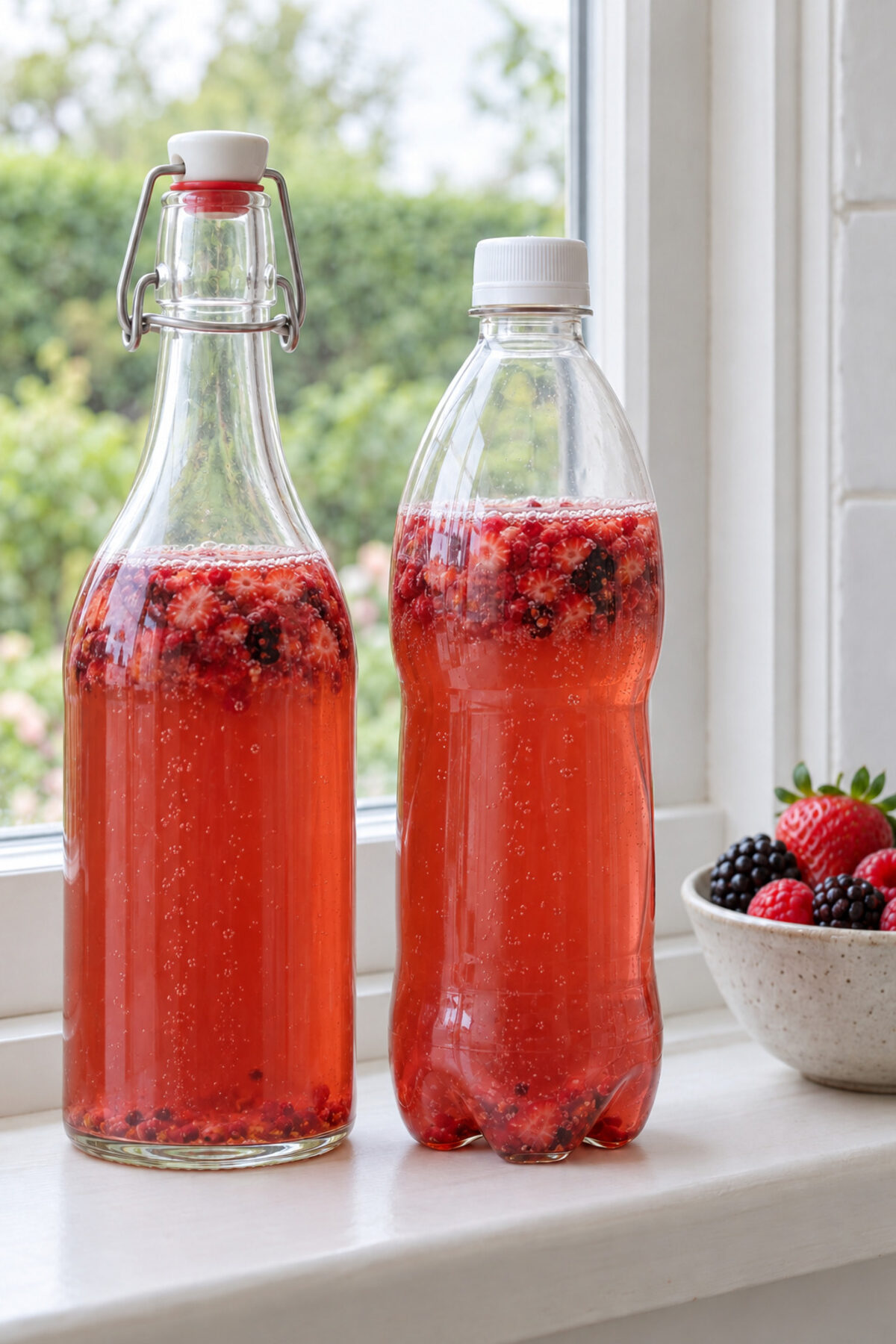
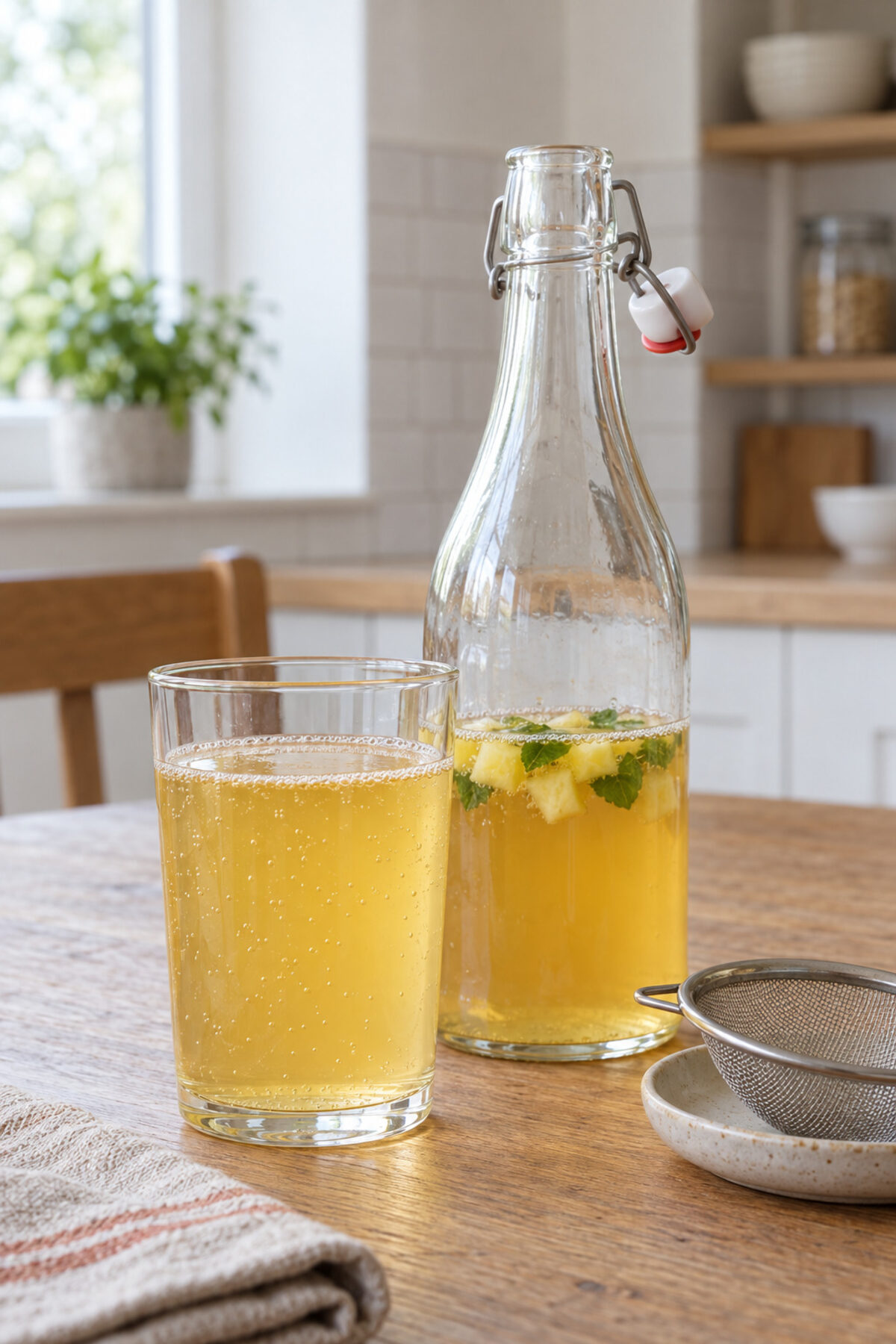
The same method, a different flavor. Once you have this one down, try one of these.
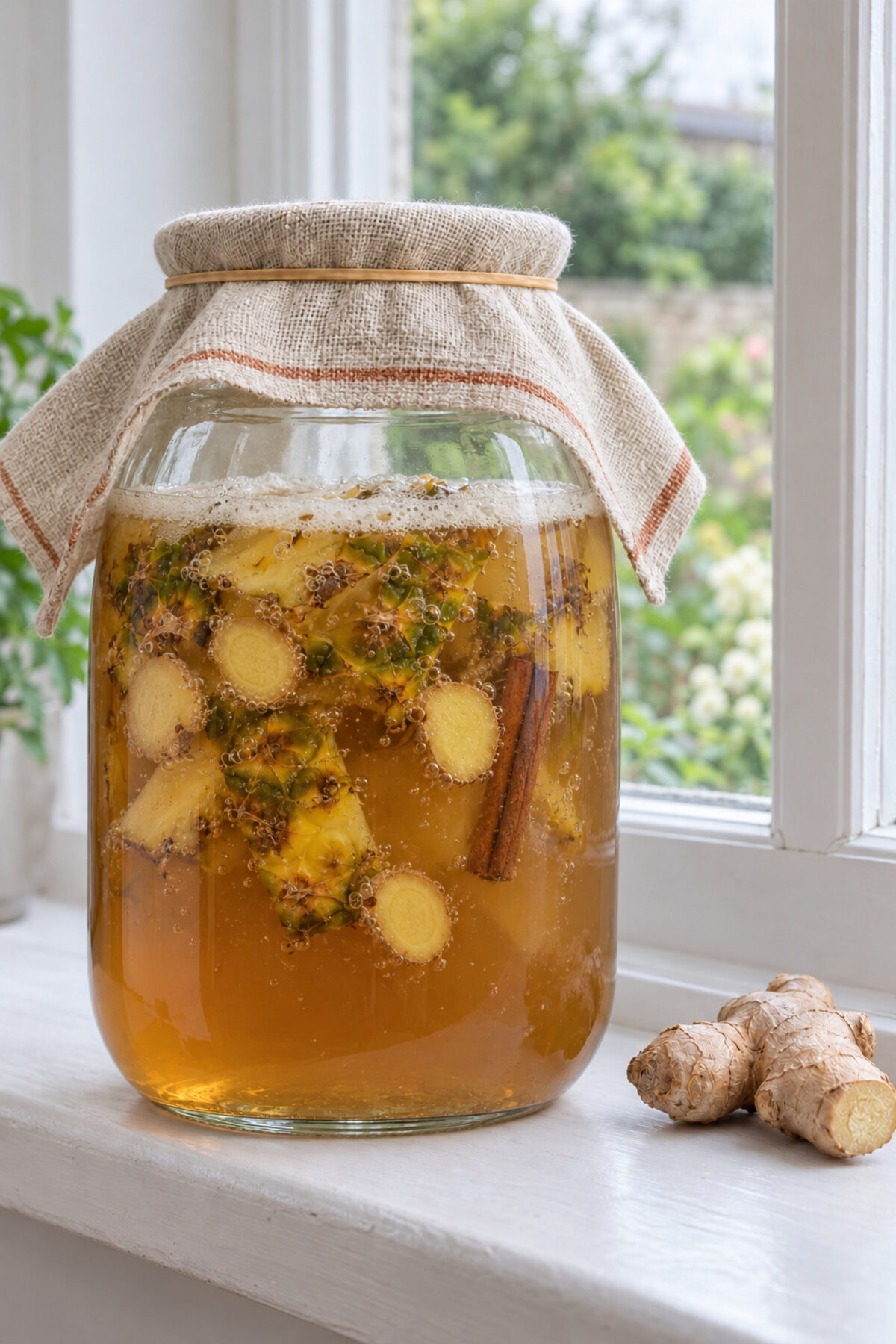
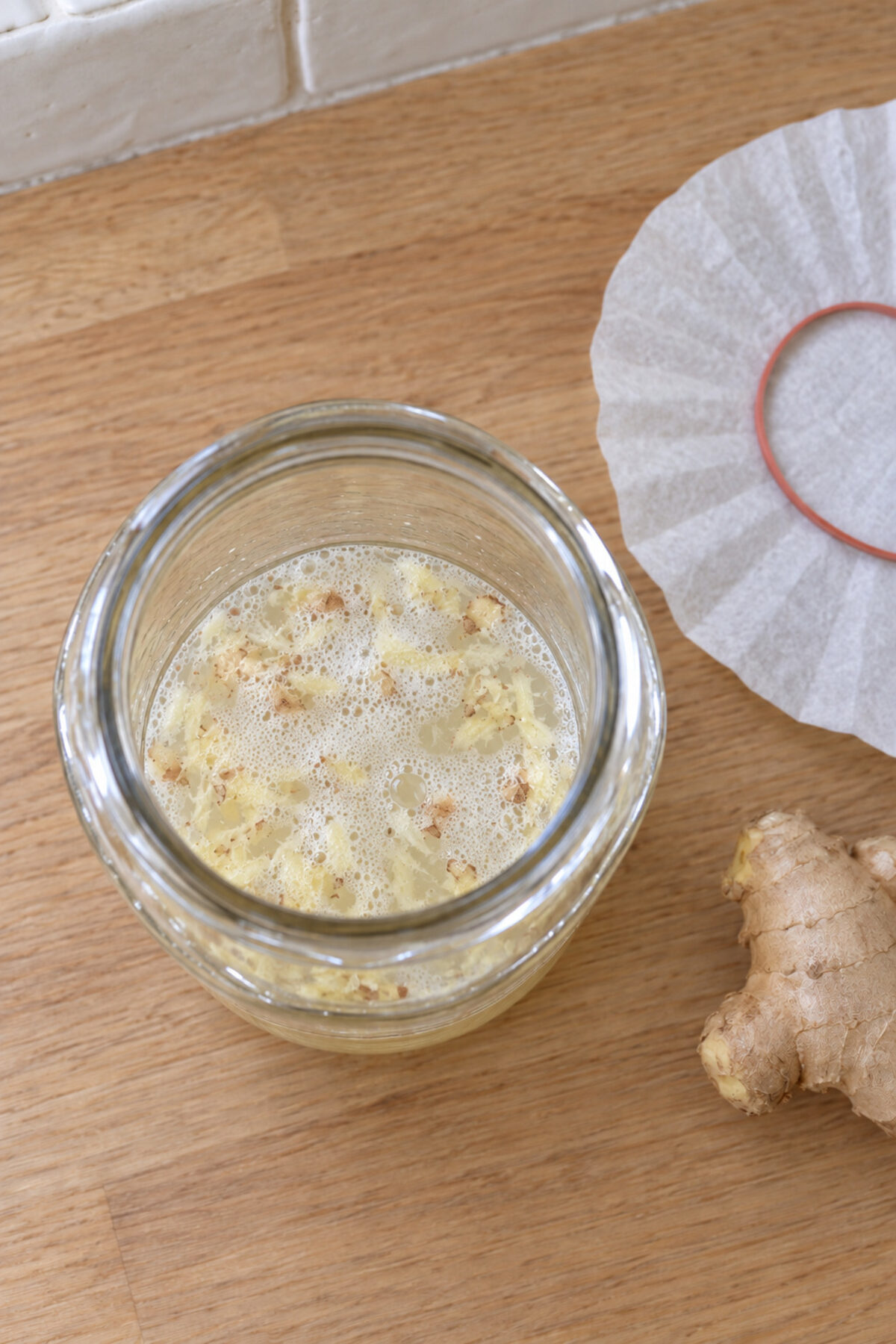
What you'll see
Tepache is a traditional Mexican drink made from pineapple rind, piloncillo and water. It has no starter: the yeasts and bacteria on the rind itself do the fermenting. First they make lactic acid and a little alcohol, and if you leave it longer, vinegar bacteria take over. Pineapple is acidic, with a pH of 3.2 to 4.0, but the rind also carries bacteria such as Escherichia and Klebsiella. It's a homemade drink that varies from kitchen to kitchen, and no health authority publishes a recipe. That's why the time, the piloncillo and the days in the fridge here are house rules, backed by two studies.
 AI
 AI
AI
How to tell it's going well
- It contains alcohol, and more each day. It isn't for young children or during pregnancy.
- It's raw, unpasteurized fruit. The FDA warns that untreated juices can cause serious illness in children, older adults, pregnant women and people with weakened immune systems.
- A sound pineapple, washed without soap. Throw out any rotten or moldy parts before you start.
- In glass, covered with cloth. No metal: tepache is acidic.
- 2 to 4 days out of the fridge, no more (house rule).
- Green, blue, brown or black mold, or a putrid smell: throw it out. A white or gray film is usually yeast.
- With pH strips, 4.2 or below (house rule). Above 4.6, don't drink it.
- Into the fridge at 39 °F, and drink it within 3 days (house rule).
Where every number comes from
Every number in this recipe comes from a food safety guide. We keep a copy of each source and quote its exact words.
-
1
Pineapple rind and brown sugar, fermented naturally
“Tepache is a native beverage from Mexico, which is usually elaborated with pineapple shells, brown cane sugar and is fermented naturally.”
Microbiological Research (Gutiérrez-Sarmiento et al., TecNM Tuxtla Gutiérrez), abstract via NCBI PubMed E-utilities · Microbial community structure, physicochemical characteristics and predictive functionalities of the Mexican tepache fermented beverage (2022), abstract · read on October 25, 2026
-
2
First lactic acid and alcohol, then vinegar
“Tepache fermentation mainly occurred at two temporal successions. First, a lactic acid and ethanol fermentation dominated by lactic acid bacteria and yeast, and then an increase in acetogenic bacteria”
Microbiological Research (Gutiérrez-Sarmiento et al., TecNM Tuxtla Gutiérrez), abstract via NCBI PubMed E-utilities · Microbial community structure, physicochemical characteristics and predictive functionalities of the Mexican tepache fermented beverage (2022), abstract · read on October 25, 2026
-
3
Acidic at 72 hours
“after 72 h of fermentation, the tepache physicochemical characteristics shifted to 9.5 Brix degrees and acidic pH”
Microbiological Research (Gutiérrez-Sarmiento et al., TecNM Tuxtla Gutiérrez), abstract via NCBI PubMed E-utilities · Microbial community structure, physicochemical characteristics and predictive functionalities of the Mexican tepache fermented beverage (2022), abstract · read on October 25, 2026
-
4
Alcohol rises within 72 hours
“The content of ethanol, acetic and L-lactic acid increased significantly from 0.83 ± 0.02 to 3.39 ± 0.18 g/L”
Microbiological Research (Gutiérrez-Sarmiento et al., TecNM Tuxtla Gutiérrez), abstract via NCBI PubMed E-utilities · Microbial community structure, physicochemical characteristics and predictive functionalities of the Mexican tepache fermented beverage (2022), abstract · read on October 25, 2026
-
5
The microbes come from the rind
“It is a spontaneous fermentation where the microbiota is mainly associated with the sorosis epidermis”
Foods (MDPI; Ojeda-Linares et al., UNAM), via PubMed Central · Traditional Fermented Beverages of Mexico: A Biocultural Unseen Foodscape (2021) · read on October 25, 2026
-
6
The rind goes into a wooden pot, the tepachera
“the process starts by peeling the infrutescences and adding the rind into a wooden container known as tepacheras, then brown sugar is added”
Foods (MDPI; Ojeda-Linares et al., UNAM), via PubMed Central · Traditional Fermented Beverages of Mexico: A Biocultural Unseen Foodscape (2021) · read on October 25, 2026
-
7
Homemade, and it varies from kitchen to kitchen
“this beverage is commonly homemade, and its quality varies from kitchen to kitchen”
Foods (MDPI; Ojeda-Linares et al., UNAM), via PubMed Central · Traditional Fermented Beverages of Mexico: A Biocultural Unseen Foodscape (2021) · read on October 25, 2026
-
8
Tepache also carries Escherichia and Klebsiella
“Tepache Ananas comosus (fruit) Bacteria: Acetobacter, Acinetobacter, Bacillus, Escherichia, Enterobacter, Enterococcus, Gluconobacter, Klebsiella, Lactobacillus”
Foods (MDPI; Ojeda-Linares et al., UNAM), via PubMed Central · Traditional Fermented Beverages of Mexico: A Biocultural Unseen Foodscape (2021) · read on October 25, 2026
Show the remaining 19 claims
-
9
Rind and core, piloncillo, water, cinnamon and allspice
“Tepache was prepared in a home setting with 3 cups of rind and core from 1 pineapple (non-organic), ½ cup of piloncillo (unrefined whole cane sugar), 4 liters of water, a cinnamon stick, and whole allspice.”
microPublication Biology (Bucknell University), via PubMed Central · The Microbiota of Homemade Tepache Includes Antibiotic-Resistant Microorganisms (2025) · read on October 25, 2026
-
10
The sugar is dissolved first
“Once the sugar was dissolved, the pineapple and spice components were added”
microPublication Biology (Bucknell University), via PubMed Central · The Microbiota of Homemade Tepache Includes Antibiotic-Resistant Microorganisms (2025) · read on October 25, 2026
-
11
4 days at about 72 °F
“the mixture fermented at room temperature (~22 ℃) for four days”
microPublication Biology (Bucknell University), via PubMed Central · The Microbiota of Homemade Tepache Includes Antibiotic-Resistant Microorganisms (2025) · read on October 25, 2026
-
12
Strained and stored at 39 °F
“After fermentation, the tepache was strained and stored at 4 ℃.”
microPublication Biology (Bucknell University), via PubMed Central · The Microbiota of Homemade Tepache Includes Antibiotic-Resistant Microorganisms (2025) · read on October 25, 2026
-
13
Hands washed 20 seconds with soap and warm water
“Wash your hands for at least 20 seconds with soap and warm water before and after preparation.”
U.S. Food and Drug Administration · What You Need to Know About Juice Safety · read on October 25, 2026
-
14
Fruit washed under running water before cutting
“Wash all produce thoroughly under running water before cutting or cooking”
U.S. Food and Drug Administration · What You Need to Know About Juice Safety · read on October 25, 2026
-
15
No soap or produce wash
“Washing fruits and vegetables with soap, detergent, or commercial produce wash is not recommended.”
U.S. Food and Drug Administration · What You Need to Know About Juice Safety · read on October 25, 2026
-
16
Wash before peeling
“Even if you plan to peel the produce before juicing it, wash it first so dirt and bacteria are not transferred from the surface when peeling or cutting into it.”
U.S. Food and Drug Administration · What You Need to Know About Juice Safety · read on October 25, 2026
-
17
Raw fruit can pass bacteria into the drink
“When fruits and vegetables are fresh-squeezed or used raw, bacteria from the produce can end up in your juice or cider.”
U.S. Food and Drug Administration · What You Need to Know About Juice Safety · read on October 25, 2026
-
18
Children, older adults, pregnant women and the immunocompromised are most at risk
“children, older adults, pregnant women, and people with weakened immune systems (such as transplant patients and individuals with HIV/AIDS, cancer, or diabetes) risk serious illnesses or even death from drinking untreated juices.”
U.S. Food and Drug Administration · What You Need to Know About Juice Safety · read on October 25, 2026
-
19
Anything damaged or moldy goes
“Wash ingredients to remove soil and contamination, discard damaged, mouldy vegetables.”
BC Centre for Disease Control, Environmental Health Services · Safety of Fermented Foods, Section 3.1: Fermented Vegetables (August 2024, updated December 2024) · read on October 25, 2026
-
20
Metal reacts with acid
“Metal containers are not suitable due to their reactivity with acid.”
BC Centre for Disease Control, Environmental Health Services · Safety of Fermented Foods, Section 3.1: Fermented Vegetables (August 2024, updated December 2024) · read on October 25, 2026
-
21
Above pH 4.6, botulism spores can grow
“C. botulinum spores may germinate in fermented foods when pH rises above 4.6 during spoilage.”
BC Centre for Disease Control, Environmental Health Services · Safety of Fermented Foods, Section 3.1: Fermented Vegetables (August 2024, updated December 2024) · read on October 25, 2026
-
22
A cloth to keep out fruit flies
“The container was covered with a linen cloth to avoid contamination and infestation, mainly by the insect Drosophila melanogaster (vinegar fly).”
Foods (MDPI), via PubMed Central · Kombucha Fermentation of Olympus Mountain Tea (Sideritis scardica) Sweetened with Thyme Honey (2023) · read on October 25, 2026
-
23
Pineapple at pH 3.2–4.0
“Pineapple 3.20 - 4.00”
U.S. FDA, CFSAN (copy hosted by RiverStone Health, Yellowstone County public health department) · Approximate pH of Foods and Food Products (April 2007) · read on October 25, 2026
-
24
A white or gray film is usually yeast
“White, grey, or pink films may form on the surface of fermenting fruits or vegetables. This film is typically yeast”
UC Davis, Department of Food Science and Technology · Common issues with fermented fruits and vegetables (v1.0, 15-mar-2022) · read on October 20, 2026
-
25
Green, blue, brown or black mold gets thrown out
“If you confirm mold growth on any part of a ferment, it should be immediately discarded. Mold is typically green, blue, brown, or black in color.”
UC Davis, Department of Food Science and Technology · Common issues with fermented fruits and vegetables (v1.0, 15-mar-2022) · read on October 20, 2026
-
26
A putrid smell means a failed ferment
“A putrid smell indicates a failed fermentation.”
UC Davis, Department of Food Science and Technology · Common issues with fermented fruits and vegetables (v1.0, 15-mar-2022) · read on October 20, 2026
-
27
Alcohol is a concern above all for children and during pregnancy
“In summary, because kombucha, jun, water kefir and other fermented beverages (e.g., ginger beer) are sold as non-alcoholic, unintended alcohol content can be a concern for some parts of the general population, especially for children and during pregnancy.”
BC Centre for Disease Control, Environmental Health Services · Safety of Fermented Foods, Section 2: Starter cultures and fermented food standards (August 2024, updated December 2024) · read on October 25, 2026