






First steps · 4 weeks
Your first month
Four weeks and four ferments, each with one new idea. By the end you'll know how to salt by weight, keep things under the brine, look after a live culture and read the pH.
You don't need to know everything to start, but you do need to understand a few things. This path spreads them over four weeks: each brings a ferment, the idea it teaches and what to look for in the jar. You can go faster or slower; what matters is the order.
The app goes along week by week, with each jar and its check-ins.
Week 1
Salt and brine
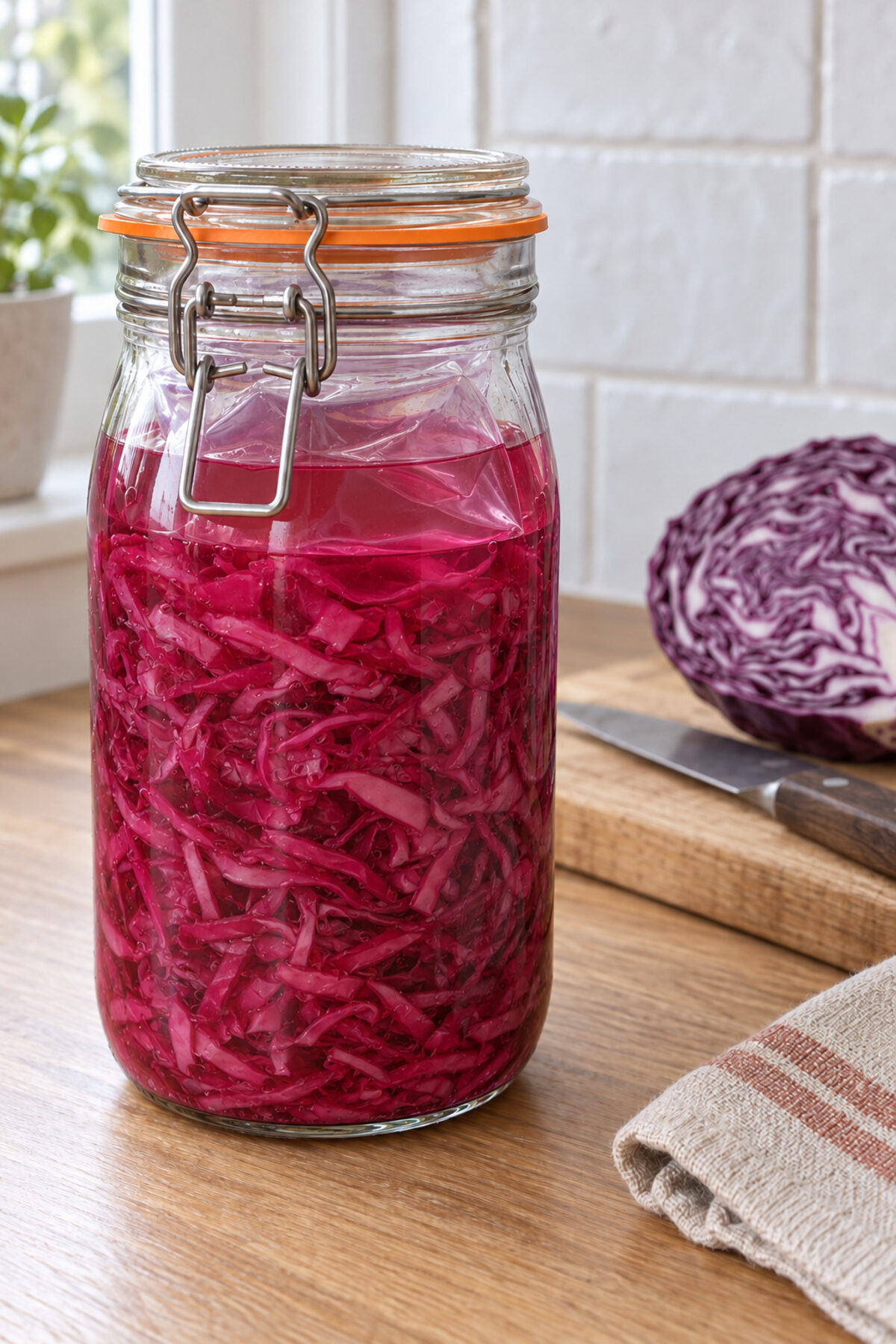
You start with red cabbage sauerkraut, the most forgiving ferment: cabbage, salt and time. You learn to weigh the salt instead of measuring it in spoons and to keep the cabbage under its own juice, which is what protects it from mold. Red cabbage also tells you how it's going: it turns from purple to pink as it sours.
Week 2
Dry salt or brine
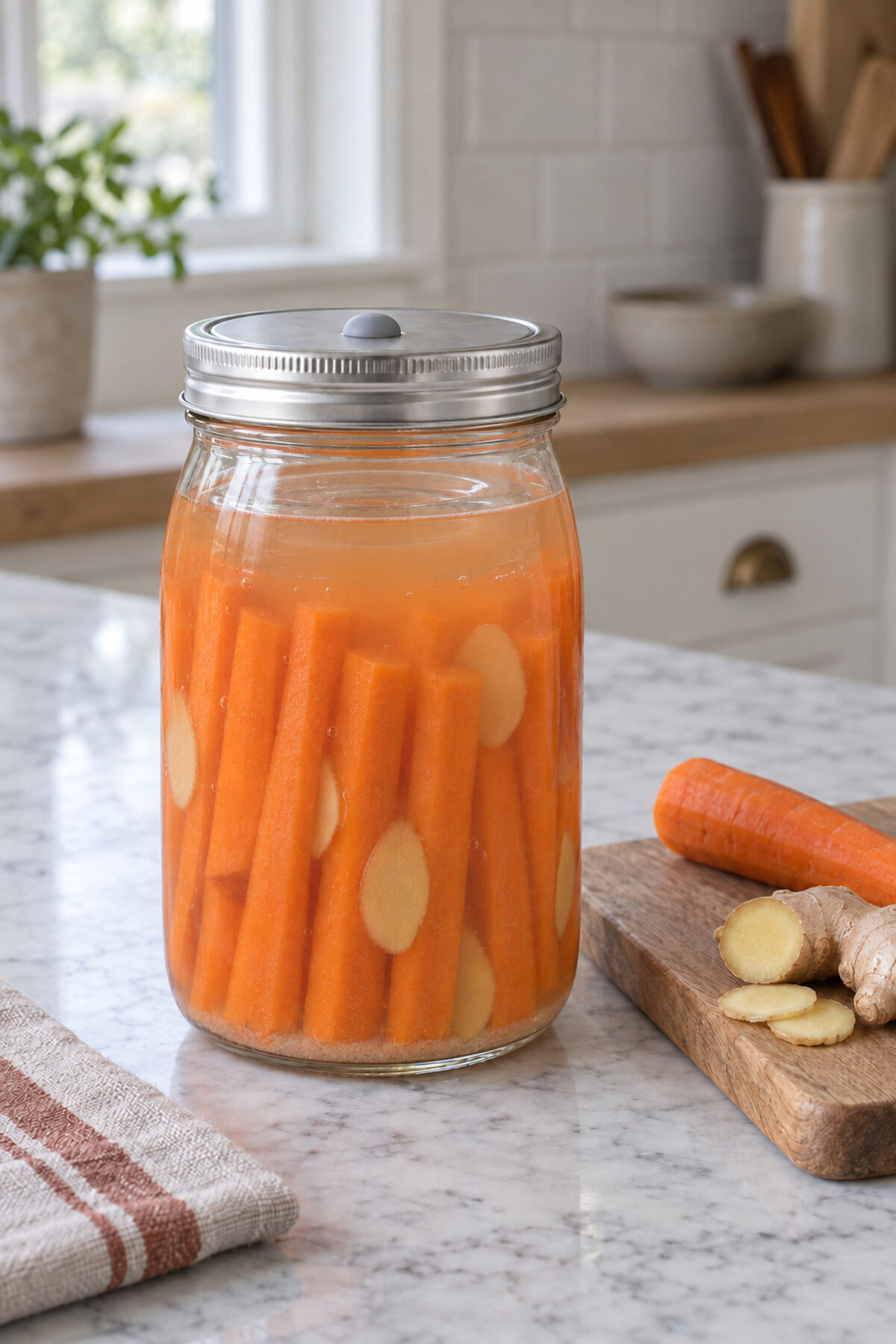
With the sauerkraut under way, you move on to carrots in brine. It's the other way to ferment vegetables: in pieces and covered with salted water. The difference matters because the salt is worked out on the water, not the vegetables. This week you also learn to close a jar that gives off gas.
Week 3
A live culture
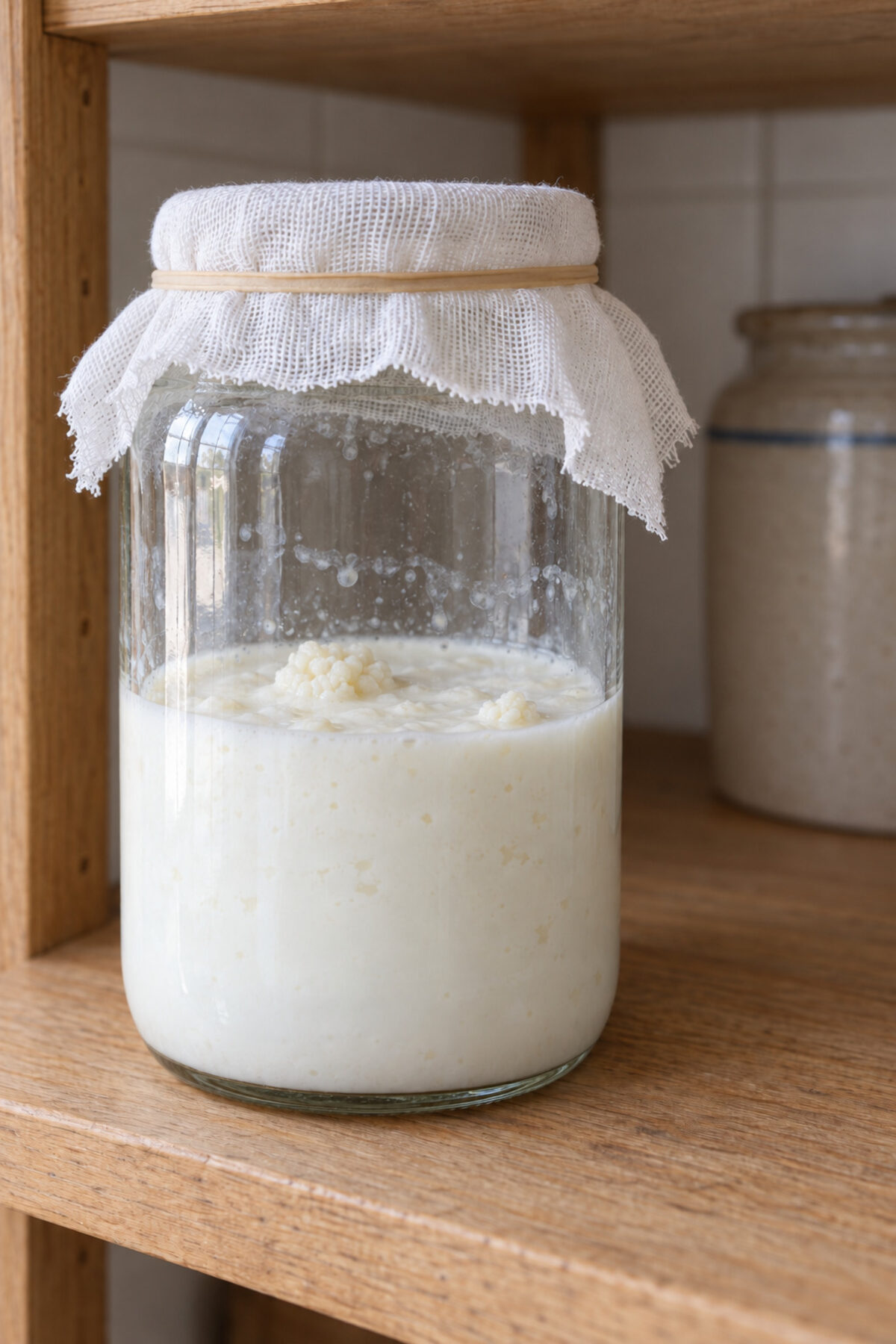
Milk kefir changes the pace: it's counted in hours, not weeks. The grains are a culture you strain, reuse and watch grow from one batch to the next. You learn to look after them and to tell when the kefir is ready by its texture and smell.
Week 4
The pH decides
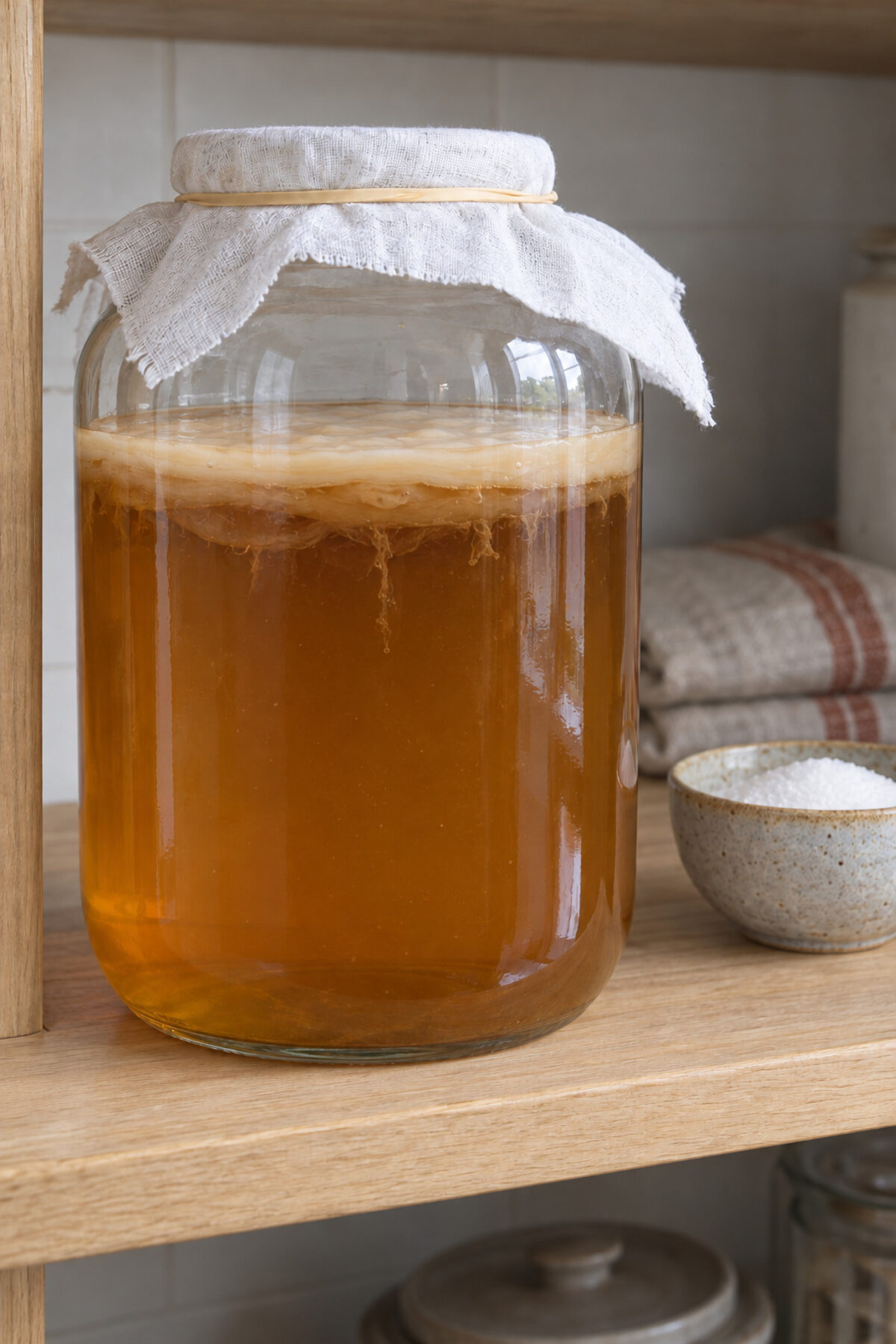
Kombucha closes the month. It starts with acidic liquid from an earlier batch, and that starter is what protects it in the first days. Here the pH is the measure that decides: you learn to check it with strips or a meter and to read what it tells you.
What comes next
With these four you've done the essentials of almost every ferment: weighed salt, everything submerged, a live culture and a measured pH. The next path goes a step further with kimchi, second fermentation, yogurt and your first koji.
The next path
Getting good · 6 weeks Getting good