 AI
Crème fraîche
Level 2 · some practice
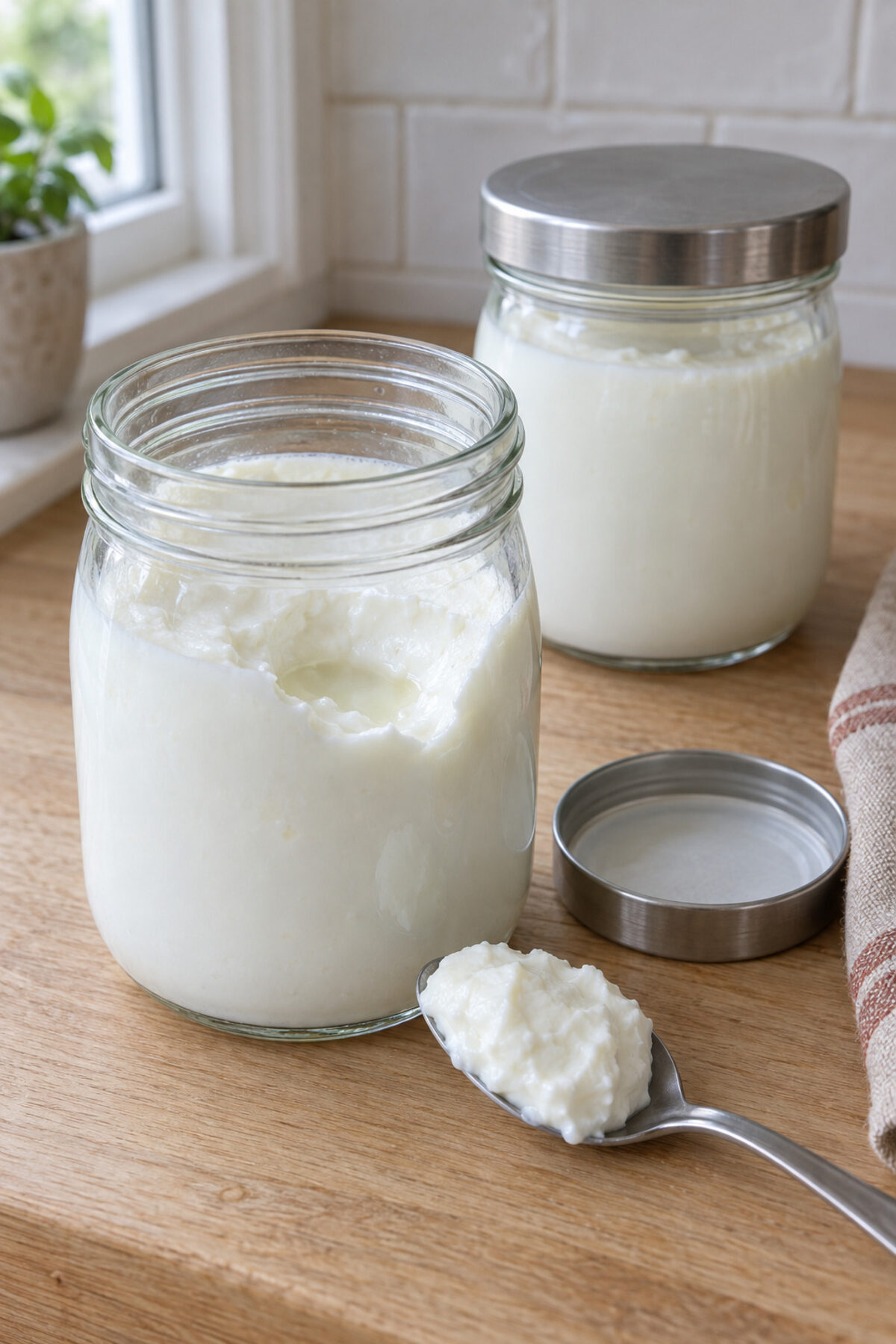
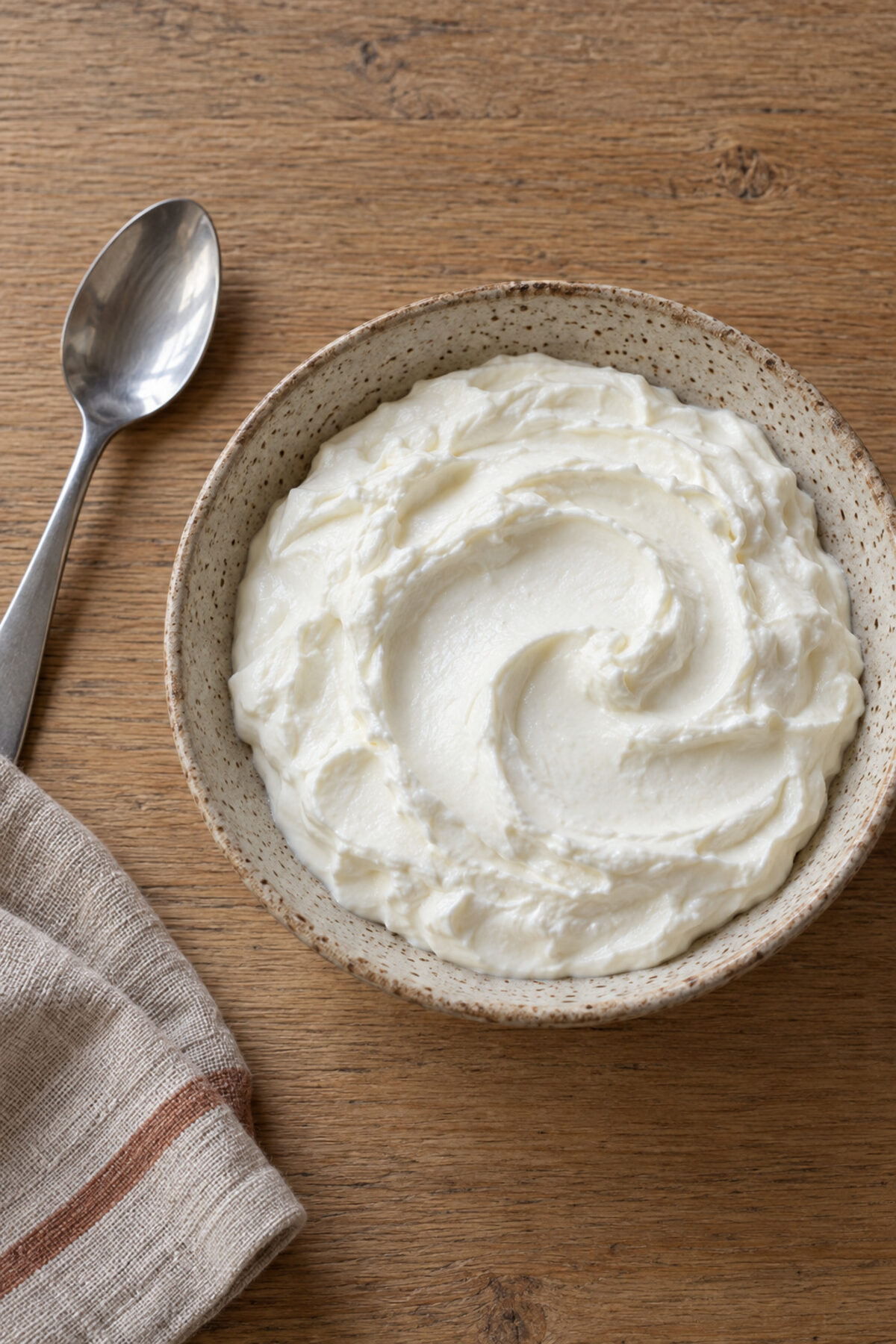
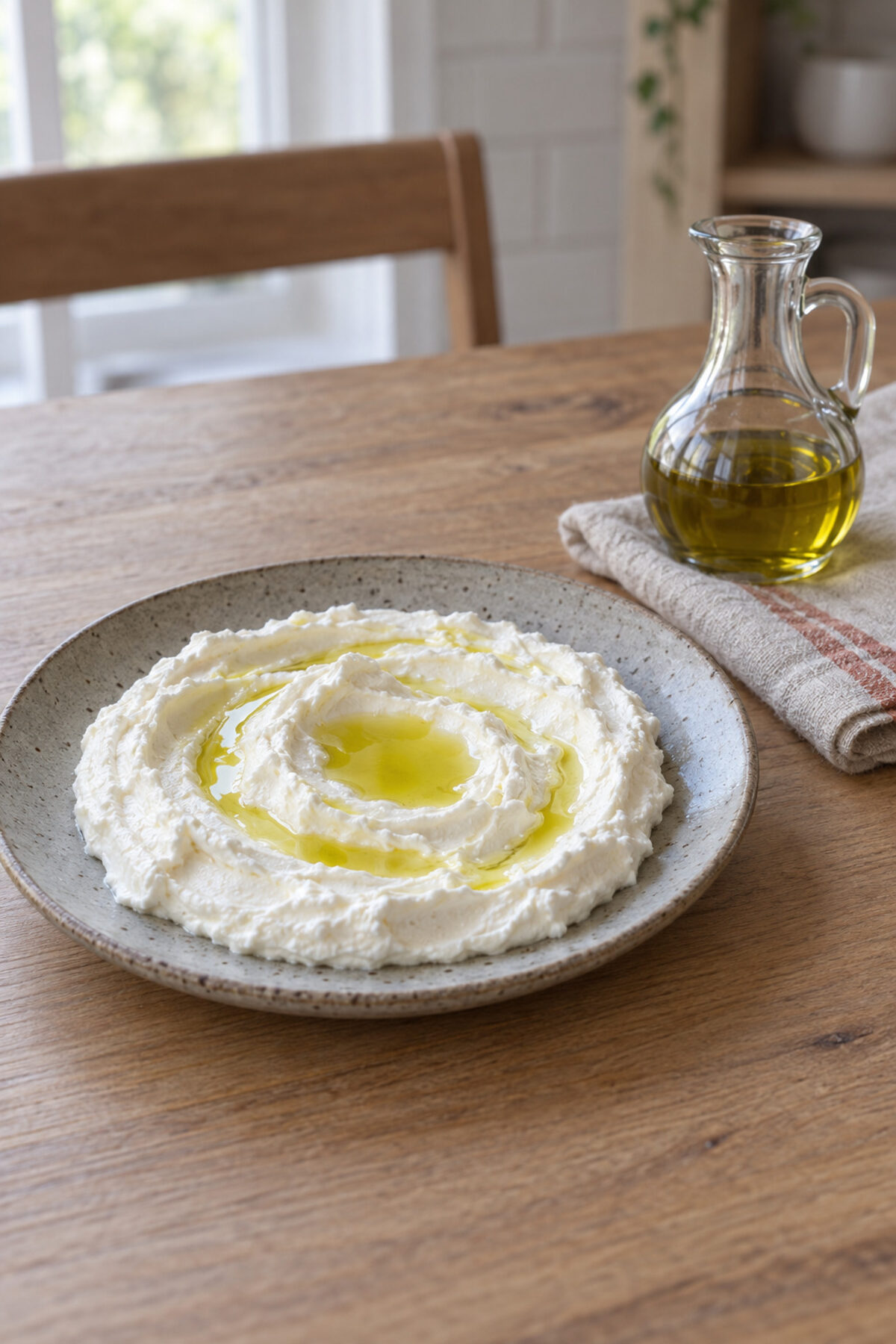
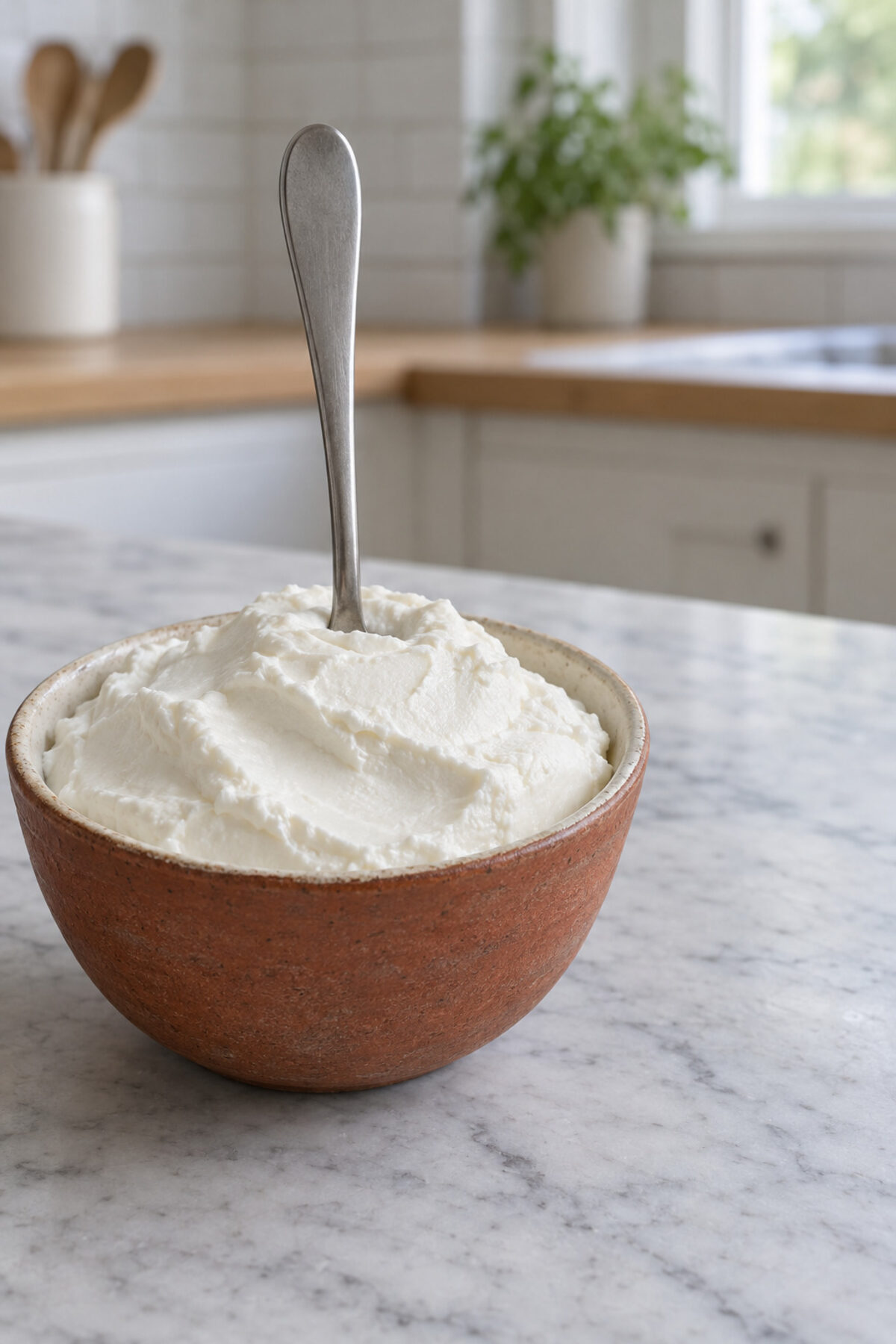
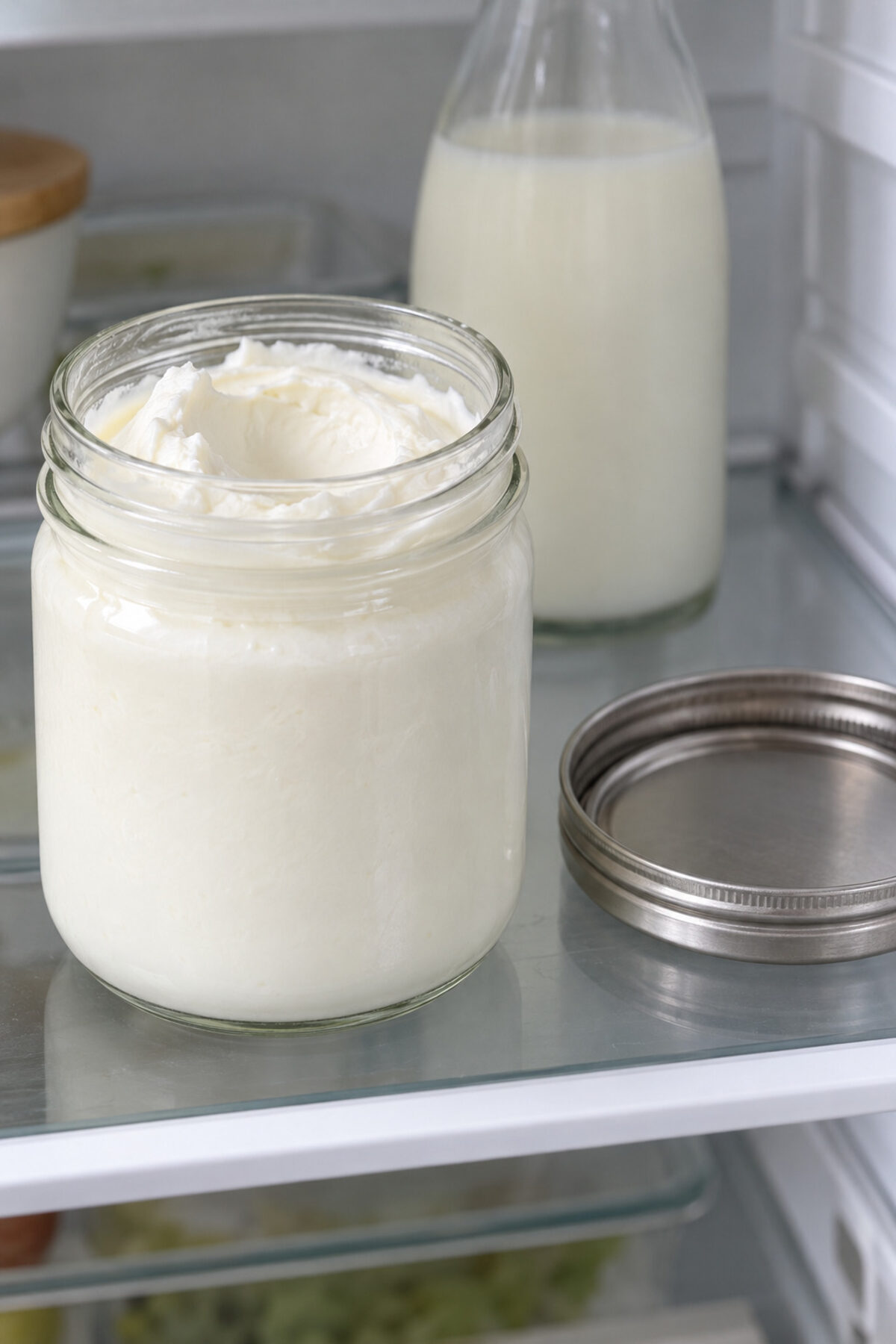
Fresh cream with a culture that works at room temperature. Thick, a little tangy, and it doesn't curdle in hot sauces.
- Time
- 16–20h
- Temperature
- 68–77°F
- Jar
- 0.5L
The golden rule: pasteurized cream or milk, a bought culture, and into the fridge as soon as it thickens.
No sign-up. We guide you step by step, from the scale to the fridge.
Reviewed October 26, 2026 · 25 facts, each with its source
Before you start
Crème fraîche is cream cultured with a mesophilic culture, the kind that works at room temperature. It turns thick and a little tangy and, with so much fat, it doesn't curdle in hot sauces or soups. No home guide gives figures for making it. This recipe follows the British Columbia food safety sheet for professional kitchens, and takes its time from the University of Guelph's dairy science textbook. You'll need a thermometer.
You'll need
- 500 ml (pint) glass jar with a lid
- Pot for a water bath
- Kitchen thermometer
- Clean spoon
Step by step
-
Bring the cream to 68–77 °F in a water bath
Wash the jar, lid and spoon in hot soapy water and rinse them well. Pour the cream into the jar and set it in a pot of lukewarm water. Stir until the cream reaches 68–77 °F, or the temperature on the culture packet. It should get there within 1 hour.
Tip: Read the cream label closely: over 33% fat, pasteurized, not UHT and with no stabilizers such as carrageenan. With UHT cream or stabilizers it won't thicken.
-
Add the culture and stir gently
Sprinkle the culture over the cream, using the maker's dose for 500 ml. You can also mix it first with a couple of spoonfuls of the same cream. Stir gently until it's spread through.
Tip: Always use a commercial culture. The British Columbia sheets don't approve a previous batch of crème fraîche as a starter.
-
Leave it covered at 68–77 °F for 16 to 20 hours
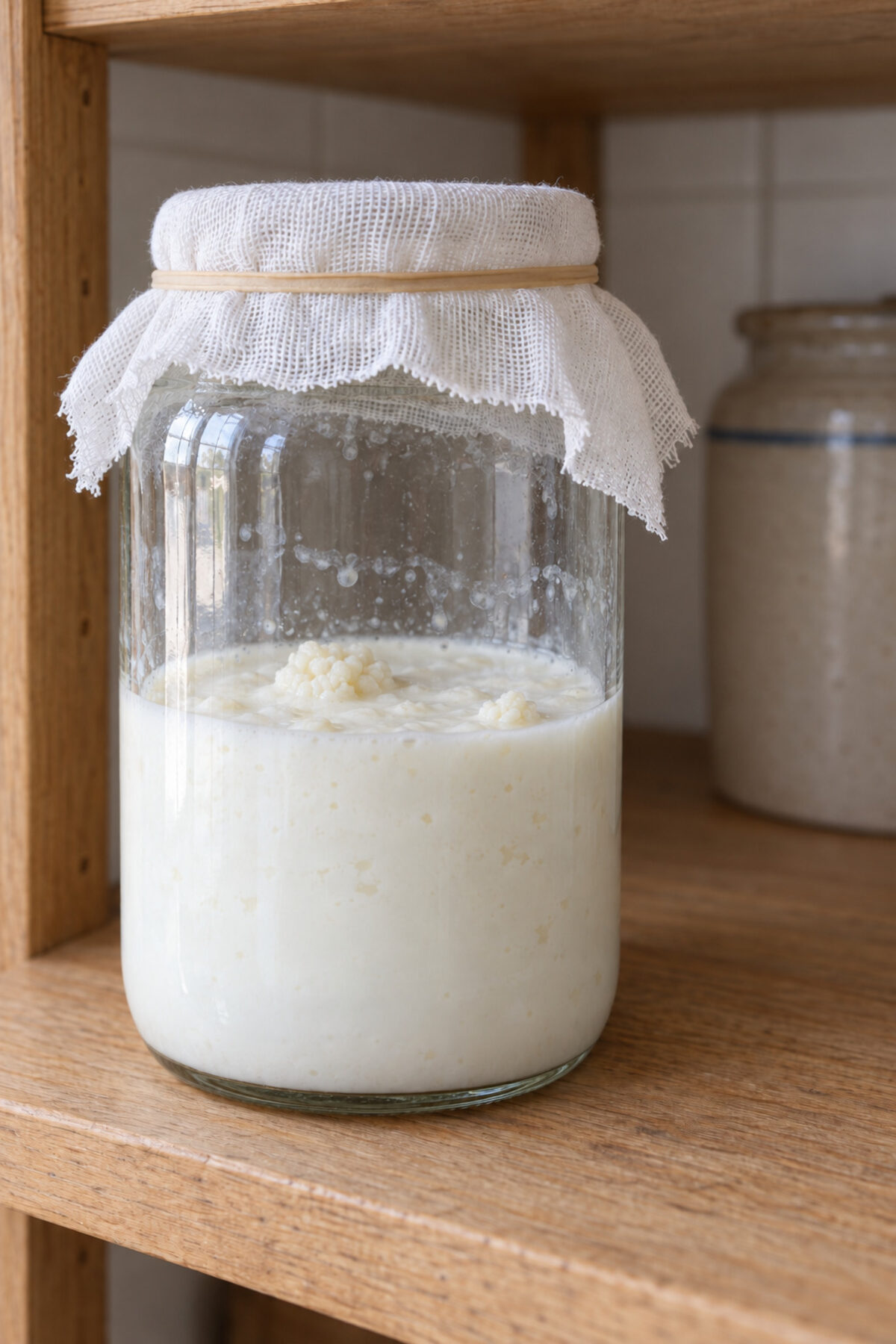
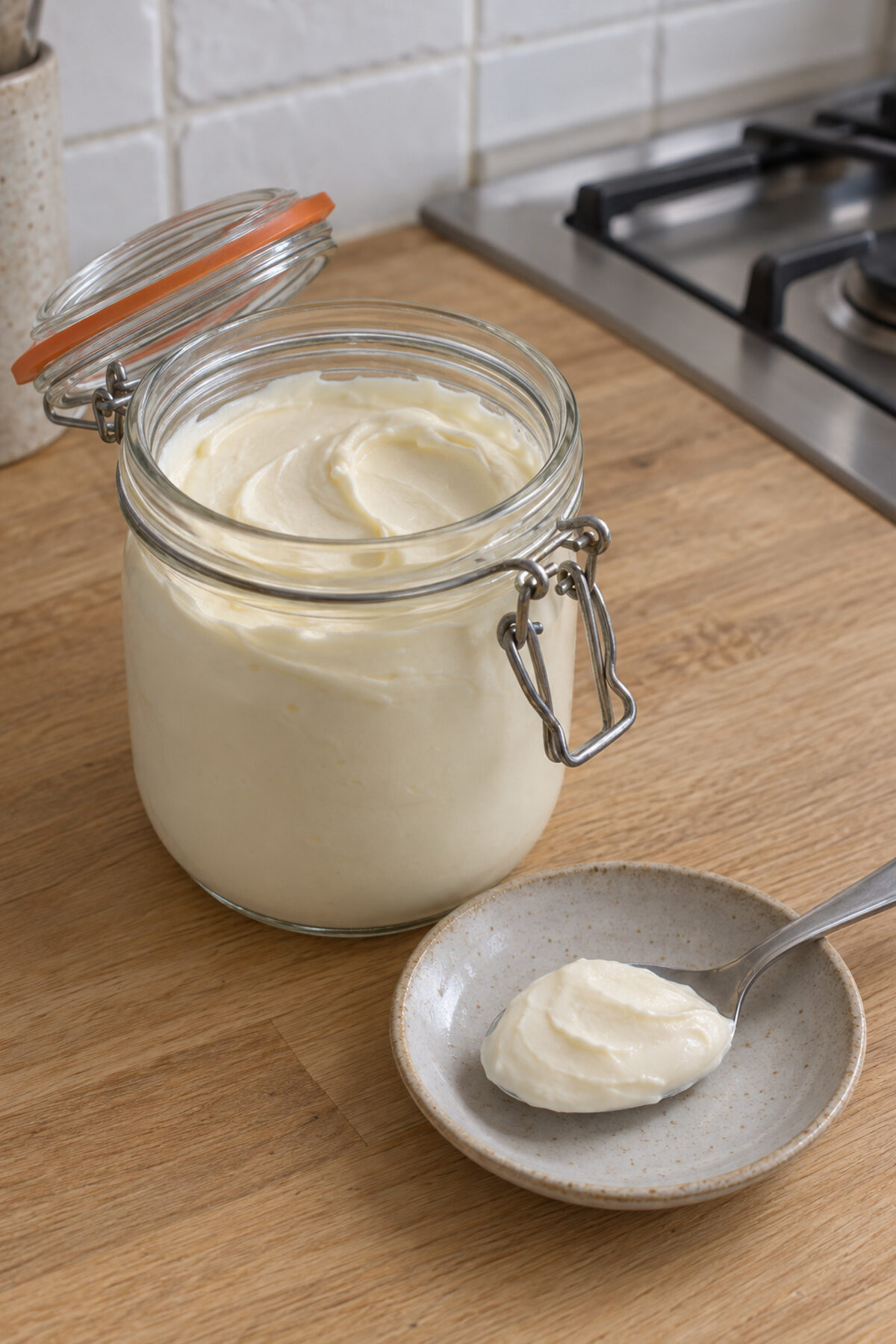
Close the jar and leave it at 68–77 °F, away from drafts and without moving it. Culturing it in the jar, without moving it from one container to another, lowers the risk of contamination. It's ready when it has thickened and smells tangy. If you have a pH meter, it should read 4.6 or below.
If it hasn't thickened by 22 hours, throw it out. That's a house rule: the British Columbia sheets discard a batch that hasn't reached pH 4.6 two hours past the expected time, and we apply that to the texture.
-
Chill it within 6 hours
Put the jar in the fridge as soon as it's ready. It should drop to 68 °F within 2 hours and to 39 °F within 4 more: 6 hours in all, at most. If the fridge is full or the jar is large, chill it first in a sink of cold water or ice.
-
Keep it in the fridge and use it within 3 days
Keep it covered, at 39 °F or colder. Use it within 3 days and throw out the rest. That's the British Columbia figure for professional kitchens; there's no published figure for home cooks, so we don't count on more.
Tip: Don't save some for the next batch: buy fresh culture.
No sign-up. We guide you step by step, from the scale to the fridge.
Variations
The same method, a different flavor. Once you have this one down, try one of these.
How to tell it's going well
- Pasteurized cream only. The cream spends hours at room temperature before there's any acid.
- Use a commercial culture, at the maker's dose. A previous batch isn't a starter.
- If it hasn't thickened by 22 hours, throw it out. With a pH meter: if it hasn't reached 4.6 by 22 hours, too.
- Into the fridge right away: down to 39 °F within 6 hours.
- In the fridge for 3 days at most.
- If mold appears, throw it all out. In cream, mold can reach below the surface and bring bacteria with it. Don't sniff it.
Where every number comes from
Every number in this recipe comes from a food safety guide. We keep a copy of each source and quote its exact words.
-
1
The British Columbia sheets are written for professional kitchens
“Production of Crème Fraîche in Food Service Establishment”
Province of British Columbia (Ministry of Health, BCCDC Environmental Health Services, Fraser Health), Guidelines for the Production of Dairy Products in Food Establishments · Sample documentation: Crème fraîche, production of dairy products in food service establishments (September 2022) · read on October 25, 2026
-
2
It's made like buttermilk and sour cream, but with heavy cream
“The process for making Crème Fraîche is the same as buttermilk and sour cream. However, it is made with heavy cream /whipping cream.”
Province of British Columbia (Ministry of Health, BCCDC Environmental Health Services, Fraser Health), Guidelines for the Production of Dairy Products in Food Establishments · Sample documentation: Crème fraîche, production of dairy products in food service establishments (September 2022) · read on October 25, 2026
-
3
With that much fat it doesn't curdle in hot sauces and soups
“The high fat content of this product prevents it from curdling when added to hot sauces and soups.”
Province of British Columbia (Ministry of Health, BCCDC Environmental Health Services, Fraser Health), Guidelines for the Production of Dairy Products in Food Establishments · Sample documentation: Crème fraîche, production of dairy products in food service establishments (September 2022) · read on October 25, 2026
-
4
Cream over 33% fat; it won't work with UHT cream or stabilizers
“Crème fraîche is made from high fat whipping cream (>33% BF). This recipe will not work with ultra-pasteurized (UHT) cream or cream that has added stabilizers.”
Province of British Columbia (Ministry of Health, BCCDC Environmental Health Services, Fraser Health), Guidelines for the Production of Dairy Products in Food Establishments · Sample documentation: Crème fraîche, production of dairy products in food service establishments (September 2022) · read on October 25, 2026
-
5
Pasteurized dairy only
“Purchase and use only pasteurized dairy ingredients from approved sources.”
Province of British Columbia (Ministry of Health, BCCDC Environmental Health Services, Fraser Health), Guidelines for the Production of Dairy Products in Food Establishments · Sample documentation: Crème fraîche, production of dairy products in food service establishments (September 2022) · read on October 25, 2026
-
6
The culture is mesophilic and grows at room temperature
“The starter culture used for Crème fraîche is a mesophilic culture and grows at room temperature.”
Province of British Columbia (Ministry of Health, BCCDC Environmental Health Services, Fraser Health), Guidelines for the Production of Dairy Products in Food Establishments · Sample documentation: Crème fraîche, production of dairy products in food service establishments (September 2022) · read on October 25, 2026
-
7
Commercial culture only
“Use only approved commercial starter culture.”
Province of British Columbia (Ministry of Health, BCCDC Environmental Health Services, Fraser Health), Guidelines for the Production of Dairy Products in Food Establishments · Sample documentation: Crème fraîche, production of dairy products in food service establishments (September 2022) · read on October 25, 2026
-
8
The dose and temperature are the maker's
“Follow the manufacturer’s instructions for usage rate and incubation requirements.”
Province of British Columbia (Ministry of Health, BCCDC Environmental Health Services, Fraser Health), Guidelines for the Production of Dairy Products in Food Establishments · Sample documentation: Crème fraîche, production of dairy products in food service establishments (September 2022) · read on October 25, 2026
Show the remaining 17 claims
-
9
A previous batch isn't approved as a starter
“Previous batches of crème fraîche are not approved for use as a bacterial culture.”
Province of British Columbia (Ministry of Health, BCCDC Environmental Health Services, Fraser Health), Guidelines for the Production of Dairy Products in Food Establishments · Sample documentation: Crème fraîche, production of dairy products in food service establishments (September 2022) · read on October 25, 2026
-
10
Culturing in the jar lowers the risk of contamination
“Crème fraîche can be made by putting cream in mason jars, heating to inoculation temperature and then adding culture. The jars are then left to incubate. This reduces the risk of contamination during culturing and incubation.”
Province of British Columbia (Ministry of Health, BCCDC Environmental Health Services, Fraser Health), Guidelines for the Production of Dairy Products in Food Establishments · Sample documentation: Crème fraîche, production of dairy products in food service establishments (September 2022) · read on October 25, 2026
-
11
To the culturing temperature within 1 hour
“Heat cream to desired temperature as per your recipe (reach temperature within 1 hour)”
Province of British Columbia (Ministry of Health, BCCDC Environmental Health Services, Fraser Health), Guidelines for the Production of Dairy Products in Food Establishments · Sample documentation: Crème fraîche, production of dairy products in food service establishments (September 2022) · read on October 25, 2026
-
12
In a water bath and stirring, so it doesn't scorch
“Stir constantly to avoid burning the cream. Use of a water bath or double boiler is recommended.”
Province of British Columbia (Ministry of Health, BCCDC Environmental Health Services, Fraser Health), Guidelines for the Production of Dairy Products in Food Establishments · Sample documentation: Crème fraîche, production of dairy products in food service establishments (September 2022) · read on October 25, 2026
-
13
The culture sprinkled on, or premixed with a little cream
“Sprinkle the bacterial culture directly into the processing container, or premix the culture with a small volume of the cream before adding to the processing container.”
Province of British Columbia (Ministry of Health, BCCDC Environmental Health Services, Fraser Health), Guidelines for the Production of Dairy Products in Food Establishments · Sample documentation: Crème fraîche, production of dairy products in food service establishments (September 2022) · read on October 25, 2026
-
14
Stir gently until the culture is spread through
“Mix gently and thoroughly to disperse the culture.”
Province of British Columbia (Ministry of Health, BCCDC Environmental Health Services, Fraser Health), Guidelines for the Production of Dairy Products in Food Establishments · Sample documentation: Crème fraîche, production of dairy products in food service establishments (September 2022) · read on October 25, 2026
-
15
Covered, at room temperature and away from drafts
“Crème fraîche may be incubated by leaving it covered at room temperature in an area away from drafts.”
Province of British Columbia (Ministry of Health, BCCDC Environmental Health Services, Fraser Health), Guidelines for the Production of Dairy Products in Food Establishments · Sample documentation: Crème fraîche, production of dairy products in food service establishments (September 2022) · read on October 25, 2026
-
16
pH 4.6 or below
“Endpoint pH <4.6 or lower within 2 hours of the expected incubation time.”
Province of British Columbia (Ministry of Health, BCCDC Environmental Health Services, Fraser Health), Guidelines for the Production of Dairy Products in Food Establishments · Sample documentation: Crème fraîche, production of dairy products in food service establishments (September 2022) · read on October 25, 2026
-
17
If it hasn't reached pH 4.6 two hours past the expected time, it's discarded
“If the end point pH (pH 4.6 or lower) has not been reached after 2 hours past the expected incubation time, there is a problem with the batch and it must be discarded.”
Province of British Columbia (Ministry of Health, BCCDC Environmental Health Services, Fraser Health), Guidelines for the Production of Dairy Products in Food Establishments · Sample documentation: Crème fraîche, production of dairy products in food service establishments (September 2022) · read on October 25, 2026
-
18
To 68 °F within 2 hours and to 39 °F within 4 more, 6 hours in all
“Cool down to 20°C within 2 hours, and 20°C to 4°C within 4 hours. Total cooling time not to exceed 6 hours.”
Province of British Columbia (Ministry of Health, BCCDC Environmental Health Services, Fraser Health), Guidelines for the Production of Dairy Products in Food Establishments · Sample documentation: Crème fraîche, production of dairy products in food service establishments (September 2022) · read on October 25, 2026
-
19
In the fridge at 39 °F or colder
“Store at 4°C or colder.”
Province of British Columbia (Ministry of Health, BCCDC Environmental Health Services, Fraser Health), Guidelines for the Production of Dairy Products in Food Establishments · Sample documentation: Crème fraîche, production of dairy products in food service establishments (September 2022) · read on October 25, 2026
-
20
Thrown out after 3 days
“Discard product after 3 days.”
Province of British Columbia (Ministry of Health, BCCDC Environmental Health Services, Fraser Health), Guidelines for the Production of Dairy Products in Food Establishments · Sample documentation: Crème fraîche, production of dairy products in food service establishments (September 2022) · read on October 25, 2026
-
21
Guelph, for buttermilk: 16 to 20 hours at 68–77 °F
“Milk is usually heated to 95°C and cooled to 20-25°C before the addition of the starter culture. Starter is added at 1-2% and the fermentation is allowed to proceed for 16-20 hours”
University of Guelph, Department of Food Science (Goff, Hill & Ferrer) · Dairy Science and Technology eBook: Cultured Dairy Products and Cheese · read on October 25, 2026
-
22
To cool it, cold water or an ice bath
“Cool the pot in a sink with cold water or ice bath.”
Province of British Columbia (Ministry of Health, BCCDC Environmental Health Services, Fraser Health), Guidelines for the Production of Dairy Products in Food Establishments · Sample documentation: Buttermilk, production of dairy products in food service establishments · read on October 25, 2026
-
23
Moldy yogurt and sour cream go in the trash
“Yogurt and sour cream Discard Foods with high moisture content can be contaminated below the surface.”
USDA Food Safety and Inspection Service · Molds on Food: Are They Dangerous? · read on October 20, 2026
-
24
Bacteria can grow along with mold
“Moldy foods may also have bacteria growing along with the mold.”
USDA Food Safety and Inspection Service · Molds on Food: Are They Dangerous? · read on October 20, 2026
-
25
Don't sniff mold
“Don't sniff the moldy item. This can cause respiratory trouble.”
USDA Food Safety and Inspection Service · Molds on Food: Are They Dangerous? · read on October 20, 2026