






Gray liquid on top of the starter
The short answer It's normal
It's normal: it's hooch, the alcohol the yeasts make when the starter hasn't been fed in a while. Pour it off or stir it in, and feed the starter. If the liquid is pink or orange, or there's fuzz, that's something else: throw it out.
Reviewed October 26, 2026 · 15 facts, each with its source
 AI
When in doubt, throw it out. Fervida can’t see your jar. No page can tell you something is safe: it can show you how to look.
What you see
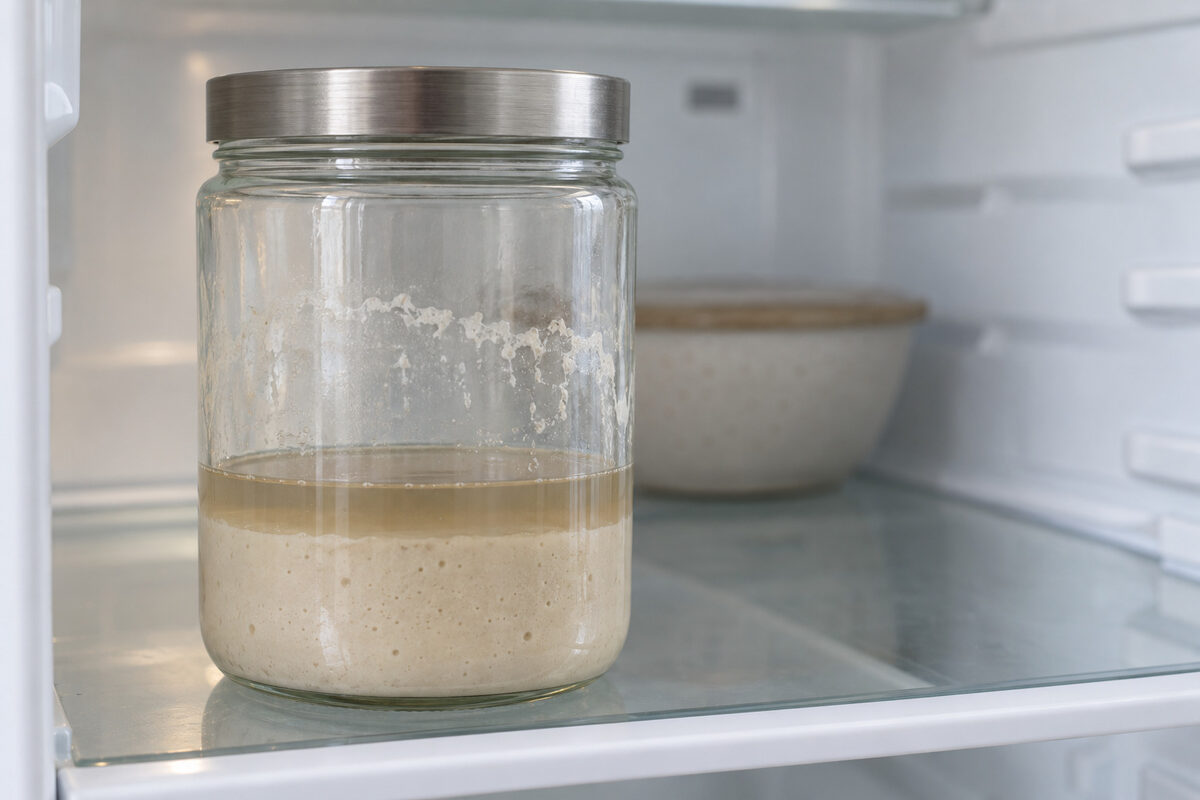
A layer of gray, brown or almost black liquid on top of the starter, sometimes a finger deep. It smells of alcohol, beer or wine. It shows up mostly in the fridge, or on the counter when a feeding is missed.
Why it happens
It's hooch. Besides the gas that makes the starter rise, the yeasts produce alcohol. When the starter hasn't been fed in a while, that liquid separates and sits on top. It's a sign of hunger, not of spoilage.
Still, don't leave it like that for weeks: the longer it goes without food, the more acidic it gets, and with too much acid the good bacteria can't survive. Even so, starters are very resilient and can almost always be revived.
What to do
It's normal: pour it off or stir it in
- Pour off the liquid or stir it into the starter, whichever you prefer. Either works.
- Feed it as usual.
- If it was in the fridge and you see whitish clumps on the liquid, they're yeasts, not mold.
What does mean throwing it out is something else: fuzz or colored spots, or a pink or orange liquid. See “Mold on a sourdough starter.”
How to prevent it
- On the counter, feed it every day.
- In the fridge, covered, feed it and use it every week.
- If it's going to be left alone longer, give it more food at each feeding, 1:3:3 or even 1:5:5: the more food you give it, the longer it lasts until the next one.
Where every figure comes from
Every statement on this page comes from a food safety guide. We keep a copy of each source and quote its exact words, in its original language.
-
1
The yeasts make alcohol, which rises as a dark liquid when it hasn't been fed in a while
“Besides carbon dioxide, yeasts also produce alcohol, which forms as a dark liquid at the top of the starter when it hasn’t been fed in a while.”
University of Illinois Extension · Sourdough Bread: 101 (modified December 2025) · read on October 25, 2026
-
2
It's called hooch: pour it off or stir it in
“This liquid is known as “hooch.” Pour it off or stir it in”
University of Illinois Extension · Sourdough Bread: 101 (modified December 2025) · read on October 25, 2026
-
3
Unfed, it gets more and more acidic, and with too much acid the good bacteria can't survive
“the longer a starter goes without food, the higher the acidity; too much acid and beneficial bacteria can’t survive.”
University of Illinois Extension · Sourdough Bread: 101 (modified December 2025) · read on October 25, 2026
-
4
Starters are very resilient and can almost always be revived
“Starters are highly resilient and more than likely can be revived.”
University of Illinois Extension · Sourdough Bread: 101 (modified December 2025) · read on October 25, 2026
-
5
On the counter, one feeding a day
“Every day or 3-4 times per week: Feed it daily and leave it on the counter or in a warm place.”
University of Illinois Extension · Sourdough Bread: 101 (modified December 2025) · read on October 25, 2026
-
6
A liquid on top that smells of alcohol is normal
“Sourdough starter may develop a liquid layer that smells of alcohol, and this is fine.”
Colorado State University Extension (Farm to Table) · Sourdough Starter Best Practices (March 2020) · read on October 25, 2026
-
7
The fermenting yeast makes it, and it can be poured off or stirred in
“The liquid is a by-product of the fermenting yeast and can either be poured off or stirred in.”
Colorado State University Extension (Farm to Table) · Sourdough Starter Best Practices (March 2020) · read on October 25, 2026
-
8
In the fridge, whitish clumps on the liquid are yeasts, not mold
“A sourdough starter that is kept in the refrigerator and not fed regularly may develop whitish clumps on the surface of the liquid layer that are safe yeasts, but not mold.”
Colorado State University Extension (Farm to Table) · Sourdough Starter Best Practices (March 2020) · read on October 25, 2026
Show the remaining 7 claims
-
9
Any sign of mold, colored or fuzzy, means it's not used: clean the jar well and start over
“Sourdough starter that shows any sign of mold (colored and/or fuzzy) should NOT be used, and the container should be thoroughly cleaned and rinsed before starting over.”
Colorado State University Extension (Farm to Table) · Sourdough Starter Best Practices (March 2020) · read on October 25, 2026
-
10
After a few days standing, the liquid separates: it doesn't matter, stir it in and feed it
“When it stands several days, the liquid will separate from the batter. This does not matter; just stir it in and feed it.”
University of Alaska Fairbanks Cooperative Extension Service · Sourdough (FNH-00061, revised October 2024) · read on October 25, 2026
-
11
If you see mold or a pink color, throw it out
“If you see mold or color that is pink”
UC Cooperative Extension Master Food Preservers of Northern San Joaquin Valley (UC ANR) · New Sourdough Starter Schedule · read on October 26, 2026
-
12
Orange too: throw it out and start over
“or orange, throw out and start over”
UC Cooperative Extension Master Food Preservers of Northern San Joaquin Valley (UC ANR) · New Sourdough Starter Schedule · read on October 26, 2026
-
13
Ratios of 1:3:3 or even 1:5:5
“Adjust ratios to 1:3:3 or even 1:5:5.”
UC Cooperative Extension Master Food Preservers of Northern San Joaquin Valley (UC ANR) · New Sourdough Starter Schedule · read on October 26, 2026
-
14
The more food you give it, the longer it can go between feedings
“The more food you give it, the longer it can go between feedings.”
UC Cooperative Extension Master Food Preservers of Northern San Joaquin Valley (UC ANR) · New Sourdough Starter Schedule · read on October 26, 2026
-
15
In the fridge, covered, fed and used every week
“Keep your starter covered in an air-tight container and refrigerated when not in use. Ideally, feed and use the starter weekly.”
Colorado State University Extension (FoodSmart Colorado) · Sourdough Basics: Caring for your Starter and Making Bread (reviewed October 2025) · read on October 25, 2026