 AI
Sourdough discard crackers
Level 1 · beginner
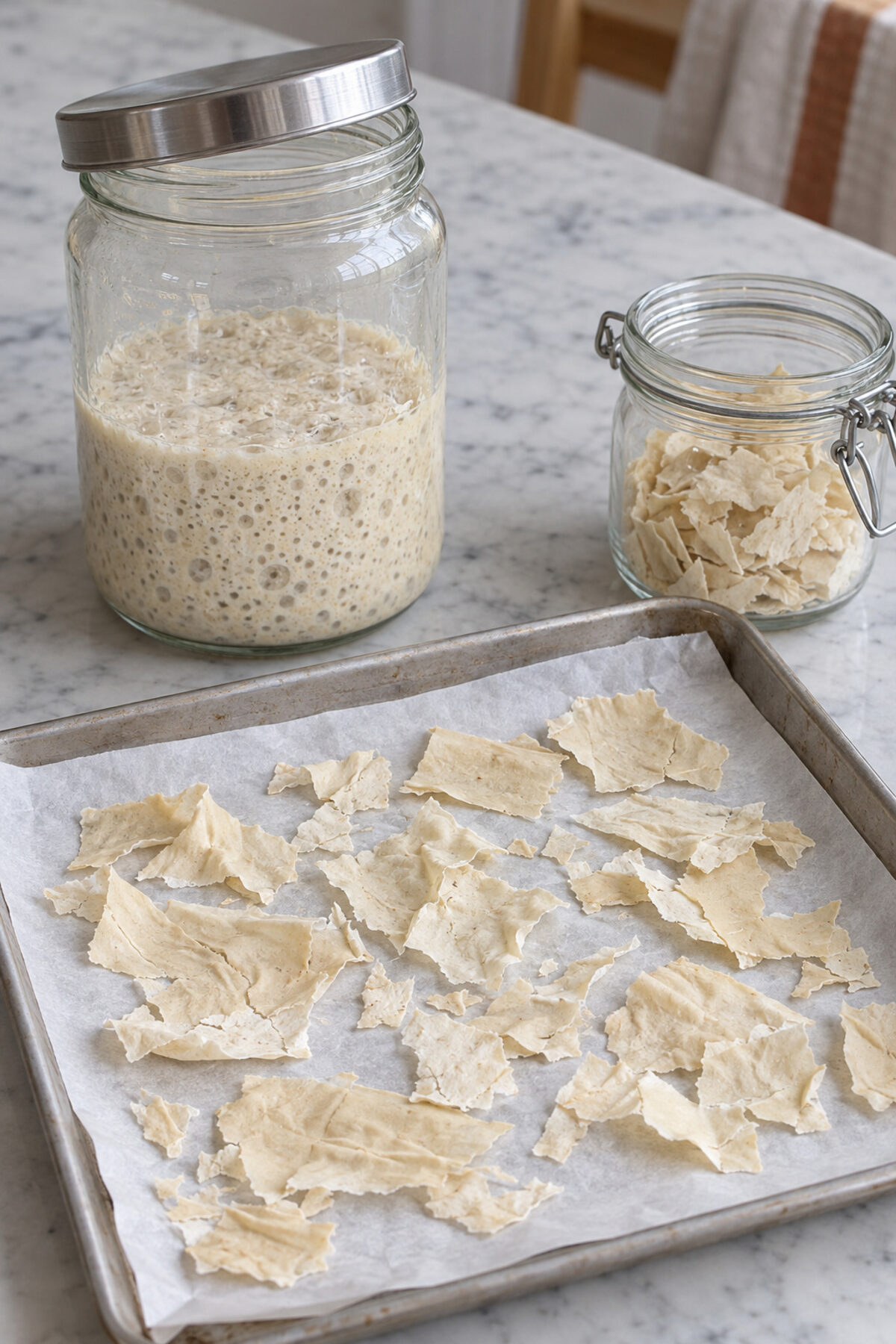
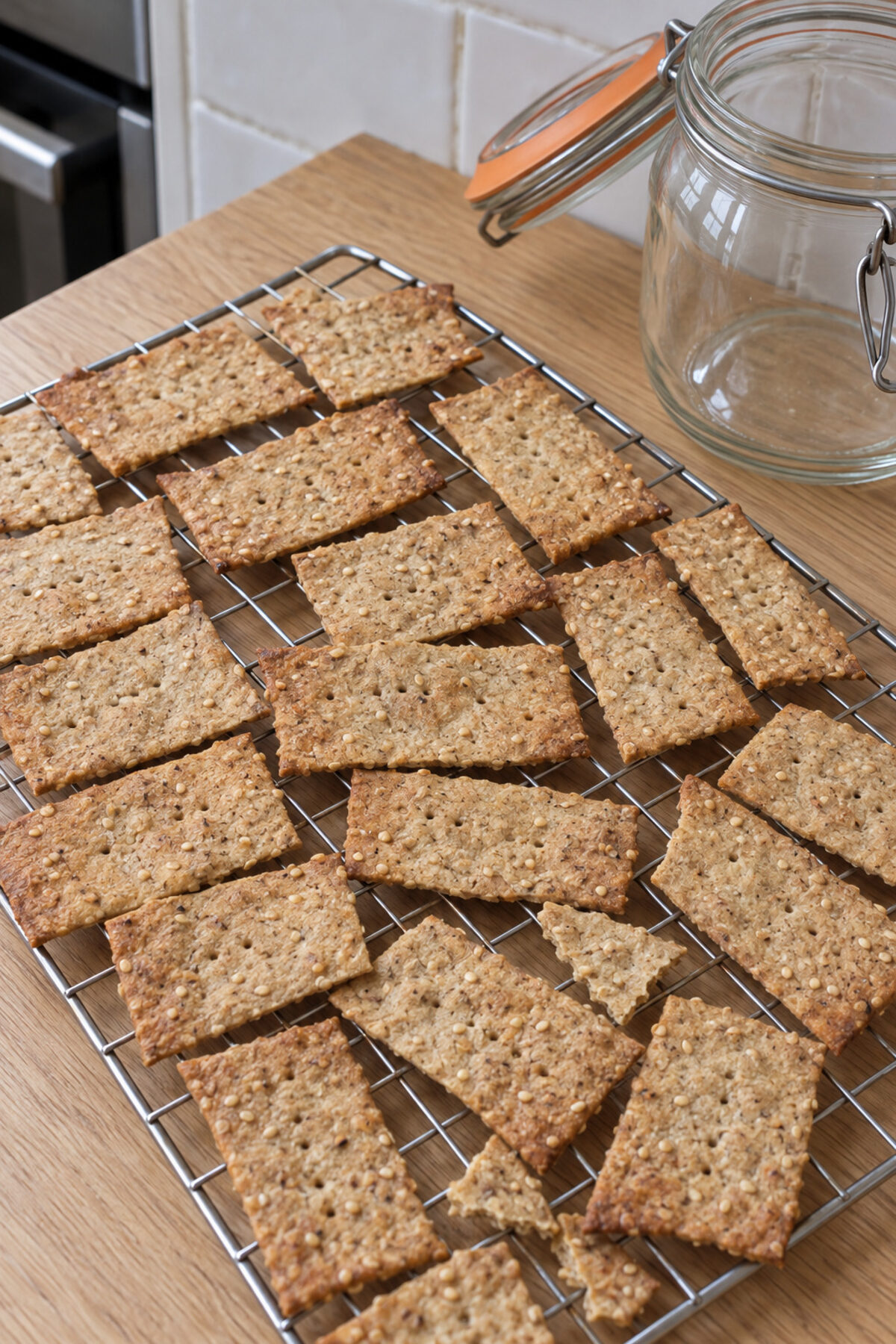
What you remove when you feed your starter, turned into thin, crisp crackers. Mix, rest a few hours, roll very thin and bake for a few minutes.
- Time
- 3–6h
- Temperature
- 72–80°F
- Makes
- 1 sheetpan
The golden rule: raw dough isn't for tasting; the bread, baked through.
No sign-up. We guide you step by step, from the scale to the fridge.
Reviewed October 26, 2026 · 17 facts, each with its source
Before you start
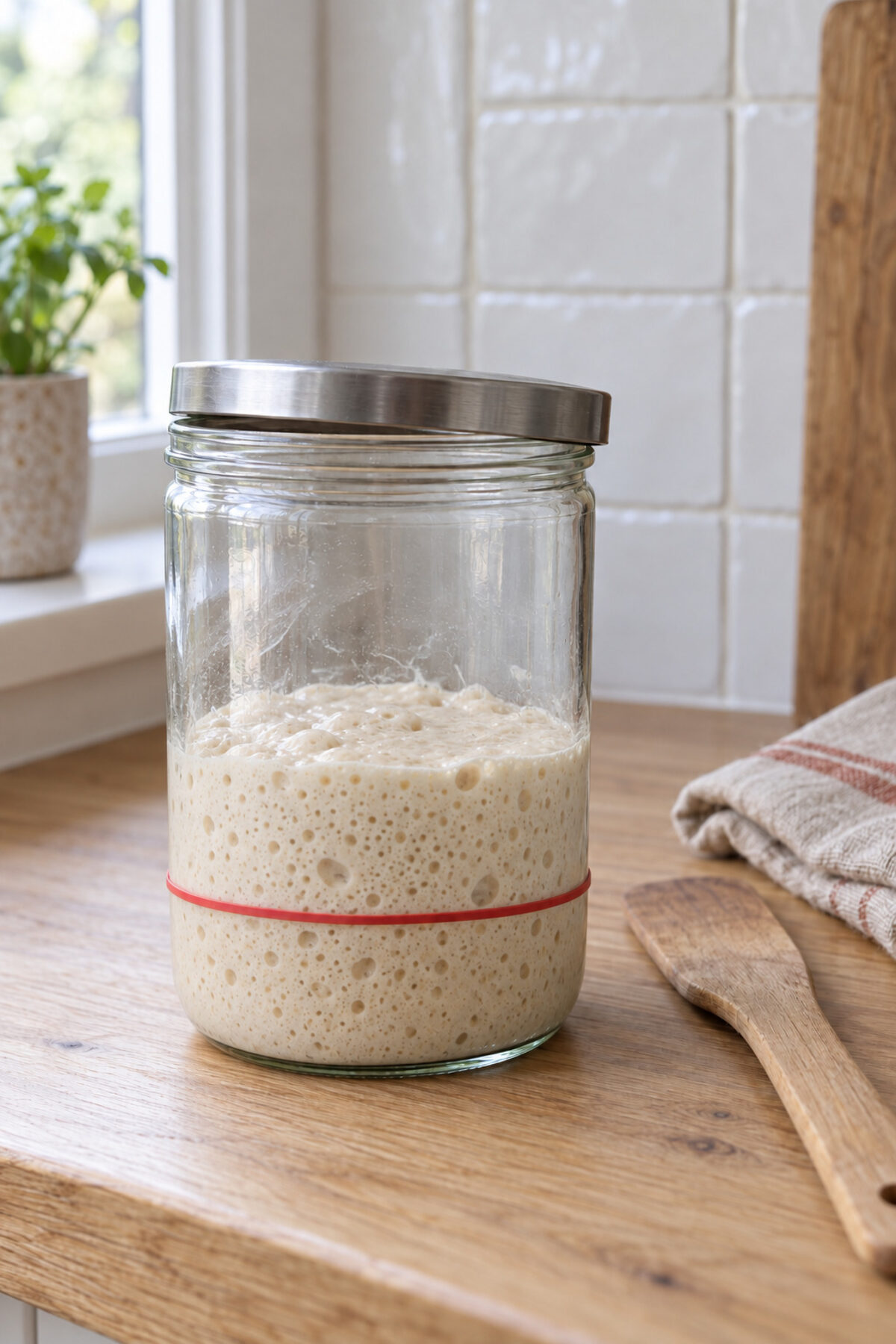
Every time you feed your starter you remove some of it: the discard. It can be shared, frozen, composted or used in other recipes, like this one. Crackers don't rise: the discard gives them flavor, not volume, so it works even when it isn't at its peak (our house rule).
They're based on the University of Alaska's sesame crackers, which are measured in cups; the grams are our house figures. With discard from a starter fed equal weights of flour and water, the dough has 200 g of flour in all and 50% water: it comes out stiff, as it should.
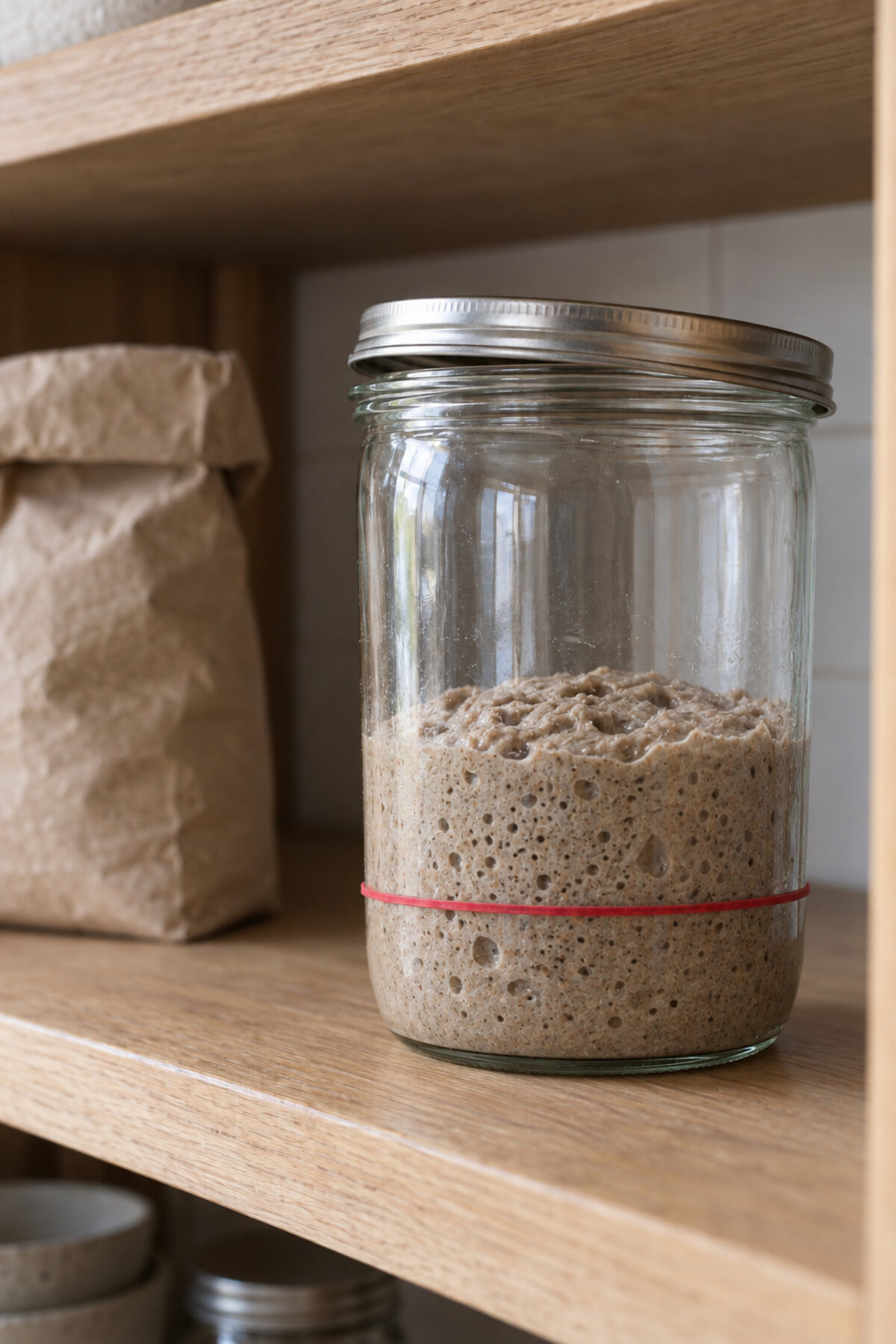
Use discard from an established starter, not from the first week: in those days the microbes that come with the flour lead (our house rule).
You'll need
- Kitchen scale
- Medium bowl
- Rolling pin
- Parchment paper
- Baking sheet
- Pizza cutter or knife
- Fork
- Cooling rack
- Airtight container
Step by step
-
Mix the discard with the oil, salt and flour
In the bowl, mix 200 g of discard with 30 g of oil and 4 g of salt. Add 100 g of whole wheat flour and mix until it comes together. Turn it out onto a floured counter, cover it with a damp cloth for a few minutes, then knead in 30 g of sesame seeds. If it's sticky, add a little more flour: it should be stiff.
-
Let it rest, covered, for 3 to 6 hours
Cover the dough and let it rest for 3 to 6 hours at 72–80 °F (our house rule): the discard keeps fermenting and adds flavor. If you're in a hurry, roll it out now; the Alaska recipe rests it only a few minutes.
-
Roll it very thin and cut it
Heat the oven to 400 °F. Roll the dough out on a sheet of parchment paper to 1/16 inch thick, as thin as you can. Cut it into 1 × 2 inch rectangles with the pizza cutter, pull them slightly apart and prick them with a fork. Slide the paper onto the baking sheet.
-
Bake them about 8 minutes
Bake them about 8 minutes, until lightly browned. The ones at the edges brown first: if needed, take them out and give the rest a little longer (our house rule). They should be dry and crisp once cool; if the middle is still soft, put them back in the oven.
-
Let them cool and store them airtight
Move them to the rack. Once they're completely cool, store them in an airtight container.
No sign-up. We guide you step by step, from the scale to the fridge.
Variations
The same method, a different flavor. Once you have this one down, try one of these.
How to tell it's going well
- Don't taste raw dough. Discard and flour are raw and can carry E. coli or Salmonella, which die only when baked. Bake the dough before eating it. Wash your hands with soap and water after handling it.
- Discard from a healthy starter. If the starter has fuzz, colored spots or pink or orange streaks, don't use it or its discard.
- No discard from the first week (our house rule).
- If the crackers grow mold, throw them all out. Baked goods are porous, and mold can reach inside.
Where every number comes from
Every number in this recipe comes from a food safety guide. We keep a copy of each source and quote its exact words.
-
1
Discard can be shared, frozen, composted or used in other recipes
“If there is more removed starter than needed, excess starter can be shared, frozen, used in other recipes, composted, or discarded.”
Colorado State University Extension (FoodSmart Colorado) · Sourdough Basics: Caring for your Starter and Making Bread (reviewed October 2025) · read on October 25, 2026
-
2
A starter is fed equal weights of flour and water
“Feed a minimum 1:1:1 ratio, equal parts by weight of starter, flour, and water.”
University of Illinois Extension · Sourdough Bread: 101 (modified December 2025) · read on October 25, 2026
-
3
Half a cup of starter and 2 tablespoons of oil
“½ cup sponge (active sourdough) 2 tablespoons vegetable oil”
University of Alaska Fairbanks Cooperative Extension Service · Sourdough (FNH-00061, revised October 2024) · read on October 25, 2026
-
4
Salt, a cup of whole wheat flour, sesame and a 400 °F oven
“1 teaspoon salt 1 cup whole wheat flour ¼ cup sesame seeds (preferably unhulled) Preheat oven to 400° F.”
University of Alaska Fairbanks Cooperative Extension Service · Sourdough (FNH-00061, revised October 2024) · read on October 25, 2026
-
5
Oil, salt and flour; a rest under a damp cloth, then the sesame
“To the frothy sourdough starter, add the oil, salt and as much of the flour as you can work in. Turn dough onto a floured board and let it rest a few minutes covered with a damp cloth. Knead in the sesame seeds. Add more flour as needed.”
University of Alaska Fairbanks Cooperative Extension Service · Sourdough (FNH-00061, revised October 2024) · read on October 25, 2026
-
6
Rolled 1/16 inch thin and cut into 1 × 2 inch rectangles
“When the dough is stiff, roll it out to a thickness of ¹⁄16 of an inch. Cut the crackers into 1×2-inch rectangles and place on an ungreased cookie sheet. Leave space between each cracker.”
University of Alaska Fairbanks Cooperative Extension Service · Sourdough (FNH-00061, revised October 2024) · read on October 25, 2026
-
7
Pricked and baked about 8 minutes, until lightly browned
“Prick with a fork and bake for about 8 minutes. The crackers should brown lightly.”
University of Alaska Fairbanks Cooperative Extension Service · Sourdough (FNH-00061, revised October 2024) · read on October 25, 2026
-
8
Onto a rack and, once cool, into an airtight container
“Remove from cookie sheet to wire racks to cool. When cool, store in an airtight container.”
University of Alaska Fairbanks Cooperative Extension Service · Sourdough (FNH-00061, revised October 2024) · read on October 25, 2026
Show the remaining 9 claims
-
9
In Alaska, discolored starters aren't used
“Modern Alaskans do not use discolored starters”
University of Alaska Fairbanks Cooperative Extension Service · Sourdough (FNH-00061, revised October 2024) · read on October 25, 2026
-
10
In the first days, the microbes from the flour lead
“Day 1 starter cultures were dominated by microorganisms commonly associated with plants and flour, and by aromas similar to toasted grain/cereal.”
PeerJ, McKenney et al. · Sourdough starters exhibit similar succession patterns but develop flour-specific climax communities (2023) · read on October 25, 2026
-
11
Tasting raw dough can make you sick
“Do not taste raw sourdough starter before baking.”
Colorado State University Extension (Farm to Table) · Sourdough Starter Best Practices (March 2020) · read on October 25, 2026
-
12
A moldy starter isn't used
“Sourdough starter that shows any sign of mold (colored and/or fuzzy) should NOT be used”
Colorado State University Extension (Farm to Table) · Sourdough Starter Best Practices (March 2020) · read on October 25, 2026
-
13
Raw dough is baked before eating
“Bake raw dough and batter before eating”
CDC · Raw Flour and Dough · read on October 25, 2026
-
14
Raw flour can carry E. coli and Salmonella
“That means it hasn't been treated to kill germs that cause food poisoning, such as Escherichia coli (E. coli) and Salmonella.”
CDC · Raw Flour and Dough · read on October 25, 2026
-
15
Germs are killed only by baking or cooking
“Germs are killed only when flour is baked or cooked.”
CDC · Raw Flour and Dough · read on October 25, 2026
-
16
Hands washed with soap and water after handling flour or dough
“Wash your hands with soap and water after handling flour, raw eggs, or any surfaces they have touched.”
CDC · Raw Flour and Dough · read on October 25, 2026
-
17
Moldy baked goods go out whole
“Bread and baked goods Discard Porous foods can be contaminated below the surface.”
USDA Food Safety and Inspection Service · Molds on Food: Are They Dangerous? · read on October 20, 2026