






It smells of yeast or alcohol
The short answer It depends on what you see
It depends on the ferment. In kombucha, kefir and sourdough it's normal: there are yeasts. In vegetables it's usually yeast on the surface: skim it off and keep an eye on the pH. If it also smells rotten or there's mold, throw it out.
Reviewed October 26, 2026 · 17 facts, each with its source
 AI
When in doubt, throw it out. Fervida can’t see your jar. No page can tell you something is safe: it can show you how to look.
What you see
A smell of yeast, beer, wine or plain alcohol. In kombucha and kefir it comes along with the sour smell. In vegetables it usually comes with a flat white film on the surface. In a sourdough starter, with a liquid on top.
Why it happens
It's yeast. With little oxygen, yeasts turn sugar into alcohol.
- In kombucha, kefir and sourdough, yeasts are part of the culture. In kombucha, the yeasts in the SCOBY turn sugar into alcohol and gas, and kefir grains carry yeasts too.
- In vegetables, yeasts grow mostly on the surface, where the ferment meets the air: that's kahm yeast. They also grow more when there's too much salt, which slows down the lactic acid bacteria.
What to do
It depends on the ferment
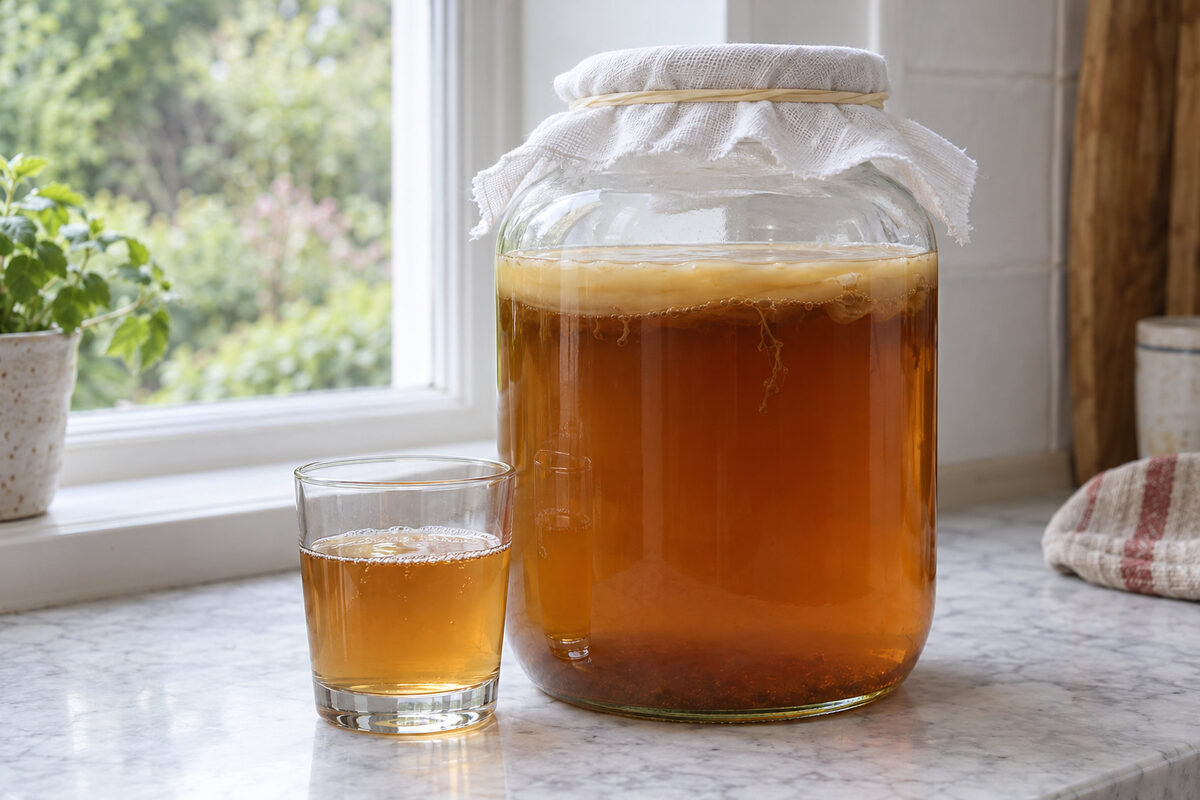
Kombucha. It's normal. After 7–10 days, move it to the fridge with the lid on: the cold holds back alcohol and excess acid.
Milk kefir. A slight smell of yeast is normal. It may contain some alcohol, so it isn't for children or pregnant women.
Sourdough starter. A liquid on top that smells of alcohol is normal. See "Gray liquid on top".
Vegetables. It's usually yeast on the surface. Don't leave it: it spoils the flavor and, if it grows a lot, lowers the acidity.
- Skim off the film with a clean spoon, without stirring.
- Check that every vegetable is still below the brine.
- If you have strips or a pH meter, check the pH: it must not rise above 4.6.
In any ferment, if it also smells rotten, turns slimy or shows fuzz or spots of mold, the whole batch goes.
How to prevent it in vegetables
- Every vegetable below the brine, held down with a weight: that leaves the yeast little air.
- The salt the recipe calls for, weighed: no less, no more.
Where every figure comes from
Every statement on this page comes from a food safety guide. We keep a copy of each source and quote its exact words, in its original language.
-
1
With little oxygen, yeasts turn sugar into alcohol
“Yeast will ferment sugars to produce ethanol under low or no oxygen conditions”
University of Minnesota Extension · Preserving food at home: Fermentation (reviewed 2026) · read on October 25, 2026
-
2
In kombucha, the yeasts in the SCOBY turn sugar into alcohol and gas
“In the first step, the yeast in the SCOBY ferments the added sugar and forms alcohol and carbon dioxide.”
Virginia Cooperative Extension (Virginia Tech) · What do I need to know to sell KOMBUCHA at the farmers market? (FST-297, last reviewed November 2025) · read on October 20, 2026
-
3
After 7–10 days, kombucha goes into the fridge with a lid
“After 7-10 days, refrigerate the kombucha with a tight fitting lid.”
Virginia Cooperative Extension (Virginia Tech) · What do I need to know to sell KOMBUCHA at the farmers market? (FST-297, last reviewed November 2025) · read on October 20, 2026
-
4
The fridge holds back alcohol and excess acid
“Refrigeration limits alcohol and excessive acid production.”
Virginia Cooperative Extension (Virginia Tech) · What do I need to know to sell KOMBUCHA at the farmers market? (FST-297, last reviewed November 2025) · read on October 20, 2026
-
5
Kefir grains carry yeasts
“Kefir grains consist of lactose-fermenting and non-lactose fermenting yeasts”
Colorado State University Extension (FoodSmart Colorado) · Understanding and Making Kefir · read on October 20, 2026
-
6
Kefir may contain some alcohol, and then it isn't for children or pregnant women
“kefir may contain alcohol produced during the fermentation process (Rahmatullah et al., 2023) and, if so, it would not be appropriate for children and pregnant women.”
UF/IFAS Extension (University of Florida) · Fermented Foods: Kefir (FSHN24-2/FS457, 2024) · read on October 20, 2026
-
7
A liquid on top of a sourdough starter that smells of alcohol is fine
“Sourdough starter may develop a liquid layer that smells of alcohol, and this is fine.”
Colorado State University Extension (Farm to Table) · Sourdough Starter Best Practices (March 2020) · read on October 25, 2026
-
8
The film on the surface is usually yeast: kahm
“This film is typically yeast, often referred to by home fermenters as Kahm yeast.”
UC Davis, Department of Food Science and Technology · Common issues with fermented fruits and vegetables (v1.0, 15-mar-2022) · read on October 20, 2026
Show the remaining 9 claims
-
9
Too much yeast spoils the flavor and lowers acidity
“Excessive yeast growth can lead to off flavors or textures and reduce acidity.”
UC Davis, Department of Food Science and Technology · Common issues with fermented fruits and vegetables (v1.0, 15-mar-2022) · read on October 20, 2026
-
10
On sauerkraut, yeast is skimmed off from time to time
“For other ferments, such as sauerkraut, yeast should be periodically removed during fermentation.”
UC Davis, Department of Food Science and Technology · Common issues with fermented fruits and vegetables (v1.0, 15-mar-2022) · read on October 20, 2026
-
11
The pH must not rise above 4.6
“The pH can be checked periodically to ensure it does not rise above 4.6.”
UC Davis, Department of Food Science and Technology · Common issues with fermented fruits and vegetables (v1.0, 15-mar-2022) · read on October 20, 2026
-
12
Everything below the brine
“All produce should be submerged in the brine liquid.”
UC Davis, Department of Food Science and Technology · Common issues with fermented fruits and vegetables (v1.0, 15-mar-2022) · read on October 20, 2026
-
13
If there is mold anywhere, the whole batch goes
“If you confirm mold growth on any part of a ferment, it should be immediately discarded.”
UC Davis, Department of Food Science and Technology · Common issues with fermented fruits and vegetables (v1.0, 15-mar-2022) · read on October 20, 2026
-
14
Contact with air encourages mold and yeast
“Exposure to oxygen can encourage and allow for both mold and yeast to grow.”
University of Illinois Extension · Fermentation handout (2020) · read on October 20, 2026
-
15
If it is slimy or smells rotten, throw it out
“If fermented product is slimy, smells spoiled/rotten, discard it.”
University of Illinois Extension · Fermentation handout (2020) · read on October 20, 2026
-
16
The right amount of salt
“Use the correct amount of salt”
University of Illinois Extension · Fermentation handout (2020) · read on October 20, 2026
-
17
With too much salt, lactic acid bacteria slow down and yeasts grow
“High salt can slow the growth of LAB allowing yeast growth and may result in longer fermentation times.”
BC Centre for Disease Control, Environmental Health Services · Safety of Fermented Foods, Section 3.1: Fermented Vegetables (August 2024, updated December 2024) · read on October 25, 2026