






Advanced · 8 weeks
Your own recipes
Four long ferments in eight weeks. By the end you'll know how to read a hydrometer, keep a living culture, let a ferment mature without losing track of it and design a recipe within the rules.
So far you've followed recipes. This path gives you what you need to step outside them without breaking the rules: measuring instead of counting days, looking after a culture that stays with you, letting a long ferment mature and designing one of your own. The four start one a week, and most keep going until the end. The miso matures for 2 to 4 weeks; the mead ferments for 4 to 8 and then clears; the starter needs daily feedings for one or two weeks, and the hot sauce, which starts in week 4, needs 5 to 8 weeks between fermenting, resting and straining. The mead and the sauce may still be going when the path ends.
The app goes along week by week, with each jar and its check-ins.
Week 1
Taking it slow
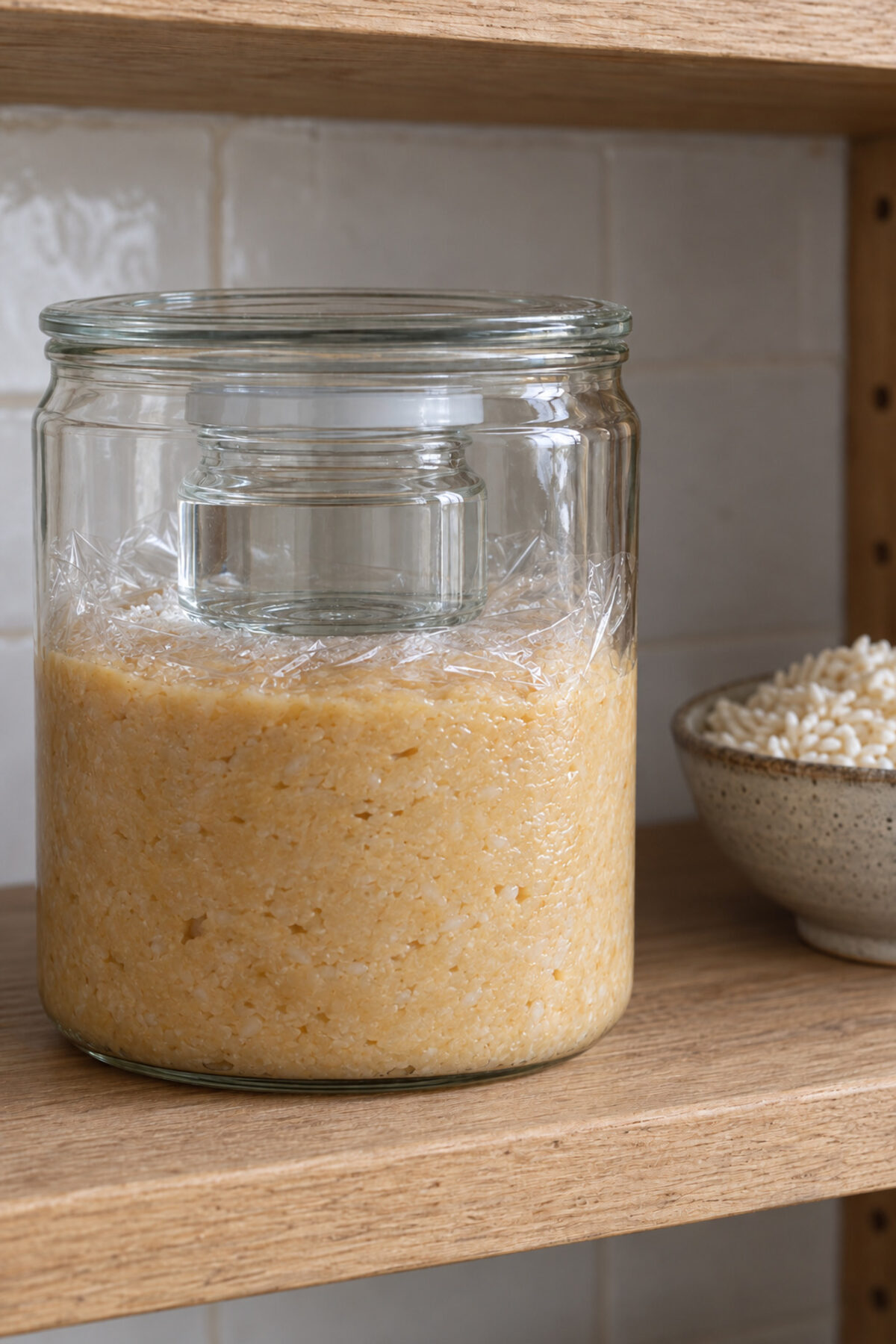
White miso is cooked soybeans, more koji than soy, and 8% salt by the weight of everything. Like shio koji, it doesn't sour: salt keeps it. It teaches you to wait. The soybeans cool from 140 °F to 95 °F within 2 hours, and the paste goes into the jar packed tight, under plastic wrap and a weight, with the lid loose. It matures 2 to 4 weeks at 59–77 °F; taste it from the second. A dark liquid on top, the tamari, gets mixed back in. White or pale green mold is scraped off with a margin. If it's pink, red, orange or black, the whole miso goes.
Week 2
The hydrometer decides
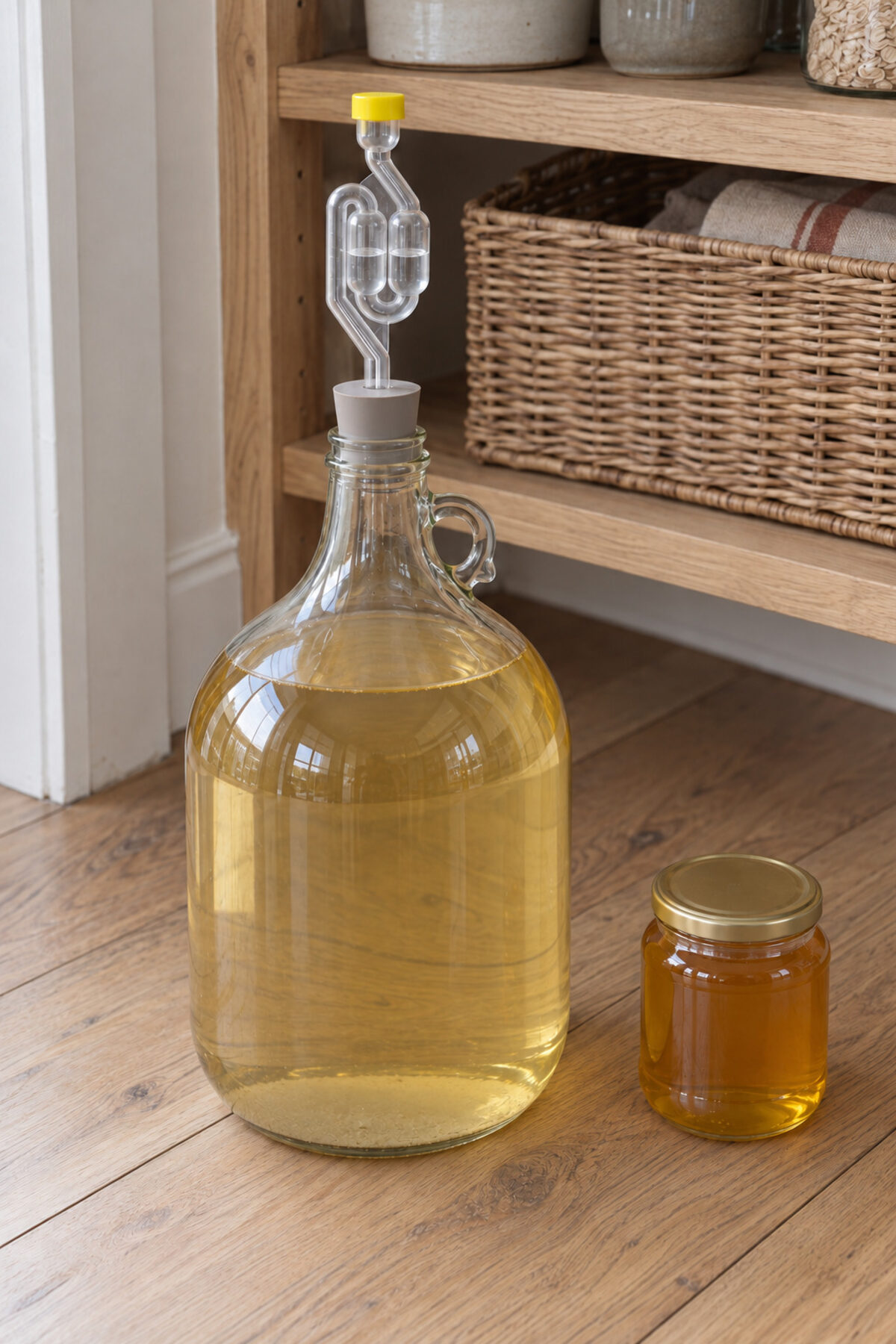
Mead is honey, water and wine yeast, and here the calendar is no use: the hydrometer has the last word. To start, the must has to read 1.080 or higher. It ferments at 65–80 °F, and once a week you read a sample that you then throw out. When it drops to 1.020–1.030, you rack it into the second jug. It's done at 1.000 or lower, unchanged over three readings across 7 days. If it stalls above 1.000, there's sugar left: don't bottle it like that, because the bottles can burst. And sanitize everything that touches it, every time.
Week 3
A culture that stays with you
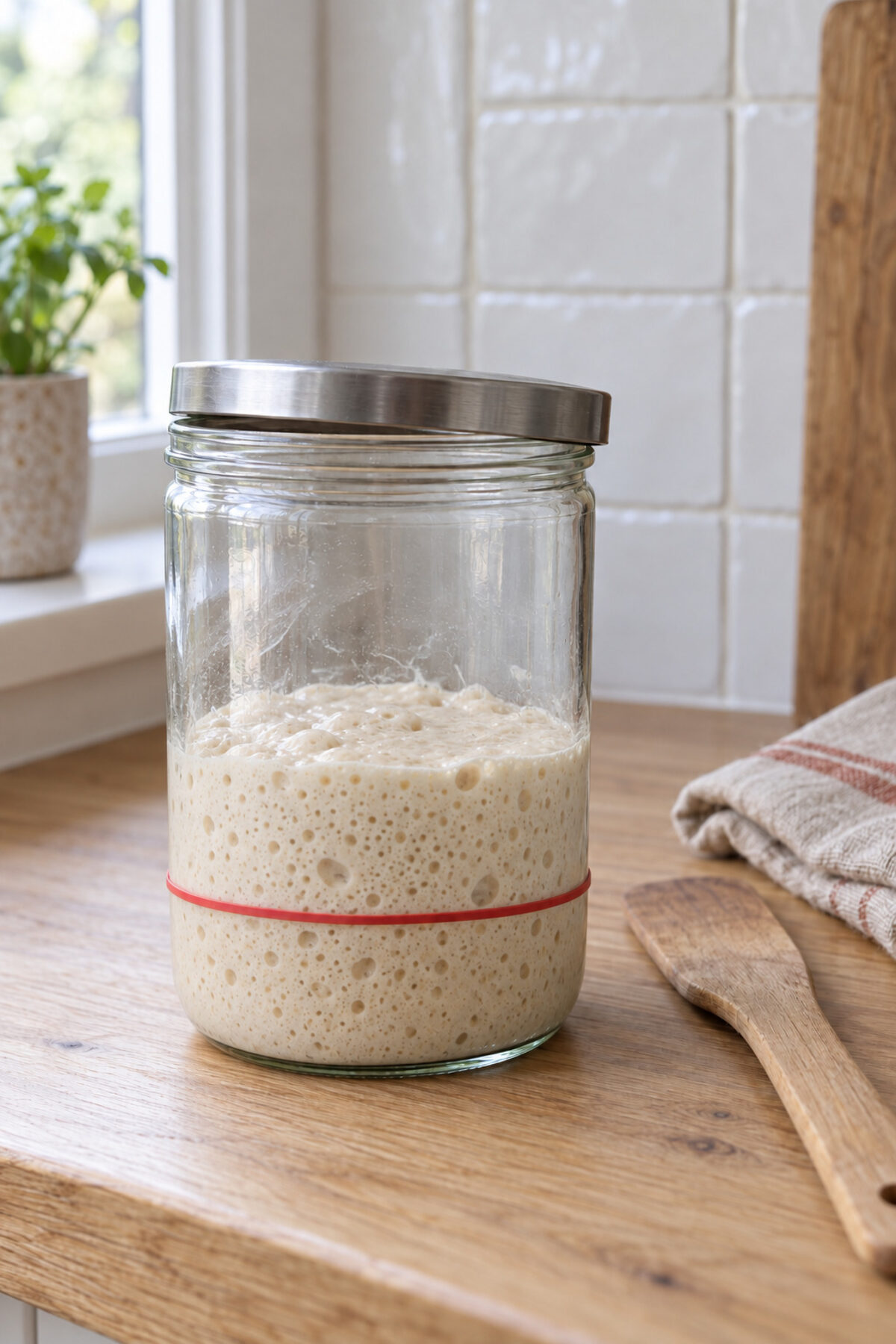
A sourdough starter is flour and water fermented by the yeasts and bacteria already in the flour. It's a living culture: you make it, and it lasts while you look after it. On day 1, mix 50 g of whole rye with 55 g of water. On days 2 and 3, keep 50 g and feed it once a day; from day 4, twice, 12 hours apart, at 70–82 °F. A rubber band marks how far it rises. It's ready when it doubles 4 to 6 hours after a feeding. If it won't rise, it's usually young, cold or hungry: keep going. Don't taste it: it's raw flour.
Week 4
From method to your own recipe
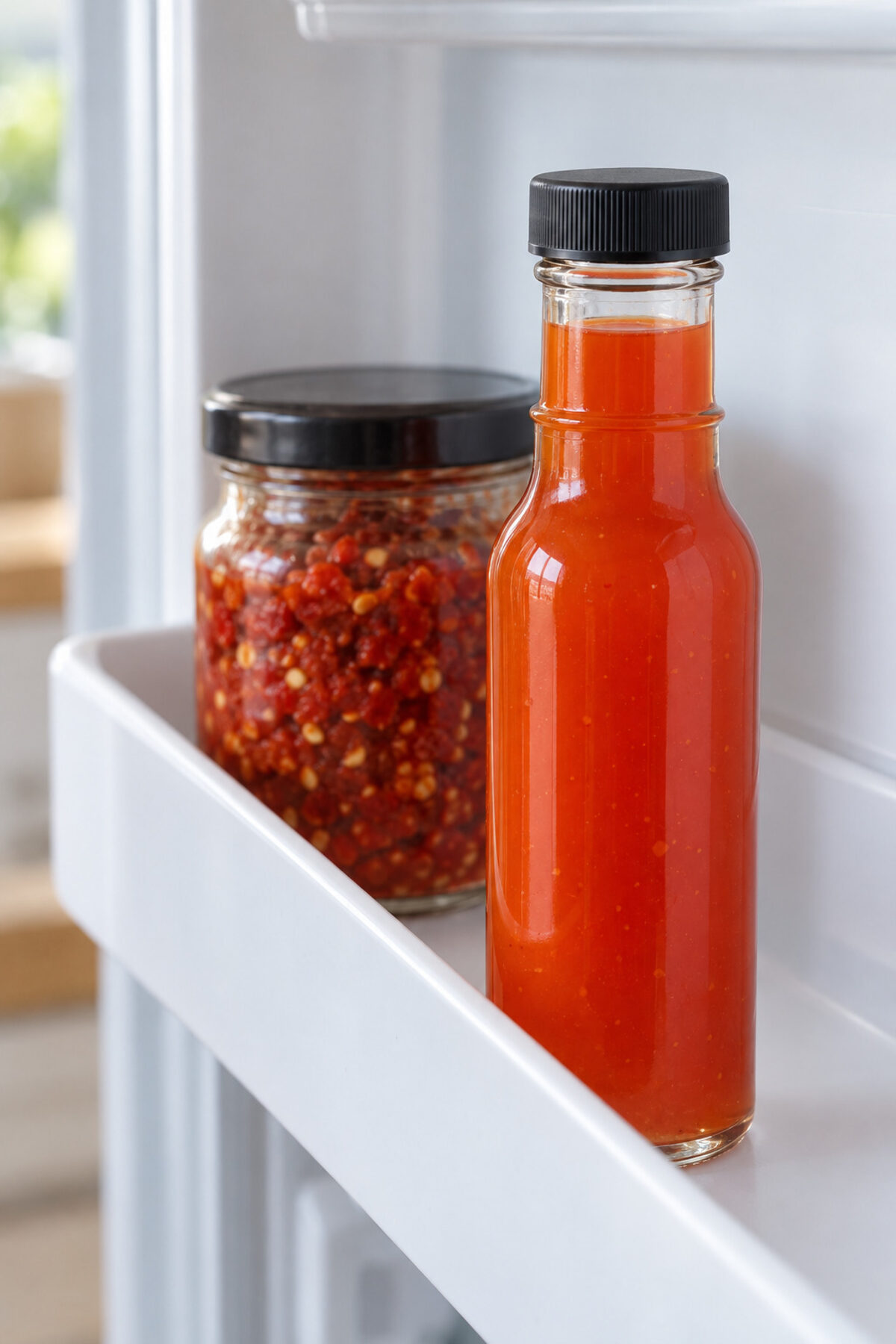
Tabasco-style hot sauce is just chilies, salt and vinegar, made with the hot sauce method. The mash, with 2.5% salt by the weight of the chilies, ferments 3 to 4 weeks at 68–72 °F, under its liquid. Then it gets vinegar, rests 2 to 4 weeks in the fridge and is strained. How sour it is comes down to taste. The limit runs the other way: once strained, it has to reach pH 4.6 or below, and in practice 4.2. With this method, "What can I ferment with what I have?" lets you design your own, with extras weighing at most 30% of the chilies.
What comes next
When the path ends, the mead will still be clearing, and it improves with at least 2 months in the bottle. The starter will stay alive as long as you feed it: keep it on your shelf in the app, under "Your living cultures", which reminds you of each feeding, in the kitchen or in the fridge. From here on, the recipes are yours. Change the vegetable, the chili or the miso's legume within the rules of its method, and show what comes out in the community, where you can ask from a jar with its salt, its days and its pH.