






Getting good · 6 weeks
Getting good
Four ferments in six weeks, some side by side. By the end you'll know how to follow a ferment by its pH, bottle for fizz, work by thermometer and let salt do the preserving.
You already know how to salt, keep everything submerged and check the pH. This path puts that to work with four ferments that ask for more attention: one you follow by its pH, one that builds fizz in the bottle, one that depends on the thermometer and one that never turns sour. Each starts in its own week, but not all of them finish there. The kimchi matures in the fridge while you bottle the kombucha, and the shio koji spends 7 to 10 days in the kitchen: weeks 5 and 6 are for finishing it and repeating whichever ferment gave you the most trouble. For week 2 you need finished kombucha. If you don't have a batch going from the first path, start the homemade kombucha in week 1, alongside the kimchi.
The app goes along week by week, with each jar and its check-ins.
Week 1
A fast ferment
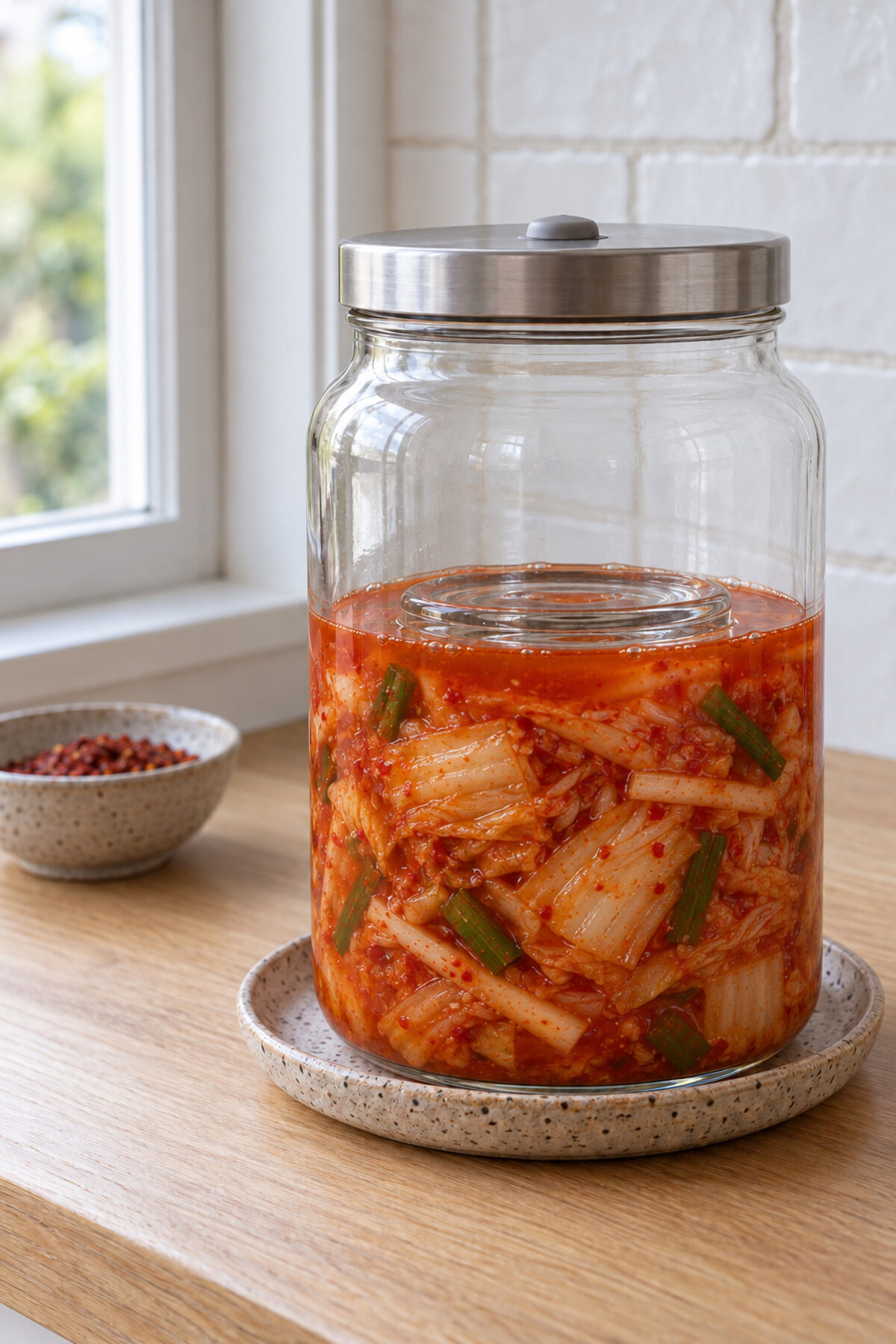
Kimchi moves much faster than sauerkraut: 1 to 2 days in the kitchen at 68–72 °F, then into the fridge, where it keeps souring slowly. The salt goes on the weight of all the vegetables and the chili, 25 g per kilo, and nothing gets rinsed. What it teaches is following a ferment by its pH, not by the calendar: from 24 hours on, check it every 12 and write it down. It goes in the fridge once it reads 4.6 or below, and if it hasn't got there by 72 hours, the whole batch goes. From then on it can be eaten, but the most prudent thing is to wait about two weeks in the fridge. In the first days it may smell strongly of sulfur: that's usually the cabbage. If it smells rotten, throw it out.
Week 2
Fizz in the bottle
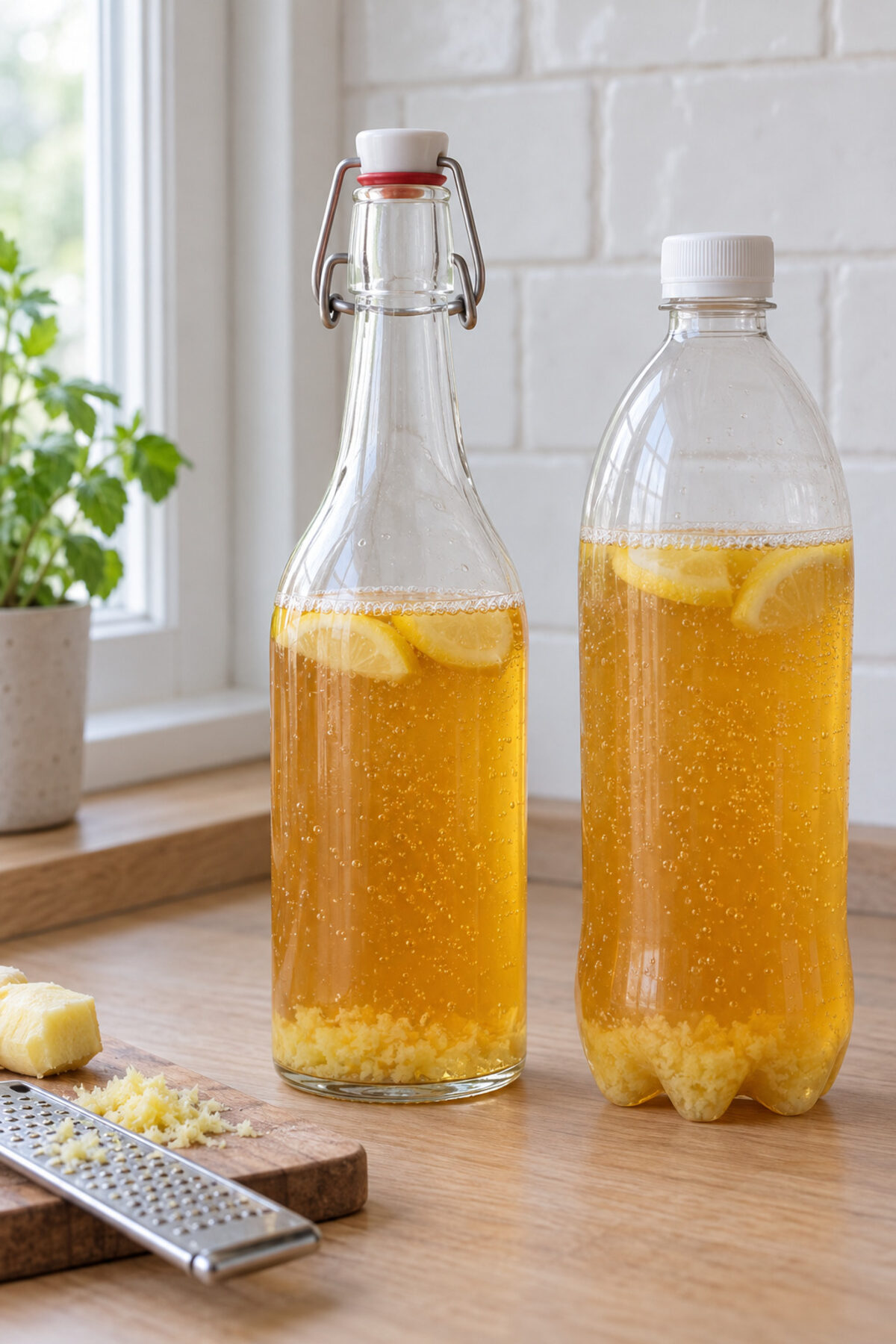
With the kimchi in the fridge, you bottle finished kombucha with ginger and lemon. This is the second fermentation: in the sealed bottle, the yeast eats the sugar that's left and makes gas. Here the rules matter more than the recipe. Only kombucha at pH 4.2 or below, with no added sugar, in bottles made for fizz, with a PET test bottle. Squeeze the test bottle every 12 hours: when it's as hard as an unopened soda, they all go in the fridge; at 48 hours they go in even if it's still soft. Open it cold, slowly and away from your face, and drink it within 2 days.
Week 3
Steady heat
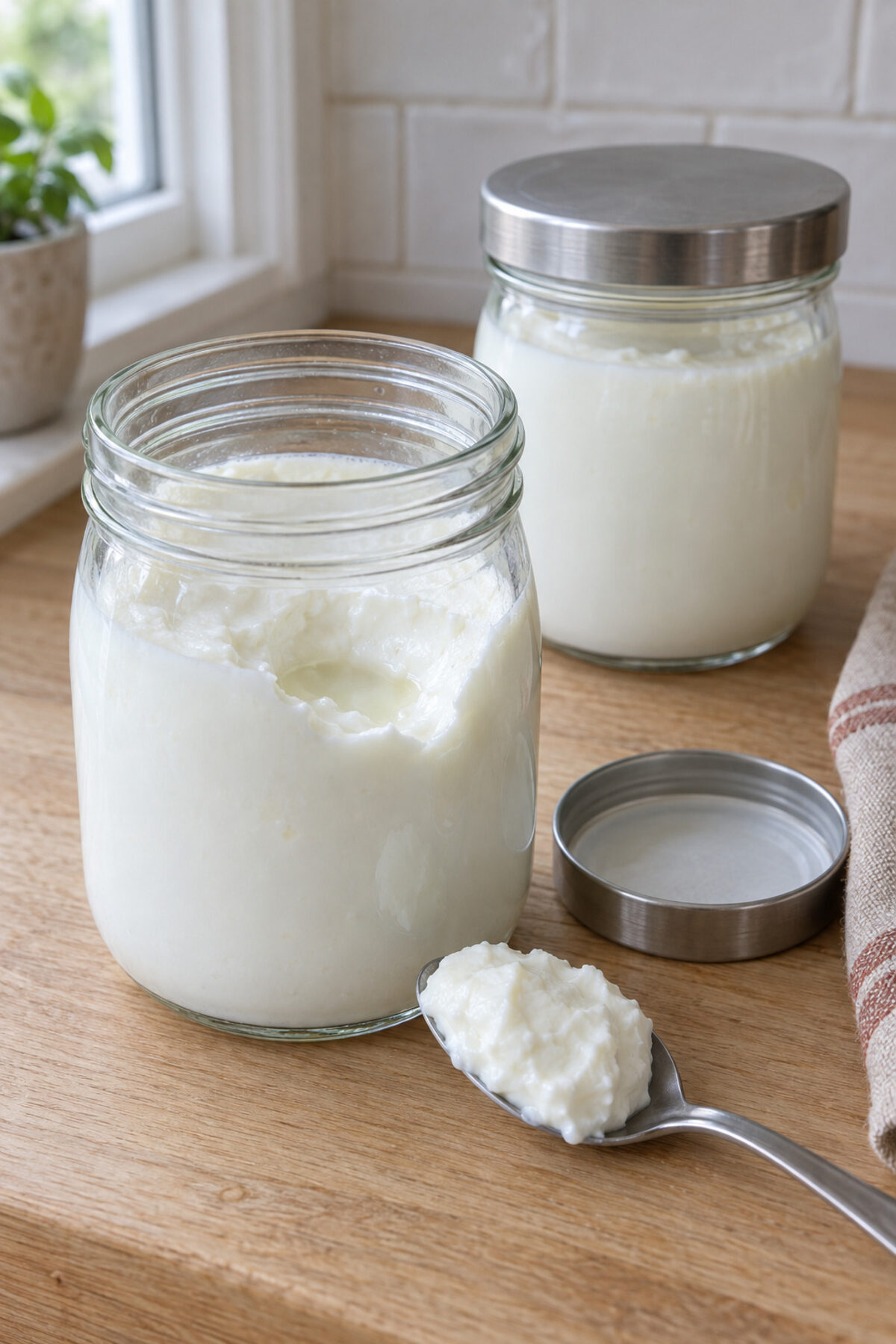
Yogurt takes an afternoon, and everything depends on temperature. The milk, always pasteurized, is heated to 185–200 °F and held there for 10 minutes. It's cooled quickly to 112–115 °F, seeded with 60 g of yogurt with live cultures and kept between 105 and 115 °F for 4 to 7 hours, without moving it. Above 115 °F the heat can kill the starter, and below 98 °F the bacteria grow poorly: check every hour. If it hasn't set by 9 hours, throw it out. If it has set but is soft, strain it in the fridge.
Week 4
Salt does the preserving
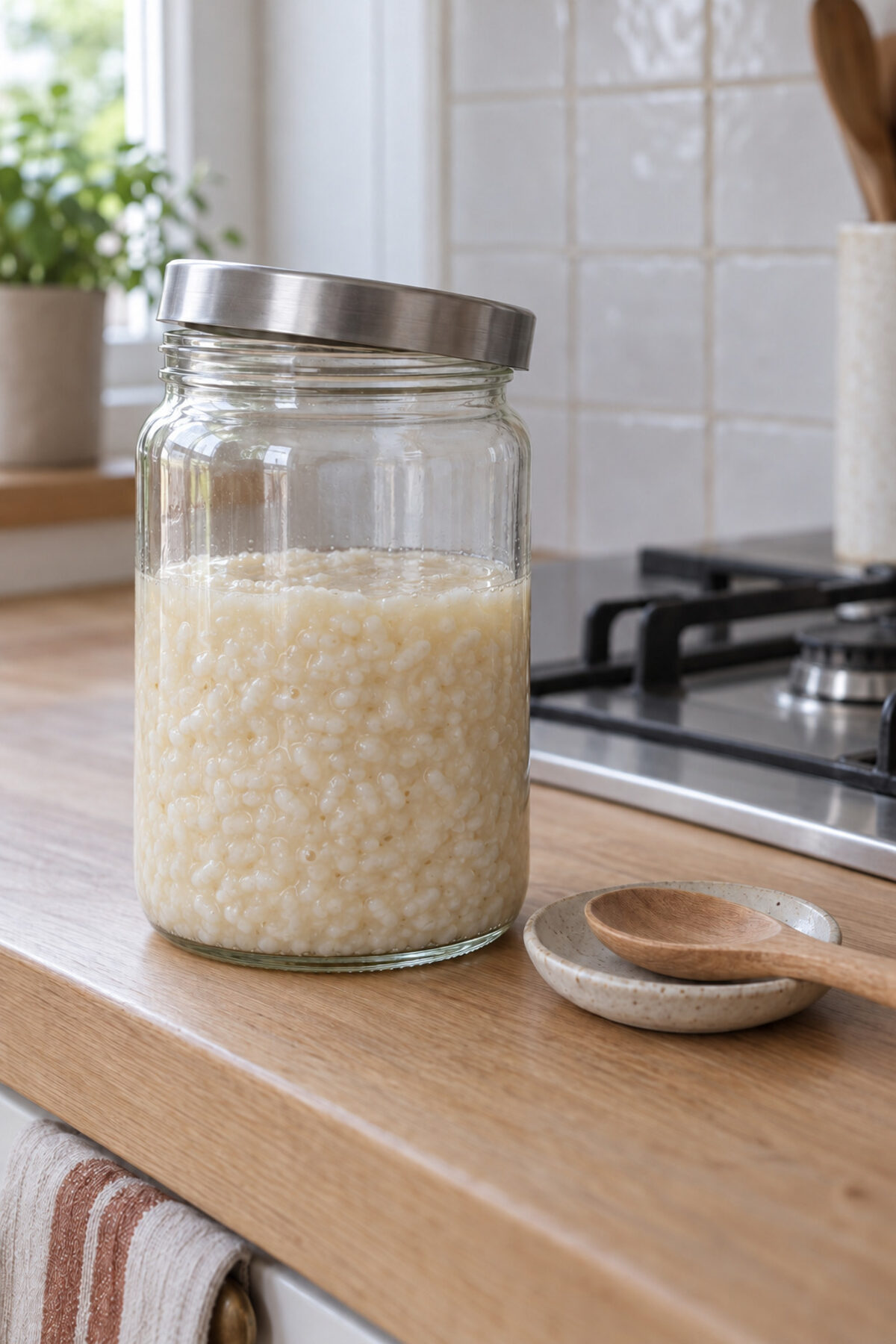
Shio koji is store-bought rice koji, water and salt, and it's your first ferment that doesn't turn sour: the pH won't tell you whether it's going well. The salt keeps it, 12% of the weight of everything, salt included, so weigh it carefully. Rest the lid on top without screwing it down and leave it 7 to 10 days at 68–77 °F, stirring from the bottom once a day. If the koji pokes out dry, add water with its salt. It's ready when the grains crush between your fingers. Mold of any color, a slimy pink or orange layer, or a rotten smell: throw it all out.
What comes next
With these four you've followed a ferment by its pH, bottled for fizz within its rules, worked by thermometer and seen that salt can preserve without acid. The next path moves from following recipes to designing your own: a miso that matures for weeks, a mead you follow with a hydrometer, a sourdough starter that stays with you and a hot sauce with a long ferment.
The next path
Advanced · 8 weeks Your own recipes