






It lost its crunch
The short answer It depends on what you see
It depends how much: if it has only lost its crunch but is still firm, smells sour and shows no slime or mold, it's a matter of texture, and the crunch won't come back. If it squashes between your fingers, it has gone soft, and that goes.
Reviewed October 26, 2026 · 21 facts, each with its source
 AI
When in doubt, throw it out. Fervida can’t see your jar. No page can tell you something is safe: it can show you how to look.
What you see
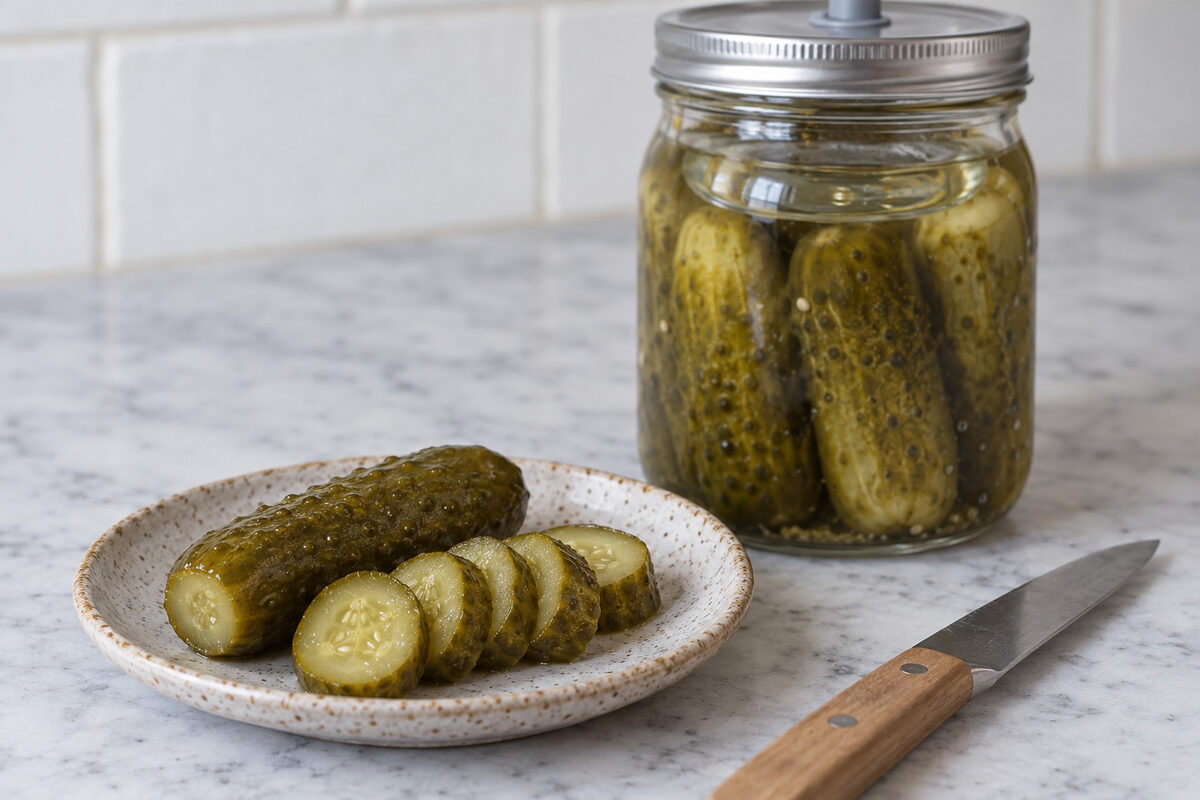
The vegetables are still whole and firm, but they no longer snap when you bite: they give instead of breaking. It happens with pickles, radishes and green beans, and with sauerkraut too.
Notice how much they've given. If they hold their shape and don't squash between your fingers, they've lost their crunch. If they squash or fall apart, that's something else: they've gone soft.
Why it happens
The crunch comes from the vegetable's pectin. Salt helps keep it: it firms the pectin and slows the enzyme that breaks it down. Crunch is lost through:
- Microbial activity, excess heat or rough handling.
- The cucumber's blossom end, if it wasn't trimmed: it carries microbes and an enzyme that soften it.
- Too little salt.
- Vegetables that weren't freshly picked: every day after harvest, they lose firmness.
- A variety that wasn't crisp to begin with.
- Sharp swings in temperature, or freezing the finished ferment.
What to do
It depends how much it has given
- Still firm, smells sour, no slime or mold: it's a matter of texture. The crunch won't come back, but you can keep it from fading further: move it to the fridge, where it stays firm for months.
- Squashes or falls apart: it has gone soft. The guides say to discard soft pickles and soft sauerkraut.
- Slimy, smells rotten, or has fuzz or green, blue, brown or black spots: throw out the whole batch.
If you have strips or a pH meter, check the pH: it must not rise above 4.6. When in doubt, throw it out.
How to keep the crunch
- Freshly picked vegetables, of a crisp variety.
- For pickles, slice at least 1/16 inch off the blossom end and throw it away. Grape leaves hold back the softening enzyme, but if you trim the blossom end they aren't needed.
- The salt the recipe calls for, weighed.
- A steady temperature, without sharp swings.
- Move it to the fridge when it's done, and don't freeze it.
Where every figure comes from
Every statement on this page comes from a food safety guide. We keep a copy of each source and quote its exact words, in its original language.
-
1
Vegetables soften from microbes, excess heat or rough handling
“Vegetables become soft as their pectin structure changes due to microbial activity, excess heat or improper handling.”
Utah State University Extension · Getting Crisp Home Pickled Vegetables · read on October 26, 2026
-
2
The cucumber's blossom carries microbes that soften it
“Remove the blossom end. The blossom harbors microbes that can cause softening.”
Utah State University Extension · Getting Crisp Home Pickled Vegetables · read on October 26, 2026
-
3
Every day after harvest, vegetables lose crispness
“As each day passes, vegetables lose crispness.”
Utah State University Extension · Getting Crisp Home Pickled Vegetables · read on October 26, 2026
-
4
For crunch, start with a crisp variety
“Start with crisp raw vegetable varieties to get crisp pickled vegetables.”
Utah State University Extension · Getting Crisp Home Pickled Vegetables · read on October 26, 2026
-
5
Once a vegetable is soft, it can't be made firm again
“Once a vegetable is soft it cannot be made firm again.”
Utah State University Extension · Getting Crisp Home Pickled Vegetables · read on October 26, 2026
-
6
If you remove the blossom end, grape leaves aren't needed
“However, this enzyme is located at the blossom end of the cucumber and if that is removed this process is redundant.”
Utah State University Extension · Getting Crisp Home Pickled Vegetables · read on October 26, 2026
-
7
Salt firms the pectin and slows the enzyme that softens it
“Allows for crisper vegetables by hardening the plant pectin and decreases the activity of pectinase, an enzyme that makes vegetables mushy”
University of Illinois Extension · Fermentation handout (2020) · read on October 20, 2026
-
8
If it's slimy or smells rotten, throw it out
“If fermented product is slimy, smells spoiled/rotten, discard it.”
University of Illinois Extension · Fermentation handout (2020) · read on October 20, 2026
Show the remaining 13 claims
-
9
When in doubt, throw it out
“When in Doubt—Throw it Out”
University of Illinois Extension · Fermentation handout (2020) · read on October 20, 2026
-
10
Sharp swings in temperature break down the texture
“Extreme fluctuation of temperature can cause a breakdown of the texture.”
Oregon State University Extension Service · Pickle Fact Sheet (SP 50-466, revised April 2024) · read on October 26, 2026
-
11
Once thawed, a ferment loses its crunch
“Beware that frozen, fermented produce may lose its crisp texture upon thawing.”
University of Minnesota Extension · Preserving food at home: Fermentation (reviewed 2026) · read on October 25, 2026
-
12
In the fridge, fermented vegetables stay crisp for many months
“Storing fermented vegetables in the refrigerator will keep them fresh and crisp for many months.”
K-State Research and Extension (Kansas State University) · Taking a New Look at Fermented Foods (MF3491, June 2020) · read on October 20, 2026
-
13
If pickles go soft, slimy or smell off, throw them out
“Caution: If the pickles become soft, slimy, or develop a disagreeable odor, discard them.”
National Center for Home Food Preservation (USDA, University of Georgia) · Dill Pickles · read on October 26, 2026
-
14
Soft sauerkraut is discarded
“Soft kraut • Insufficient salt (inaccurate measuring or uneven salt distribution.) (Discard)”
Washington State University Extension, Lewis County · Sauerkraut Making · read on October 26, 2026
-
15
Mold is usually green, blue, brown or black
“Mold is typically green, blue, brown, or black in color.”
UC Davis, Department of Food Science and Technology · Common issues with fermented fruits and vegetables (v1.0, 15-mar-2022) · read on October 20, 2026
-
16
If there is mold anywhere, the whole batch goes
“If you confirm mold growth on any part of a ferment, it should be immediately discarded.”
UC Davis, Department of Food Science and Technology · Common issues with fermented fruits and vegetables (v1.0, 15-mar-2022) · read on October 20, 2026
-
17
A ferment smells pleasantly sour, not rotten
“A fermented fruit or vegetable will smell pleasantly sour but not putrid.”
UC Davis, Department of Food Science and Technology · Common issues with fermented fruits and vegetables (v1.0, 15-mar-2022) · read on October 20, 2026
-
18
The pH must not rise above 4.6
“The pH can be checked periodically to ensure it does not rise above 4.6.”
UC Davis, Department of Food Science and Technology · Common issues with fermented fruits and vegetables (v1.0, 15-mar-2022) · read on October 20, 2026
-
19
Slice at least 1/16 inch off the blossom end
“Slice at least 1/16th inch off blossom end of cucumbers and discard.”
National Center for Home Food Preservation (USDA, University of Georgia) · Causes and Possible Solutions for Problems with Fermented Pickles · read on October 26, 2026
-
20
Keep the salt the recipe calls for
“Maintain salt concentration specified in recipe.”
National Center for Home Food Preservation (USDA, University of Georgia) · Causes and Possible Solutions for Problems with Fermented Pickles · read on October 26, 2026
-
21
Grape leaves hold back the enzymes that soften pickles
“Grape leaves contain a substance that inhibits enzymes that make pickles soft.”
Clemson Cooperative Extension, Home & Garden Information Center · Common Pickle Problems (HGIC 3101, revised August 2020) · read on October 26, 2026