






How long does it keep in the fridge?
The short answer It depends on what you see
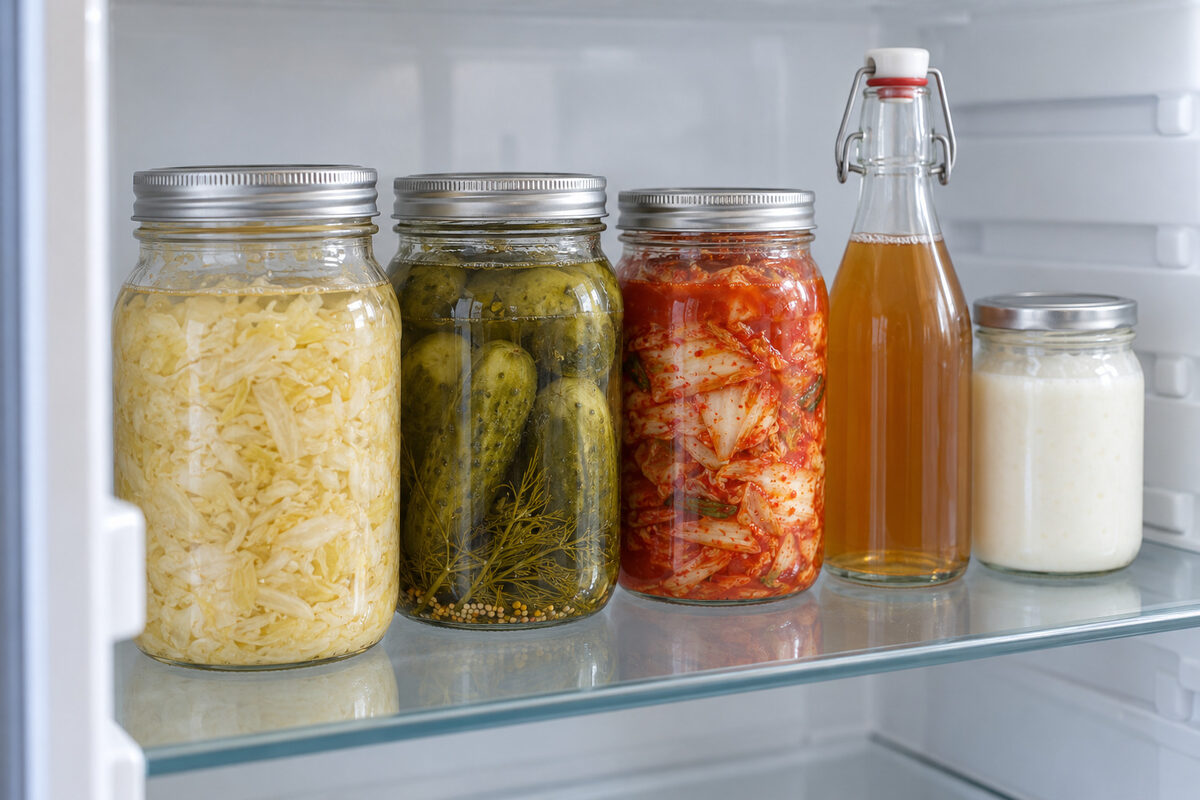
It depends on the ferment: sauerkraut, several months; pickles, 4 to 6 months; kombucha, up to 30 days; kefir, up to 2 weeks. No timeline counts once mold, a rotten smell or sliminess shows up.
Reviewed October 26, 2026 · 16 facts, each with its source
 AI
When in doubt, throw it out. Fervida can’t see your jar. No page can tell you something is safe: it can show you how to look.
What you see
You have a finished ferment in the fridge and don't know how long it can be eaten. Or you find a jar at the back and can't remember when you made it.
Why it happens
The fridge doesn't stop fermentation: it slows it down. The flavor keeps changing slowly, and over time the ferment gets more sour and loses quality. That's why each ferment has its own timeline, and not every guide gives one.
What to do
It depends on the ferment
These are the guides' timelines, counted from when the ferment is finished and in the fridge:
- Sauerkraut: several months, tightly covered.
- Brined pickles: 4 to 6 months.
- Other fermented vegetables: one of the guides gives up to 9 months for fermented vegetables in general. It's the longest figure we have; if you're not sure which applies, go with the shortest.
- Kimchi: the guides don't give a timeline. They say it gets more sour in the fridge and its quality declines the longer it ferments. Keep it pressed down, so it's barely exposed to air.
- Kombucha: up to 30 days, at 40 °F or below. If you've added fruit or other flavors, 2 days.
- Milk kefir: up to 2 weeks, at 41 °F or below.
No timeline counts once the jar shows signs. Throw out the whole batch, even within its timeline, if you see mold, it smells rotten or it's slimy. When in doubt, throw it out.
How to make it last
- Tightly covered and in the fridge as soon as it's finished.
- Vegetables always below their brine. Kimchi, pressed down.
- Label and date every jar, so you know how long it's been.
Where every figure comes from
Every statement on this page comes from a food safety guide. We keep a copy of each source and quote its exact words, in its original language.
-
1
Fully fermented sauerkraut keeps for several months in the fridge, tightly covered
“Fully fermented kraut may be kept tightly covered in the refrigerator for several months”
National Center for Home Food Preservation (USDA, University of Georgia) · Sauerkraut · read on October 20, 2026
-
2
Fermented pickles keep for 4 to 6 months in the fridge
“Fully fermented pickles may be stored in the original container for about 4 to 6 months, provided they are refrigerated”
National Center for Home Food Preservation (USDA, University of Georgia) · Dill Pickles · read on October 26, 2026
-
3
Fermented vegetables keep for up to 9 months in the fridge
“Fermented produce can be kept refrigerated for up to 9 months.”
University of Minnesota Extension · Preserving food at home: Fermentation (reviewed 2026) · read on October 25, 2026
-
4
The flavor keeps changing in the fridge, because the process slowly continues
“Expect subtle changes in flavor even during refrigeration (the process slowly continues).”
University of Illinois Extension · Fermentation handout (2020) · read on October 20, 2026
-
5
If it is slimy or smells rotten, throw it out
“If fermented product is slimy, smells spoiled/rotten, discard it.”
University of Illinois Extension · Fermentation handout (2020) · read on October 20, 2026
-
6
When in doubt, throw it out
“When in Doubt—Throw it Out”
University of Illinois Extension · Fermentation handout (2020) · read on October 20, 2026
-
7
Kimchi gets more sour over time
“Kimchi may become more sour over time.”
Colorado State University Extension · Understanding and Making Kimchi (2025) · read on October 20, 2026
-
8
Kimchi's quality declines the longer it ferments
“The quality of kimchi deteriorates with longer fermentation.”
Colorado State University Extension · Understanding and Making Kimchi (2025) · read on October 20, 2026
Show the remaining 8 claims
-
9
Kimchi pressed down so it's barely exposed to air
“Keep it pressed down to minimize air exposure.”
Colorado State University Extension · Understanding and Making Kimchi (2025) · read on October 20, 2026
-
10
Kombucha in the fridge at 40 °F or below, for up to 30 days
“kombucha should be stored in the refrigerator at 40 degrees Fahrenheit or below to slow down fermentation and preserve flavor. It can be stored under refrigeration temperatures for up to 30 days.”
University of Georgia Cooperative Extension (National Center for Home Food Preservation) · Crafting Kombucha at Home: Frequently Asked Questions (2026) · read on October 20, 2026
-
11
Once flavored, kombucha is drunk within 2 days
“Once flavors have been added kombucha should be stored under refrigeration and consumed within 2 days.”
University of Georgia Cooperative Extension (National Center for Home Food Preservation) · Crafting Kombucha at Home: Frequently Asked Questions (2026) · read on October 20, 2026
-
12
Kefir in the fridge for up to 2 weeks
“Drink immediately or refrigerate for up to 2 weeks.”
Colorado State University Extension (FoodSmart Colorado) · Understanding and Making Kefir · read on October 20, 2026
-
13
Kefir in the fridge at 41 °F or below
“refrigerated after fermentation (≤ 41°F)”
UF/IFAS Extension (University of Florida) · Fermented Foods: Kefir (FSHN24-2/FS457, 2024) · read on October 20, 2026
-
14
Everything below the brine
“All produce should be submerged in the brine liquid.”
UC Davis, Department of Food Science and Technology · Common issues with fermented fruits and vegetables (v1.0, 15-mar-2022) · read on October 20, 2026
-
15
If there is mold anywhere, the whole batch goes
“If you confirm mold growth on any part of a ferment, it should be immediately discarded.”
UC Davis, Department of Food Science and Technology · Common issues with fermented fruits and vegetables (v1.0, 15-mar-2022) · read on October 20, 2026
-
16
Label and date your jars
“Label and date your jars.”
CDC · Botulism prevention: home-canned foods · read on October 26, 2026