






It went soft
The short answer Throw it out
Throw it out: if the vegetables have gone so soft they squash between your fingers, the guides say to discard them. Sometimes it's just too little salt or too much heat, but at home you can't tell that apart from a ferment that's spoiling.
Reviewed October 26, 2026 · 24 facts, each with its source
 AI
When in doubt, throw it out. Fervida can’t see your jar. No page can tell you something is safe: it can show you how to look.
What you see
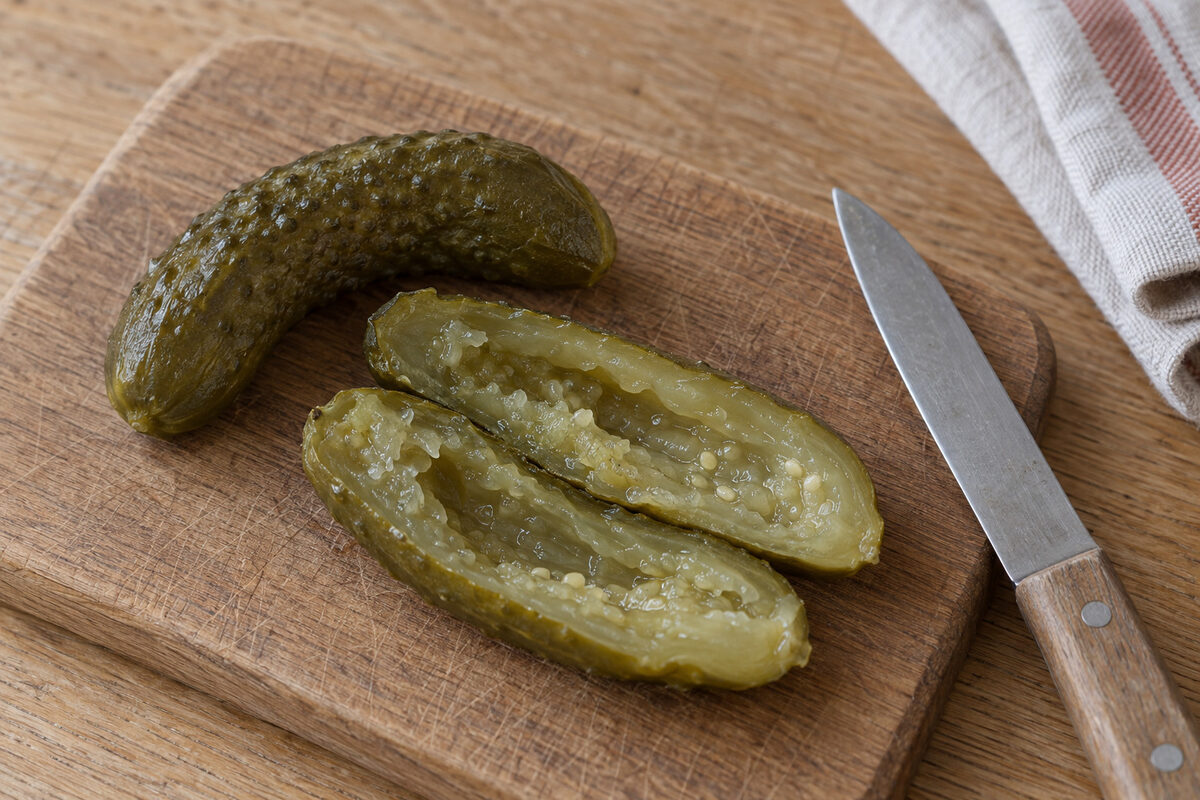
The vegetables have lost their body. They squash between your fingers, fall apart when you stick a fork in them or give no resistance when you bite. A soft pickle bends instead of snapping; soft sauerkraut turns into a shapeless mush of strands.
This isn't the same as losing that first-day crunch. If the vegetables are still firm but no longer crunchy, see “It lost its crunch.” Here the texture has given way completely.
Why it happens
Vegetables stay firm thanks to their pectin, and they lose it through microbial activity, excess heat or rough handling. Once soft, they can't be made firm again. The usual causes:
- Too little salt, or salt spread unevenly.
- Too much heat: above 75 °F (24 °C), sauerkraut may go soft, and pickles do the same.
- Not enough brine, or vegetables left sticking out of it.
- In pickles, the blossom end, which carries an enzyme that softens them.
- Moldy garlic or spices.
- Air pockets in sauerkraut that wasn't packed tightly.
- Vegetables that weren't fresh: every day after harvest, they lose firmness.
What to do
Throw it out
The NCHFP says to discard fermented pickles that go soft, and the Washington State University guide says the same of soft sauerkraut.
Not every guide is that strict. When the cause is too little salt, the vegetables come out soft, and if the pH still drops it may not matter. But the molds and yeasts that spoil a ferment soften it too, and at home there's no way to tell which of the two happened. So here we go with the more cautious call: throw it out.
Wash the jar, the weight and the lid in hot soapy water, and rinse them with very hot water before using them again. When in doubt, throw it out.
How to prevent it
- The salt the recipe calls for, weighed. For sauerkraut, mixed well into the cabbage, and the cabbage packed tightly in the jar so no air pockets are left.
- A temperature of 70–75 °F (21–24 °C), no higher.
- Every vegetable below the brine.
- For pickles, slice at least 1/16 inch off the blossom end and throw it away.
- Fresh garlic and spices, with no mold.
- Just-picked vegetables: the sooner you ferment them, the firmer they stay.
Where every figure comes from
Every statement on this page comes from a food safety guide. We keep a copy of each source and quote its exact words, in its original language.
-
1
Vegetables soften from microbes, excess heat or rough handling
“Vegetables become soft as their pectin structure changes due to microbial activity, excess heat or improper handling.”
Utah State University Extension · Getting Crisp Home Pickled Vegetables · read on October 26, 2026
-
2
Once a vegetable is soft, it can't be made firm again
“Once a vegetable is soft it cannot be made firm again.”
Utah State University Extension · Getting Crisp Home Pickled Vegetables · read on October 26, 2026
-
3
Every day after harvest, vegetables lose crispness
“As each day passes, vegetables lose crispness.”
Utah State University Extension · Getting Crisp Home Pickled Vegetables · read on October 26, 2026
-
4
A brine with too little salt softens pickles
“Salt brine too weak during fermentation.”
National Center for Home Food Preservation (USDA, University of Georgia) · Causes and Possible Solutions for Problems with Fermented Pickles · read on October 26, 2026
-
5
Pickles fermented too warm
“Cucumbers stored at too high a temperature during fermentation.”
National Center for Home Food Preservation (USDA, University of Georgia) · Causes and Possible Solutions for Problems with Fermented Pickles · read on October 26, 2026
-
6
Not enough brine to cover them
“Insufficient amount of brine.”
National Center for Home Food Preservation (USDA, University of Georgia) · Causes and Possible Solutions for Problems with Fermented Pickles · read on October 26, 2026
-
7
Moldy garlic or spices
“Moldy garlic or spices.”
National Center for Home Food Preservation (USDA, University of Georgia) · Causes and Possible Solutions for Problems with Fermented Pickles · read on October 26, 2026
-
8
Keep the salt the recipe calls for
“Maintain salt concentration specified in recipe.”
National Center for Home Food Preservation (USDA, University of Georgia) · Causes and Possible Solutions for Problems with Fermented Pickles · read on October 26, 2026
Show the remaining 16 claims
-
9
Ferment pickles at 70–75 °F
“Store fermenting cucumbers between 70° and 75°F.”
National Center for Home Food Preservation (USDA, University of Georgia) · Causes and Possible Solutions for Problems with Fermented Pickles · read on October 26, 2026
-
10
Pickles always below the brine
“Keep cucumbers immersed in the brine.”
National Center for Home Food Preservation (USDA, University of Georgia) · Causes and Possible Solutions for Problems with Fermented Pickles · read on October 26, 2026
-
11
Slice at least 1/16 inch off the blossom end
“Slice at least 1/16th inch off blossom end of cucumbers and discard.”
National Center for Home Food Preservation (USDA, University of Georgia) · Causes and Possible Solutions for Problems with Fermented Pickles · read on October 26, 2026
-
12
Use fresh spices
“Always use fresh spices.”
National Center for Home Food Preservation (USDA, University of Georgia) · Causes and Possible Solutions for Problems with Fermented Pickles · read on October 26, 2026
-
13
In sauerkraut, too little salt or salt spread unevenly
“Insufficient salt (less than 1.7% concentration). Uneven distribution of salt.”
Oregon State University Extension Service · Sauerkraut: Problems and solutions · read on October 26, 2026
-
14
Air pockets in sauerkraut that wasn't packed tightly
“Air pockets caused by improper packing.”
Oregon State University Extension Service · Sauerkraut: Problems and solutions · read on October 26, 2026
-
15
Mix the salt in well and pack the cabbage to leave no air pockets
“Mix salt well into cabbage before packing. Pack tightly to eliminate air pockets.”
Oregon State University Extension Service · Sauerkraut: Problems and solutions · read on October 26, 2026
-
16
Above 75 °F, sauerkraut may go soft
“Above 75ºF, kraut may become soft.”
National Center for Home Food Preservation (USDA, University of Georgia) · Sauerkraut · read on October 20, 2026
-
17
The blossom end of the cucumber carries an enzyme that softens it
“Blossoms may contain an enzyme which causes excessive softening of pickles.”
National Center for Home Food Preservation (USDA, University of Georgia) · General Information on Fermenting · read on October 26, 2026
-
18
If pickles go soft, slimy or smell off, throw them out
“Caution: If the pickles become soft, slimy, or develop a disagreeable odor, discard them.”
National Center for Home Food Preservation (USDA, University of Georgia) · Dill Pickles · read on October 26, 2026
-
19
Soft sauerkraut is discarded
“Soft kraut • Insufficient salt (inaccurate measuring or uneven salt distribution.) (Discard)”
Washington State University Extension, Lewis County · Sauerkraut Making · read on October 26, 2026
-
20
Low salt leaves vegetables soft; if the pH still drops, it may not matter
“Low salt, generally less than 0.8% can result in poor LAB growth, and soft-textured vegetables. However, as long as LAB populations recover and organic acids drive down pH, this may not be significant.”
BC Centre for Disease Control, Environmental Health Services · Safety of Fermented Foods, Section 3.1: Fermented Vegetables (August 2024, updated December 2024) · read on October 25, 2026
-
21
The molds and yeasts that spoil a ferment also soften it
“spoilage moulds and yeasts have softened the pickles, so they are inedible.”
BC Centre for Disease Control, Environmental Health Services · Safety of Fermented Foods, Section 3.1: Fermented Vegetables (August 2024, updated December 2024) · read on October 25, 2026
-
22
If a microbe spoiled it, throw it out
“If microbial spoilage, destroy food.”
Oregon State University Extension Service (copy hosted by UC ANR) · Pickles and Relishes: Problems and Solutions (SP 50-744, revised January 2017) · read on October 26, 2026
-
23
Wash the jar, weight and lid in hot soapy water
“The fermentation container, plate, and jars must be washed in hot sudsy water, and rinsed well with very hot water before use.”
National Center for Home Food Preservation (USDA, University of Georgia) · Suitable Containers, Covers, and Weights for Fermenting Food · read on October 26, 2026
-
24
When in doubt, throw it out
“When in Doubt—Throw it Out”
University of Illinois Extension · Fermentation handout (2020) · read on October 20, 2026