






It tastes bitter
The short answer It depends on what you see
It depends on the cause. If it comes from the vegetable's skin or the spices and the ferment smells sour, it's a matter of taste. If you used a salt substitute, or if it also smells off or has mold, throw it out.
Reviewed October 26, 2026 · 17 facts, each with its source
 AI
When in doubt, throw it out. Fervida can’t see your jar. No page can tell you something is safe: it can show you how to look.
What you see
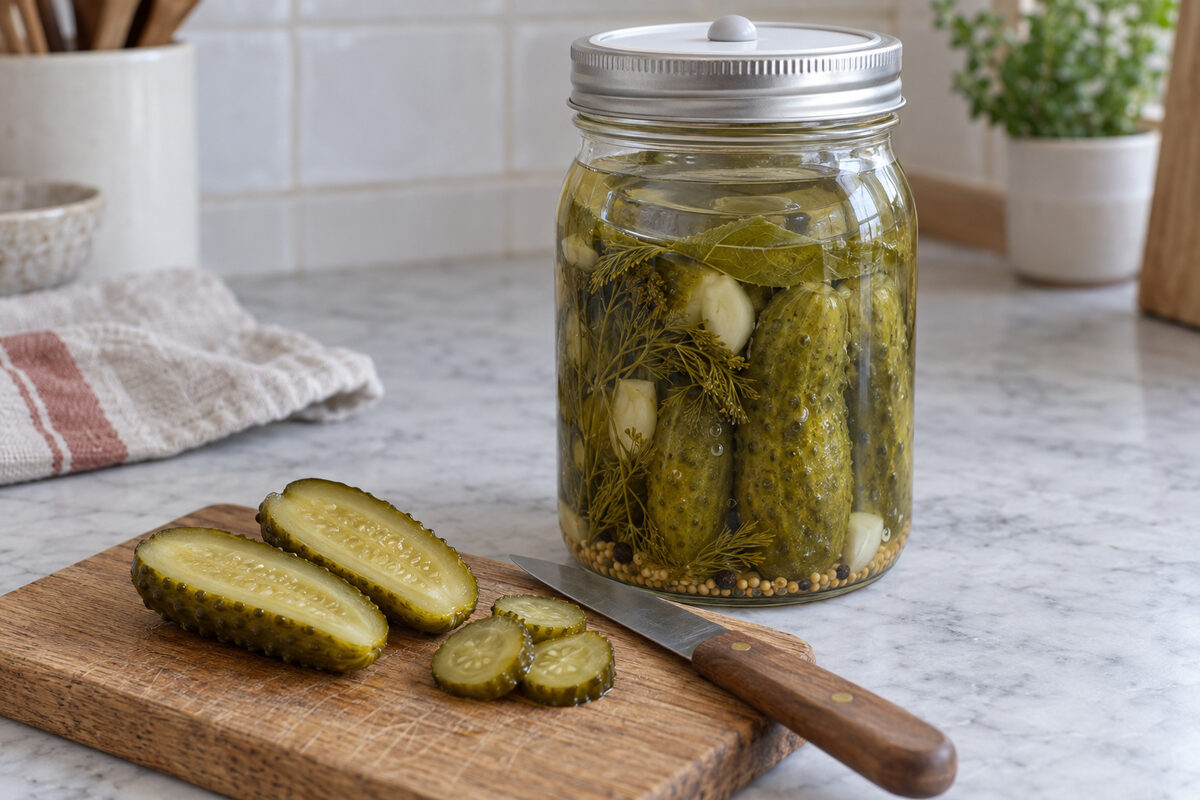
A bitter aftertaste when you eat it, faint or very strong. In pickles it's mostly in the skin. The rest of the ferment may look fine: sour, firm and below the brine.
Why it happens
Bitterness can come from several places:
- The vegetable itself. Bitterness is usually in the skin. In dry seasons, vegetables come out more bitter, and that can't be prevented.
- The spices. Too many of them taste bitter.
- A salt substitute. Most contain potassium chloride, which is bitter.
- Yeasts. When they grow a lot on the surface, they bring off flavors.
What to do
It depends on the cause
If it comes from the vegetable or the spices, and the ferment smells sour, has no mold and its texture is normal, the bitterness is a matter of taste. If you notice it mostly in the skin, it's the vegetable itself.
If there's a flat white film on the surface, it's usually yeast, and it may be behind that off taste. Skim it off with a clean spoon, check that every vegetable is still below the brine and, if you have strips or a pH meter, that the pH hasn't risen above 4.6. If you're not sure whether it's yeast or mold, see "Mold or kahm yeast?".
If you used a salt substitute, bitterness isn't the problem. In a vegetable ferment, salt is vital to safety, and we know of no guide that backs fermenting with a substitute instead. To be cautious, throw it out.
If it also smells off, in a way unlike its sour smell, or has mold or an odd texture, it has spoiled: throw out the whole batch.
If you can't tell where the bitterness comes from, throw it out.
How to prevent it
- Vegetables as fresh as possible.
- The spices the recipe calls for, no more.
- Canning or pickling salt, in the amount the recipe calls for. Never a substitute, and never less salt.
Where every figure comes from
Every statement on this page comes from a food safety guide. We keep a copy of each source and quote its exact words, in its original language.
-
1
Bitterness is usually in the peel or skin of fruits and vegetables
“Bitter taste is usually in the peel or skin of fruits and vegetables.”
National Center for Home Food Preservation (USDA, University of Georgia) · Causes and Possible Solutions for Problems with Fermented Pickles · read on October 26, 2026
-
2
Dry weather makes vegetables bitter, and it can't be prevented
“3. Dry weather. 3. No prevention.”
National Center for Home Food Preservation (USDA, University of Georgia) · Causes and Possible Solutions for Problems with Fermented Pickles · read on October 26, 2026
-
3
Too many spices taste bitter
“Spices cooked too long in vinegar, or too many spices used.”
National Center for Home Food Preservation (USDA, University of Georgia) · Causes and Possible Solutions for Problems with Fermented Pickles · read on October 26, 2026
-
4
Spices in the amount the recipe calls for
“Follow directions for amount of spices to use and the boiling time.”
National Center for Home Food Preservation (USDA, University of Georgia) · Causes and Possible Solutions for Problems with Fermented Pickles · read on October 26, 2026
-
5
The potassium chloride in most salt substitutes is bitter
“Potassium chloride, the ingredient in most of these, causes bitterness.”
National Center for Home Food Preservation (USDA, University of Georgia) · Causes and Possible Solutions for Problems with Fermented Pickles · read on October 26, 2026
-
6
Use canning or pickling salt
“Use canning or pickling salt.”
National Center for Home Food Preservation (USDA, University of Georgia) · Causes and Possible Solutions for Problems with Fermented Pickles · read on October 26, 2026
-
7
In sauerkraut and fermented pickles, salt is vital to safety and texture
“the salt used in making fermented sauerkraut and brined pickles not only provides characteristic flavor but also is vital to safety and texture.”
National Center for Home Food Preservation (USDA, University of Georgia) · General Information on Fermenting · read on October 26, 2026
-
8
Don't cut back on the salt the recipe calls for
“Do not attempt to make sauerkraut or fermented pickles by cutting back on the salt required.”
National Center for Home Food Preservation (USDA, University of Georgia) · General Information on Fermenting · read on October 26, 2026
Show the remaining 9 claims
-
9
Too much yeast brings off flavors and textures
“Excessive yeast growth can lead to off flavors or textures and reduce acidity.”
UC Davis, Department of Food Science and Technology · Common issues with fermented fruits and vegetables (v1.0, 15-mar-2022) · read on October 20, 2026
-
10
On sauerkraut, yeast is skimmed off from time to time
“For other ferments, such as sauerkraut, yeast should be periodically removed during fermentation.”
UC Davis, Department of Food Science and Technology · Common issues with fermented fruits and vegetables (v1.0, 15-mar-2022) · read on October 20, 2026
-
11
Everything below the brine
“All produce should be submerged in the brine liquid.”
UC Davis, Department of Food Science and Technology · Common issues with fermented fruits and vegetables (v1.0, 15-mar-2022) · read on October 20, 2026
-
12
The pH must not rise above 4.6
“The pH can be checked periodically to ensure it does not rise above 4.6.”
UC Davis, Department of Food Science and Technology · Common issues with fermented fruits and vegetables (v1.0, 15-mar-2022) · read on October 20, 2026
-
13
A vegetable ferment smells pleasantly sour, never putrid
“A fermented fruit or vegetable will smell pleasantly sour but not putrid.”
UC Davis, Department of Food Science and Technology · Common issues with fermented fruits and vegetables (v1.0, 15-mar-2022) · read on October 20, 2026
-
14
Mold, an off smell unlike its own or an odd texture are signs it has spoiled
“Signs of spoilage include the presence of mold, an off-putting odor distinct from its characteristic fermented aroma, or an unusual texture.”
University of Georgia Cooperative Extension · Homemade Kimchi: A Science-Based Guide to Safe Fermentation (Circular 1362, 2025) · read on October 20, 2026
-
15
With any of those signs, throw it out
“If any of these signs are observed, discard the kimchi to prevent potential foodborne illness.”
University of Georgia Cooperative Extension · Homemade Kimchi: A Science-Based Guide to Safe Fermentation (Circular 1362, 2025) · read on October 20, 2026
-
16
When in doubt, throw it out
“When in Doubt—Throw it Out”
University of Illinois Extension · Fermentation handout (2020) · read on October 20, 2026
-
17
Vegetables as fresh as possible
“Use the freshest produce possible”
University of Illinois Extension · Fermentation handout (2020) · read on October 20, 2026